

Hyperlipidemia
Dr. Rima Das.
B.A.M.S. (Mum); PGDEMS (Pune); DACLS, DIHM, DDM (Pune);
FPC (M.U.H.S; Nashik).
Consulting Preventive Cardiologist.
1
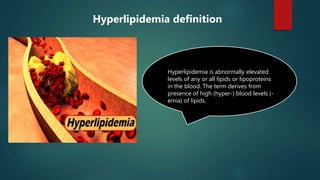
Hyperlipidemia is abnormally elevated
levels of any or all lipids or lipoproteins
in the blood. The term derives from
presence of high (hyper-) blood levels (-
emia) of lipids.
Hyperlipidemia definition
 Based on cause –
• Primary - due to genetic causes
• Secondary - due to other underlying causes such as diabetes.
 Based on values -
• Hypercholesterolemia - presence of high levels of cholesterol.
• Hypertriglyceridemia - presence of high (hyper-) blood levels (-emia) of triglycerides.
• Hyperlipidemia - presence of elevated levels of lipid (triglycerides and cholesterol) in blood.
• Hyperlipoproteinemia - presence of elevated levels of lipoproteins, especially VLDL, IDL and
LDL.
Classifications:
Common causes of hyperlipidemia:
• Eating foods with saturated and trans
fats
• Eating animal protein, like meat and
dairy
• Not getting enough exercise
• Not eating enough healthy fats
• Obesity
• Large waist circumference
• Smoking
• Drinking alcohol excessively
Risk factors:
• Chest pain or pressure
• Blockage of blood vessels in brain and heart
• High blood pressure
• Heart attack
• Stroke
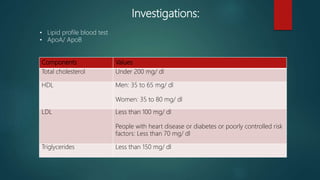
Investigations:
Components Values
Total cholesterol Under 200 mg/ dl
HDL Men: 35 to 65 mg/ dl
Women: 35 to 80 mg/ dl
LDL Less than 100 mg/ dl
People with heart disease or diabetes or poorly controlled risk
factors: Less than 70 mg/ dl
Triglycerides Less than 150 mg/ dl
• Lipid profile blood test
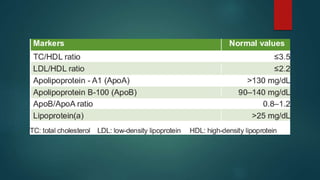
• ApoA/ ApoB
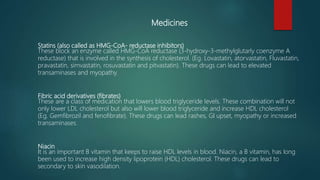
Medicines
Statins (also called as HMG-CoA- reductase inhibitors)
These block an enzyme called HMG-CoA reductase (3-hydroxy-3-methylglutarly coenzyme A
reductase) that is involved in the synthesis of cholesterol. (Eg. Lovastatin, atorvastatin, Fluvastatin,
pravastatin, simvastatin, rosuvastatin and pitvastatin). These drugs can lead to elevated
transaminases and myopathy.
Fibric acid derivatives (fibrates)
These are a class of medication that lowers blood triglyceride levels. These combination will not
only lower LDL cholesterol but also will lower blood triglyceride and increase HDL cholesterol
(Eg. Gemfibrozil and fenofibrate). These drugs can lead rashes, GI upset, myopathy or increased
transaminases.
Niacin
It is an important B vitamin that keeps to raise HDL levels in blood. Niacin, a B vitamin, has long
been used to increase high density lipoprotein (HDL) cholesterol. These drugs can lead to
secondary to skin vasodilation.
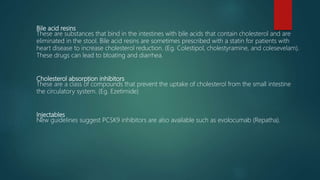
Bile acid resins
These are substances that bind in the intestines with bile acids that contain cholesterol and are
eliminated in the stool. Bile acid resins are sometimes prescribed with a statin for patients with
heart disease to increase cholesterol reduction. (Eg. Colestipol, cholestyramine, and colesevelam).
These drugs can lead to bloating and diarrhea.
Cholesterol absorption inhibitors
These are a class of compounds that prevent the uptake of cholesterol from the small intestine
the circulatory system. (Eg. Ezetimide)
Injectables
New guidelines suggest PCSK9 inhibitors are also available such as evolocumab (Repatha).
Patient education:
• A heart healthy diet emphasizes fruits, vegetables, whole grains,
fish and nuts, while curving sugary foods and beverages.
• Becoming more physically active
• Quitting smoking
• Losing weight
Thank you!
10

Hyperlipidemia

  • 1.
    Hyperlipidemia Dr. Rima Das. B.A.M.S.(Mum); PGDEMS (Pune); DACLS, DIHM, DDM (Pune); FPC (M.U.H.S; Nashik). Consulting Preventive Cardiologist. 1
  • 2.
    Hyperlipidemia is abnormallyelevated levels of any or all lipids or lipoproteins in the blood. The term derives from presence of high (hyper-) blood levels (- emia) of lipids. Hyperlipidemia definition
  • 3.
     Based oncause – • Primary - due to genetic causes • Secondary - due to other underlying causes such as diabetes.  Based on values - • Hypercholesterolemia - presence of high levels of cholesterol. • Hypertriglyceridemia - presence of high (hyper-) blood levels (-emia) of triglycerides. • Hyperlipidemia - presence of elevated levels of lipid (triglycerides and cholesterol) in blood. • Hyperlipoproteinemia - presence of elevated levels of lipoproteins, especially VLDL, IDL and LDL. Classifications:
  • 4.
    Common causes ofhyperlipidemia: • Eating foods with saturated and trans fats • Eating animal protein, like meat and dairy • Not getting enough exercise • Not eating enough healthy fats • Obesity • Large waist circumference • Smoking • Drinking alcohol excessively Risk factors: • Chest pain or pressure • Blockage of blood vessels in brain and heart • High blood pressure • Heart attack • Stroke
  • 5.
    Investigations: Components Values Total cholesterolUnder 200 mg/ dl HDL Men: 35 to 65 mg/ dl Women: 35 to 80 mg/ dl LDL Less than 100 mg/ dl People with heart disease or diabetes or poorly controlled risk factors: Less than 70 mg/ dl Triglycerides Less than 150 mg/ dl • Lipid profile blood test • ApoA/ ApoB
  • 7.
    Medicines Statins (also calledas HMG-CoA- reductase inhibitors) These block an enzyme called HMG-CoA reductase (3-hydroxy-3-methylglutarly coenzyme A reductase) that is involved in the synthesis of cholesterol. (Eg. Lovastatin, atorvastatin, Fluvastatin, pravastatin, simvastatin, rosuvastatin and pitvastatin). These drugs can lead to elevated transaminases and myopathy. Fibric acid derivatives (fibrates) These are a class of medication that lowers blood triglyceride levels. These combination will not only lower LDL cholesterol but also will lower blood triglyceride and increase HDL cholesterol (Eg. Gemfibrozil and fenofibrate). These drugs can lead rashes, GI upset, myopathy or increased transaminases. Niacin It is an important B vitamin that keeps to raise HDL levels in blood. Niacin, a B vitamin, has long been used to increase high density lipoprotein (HDL) cholesterol. These drugs can lead to secondary to skin vasodilation.
  • 8.
    Bile acid resins Theseare substances that bind in the intestines with bile acids that contain cholesterol and are eliminated in the stool. Bile acid resins are sometimes prescribed with a statin for patients with heart disease to increase cholesterol reduction. (Eg. Colestipol, cholestyramine, and colesevelam). These drugs can lead to bloating and diarrhea. Cholesterol absorption inhibitors These are a class of compounds that prevent the uptake of cholesterol from the small intestine the circulatory system. (Eg. Ezetimide) Injectables New guidelines suggest PCSK9 inhibitors are also available such as evolocumab (Repatha).
  • 9.
    Patient education: • Aheart healthy diet emphasizes fruits, vegetables, whole grains, fish and nuts, while curving sugary foods and beverages. • Becoming more physically active • Quitting smoking • Losing weight
  • 10.