

Anxiety Disorders
JMJ 1
What is normal anxiety?
• respond to threatening situation
• Defense or escape (‘fight or flight)
• Increased
• Heartrate
• Blood pressure
• Respiration
• Muscle tension
• Sympathetic nervous system activation
• Tremor
• Sweating
• Polyuria
• Diarrhea
• Beneficial response
JMJ 2
What is abnormal anxiety?
• Respond similar to normal anxiety,
• But out of proportion to the treat,
• And/or is more prolonged
JMJ 3
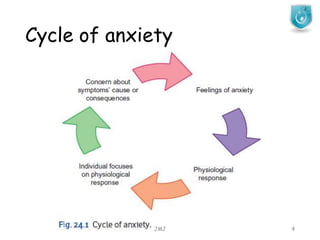
Cycle of anxiety
JMJ 4
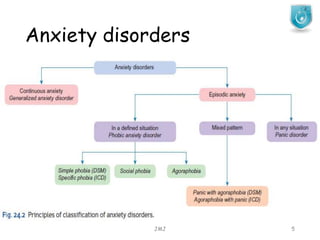
Anxiety disorders
JMJ 5
Anxiety disorders
JMJ 6
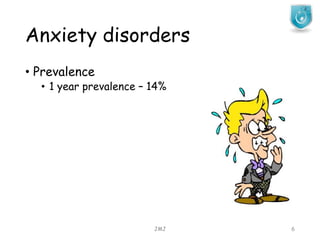
• Prevalence
• 1 year prevalence – 14%
Generalized anxiety
disorder
JMJ 7
Generalized anxiety disorder
JMJ 8
• Introduction
• Clinical features
• Appearance
• Prevalence
• Co-morbidities
• Differential diagnosis
• Aetiology
• Prognosis
• Assessment and management
Generalized anxiety disorder
JMJ 9
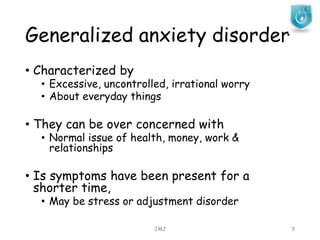
• Characterized by
• Excessive, uncontrolled, irrational worry
• About everyday things
• They can be over concerned with
• Normal issue of health, money, work &
relationships
• Is symptoms have been present for a
shorter time,
• May be stress or adjustment disorder
Generalized anxiety disorder
JMJ 10
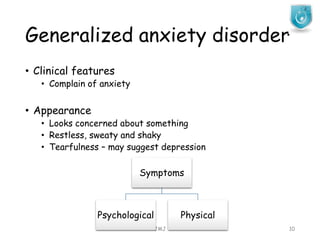
• Clinical features
• Complain of anxiety
• Appearance
• Looks concerned about something
• Restless, sweaty and shaky
• Tearfulness – may suggest depression
Symptoms
Psychological Physical
Psychological Symptoms
JMJ 11
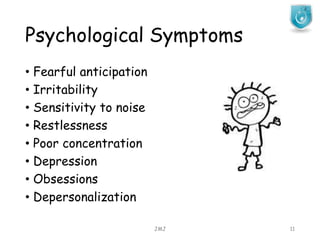
• Fearful anticipation
• Irritability
• Sensitivity to noise
• Restlessness
• Poor concentration
• Depression
• Obsessions
• Depersonalization
Psychological Symptoms
JMJ 12
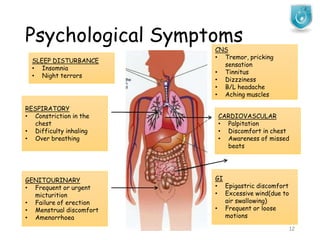
GI
• Epigastric discomfort
• Excessive wind(due to
air swallowing)
• Frequent or loose
motions
RESPIRATORY
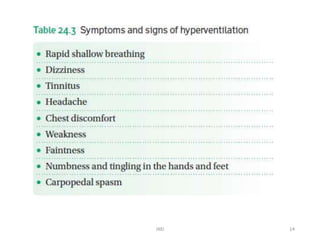
• Constriction in the
chest
• Difficulty inhaling
• Over breathing
CARDIOVASCULAR
• Palpitation
• Discomfort in chest
• Awareness of missed
beats
GENITOURINARY
• Frequent or urgent
micturition
• Failure of erection
• Menstrual discomfort
• Amenorrhoea
CNS
• Tremor, pricking
sensation
• Tinnitus
• Dizzziness
• B/L headache
• Aching muscles
SLEEP DISTURBANCE
• Insomnia
• Night terrors
Sleep
JMJ 13
• Characteristic way
• Lies awake worrying
• They wake intermittently
• Often report unpleasant dreams
• Occasionally night terrors
• Early waking with an inability to go back to
sleep again is much less common among
patients with a generalized anxiety
diosrders
JMJ 14
Prevalence
JMJ 15
• 4-5%
• 2:1 – women:men
• Common in
• Caucasians
• Lower socio-economic group
• Age at onset – 21 years
• Peak at – 40 to 59 years
DD
JMJ 16
Depressive
disorders
In chronic GAD
Other symptoms of depression +
Schizophrenia Anxiety can occur before other symptoms
Dementia In older patients
Assess memory impairment
Drugs Alcohol
Cannabis
Antidepressant
Antipsychotics
Benzodiazepine
Caffeine
Sedatives
Thyroxine
Bronchodilators
Anti
hypertensive
Anti convulsions
Withdrawal from
alcohol/substance
Symptoms severe on awaking in morning - dependence
Physical illness Thyrotoxicosis
Hypoparathyroi
dism
peochromocyto
ma
Hypogycemia
Arrythmia
Respi.disease
Carcinoid tumor
Temporal lobe
epilepsy
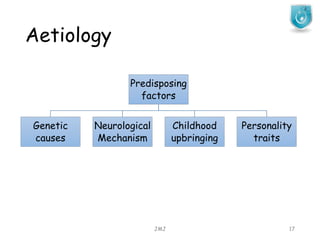
Aetiology
JMJ 17
Predisposing
factors
Genetic
causes
Neurological
Mechanism
Childhood
upbringing
Personality
traits
Prognosis
JMJ 18
• Diagnosis cannot be made until the
symptoms have been present for 6 months
• Worse prognosis
• When symptoms severe
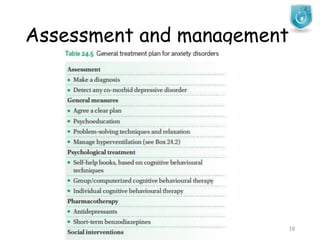
Assessment and management
JMJ 19
Assessment and management
JMJ 20
• Full psychiatric history
• Risk assessment
• Self harm, exploitation, driving, self neglect
• Psychological evaluation
• Physical examnation
Assessment and management
JMJ 21
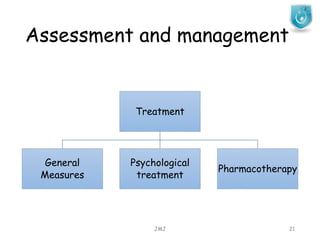
Treatment
General
Measures
Psychological
treatment
Pharmacotherapy
General Measures
JMJ 22
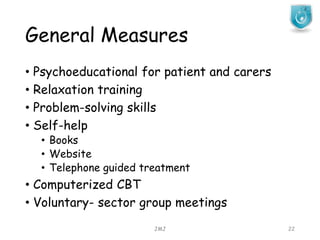
• Psychoeducational for patient and carers
• Relaxation training
• Problem-solving skills
• Self-help
• Books
• Website
• Telephone guided treatment
• Computerized CBT
• Voluntary- sector group meetings
Psychological Treatments
JMJ 23
• Psychoeducational, support and problem
solving
• Self-help books or computer courses
• Refer to Cognitive behaviour therapy
• Weekly sessions of 1 hour to a total of 16-20
hours delivered within 4 months
Pharmacotherapy
JMJ 24
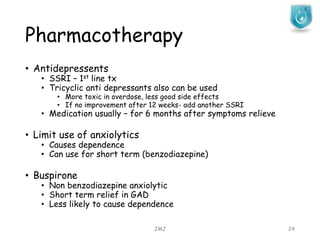
• Antidepressents
• SSRI – 1st line tx
• Tricyclic anti depressants also can be used
• More toxic in overdose, less good side effects
• If no improvement after 12 weeks- add another SSRI
• Medication usually – for 6 months after symptoms relieve
• Limit use of anxiolytics
• Causes dependence
• Can use for short term (benzodiazepine)
• Buspirone
• Non benzodiazepine anxiolytic
• Short term relief in GAD
• Less likely to cause dependence
Phobic Anxiety
Disorder
JMJ 25
Phobic anxiety disorder
JMJ 26
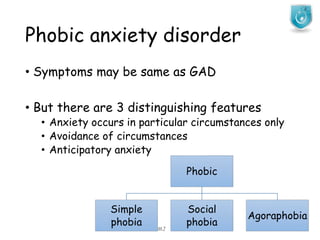
• Symptoms may be same as GAD
• But there are 3 distinguishing features
• Anxiety occurs in particular circumstances only
• Avoidance of circumstances
• Anticipatory anxiety
Phobic
Simple
phobia
Social
phobia
Agoraphobia
Simple phobia
JMJ 27
• Introduction
• Prevalence
• Prognosis
• Treatment
Simple phobia
JMJ 28
• Inappropriately anxious
• in the presence of a particular object or
situation, or
• When anticipating this encounter,
• and has the urge to avoid the object or
situation
• for example,
• a person who fears storms may become extremely
anxious when there are only black clouds, which might
precede a storm
Simple phobia
JMJ 29
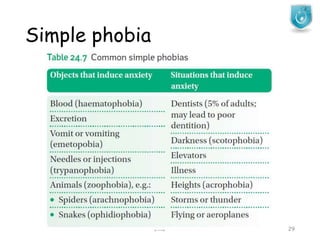
Simple phobia
JMJ 30
• Prevalence
• Common
• Life time prevalence of 12.5%
• Mean age of onset – 7
• Most situational phobias present in early
adulthood
• More frequent in women
Simple phobia
JMJ 31
• Prognosis
• Phobias that begins in childhood
• Continue for many years
• Those starting after a stressful experience in
adult live
• May improve with time
Simple phobia
JMJ 32
• Treatment
• Cognitive behavior therapy
• Tx of choice for simple phobia is graded exposure
therapy
• Medication
• Benzodiazepine short term course
• To the patients who need immediate relief
Social phobia
JMJ 33
• Introduction
• Onset & course
• Prevalence
• DD
• Aetiology
• Prognosis
• Treatment
Social phobia
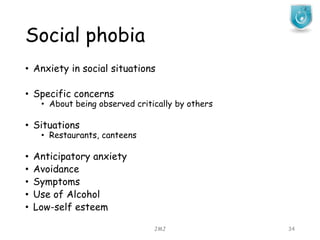
JMJ 34
• Anxiety in social situations
• Specific concerns
• About being observed critically by others
• Situations
• Restaurants, canteens
• Anticipatory anxiety
• Avoidance
• Symptoms
• Use of Alcohol
• Low-self esteem
Social phobia
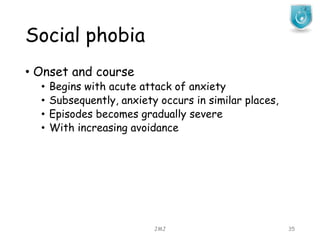
JMJ 35
• Onset and course
• Begins with acute attack of anxiety
• Subsequently, anxiety occurs in similar places,
• Episodes becomes gradually severe
• With increasing avoidance
Social phobia
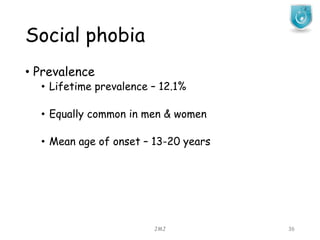
JMJ 36
• Prevalence
• Lifetime prevalence – 12.1%
• Equally common in men & women
• Mean age of onset – 13-20 years
Social phobia - DD
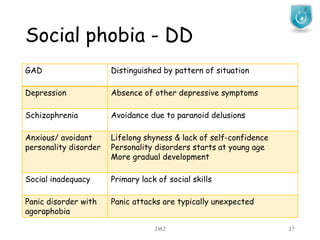
JMJ 37
GAD Distinguished by pattern of situation
Depression Absence of other depressive symptoms
Schizophrenia Avoidance due to paranoid delusions
Anxious/ avoidant
personality disorder
Lifelong shyness & lack of self-confidence
Personality disorders starts at young age
More gradual development
Social inadequacy Primary lack of social skills
Panic disorder with
agoraphobia
Panic attacks are typically unexpected
Social phobia
JMJ 38
• Aetiology
• Starts in late adolescence
• Prognosis
• Most improve by mid-life
Social phobia
JMJ 39
• Treatment
• Antidepressents
• Best – SSRI
• 2nd line – SNRI
• Monoamine oxidase were used fro social anxiety
• While taking drugs patients are advised to practice
exposure to situations
• Anxiolytic medications
• Immediate short term relief
• Risk of dependence
• Beta adrenergic antagonists
• Control tremor and palpitations
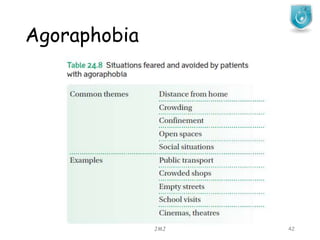
Agoraphobia
JMJ 40
• Introduction
• Clinical features
• Course and outcome
• Prevalence
• DD
• Prognosis
• Treatment
Agoraphobia
JMJ 41
• in which the patient experiences anxiety
• in situations that are unfamiliar,
• From which they cannot escape,
• or in which they perceive they have little
control.
• Leads to avoidance
Agoraphobia
JMJ 42
Agoraphobia
JMJ 43
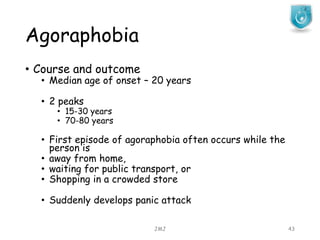
• Course and outcome
• Median age of onset – 20 years
• 2 peaks
• 15-30 years
• 70-80 years
• First episode of agoraphobia often occurs while the
person is
• away from home,
• waiting for public transport, or
• Shopping in a crowded store
• Suddenly develops panic attack
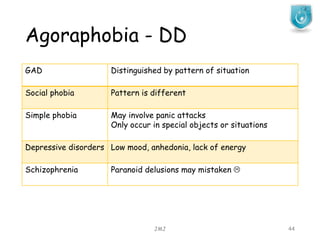
Agoraphobia - DD
JMJ 44
GAD Distinguished by pattern of situation
Social phobia Pattern is different
Simple phobia May involve panic attacks
Only occur in special objects or situations
Depressive disorders Low mood, anhedonia, lack of energy
Schizophrenia Paranoid delusions may mistaken 
Agoraphobia
JMJ 45
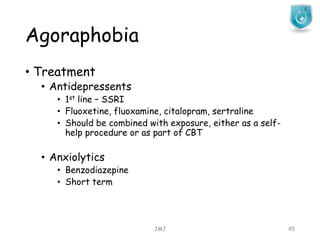
• Treatment
• Antidepressents
• 1st line – SSRI
• Fluoxetine, fluoxamine, citalopram, sertraline
• Should be combined with exposure, either as a self-
help procedure or as part of CBT
• Anxiolytics
• Benzodiazepine
• Short term
Panic Disorder
JMJ 46
Panic Disorder
Panic attack
• Intense fear
• Characterized by cluster of
typical symptoms
Panic diorder
• Recurrent panic attacks
• Not associate with
• Substance abuse
• Medical conditions
• Another psychiatric
disorders
JMJ 47
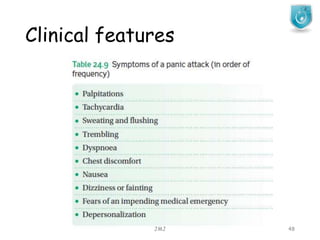
Clinical features
JMJ 48
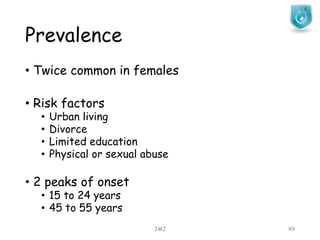
Prevalence
JMJ 49
• Twice common in females
• Risk factors
• Urban living
• Divorce
• Limited education
• Physical or sexual abuse
• 2 peaks of onset
• 15 to 24 years
• 45 to 55 years
DD
JMJ 50
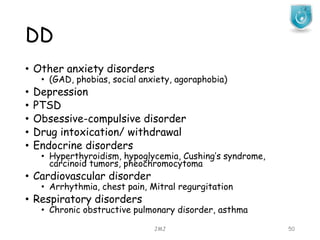
• Other anxiety disorders
• (GAD, phobias, social anxiety, agoraphobia)
• Depression
• PTSD
• Obsessive-compulsive disorder
• Drug intoxication/ withdrawal
• Endocrine disorders
• Hyperthyroidism, hypoglycemia, Cushing’s syndrome,
carcinoid tumors, pheochromocytoma
• Cardiovascular disorder
• Arrhythmia, chest pain, Mitral regurgitation
• Respiratory disorders
• Chronic obstructive pulmonary disorder, asthma
Aetiology
JMJ 51
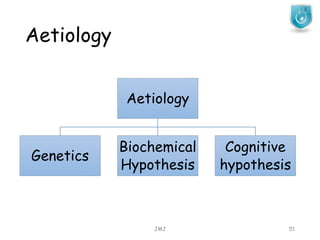
Aetiology
Genetics
Biochemical
Hypothesis
Cognitive
hypothesis
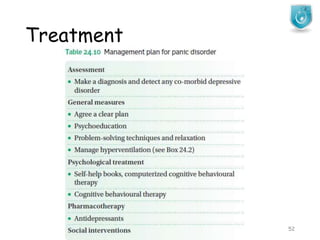
Treatment
JMJ 52
Thank You!!
JMJ 53

Anxiety disorders-

  • 1.
  • 2.
    What is normalanxiety? • respond to threatening situation • Defense or escape (‘fight or flight) • Increased • Heartrate • Blood pressure • Respiration • Muscle tension • Sympathetic nervous system activation • Tremor • Sweating • Polyuria • Diarrhea • Beneficial response JMJ 2
  • 3.
    What is abnormalanxiety? • Respond similar to normal anxiety, • But out of proportion to the treat, • And/or is more prolonged JMJ 3
  • 4.
  • 5.
  • 6.
    Anxiety disorders JMJ 6 •Prevalence • 1 year prevalence – 14%
  • 7.
  • 8.
    Generalized anxiety disorder JMJ8 • Introduction • Clinical features • Appearance • Prevalence • Co-morbidities • Differential diagnosis • Aetiology • Prognosis • Assessment and management
  • 9.
    Generalized anxiety disorder JMJ9 • Characterized by • Excessive, uncontrolled, irrational worry • About everyday things • They can be over concerned with • Normal issue of health, money, work & relationships • Is symptoms have been present for a shorter time, • May be stress or adjustment disorder
  • 10.
    Generalized anxiety disorder JMJ10 • Clinical features • Complain of anxiety • Appearance • Looks concerned about something • Restless, sweaty and shaky • Tearfulness – may suggest depression Symptoms Psychological Physical
  • 11.
    Psychological Symptoms JMJ 11 •Fearful anticipation • Irritability • Sensitivity to noise • Restlessness • Poor concentration • Depression • Obsessions • Depersonalization
  • 12.
    Psychological Symptoms JMJ 12 GI •Epigastric discomfort • Excessive wind(due to air swallowing) • Frequent or loose motions RESPIRATORY • Constriction in the chest • Difficulty inhaling • Over breathing CARDIOVASCULAR • Palpitation • Discomfort in chest • Awareness of missed beats GENITOURINARY • Frequent or urgent micturition • Failure of erection • Menstrual discomfort • Amenorrhoea CNS • Tremor, pricking sensation • Tinnitus • Dizzziness • B/L headache • Aching muscles SLEEP DISTURBANCE • Insomnia • Night terrors
  • 13.
    Sleep JMJ 13 • Characteristicway • Lies awake worrying • They wake intermittently • Often report unpleasant dreams • Occasionally night terrors • Early waking with an inability to go back to sleep again is much less common among patients with a generalized anxiety diosrders
  • 14.
  • 15.
    Prevalence JMJ 15 • 4-5% •2:1 – women:men • Common in • Caucasians • Lower socio-economic group • Age at onset – 21 years • Peak at – 40 to 59 years
  • 16.
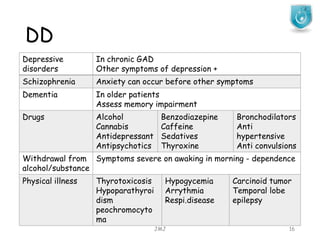
    DD JMJ 16 Depressive disorders In chronicGAD Other symptoms of depression + Schizophrenia Anxiety can occur before other symptoms Dementia In older patients Assess memory impairment Drugs Alcohol Cannabis Antidepressant Antipsychotics Benzodiazepine Caffeine Sedatives Thyroxine Bronchodilators Anti hypertensive Anti convulsions Withdrawal from alcohol/substance Symptoms severe on awaking in morning - dependence Physical illness Thyrotoxicosis Hypoparathyroi dism peochromocyto ma Hypogycemia Arrythmia Respi.disease Carcinoid tumor Temporal lobe epilepsy
  • 17.
  • 18.
    Prognosis JMJ 18 • Diagnosiscannot be made until the symptoms have been present for 6 months • Worse prognosis • When symptoms severe
  • 19.
  • 20.
    Assessment and management JMJ20 • Full psychiatric history • Risk assessment • Self harm, exploitation, driving, self neglect • Psychological evaluation • Physical examnation
  • 21.
    Assessment and management JMJ21 Treatment General Measures Psychological treatment Pharmacotherapy
  • 22.
    General Measures JMJ 22 •Psychoeducational for patient and carers • Relaxation training • Problem-solving skills • Self-help • Books • Website • Telephone guided treatment • Computerized CBT • Voluntary- sector group meetings
  • 23.
    Psychological Treatments JMJ 23 •Psychoeducational, support and problem solving • Self-help books or computer courses • Refer to Cognitive behaviour therapy • Weekly sessions of 1 hour to a total of 16-20 hours delivered within 4 months
  • 24.
    Pharmacotherapy JMJ 24 • Antidepressents •SSRI – 1st line tx • Tricyclic anti depressants also can be used • More toxic in overdose, less good side effects • If no improvement after 12 weeks- add another SSRI • Medication usually – for 6 months after symptoms relieve • Limit use of anxiolytics • Causes dependence • Can use for short term (benzodiazepine) • Buspirone • Non benzodiazepine anxiolytic • Short term relief in GAD • Less likely to cause dependence
  • 25.
  • 26.
    Phobic anxiety disorder JMJ26 • Symptoms may be same as GAD • But there are 3 distinguishing features • Anxiety occurs in particular circumstances only • Avoidance of circumstances • Anticipatory anxiety Phobic Simple phobia Social phobia Agoraphobia
  • 27.
    Simple phobia JMJ 27 •Introduction • Prevalence • Prognosis • Treatment
  • 28.
    Simple phobia JMJ 28 •Inappropriately anxious • in the presence of a particular object or situation, or • When anticipating this encounter, • and has the urge to avoid the object or situation • for example, • a person who fears storms may become extremely anxious when there are only black clouds, which might precede a storm
  • 29.
  • 30.
    Simple phobia JMJ 30 •Prevalence • Common • Life time prevalence of 12.5% • Mean age of onset – 7 • Most situational phobias present in early adulthood • More frequent in women
  • 31.
    Simple phobia JMJ 31 •Prognosis • Phobias that begins in childhood • Continue for many years • Those starting after a stressful experience in adult live • May improve with time
  • 32.
    Simple phobia JMJ 32 •Treatment • Cognitive behavior therapy • Tx of choice for simple phobia is graded exposure therapy • Medication • Benzodiazepine short term course • To the patients who need immediate relief
  • 33.
    Social phobia JMJ 33 •Introduction • Onset & course • Prevalence • DD • Aetiology • Prognosis • Treatment
  • 34.
    Social phobia JMJ 34 •Anxiety in social situations • Specific concerns • About being observed critically by others • Situations • Restaurants, canteens • Anticipatory anxiety • Avoidance • Symptoms • Use of Alcohol • Low-self esteem
  • 35.
    Social phobia JMJ 35 •Onset and course • Begins with acute attack of anxiety • Subsequently, anxiety occurs in similar places, • Episodes becomes gradually severe • With increasing avoidance
  • 36.
    Social phobia JMJ 36 •Prevalence • Lifetime prevalence – 12.1% • Equally common in men & women • Mean age of onset – 13-20 years
  • 37.
    Social phobia -DD JMJ 37 GAD Distinguished by pattern of situation Depression Absence of other depressive symptoms Schizophrenia Avoidance due to paranoid delusions Anxious/ avoidant personality disorder Lifelong shyness & lack of self-confidence Personality disorders starts at young age More gradual development Social inadequacy Primary lack of social skills Panic disorder with agoraphobia Panic attacks are typically unexpected
  • 38.
    Social phobia JMJ 38 •Aetiology • Starts in late adolescence • Prognosis • Most improve by mid-life
  • 39.
    Social phobia JMJ 39 •Treatment • Antidepressents • Best – SSRI • 2nd line – SNRI • Monoamine oxidase were used fro social anxiety • While taking drugs patients are advised to practice exposure to situations • Anxiolytic medications • Immediate short term relief • Risk of dependence • Beta adrenergic antagonists • Control tremor and palpitations
  • 40.
    Agoraphobia JMJ 40 • Introduction •Clinical features • Course and outcome • Prevalence • DD • Prognosis • Treatment
  • 41.
    Agoraphobia JMJ 41 • inwhich the patient experiences anxiety • in situations that are unfamiliar, • From which they cannot escape, • or in which they perceive they have little control. • Leads to avoidance
  • 42.
  • 43.
    Agoraphobia JMJ 43 • Courseand outcome • Median age of onset – 20 years • 2 peaks • 15-30 years • 70-80 years • First episode of agoraphobia often occurs while the person is • away from home, • waiting for public transport, or • Shopping in a crowded store • Suddenly develops panic attack
  • 44.
    Agoraphobia - DD JMJ44 GAD Distinguished by pattern of situation Social phobia Pattern is different Simple phobia May involve panic attacks Only occur in special objects or situations Depressive disorders Low mood, anhedonia, lack of energy Schizophrenia Paranoid delusions may mistaken 
  • 45.
    Agoraphobia JMJ 45 • Treatment •Antidepressents • 1st line – SSRI • Fluoxetine, fluoxamine, citalopram, sertraline • Should be combined with exposure, either as a self- help procedure or as part of CBT • Anxiolytics • Benzodiazepine • Short term
  • 46.
  • 47.
    Panic Disorder Panic attack •Intense fear • Characterized by cluster of typical symptoms Panic diorder • Recurrent panic attacks • Not associate with • Substance abuse • Medical conditions • Another psychiatric disorders JMJ 47
  • 48.
  • 49.
    Prevalence JMJ 49 • Twicecommon in females • Risk factors • Urban living • Divorce • Limited education • Physical or sexual abuse • 2 peaks of onset • 15 to 24 years • 45 to 55 years
  • 50.
    DD JMJ 50 • Otheranxiety disorders • (GAD, phobias, social anxiety, agoraphobia) • Depression • PTSD • Obsessive-compulsive disorder • Drug intoxication/ withdrawal • Endocrine disorders • Hyperthyroidism, hypoglycemia, Cushing’s syndrome, carcinoid tumors, pheochromocytoma • Cardiovascular disorder • Arrhythmia, chest pain, Mitral regurgitation • Respiratory disorders • Chronic obstructive pulmonary disorder, asthma
  • 51.
  • 52.
  • 53.