We are celebrating World Mental health day
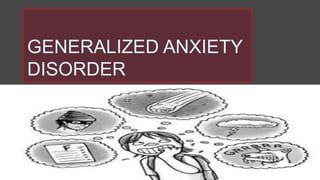
GENERALIZED ANXIETY
DISORDER


     ****************************************
Let’s find first What is Anxiety
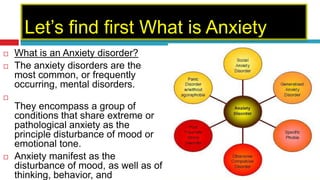
   What is an Anxiety disorder?
   The anxiety disorders are the
    most common, or frequently
    occurring, mental disorders.

    They encompass a group of
    conditions that share extreme or
    pathological anxiety as the
    principle disturbance of mood or
    emotional tone.
   Anxiety manifest as the
    disturbance of mood, as well as of
    thinking, behavior, and
Generalized Anxiety Disorder
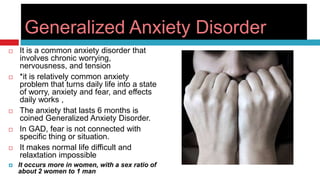
   It is a common anxiety disorder that
    involves chronic worrying,
    nervousness, and tension
   *it is relatively common anxiety
    problem that turns daily life into a state
    of worry, anxiety and fear, and effects
    daily works ,
   The anxiety that lasts 6 months is
    coined Generalized Anxiety Disorder.
   In GAD, fear is not connected with
    specific thing or situation.
   It makes normal life difficult and
    relaxtation impossible
   It occurs more in women, with a sex ratio of
    about 2 women to 1 man
People with GAD may

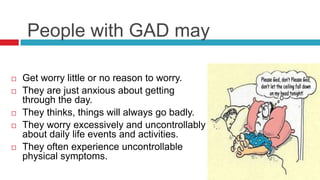
   Get worry little or no reason to worry.
   They are just anxious about getting
    through the day.
   They thinks, things will always go badly.
   They worry excessively and uncontrollably
    about daily life events and activities.
   They often experience uncontrollable
    physical symptoms.
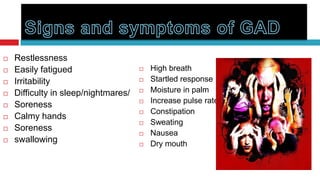
   Restlessness
   Easily fatigued                      High breath
   Irritability                         Startled response
   Difficulty in sleep/nightmares/      Moisture in palm
                                         Increase pulse rate
   Soreness
                                         Constipation
   Calmy hands
                                         Sweating
   Soreness
                                         Nausea
   swallowing                           Dry mouth
Different Explnataions by
1)Psychodynamic perspective
2) Humanistic perspective
3) Cognitive perspective
4) Biological perspective
Let’s see what these perspective say about how
  GAD occur and what are their therapies?
Acc: to Sigmund freud
Early developmental experience of person may produce an
   unusually high level of anxiety when they showing their id
   impulse and punished,child then believes that his id
   impulses are very dangerous, and he may then experience
   over whelming anxiety whenever he has such
   impluses,Alternately child’s ego defense mechanism may
   become too weak to cope with even normal anxiety levels.
   They become over protected by parents from all
   frustrations and threats, have little opportunity to develop
   effective defense mechanism. This child when face the
   pressures of adult life, his defense mechanism may be too
   weak to cope the resulting anxiety and then this anxiety
   develops into GAD.
Psychodynamic therapy
•   Free association
•   Therapist’s interpretations of
    transference, resistance, and dreams.
•   Object relation therapists( to help
    anxious patients identify and settle the
    childhood relationship problems)
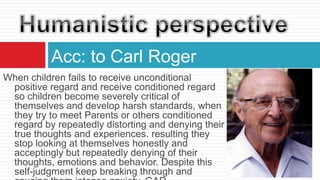
Acc: to Carl Roger
When children fails to receive unconditional
 positive regard and receive conditioned regard
 so children become severely critical of
 themselves and develop harsh standards, when
 they try to meet Parents or others conditioned
 regard by repeatedly distorting and denying their
 true thoughts and experiences. resulting they
 stop looking at themselves honestly and
 acceptingly but repeatedly denying of their
 thoughts, emotions and behavior. Despite this
 self-judgment keep breaking through and
Humanistic therapy
Client-centered therapy:-
Try to show unconditional positive
  regard for GAD person and to
  emphasize them.
To this therapy GAD person identify
  their true needs, thoughts and
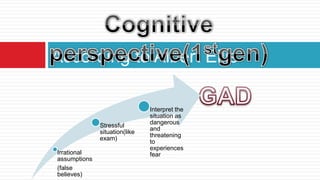
According to Albert Ellis

                               Interpret the
                               situation as
              Stressful        dangerous
                               and
              situation(like
                               threatening
              exam)
                               to
                               experiences
Irrational                     fear
assumptions
(false
believes)
Meta cognitive theory
Acc: to Adrian Wells, the most problematic
  assumptions at work in GAD are the
  individual’s beliefs about worrying itself.
  Worries further categorized as positive and
  negative beliefs
Positive Beliefs:- people believe that
  worrying is a useful way of appraising and
  coping with threats in life and they at this
Negative beliefs:-

Society teaches them that worry
is bad, then individual come to
believe that their repeated
worrying is harmful.
Avoidance theory
Acc: to Thomas Borkovec, worry serves
 positive function for individual.GAD
 people have great bodily arousal
 Borveck found that GAD people worry
 repeatedly to reduce or avoid somatic
 arousal
Cognitive therapy
1)   Therapists help GAD person to change the
     maladaptive assumptions and related
     dysfunctional thinking
2)   In other, therapists help GAD person to
     understand that worrying may play in the disorder
     and to change their views about and reactions to
     worrying.
3)   Rational-emotive therapy( more appropriate
     assumptions and assigns homework to the GAD
     person, that gives the individual practice at
Biological perspective
Inherited disorder also cause GAD,
Deprivation of neurotransmitter like GABA,
  which stops neuron to stop firing, may
  cause GAD, because continuously firing
  of neurons produce anxiety which then
  leads to great anxiety
Biological Therapy
Drugs like Benzodiazepine and
  antidepressant drugs can relief GAD
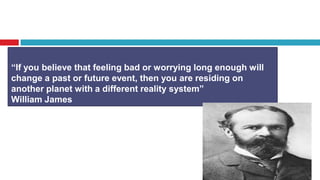
“If you believe that feeling bad or worrying long enough will
change a past or future event, then you are residing on
another planet with a different reality system”
William James
Generalized anxiety disorder

Generalized anxiety disorder

  • 2.
    We are celebratingWorld Mental health day
  • 3.
    GENERALIZED ANXIETY DISORDER ****************************************
  • 4.
    Let’s find firstWhat is Anxiety  What is an Anxiety disorder?  The anxiety disorders are the most common, or frequently occurring, mental disorders.  They encompass a group of conditions that share extreme or pathological anxiety as the principle disturbance of mood or emotional tone.  Anxiety manifest as the disturbance of mood, as well as of thinking, behavior, and
  • 5.
    Generalized Anxiety Disorder  It is a common anxiety disorder that involves chronic worrying, nervousness, and tension  *it is relatively common anxiety problem that turns daily life into a state of worry, anxiety and fear, and effects daily works ,  The anxiety that lasts 6 months is coined Generalized Anxiety Disorder.  In GAD, fear is not connected with specific thing or situation.  It makes normal life difficult and relaxtation impossible  It occurs more in women, with a sex ratio of about 2 women to 1 man
  • 6.
    People with GADmay  Get worry little or no reason to worry.  They are just anxious about getting through the day.  They thinks, things will always go badly.  They worry excessively and uncontrollably about daily life events and activities.  They often experience uncontrollable physical symptoms.
  • 7.
    Restlessness  Easily fatigued  High breath  Irritability  Startled response  Difficulty in sleep/nightmares/  Moisture in palm  Increase pulse rate  Soreness  Constipation  Calmy hands  Sweating  Soreness  Nausea  swallowing  Dry mouth
  • 8.
    Different Explnataions by 1)Psychodynamicperspective 2) Humanistic perspective 3) Cognitive perspective 4) Biological perspective Let’s see what these perspective say about how GAD occur and what are their therapies?
  • 9.
    Acc: to Sigmundfreud Early developmental experience of person may produce an unusually high level of anxiety when they showing their id impulse and punished,child then believes that his id impulses are very dangerous, and he may then experience over whelming anxiety whenever he has such impluses,Alternately child’s ego defense mechanism may become too weak to cope with even normal anxiety levels. They become over protected by parents from all frustrations and threats, have little opportunity to develop effective defense mechanism. This child when face the pressures of adult life, his defense mechanism may be too weak to cope the resulting anxiety and then this anxiety develops into GAD.
  • 10.
    Psychodynamic therapy • Free association • Therapist’s interpretations of transference, resistance, and dreams. • Object relation therapists( to help anxious patients identify and settle the childhood relationship problems)
  • 11.
    Acc: to CarlRoger When children fails to receive unconditional positive regard and receive conditioned regard so children become severely critical of themselves and develop harsh standards, when they try to meet Parents or others conditioned regard by repeatedly distorting and denying their true thoughts and experiences. resulting they stop looking at themselves honestly and acceptingly but repeatedly denying of their thoughts, emotions and behavior. Despite this self-judgment keep breaking through and
  • 12.
    Humanistic therapy Client-centered therapy:- Tryto show unconditional positive regard for GAD person and to emphasize them. To this therapy GAD person identify their true needs, thoughts and
  • 13.
    According to AlbertEllis Interpret the situation as Stressful dangerous and situation(like threatening exam) to experiences Irrational fear assumptions (false believes)
  • 14.
    Meta cognitive theory Acc:to Adrian Wells, the most problematic assumptions at work in GAD are the individual’s beliefs about worrying itself. Worries further categorized as positive and negative beliefs Positive Beliefs:- people believe that worrying is a useful way of appraising and coping with threats in life and they at this
  • 15.
    Negative beliefs:- Society teachesthem that worry is bad, then individual come to believe that their repeated worrying is harmful.
  • 16.
    Avoidance theory Acc: toThomas Borkovec, worry serves positive function for individual.GAD people have great bodily arousal Borveck found that GAD people worry repeatedly to reduce or avoid somatic arousal
  • 17.
    Cognitive therapy 1) Therapists help GAD person to change the maladaptive assumptions and related dysfunctional thinking 2) In other, therapists help GAD person to understand that worrying may play in the disorder and to change their views about and reactions to worrying. 3) Rational-emotive therapy( more appropriate assumptions and assigns homework to the GAD person, that gives the individual practice at
  • 18.
    Biological perspective Inherited disorderalso cause GAD, Deprivation of neurotransmitter like GABA, which stops neuron to stop firing, may cause GAD, because continuously firing of neurons produce anxiety which then leads to great anxiety
  • 19.
    Biological Therapy Drugs likeBenzodiazepine and antidepressant drugs can relief GAD
  • 20.
    “If you believethat feeling bad or worrying long enough will change a past or future event, then you are residing on another planet with a different reality system” William James