



ANXIETY
DISORDERS
ARWA M. AMIN MOSTAFA
Phd, M.Pharm. Clinical Pharmacy, Dip. Managment., BSc. Pharmacy
ARWA M. AMIN
WHAT WE ARE GOING TO DISCUSS TODAY?
• What is Anxiety? What is Anxiety Disorders?
• What is the Etiology of Anxiety Disorders?
• What are the Risk Factors of developing Anxiety?
• What are the Different Types of Anxiety Disorders?
• What is the Pathophysiology of Anxiety Disorders?
• How to Diagnose GAD & SAD types of Anxiety Disorders?
• What are the Goals of Anxiety Disorders Therapy?
• What are the Non-Pharmacological Treatment of Anxiety Disorders?
• What are the Pharmacological Treatment of Anxiety Disorders?
• How to evaluate Anxiety Disorders Therapy?
ARWA M. AMIN
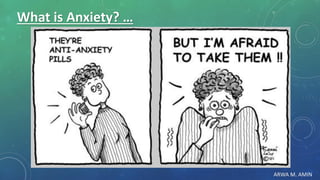
What is Anxiety? …
ARWA M. AMIN
ANXIETY
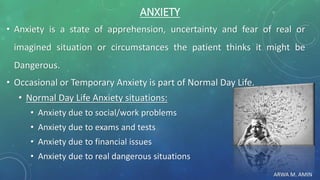
• Anxiety is a state of apprehension, uncertainty and fear of real or
imagined situation or circumstances the patient thinks it might be
Dangerous.
• Occasional or Temporary Anxiety is part of Normal Day Life.
• Normal Day Life Anxiety situations:
• Anxiety due to social/work problems
• Anxiety due to exams and tests
• Anxiety due to financial issues
• Anxiety due to real dangerous situations
ARWA M. AMIN
ANXIETY DISORDERS
• Anxiety Disorders (ADs) are mental
disorder of anxiety, Fear, Worry, dread,
apprehension or uncertainty which is
strong to interfere with daily life.
• Anxiety Disorders are the most common
Mental Illness.
ARWA M. AMIN
ETIOLOGY OF ANXIETY DISORDERS
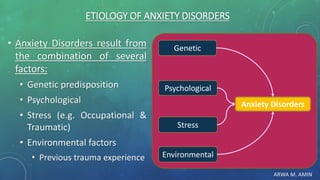
• Anxiety Disorders result from
the combination of several
factors:
• Genetic predisposition
• Psychological
• Stress (e.g. Occupational &
Traumatic)
• Environmental factors
• Previous trauma experience Environmental
Anxiety Disorders
Genetic
Psychological
Stress
ARWA M. AMIN
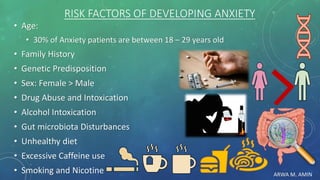
RISK FACTORS OF DEVELOPING ANXIETY
• Age:
• 30% of Anxiety patients are between 18 – 29 years old
• Family History
• Genetic Predisposition
• Sex: Female > Male
• Drug Abuse and Intoxication
• Alcohol Intoxication
• Gut microbiota Disturbances
• Unhealthy diet
• Excessive Caffeine use
• Smoking and Nicotine
ARWA M. AMIN
RISK FACTORS OF DEVELOPING ANXIETY
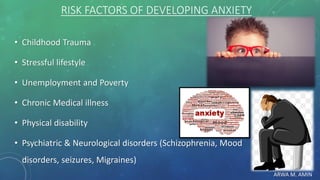
• Childhood Trauma
• Stressful lifestyle
• Unemployment and Poverty
• Chronic Medical illness
• Physical disability
• Psychiatric & Neurological disorders (Schizophrenia, Mood
disorders, seizures, Migraines)
ARWA M. AMIN
RISK FACTORS OF DEVELOPING ANXIETY
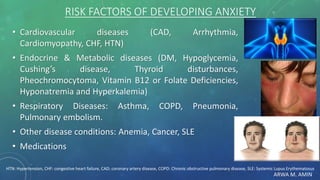
• Cardiovascular diseases (CAD, Arrhythmia,
Cardiomyopathy, CHF, HTN)
• Endocrine & Metabolic diseases (DM, Hypoglycemia,
Cushing’s disease, Thyroid disturbances,
Pheochromocytoma, Vitamin B12 or Folate Deficiencies,
Hyponatremia and Hyperkalemia)
• Respiratory Diseases: Asthma, COPD, Pneumonia,
Pulmonary embolism.
• Other disease conditions: Anemia, Cancer, SLE
• Medications
HTN: Hypertension, CHF: congestive heart failure, CAD: coronary artery disease, COPD: Chronic obstructive pulmonary disease, SLE: Systemic Lupus Erythematosus
ARWA M. AMIN
RISK FACTORS OF ANXIETY: DRUGS ASSOCIATED WITH ANXIETY
• Anticonvulsants:
• Carbamazepine, Phenytoin
• Antidepressants:
• SSRIs, bupropion, SNERIs
• Anti-hypertensives:
• Clonidine, Felodipine
• Antibiotics:
• Quinolones, Isoniazid
• NSAIDs:
• Ibuprofen, Indomethacin
• Stimulants:
• Amphetamines,
Methylphenidate, Nicotine,
Caffeine, Cocaine
• Corticosteroids:
• Prednisone
• Thyroid hormones:
• levothyroxine
• Bronchodilators:
• Albuterol, Theophylline
• Dopamine agonists:
• Amantadine,
Levodopa
• Sympathomimetics:
• Pseudoephedrine,
Phenylephrine
• Illicit substances:
• Marijuana, Ecstasy
• Toxicity:
• Anticholinergics,
antihistamines,
digoxin
SSRIs: Serotonin Reuptake Inhibitors, SNERIs: Serotonin Norepinephrine reuptake inhibitors,. **Aminoketone: Bupropion.
ARWA M. AMIN
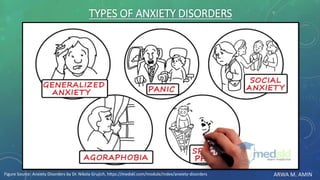
TYPES OF ANXIETY DISORDERS
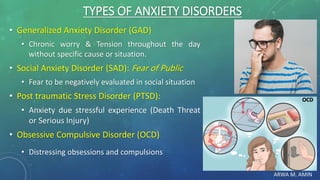
• Generalized Anxiety Disorder (GAD)
• Chronic worry & Tension throughout the day
without specific cause or situation.
• Social Anxiety Disorder (SAD): Fear of Public
• Fear to be negatively evaluated in social situation
• Post traumatic Stress Disorder (PTSD):
• Anxiety due stressful experience (Death Threat
or Serious Injury)
• Obsessive Compulsive Disorder (OCD)
• Distressing obsessions and compulsions
OCD
ARWA M. AMIN
TYPES OF ANXIETY DISORDERS
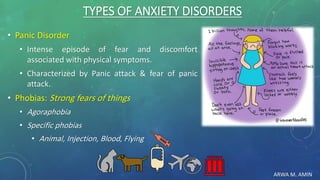
• Panic Disorder
• Intense episode of fear and discomfort
associated with physical symptoms.
• Characterized by Panic attack & fear of panic
attack.
• Phobias: Strong fears of things
• Agoraphobia
• Specific phobias
• Animal, Injection, Blood, Flying
ARWA M. AMIN
TYPES OF ANXIETY DISORDERS
Figure Source: Anxiety Disorders by Dr. Nikola Grujich, https://medskl.com/module/index/anxiety-disorders
ARWA M. AMIN
Pathophysiology of Anxiety Disorders
• Noradrenergic Model
• δ-Aminobutyric acid (GABA) receptor Model
• 5-HT Model
ARWA M. AMIN
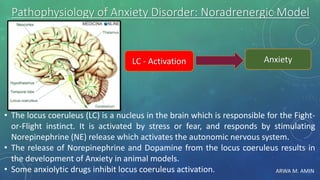
Pathophysiology of Anxiety Disorder: Noradrenergic Model
• The locus coeruleus (LC) is a nucleus in the brain which is responsible for the Fight-
or-Flight instinct. It is activated by stress or fear, and responds by stimulating
Norepinephrine (NE) release which activates the autonomic nervous system.
• The release of Norepinephrine and Dopamine from the locus coeruleus results in
the development of Anxiety in animal models.
• Some anxiolytic drugs inhibit locus coeruleus activation.
AnxietyLC - Activation
ARWA M. AMIN
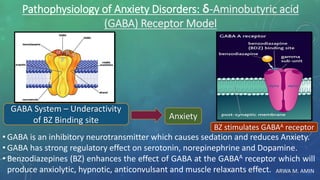
Pathophysiology of Anxiety Disorders: δ-Aminobutyric acid
(GABA) Receptor Model
• GABA is an inhibitory neurotransmitter which causes sedation and reduces Anxiety.
• GABA has strong regulatory effect on serotonin, norepinephrine and Dopamine.
• Benzodiazepines (BZ) enhances the effect of GABA at the GABAA receptor which will
produce anxiolytic, hypnotic, anticonvulsant and muscle relaxants effect.
Anxiety
GABA System – Underactivity
of BZ Binding site
BZ stimulates GABAA receptor
ARWA M. AMIN
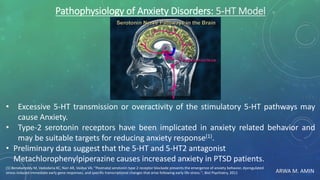
Pathophysiology of Anxiety Disorders: 5-HT Model
• Excessive 5-HT transmission or overactivity of the stimulatory 5-HT pathways may
cause Anxiety.
• Type-2 serotonin receptors have been implicated in anxiety related behavior and
may be suitable targets for reducing anxiety response(1).
• Preliminary data suggest that the 5-HT and 5-HT2 antagonist
Metachlorophenylpiperazine causes increased anxiety in PTSD patients.
(1) Benekareddy M, Vadodaria KC, Nair AR, Vaidya VA; ''Postnatal serotonin type 2 receptor blockade prevents the emergence of anxiety behavior, dysregulated
stress-induced immediate early gene responses, and specific transcriptional changes that arise following early life stress.''; Biol Psychiatry, 2011
ARWA M. AMIN
Could You Actually Have An Anxiety Disorder?
https://www.youtube.com/watch?v=6wHVgiM0R54
Pathophysiology of Anxiety Disorders
ARWA M. AMIN
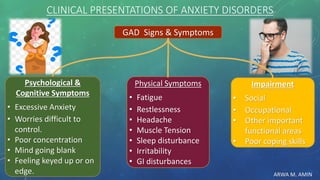
CLINICAL PRESENTATIONS OF ANXIETY DISORDERS
GAD Signs & Symptoms
Impairment
• Social
• Occupational
• Other important
functional areas
• Poor coping skills
Physical Symptoms
• Fatigue
• Restlessness
• Headache
• Muscle Tension
• Sleep disturbance
• Irritability
• GI disturbances
Psychological &
Cognitive Symptoms
• Excessive Anxiety
• Worries difficult to
control.
• Poor concentration
• Mind going blank
• Feeling keyed up or on
edge.
ARWA M. AMIN
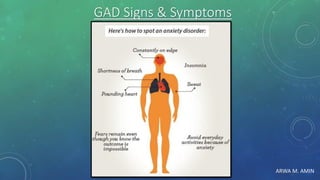
GAD Signs & Symptoms
ARWA M. AMIN
CLINICAL PRESENTATIONS OF ANXIETY DISORDERS
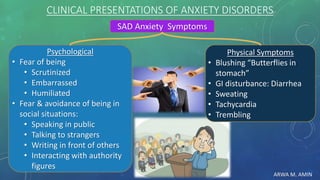
SAD Anxiety Symptoms
Psychological
• Fear of being
• Scrutinized
• Embarrassed
• Humiliated
• Fear & avoidance of being in
social situations:
• Speaking in public
• Talking to strangers
• Writing in front of others
• Interacting with authority
figures
Physical Symptoms
• Blushing “Butterflies in
stomach”
• GI disturbance: Diarrhea
• Sweating
• Tachycardia
• Trembling
ARWA M. AMIN
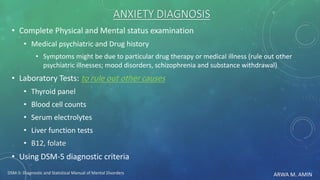
ANXIETY DIAGNOSIS
• Complete Physical and Mental status examination
• Medical psychiatric and Drug history
• Symptoms might be due to particular drug therapy or medical illness (rule out other
psychiatric illnesses; mood disorders, schizophrenia and substance withdrawal)
• Laboratory Tests: to rule out other causes
• Thyroid panel
• Blood cell counts
• Serum electrolytes
• Liver function tests
• B12, folate
• Using DSM-5 diagnostic criteria
DSM-5: Diagnostic and Statistical Manual of Mental Disorders
ARWA M. AMIN
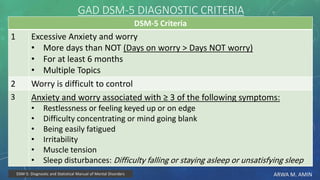
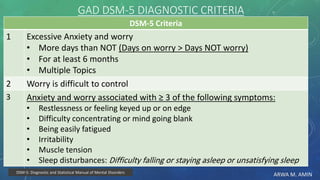
GAD DSM-5 DIAGNOSTIC CRITERIA
DSM-5 Criteria
Excessive Anxiety and worry
• More days than NOT (Days on worry > Days NOT worry)
• For at least 6 months
• Multiple Topics
1
Worry is difficult to control2
Anxiety and worry associated with ≥ 3 of the following symptoms:
• Restlessness or feeling keyed up or on edge
• Difficulty concentrating or mind going blank
• Being easily fatigued
• Irritability
• Muscle tension
• Sleep disturbances: Difficulty falling or staying asleep or unsatisfying sleep
3
DSM-5: Diagnostic and Statistical Manual of Mental Disorders
ARWA M. AMIN
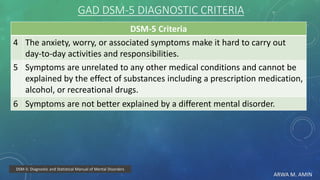
GAD DSM-5 DIAGNOSTIC CRITERIA
DSM-5 Criteria
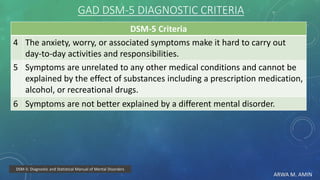
The anxiety, worry, or associated symptoms make it hard to carry out
day-to-day activities and responsibilities.
4
Symptoms are unrelated to any other medical conditions and cannot be
explained by the effect of substances including a prescription medication,
alcohol, or recreational drugs.
5
Symptoms are not better explained by a different mental disorder.6
DSM-5: Diagnostic and Statistical Manual of Mental Disorders
ARWA M. AMIN
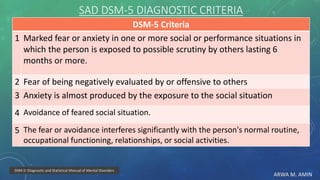
SAD DSM-5 DIAGNOSTIC CRITERIA
DSM-5 Criteria
Marked fear or anxiety in one or more social or performance situations in
which the person is exposed to possible scrutiny by others lasting 6
months or more.
1
Fear of being negatively evaluated by or offensive to others2
Anxiety is almost produced by the exposure to the social situation3
Avoidance of feared social situation.4
The fear or avoidance interferes significantly with the person's normal routine,
occupational functioning, relationships, or social activities.
5
DSM-5: Diagnostic and Statistical Manual of Mental Disorders
ARWA M. AMIN
SAD DSM-5 DIAGNOSTIC CRITERIA
DSM-5 Criteria
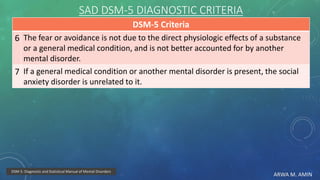
The fear or avoidance is not due to the direct physiologic effects of a substance
or a general medical condition, and is not better accounted for by another
mental disorder.
6
If a general medical condition or another mental disorder is present, the social
anxiety disorder is unrelated to it.
7
DSM-5: Diagnostic and Statistical Manual of Mental Disorders
ARWA M. AMIN
CASE DISCUSSION
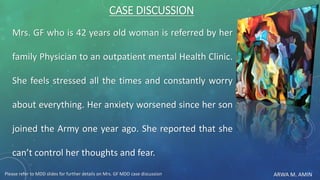
Mrs. GF who is 42 years old woman is referred by her
family Physician to an outpatient mental Health Clinic.
She feels stressed all the times and constantly worry
about everything. Her anxiety worsened since her son
joined the Army one year ago. She reported that she
can’t control her thoughts and fear.
Please refer to MDD slides for further details on Mrs. GF MDD case discussion
ARWA M. AMIN
CASE DISCUSSION
When she feels worry, Mrs. GF feels shoulders’ &
legs’ tension, raised heart beats and sometimes
breathing difficulty. She also gets tensions in her
stomach. She has sleep disturbances with
difficulty getting off to sleep due to worrying and
frequent wakening. She feels tired and irritable.
She does not drink any alcohol since 3 years ago.
Please refer to MDD slides for further details on Mrs. GF MDD case discussion
ARWA M. AMIN
CASE DISCUSSION
PMH
Mrs. GF was previously diagnosed with MDD (4 years ago)
which happened consequent to financial, family and
social problems*. She was treated by ten sessions of
Psychotherapy and Antidepressant Drugs. She responded
well to the treatment and after one year of starting her
antidepressant treatment, she stopped her medication
because she felt that they are no longer needed.
*Please refer to MDD slides for further details on Mrs. GF MDD case discussion
PMH: Past medical History, MDD: Major Depressive Disorder
ARWA M. AMIN
CASE DISCUSSION
Family History
• A sister has Depression and Anxiety and she takes
antidepressant medication; G.F. doesn’t know the
medication’s name.
• A second sister committed suicide.
VS
• BP 135/85, P 90, RR 25, T 37.2°C; Wt 180 lbs, Ht 5'8''
ARWA M. AMIN
CASE DISCUSSION
What are Anxiety signs and symptoms that Mrs. GF suffer from? What type of
Anxiety Disorder she suffers from? Explain Why?
• She can’t control her thoughts and fear.
• She feels worry all the time about everything.
• She feels tired and irritable.
• She has sleep disturbances with difficulty getting off to sleep due to worrying and
frequent wakening.
• When she feels worry, She feels:
• Shoulders’ & legs’ tension.
• Raised heart beats.
• Sometimes breathing difficulty.
• She gets stomach tensions.
ARWA M. AMIN
CASE DISCUSSION
What type of Anxiety Disorder Mrs. GF suffers from?
• Mrs. GF is suffering from Generalized Anxiety Disorder (GAD)
Explain Why?
ARWA M. AMIN
GAD DSM-5 DIAGNOSTIC CRITERIA
DSM-5 Criteria
Excessive Anxiety and worry
• More days than NOT (Days on worry > Days NOT worry)
• For at least 6 months
• Multiple Topics
1
Worry is difficult to control2
Anxiety and worry associated with ≥ 3 of the following symptoms:
• Restlessness or feeling keyed up or on edge
• Difficulty concentrating or mind going blank
• Being easily fatigued
• Irritability
• Muscle tension
• Sleep disturbances: Difficulty falling or staying asleep or unsatisfying sleep
3
DSM-5: Diagnostic and Statistical Manual of Mental Disorders
ARWA M. AMIN
GAD DSM-5 DIAGNOSTIC CRITERIA
DSM-5 Criteria
The anxiety, worry, or associated symptoms make it hard to carry out
day-to-day activities and responsibilities.
4
Symptoms are unrelated to any other medical conditions and cannot be
explained by the effect of substances including a prescription medication,
alcohol, or recreational drugs.
5
Symptoms are not better explained by a different mental disorder.6
DSM-5: Diagnostic and Statistical Manual of Mental Disorders
ARWA M. AMIN
GAD DSM-5 DIAGNOSTIC CRITERIA
DSM-5 Criteria
The anxiety, worry, or associated symptoms make it hard to carry out
day-to-day activities and responsibilities.
4
Symptoms are unrelated to any other medical conditions and cannot be
explained by the effect of substances including a prescription medication,
alcohol, or recreational drugs.
5
Symptoms are not better explained by a different mental disorder.6
DSM-5: Diagnostic and Statistical Manual of Mental Disorders
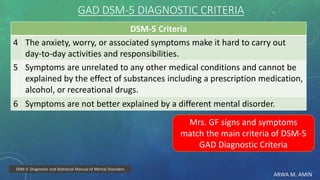
Mrs. GF signs and symptoms
match the main criteria of DSM-5
GAD Diagnostic Criteria
ARWA M. AMIN
CASE DISCUSSION
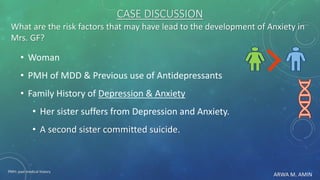
What are the risk factors that may have lead to the development of Anxiety in
Mrs. GF?
• Woman
• PMH of MDD & Previous use of Antidepressants
• Family History of Depression & Anxiety
• Her sister suffers from Depression and Anxiety.
• A second sister committed suicide.
PMH: past medical history
ARWA M. AMIN
THERAPEUTIC TARGETS
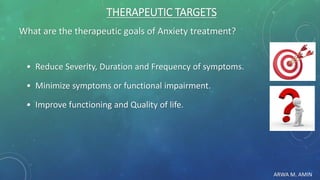
What are the therapeutic goals of Anxiety treatment?
• Reduce Severity, Duration and Frequency of symptoms.
• Minimize symptoms or functional impairment.
• Improve functioning and Quality of life.
ARWA M. AMIN
CASE DISCUSSION
What are the Non-pharmacological treatment options of Anxiety
Disorder that you can discuss with Mrs. GF?
ARWA M. AMIN
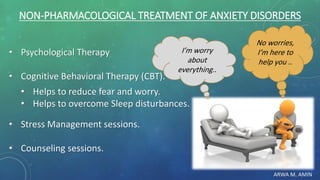
NON-PHARMACOLOGICAL TREATMENT OF ANXIETY DISORDERS
• Psychological Therapy
• Cognitive Behavioral Therapy (CBT).
• Helps to reduce fear and worry.
• Helps to overcome Sleep disturbances.
• Stress Management sessions.
• Counseling sessions.
No worries,
I’m here to
help you ..
I’m worry
about
everything..
ARWA M. AMIN
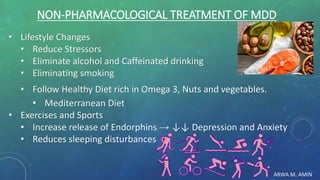
NON-PHARMACOLOGICAL TREATMENT OF MDD
• Lifestyle Changes
• Reduce Stressors
• Eliminate alcohol and Caffeinated drinking
• Eliminating smoking
• Follow Healthy Diet rich in Omega 3, Nuts and vegetables.
• Mediterranean Diet
• Exercises and Sports
• Increase release of Endorphins → ↓↓ Depression and Anxiety
• Reduces sleeping disturbances
ARWA M. AMIN
CASE DISCUSSION
• What are the Pharmacological Treatment options of Anxiety Disorders?
• What are the common side-effects of Antianxiety drugs?
• Discuss the Pharmacological Treatment choice options for Mrs. GF?
ARWA M. AMIN
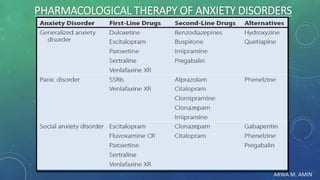
PHARMACOLOGICAL THERAPY OF ANXIETY DISORDERS
ARWA M. AMIN
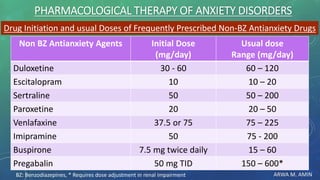
PHARMACOLOGICAL THERAPY OF ANXIETY DISORDERS
Usual dose
Range (mg/day)
Initial Dose
(mg/day)
Non BZ Antianxiety Agents
60 – 12030 - 60Duloxetine
10 – 2010Escitalopram
50 – 20050Sertraline
20 – 5020Paroxetine
75 – 22537.5 or 75Venlafaxine
75 - 20050Imipramine
15 – 607.5 mg twice dailyBuspirone
150 – 600*50 mg TIDPregabalin
Drug Initiation and usual Doses of Frequently Prescribed Non-BZ Antianxiety Drugs
BZ: Benzodiazepines, * Requires dose adjustment in renal impairment
ARWA M. AMIN
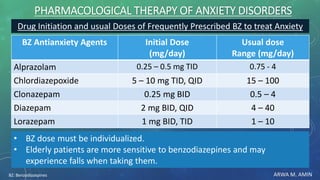
PHARMACOLOGICAL THERAPY OF ANXIETY DISORDERS
Usual dose
Range (mg/day)
Initial Dose
(mg/day)
BZ Antianxiety Agents
0.75 - 40.25 – 0.5 mg TIDAlprazolam
15 – 1005 – 10 mg TID, QIDChlordiazepoxide
0.5 – 40.25 mg BIDClonazepam
4 – 402 mg BID, QIDDiazepam
1 – 101 mg BID, TIDLorazepam
Drug Initiation and usual Doses of Frequently Prescribed BZ to treat Anxiety
BZ: Benzodiazepines
• BZ dose must be individualized.
• Elderly patients are more sensitive to benzodiazepines and may
experience falls when taking them.
ARWA M. AMIN
CASE DISCUSSION
• What are the common side-effects of Antianxiety drugs?
ARWA M. AMIN
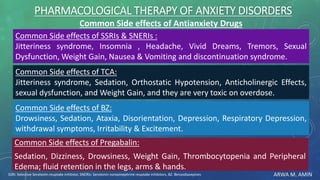
PHARMACOLOGICAL THERAPY OF ANXIETY DISORDERS
SSRI: Selective Serotonin reuptake inhibitor, SNERIs: Serotonin norepinephrine reuptake inhibitors, BZ: Benzodiazepines
Common Side effects of SSRIs & SNERIs :
Jitteriness syndrome, Insomnia , Headache, Vivid Dreams, Tremors, Sexual
Dysfunction, Weight Gain, Nausea & Vomiting and discontinuation syndrome.
Common Side effects of BZ:
Drowsiness, Sedation, Ataxia, Disorientation, Depression, Respiratory Depression,
withdrawal symptoms, Irritability & Excitement.
Common Side effects of Pregabalin:
Sedation, Dizziness, Drowsiness, Weight Gain, Thrombocytopenia and Peripheral
Edema; fluid retention in the legs, arms & hands.
Common Side effects of TCA:
Jitteriness syndrome, Sedation, Orthostatic Hypotension, Anticholinergic Effects,
sexual dysfunction, and Weight Gain, and they are very toxic on overdose.
Common Side effects of Antianxiety Drugs
ARWA M. AMIN
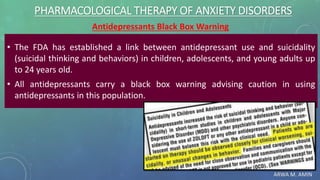
PHARMACOLOGICAL THERAPY OF ANXIETY DISORDERS
Antidepressants Black Box Warning
• The FDA has established a link between antidepressant use and suicidality
(suicidal thinking and behaviors) in children, adolescents, and young adults up
to 24 years old.
• All antidepressants carry a black box warning advising caution in using
antidepressants in this population.
ARWA M. AMIN
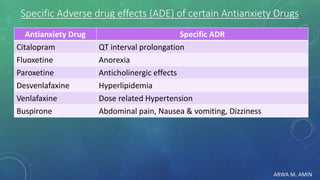
Specific Adverse drug effects (ADE) of certain Antianxiety Drugs
Specific ADRAntianxiety Drug
QT interval prolongationCitalopram
AnorexiaFluoxetine
Anticholinergic effectsParoxetine
HyperlipidemiaDesvenlafaxine
Dose related HypertensionVenlafaxine
Abdominal pain, Nausea & vomiting, DizzinessBuspirone
ARWA M. AMIN
CASE DISCUSSION
Discuss the pharmacological treatment choice options for Mrs. GF?
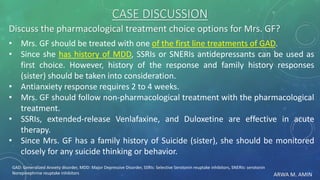
• Mrs. GF should be treated with one of the first line treatments of GAD.
• Since she has history of MDD, SSRIs or SNERIs antidepressants can be used as
first choice. However, history of the response and family history responses
(sister) should be taken into consideration.
• Antianxiety response requires 2 to 4 weeks.
• Mrs. GF should follow non-pharmacological treatment with the pharmacological
treatment.
• SSRIs, extended-release Venlafaxine, and Duloxetine are effective in acute
therapy.
• Since Mrs. GF has a family history of Suicide (sister), she should be monitored
closely for any suicide thinking or behavior.
GAD: Generalized Anxiety disorder, MDD: Major Depressive Disorder, SSRIs: Selective Serotonin reuptake inhibitors, SNERIs: serotonin
Norepinephrine reuptake inhibitors
ARWA M. AMIN
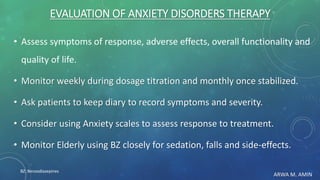
EVALUATION OF ANXIETY DISORDERS THERAPY
• Assess symptoms of response, adverse effects, overall functionality and
quality of life.
• Monitor weekly during dosage titration and monthly once stabilized.
• Ask patients to keep diary to record symptoms and severity.
• Consider using Anxiety scales to assess response to treatment.
• Monitor Elderly using BZ closely for sedation, falls and side-effects.
BZ: Benzodiazepines
ARWA M. AMIN

Anxiety Disorders

  • 1.
    ANXIETY DISORDERS ARWA M. AMINMOSTAFA Phd, M.Pharm. Clinical Pharmacy, Dip. Managment., BSc. Pharmacy
  • 2.
    ARWA M. AMIN WHATWE ARE GOING TO DISCUSS TODAY? • What is Anxiety? What is Anxiety Disorders? • What is the Etiology of Anxiety Disorders? • What are the Risk Factors of developing Anxiety? • What are the Different Types of Anxiety Disorders? • What is the Pathophysiology of Anxiety Disorders? • How to Diagnose GAD & SAD types of Anxiety Disorders? • What are the Goals of Anxiety Disorders Therapy? • What are the Non-Pharmacological Treatment of Anxiety Disorders? • What are the Pharmacological Treatment of Anxiety Disorders? • How to evaluate Anxiety Disorders Therapy?
  • 3.
    ARWA M. AMIN Whatis Anxiety? …
  • 4.
    ARWA M. AMIN ANXIETY •Anxiety is a state of apprehension, uncertainty and fear of real or imagined situation or circumstances the patient thinks it might be Dangerous. • Occasional or Temporary Anxiety is part of Normal Day Life. • Normal Day Life Anxiety situations: • Anxiety due to social/work problems • Anxiety due to exams and tests • Anxiety due to financial issues • Anxiety due to real dangerous situations
  • 5.
    ARWA M. AMIN ANXIETYDISORDERS • Anxiety Disorders (ADs) are mental disorder of anxiety, Fear, Worry, dread, apprehension or uncertainty which is strong to interfere with daily life. • Anxiety Disorders are the most common Mental Illness.
  • 6.
    ARWA M. AMIN ETIOLOGYOF ANXIETY DISORDERS • Anxiety Disorders result from the combination of several factors: • Genetic predisposition • Psychological • Stress (e.g. Occupational & Traumatic) • Environmental factors • Previous trauma experience Environmental Anxiety Disorders Genetic Psychological Stress
  • 7.
    ARWA M. AMIN RISKFACTORS OF DEVELOPING ANXIETY • Age: • 30% of Anxiety patients are between 18 – 29 years old • Family History • Genetic Predisposition • Sex: Female > Male • Drug Abuse and Intoxication • Alcohol Intoxication • Gut microbiota Disturbances • Unhealthy diet • Excessive Caffeine use • Smoking and Nicotine
  • 8.
    ARWA M. AMIN RISKFACTORS OF DEVELOPING ANXIETY • Childhood Trauma • Stressful lifestyle • Unemployment and Poverty • Chronic Medical illness • Physical disability • Psychiatric & Neurological disorders (Schizophrenia, Mood disorders, seizures, Migraines)
  • 9.
    ARWA M. AMIN RISKFACTORS OF DEVELOPING ANXIETY • Cardiovascular diseases (CAD, Arrhythmia, Cardiomyopathy, CHF, HTN) • Endocrine & Metabolic diseases (DM, Hypoglycemia, Cushing’s disease, Thyroid disturbances, Pheochromocytoma, Vitamin B12 or Folate Deficiencies, Hyponatremia and Hyperkalemia) • Respiratory Diseases: Asthma, COPD, Pneumonia, Pulmonary embolism. • Other disease conditions: Anemia, Cancer, SLE • Medications HTN: Hypertension, CHF: congestive heart failure, CAD: coronary artery disease, COPD: Chronic obstructive pulmonary disease, SLE: Systemic Lupus Erythematosus
  • 10.
    ARWA M. AMIN RISKFACTORS OF ANXIETY: DRUGS ASSOCIATED WITH ANXIETY • Anticonvulsants: • Carbamazepine, Phenytoin • Antidepressants: • SSRIs, bupropion, SNERIs • Anti-hypertensives: • Clonidine, Felodipine • Antibiotics: • Quinolones, Isoniazid • NSAIDs: • Ibuprofen, Indomethacin • Stimulants: • Amphetamines, Methylphenidate, Nicotine, Caffeine, Cocaine • Corticosteroids: • Prednisone • Thyroid hormones: • levothyroxine • Bronchodilators: • Albuterol, Theophylline • Dopamine agonists: • Amantadine, Levodopa • Sympathomimetics: • Pseudoephedrine, Phenylephrine • Illicit substances: • Marijuana, Ecstasy • Toxicity: • Anticholinergics, antihistamines, digoxin SSRIs: Serotonin Reuptake Inhibitors, SNERIs: Serotonin Norepinephrine reuptake inhibitors,. **Aminoketone: Bupropion.
  • 11.
    ARWA M. AMIN TYPESOF ANXIETY DISORDERS • Generalized Anxiety Disorder (GAD) • Chronic worry & Tension throughout the day without specific cause or situation. • Social Anxiety Disorder (SAD): Fear of Public • Fear to be negatively evaluated in social situation • Post traumatic Stress Disorder (PTSD): • Anxiety due stressful experience (Death Threat or Serious Injury) • Obsessive Compulsive Disorder (OCD) • Distressing obsessions and compulsions OCD
  • 12.
    ARWA M. AMIN TYPESOF ANXIETY DISORDERS • Panic Disorder • Intense episode of fear and discomfort associated with physical symptoms. • Characterized by Panic attack & fear of panic attack. • Phobias: Strong fears of things • Agoraphobia • Specific phobias • Animal, Injection, Blood, Flying
  • 13.
    ARWA M. AMIN TYPESOF ANXIETY DISORDERS Figure Source: Anxiety Disorders by Dr. Nikola Grujich, https://medskl.com/module/index/anxiety-disorders
  • 14.
    ARWA M. AMIN Pathophysiologyof Anxiety Disorders • Noradrenergic Model • δ-Aminobutyric acid (GABA) receptor Model • 5-HT Model
  • 15.
    ARWA M. AMIN Pathophysiologyof Anxiety Disorder: Noradrenergic Model • The locus coeruleus (LC) is a nucleus in the brain which is responsible for the Fight- or-Flight instinct. It is activated by stress or fear, and responds by stimulating Norepinephrine (NE) release which activates the autonomic nervous system. • The release of Norepinephrine and Dopamine from the locus coeruleus results in the development of Anxiety in animal models. • Some anxiolytic drugs inhibit locus coeruleus activation. AnxietyLC - Activation
  • 16.
    ARWA M. AMIN Pathophysiologyof Anxiety Disorders: δ-Aminobutyric acid (GABA) Receptor Model • GABA is an inhibitory neurotransmitter which causes sedation and reduces Anxiety. • GABA has strong regulatory effect on serotonin, norepinephrine and Dopamine. • Benzodiazepines (BZ) enhances the effect of GABA at the GABAA receptor which will produce anxiolytic, hypnotic, anticonvulsant and muscle relaxants effect. Anxiety GABA System – Underactivity of BZ Binding site BZ stimulates GABAA receptor
  • 17.
    ARWA M. AMIN Pathophysiologyof Anxiety Disorders: 5-HT Model • Excessive 5-HT transmission or overactivity of the stimulatory 5-HT pathways may cause Anxiety. • Type-2 serotonin receptors have been implicated in anxiety related behavior and may be suitable targets for reducing anxiety response(1). • Preliminary data suggest that the 5-HT and 5-HT2 antagonist Metachlorophenylpiperazine causes increased anxiety in PTSD patients. (1) Benekareddy M, Vadodaria KC, Nair AR, Vaidya VA; ''Postnatal serotonin type 2 receptor blockade prevents the emergence of anxiety behavior, dysregulated stress-induced immediate early gene responses, and specific transcriptional changes that arise following early life stress.''; Biol Psychiatry, 2011
  • 18.
    ARWA M. AMIN CouldYou Actually Have An Anxiety Disorder? https://www.youtube.com/watch?v=6wHVgiM0R54 Pathophysiology of Anxiety Disorders
  • 19.
    ARWA M. AMIN CLINICALPRESENTATIONS OF ANXIETY DISORDERS GAD Signs & Symptoms Impairment • Social • Occupational • Other important functional areas • Poor coping skills Physical Symptoms • Fatigue • Restlessness • Headache • Muscle Tension • Sleep disturbance • Irritability • GI disturbances Psychological & Cognitive Symptoms • Excessive Anxiety • Worries difficult to control. • Poor concentration • Mind going blank • Feeling keyed up or on edge.
  • 20.
    ARWA M. AMIN GADSigns & Symptoms
  • 21.
    ARWA M. AMIN CLINICALPRESENTATIONS OF ANXIETY DISORDERS SAD Anxiety Symptoms Psychological • Fear of being • Scrutinized • Embarrassed • Humiliated • Fear & avoidance of being in social situations: • Speaking in public • Talking to strangers • Writing in front of others • Interacting with authority figures Physical Symptoms • Blushing “Butterflies in stomach” • GI disturbance: Diarrhea • Sweating • Tachycardia • Trembling
  • 22.
    ARWA M. AMIN ANXIETYDIAGNOSIS • Complete Physical and Mental status examination • Medical psychiatric and Drug history • Symptoms might be due to particular drug therapy or medical illness (rule out other psychiatric illnesses; mood disorders, schizophrenia and substance withdrawal) • Laboratory Tests: to rule out other causes • Thyroid panel • Blood cell counts • Serum electrolytes • Liver function tests • B12, folate • Using DSM-5 diagnostic criteria DSM-5: Diagnostic and Statistical Manual of Mental Disorders
  • 23.
    ARWA M. AMIN GADDSM-5 DIAGNOSTIC CRITERIA DSM-5 Criteria Excessive Anxiety and worry • More days than NOT (Days on worry > Days NOT worry) • For at least 6 months • Multiple Topics 1 Worry is difficult to control2 Anxiety and worry associated with ≥ 3 of the following symptoms: • Restlessness or feeling keyed up or on edge • Difficulty concentrating or mind going blank • Being easily fatigued • Irritability • Muscle tension • Sleep disturbances: Difficulty falling or staying asleep or unsatisfying sleep 3 DSM-5: Diagnostic and Statistical Manual of Mental Disorders
  • 24.
    ARWA M. AMIN GADDSM-5 DIAGNOSTIC CRITERIA DSM-5 Criteria The anxiety, worry, or associated symptoms make it hard to carry out day-to-day activities and responsibilities. 4 Symptoms are unrelated to any other medical conditions and cannot be explained by the effect of substances including a prescription medication, alcohol, or recreational drugs. 5 Symptoms are not better explained by a different mental disorder.6 DSM-5: Diagnostic and Statistical Manual of Mental Disorders
  • 25.
    ARWA M. AMIN SADDSM-5 DIAGNOSTIC CRITERIA DSM-5 Criteria Marked fear or anxiety in one or more social or performance situations in which the person is exposed to possible scrutiny by others lasting 6 months or more. 1 Fear of being negatively evaluated by or offensive to others2 Anxiety is almost produced by the exposure to the social situation3 Avoidance of feared social situation.4 The fear or avoidance interferes significantly with the person's normal routine, occupational functioning, relationships, or social activities. 5 DSM-5: Diagnostic and Statistical Manual of Mental Disorders
  • 26.
    ARWA M. AMIN SADDSM-5 DIAGNOSTIC CRITERIA DSM-5 Criteria The fear or avoidance is not due to the direct physiologic effects of a substance or a general medical condition, and is not better accounted for by another mental disorder. 6 If a general medical condition or another mental disorder is present, the social anxiety disorder is unrelated to it. 7 DSM-5: Diagnostic and Statistical Manual of Mental Disorders
  • 27.
    ARWA M. AMIN CASEDISCUSSION Mrs. GF who is 42 years old woman is referred by her family Physician to an outpatient mental Health Clinic. She feels stressed all the times and constantly worry about everything. Her anxiety worsened since her son joined the Army one year ago. She reported that she can’t control her thoughts and fear. Please refer to MDD slides for further details on Mrs. GF MDD case discussion
  • 28.
    ARWA M. AMIN CASEDISCUSSION When she feels worry, Mrs. GF feels shoulders’ & legs’ tension, raised heart beats and sometimes breathing difficulty. She also gets tensions in her stomach. She has sleep disturbances with difficulty getting off to sleep due to worrying and frequent wakening. She feels tired and irritable. She does not drink any alcohol since 3 years ago. Please refer to MDD slides for further details on Mrs. GF MDD case discussion
  • 29.
    ARWA M. AMIN CASEDISCUSSION PMH Mrs. GF was previously diagnosed with MDD (4 years ago) which happened consequent to financial, family and social problems*. She was treated by ten sessions of Psychotherapy and Antidepressant Drugs. She responded well to the treatment and after one year of starting her antidepressant treatment, she stopped her medication because she felt that they are no longer needed. *Please refer to MDD slides for further details on Mrs. GF MDD case discussion PMH: Past medical History, MDD: Major Depressive Disorder
  • 30.
    ARWA M. AMIN CASEDISCUSSION Family History • A sister has Depression and Anxiety and she takes antidepressant medication; G.F. doesn’t know the medication’s name. • A second sister committed suicide. VS • BP 135/85, P 90, RR 25, T 37.2°C; Wt 180 lbs, Ht 5'8''
  • 31.
    ARWA M. AMIN CASEDISCUSSION What are Anxiety signs and symptoms that Mrs. GF suffer from? What type of Anxiety Disorder she suffers from? Explain Why? • She can’t control her thoughts and fear. • She feels worry all the time about everything. • She feels tired and irritable. • She has sleep disturbances with difficulty getting off to sleep due to worrying and frequent wakening. • When she feels worry, She feels: • Shoulders’ & legs’ tension. • Raised heart beats. • Sometimes breathing difficulty. • She gets stomach tensions.
  • 32.
    ARWA M. AMIN CASEDISCUSSION What type of Anxiety Disorder Mrs. GF suffers from? • Mrs. GF is suffering from Generalized Anxiety Disorder (GAD) Explain Why?
  • 33.
    ARWA M. AMIN GADDSM-5 DIAGNOSTIC CRITERIA DSM-5 Criteria Excessive Anxiety and worry • More days than NOT (Days on worry > Days NOT worry) • For at least 6 months • Multiple Topics 1 Worry is difficult to control2 Anxiety and worry associated with ≥ 3 of the following symptoms: • Restlessness or feeling keyed up or on edge • Difficulty concentrating or mind going blank • Being easily fatigued • Irritability • Muscle tension • Sleep disturbances: Difficulty falling or staying asleep or unsatisfying sleep 3 DSM-5: Diagnostic and Statistical Manual of Mental Disorders
  • 34.
    ARWA M. AMIN GADDSM-5 DIAGNOSTIC CRITERIA DSM-5 Criteria The anxiety, worry, or associated symptoms make it hard to carry out day-to-day activities and responsibilities. 4 Symptoms are unrelated to any other medical conditions and cannot be explained by the effect of substances including a prescription medication, alcohol, or recreational drugs. 5 Symptoms are not better explained by a different mental disorder.6 DSM-5: Diagnostic and Statistical Manual of Mental Disorders
  • 35.
    ARWA M. AMIN GADDSM-5 DIAGNOSTIC CRITERIA DSM-5 Criteria The anxiety, worry, or associated symptoms make it hard to carry out day-to-day activities and responsibilities. 4 Symptoms are unrelated to any other medical conditions and cannot be explained by the effect of substances including a prescription medication, alcohol, or recreational drugs. 5 Symptoms are not better explained by a different mental disorder.6 DSM-5: Diagnostic and Statistical Manual of Mental Disorders Mrs. GF signs and symptoms match the main criteria of DSM-5 GAD Diagnostic Criteria
  • 36.
    ARWA M. AMIN CASEDISCUSSION What are the risk factors that may have lead to the development of Anxiety in Mrs. GF? • Woman • PMH of MDD & Previous use of Antidepressants • Family History of Depression & Anxiety • Her sister suffers from Depression and Anxiety. • A second sister committed suicide. PMH: past medical history
  • 37.
    ARWA M. AMIN THERAPEUTICTARGETS What are the therapeutic goals of Anxiety treatment? • Reduce Severity, Duration and Frequency of symptoms. • Minimize symptoms or functional impairment. • Improve functioning and Quality of life.
  • 38.
    ARWA M. AMIN CASEDISCUSSION What are the Non-pharmacological treatment options of Anxiety Disorder that you can discuss with Mrs. GF?
  • 39.
    ARWA M. AMIN NON-PHARMACOLOGICALTREATMENT OF ANXIETY DISORDERS • Psychological Therapy • Cognitive Behavioral Therapy (CBT). • Helps to reduce fear and worry. • Helps to overcome Sleep disturbances. • Stress Management sessions. • Counseling sessions. No worries, I’m here to help you .. I’m worry about everything..
  • 40.
    ARWA M. AMIN NON-PHARMACOLOGICALTREATMENT OF MDD • Lifestyle Changes • Reduce Stressors • Eliminate alcohol and Caffeinated drinking • Eliminating smoking • Follow Healthy Diet rich in Omega 3, Nuts and vegetables. • Mediterranean Diet • Exercises and Sports • Increase release of Endorphins → ↓↓ Depression and Anxiety • Reduces sleeping disturbances
  • 41.
    ARWA M. AMIN CASEDISCUSSION • What are the Pharmacological Treatment options of Anxiety Disorders? • What are the common side-effects of Antianxiety drugs? • Discuss the Pharmacological Treatment choice options for Mrs. GF?
  • 42.
    ARWA M. AMIN PHARMACOLOGICALTHERAPY OF ANXIETY DISORDERS
  • 43.
    ARWA M. AMIN PHARMACOLOGICALTHERAPY OF ANXIETY DISORDERS Usual dose Range (mg/day) Initial Dose (mg/day) Non BZ Antianxiety Agents 60 – 12030 - 60Duloxetine 10 – 2010Escitalopram 50 – 20050Sertraline 20 – 5020Paroxetine 75 – 22537.5 or 75Venlafaxine 75 - 20050Imipramine 15 – 607.5 mg twice dailyBuspirone 150 – 600*50 mg TIDPregabalin Drug Initiation and usual Doses of Frequently Prescribed Non-BZ Antianxiety Drugs BZ: Benzodiazepines, * Requires dose adjustment in renal impairment
  • 44.
    ARWA M. AMIN PHARMACOLOGICALTHERAPY OF ANXIETY DISORDERS Usual dose Range (mg/day) Initial Dose (mg/day) BZ Antianxiety Agents 0.75 - 40.25 – 0.5 mg TIDAlprazolam 15 – 1005 – 10 mg TID, QIDChlordiazepoxide 0.5 – 40.25 mg BIDClonazepam 4 – 402 mg BID, QIDDiazepam 1 – 101 mg BID, TIDLorazepam Drug Initiation and usual Doses of Frequently Prescribed BZ to treat Anxiety BZ: Benzodiazepines • BZ dose must be individualized. • Elderly patients are more sensitive to benzodiazepines and may experience falls when taking them.
  • 45.
    ARWA M. AMIN CASEDISCUSSION • What are the common side-effects of Antianxiety drugs?
  • 46.
    ARWA M. AMIN PHARMACOLOGICALTHERAPY OF ANXIETY DISORDERS SSRI: Selective Serotonin reuptake inhibitor, SNERIs: Serotonin norepinephrine reuptake inhibitors, BZ: Benzodiazepines Common Side effects of SSRIs & SNERIs : Jitteriness syndrome, Insomnia , Headache, Vivid Dreams, Tremors, Sexual Dysfunction, Weight Gain, Nausea & Vomiting and discontinuation syndrome. Common Side effects of BZ: Drowsiness, Sedation, Ataxia, Disorientation, Depression, Respiratory Depression, withdrawal symptoms, Irritability & Excitement. Common Side effects of Pregabalin: Sedation, Dizziness, Drowsiness, Weight Gain, Thrombocytopenia and Peripheral Edema; fluid retention in the legs, arms & hands. Common Side effects of TCA: Jitteriness syndrome, Sedation, Orthostatic Hypotension, Anticholinergic Effects, sexual dysfunction, and Weight Gain, and they are very toxic on overdose. Common Side effects of Antianxiety Drugs
  • 47.
    ARWA M. AMIN PHARMACOLOGICALTHERAPY OF ANXIETY DISORDERS Antidepressants Black Box Warning • The FDA has established a link between antidepressant use and suicidality (suicidal thinking and behaviors) in children, adolescents, and young adults up to 24 years old. • All antidepressants carry a black box warning advising caution in using antidepressants in this population.
  • 48.
    ARWA M. AMIN SpecificAdverse drug effects (ADE) of certain Antianxiety Drugs Specific ADRAntianxiety Drug QT interval prolongationCitalopram AnorexiaFluoxetine Anticholinergic effectsParoxetine HyperlipidemiaDesvenlafaxine Dose related HypertensionVenlafaxine Abdominal pain, Nausea & vomiting, DizzinessBuspirone
  • 49.
    ARWA M. AMIN CASEDISCUSSION Discuss the pharmacological treatment choice options for Mrs. GF? • Mrs. GF should be treated with one of the first line treatments of GAD. • Since she has history of MDD, SSRIs or SNERIs antidepressants can be used as first choice. However, history of the response and family history responses (sister) should be taken into consideration. • Antianxiety response requires 2 to 4 weeks. • Mrs. GF should follow non-pharmacological treatment with the pharmacological treatment. • SSRIs, extended-release Venlafaxine, and Duloxetine are effective in acute therapy. • Since Mrs. GF has a family history of Suicide (sister), she should be monitored closely for any suicide thinking or behavior. GAD: Generalized Anxiety disorder, MDD: Major Depressive Disorder, SSRIs: Selective Serotonin reuptake inhibitors, SNERIs: serotonin Norepinephrine reuptake inhibitors
  • 50.
    ARWA M. AMIN EVALUATIONOF ANXIETY DISORDERS THERAPY • Assess symptoms of response, adverse effects, overall functionality and quality of life. • Monitor weekly during dosage titration and monthly once stabilized. • Ask patients to keep diary to record symptoms and severity. • Consider using Anxiety scales to assess response to treatment. • Monitor Elderly using BZ closely for sedation, falls and side-effects. BZ: Benzodiazepines
  • 51.