Dr.Lara Owies
• Plasma volume
• Blood volume
• plasma composition & function
• blood composition & cell count
• White blood cell types & function
• Platelets count & function
• Hemostasis, mechanism &
disorders
Lecture Outline
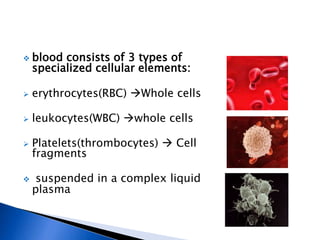
 blood consists of 3 types of
specialized cellular elements:
 erythrocytes(RBC) Whole cells
 leukocytes(WBC) whole cells
 Platelets(thrombocytes)  Cell
fragments
 suspended in a complex liquid
plasma
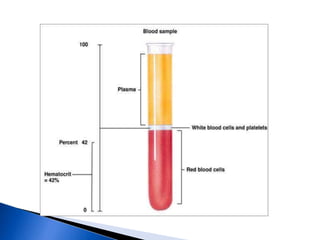
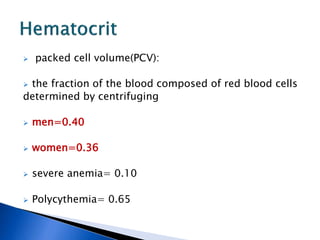
 packed cell volume(PCV):
 the fraction of the blood composed of red blood cells
determined by centrifuging
 men=0.40
 women=0.36
 severe anemia= 0.10
 Polycythemia= 0.65
 Measuring plasma volume:
 serum albumin labeled with radioactive
iodine (125I-albumin).
 Evans blue dye (T-1824)
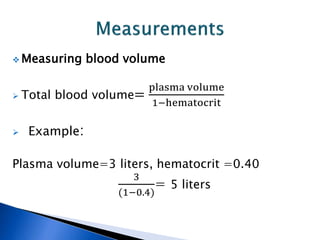
 Measuring blood volume
 Total blood volume=
plasma volume
1−hematocrit
 Example:
Plasma volume=3 liters, hematocrit =0.40
3
(1−0.4)
= 5 liters
 Measuring blood volume
 Another way: inject into the circulation red
blood cells that have been labeled with
radioactive chromium (51Cr).
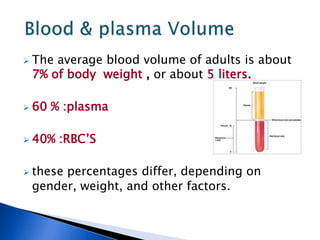
 The average blood volume of adults is about
7% of body weight , or about 5 liters.
 60 % :plasma
 40% :RBC’S
 these percentages differ, depending on
gender, weight, and other factors.
 3 liters.
 the noncellular part of the blood
 it exchanges substances continuously with
the interstitial fluid through the pores of the
capillary membranes.
 These pores are highly permeable to all
solutes except proteins
 Composition:
 contains large amounts of sodium and chloride
ions, reasonably large amounts of bicarbonate
ions.
 but only small quantities of potassium,calcium,
magnesium, phosphate, and organic acid ions.
 The composition of plasma is regulated by the
kidneys.
 The largest portion of the blood
 90% water.
 Water is a medium for materials being carried
in the blood , & can absorb and distribute
heat
 Inorganic constituants :
 1% of plasma weight
 Most abundant ions in plasma Na⁺,Cl⁻
 HCO₃⁻,K⁺, Ca⁺² in smaller amounts
 They function in:
 membrane excitability
 osmotic distribution of fluid between Extracelluar fluid and cells
 buffering of pH changes.
 Organic constituants:
 plasma protiens(6-8% of plasma weight)
 Nutrients : glucose , Amino Acids, Lipids ,Vitamins.
 waste products: creatinin, bilirubin , urea
 Dissolved gases O2,CO2
 Hormones
 Plasma protiens functions
 maintain plasma volume
 Partially responsible for buffering pH .
 Bind substances that poorly dissolve in plasma ( thyroid hormone
, cholesterol , iron)
 Blood clotting factors are plasma protiens
 Inactive circulating precursor molcules
(ex:angiotensinogenangiotensin).
 Gamma globulins are immunoglobulins (antibodies)which are
crucial to body defence mechanism.
 Function:
 transport hemoglobin, which in turn carries
oxygen
 contain carbonic anhydrase,
 Acid-Base buffer( by hemoglobin)
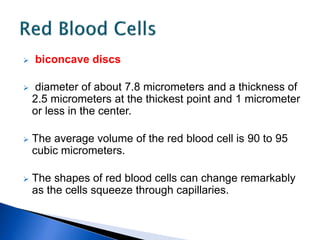
 biconcave discs
 diameter of about 7.8 micrometers and a thickness of
2.5 micrometers at the thickest point and 1 micrometer
or less in the center.
 The average volume of the red blood cell is 90 to 95
cubic micrometers.
 The shapes of red blood cells can change remarkably
as the cells squeeze through capillaries.
 Concentration of Red Blood Cells in the Blood.
 In normal men, per cubic millimeter is 5,200,000
(±300,000)
 in normal women 4,700,000 (±300,000).
 Persons living at high altitudes have greater numbers of
red blood cells.
 Quantity of Hemoglobin in the Cells.
 Red blood cells have the ability to concentrate hemoglobin
in the cell fluid up to about 34 grams in each 100
milliliters of cells.
 In men :15 grams of hemoglobin per 100 milliliters of
cells
 In women: 14 grams per 100 milliliters.
 each gram of pure hemoglobin can combine 1.34
milliliters of oxygen.
 In normal man, 20 milliliters of oxygen can be carried
in combination with hemoglobin in each 100
milliliters of blood.
 in normal woman, 19 milliliters of oxygen can be
carried.
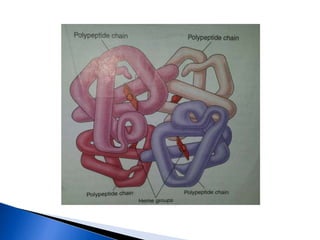
 .each of the four iron atoms can combine reversibly
with one molecule of O2
 Each hemoglobin molecule can pick up 4 O2
passengers in the lungs.
 98.5% of the O2 is carried in the blood is bound to
hemoglobin
 Due to iron, hemoglobin is a pigment
 O2 binds loosely to iron atoms so that the
combination is easily reversible
 Each hemoglobin molecule contain 4
hemoglobin chains :Alpha , beta, gama ,
delta chains.
 In adults: hemoglobin A ; 2 alpha and 2 beta
chains
 Sickle cell anemia results from abnormalities
in 2 beta chains of hemoglobin
 Transport and storage of iron
 Iron in plasma : transferrin
 Iron inside cell cytoplasm: ferritin (storage
iron)
 Small quantities as insolube hemosederin
 Transferrin delivers iron to erythroblast cells
in bone marrow to form hemoglobin
 Low transferrin in blood  failure to
transport iron to the erythroblasts severe
hypochromic anemia
 Hypochromic anemia: red cells that contain
much less hemoglobin than normal
 When red blood cells are destroyed, the
hemoglobin released from the cells is
ingested by monocyte-macrophage cells.
 There, iron is liberated and is stored mainly
in the ferritin pool to be used as needed for
the formation of new hemoglobin.
 Life span and destruction of RBC’s
 circulate for 120 days before being destroyed
 do not have a nucleus ,mitochondria, or
endoplasmic reticulum
 they do have cytoplasmic enzymes that are
capable of metabolizing glucose and forming
small amounts of ATP.
 Life span and destruction of RBC’S
 Red cells are destructed in the spleen
 the hemoglobin is phagocytized by
macrophages:
 especially by the Kupffer cells (liver)
 macrophages of the spleen and bone marrow.
 Iron and bilirubin are released into the blood
 deficiency of hemoglobin in the blood ,
which can be caused by too few RBC’s
1. Blood Loss Anemia.
2. Microcytic Hypochromic Anemia
3. Aplastic Anemia.
4. Megaloblastic anemia.
5. Hemolytic anemia (hereditary)
 hereditary spherocytosis
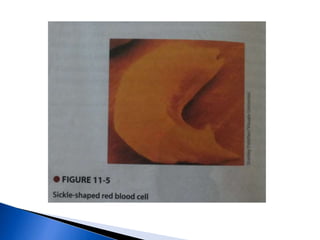
 sickle cell anemia
 West African and American blacks,
 sickle cell disease “crisis”
 erythroblastosis fetalis
Rh-positive red blood cells in the fetus are
attacked by antibodies from an Rh-negative
mother
 effects of anemia:
1. greatly increased cardiac output
2. increased pumping workload on the heart.
1. Secondary polycythemia
causes:
 too little oxygen in the breathed air (high
altitudes)
 failure of oxygen delivery to the tissues ( in
cardiac failure) ex: Physiologic
polycythemia
2. Polycythemia vera ( erythremia)
 Genetic
 The blast cells no longer stop producing red
cells when too many cells are already present
 Hematocrit & total blood volume increase
 Cyanotic (bluish )skin
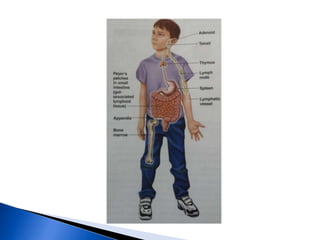
 The mobile units of the body’s protective
system
 Formed in:
 Bone Marrow
 lymph tissue
 After formation, they are transported in the
blood to different parts of the body where
they are needed.
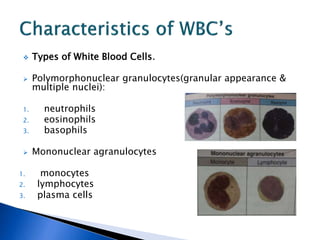
 Types of White Blood Cells.
 Polymorphonuclear granulocytes(granular appearance &
multiple nuclei):
1. neutrophils
2. eosinophils
3. basophils
 Mononuclear agranulocytes
1. monocytes
2. lymphocytes
3. plasma cells
 Granulocytes & monocytes protect the body
by phagocytosis
 The lymphocytes and plasma cells function
mainly in connection with the immune
system.
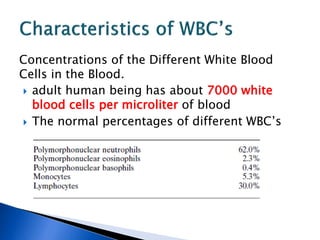
Concentrations of the Different White Blood
Cells in the Blood.
 adult human being has about 7000 white
blood cells per microliter of blood
 The normal percentages of different WBC’s
 granulocytes:
 normally 4 to 8 hours circulating in the blood
and another 4 to 5 days in tissues
 In times of serious tissue infection,this total
life span is often shortened to only a few
hours because the granulocytes are
destroyed.
 The monocytes
 10 to20 hours in the blood
 Then ,through the capillary membranes into the
tissues.
 Once in the tissues , they become tissue
macrophages
 tissue macrophages can live for months unless
destroyed while performing phagocytic functions.
 Lymphocytes
 life spans of weeks or months
 enter the circulatory system continually ,from the
lymph nodes and other lymphoid tissue.
 After a few hours, they pass out of the blood
back into the tissues by diapedesis.
 Later, they re-enter the lymph and return to the
blood again and again
 It is mainly the neutrophils and tissue
macrophages that attack and destroy
invading microorganisms
 The neutrophils
 mature cells
 attack and destroy bacteria even in the
circulating blood.
 Monocyte-tissue macrophages
 Monocytes
 immature cells while still in the blood and have little ability to
fight infectious agents at that time.
 tissue macrophages
 begin life as blood monocytes
 They enter the tissues
 They swell to a size that can barely be seen with the naked eye.
 extremely capable of combating intratissue disease agents
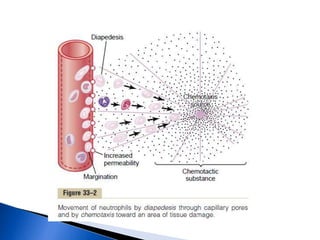
 Neutrophils and monocytes can squeeze
through the pores of the blood capillaries by
diapedesis
 Both neutrophils and macrophages can move
through the tissues by ameboid motion,
 Chemotaxis:chemical substances in the
tissues cause both neutrophils and
macrophages to move toward the source of
the chemical .
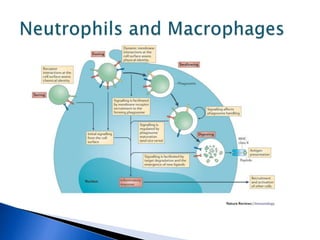
 neutrophils and macrophages main function
is phagocytosis
1. Antibodies adhere to bacterial membrane to
make it susceptible to phagocytosis
2. the antibody combine with C3 . C3
molecules, in turn, attach to receptors on
the phagocyte membrane.
 This selection and phagocytosis processis
called opsonization.
 single neutrophil can usually phagocytize 3 to
20 bacteria
 neutrophils are not capable of phagocytizing
particles much larger than bacteria
 Macrophages
 more powerful phagocytes than neutrophils
 phagocytizing as many as 100 bacteria.
 They also have the ability to engulf much
larger particles (red blood cells ,malarial
parasites)
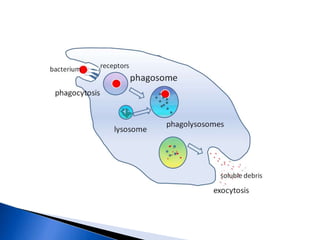
 The phagocytic vesicle fuse with lysosomes and
other granules and create digestive vesicle
 Neutrophils and macrophages:
1. proteolytic enzymes
2. lipases
3. oxidizing agents
 Composed of :
 Monocytes
 mobile macrophages
 fixed macrophages
 Tissue Macrophages:
 the Skin and Subcutaneous Tissues (Histiocytes)
 Macrophages in the Lymph Nodes
 Alveolar macrophages in the lungs
 Kupffer cells in the liver
 Macrophages of the Spleen and Bone Marrow
 Microglia in the brain
 Defense lines
 a First Line of Defense :
Tissue Macrophage.Within minutes begin their phagocytic
actions
 Second Line of Defense :
Neutrophil Invasion of the Inflamed Area Is a within a few
hours
Neutrophilia: acute increase in the number of neutrophis
the number of neutrophils in the blood sometimes increases
from a normal of (4000 to 5000)  15,000 to 25,000 )neutrophils
per microliter
 Defense lines
 Third Line of Defense : Second Macrophage Invasion into
the Inflamed Tissue.
 Fourth Line of Defense : Increased Production of
Granulocytes and Monocytes by the Bone Marrow Is
 It takes 3-4 days for the new granulocytes & monocytes to
leave the bone marrow
 Pus: cavity is often excavated in the inflamed
tissues that contains varying portions of necrotic
tissue, dead neutrophils, dead macrophages, and
tissue fluid
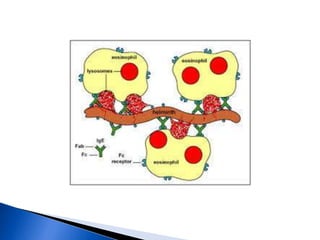
 2% of all the blood leukocytes
 weak phagocytes,
 parasitic infections
.
 release substances as:
1. hydrolytic enzymes
2. highly reactive forms of oxygen
3. major basic protein
 In allergic reactions:
1. detoxify some of the inflammation-
inducing substances released by the mast
cells and basophils and probably
2. phagocytize and destroy allergen-antibody
complexes
 thus preventing excess spread of the local
inflammatory process.
 Basophils In the blood
 basophils are similar to tissue mast cells
 mast cells and basophils release:
1. heparin
2. Histamine
3. bradykinin
 They play an important role allergic reactions
 Release of
1. histamine,
2. bradykinin,
3. serotonin,
4. heparin,
5. slow-reacting substance of anaphylaxis
6. lysosomal enzymes
 Low WBC’s production
 Without treatment, death often ensues in less
than a week after acute total leukopenia
begins.
 Causes of aplasia of the bone marrow
 Irradiation of the body by x-rays or gamma
rays
 drugs and chemicals that contain benzene
 chloramphenicol (an antibiotic), thiouracil
(used to treat thyrotoxicosis), and even
various barbiturate hypnotics, on very rare
occasions cause leukopenia
 Uncontrolled production of white blood cells
 can be caused by cancerous mutation of
1. myelogenous cells
2. lymphogenous cells.
 Blood cells that are concerned with acquired
immunity
 Present in lymph nodes and other lymphoid
tissues
 Acquired immunity: the formation of antibody
and/or activation of lymphocytes that attack
and destroy the specific invading organism or
toxin.
 Types of Acquired Immunity:
1. Humoral (B-cell ) immunity: B lymphocytes
produce antibodies.
2. Cell mediated (T-cell) immunity: formation
of activated T-lymphocyte that are
specifically crafted in L.N to destroy the
foreign agent
 Both types are initiated by antigen
 Antigen: is a large molecule with a special
epitope ( protein /polysaccharide ) on its
surface to be recognized
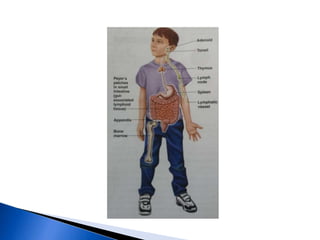
 It starts When the invading antigen reaches
the lymphoid tissue (lymph nodes, spleen,
thymus …)
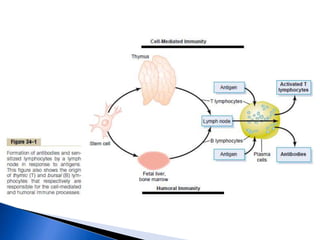
 derived originally in the embryo from pluripotent
hematopoietic stem cells
 Lymphocytes that migrate and differentiate in the
thymus form T-lymphocyte
 Lymphocytes that differentiate in the fetal liver
and bone marrow form B-lymhocytes
 After differentiation , B,T lymphocytes migrate to
lymphoid tissues throughout the body
 B-lymphocytes remain dormant in lymphoid tissue
 Macrophages phagocytize the antigen and present it
to T& B-lymphocytes
 T-helper cells activate B-lymphocytes
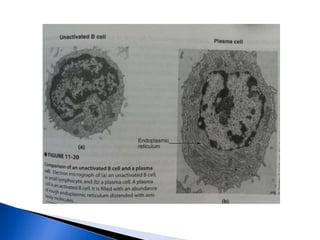
 B-lymphocytes enlarge and differentiate to form
plasma cells
 Mature plasma cells produce gamma gobulin
antibodies
 Antibodies are secreted into the blood
 IgM, IgG, IgA, IgD, and IgE.
 Ig stands for immunoglobulin
 75% of Ig’s of a normal person are IgG
 IgE involved in allergy
 T-lymphocytes types and function:
 T-helper cells:
 most numerous T-cells,
 major regulator of all immune functions by forming
lymphokines (interleukins, interferon …)
 in the abscense of T-helper cells the immune system is
paralyzed
 T-helper cells functions:
1. Stimulation of Growth and Proliferation of
Cytotoxic T Cells and Suppressor T Cells
2. Stimulation of B-Cell Growth and
Differentiation to Form Plasma Cells and
Antibodies.
3. Activation of the Macrophage System.
4. Feedback Stimulatory Effect on the Helper Cells
Themselves.
 T-lymphocytes types and functions:
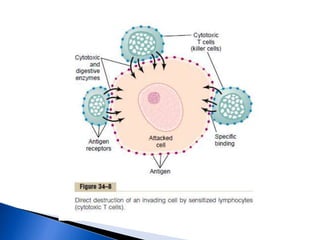
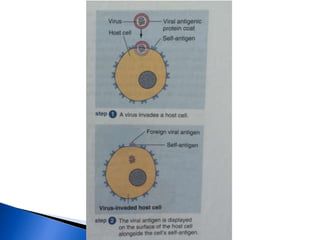
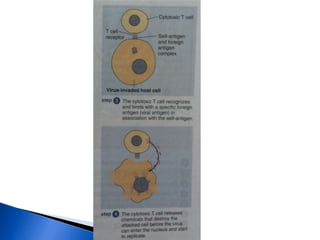
 Cytotoxic T Cells(killer cells):
 has a protien receptor that bind to a specific
antegin and secret perforins that punchholes
in the attacked antigen and release cytotoxic
substances
 after that they pull away and kill more cells
 Cytotoxic T-cells
 They are lethal to cells invaded by viruses ,
cancer cells , and any other foreign cells
 T-lymphocytes types and functions:
 Supressor T-cells :
 Capable of suppressing the functions of both
cytotoxic and helper T cells
 plays an important role in limiting the ability of
the immune system to attack a person’s own
body tissues, called immune tolerance
 Failure of the Tolerance Mechanism Causes
Autoimmune Diseases.
 Old people
 after destruction of the body’s own tissues ,
releasing considerable quantities of “self-
antigens” that cause acquired immunity
• Rheumatoid fever
• Glomerulonephritis
• myasthenia gravis
• lupus erythematosus,
 Other functions:
 Delayed-reaction allergy is caused by
activated T cells and not by antibodies
 on repeated exposure, it does cause the
formation of activated helper and cytotoxic T
cells
 the eventual result of some delayed-reaction
allergies can be serious tissue damage in the
tissue area where the instigating antigen is
present.
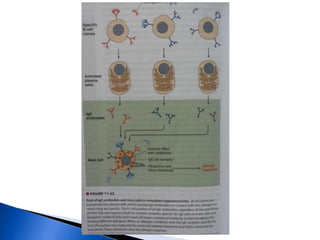
 “Allergic” Person,
 Excess IgE Antibodies
 Genetically passed
 IgE has strong propensity to attach to mast
cells and basophils. ,results in immediate
change of the membrane and rupture of
these cells and releasing substances that
causes an allergic reaction (anaphylaxis, hay
fever,asthma…)
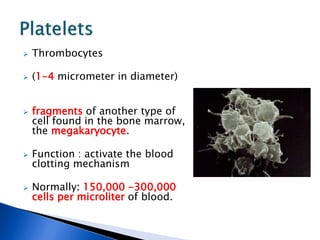
 Thrombocytes
 (1-4 micrometer in diameter)
 fragments of another type of
cell found in the bone marrow,
the megakaryocyte.
 Function : activate the blood
clotting mechanism
 Normally: 150,000 -300,000
cells per microliter of blood.
 Lack nuclei , cannot reproduce
 They have contractile proteins in their cytoplasm:
1. actin
2. Myocin
3. Thrombosthenin
 Residual E.R & G.A that synthesize enzymes and store
Ca⁺²
 Able to form ATP ,ADP , Fibrin stabilizing factor
 Glycoprotiens on its cell membrane
 replaced once every 10 days
 Half life 8-12 days
 Removed mainly by spleen macrophages
 in other words, about 30,000 platelets are
formed each day for each microliter of blood.
 Means prevention of blood loss
 After a vessel is ruptured, achieved by:
1. Vascular constriction
2. Platelet plug
3. Blood clot formation
4. Growth of fibrous tissue into the clot to
close the hole permanently
 Vascular constriction
 Trauma to the blood vessel will cause its smooth
muscles to contract ,to reduce blood flow from it
 for the smaller vessels, platelets release a
vasoconstrictor substance, thromboxane A2
 The more severe a trauma is , the greater the
degree of vascular spasm
 Last from minutes to hours
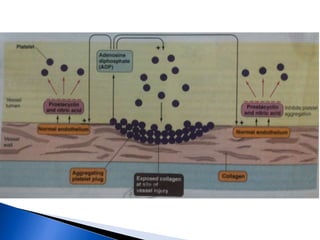
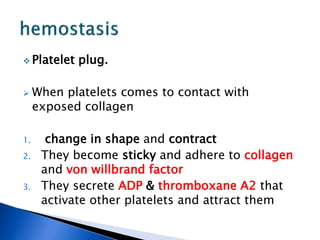
 Platelet plug.
 When platelets comes to contact with
exposed collagen
1. change in shape and contract
2. They become sticky and adhere to collagen
and von willbrand factor
3. They secrete ADP & thromboxane A2 that
activate other platelets and attract them
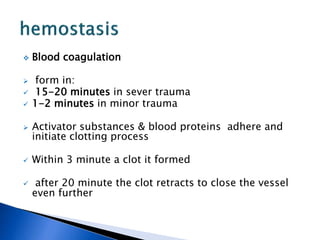
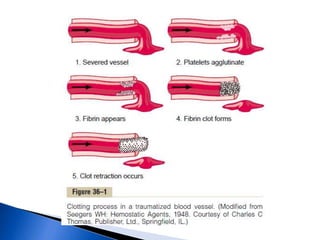
 Blood coagulation
 form in:
 15-20 minutes in sever trauma
 1-2 minutes in minor trauma
 Activator substances & blood proteins adhere and
initiate clotting process
 Within 3 minute a clot it formed
 after 20 minute the clot retracts to close the vessel
even further
 Fibrous organisation or dissolution of the
blood clot
 The clot is either invaded by fibroblasts which
forms C.T through the clot. or it can dissolve
 Mechanism of blood coagulation.
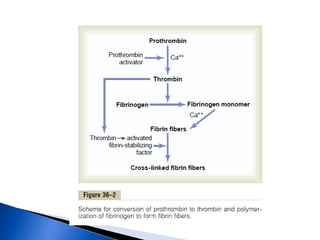
 a complex cascade of chemical reactions occurs in
the blood involving Coagulation factors. the net result
is the formation of prothrombin activator.
 The prothrombin activator catalyzes conversion of
prothrombin into thrombin.
 the thrombin acts as an enzyme to convert
fibrinogen into fibrin fibers that enmesh platelets,
blood cells, and plasma to form the clot.
 Prothrombin is a plasma protein formed in
the liver
 Vitamin K is required in the liver for the
formation of prothrombin and other clotting
factors
 Lack of vitamin K or presence of liver
diseases lead to bleeding tendency
 Conversion of prothrombin to thrombin
 Prothrombin activator , In the presence of
Ca⁺² causes the conversion of prothrombin to
thrombin.
 Platelets also help in prothrombin conversion
 Thrombin polymerizes fibrinogen into fibrin
within 10-15 seconds
 Conversion of fibrinogen to fibrin-clot
formation
 Fibrin stabilizing factor produced by platelets
add strength to this fibrin meshwork
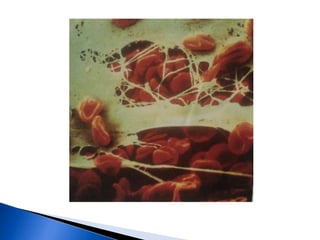
 Blood clot meshwork of fibrin fibers running in
all directions & entrapping blood cells ,platelets
& plasma
 Clot retraction-serum
 few minutes after clot is formed , it contracts,
expressing the fluid from it( serum )
 serum lacks fibrinogen and clotting factors
 Serum differs from plasma that it lacks these
clotting factors and so it cannot clot
 platelet thrombosthenin , actin, and myosin
molecules causes clot contraction
 The contraction is activated and accelerated
by thrombin & calcium ions
 the clot retracts
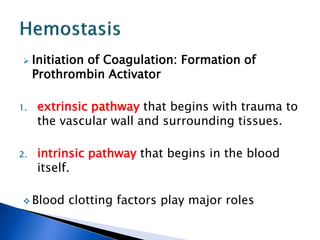
 Initiation of Coagulation: Formation of
Prothrombin Activator
1. extrinsic pathway that begins with trauma to
the vascular wall and surrounding tissues.
2. intrinsic pathway that begins in the blood
itself.
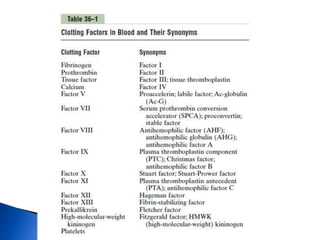
 Blood clotting factors play major roles
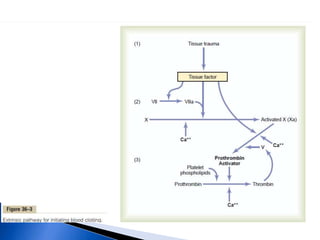
 Extrinsic pathway
 Traumatized vascular wall that comes in contact
with blood results in release of tissue
factor(tissue thromboplastin) that function as a
proteolytic enzyme
 Activation of factor X
 Xa combine with tissue factor and factor V in the
presence of Ca⁺² to form prothrombin activator
 Prothrombin is then convertedto thrombin &
clotting proceeds
 Factor V in the activator complex is inactive until
thrombin is formed,the proteolytic action of
thrombin activate factor V
 Activated Factor X is the actual protease that
causes splitting of prothrombin to form
thrombin
 Factor V is an accelerator
 Intrinsic pathway
 begins with trauma to the blood itself or
exposure of the blood to collagen from a
traumatized blood vessel wall.
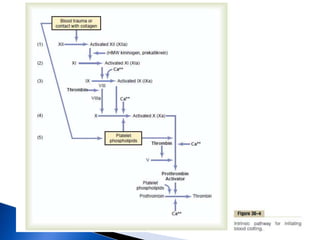
 Intrinsic pathway
 Blood trauma activate factor XII
 XIIa activate factor XI
 XIa activate factor IX
 XIa along with VIII and platelet phospholipds
activate factor X
 Missing factor VIIIhemophilia
 Lack of plateletsthrombocytopenia
 Xa with factor V prothrombin activator
 Ca⁺² is an accelerator
 in their absence blood clotting in either pathways
does not occur
 Both pathways occur simultaneously:
 Clotting needs 15seconds in extrinsic pathway
 Clotting needs 1-6 minutes in intrinsic pathway
 Prevention of Blood Clotting in the Normal
Vascular System
 Endothelial surface factors:
 Smoothness of endothelial surface
 Glycocalyx layer on endothelium/repels
clotting factors
 Thrombomodulin: bind thrombin
 Anticoagulants in blood :antithrombin III,
heparin
 Lysis of clot
 Plasmin
 It destroys many of the clotting factors
 Plasminogen entrapped inside the clot
 t-PA (tissue plasminogen activator) is slowly released
from injured tissue few days after the bleeding stops
 Entrapped plasminogen is activated into plasmin
1. Vitamin K deficiency
2. Hemophilia
3. thrombocytopenia
 Vitamin K deficiency
 Vitamin K is necessary for liver formation of five of
the important clotting factors:
1. prothrombin
2. Factor VII
3. Factor IX
4. Factor X
5. protein C
 In the absence of vitamin K, subsequent
insufficiency of these coagulation Factors in the
blood can lead to serious bleeding tendencies.
 Hemophilia
 In males
 85% factor VIII deficiency :hemophilia A
(classic hemophilia)
 15% factor IX deficiency
 Both factors are transmitted genetically
 Hemophilia
 Bleeding occur following trauma
 Even mild trauma can cause bleeding for days (e.x:
tooth extraction)
 Treatment of classic hemophilia is factor VIII
injection
 Hemophilia bleeding from large vessels
 Von Willbrand disease (vWD)
 The most common hereditary coagulation
abnormality
 Defeciency of Von Willbrand factor (vWF)
 vWF: protien required for platelet adhesion
 Thrombocytopenia
 Low number of platelets circulating in the blood
 Bleeding from small capillaries
 Multiple small purplish blotches
thrombocytopenic purura
 Thrombocytopenia
 Bleeding occur when platelet number falls below
50,000/microliter
 Levels below 10,000/microliter are lethal
 Idiopathic thrombocytopenia:
 specific antibodies destroy platelets
 Treatment of thrombocytopenia:
A. fresh whole blood transfusion
B. splenectomy
 Thromboembolisms
 Thrombus: abnormal clot that develop in a bood vessel
 Emboli: free flowing clot
 Causes:
 Roughened endothelial surface
 Slowly flowing blood
 Treatment : genetically treated t-PA delivered through a
catheter
 Femoral venous thrombosis & massive
pulmonary embolism
 Treatment: t-PA
 Disseminated intravascular coagulation.
 the clotting mechanism becomes activated in widespread areas of the
circulation
 Occurs in widespread septicemia in which endotoxins activate clotting
mechanisms
 Clots are small but numerous
 Plug small peripheral blood vessels
 Diminishes oxygen and nutrients delivery
 leads to circulatory shock an death in 85% of patients
 May cause bleeding
 Anticoagulants
1. Heparins
 increases clotting time to 30 minutes (normal=6
minutes)
 the change in clotting time occurs immediately
 action remains 1.5-4 hours
 heparin is destroyed by the enzyme heparinase
 Anticoagulants
2. Coumarins
 Ex:warfarin
 blocking the action of vitamin K
 Coagulation is not blocked immediately
 Normal coagulation returns after 1-3 days of
discontinuing coumarin therapy
 INR international normalised ratio
1. Bleeding time
2. Clotting time
3. Prothrombin time
 Bleeding time:
 Normally 1-6 minutes
 Lack of platelets causes prolonging the B.T
 Clotting time
 6-10 minutes
 Not used anymore
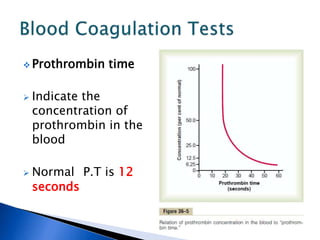
 Prothrombin time
 Indicate the
concentration of
prothrombin in the
blood
 Normal P.T is 12
seconds

General physiology - Blood

  • 1.
  • 2.
    • Plasma volume •Blood volume • plasma composition & function • blood composition & cell count • White blood cell types & function • Platelets count & function • Hemostasis, mechanism & disorders Lecture Outline
  • 3.
     blood consistsof 3 types of specialized cellular elements:  erythrocytes(RBC) Whole cells  leukocytes(WBC) whole cells  Platelets(thrombocytes)  Cell fragments  suspended in a complex liquid plasma
  • 6.
     packed cellvolume(PCV):  the fraction of the blood composed of red blood cells determined by centrifuging  men=0.40  women=0.36  severe anemia= 0.10  Polycythemia= 0.65
  • 7.
     Measuring plasmavolume:  serum albumin labeled with radioactive iodine (125I-albumin).  Evans blue dye (T-1824)
  • 8.
     Measuring bloodvolume  Total blood volume= plasma volume 1−hematocrit  Example: Plasma volume=3 liters, hematocrit =0.40 3 (1−0.4) = 5 liters
  • 9.
     Measuring bloodvolume  Another way: inject into the circulation red blood cells that have been labeled with radioactive chromium (51Cr).
  • 10.
     The averageblood volume of adults is about 7% of body weight , or about 5 liters.  60 % :plasma  40% :RBC’S  these percentages differ, depending on gender, weight, and other factors.
  • 12.
     3 liters. the noncellular part of the blood  it exchanges substances continuously with the interstitial fluid through the pores of the capillary membranes.  These pores are highly permeable to all solutes except proteins
  • 13.
     Composition:  containslarge amounts of sodium and chloride ions, reasonably large amounts of bicarbonate ions.  but only small quantities of potassium,calcium, magnesium, phosphate, and organic acid ions.  The composition of plasma is regulated by the kidneys.
  • 14.
     The largestportion of the blood  90% water.  Water is a medium for materials being carried in the blood , & can absorb and distribute heat
  • 15.
     Inorganic constituants:  1% of plasma weight  Most abundant ions in plasma Na⁺,Cl⁻  HCO₃⁻,K⁺, Ca⁺² in smaller amounts  They function in:  membrane excitability  osmotic distribution of fluid between Extracelluar fluid and cells  buffering of pH changes.
  • 16.
     Organic constituants: plasma protiens(6-8% of plasma weight)  Nutrients : glucose , Amino Acids, Lipids ,Vitamins.  waste products: creatinin, bilirubin , urea  Dissolved gases O2,CO2  Hormones
  • 17.
     Plasma protiensfunctions  maintain plasma volume  Partially responsible for buffering pH .  Bind substances that poorly dissolve in plasma ( thyroid hormone , cholesterol , iron)  Blood clotting factors are plasma protiens  Inactive circulating precursor molcules (ex:angiotensinogenangiotensin).  Gamma globulins are immunoglobulins (antibodies)which are crucial to body defence mechanism.
  • 21.
     Function:  transporthemoglobin, which in turn carries oxygen  contain carbonic anhydrase,  Acid-Base buffer( by hemoglobin)
  • 22.
     biconcave discs diameter of about 7.8 micrometers and a thickness of 2.5 micrometers at the thickest point and 1 micrometer or less in the center.  The average volume of the red blood cell is 90 to 95 cubic micrometers.  The shapes of red blood cells can change remarkably as the cells squeeze through capillaries.
  • 23.
     Concentration ofRed Blood Cells in the Blood.  In normal men, per cubic millimeter is 5,200,000 (±300,000)  in normal women 4,700,000 (±300,000).  Persons living at high altitudes have greater numbers of red blood cells.  Quantity of Hemoglobin in the Cells.  Red blood cells have the ability to concentrate hemoglobin in the cell fluid up to about 34 grams in each 100 milliliters of cells.
  • 24.
     In men:15 grams of hemoglobin per 100 milliliters of cells  In women: 14 grams per 100 milliliters.  each gram of pure hemoglobin can combine 1.34 milliliters of oxygen.  In normal man, 20 milliliters of oxygen can be carried in combination with hemoglobin in each 100 milliliters of blood.  in normal woman, 19 milliliters of oxygen can be carried.
  • 26.
     .each ofthe four iron atoms can combine reversibly with one molecule of O2  Each hemoglobin molecule can pick up 4 O2 passengers in the lungs.  98.5% of the O2 is carried in the blood is bound to hemoglobin  Due to iron, hemoglobin is a pigment  O2 binds loosely to iron atoms so that the combination is easily reversible
  • 27.
     Each hemoglobinmolecule contain 4 hemoglobin chains :Alpha , beta, gama , delta chains.  In adults: hemoglobin A ; 2 alpha and 2 beta chains  Sickle cell anemia results from abnormalities in 2 beta chains of hemoglobin
  • 28.
     Transport andstorage of iron  Iron in plasma : transferrin  Iron inside cell cytoplasm: ferritin (storage iron)  Small quantities as insolube hemosederin
  • 29.
     Transferrin deliversiron to erythroblast cells in bone marrow to form hemoglobin  Low transferrin in blood  failure to transport iron to the erythroblasts severe hypochromic anemia  Hypochromic anemia: red cells that contain much less hemoglobin than normal
  • 30.
     When redblood cells are destroyed, the hemoglobin released from the cells is ingested by monocyte-macrophage cells.  There, iron is liberated and is stored mainly in the ferritin pool to be used as needed for the formation of new hemoglobin.
  • 31.
     Life spanand destruction of RBC’s  circulate for 120 days before being destroyed  do not have a nucleus ,mitochondria, or endoplasmic reticulum  they do have cytoplasmic enzymes that are capable of metabolizing glucose and forming small amounts of ATP.
  • 32.
     Life spanand destruction of RBC’S  Red cells are destructed in the spleen  the hemoglobin is phagocytized by macrophages:  especially by the Kupffer cells (liver)  macrophages of the spleen and bone marrow.  Iron and bilirubin are released into the blood
  • 33.
     deficiency ofhemoglobin in the blood , which can be caused by too few RBC’s 1. Blood Loss Anemia. 2. Microcytic Hypochromic Anemia 3. Aplastic Anemia. 4. Megaloblastic anemia.
  • 34.
    5. Hemolytic anemia(hereditary)  hereditary spherocytosis  sickle cell anemia  West African and American blacks,  sickle cell disease “crisis”
  • 36.
     erythroblastosis fetalis Rh-positivered blood cells in the fetus are attacked by antibodies from an Rh-negative mother  effects of anemia: 1. greatly increased cardiac output 2. increased pumping workload on the heart.
  • 37.
    1. Secondary polycythemia causes: too little oxygen in the breathed air (high altitudes)  failure of oxygen delivery to the tissues ( in cardiac failure) ex: Physiologic polycythemia
  • 38.
    2. Polycythemia vera( erythremia)  Genetic  The blast cells no longer stop producing red cells when too many cells are already present  Hematocrit & total blood volume increase  Cyanotic (bluish )skin
  • 40.
     The mobileunits of the body’s protective system  Formed in:  Bone Marrow  lymph tissue  After formation, they are transported in the blood to different parts of the body where they are needed.
  • 42.
     Types ofWhite Blood Cells.  Polymorphonuclear granulocytes(granular appearance & multiple nuclei): 1. neutrophils 2. eosinophils 3. basophils  Mononuclear agranulocytes 1. monocytes 2. lymphocytes 3. plasma cells
  • 43.
     Granulocytes &monocytes protect the body by phagocytosis  The lymphocytes and plasma cells function mainly in connection with the immune system.
  • 44.
    Concentrations of theDifferent White Blood Cells in the Blood.  adult human being has about 7000 white blood cells per microliter of blood  The normal percentages of different WBC’s
  • 45.
     granulocytes:  normally4 to 8 hours circulating in the blood and another 4 to 5 days in tissues  In times of serious tissue infection,this total life span is often shortened to only a few hours because the granulocytes are destroyed.
  • 46.
     The monocytes 10 to20 hours in the blood  Then ,through the capillary membranes into the tissues.  Once in the tissues , they become tissue macrophages  tissue macrophages can live for months unless destroyed while performing phagocytic functions.
  • 47.
     Lymphocytes  lifespans of weeks or months  enter the circulatory system continually ,from the lymph nodes and other lymphoid tissue.  After a few hours, they pass out of the blood back into the tissues by diapedesis.  Later, they re-enter the lymph and return to the blood again and again
  • 48.
     It ismainly the neutrophils and tissue macrophages that attack and destroy invading microorganisms  The neutrophils  mature cells  attack and destroy bacteria even in the circulating blood.
  • 49.
     Monocyte-tissue macrophages Monocytes  immature cells while still in the blood and have little ability to fight infectious agents at that time.  tissue macrophages  begin life as blood monocytes  They enter the tissues  They swell to a size that can barely be seen with the naked eye.  extremely capable of combating intratissue disease agents
  • 51.
     Neutrophils andmonocytes can squeeze through the pores of the blood capillaries by diapedesis  Both neutrophils and macrophages can move through the tissues by ameboid motion,  Chemotaxis:chemical substances in the tissues cause both neutrophils and macrophages to move toward the source of the chemical .
  • 52.
     neutrophils andmacrophages main function is phagocytosis 1. Antibodies adhere to bacterial membrane to make it susceptible to phagocytosis 2. the antibody combine with C3 . C3 molecules, in turn, attach to receptors on the phagocyte membrane.  This selection and phagocytosis processis called opsonization.
  • 54.
     single neutrophilcan usually phagocytize 3 to 20 bacteria  neutrophils are not capable of phagocytizing particles much larger than bacteria
  • 55.
     Macrophages  morepowerful phagocytes than neutrophils  phagocytizing as many as 100 bacteria.  They also have the ability to engulf much larger particles (red blood cells ,malarial parasites)
  • 57.
     The phagocyticvesicle fuse with lysosomes and other granules and create digestive vesicle  Neutrophils and macrophages: 1. proteolytic enzymes 2. lipases 3. oxidizing agents
  • 58.
     Composed of:  Monocytes  mobile macrophages  fixed macrophages
  • 59.
     Tissue Macrophages: the Skin and Subcutaneous Tissues (Histiocytes)  Macrophages in the Lymph Nodes  Alveolar macrophages in the lungs  Kupffer cells in the liver  Macrophages of the Spleen and Bone Marrow  Microglia in the brain
  • 60.
     Defense lines a First Line of Defense : Tissue Macrophage.Within minutes begin their phagocytic actions  Second Line of Defense : Neutrophil Invasion of the Inflamed Area Is a within a few hours Neutrophilia: acute increase in the number of neutrophis the number of neutrophils in the blood sometimes increases from a normal of (4000 to 5000)  15,000 to 25,000 )neutrophils per microliter
  • 61.
     Defense lines Third Line of Defense : Second Macrophage Invasion into the Inflamed Tissue.  Fourth Line of Defense : Increased Production of Granulocytes and Monocytes by the Bone Marrow Is  It takes 3-4 days for the new granulocytes & monocytes to leave the bone marrow
  • 62.
     Pus: cavityis often excavated in the inflamed tissues that contains varying portions of necrotic tissue, dead neutrophils, dead macrophages, and tissue fluid
  • 63.
     2% ofall the blood leukocytes  weak phagocytes,  parasitic infections .
  • 65.
     release substancesas: 1. hydrolytic enzymes 2. highly reactive forms of oxygen 3. major basic protein
  • 66.
     In allergicreactions: 1. detoxify some of the inflammation- inducing substances released by the mast cells and basophils and probably 2. phagocytize and destroy allergen-antibody complexes  thus preventing excess spread of the local inflammatory process.
  • 67.
     Basophils Inthe blood  basophils are similar to tissue mast cells  mast cells and basophils release: 1. heparin 2. Histamine 3. bradykinin
  • 68.
     They playan important role allergic reactions
  • 70.
     Release of 1.histamine, 2. bradykinin, 3. serotonin, 4. heparin, 5. slow-reacting substance of anaphylaxis 6. lysosomal enzymes
  • 71.
     Low WBC’sproduction  Without treatment, death often ensues in less than a week after acute total leukopenia begins.
  • 72.
     Causes ofaplasia of the bone marrow  Irradiation of the body by x-rays or gamma rays  drugs and chemicals that contain benzene  chloramphenicol (an antibiotic), thiouracil (used to treat thyrotoxicosis), and even various barbiturate hypnotics, on very rare occasions cause leukopenia
  • 73.
     Uncontrolled productionof white blood cells  can be caused by cancerous mutation of 1. myelogenous cells 2. lymphogenous cells.
  • 74.
     Blood cellsthat are concerned with acquired immunity  Present in lymph nodes and other lymphoid tissues  Acquired immunity: the formation of antibody and/or activation of lymphocytes that attack and destroy the specific invading organism or toxin.
  • 75.
     Types ofAcquired Immunity: 1. Humoral (B-cell ) immunity: B lymphocytes produce antibodies. 2. Cell mediated (T-cell) immunity: formation of activated T-lymphocyte that are specifically crafted in L.N to destroy the foreign agent
  • 76.
     Both typesare initiated by antigen  Antigen: is a large molecule with a special epitope ( protein /polysaccharide ) on its surface to be recognized  It starts When the invading antigen reaches the lymphoid tissue (lymph nodes, spleen, thymus …)
  • 79.
     derived originallyin the embryo from pluripotent hematopoietic stem cells  Lymphocytes that migrate and differentiate in the thymus form T-lymphocyte  Lymphocytes that differentiate in the fetal liver and bone marrow form B-lymhocytes  After differentiation , B,T lymphocytes migrate to lymphoid tissues throughout the body
  • 80.
     B-lymphocytes remaindormant in lymphoid tissue  Macrophages phagocytize the antigen and present it to T& B-lymphocytes  T-helper cells activate B-lymphocytes  B-lymphocytes enlarge and differentiate to form plasma cells  Mature plasma cells produce gamma gobulin antibodies  Antibodies are secreted into the blood
  • 81.
     IgM, IgG,IgA, IgD, and IgE.  Ig stands for immunoglobulin  75% of Ig’s of a normal person are IgG  IgE involved in allergy
  • 82.
     T-lymphocytes typesand function:  T-helper cells:  most numerous T-cells,  major regulator of all immune functions by forming lymphokines (interleukins, interferon …)  in the abscense of T-helper cells the immune system is paralyzed
  • 84.
     T-helper cellsfunctions: 1. Stimulation of Growth and Proliferation of Cytotoxic T Cells and Suppressor T Cells 2. Stimulation of B-Cell Growth and Differentiation to Form Plasma Cells and Antibodies. 3. Activation of the Macrophage System. 4. Feedback Stimulatory Effect on the Helper Cells Themselves.
  • 87.
     T-lymphocytes typesand functions:  Cytotoxic T Cells(killer cells):  has a protien receptor that bind to a specific antegin and secret perforins that punchholes in the attacked antigen and release cytotoxic substances  after that they pull away and kill more cells
  • 88.
     Cytotoxic T-cells They are lethal to cells invaded by viruses , cancer cells , and any other foreign cells
  • 91.
     T-lymphocytes typesand functions:  Supressor T-cells :  Capable of suppressing the functions of both cytotoxic and helper T cells  plays an important role in limiting the ability of the immune system to attack a person’s own body tissues, called immune tolerance  Failure of the Tolerance Mechanism Causes Autoimmune Diseases.
  • 92.
     Old people after destruction of the body’s own tissues , releasing considerable quantities of “self- antigens” that cause acquired immunity • Rheumatoid fever • Glomerulonephritis • myasthenia gravis • lupus erythematosus,
  • 93.
     Other functions: Delayed-reaction allergy is caused by activated T cells and not by antibodies  on repeated exposure, it does cause the formation of activated helper and cytotoxic T cells  the eventual result of some delayed-reaction allergies can be serious tissue damage in the tissue area where the instigating antigen is present.
  • 94.
     “Allergic” Person, Excess IgE Antibodies  Genetically passed  IgE has strong propensity to attach to mast cells and basophils. ,results in immediate change of the membrane and rupture of these cells and releasing substances that causes an allergic reaction (anaphylaxis, hay fever,asthma…)
  • 96.
     Thrombocytes  (1-4micrometer in diameter)  fragments of another type of cell found in the bone marrow, the megakaryocyte.  Function : activate the blood clotting mechanism  Normally: 150,000 -300,000 cells per microliter of blood.
  • 97.
     Lack nuclei, cannot reproduce  They have contractile proteins in their cytoplasm: 1. actin 2. Myocin 3. Thrombosthenin  Residual E.R & G.A that synthesize enzymes and store Ca⁺²  Able to form ATP ,ADP , Fibrin stabilizing factor  Glycoprotiens on its cell membrane
  • 98.
     replaced onceevery 10 days  Half life 8-12 days  Removed mainly by spleen macrophages  in other words, about 30,000 platelets are formed each day for each microliter of blood.
  • 100.
     Means preventionof blood loss  After a vessel is ruptured, achieved by: 1. Vascular constriction 2. Platelet plug 3. Blood clot formation 4. Growth of fibrous tissue into the clot to close the hole permanently
  • 101.
     Vascular constriction Trauma to the blood vessel will cause its smooth muscles to contract ,to reduce blood flow from it  for the smaller vessels, platelets release a vasoconstrictor substance, thromboxane A2  The more severe a trauma is , the greater the degree of vascular spasm  Last from minutes to hours
  • 103.
     Platelet plug. When platelets comes to contact with exposed collagen 1. change in shape and contract 2. They become sticky and adhere to collagen and von willbrand factor 3. They secrete ADP & thromboxane A2 that activate other platelets and attract them
  • 104.
     Blood coagulation form in:  15-20 minutes in sever trauma  1-2 minutes in minor trauma  Activator substances & blood proteins adhere and initiate clotting process  Within 3 minute a clot it formed  after 20 minute the clot retracts to close the vessel even further
  • 106.
     Fibrous organisationor dissolution of the blood clot  The clot is either invaded by fibroblasts which forms C.T through the clot. or it can dissolve
  • 107.
     Mechanism ofblood coagulation.  a complex cascade of chemical reactions occurs in the blood involving Coagulation factors. the net result is the formation of prothrombin activator.  The prothrombin activator catalyzes conversion of prothrombin into thrombin.  the thrombin acts as an enzyme to convert fibrinogen into fibrin fibers that enmesh platelets, blood cells, and plasma to form the clot.
  • 109.
     Prothrombin isa plasma protein formed in the liver  Vitamin K is required in the liver for the formation of prothrombin and other clotting factors  Lack of vitamin K or presence of liver diseases lead to bleeding tendency
  • 111.
     Conversion ofprothrombin to thrombin  Prothrombin activator , In the presence of Ca⁺² causes the conversion of prothrombin to thrombin.  Platelets also help in prothrombin conversion  Thrombin polymerizes fibrinogen into fibrin within 10-15 seconds
  • 112.
     Conversion offibrinogen to fibrin-clot formation  Fibrin stabilizing factor produced by platelets add strength to this fibrin meshwork  Blood clot meshwork of fibrin fibers running in all directions & entrapping blood cells ,platelets & plasma
  • 113.
     Clot retraction-serum few minutes after clot is formed , it contracts, expressing the fluid from it( serum )  serum lacks fibrinogen and clotting factors  Serum differs from plasma that it lacks these clotting factors and so it cannot clot
  • 114.
     platelet thrombosthenin, actin, and myosin molecules causes clot contraction  The contraction is activated and accelerated by thrombin & calcium ions  the clot retracts
  • 115.
     Initiation ofCoagulation: Formation of Prothrombin Activator 1. extrinsic pathway that begins with trauma to the vascular wall and surrounding tissues. 2. intrinsic pathway that begins in the blood itself.  Blood clotting factors play major roles
  • 118.
     Extrinsic pathway Traumatized vascular wall that comes in contact with blood results in release of tissue factor(tissue thromboplastin) that function as a proteolytic enzyme  Activation of factor X  Xa combine with tissue factor and factor V in the presence of Ca⁺² to form prothrombin activator  Prothrombin is then convertedto thrombin & clotting proceeds  Factor V in the activator complex is inactive until thrombin is formed,the proteolytic action of thrombin activate factor V
  • 119.
     Activated FactorX is the actual protease that causes splitting of prothrombin to form thrombin  Factor V is an accelerator
  • 120.
     Intrinsic pathway begins with trauma to the blood itself or exposure of the blood to collagen from a traumatized blood vessel wall.
  • 122.
     Intrinsic pathway Blood trauma activate factor XII  XIIa activate factor XI  XIa activate factor IX  XIa along with VIII and platelet phospholipds activate factor X  Missing factor VIIIhemophilia  Lack of plateletsthrombocytopenia  Xa with factor V prothrombin activator
  • 123.
     Ca⁺² isan accelerator  in their absence blood clotting in either pathways does not occur  Both pathways occur simultaneously:  Clotting needs 15seconds in extrinsic pathway  Clotting needs 1-6 minutes in intrinsic pathway
  • 124.
     Prevention ofBlood Clotting in the Normal Vascular System  Endothelial surface factors:  Smoothness of endothelial surface  Glycocalyx layer on endothelium/repels clotting factors  Thrombomodulin: bind thrombin  Anticoagulants in blood :antithrombin III, heparin
  • 125.
     Lysis ofclot  Plasmin  It destroys many of the clotting factors  Plasminogen entrapped inside the clot  t-PA (tissue plasminogen activator) is slowly released from injured tissue few days after the bleeding stops  Entrapped plasminogen is activated into plasmin
  • 126.
    1. Vitamin Kdeficiency 2. Hemophilia 3. thrombocytopenia
  • 127.
     Vitamin Kdeficiency  Vitamin K is necessary for liver formation of five of the important clotting factors: 1. prothrombin 2. Factor VII 3. Factor IX 4. Factor X 5. protein C  In the absence of vitamin K, subsequent insufficiency of these coagulation Factors in the blood can lead to serious bleeding tendencies.
  • 128.
     Hemophilia  Inmales  85% factor VIII deficiency :hemophilia A (classic hemophilia)  15% factor IX deficiency  Both factors are transmitted genetically
  • 129.
     Hemophilia  Bleedingoccur following trauma  Even mild trauma can cause bleeding for days (e.x: tooth extraction)  Treatment of classic hemophilia is factor VIII injection  Hemophilia bleeding from large vessels
  • 130.
     Von Willbranddisease (vWD)  The most common hereditary coagulation abnormality  Defeciency of Von Willbrand factor (vWF)  vWF: protien required for platelet adhesion
  • 131.
     Thrombocytopenia  Lownumber of platelets circulating in the blood  Bleeding from small capillaries  Multiple small purplish blotches thrombocytopenic purura
  • 132.
     Thrombocytopenia  Bleedingoccur when platelet number falls below 50,000/microliter  Levels below 10,000/microliter are lethal  Idiopathic thrombocytopenia:  specific antibodies destroy platelets  Treatment of thrombocytopenia: A. fresh whole blood transfusion B. splenectomy
  • 133.
     Thromboembolisms  Thrombus:abnormal clot that develop in a bood vessel  Emboli: free flowing clot  Causes:  Roughened endothelial surface  Slowly flowing blood  Treatment : genetically treated t-PA delivered through a catheter
  • 134.
     Femoral venousthrombosis & massive pulmonary embolism  Treatment: t-PA
  • 135.
     Disseminated intravascularcoagulation.  the clotting mechanism becomes activated in widespread areas of the circulation  Occurs in widespread septicemia in which endotoxins activate clotting mechanisms  Clots are small but numerous  Plug small peripheral blood vessels  Diminishes oxygen and nutrients delivery  leads to circulatory shock an death in 85% of patients  May cause bleeding
  • 136.
     Anticoagulants 1. Heparins increases clotting time to 30 minutes (normal=6 minutes)  the change in clotting time occurs immediately  action remains 1.5-4 hours  heparin is destroyed by the enzyme heparinase
  • 137.
     Anticoagulants 2. Coumarins Ex:warfarin  blocking the action of vitamin K  Coagulation is not blocked immediately  Normal coagulation returns after 1-3 days of discontinuing coumarin therapy  INR international normalised ratio
  • 138.
    1. Bleeding time 2.Clotting time 3. Prothrombin time
  • 139.
     Bleeding time: Normally 1-6 minutes  Lack of platelets causes prolonging the B.T
  • 140.
     Clotting time 6-10 minutes  Not used anymore
  • 141.
     Prothrombin time Indicate the concentration of prothrombin in the blood  Normal P.T is 12 seconds

Editor's Notes

  • #6 centrifuging blood in a “hematocrit tube” until the cells become tightly packed in the bottom of the tube
  • #7 In severe anemia= 0.10, a value that is barely sufficient to sustain life. Polycythemia:excessive production of RBC’s
  • #8 a substance must be used that does not readily penetrate capillary membranes but remains in the vascular system after injection. Evans blue dye binds to the plasma protien
  • #9 Blood volume can be calculated if one knows the hematocrit (the fraction of the total blood volume composed of cells),
  • #11 Blood contains both extracellular fluid (the fluid in plasma) and intracellular fluid (the fluid in the red blood cells) The blood volume is especially important in the control of cardiovascular dynamics.
  • #13 solutes in the extracellular fluid (the plasma +intestitial fluid).
  • #17 Plasma protiens :the most plentiful
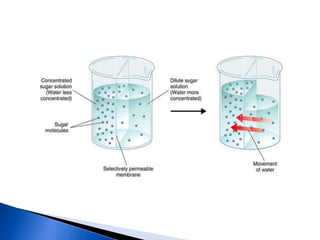
  • #18 Angiotnsin:regulate salt balance
  • #19 1-Plasma protiens carry out many of the functions of plasma Because they are the largest of plasma constituants and dispearsed as colloid they dont exit through pores in the capillary wall, so their presence in plasma and absence in interstitial fluid establish an osmotic gradient between blood and interstital fluid.this prevent excessive loss of plasma from capillaries into the interstetitial fluid, thus
  • #22 Carbonic anhydraze:enzyme that catalyzes the reversible reaction between carbon dioxide (CO2) and water to form carbonic acid (H2CO3), increasing the rate of this reaction several thousandfold. The rapidity of this reaction makes it possible for the water of the blood to transport enormous quantities of CO2 in the form of bicarbonate ion (HCO3–) from the tissues to the lungs, where it is reconverted to CO2 and expelled into the atmosphere as a body waste product Acid base buffer: RBC’s are responsible for most of the acid base buffering of whole blood
  • #26 A hemoglobin molecule has two parts the globin portion : a protien made up of polypeptide chains. four iron containing, nonprotien groups known as heme groups. each of which is bound to one of the polypeptides.
  • #27 O2 is poorly soluble in the plasma it appearse reddish when combined with O2 and bluish when deoxygenated Oxygen carried in the molecular form
  • #29 When iron quantities in plasma falls low ferritin is removed and transported in the form of transferrin
  • #34 1.After rapid hemorrhage 2.In chronic blood loss 3. Bone marrow aplasia :means lack of functioning bone marrow. ex: after excessive x-ray treatment 4. Loss of vitamin B12 or folic acid leads to slow reproduction of erythroblasts, as a result red cells grow to large with odd shapes , these cells rupture easily
  • #35 5. hereditary spherocytosis, the red cells are very small and spherical rather than being biconcave discs. On passing through the splenic pulp and some other tight vascular beds, they are easily ruptured by even slight compression. Crisis: circle of events called a sickle cell disease “crisis,” in which low oxygen tension in the tissues causes sickling, which leads to ruptured red cells, which causes a further decrease in oxygen tension and still more sickling and red cell destruction Once the process starts, it progresses rapidly, eventuating in a serious decrease in red blood cells within a few hours and, often, death.
  • #36 hemoglobin Scontaining faulty beta chains in the hemoglobin molecule, Sickle appearance
  • #39 Capillaries blocked by viscous blood Increased arterial pressure
  • #41 Bone Marrow (granulocytes and monocytes and a few lymphocytes lymph tissue (lymphocytes and plasma cells)
  • #42 various lymphogenous tissues—especially the lymph glands, spleen, thymus,tonsils, and various pockets of lymphoid tissue elsewhere in the body, such as in the bone marrow and in so-called Peyer’s patches underneath the epithelium in the gut wall
  • #43 EOSINOPHILS:red dye eosin BSOPHILS: BASIC BLUE DYE NEUTROPHILS neutral no dye preference
  • #45 7000 in comparison with 5 million rbc’s Neutrophils 62 % Lymphocytes 30% Eosiophils, badophils,monocytes
  • #47 Once in the tissues, they swell to much larger sizes to become tissue macrophages, and, in this form, can live for months unless destroyed while performing phagocytic functions.
  • #48 Lymphoid tissuebloodby diapedisisto tissues, and so on
  • #51 Neutrophils and monocytes can squeeze through the pores of the blood capillaries by diapedesis Both neutrophils and macrophages can move through the tissues by ameboid motion, Chemotaxis: chemical substances in the tissues cause both neutrophils and macrophages to move toward the source of the chemical
  • #53 C3 (product of the complement cascade).
  • #54 Neutrophils projects pseudopodia around the particle Pseudopodia enclose the particle Phagocytic vesicle (phagosome) is formed inside the neutrophil
  • #57  macrophages can extrude the residual products and often survive and function for many more months.
  • #58 proteolytic enzymes to digest bacteria lipases(only in machrophages) that digest thick lipid membrane possessed by some bacteria , ex: tuberculosis bacillus oxidizing agents to kill bacteria
  • #59 Fixed macrophages :large portion of monocytes becomes attached to the tissues and remains attached for months or even years until they are called on to perform specific local protective functions
  • #60 In the lymph nodes: if the particles are not destroyed locally in the tissues, they enter the lymph and flow to the lymph nodes The foreign particles are then trapped in these nodes in a meshwork of sinuses lined by tissue macrophages In the lung: If the particle is not digestible, the macrophages often form a “giant cell” capsule. Ex: around tuberculosis bacilli, silica dust particles, and even carbon particles Kupffer cells: bacteria that enteR Through the GIT SPLEEN AND BONE MARROW: If the organism succeed in entering the blood Spleen:This peculiar passage of blood through the cords of the red pulp provides an exceptional means of phagocytizing unwanted debris the blood, including especially old and abnormal red blood cells.
  • #65 parasites are too large to be phagocytized eosinophils attach themselves to the parasites by way of special surface molecules and release substances that kill many of the parasites
  • #68 masT CELLS:located immediately outside many of the capillaries in the body. HEPARIN:preveents blood coagULATION
  • #70 IgE) can attach to mast cells and basophils. The attachment of antigen to antibody causes the mast cell or basophil to rupture and release ….
  • #72 Normally, the human body lives in symbiosis with many bacteria, Any decrease in the number of white blood cells immediately allows invasion of adjacent tissues by bacteria that are already present
  • #73 Bone marrow aplasia : means lack of functioning bone marrow.
  • #74 Lymphocytic lukemia: cancerous production of lymphoid cells Myelogenous leukemia : begins by cancerous production of young myelogenous cells in the bone marrow and then spreads throughout the body
  • #79 derived originally in the embryo from pluripotent hematopoietic stem cells Lymphocytes that migrate and differentiate in the thymus form T-lymphocyte Lymphocytes that differentiate in the fetal liver and bone marrow form B-lymhocytes After differentiation , B,T lymphocytes migrate to lymphoid tissues throughout the body
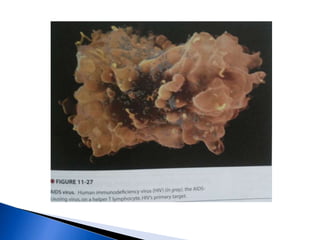
  • #84 Gray: HIV T-helper cells are the inactivated cells in (AIDS)
  • #87 Cytotoxic T Cells(killer cells):has a protien receptor that bind to a specific antigen and secret perforins that punch holes in the attacked antigen and release cytotoxic substances
  • #92 preventing the cytotoxic cells from causing excessive immune reactions that might be damaging to the body’s own tissue
  • #93 Rheumatoid fever:in which the body becomes immunized against tissues in the joints and heart, especially the heart valves, after exposure to a specific type of streptococcal toxin that has an epitope in its molecular structure similar to the structure of some of the body’s own self-antigens
  • #98 Glycoprotiens on its cell membrane that repulses adherence to normal endothelium & causes adherence to injured endothelial cells and exposed collagen
  • #103  When platelets comes to contact with exposed collagen change in shape and contract They become sticky and adhere to collagen and von willbrand factor They secrete ADP & thromboxane A2 that activate other platelets and attract them
  • #104 small vascular holes do develop throughout the body each day—the cut is often sealed by a platelet plug, rather than by a blood clot VON WILLBRAND LEAKS FROM PLASMA
  • #109 the thrombin acts as an enzyme to convert fibrinogen into fibrin fibers that enmesh platelets, blood cells, and plasma to form the clot.
  • #111 Prothrombin activator , In the presence of Ca⁺² causes the conversion of prothrombin to thrombin. Platelets also help in prothrombin conversion Fibrin stabilizing factor produced by platelets add strength to this fibrin meshwork
  • #115 3. As The clot retracts the edges of the broken blood vessel are pulled together, thus contributing still further to the ultimate state of hemostasis.
  • #116 Blood clotting factors play a major role:. Most of these are inactive forms of proteolytic enzymes.When converted to the active forms, their enzymatic actions cause the successive cascading reactions of the clotting process
  • #118 -Traumatized vascular wall that comes in contact with blood results in release of tissue factor(tissue thromboplastin) that function as a proteolytic enzyme -Activation of factor X -Xa combine with tissue factor and factor V in the presence of Ca ions to form prothrombin activator Prothrombin is then converted to thrombin & clotting proceeds Factor V in the activator complex is inactive until thrombin is formed,the proteolytic action of thrombin activate factor V
  • #122 Blood trauma activate factor 12 XIIa activate factor 11 XIa activate factor 9 XIa along with VIII and platelet phospholipds activate factor X Xa with factor V prothrombin activator
  • #130 ****
  • #131 ****factor VIII has 2 active components: Smallncomponentits loss lead toclassic hemophilia Large componentits loss lead to von willbrand disease
  • #134 Roughened endothelial surface of vessel (arteriosclerosis,infection, trauma)
  • #135 *Immobility of patients in bed causes intravascular clotting because of blood stasis in one or more of the leg veins *The clot grows in size and disengage from attachment & flows freely in blood & cause massive blockage in pulmonary artery If blockage in one pulmonary artery, death may occur after several hours to days If it is large enough to block both pulmonary arteries, immediate death ensues
  • #138 Vitamin k blockage:Depresses the liver formation of Prothrombin & factors VII,IX,X