HYPERPLASIAAND
RELATED DISORDER
RELATED TO ORAL
MUCOSA
hyperplasia
Localized hyperplastic lesion of the oral mucosa:
 Epulides;
A) fibrous epulis
B) pregnancy epulis
C) peipheral giant cell granuloma
 Pyogenic granuloma
 Fibroepithelial polyp
 Denture irritation hyperplasia
 Papillary hyperplasia of the palate
Epulides
 Common, localized tumour-like gingival enlargment.
 Mostly arise from interdental tissue.
 Trauma & chronic irritation (e.g subgingival plaque) are
the main aetiological factors.
 F > M
 80% occur anterior to molar teeth.
 Maxilla > Mandible.
A) Fibrous epulis
• Most common, present as pedunculated mass, firm of
consistency, with similar colour to adjacent gingiva.
• Mostly arise btween 11 – 40 years of age.
B) Pregnancy epulis “vascular epulides”
• Present as soft, deep reddish-purple swelling, extensively
ulcerated.
• Haemorrhage occur spontaneously or in minor trauma.
• Arise any time of pregnancy with onset usually around the
end of the first trimester.
• After delivery may regress spontaneously.
C) Peripheral giant cell granuloma
• Least common.
• Present as pedunculated drak-
red in colour commonly ulcerated.
• Peak incidence in males is the 2nd
decade, while in female is the 5th
decade.
• Arise anywhere on gingival or
alveolar mucosa.
• Mandible > Maxilla.
Pyogenic granuloma
 Arise on gingiva, tongue,
buccal and labial mucosa.
 Initiated by trauma or irritation.
 Hyperplastic granulation
tissue.
 treatment include; Excision to
periosteum or periodontal
membrane.
 May be recur but no malignant
potential.
Fibroepithelial polyp
 Arise manily in cheeks ( along the occlusal line), lips,
tongue.
 Present as firm, pink, painless swellling from few
millimeters to centimeters in diameter.
Leaf fibroma: a fibroepithelial polyp occurs in the palate
under denture, occaionally the surface is whitish due to
frictional keratosis.
Denture irritation hyperplasia
 Related to the periphery of an ill
fitting denture.
 Single or multiple.
 Present as firm leaf-like folds of
tissue embracing the over
extending flange of denture.
 Arise in the depth of vestibular
and lingual sulci but may
involve the inner surface of lips,
cheeks, palate ( along posterior
edge of upper denture).
 More in the lower denture.
 F > M
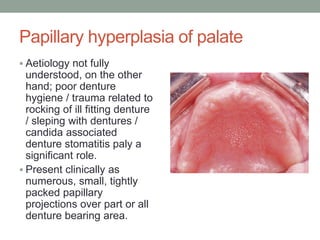
Papillary hyperplasia of palate
 Aetiology not fully
understood, on the other
hand; poor denture
hygiene / trauma related to
rocking of ill fitting denture
/ sleping with dentures /
candida associated
denture stomatitis paly a
significant role.
 Present clinically as
numerous, small, tightly
packed papillary
projections over part or all
denture bearing area.

Hyperplasia

  • 1.
  • 2.
    hyperplasia Localized hyperplastic lesionof the oral mucosa:  Epulides; A) fibrous epulis B) pregnancy epulis C) peipheral giant cell granuloma  Pyogenic granuloma  Fibroepithelial polyp  Denture irritation hyperplasia  Papillary hyperplasia of the palate
  • 3.
    Epulides  Common, localizedtumour-like gingival enlargment.  Mostly arise from interdental tissue.  Trauma & chronic irritation (e.g subgingival plaque) are the main aetiological factors.  F > M  80% occur anterior to molar teeth.  Maxilla > Mandible.
  • 4.
    A) Fibrous epulis •Most common, present as pedunculated mass, firm of consistency, with similar colour to adjacent gingiva. • Mostly arise btween 11 – 40 years of age.
  • 5.
    B) Pregnancy epulis“vascular epulides” • Present as soft, deep reddish-purple swelling, extensively ulcerated. • Haemorrhage occur spontaneously or in minor trauma. • Arise any time of pregnancy with onset usually around the end of the first trimester. • After delivery may regress spontaneously.
  • 6.
    C) Peripheral giantcell granuloma • Least common. • Present as pedunculated drak- red in colour commonly ulcerated. • Peak incidence in males is the 2nd decade, while in female is the 5th decade. • Arise anywhere on gingival or alveolar mucosa. • Mandible > Maxilla.
  • 7.
    Pyogenic granuloma  Ariseon gingiva, tongue, buccal and labial mucosa.  Initiated by trauma or irritation.  Hyperplastic granulation tissue.  treatment include; Excision to periosteum or periodontal membrane.  May be recur but no malignant potential.
  • 8.
    Fibroepithelial polyp  Arisemanily in cheeks ( along the occlusal line), lips, tongue.  Present as firm, pink, painless swellling from few millimeters to centimeters in diameter. Leaf fibroma: a fibroepithelial polyp occurs in the palate under denture, occaionally the surface is whitish due to frictional keratosis.
  • 9.
    Denture irritation hyperplasia Related to the periphery of an ill fitting denture.  Single or multiple.  Present as firm leaf-like folds of tissue embracing the over extending flange of denture.  Arise in the depth of vestibular and lingual sulci but may involve the inner surface of lips, cheeks, palate ( along posterior edge of upper denture).  More in the lower denture.  F > M
  • 10.
    Papillary hyperplasia ofpalate  Aetiology not fully understood, on the other hand; poor denture hygiene / trauma related to rocking of ill fitting denture / sleping with dentures / candida associated denture stomatitis paly a significant role.  Present clinically as numerous, small, tightly packed papillary projections over part or all denture bearing area.