Downloaded 128 times
The document discusses rational functions, defined as functions that can be expressed as the ratio of two polynomials. It includes exercises on identifying rational functions, determining their domains and ranges, and finding their zeroes through specific steps. The document also provides assignments related to finding zeroes of various rational functions.
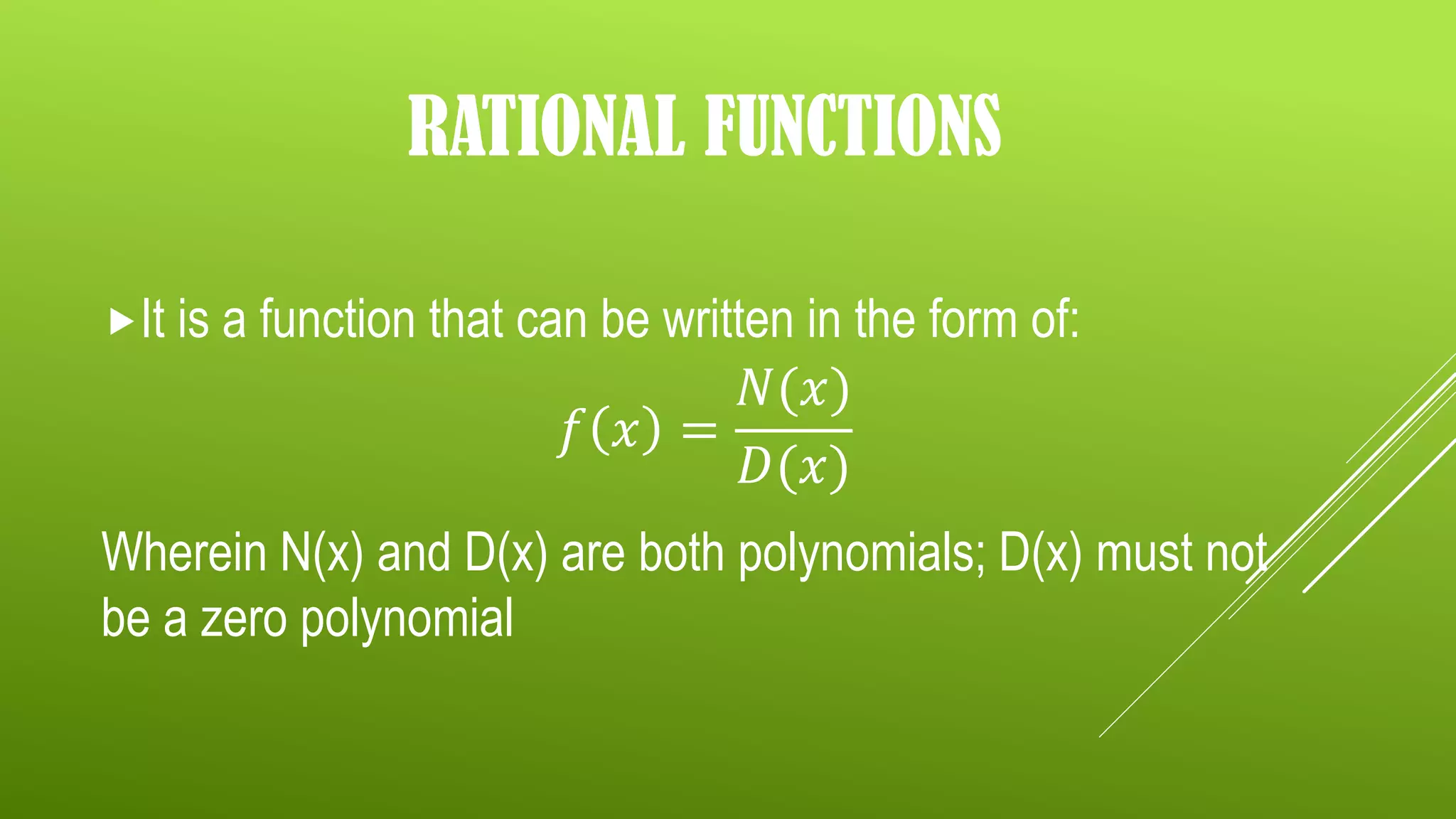
Introduction to rational functions, defined as the ratio of two polynomials with non-zero denominator.
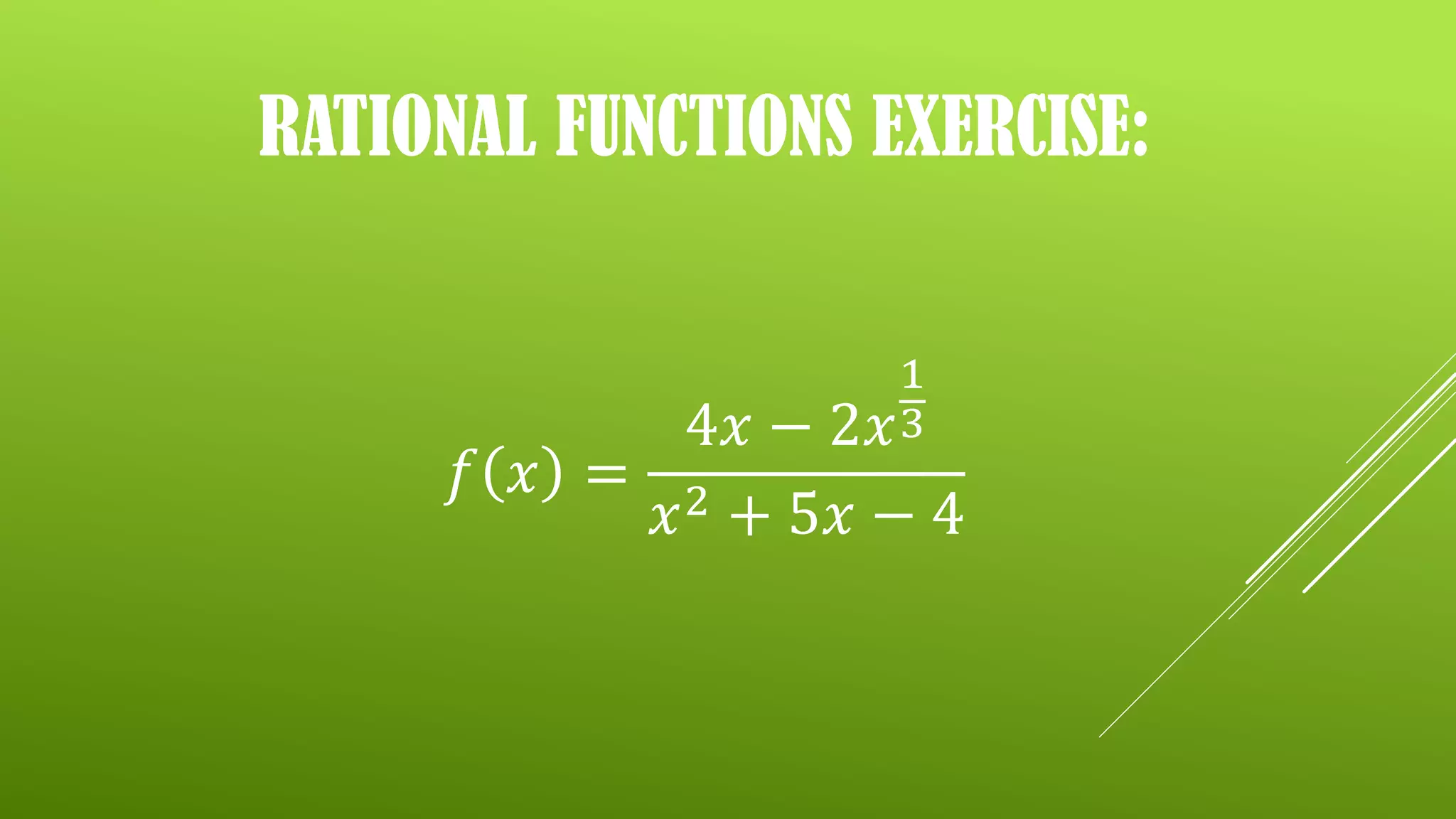
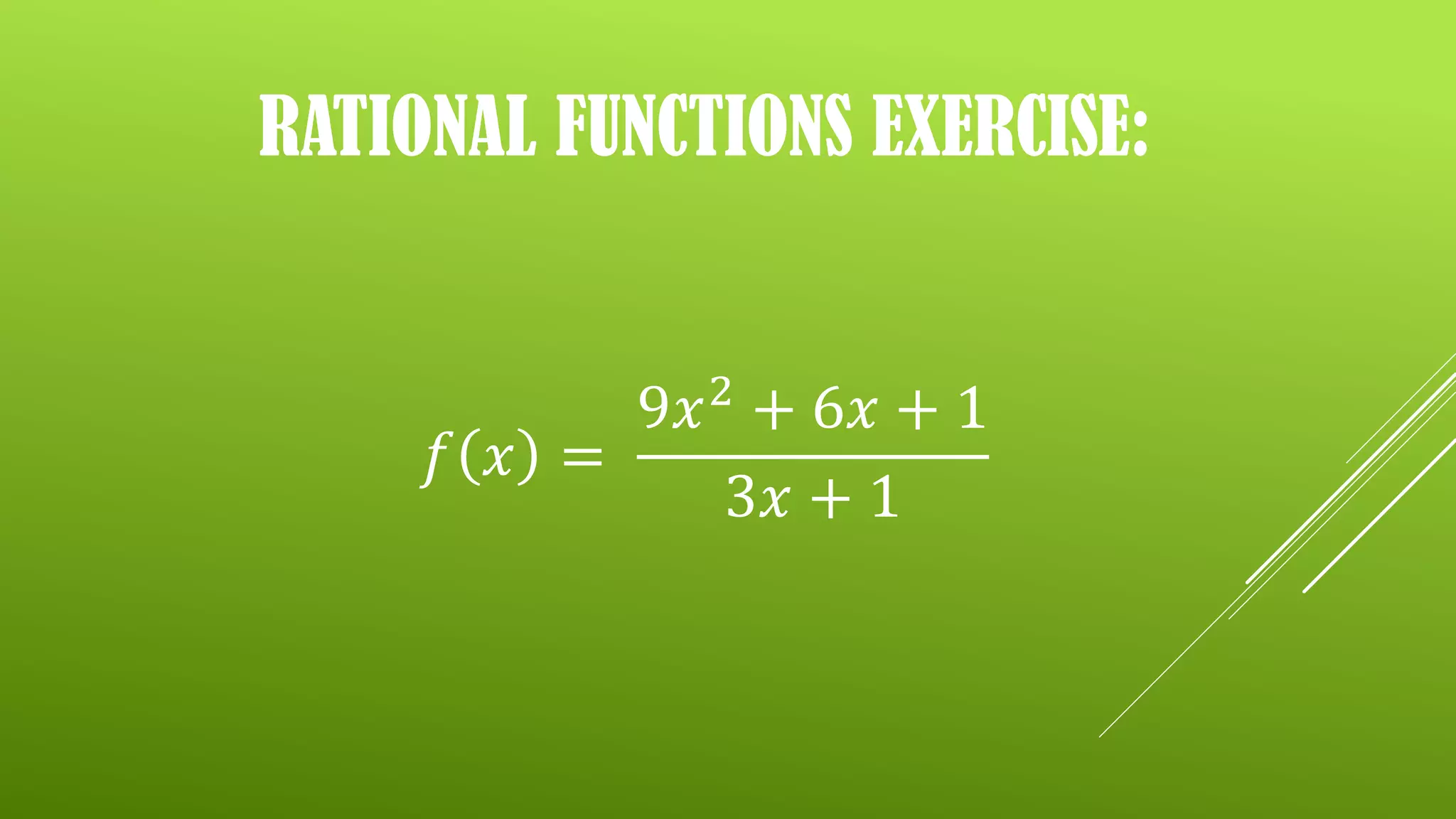
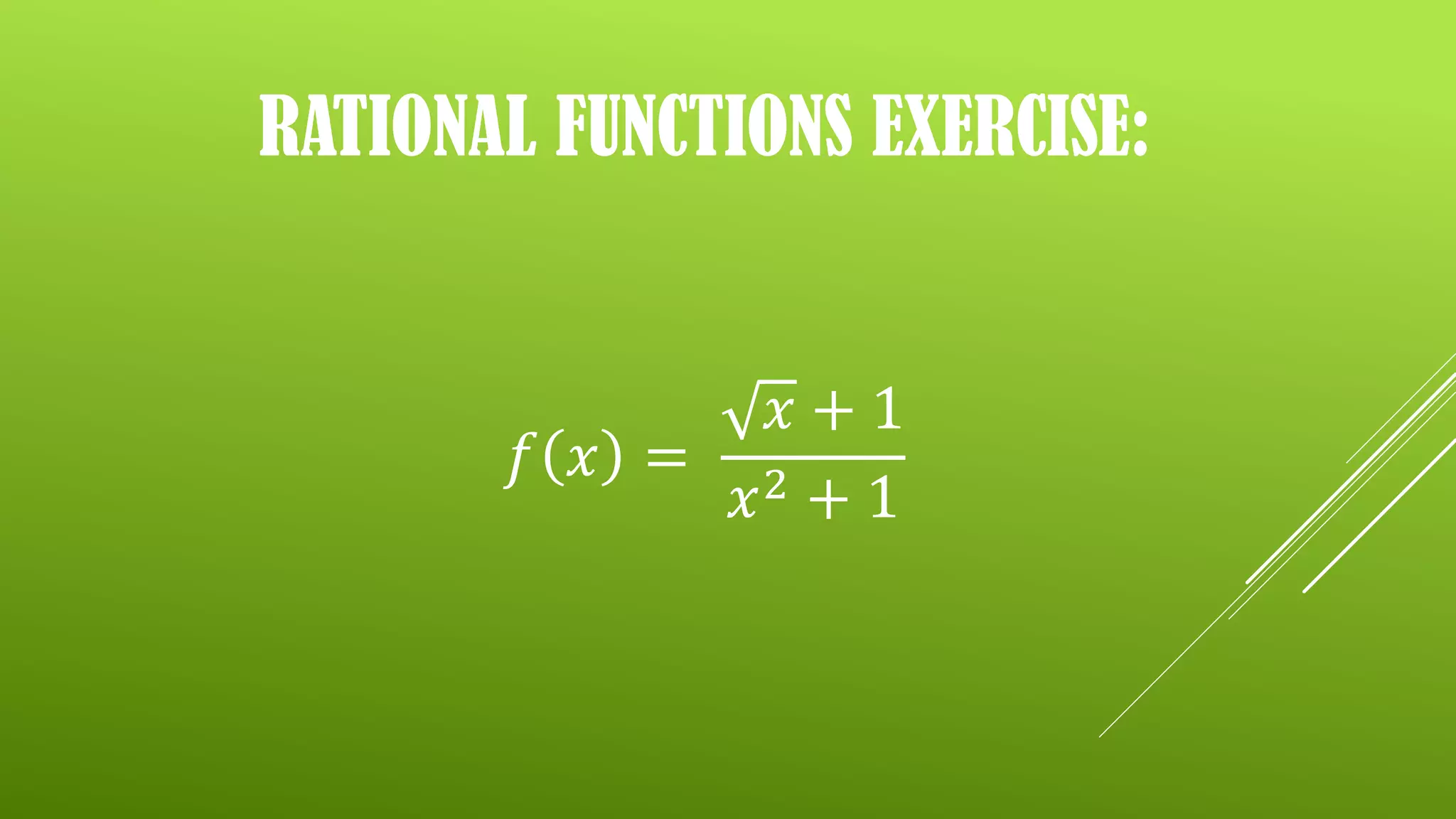
Exercises to determine if given functions are rational by analyzing specific examples.
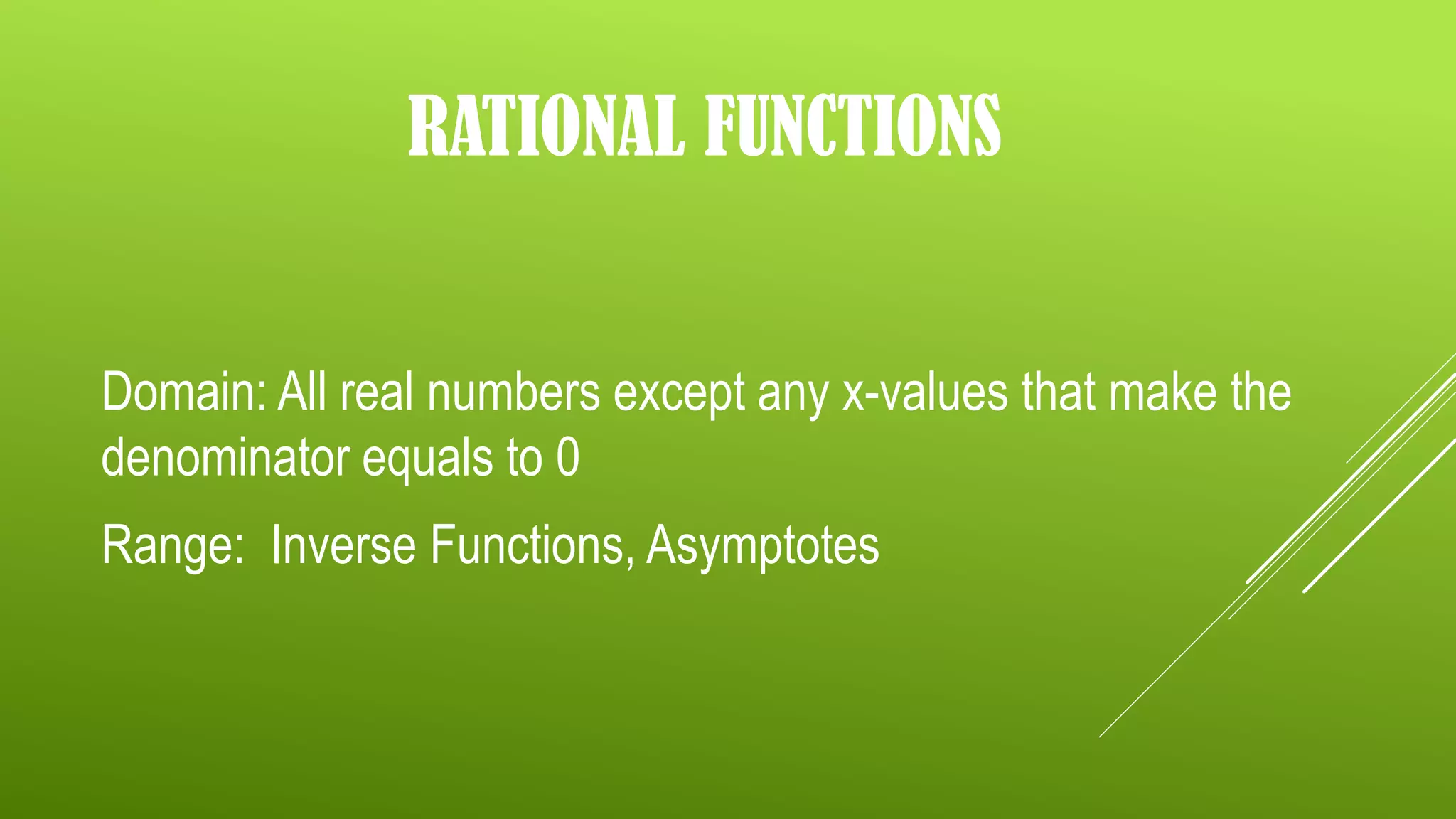
Domain includes all real numbers except where the denominator equals zero; discusses inverse functions and asymptotes.
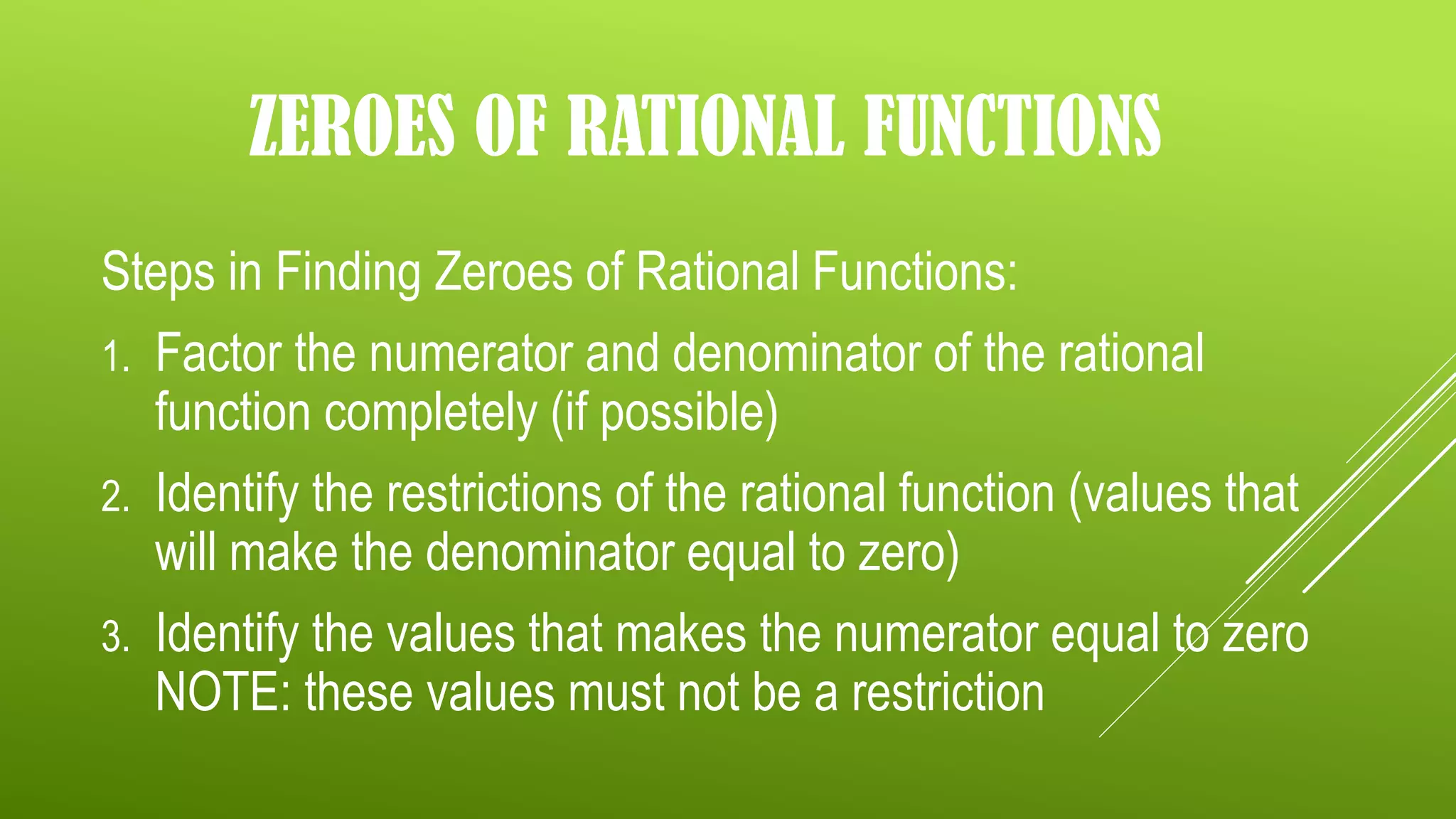
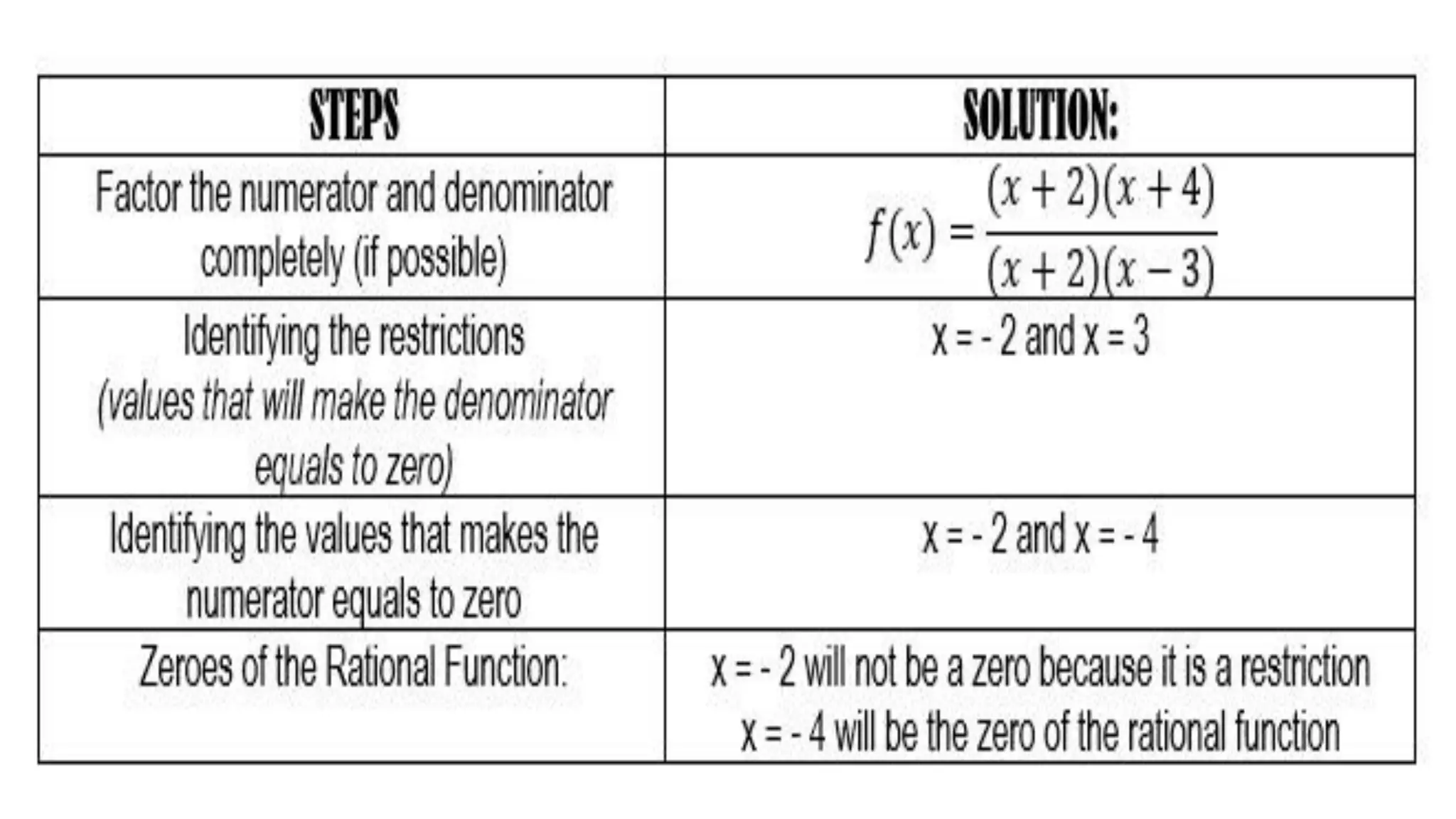
Steps to find zeroes include factoring, identifying restrictions, and finding numerator zeroes.
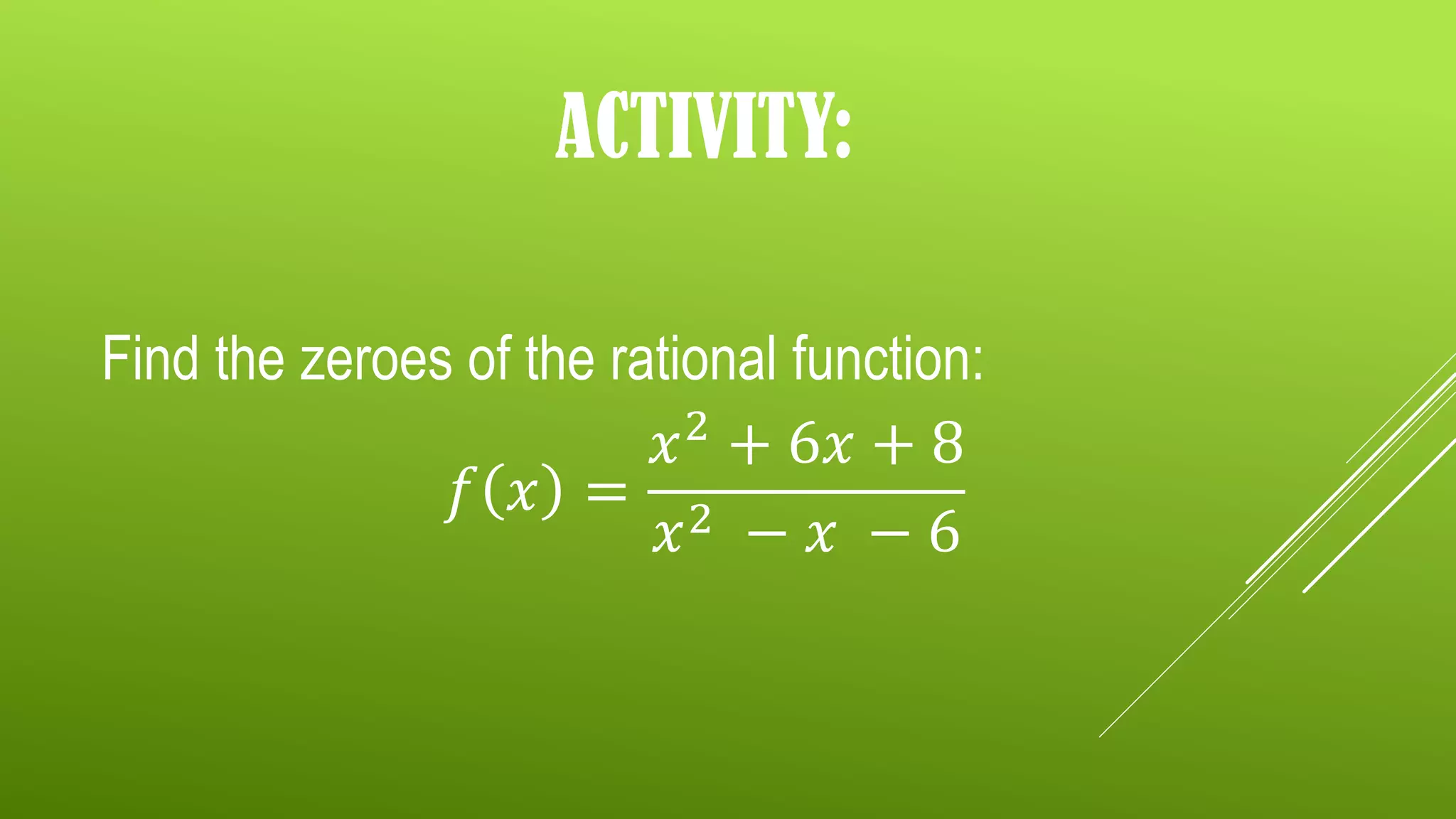
Practical activity to apply knowledge by finding zeroes of a specified rational function.
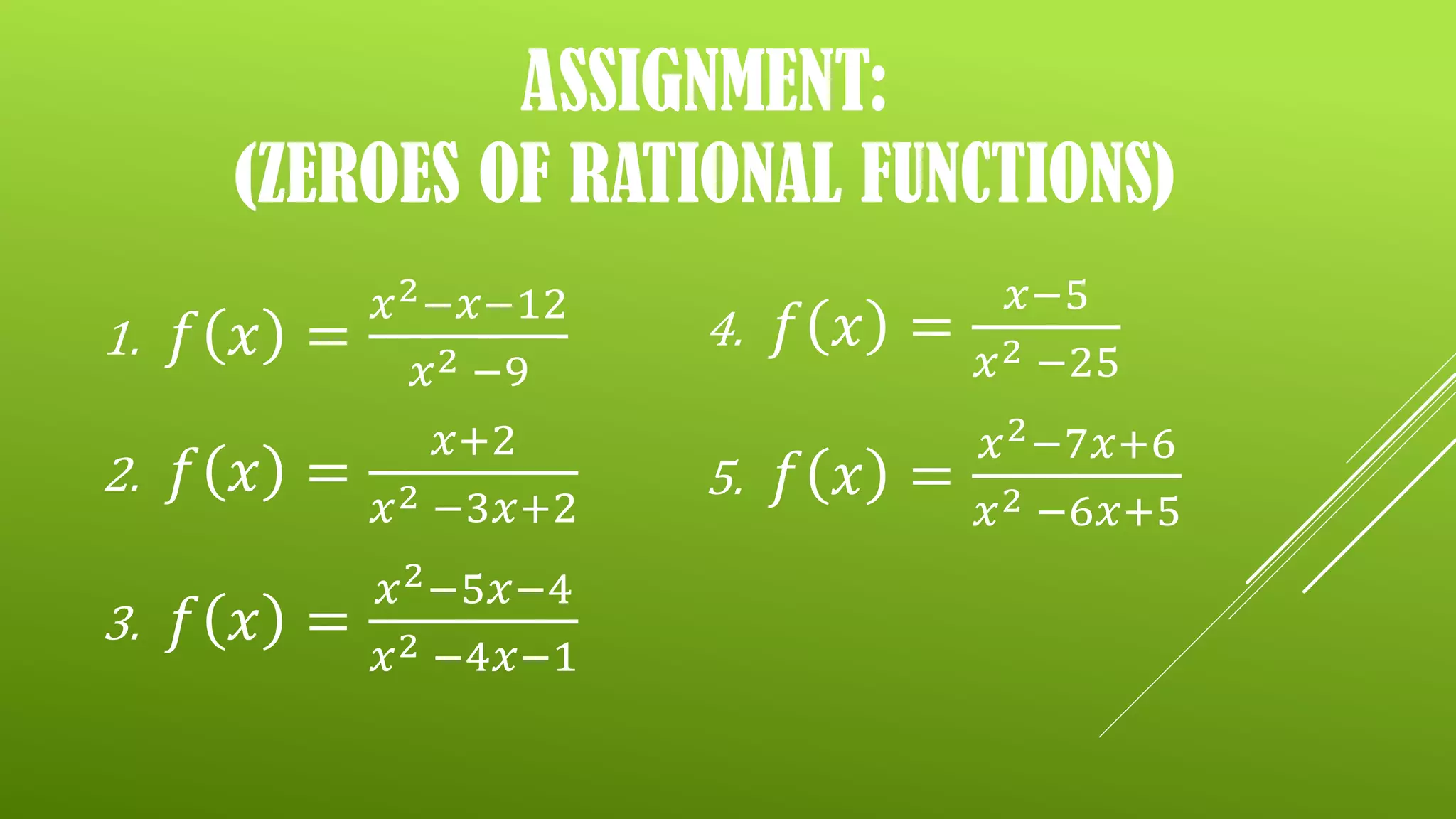
Assignment involving multiple rational functions to further practice finding their zeroes.


![770908401-PPT-W2Q1-Rational-Functions-1 pptx. [Autosaved].pptx](https://cdn.slidesharecdn.com/ss_thumbnails/770908401-ppt-w2q1-rational-functions-1pptx-251106135035-b499d3b0-thumbnail.jpg?width=640&height=640&fit=bounds)


