Gene Silensing
 Basic Science:
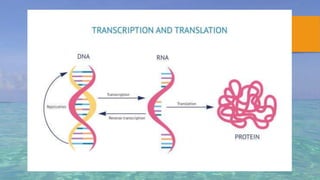
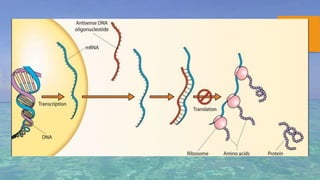
• Genes contain the information necessary to produce proteins.
Protein production occurs in two phases called transcription and
translation. In the transcription phase, the DNA strand is used as
a template for manufacturing an mRNA molecule.
• mRNA is responsible for communicating the genetic message in
the DNA to the cell so that protein production can take place. In
the translation phase, the mRNA travels to the ribosome, and
carry out protein synthesis
• That is a gene which would be expressed (“turned on”)
under normal circumstances is switched off by machinery
in the cell.
• It occurs when RNA is unable to make a protein during
translation.
• Gene silencing is same as gene knock down but is totally
different from gene knock out.
• When genes are knock down, there expression is reduced,
where in contrast when genes are knocked out, they are
completely removed from organism’s genome and thus
have no expression.
History of gene silencing
 1990 Jorgensen:
• To develop the pigmentation in petunias introduction of
transgenes homologous to endogenous genes often
resulted in plants with both gene suppressed called co-
suppression. Resulted in degradation of the endogenous
and transgene mRNA.
 1995 Kemphues:
• Injection of either antisense or sense RNAs in the
germline of C.elegans (Caenorhabditis elegans) was
equally effective at silencing at homologous target genes.
 1998 Mello and Fire:
• Combination of sense and antisense RNA
(dsRNA) was 10 times more effective than
single strand RNA.
• The discovery of the mechanism of RNA
interference by ds RNA by prof. Andrew Fire
and prof. Craig Mello in 1998, gave them the
Nobel prize in 2006.
Types of Gene silencing
Genes are regulated at either the transcriptional level or post-
transcriptional level, therefore silencing can n be induced either at
transcriptional level or posttranscriptional level.
 Transcriptional gene silencing
It is the process of silence the gene by modify the Gene.
 Post transcriptional gene silencing
It means double stranded RNA (dsRNA) suppress the
expression of the gene.
How does it works
• This is accomplished by binding a specific strand
of RNA to an existing m-RNA strand.
• The m-RNA creates a copy of DNA strand.
• By binding the RNA to the m-RNA, m-RNA is
prevented from replicating that portion of the
DNA.
• Specific genes can be targeted and prevented from
replicating in to new DNA strands.
 Mechanism of Gene Silencing
It have three type of mechanisms.
• Antisense Oligonucleotides
• Ribozymes
• RNA Interference (RNAi)
Antisense oligonucleotides
• Antisense therapy was first demonstrated in 1970s
Stephenson in Rous sarcoma virus.
• It is slightly differed from the RNAi process. Instead of
gene cutting mechanism, the Oligonucleotide was
introduced to silence the gene.
• Antisense therapy helps in the study of Gene function.
• It uses to prevent the synthesis of specific protein.
Application of Antisense Oligonucleotides:
Antisense drugs are being researched to treat a variety
of diseases such as :
 Lung cancer,
 Colorectal carcinoma
 Pancreatic carcinoma
 Malignant melanoma
 Diabetes
 Amyotrophic lateral sclerosis (ALS),
 Duchenne muscular dystrophy
 Asthma,
 Arthritis.
Antisense drugs
Two antisense drugs have been approved by the U.S. FDA
1. Fomivirsen –marketed as Vitravene as a treatment for
cytomegalovirus retinitis.
2. Mipomersen- marketed as Kynamro for homozygous
familial hypercholesterolemia
Ribozymes
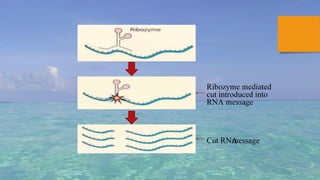
• Ribozymes are catalytic RNA molecules used to inhibit
gene expression.
• These molecules work by cleaving mRNA molecules,
essentially silencing the genes that produced them.
• Several ribozymes motif such as hammerhead, hairpin,
hepatitis delta virus, Rnase P (e coil ,degrade tRNA).
• Most of the ribozymes motif are found in viruses and
viroids. Mechanisms same as Ribonuclease.
• Research to finding sequence- specific cleavage
ribozymes.
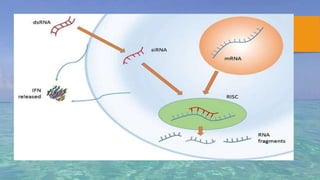
RNA Interference (RNAi)
• Andrew Fire and C. Mello pooled the 2006 Nobel Prize
in Physiology or Medicine for their work on RNA
interference in the nematode worm Caenorhabditis
elegans, which they published in 1998.
• RNA interference (RNAi) is a biological process in
which RNA molecules inhibit gene expression or
translation, by neutralizing targeted mRNA molecules.
• RNAi was known by other names, including co-
suppression, Posttranscriptional gene silencing (PTGS),
and quelling.
 Biological role of gene silencing
• Protection against pathogens including viruses.
• Production of resistant plants.
• Protection against endogenous transposable
elements.
• Protection against foreign or duplicated genes.
Advantages of gene silencing.
• Down regulation of gene expression simplifies "knockout“
analysis.
• Easier than use of antisense oligonucleotides. Si RNA more
effective and sensitive at lower concentration.
• Cost effective.
• High Specificity middle region 9-14 are most sensitive with Si
RNA, the researcher can simultaneously perform experiments in
any cell type of interest.
• Can be labelled ease of transfection by use of vector.
• Blocking expression of unwanted genes and undesirable
substances.
• Inducing viral resistance.
• Powerful tool for analysing unknown genes in sequenced
genomes.
• Useful approach in future gene therapy.
• Oligonucleotides can be manufactured quickly, some within
one week; the sequence of the mRNA is all that is needed.
Disadvantages of gene silencing
• “High pressure injection” and electroporation can cause
significant injection damage to the integrity of the normal
tissues and organs and thus preclude the utilization in a
clinical set-up.
• Liposomes/cationic encapsulated siRNA may also be toxic
to the host and may cause severe host immune responses.
•
• Other emerging strategies includes chemical
modification of siRNA molecules and encapsulated
with different molecules are still in their infancy and
need to be thoroughly investigated before used in
therapeutic applications.
Application of gene silencing
 RNAi as a treatment for HIV :
• siRNA was used to silence the primary HIV receptor
chemokine receptor 5 (CCR5). This prevented the virus from
entering the human peripheral blood lymphocytes and the
primary hematopoietic stem cells. SiRNAs can inhibit HIV
replication effectively in culture.
 Respiratory diseases :
• Ribozymes, antisense oligonucleotides, and more recently
RNAi have been used to target mRNA molecules involved in
asthma.
 RNAi in cancer :
Ras genes are frequently mutated in human cancers.
Antiapoptotic proteins, such as clusterin and survivin, are often
expressed in cancer cells.Clusterin and survivin-targeting
siRNAs were used to reduce the number of antiapoptotic proteins
and, thus, increase the sensitivity of the cancer cells to
chemotherapy treatments.
 Neurodegenerative disorders :
• Gene silencing can be used to treat HD by targeting the mutant
huntingtin protein.
 Crop quality traits :
Reduced the toxic terpenoid gossypol in cotton
seeds and cotton oil.
 Modulation of HIV-I replication by RNA i.
 Small RNA and it’s application in andrology and urology.
 Developing technologies for epigenomic analysis and clinical
application of molecular diagnosis.
 Currently there are at least six oligonucleotide drugs inducing
RNA i for illness including cancer.
Thank You!

Gene silensing

  • 1.
  • 2.
     Basic Science: •Genes contain the information necessary to produce proteins. Protein production occurs in two phases called transcription and translation. In the transcription phase, the DNA strand is used as a template for manufacturing an mRNA molecule. • mRNA is responsible for communicating the genetic message in the DNA to the cell so that protein production can take place. In the translation phase, the mRNA travels to the ribosome, and carry out protein synthesis
  • 5.
    • That isa gene which would be expressed (“turned on”) under normal circumstances is switched off by machinery in the cell. • It occurs when RNA is unable to make a protein during translation. • Gene silencing is same as gene knock down but is totally different from gene knock out. • When genes are knock down, there expression is reduced, where in contrast when genes are knocked out, they are completely removed from organism’s genome and thus have no expression.
  • 6.
    History of genesilencing  1990 Jorgensen: • To develop the pigmentation in petunias introduction of transgenes homologous to endogenous genes often resulted in plants with both gene suppressed called co- suppression. Resulted in degradation of the endogenous and transgene mRNA.  1995 Kemphues: • Injection of either antisense or sense RNAs in the germline of C.elegans (Caenorhabditis elegans) was equally effective at silencing at homologous target genes.
  • 7.
     1998 Melloand Fire: • Combination of sense and antisense RNA (dsRNA) was 10 times more effective than single strand RNA. • The discovery of the mechanism of RNA interference by ds RNA by prof. Andrew Fire and prof. Craig Mello in 1998, gave them the Nobel prize in 2006.
  • 8.
    Types of Genesilencing Genes are regulated at either the transcriptional level or post- transcriptional level, therefore silencing can n be induced either at transcriptional level or posttranscriptional level.  Transcriptional gene silencing It is the process of silence the gene by modify the Gene.  Post transcriptional gene silencing It means double stranded RNA (dsRNA) suppress the expression of the gene.
  • 9.
    How does itworks • This is accomplished by binding a specific strand of RNA to an existing m-RNA strand. • The m-RNA creates a copy of DNA strand. • By binding the RNA to the m-RNA, m-RNA is prevented from replicating that portion of the DNA. • Specific genes can be targeted and prevented from replicating in to new DNA strands.
  • 10.
     Mechanism ofGene Silencing It have three type of mechanisms. • Antisense Oligonucleotides • Ribozymes • RNA Interference (RNAi)
  • 11.
    Antisense oligonucleotides • Antisensetherapy was first demonstrated in 1970s Stephenson in Rous sarcoma virus. • It is slightly differed from the RNAi process. Instead of gene cutting mechanism, the Oligonucleotide was introduced to silence the gene. • Antisense therapy helps in the study of Gene function. • It uses to prevent the synthesis of specific protein.
  • 13.
    Application of AntisenseOligonucleotides: Antisense drugs are being researched to treat a variety of diseases such as :  Lung cancer,  Colorectal carcinoma  Pancreatic carcinoma  Malignant melanoma  Diabetes  Amyotrophic lateral sclerosis (ALS),  Duchenne muscular dystrophy  Asthma,  Arthritis.
  • 14.
    Antisense drugs Two antisensedrugs have been approved by the U.S. FDA 1. Fomivirsen –marketed as Vitravene as a treatment for cytomegalovirus retinitis. 2. Mipomersen- marketed as Kynamro for homozygous familial hypercholesterolemia
  • 15.
    Ribozymes • Ribozymes arecatalytic RNA molecules used to inhibit gene expression. • These molecules work by cleaving mRNA molecules, essentially silencing the genes that produced them. • Several ribozymes motif such as hammerhead, hairpin, hepatitis delta virus, Rnase P (e coil ,degrade tRNA). • Most of the ribozymes motif are found in viruses and viroids. Mechanisms same as Ribonuclease. • Research to finding sequence- specific cleavage ribozymes.
  • 17.
    RNA Interference (RNAi) •Andrew Fire and C. Mello pooled the 2006 Nobel Prize in Physiology or Medicine for their work on RNA interference in the nematode worm Caenorhabditis elegans, which they published in 1998. • RNA interference (RNAi) is a biological process in which RNA molecules inhibit gene expression or translation, by neutralizing targeted mRNA molecules. • RNAi was known by other names, including co- suppression, Posttranscriptional gene silencing (PTGS), and quelling.
  • 19.
     Biological roleof gene silencing • Protection against pathogens including viruses. • Production of resistant plants. • Protection against endogenous transposable elements. • Protection against foreign or duplicated genes.
  • 20.
    Advantages of genesilencing. • Down regulation of gene expression simplifies "knockout“ analysis. • Easier than use of antisense oligonucleotides. Si RNA more effective and sensitive at lower concentration. • Cost effective. • High Specificity middle region 9-14 are most sensitive with Si RNA, the researcher can simultaneously perform experiments in any cell type of interest.
  • 21.
    • Can belabelled ease of transfection by use of vector. • Blocking expression of unwanted genes and undesirable substances. • Inducing viral resistance. • Powerful tool for analysing unknown genes in sequenced genomes. • Useful approach in future gene therapy. • Oligonucleotides can be manufactured quickly, some within one week; the sequence of the mRNA is all that is needed.
  • 22.
    Disadvantages of genesilencing • “High pressure injection” and electroporation can cause significant injection damage to the integrity of the normal tissues and organs and thus preclude the utilization in a clinical set-up. • Liposomes/cationic encapsulated siRNA may also be toxic to the host and may cause severe host immune responses. •
  • 23.
    • Other emergingstrategies includes chemical modification of siRNA molecules and encapsulated with different molecules are still in their infancy and need to be thoroughly investigated before used in therapeutic applications.
  • 24.
    Application of genesilencing  RNAi as a treatment for HIV : • siRNA was used to silence the primary HIV receptor chemokine receptor 5 (CCR5). This prevented the virus from entering the human peripheral blood lymphocytes and the primary hematopoietic stem cells. SiRNAs can inhibit HIV replication effectively in culture.  Respiratory diseases : • Ribozymes, antisense oligonucleotides, and more recently RNAi have been used to target mRNA molecules involved in asthma.
  • 25.
     RNAi incancer : Ras genes are frequently mutated in human cancers. Antiapoptotic proteins, such as clusterin and survivin, are often expressed in cancer cells.Clusterin and survivin-targeting siRNAs were used to reduce the number of antiapoptotic proteins and, thus, increase the sensitivity of the cancer cells to chemotherapy treatments.  Neurodegenerative disorders : • Gene silencing can be used to treat HD by targeting the mutant huntingtin protein.
  • 26.
     Crop qualitytraits : Reduced the toxic terpenoid gossypol in cotton seeds and cotton oil.  Modulation of HIV-I replication by RNA i.  Small RNA and it’s application in andrology and urology.  Developing technologies for epigenomic analysis and clinical application of molecular diagnosis.  Currently there are at least six oligonucleotide drugs inducing RNA i for illness including cancer.
  • 27.