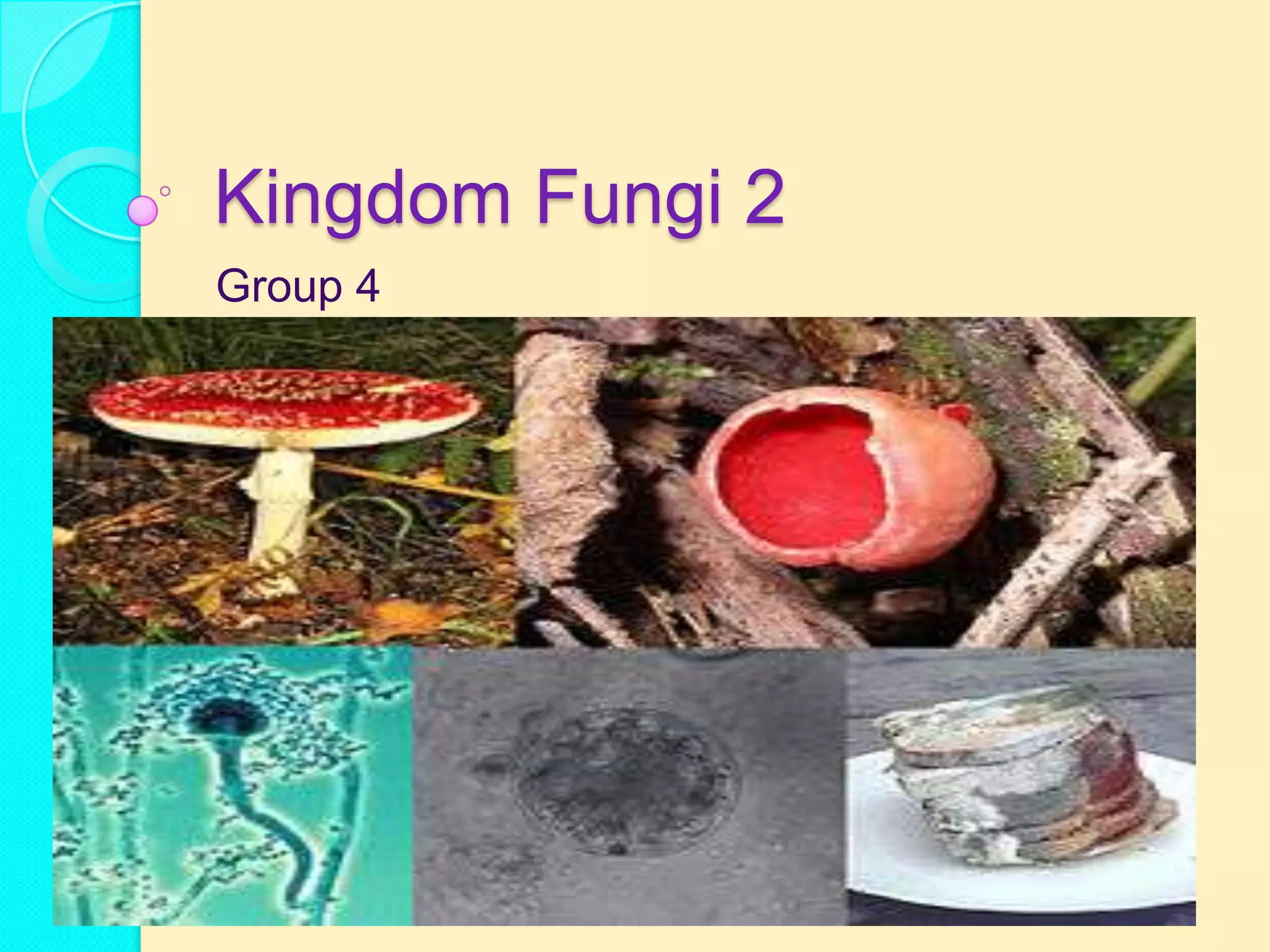
Kingdom Fungi 2
Group 4
Common Characteristics of
Fungi
   Mycologists, scientists who specialize
    in the study of fungi, believe there are
    a million or more species of fungi.
    Scientists believe they have identified
    only 5% of all fungi.
Heterotrophic Fungi
   Fungi can obtain nutrients by
    absorption
Saprophytic Fungi
   Fungi secretes enzymes to break
    down dead organic matter in recycling
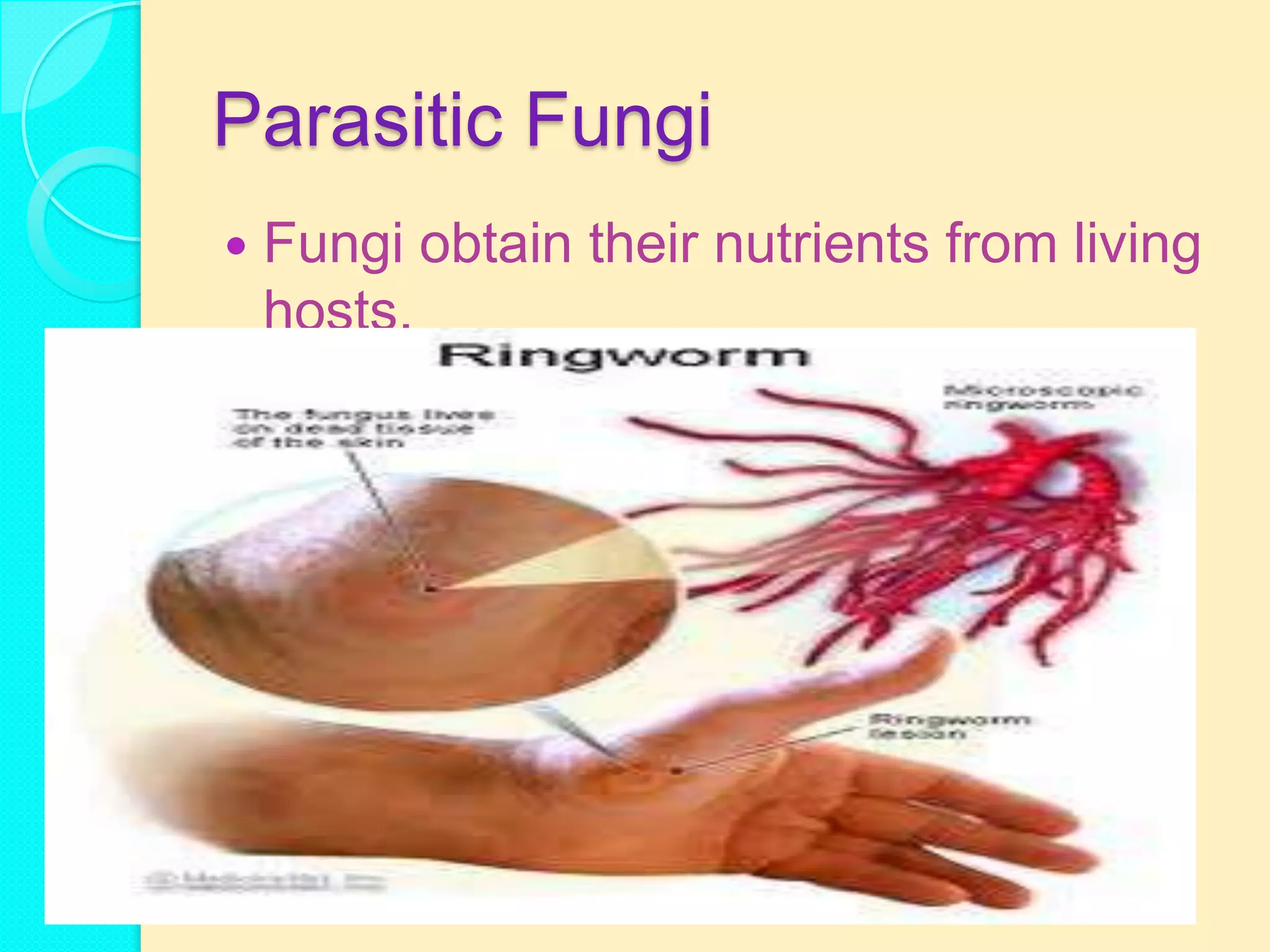
Parasitic Fungi
   Fungi obtain their nutrients from living
    hosts.
 Fungi cell walls are made mostly of
  the carbohydrate chitin.
 Fungi can reproduce sexually and
  asexually.
 Kingdom Fungi is more related to
  Kingdom Animalia than Kingdom
  Plantae.
 Kingdom Fungi & Kingdom Animalia
  probably diverged from a common
  ancestor some 0.6 billion years ago.
 Fungi cell walls are made mostly of
  the carbohydrate chitin.
 Chitin can be found also in
  exoskeleton insects
 The storage carbohydrate of fungi is
  called glycogen.
 Glycogen can be found also in
  muscles.
Fungi Reproduction
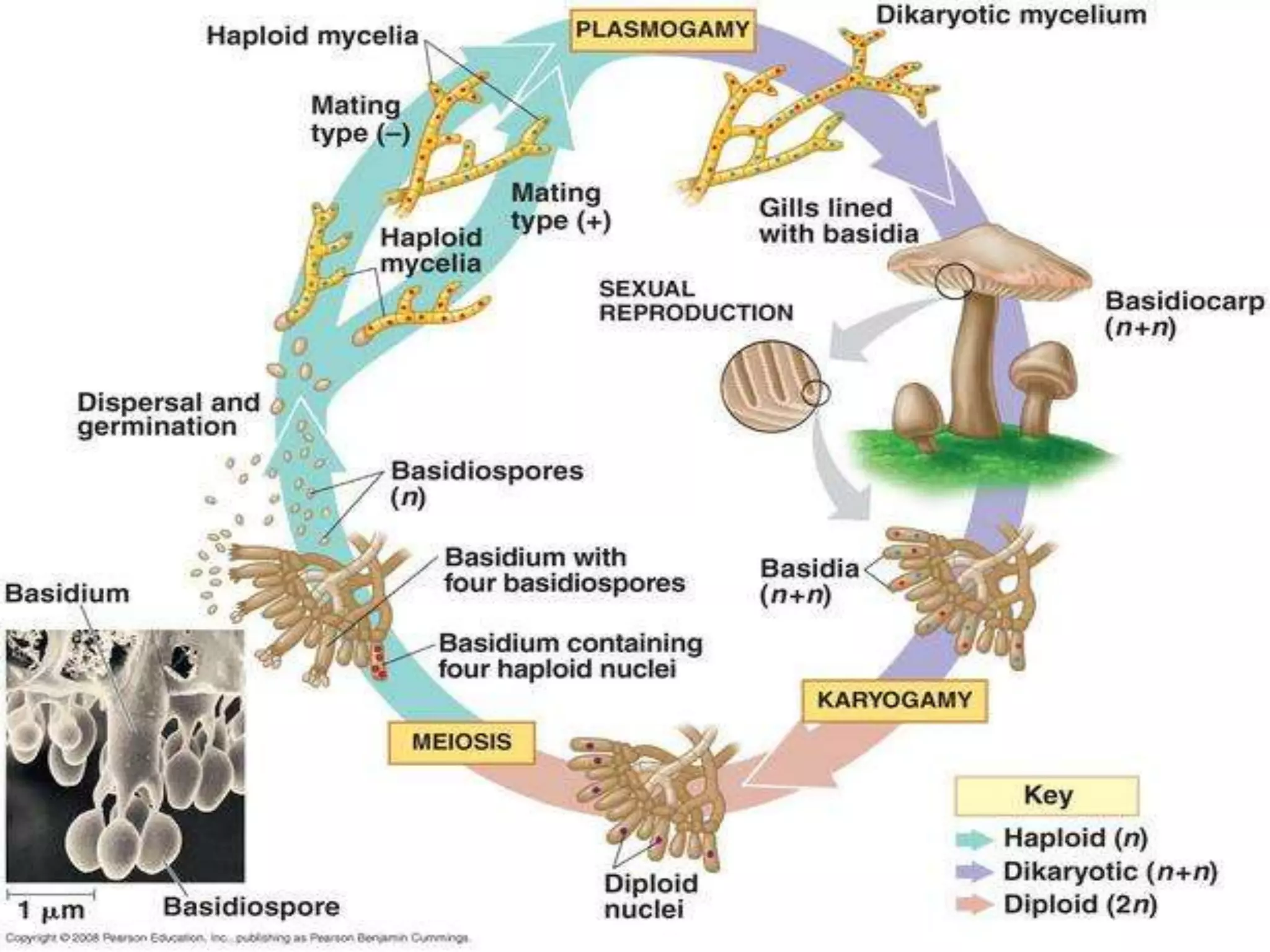
   Dikaryotic Stage – the coexistence of
    two different mating types of nuclei
    which is unique to fungi.
Plasmogamy
    is a stage in the sexual reproduction of fungi.
    In this stage, the cytoplasm of two
    parent mycelia fuse together without the
    fusion of nuclei, as occurs in higher terrestrial
    fungi. After plasmogamy occurs, the
    secondary mycelium forms. The secondary
    mycelium consists of dikaryotic cells, one
    nucleus from each of the parent mycelia. It is
    the fusion of protoplasm between two motile
    or non-motile gametes. It involves the union of
    two protoplast bringing two haploid nuclei
    close together in the same cell...
Karyogamy
 Karyogamy is the fusion of pronuclei of two cells, as
  part of syngamy, fertilization, or true bacterial
  conjugation.
 It is one of the two major modes
  of reproduction in fungi. In fungi that lack sexual
  cycles, it is an important source of genetic
  variation through the formation of somatic diploids.
 The term comes for the Greek karuo- (from karuon)
  meaning nut and -gamos meaning marriage.It is
  mainly found in fungal phylum ascomycetes. Species
  that use this mode of reproduction is responsible for
  causing ringworm.
 Four groups of fungi according to their
  molecular structures and sexual
  reproduction:
 Chytrids
 Zygomycetes
 Ascomycetes
 Basidiomycetes
Chytridiomycetes
 Members of the fungi phylum are
  considered to be the most primative
  fungi and probably appeared about
  500 million years ago.
 Chytrids, as member of this group are
  known, are found anywhere.
Chytrids
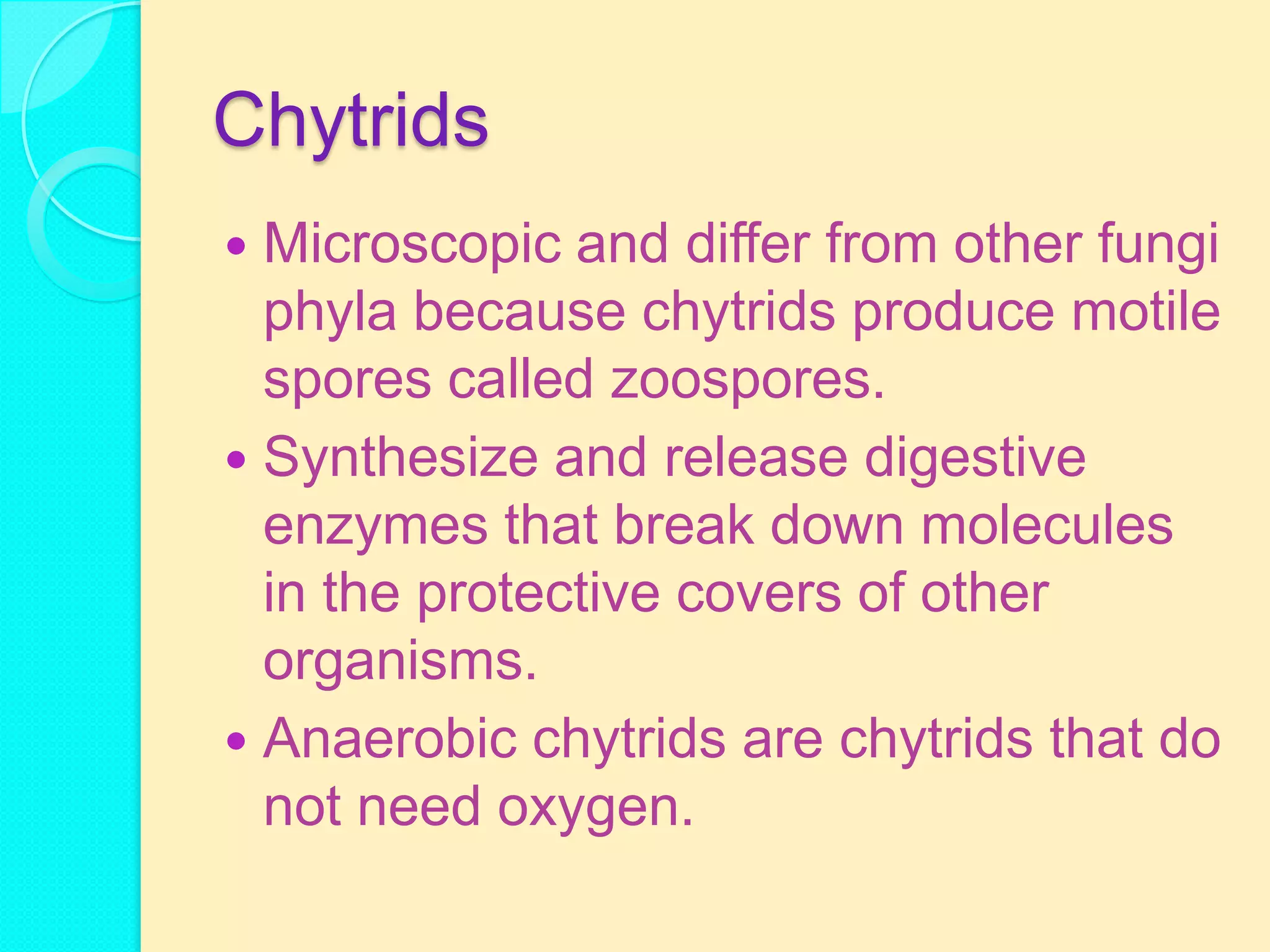
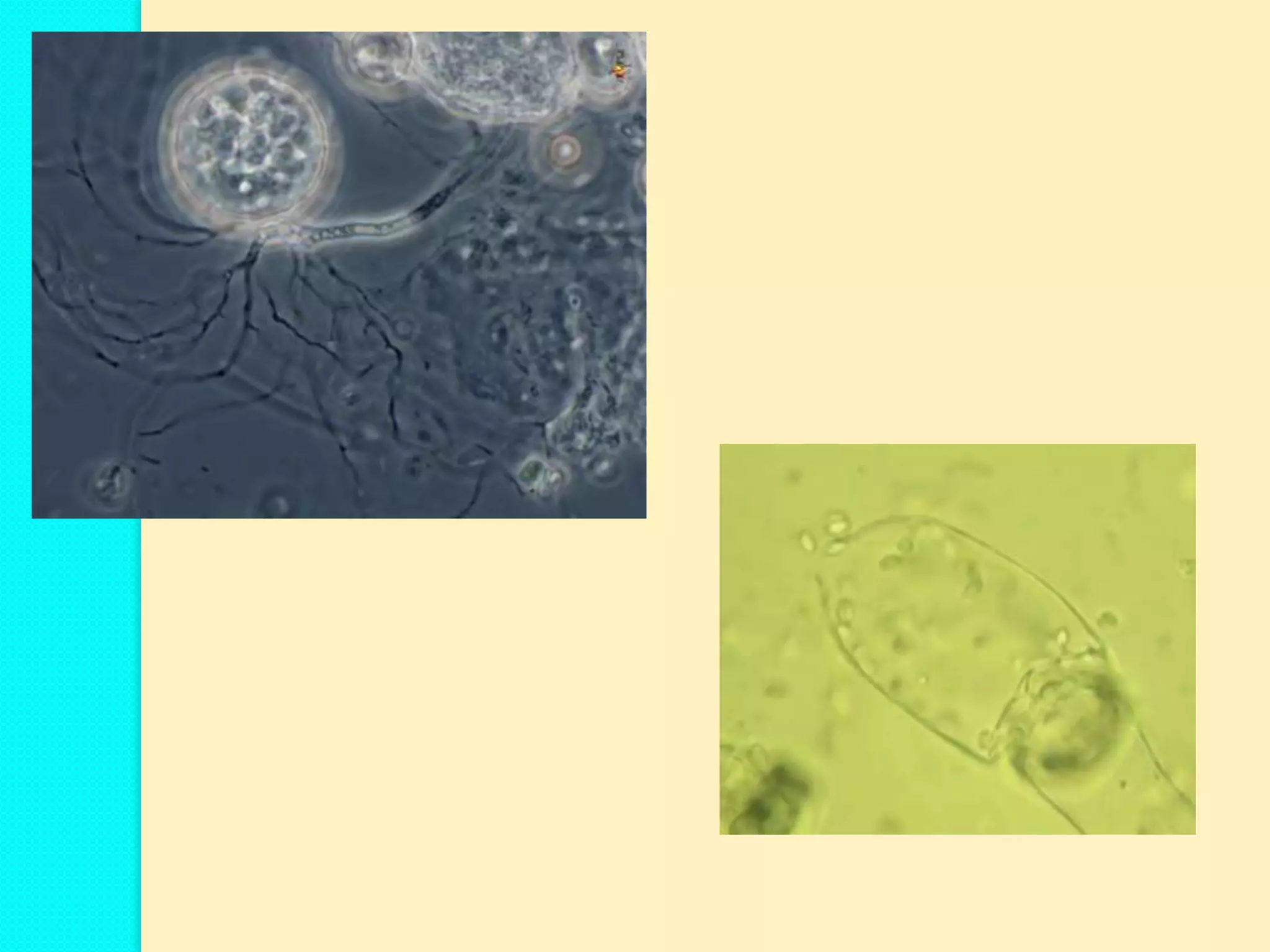
 Microscopic and differ from other fungi
  phyla because chytrids produce motile
  spores called zoospores.
 Synthesize and release digestive
  enzymes that break down molecules
  in the protective covers of other
  organisms.
 Anaerobic chytrids are chytrids that do
  not need oxygen.
Zygomycetes
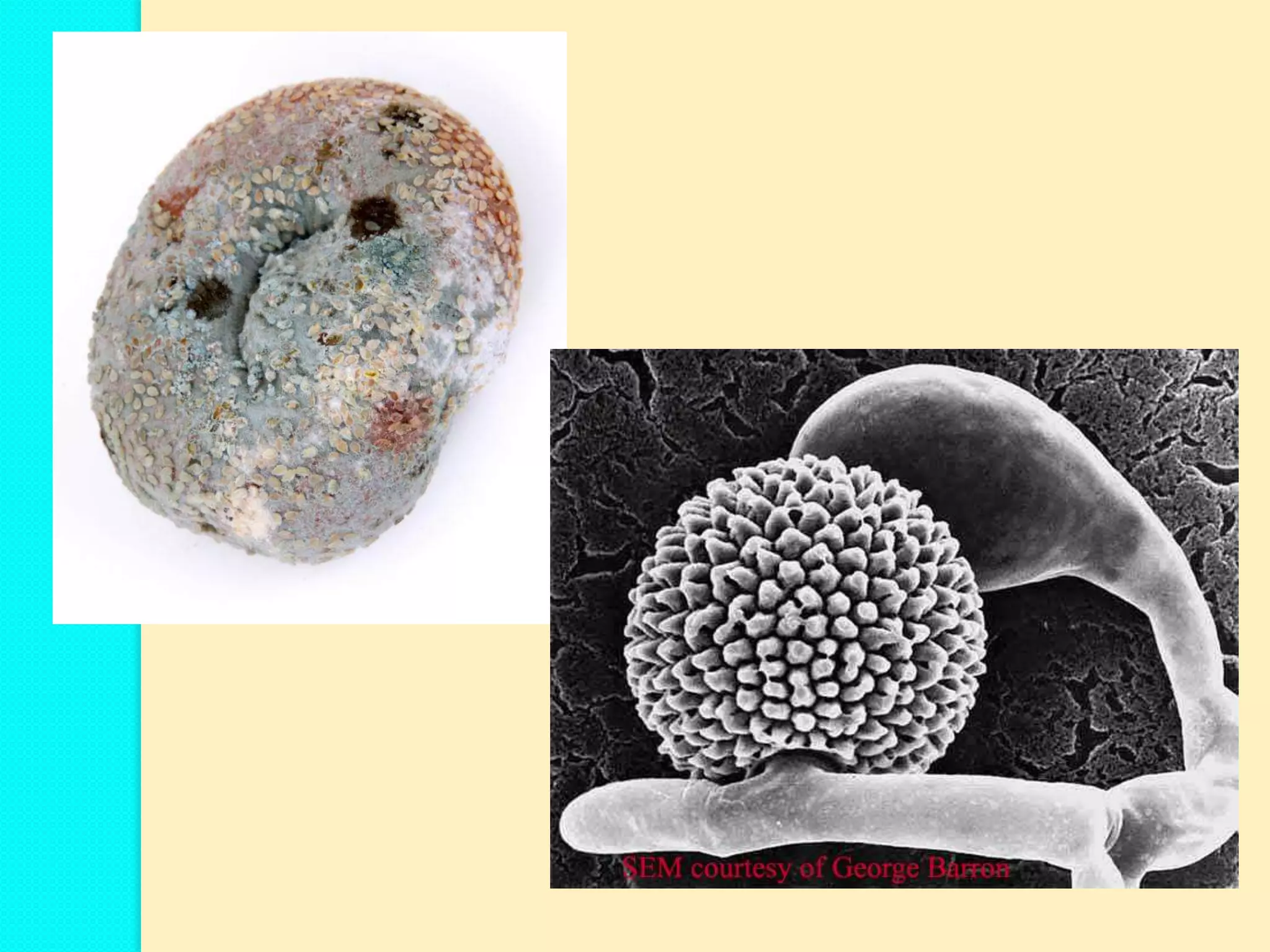
   Include a variety of fungi. The black
    bread mold is a common
    zygomycetes. It decomposes
    bread, fruits, vegetables, and
    decaying animals, and produces a
    fuzzy, black growth within the
    substance
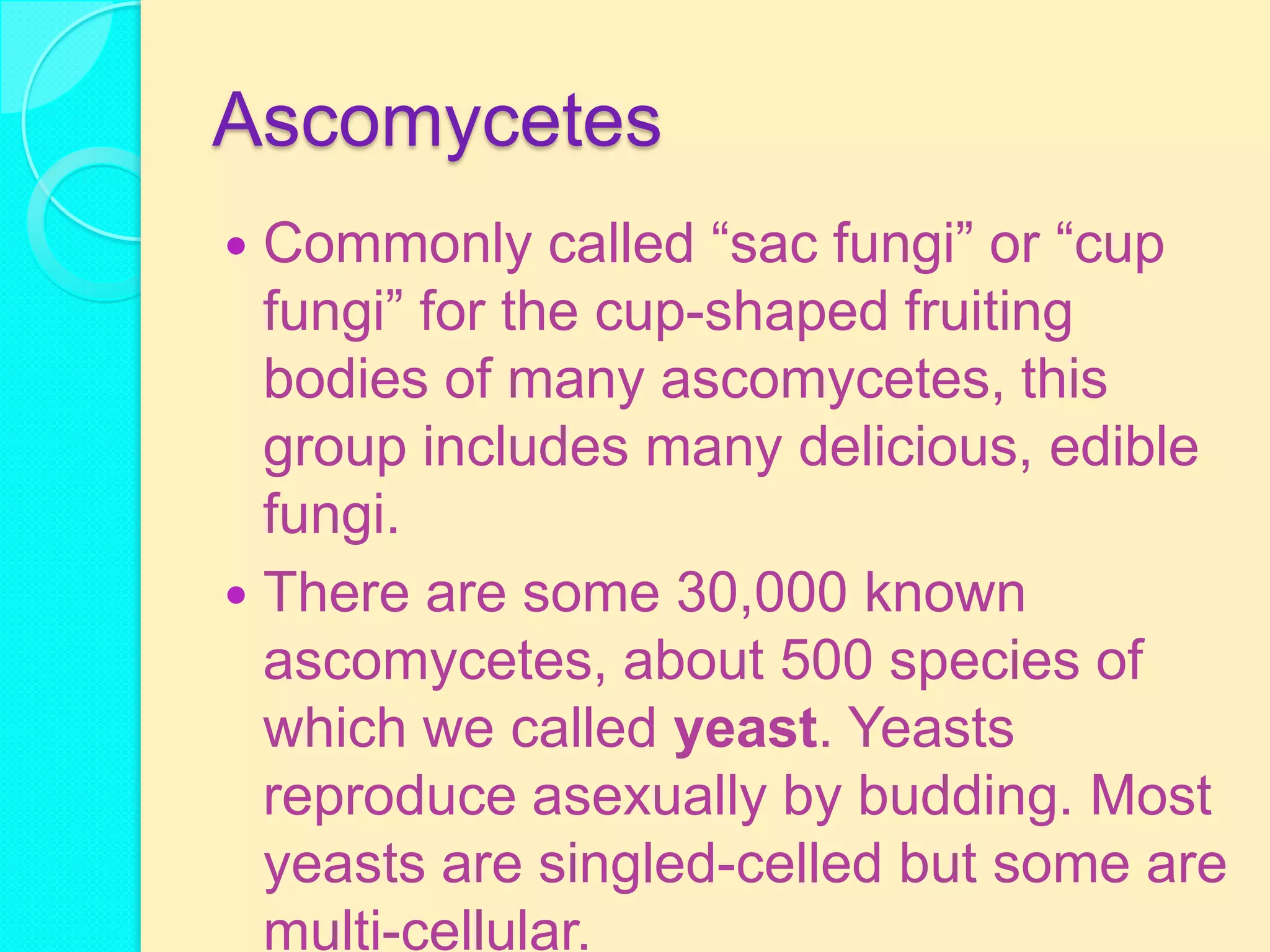
 All the fungi assigned to this group (which probably does not
  represent a single clade) form spores in a sporangium.
  Some notable examples:the bread mold, Rhizopus
  stolonifera
 Rhizopus oryzae, used to make sake, the rice wine of Asia.
  Can also infect humans, especially if they are
  immunosuppressed (e.g., AIDS patients, transplant
  recipients).
 Another species of Rhizopus is used in the commercial
  production of glucocorticoids.
 Many mycorrhizal fungi belong to this group.
Ascomycetes
 Commonly called ―sac fungi‖ or ―cup
  fungi‖ for the cup-shaped fruiting
  bodies of many ascomycetes, this
  group includes many delicious, edible
  fungi.
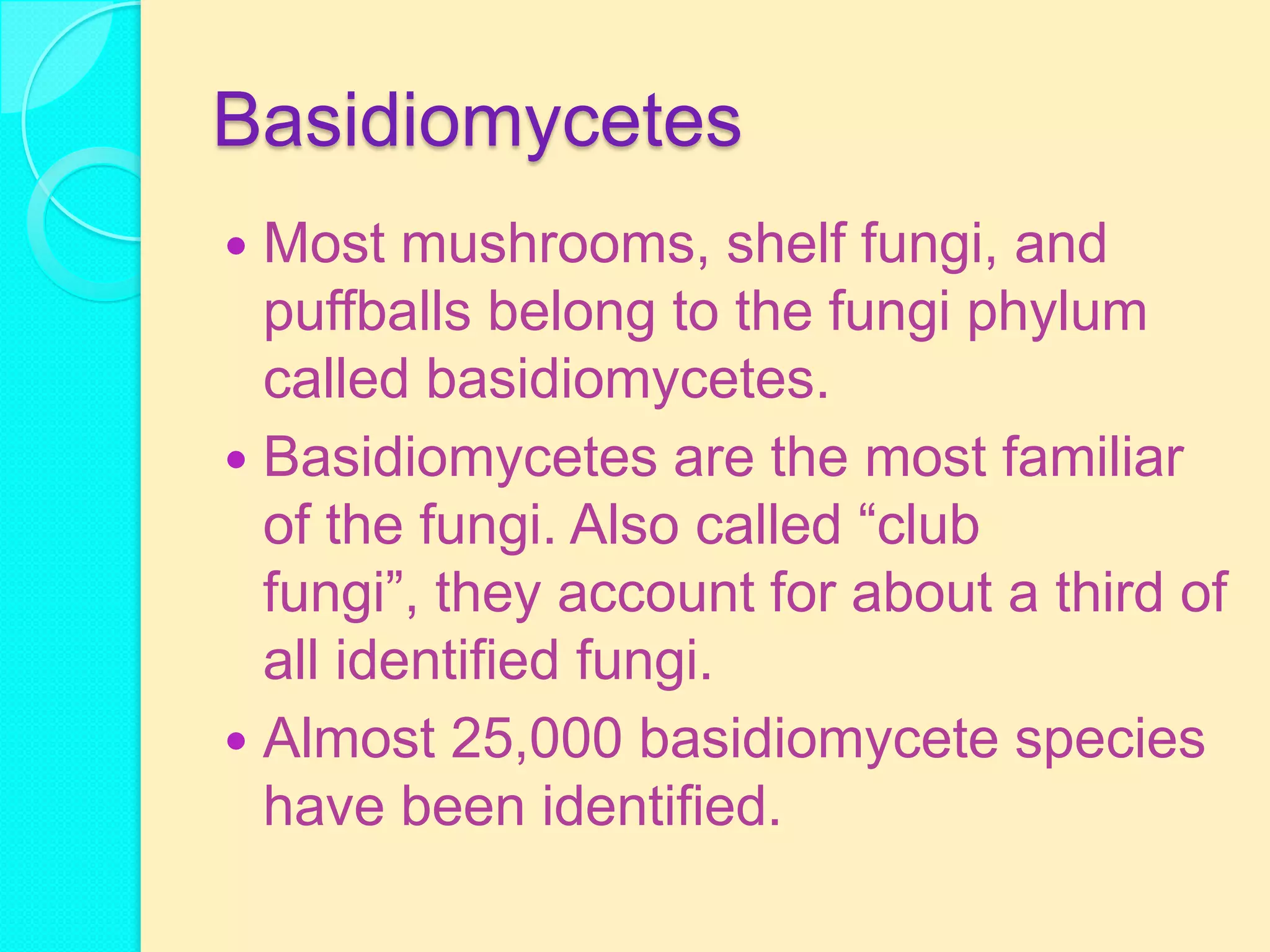
 There are some 30,000 known
  ascomycetes, about 500 species of
  which we called yeast. Yeasts
  reproduce asexually by budding. Most
  yeasts are singled-celled but some are
  multi-cellular.
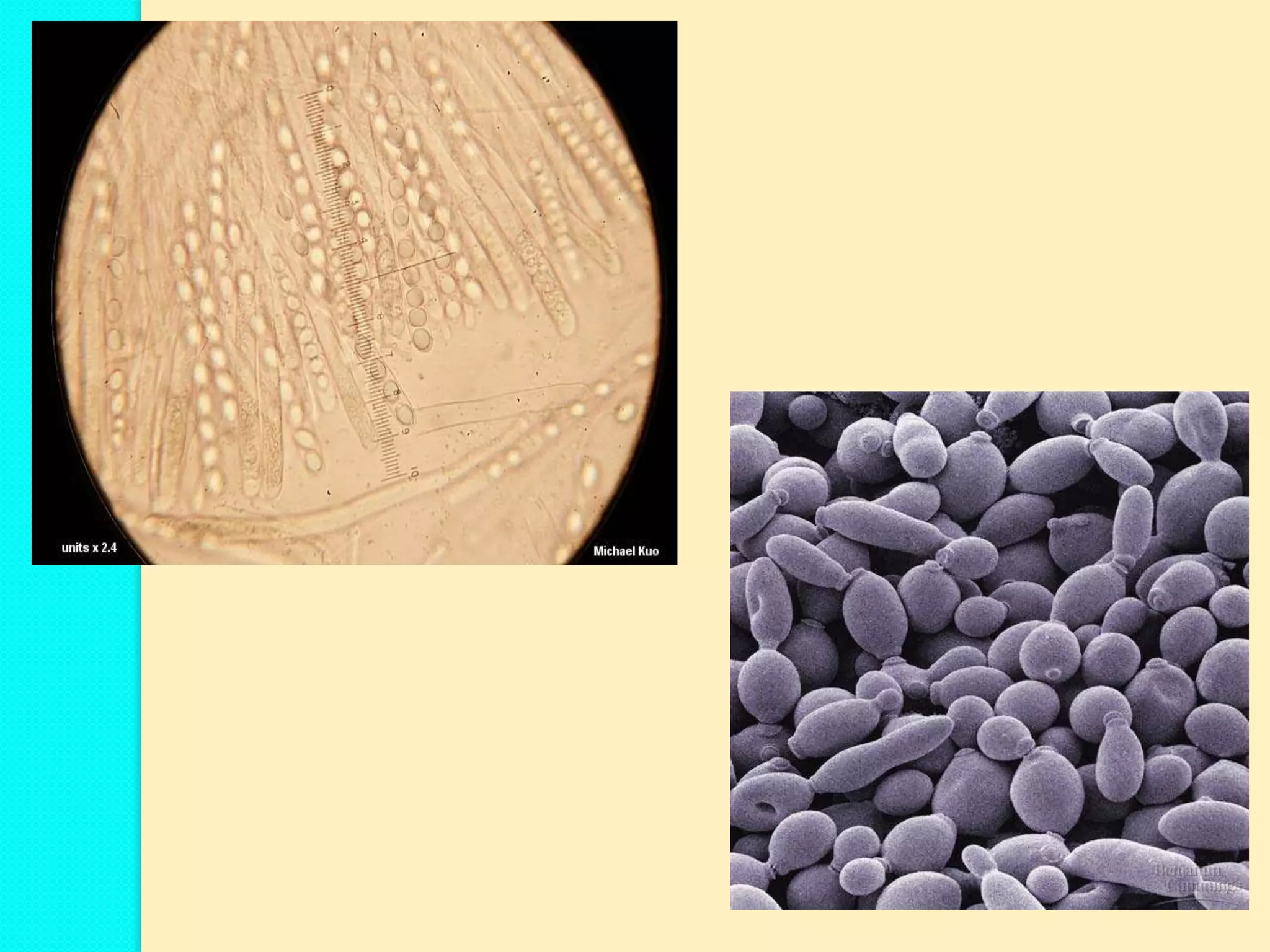
   Ascomycetes produce two kinds of spores:asexual spores called conidia
   ascospores produced following sexual reproduction. Four or eight ascospores develop inside a
    saclike ascus (the group is commonly called sac fungi).
   Some notable examples:Saccharomyces cerevisiae one of the budding yeasts. It ferments
    sugar to ethanol and carbon dioxide [Discussion] and thus is used
    ◦   to make alcoholic beverages like beer and wine
    ◦   to make ethanol for industrial use
    ◦   in baking (it is often called baker's yeast). Here, it is the carbon dioxide that is wanted (to make bread and cakes "rise" and
        have a spongy texture).

   Yeast is also used
    ◦   in the commercial production of some vitamins.
    ◦   in the production — using recombinant DNA technology — of some human therapeutic proteins.

   Neurospora crassa, another favorite "model" organism in the laboratory.
   The fungal partner in most lichens is an ascomycete.
   Powdery mildews that attack ornamental plants
   The chestnut blight, which in a few decades killed almost all of the mature American chestnut
    trees in the Appalachians of North America.
   The Dutch elm disease, which has killed many of the American elms in the United States.
   Pneumocystis jirovecii, which is a major cause of illness in immunosuppressed
    people, e.g., patients with AIDS.
   The truffle and the morel, both highly-prized food delicacies. The photo (courtesy of the
    French Embassy Press & Information Division) shows a farmer from the Périgord (in
    southwestern France) admiring a truffle. Truffles establish a symbiotic relationship with the
    roots of such trees as oaks.
Basidiomycetes
 Most mushrooms, shelf fungi, and
  puffballs belong to the fungi phylum
  called basidiomycetes.
 Basidiomycetes are the most familiar
  of the fungi. Also called ―club
  fungi‖, they account for about a third of
  all identified fungi.
 Almost 25,000 basidiomycete species
  have been identified.
   Basidiomycetes include mushrooms, shelf fungi, puffballs, rusts, and smuts. They
    are dispersed by spores borne at the tips of basidia (giving rise to the name for the
    group).
   Mushrooms are masses of interwoven hyphae growing up from the main mass of the
    mycelium growing underground. The basidia develop on the undersides and release
    their spores (four from each basidium) into the air.
   A single mycelium may expand outward year after year as its hyphae grow into new
    terrain. In some species, mushrooms are sent up once a year at the periphery
    producing a circle known since medieval times as a "fairy ring".
   Some notable basidiomycetes:Armillaria bulbosa. A single specimen in northern
    Michigan (USA) was found to have spread over 37 acres (15 hectares) of the forest
    floor. RFLP analysis of samples taken from many different locations within this area
    showed that all the samples were from a single clone. Assuming the normal rate of
    vegetative growth for this species, it must have taken 1500 years to spread to that
    size.
   the cultivated, edible mushroom that finds its way into pizza, soups, etc.
   Amanita muscaria. Forms a beautiful mushroom but deadly when eaten.
   Smuts. Parasites of important crops like wheat, oats, and rye.
   Rusts. Some, such as
    ◦ wheat black stem rust (Puccinia graminis) and
    ◦ white pine blister rust
   are serious pests. Both have complicated life cycles during which they pass through
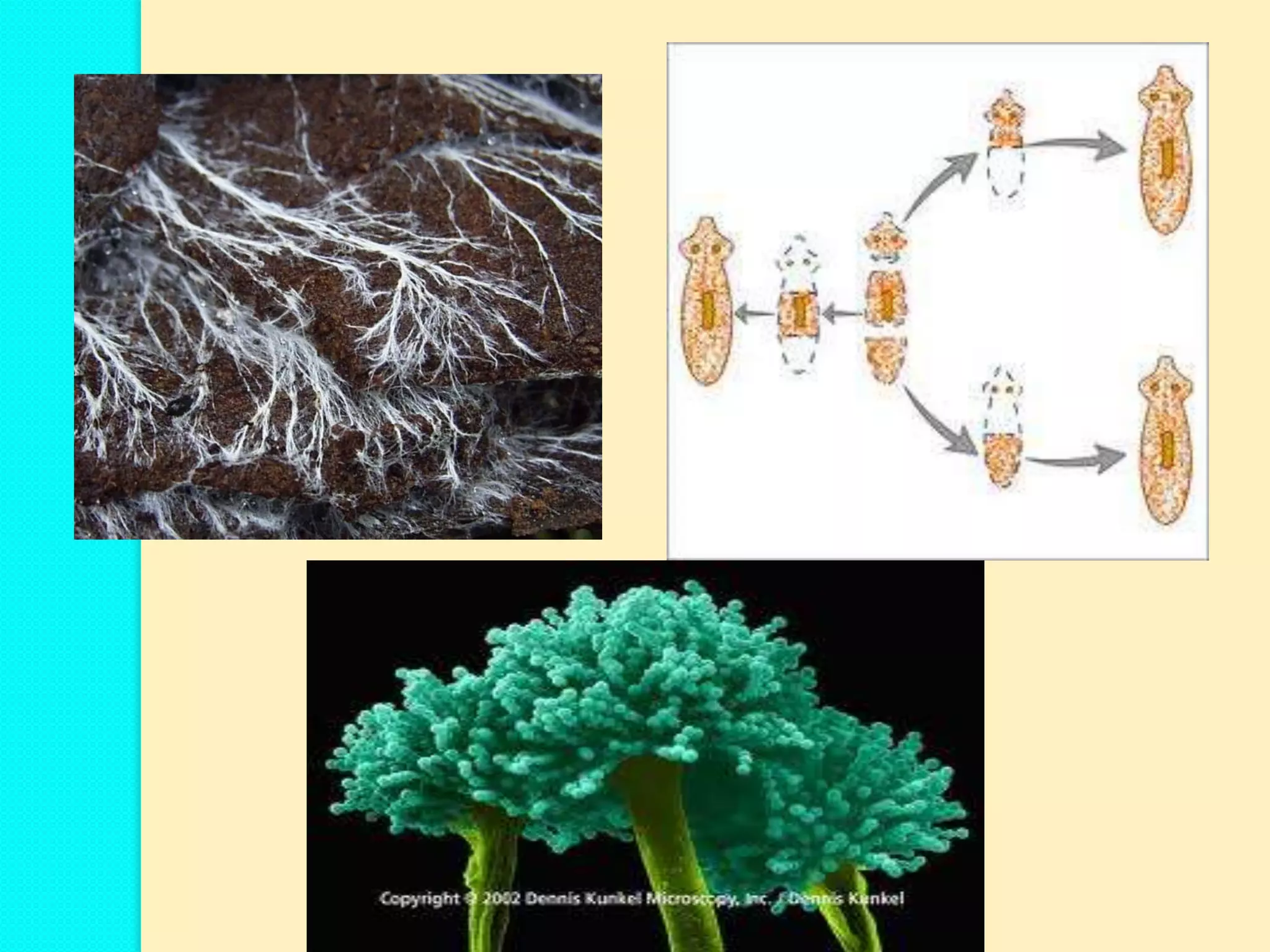
 Most of the fungi body is
  mycelium, the mass of hyphae that
  contains the vegetative part of a
  fungus.
 It reproduce asexually by
  fragmentation and conidia spore
  formation.
Lichens
 Lichens are fungi that live in a symbiotic association
  with an autotrophic green alga or cyanobacterium (the
  "photobiont") or — in some cases — both.
 The fungal partner (the "mycobiont") in most lichens
  (98% of them) is an ascomycete. Zygomycetes make
  up the remainder.
 The relationship is often characterized as mutualistic;
  that is, both partners benefit. But recent evidence (e.g.
  in British soldier) suggests that while the fungus is
  dependent on its autotrophic partner, the photobiont is
  often perfectly content to live alone.
 Lichens secrete a variety of unusual chemicals; some
  of these probably assist in the breakdown of rock
  substrates like the one shown here.
The biggest organism is…
   The largest living thing on earth (as of
    the year 2000) is a 2400-year old
    Armillaria ostoyae, commonly known
    as a ―honey mushroom‖. This
    specimen was found in Oregon
    whereits underground mycelium
    spreads from tree root covering 2,200
    acres.
Thanks for Listening!!!

Kingdom fungi 2

  • 1.
  • 2.
  • 3.
    Mycologists, scientists who specialize in the study of fungi, believe there are a million or more species of fungi. Scientists believe they have identified only 5% of all fungi.
  • 4.
    Heterotrophic Fungi  Fungi can obtain nutrients by absorption
  • 5.
    Saprophytic Fungi  Fungi secretes enzymes to break down dead organic matter in recycling
  • 6.
    Parasitic Fungi  Fungi obtain their nutrients from living hosts.
  • 7.
     Fungi cellwalls are made mostly of the carbohydrate chitin.  Fungi can reproduce sexually and asexually.  Kingdom Fungi is more related to Kingdom Animalia than Kingdom Plantae.  Kingdom Fungi & Kingdom Animalia probably diverged from a common ancestor some 0.6 billion years ago.
  • 8.
     Fungi cellwalls are made mostly of the carbohydrate chitin.  Chitin can be found also in exoskeleton insects  The storage carbohydrate of fungi is called glycogen.  Glycogen can be found also in muscles.
  • 9.
    Fungi Reproduction  Dikaryotic Stage – the coexistence of two different mating types of nuclei which is unique to fungi.
  • 11.
    Plasmogamy  is a stage in the sexual reproduction of fungi. In this stage, the cytoplasm of two parent mycelia fuse together without the fusion of nuclei, as occurs in higher terrestrial fungi. After plasmogamy occurs, the secondary mycelium forms. The secondary mycelium consists of dikaryotic cells, one nucleus from each of the parent mycelia. It is the fusion of protoplasm between two motile or non-motile gametes. It involves the union of two protoplast bringing two haploid nuclei close together in the same cell...
  • 12.
    Karyogamy  Karyogamy isthe fusion of pronuclei of two cells, as part of syngamy, fertilization, or true bacterial conjugation.  It is one of the two major modes of reproduction in fungi. In fungi that lack sexual cycles, it is an important source of genetic variation through the formation of somatic diploids.  The term comes for the Greek karuo- (from karuon) meaning nut and -gamos meaning marriage.It is mainly found in fungal phylum ascomycetes. Species that use this mode of reproduction is responsible for causing ringworm.
  • 13.
     Four groupsof fungi according to their molecular structures and sexual reproduction:  Chytrids  Zygomycetes  Ascomycetes  Basidiomycetes
  • 14.
    Chytridiomycetes  Members ofthe fungi phylum are considered to be the most primative fungi and probably appeared about 500 million years ago.  Chytrids, as member of this group are known, are found anywhere.
  • 15.
    Chytrids  Microscopic anddiffer from other fungi phyla because chytrids produce motile spores called zoospores.  Synthesize and release digestive enzymes that break down molecules in the protective covers of other organisms.  Anaerobic chytrids are chytrids that do not need oxygen.
  • 17.
    Zygomycetes  Include a variety of fungi. The black bread mold is a common zygomycetes. It decomposes bread, fruits, vegetables, and decaying animals, and produces a fuzzy, black growth within the substance
  • 18.
     All thefungi assigned to this group (which probably does not represent a single clade) form spores in a sporangium. Some notable examples:the bread mold, Rhizopus stolonifera  Rhizopus oryzae, used to make sake, the rice wine of Asia. Can also infect humans, especially if they are immunosuppressed (e.g., AIDS patients, transplant recipients).  Another species of Rhizopus is used in the commercial production of glucocorticoids.  Many mycorrhizal fungi belong to this group.
  • 20.
    Ascomycetes  Commonly called―sac fungi‖ or ―cup fungi‖ for the cup-shaped fruiting bodies of many ascomycetes, this group includes many delicious, edible fungi.  There are some 30,000 known ascomycetes, about 500 species of which we called yeast. Yeasts reproduce asexually by budding. Most yeasts are singled-celled but some are multi-cellular.
  • 21.
    Ascomycetes produce two kinds of spores:asexual spores called conidia  ascospores produced following sexual reproduction. Four or eight ascospores develop inside a saclike ascus (the group is commonly called sac fungi).  Some notable examples:Saccharomyces cerevisiae one of the budding yeasts. It ferments sugar to ethanol and carbon dioxide [Discussion] and thus is used ◦ to make alcoholic beverages like beer and wine ◦ to make ethanol for industrial use ◦ in baking (it is often called baker's yeast). Here, it is the carbon dioxide that is wanted (to make bread and cakes "rise" and have a spongy texture).  Yeast is also used ◦ in the commercial production of some vitamins. ◦ in the production — using recombinant DNA technology — of some human therapeutic proteins.  Neurospora crassa, another favorite "model" organism in the laboratory.  The fungal partner in most lichens is an ascomycete.  Powdery mildews that attack ornamental plants  The chestnut blight, which in a few decades killed almost all of the mature American chestnut trees in the Appalachians of North America.  The Dutch elm disease, which has killed many of the American elms in the United States.  Pneumocystis jirovecii, which is a major cause of illness in immunosuppressed people, e.g., patients with AIDS.  The truffle and the morel, both highly-prized food delicacies. The photo (courtesy of the French Embassy Press & Information Division) shows a farmer from the Périgord (in southwestern France) admiring a truffle. Truffles establish a symbiotic relationship with the roots of such trees as oaks.
  • 23.
    Basidiomycetes  Most mushrooms,shelf fungi, and puffballs belong to the fungi phylum called basidiomycetes.  Basidiomycetes are the most familiar of the fungi. Also called ―club fungi‖, they account for about a third of all identified fungi.  Almost 25,000 basidiomycete species have been identified.
  • 24.
    Basidiomycetes include mushrooms, shelf fungi, puffballs, rusts, and smuts. They are dispersed by spores borne at the tips of basidia (giving rise to the name for the group).  Mushrooms are masses of interwoven hyphae growing up from the main mass of the mycelium growing underground. The basidia develop on the undersides and release their spores (four from each basidium) into the air.  A single mycelium may expand outward year after year as its hyphae grow into new terrain. In some species, mushrooms are sent up once a year at the periphery producing a circle known since medieval times as a "fairy ring".  Some notable basidiomycetes:Armillaria bulbosa. A single specimen in northern Michigan (USA) was found to have spread over 37 acres (15 hectares) of the forest floor. RFLP analysis of samples taken from many different locations within this area showed that all the samples were from a single clone. Assuming the normal rate of vegetative growth for this species, it must have taken 1500 years to spread to that size.  the cultivated, edible mushroom that finds its way into pizza, soups, etc.  Amanita muscaria. Forms a beautiful mushroom but deadly when eaten.  Smuts. Parasites of important crops like wheat, oats, and rye.  Rusts. Some, such as ◦ wheat black stem rust (Puccinia graminis) and ◦ white pine blister rust  are serious pests. Both have complicated life cycles during which they pass through
  • 26.
     Most ofthe fungi body is mycelium, the mass of hyphae that contains the vegetative part of a fungus.  It reproduce asexually by fragmentation and conidia spore formation.
  • 28.
    Lichens  Lichens arefungi that live in a symbiotic association with an autotrophic green alga or cyanobacterium (the "photobiont") or — in some cases — both.  The fungal partner (the "mycobiont") in most lichens (98% of them) is an ascomycete. Zygomycetes make up the remainder.  The relationship is often characterized as mutualistic; that is, both partners benefit. But recent evidence (e.g. in British soldier) suggests that while the fungus is dependent on its autotrophic partner, the photobiont is often perfectly content to live alone.  Lichens secrete a variety of unusual chemicals; some of these probably assist in the breakdown of rock substrates like the one shown here.
  • 29.
    The biggest organismis…  The largest living thing on earth (as of the year 2000) is a 2400-year old Armillaria ostoyae, commonly known as a ―honey mushroom‖. This specimen was found in Oregon whereits underground mycelium spreads from tree root covering 2,200 acres.
  • 31.