P1.4 Methods we use to
  generate electricity
    AQA GCSE Science A
Various energy sources can be used to
generate the electricity we need. We must
carefully consider the advantages and
disadvantages of using each energy source
before deciding which energy source(s) it
would be best to use in any particular
situation.
Electricity is distributed via the National
Grid.

Candidates should use their skills, knowledge and
understanding to:

 ■ evaluate different methods of generating
 electricity
 ■ evaluate ways of matching supply with
 demand, either by increasing supply or decreasing
 demand
 ■ compare the advantages and disadvantages of
 overhead power lines and underground cables.
P1.4.1 Generating electricity

a) In some power stations an energy source is used
to heat water. The steam produced drives a turbine
that is coupled to an electrical generator.

Energy sources include:
■ the fossil fuels (coal, oil and gas) which are
burned to heat water or air
■ uranium and plutonium, when energy from
nuclear fission is used to heat water
■ biofuels that can be burned to heat water.
P1.4.1 Generating electricity

b) Water and wind can be used to drive
turbines directly.
P1.4.1 Generating electricity

c) Electricity can be produced directly from the
Sun’s radiation.
P1.4.1 Generating electricity
d) In some volcanic areas hot water and steam
rise to the surface. The steam can be tapped
and used to drive turbines. This is known as
geothermal energy.
P1.4.1 Generating electricity

e) Small-scale production of electricity may be
useful in some areas and for some uses, eg
hydroelectricity in remote areas and solar cells
for roadside signs.
P1.4.1 Generating electricity

f) Using different energy resources has
different effects on the environment. These
effects include:
 • the release of substances into the atmosphere
 • the production of waste materials noise and
 • visual pollution the destruction of wildlife
     habitats.
P1.4.2 The National Grid

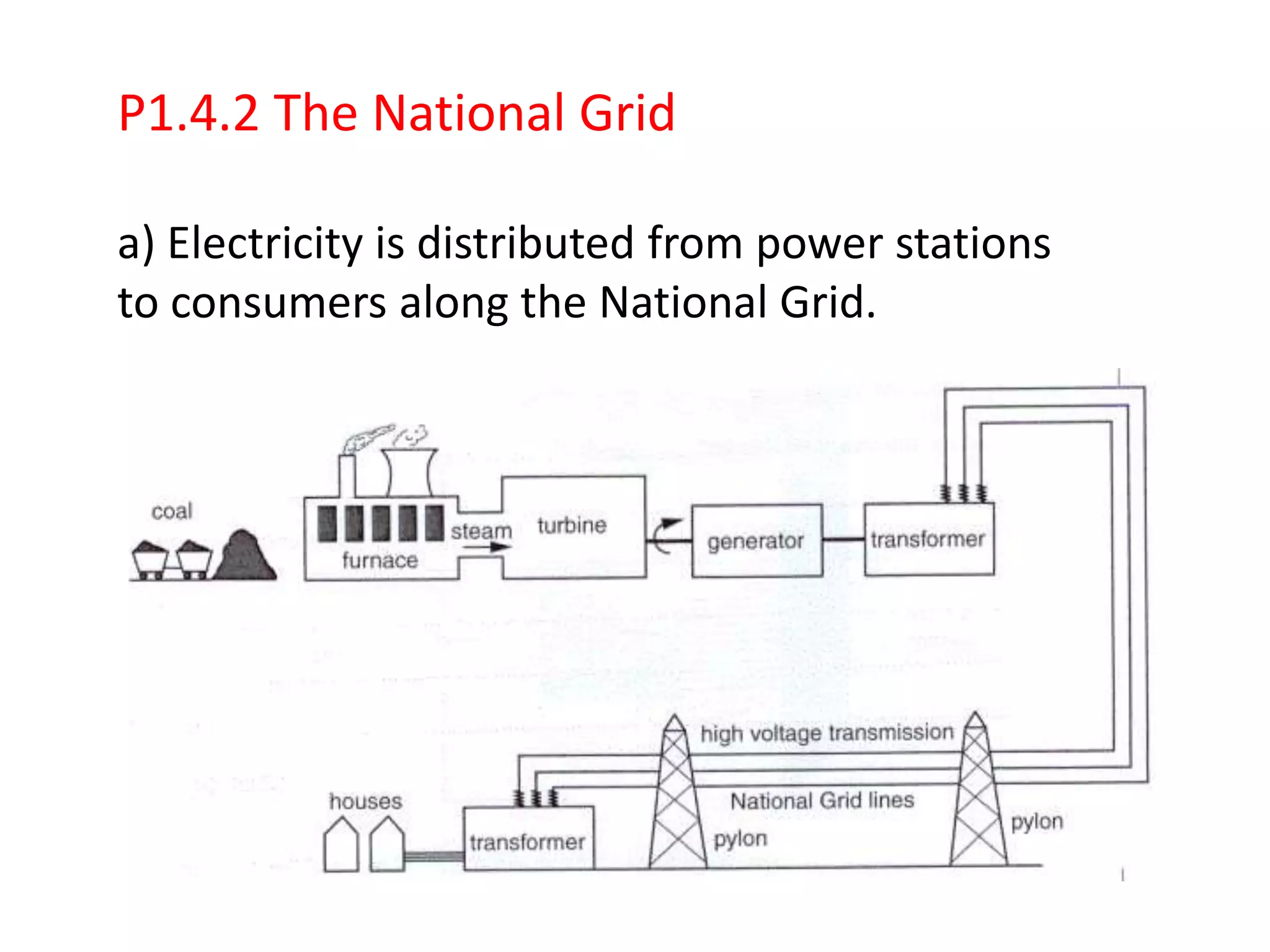
a) Electricity is distributed from power stations
to consumers along the National Grid.
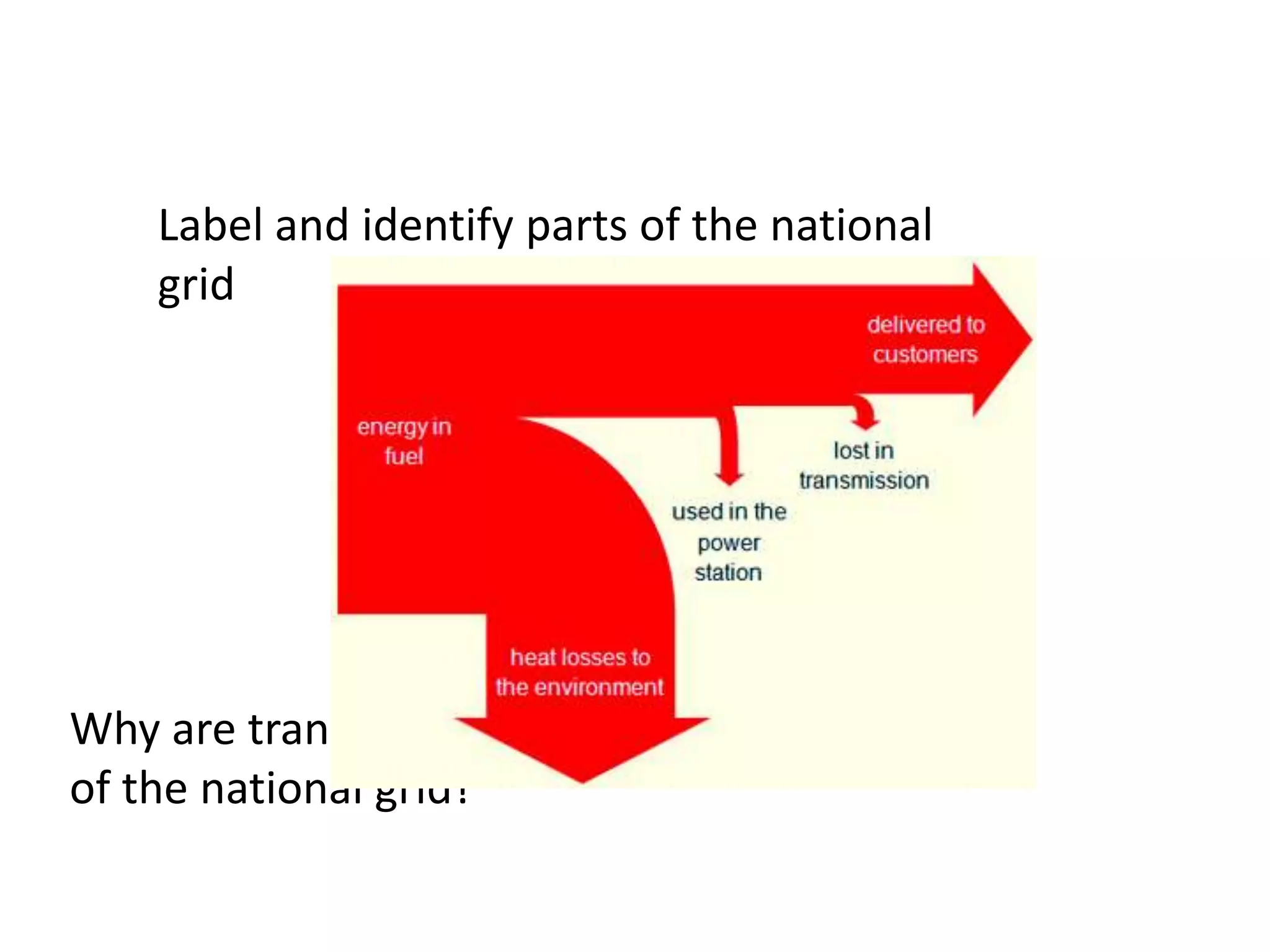
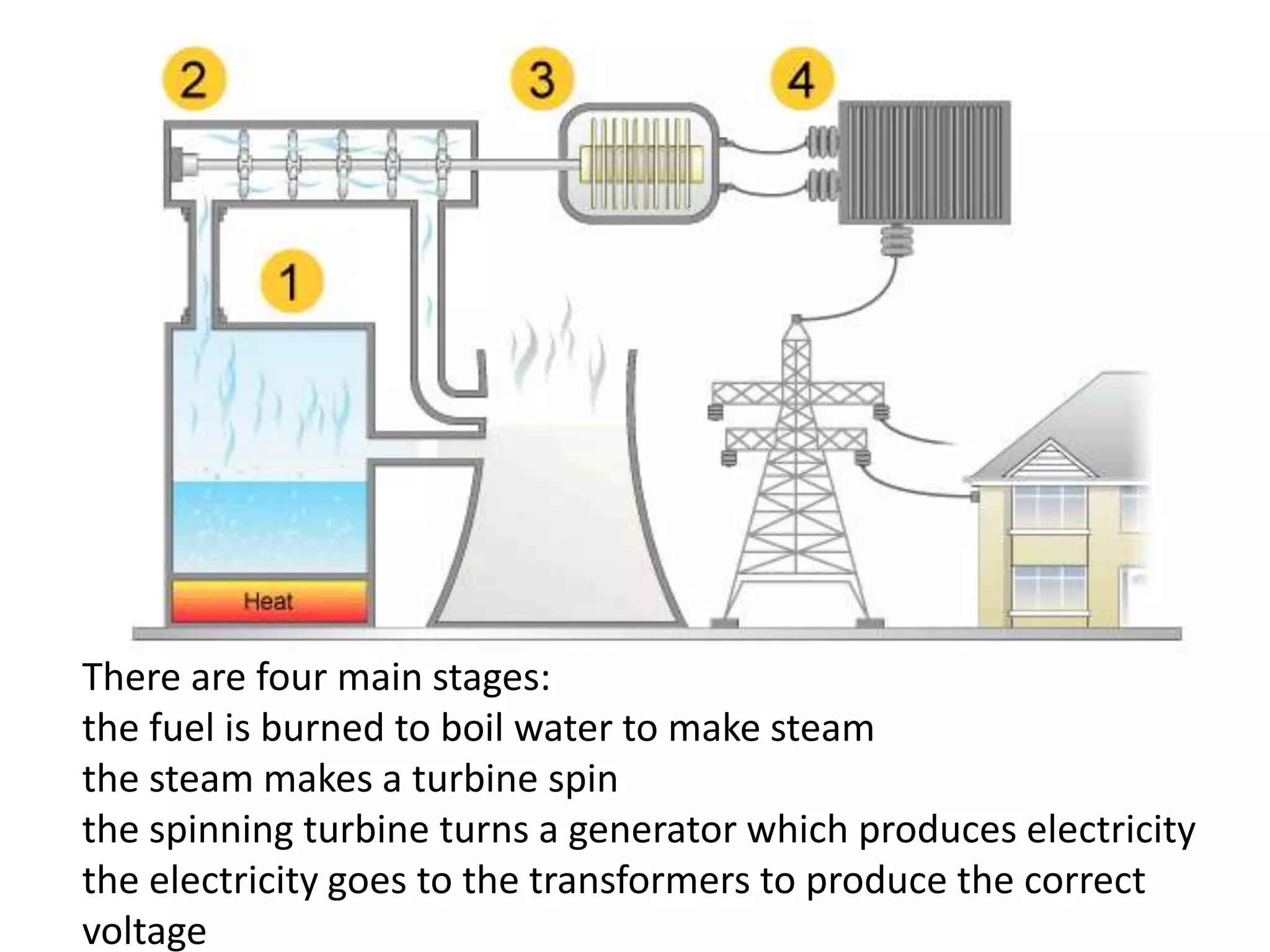
There are four main stages:
the fuel is burned to boil water to make steam
the steam makes a turbine spin
the spinning turbine turns a generator which produces electricity
the electricity goes to the transformers to produce the correct
voltage
P1.4.2 The National Grid

 b) For a given power, increasing the voltage
 reduces the current required and this reduces the
 energy losses in the cables.
P1.4.2 The National Grid

c) The uses of step-up and step-down
transformers in the National Grid.
A transformer is an electrical device that changes
the voltage of an alternating current (ac)
supply, such as the mains electrical supply. A
transformer changes a high-voltage supply into a
low-voltage one, or vice versa.
A transformer that increases the voltage is called
a step-up transformer.
A transformer that decreases the voltage is called
a step-down transformer.
1. Why are coal, oil and natural gas non-
renewable resources?

A They contain carbon compounds.
B They cannot be replaced, except over
millions of years.
C Once used, they cannot be used again.
1. Why are coal, oil and natural gas non-
renewable resources?

A
B They cannot be replaced, except over
millions of years.
C
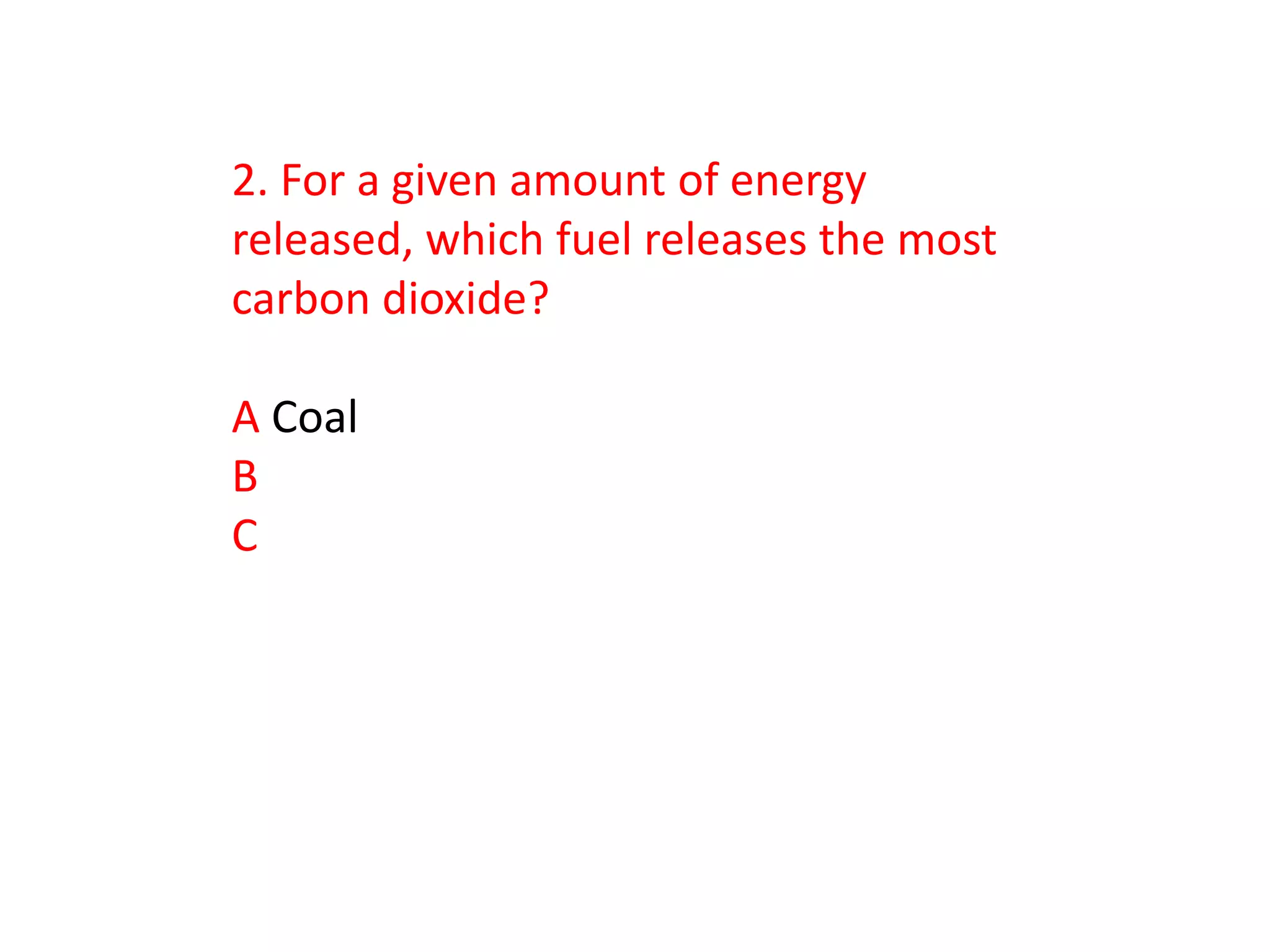
2. For a given amount of energy
released, which fuel releases the most
carbon dioxide?

A Coal
B Oil
C Natural gas
2. For a given amount of energy
released, which fuel releases the most
carbon dioxide?

A Coal
B
C
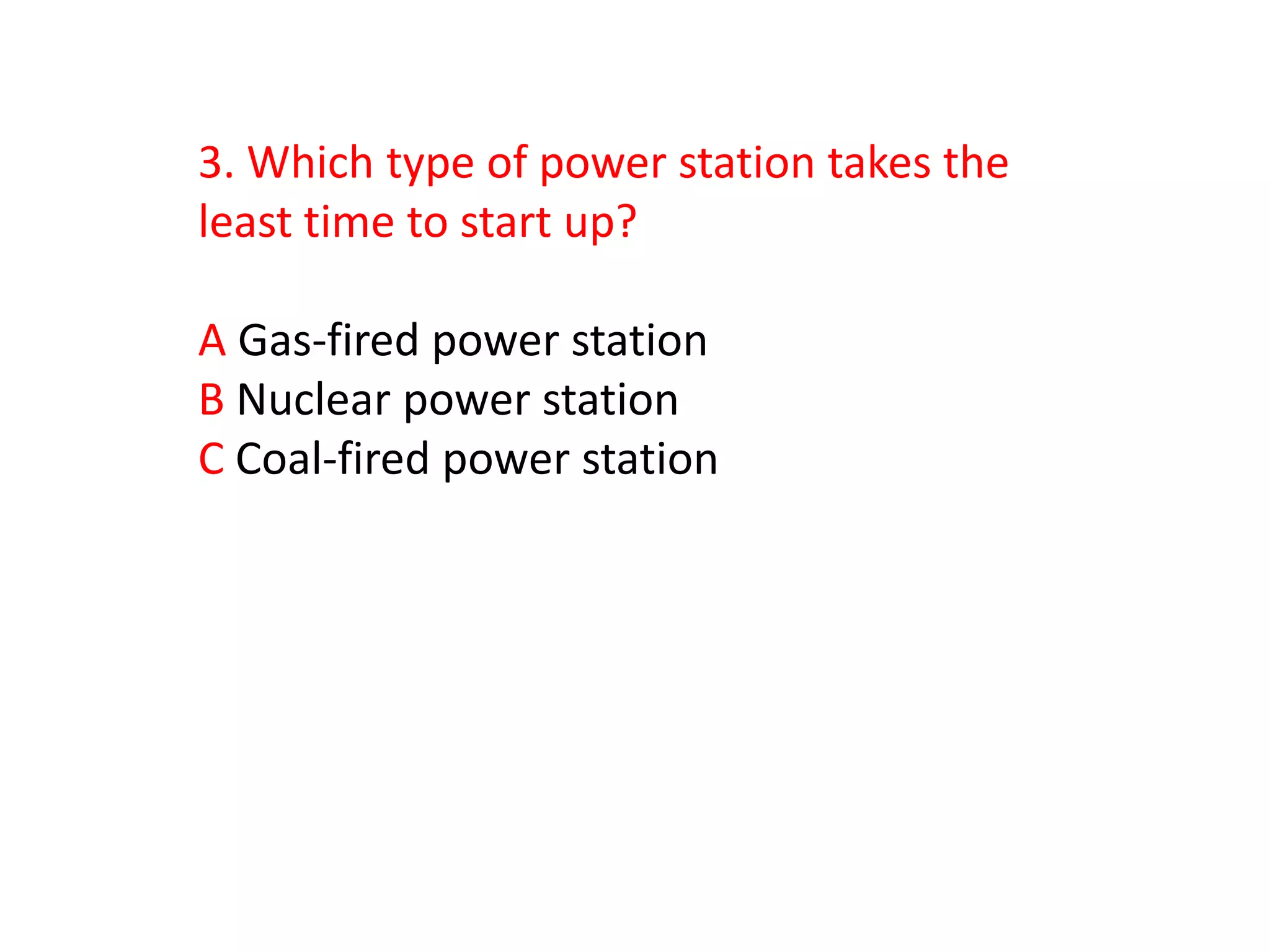
3. Which type of power station takes the
least time to start up?

A Gas-fired power station
B Nuclear power station
C Coal-fired power station
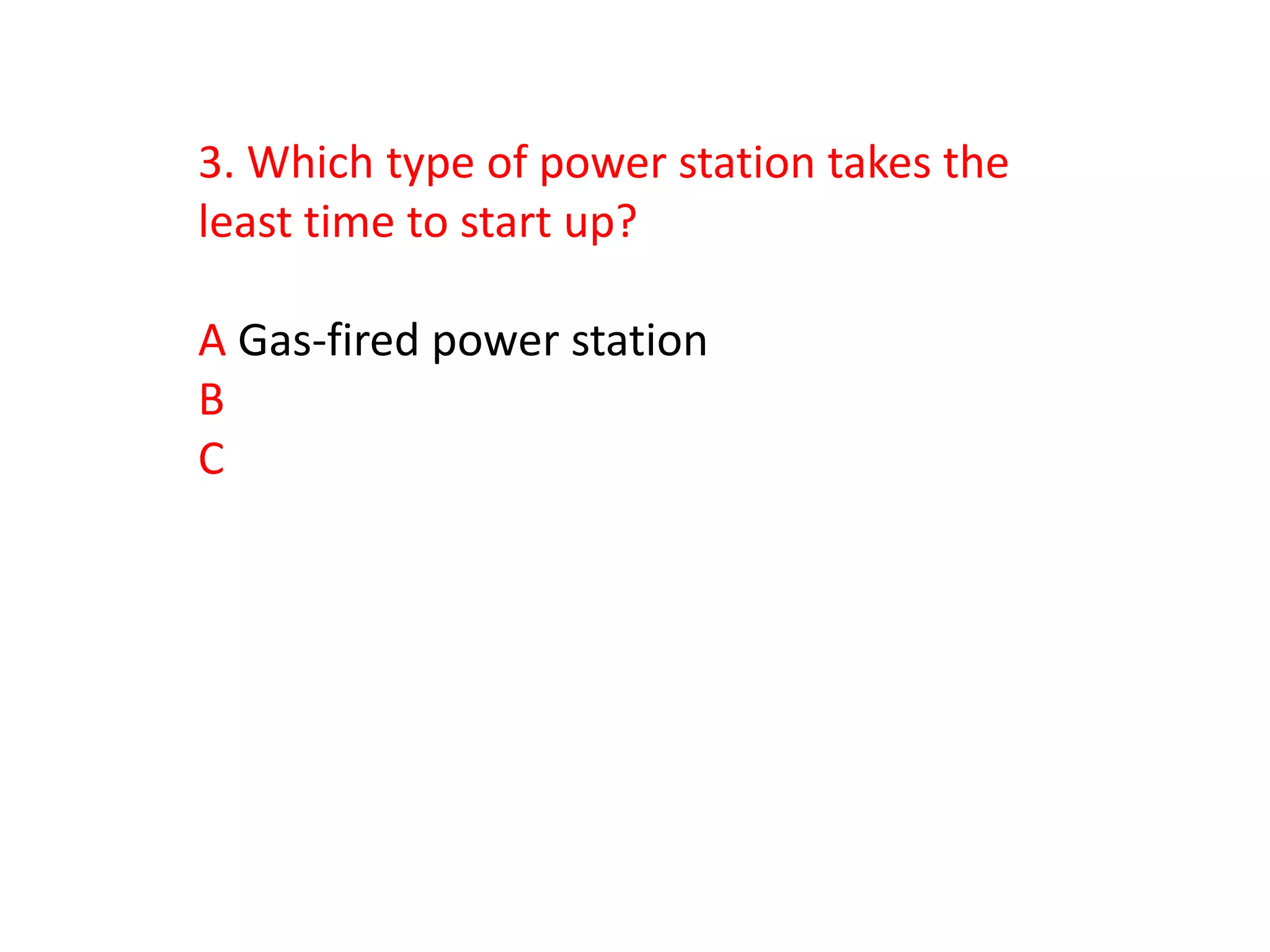
3. Which type of power station takes the
least time to start up?

A Gas-fired power station
B
C
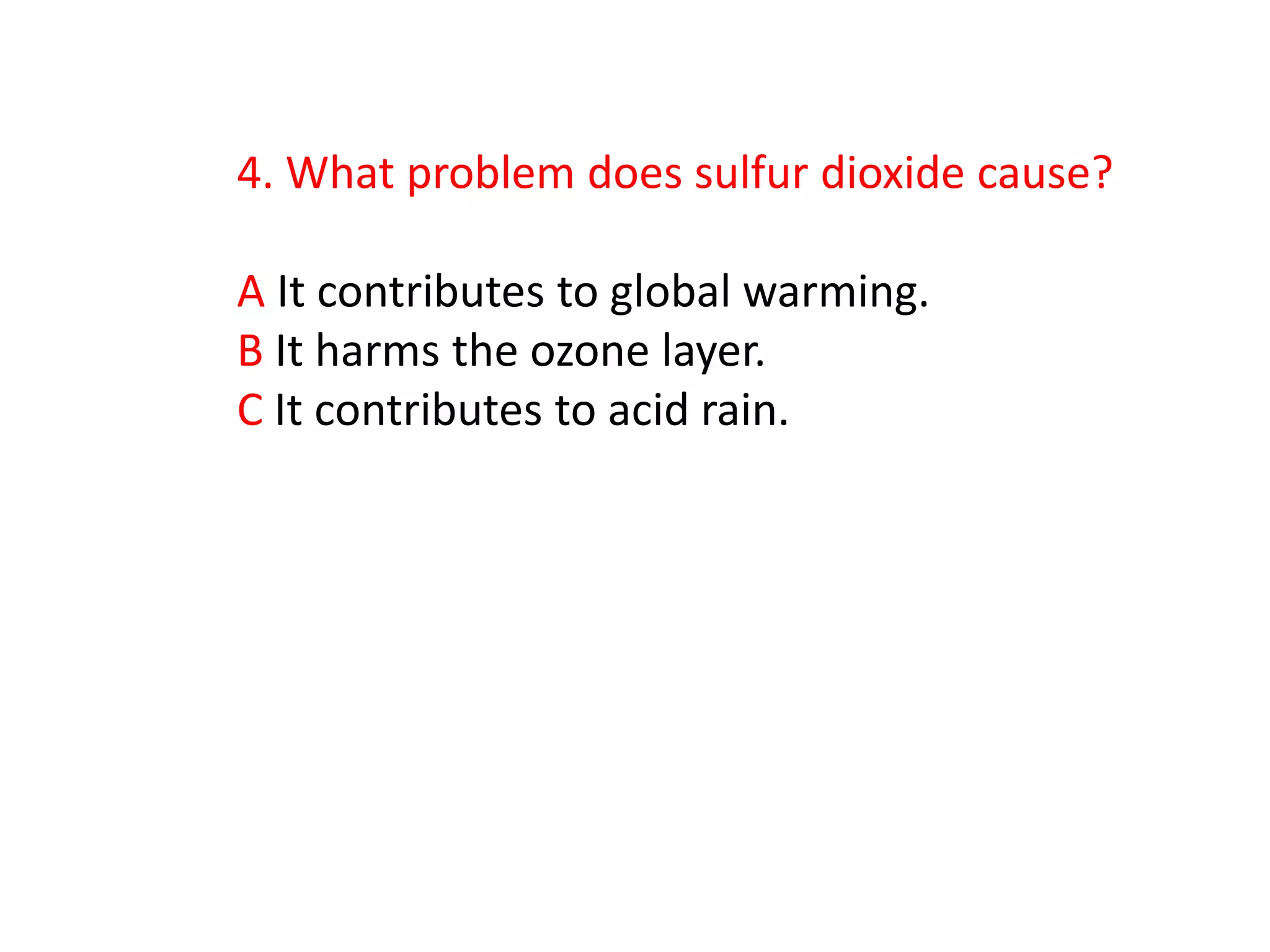
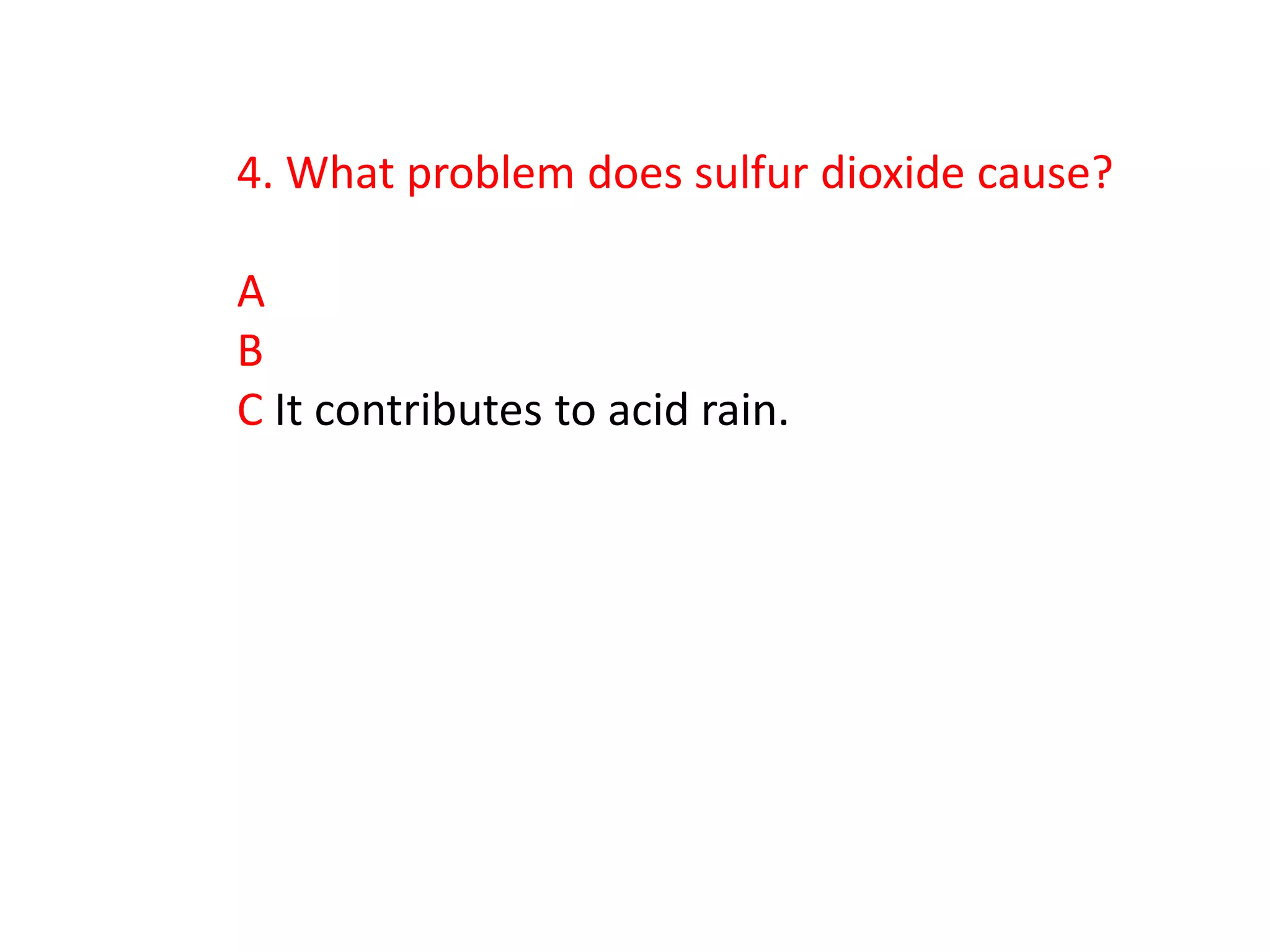
4. What problem does sulfur dioxide cause?

A It contributes to global warming.
B It harms the ozone layer.
C It contributes to acid rain.
4. What problem does sulfur dioxide cause?

A
B
C It contributes to acid rain.
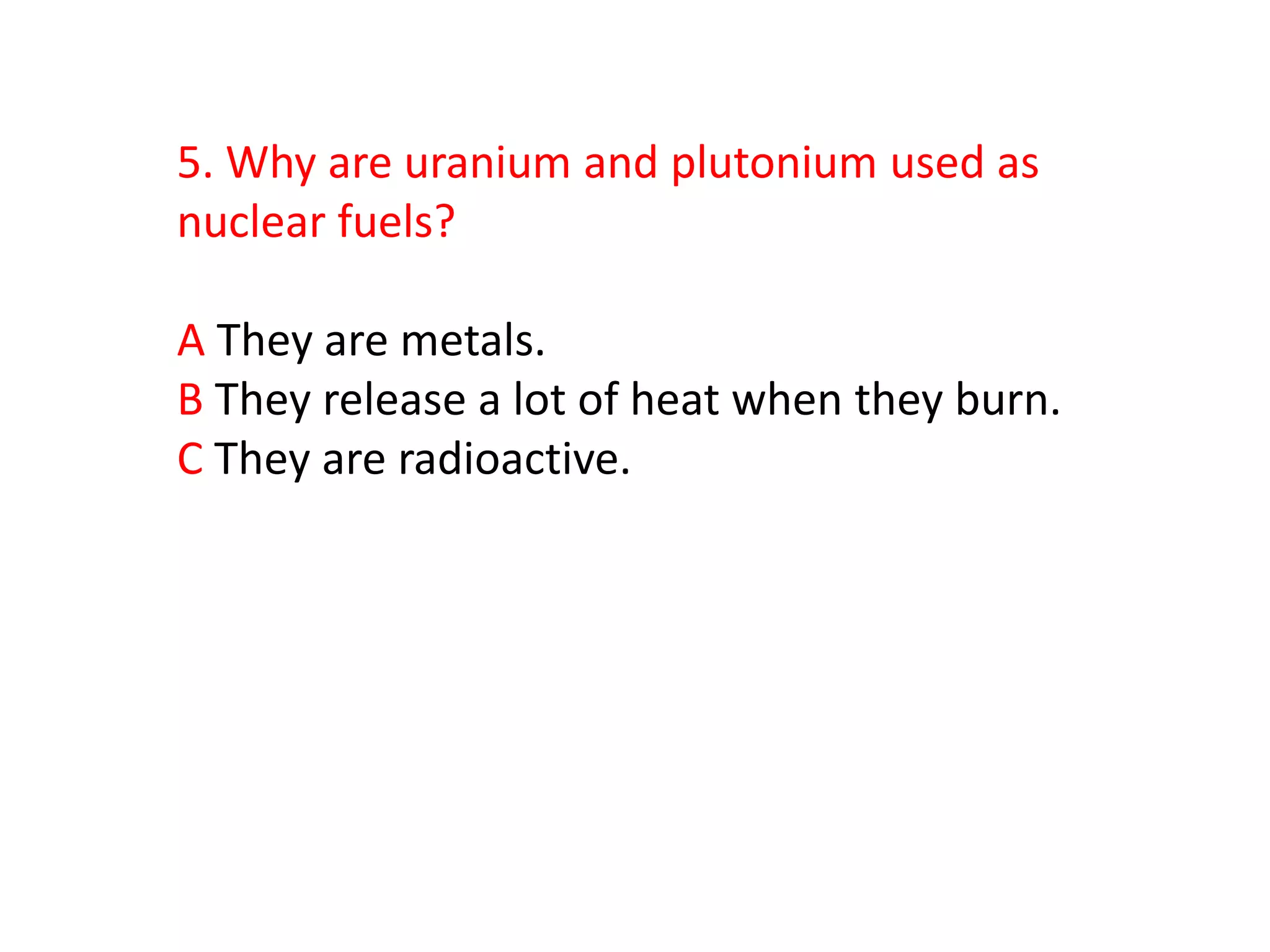
5. Why are uranium and plutonium used as
nuclear fuels?

A They are metals.
B They release a lot of heat when they burn.
C They are radioactive.
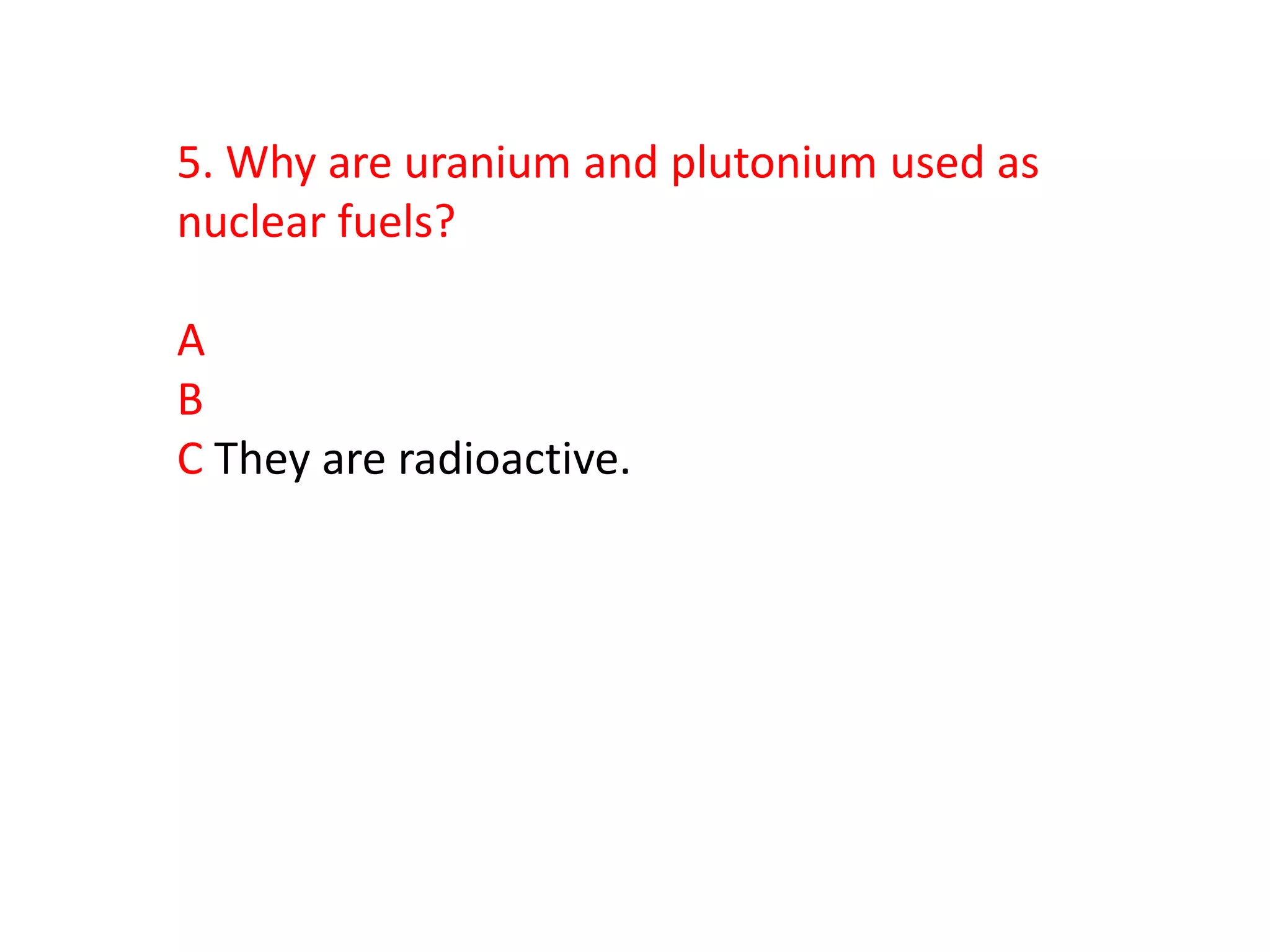
5. Why are uranium and plutonium used as
nuclear fuels?

A
B
C They are radioactive.
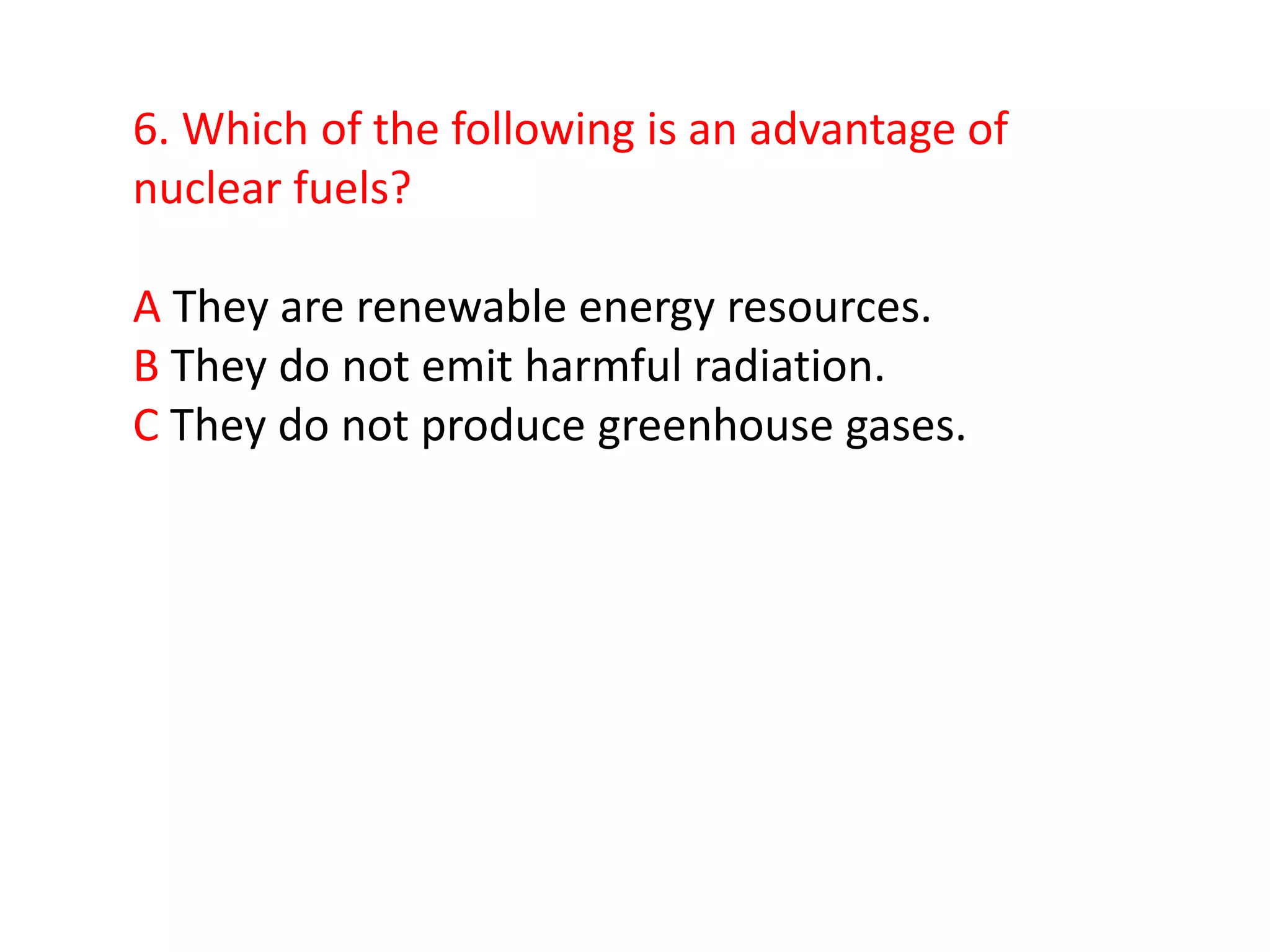
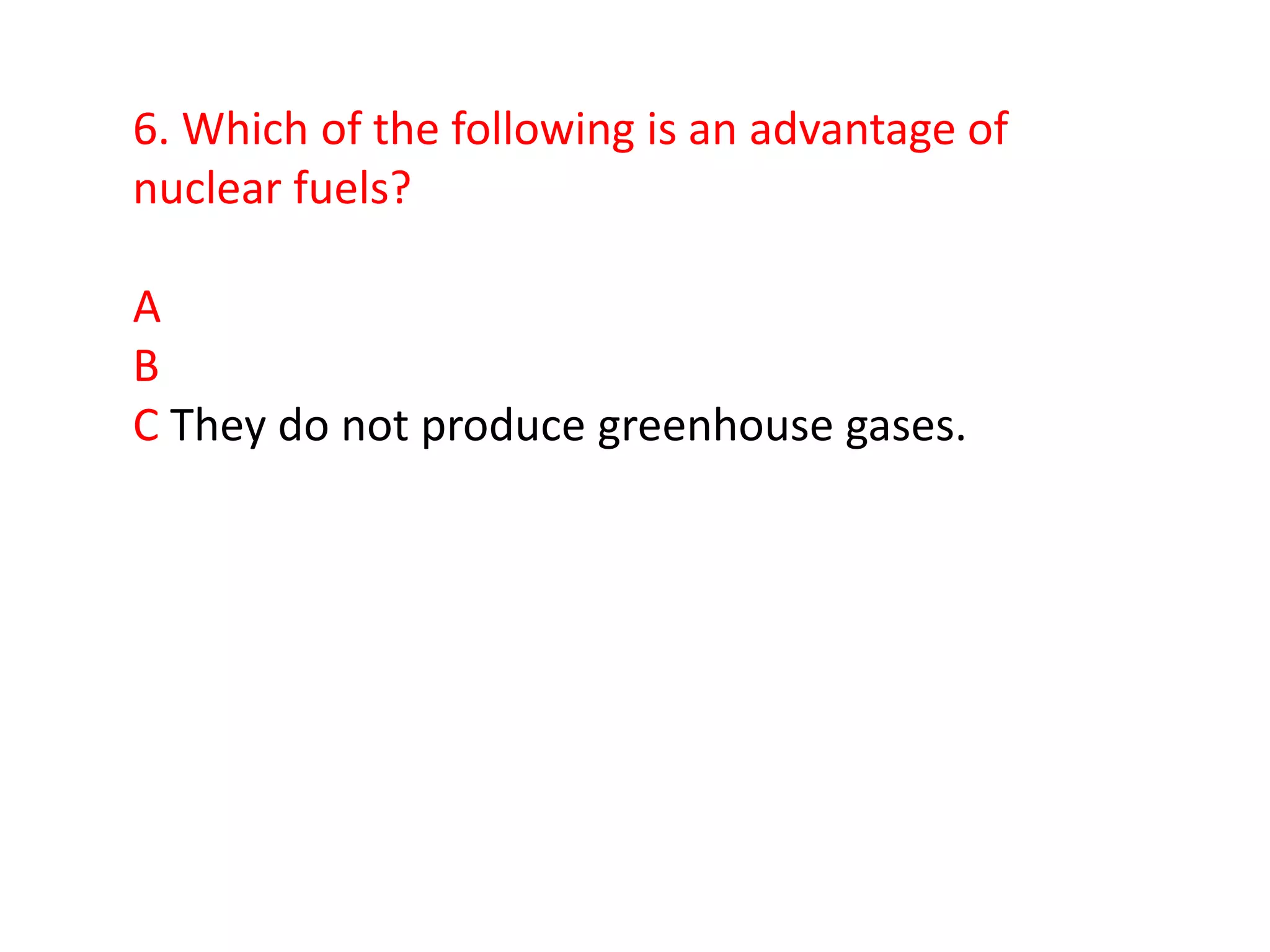
6. Which of the following is an advantage of
nuclear fuels?

A They are renewable energy resources.
B They do not emit harmful radiation.
C They do not produce greenhouse gases.
6. Which of the following is an advantage of
nuclear fuels?

A
B
C They do not produce greenhouse gases.
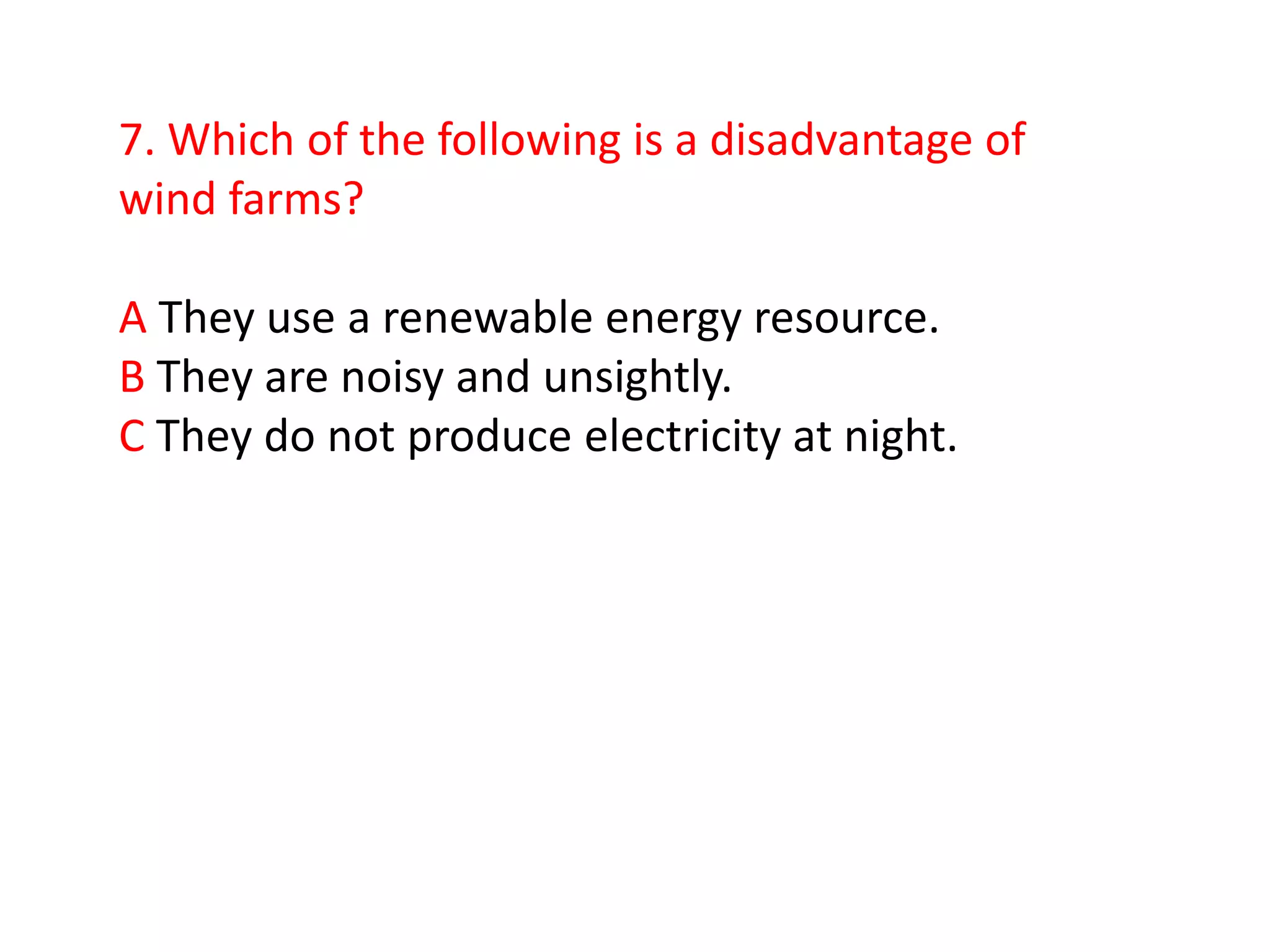
7. Which of the following is a disadvantage of
wind farms?

A They use a renewable energy resource.
B They are noisy and unsightly.
C They do not produce electricity at night.
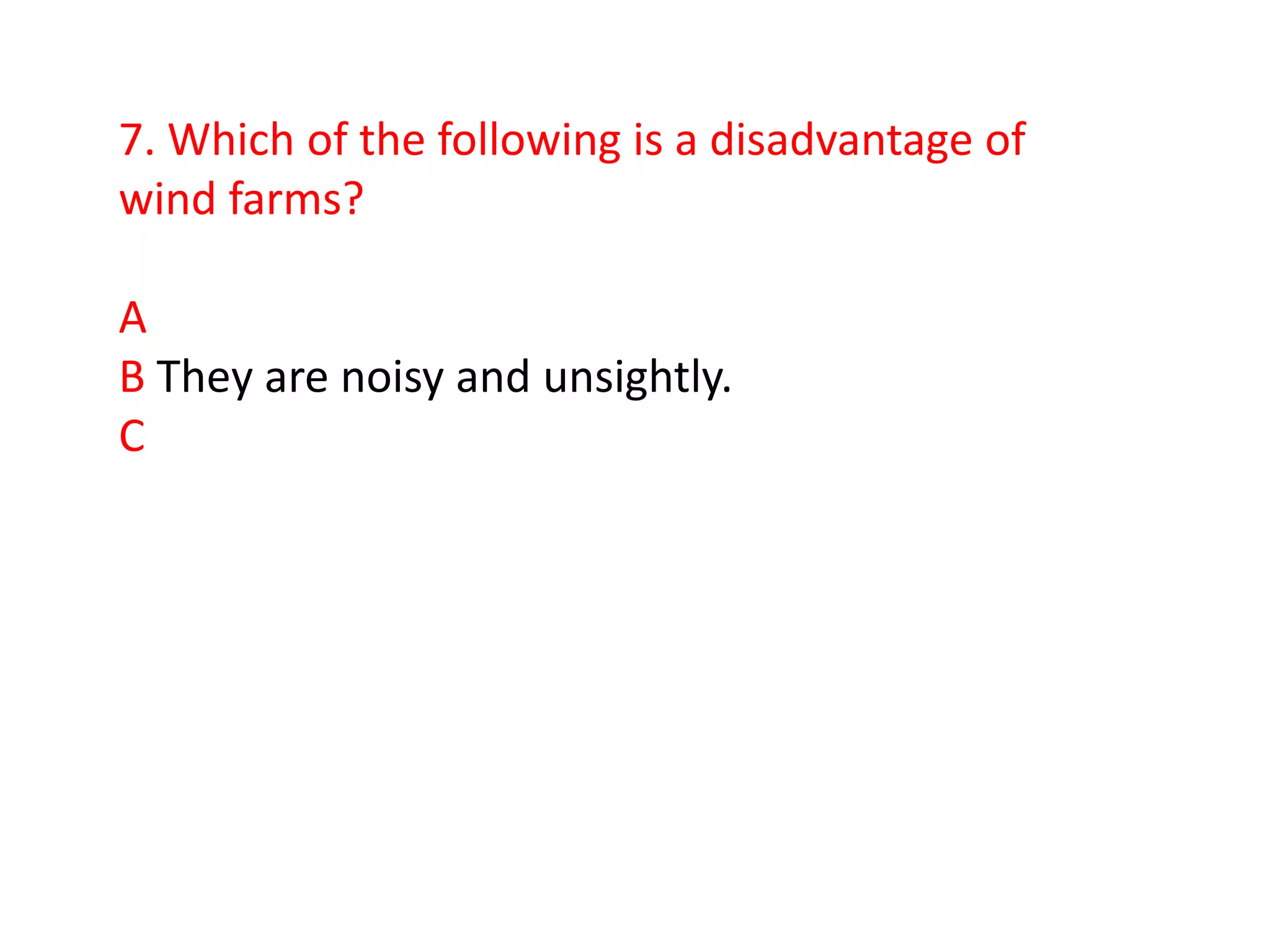
7. Which of the following is a disadvantage of
wind farms?

A
B They are noisy and unsightly.
C
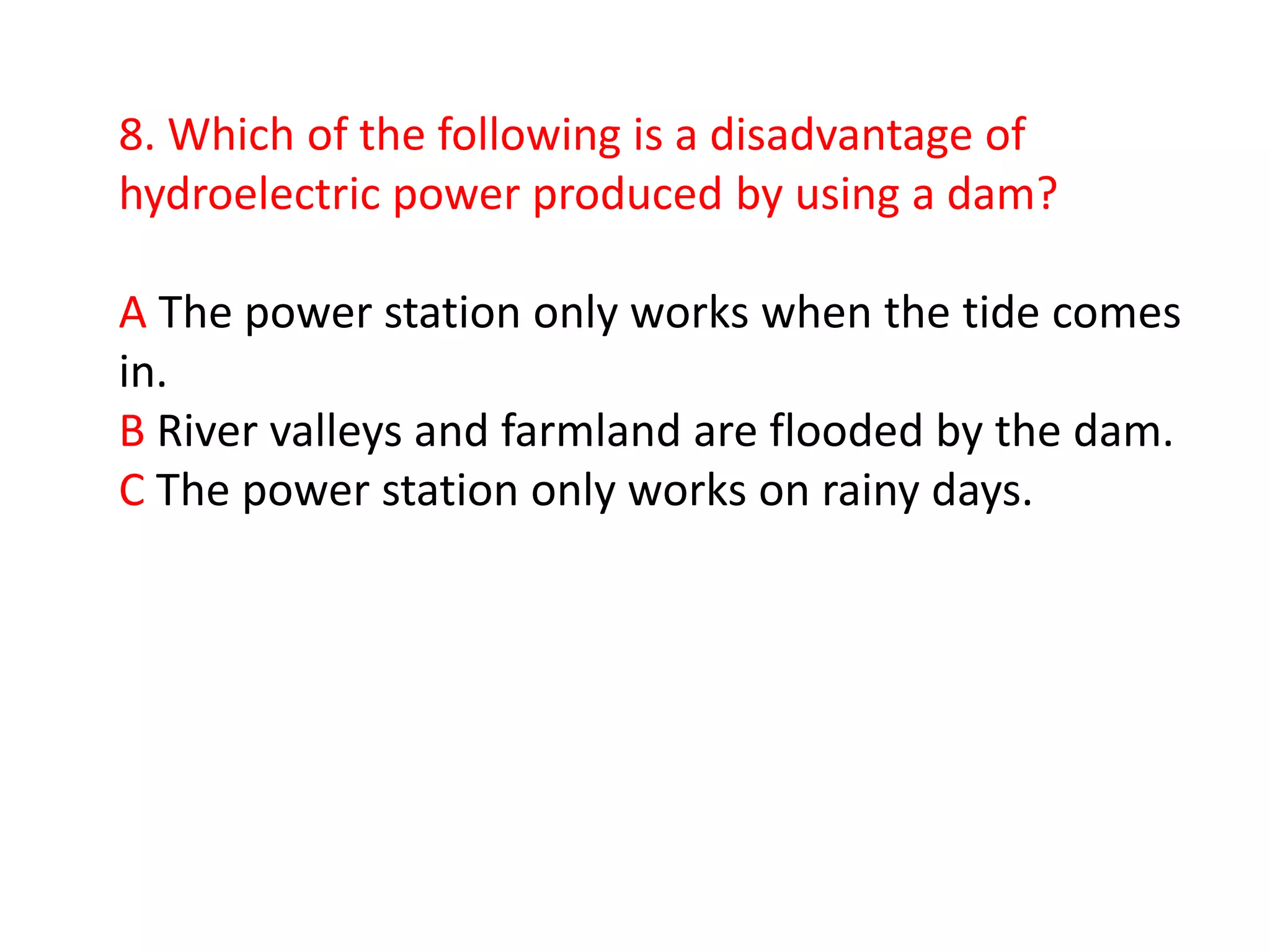
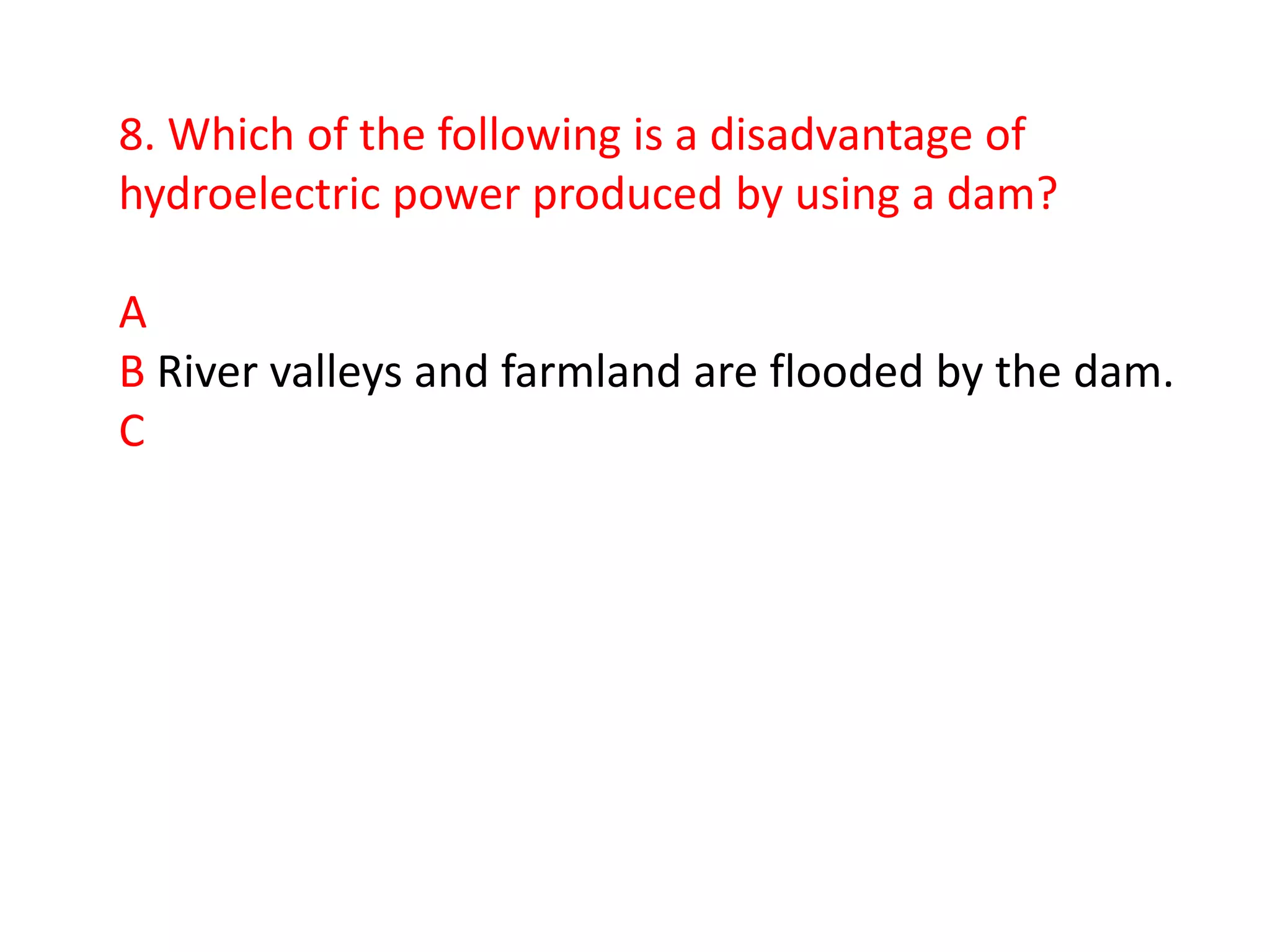
8. Which of the following is a disadvantage of
hydroelectric power produced by using a dam?

A The power station only works when the tide comes
in.
B River valleys and farmland are flooded by the dam.
C The power station only works on rainy days.
8. Which of the following is a disadvantage of
hydroelectric power produced by using a dam?

A
B River valleys and farmland are flooded by the dam.
C
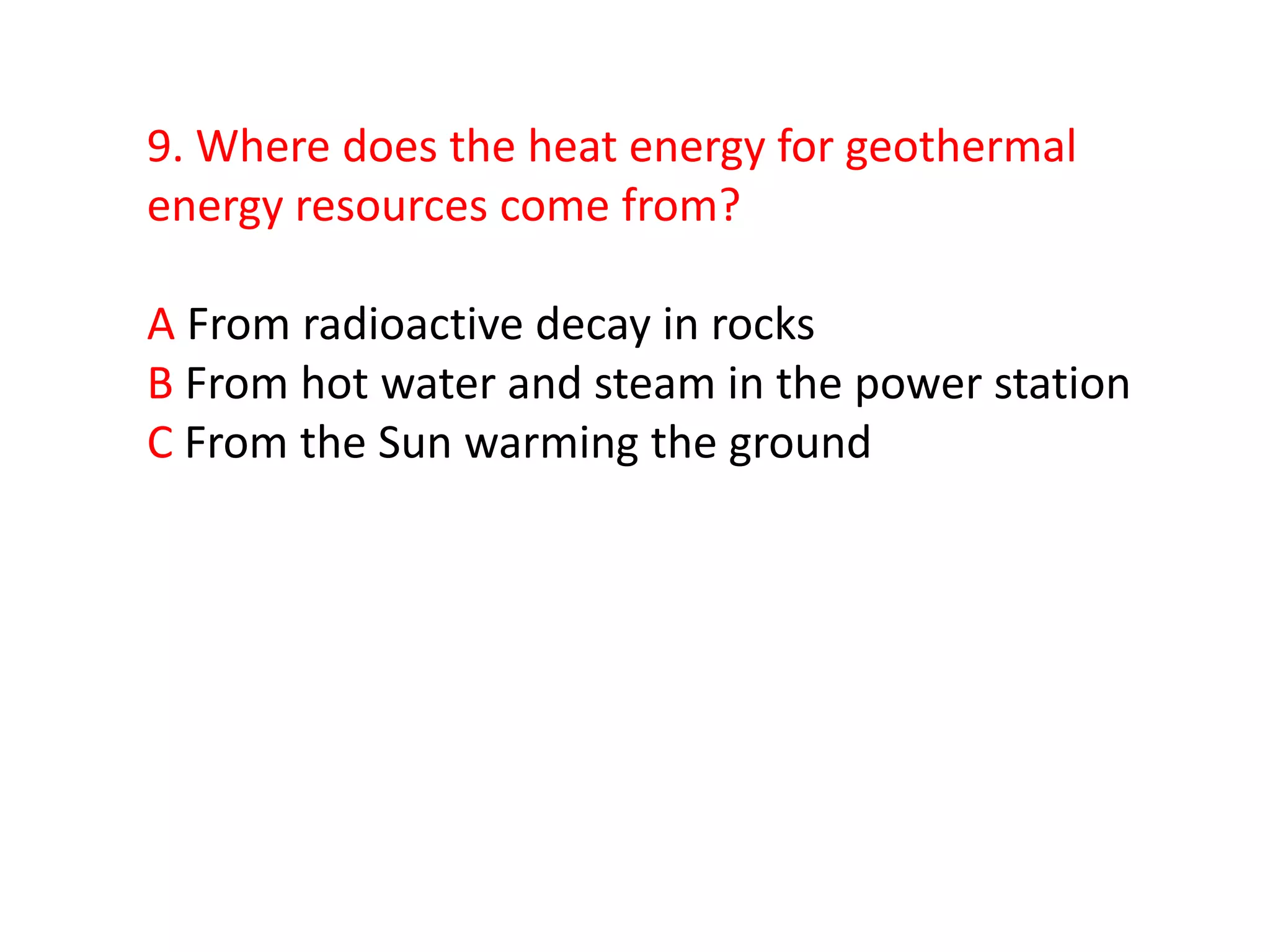
9. Where does the heat energy for geothermal
energy resources come from?

A From radioactive decay in rocks
B From hot water and steam in the power station
C From the Sun warming the ground
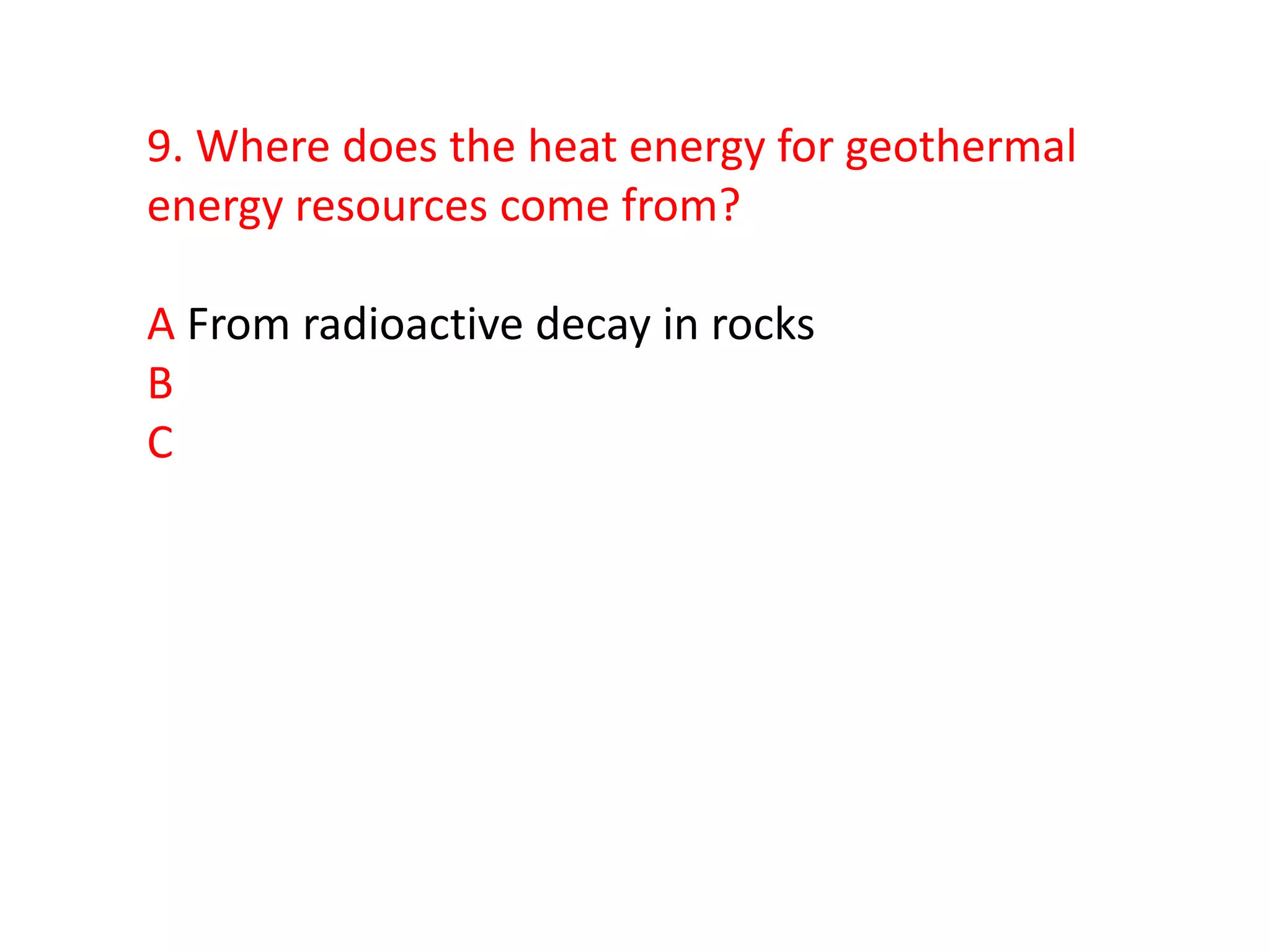
9. Where does the heat energy for geothermal
energy resources come from?

A From radioactive decay in rocks
B
C
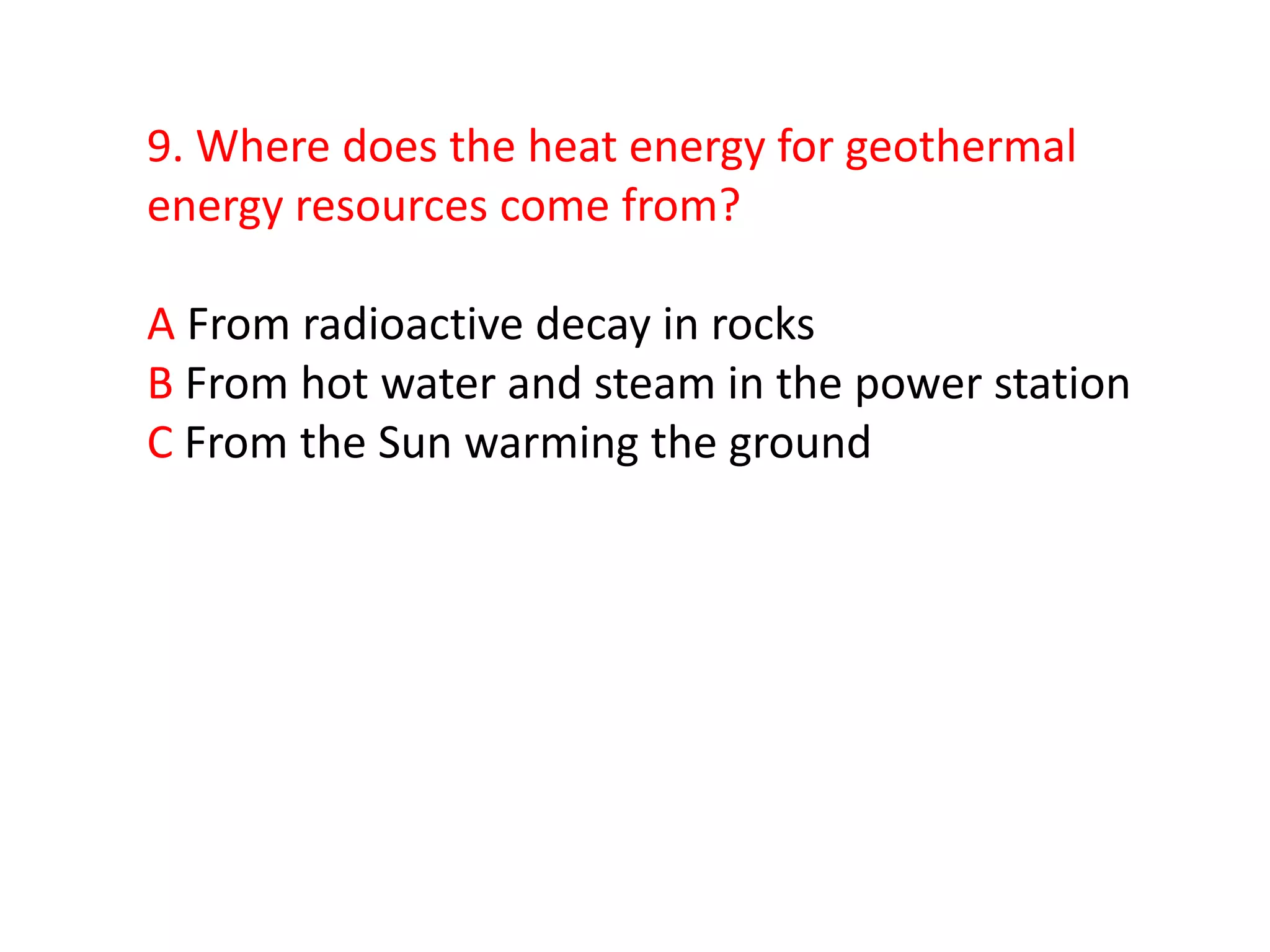
9. Where does the heat energy for geothermal
energy resources come from?

A From radioactive decay in rocks
B From hot water and steam in the power station
C From the Sun warming the ground
10. Which of the following is a disadvantage of
solar cells?

A They can supply electricity in remote areas.
B They do not produce electricity at night.
C They need complex moving parts.
10. Which of the following is a disadvantage of
solar cells?

A
B They do not produce electricity at night.
C
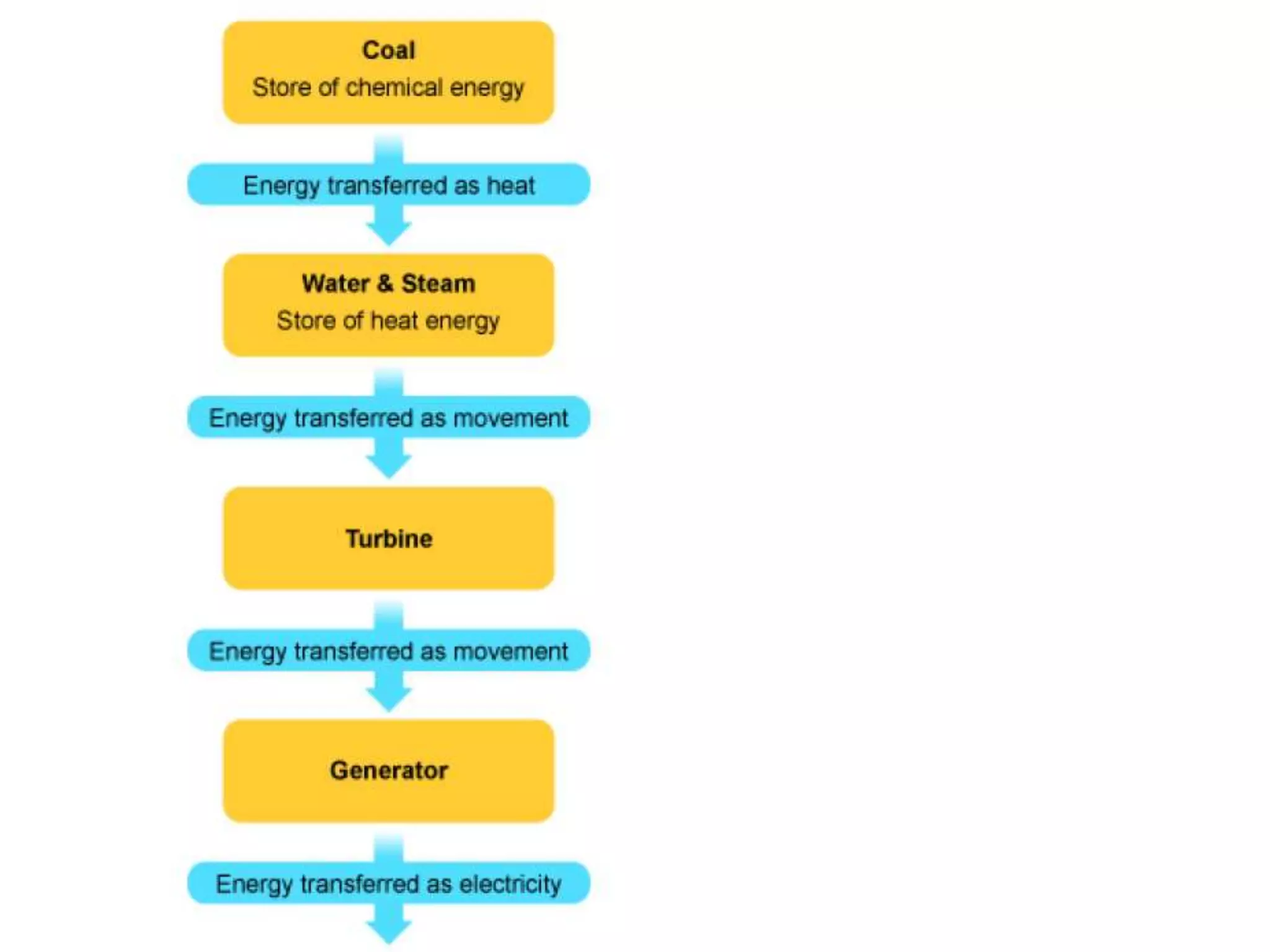
Label and identify parts of the national
    grid


Why are transformers an important part
of the national grid?
GCSE science A: physics electricity

GCSE science A: physics electricity

  • 1.
    P1.4 Methods weuse to generate electricity AQA GCSE Science A
  • 2.
    Various energy sourcescan be used to generate the electricity we need. We must carefully consider the advantages and disadvantages of using each energy source before deciding which energy source(s) it would be best to use in any particular situation. Electricity is distributed via the National Grid.
  • 3.
    Candidates should usetheir skills, knowledge and understanding to: ■ evaluate different methods of generating electricity ■ evaluate ways of matching supply with demand, either by increasing supply or decreasing demand ■ compare the advantages and disadvantages of overhead power lines and underground cables.
  • 4.
    P1.4.1 Generating electricity a)In some power stations an energy source is used to heat water. The steam produced drives a turbine that is coupled to an electrical generator. Energy sources include: ■ the fossil fuels (coal, oil and gas) which are burned to heat water or air ■ uranium and plutonium, when energy from nuclear fission is used to heat water ■ biofuels that can be burned to heat water.
  • 5.
    P1.4.1 Generating electricity b)Water and wind can be used to drive turbines directly.
  • 6.
    P1.4.1 Generating electricity c)Electricity can be produced directly from the Sun’s radiation.
  • 7.
    P1.4.1 Generating electricity d)In some volcanic areas hot water and steam rise to the surface. The steam can be tapped and used to drive turbines. This is known as geothermal energy.
  • 8.
    P1.4.1 Generating electricity e)Small-scale production of electricity may be useful in some areas and for some uses, eg hydroelectricity in remote areas and solar cells for roadside signs.
  • 9.
    P1.4.1 Generating electricity f)Using different energy resources has different effects on the environment. These effects include: • the release of substances into the atmosphere • the production of waste materials noise and • visual pollution the destruction of wildlife habitats.
  • 10.
    P1.4.2 The NationalGrid a) Electricity is distributed from power stations to consumers along the National Grid.
  • 11.
    There are fourmain stages: the fuel is burned to boil water to make steam the steam makes a turbine spin the spinning turbine turns a generator which produces electricity the electricity goes to the transformers to produce the correct voltage
  • 12.
    P1.4.2 The NationalGrid b) For a given power, increasing the voltage reduces the current required and this reduces the energy losses in the cables.
  • 13.
    P1.4.2 The NationalGrid c) The uses of step-up and step-down transformers in the National Grid. A transformer is an electrical device that changes the voltage of an alternating current (ac) supply, such as the mains electrical supply. A transformer changes a high-voltage supply into a low-voltage one, or vice versa. A transformer that increases the voltage is called a step-up transformer. A transformer that decreases the voltage is called a step-down transformer.
  • 14.
    1. Why arecoal, oil and natural gas non- renewable resources? A They contain carbon compounds. B They cannot be replaced, except over millions of years. C Once used, they cannot be used again.
  • 15.
    1. Why arecoal, oil and natural gas non- renewable resources? A B They cannot be replaced, except over millions of years. C
  • 16.
    2. For agiven amount of energy released, which fuel releases the most carbon dioxide? A Coal B Oil C Natural gas
  • 17.
    2. For agiven amount of energy released, which fuel releases the most carbon dioxide? A Coal B C
  • 18.
    3. Which typeof power station takes the least time to start up? A Gas-fired power station B Nuclear power station C Coal-fired power station
  • 19.
    3. Which typeof power station takes the least time to start up? A Gas-fired power station B C
  • 20.
    4. What problemdoes sulfur dioxide cause? A It contributes to global warming. B It harms the ozone layer. C It contributes to acid rain.
  • 21.
    4. What problemdoes sulfur dioxide cause? A B C It contributes to acid rain.
  • 22.
    5. Why areuranium and plutonium used as nuclear fuels? A They are metals. B They release a lot of heat when they burn. C They are radioactive.
  • 23.
    5. Why areuranium and plutonium used as nuclear fuels? A B C They are radioactive.
  • 24.
    6. Which ofthe following is an advantage of nuclear fuels? A They are renewable energy resources. B They do not emit harmful radiation. C They do not produce greenhouse gases.
  • 25.
    6. Which ofthe following is an advantage of nuclear fuels? A B C They do not produce greenhouse gases.
  • 26.
    7. Which ofthe following is a disadvantage of wind farms? A They use a renewable energy resource. B They are noisy and unsightly. C They do not produce electricity at night.
  • 27.
    7. Which ofthe following is a disadvantage of wind farms? A B They are noisy and unsightly. C
  • 28.
    8. Which ofthe following is a disadvantage of hydroelectric power produced by using a dam? A The power station only works when the tide comes in. B River valleys and farmland are flooded by the dam. C The power station only works on rainy days.
  • 29.
    8. Which ofthe following is a disadvantage of hydroelectric power produced by using a dam? A B River valleys and farmland are flooded by the dam. C
  • 30.
    9. Where doesthe heat energy for geothermal energy resources come from? A From radioactive decay in rocks B From hot water and steam in the power station C From the Sun warming the ground
  • 31.
    9. Where doesthe heat energy for geothermal energy resources come from? A From radioactive decay in rocks B C
  • 32.
    9. Where doesthe heat energy for geothermal energy resources come from? A From radioactive decay in rocks B From hot water and steam in the power station C From the Sun warming the ground
  • 33.
    10. Which ofthe following is a disadvantage of solar cells? A They can supply electricity in remote areas. B They do not produce electricity at night. C They need complex moving parts.
  • 34.
    10. Which ofthe following is a disadvantage of solar cells? A B They do not produce electricity at night. C
  • 37.
    Label and identifyparts of the national grid Why are transformers an important part of the national grid?