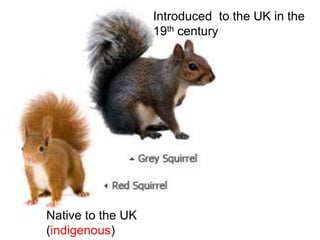
Environmental changes affect the distribution and survival of both plant and animal species through biotic and abiotic factors. Biotic factors like competition for resources and disease transmission have led to changes in species populations over time, such as the disappearance of pollinating insects and the decline of red squirrel numbers in the UK due to the introduction and spread of grey squirrels who outcompete reds for food and carry squirrel pox virus to which they are immune but kills reds. Non-biotic environmental changes in temperature, oxygen levels, water, and light availability from sources like pollution have also impacted species distributions.




![Habitats And Foodchains[1]](https://cdn.slidesharecdn.com/ss_thumbnails/habitatsandfoodchains1-1211465245857871-9-thumbnail.jpg?width=640&height=640&fit=bounds)

![Habitats And Foodchains[1]](https://cdn.slidesharecdn.com/ss_thumbnails/habitatsandfoodchains1-1211557190024111-8-thumbnail.jpg?width=640&height=640&fit=bounds)


