B2.7 Genetic disorders
Inherited disorders:
Polydactyl
Cystic Fibrosis (CF)
Huntington’s disease
You are the result of two things...
and
Key words
Gene
Genetic diagrams
Genetic disorders
Inherited
Dominant
Recessive
Alleles
Polydactyl
Cystic fibrosis
Monohybrid crosses
Homozygous
Heterozygous
Phenotype
Genotype
Stem cells
Embryos
Polydactyl
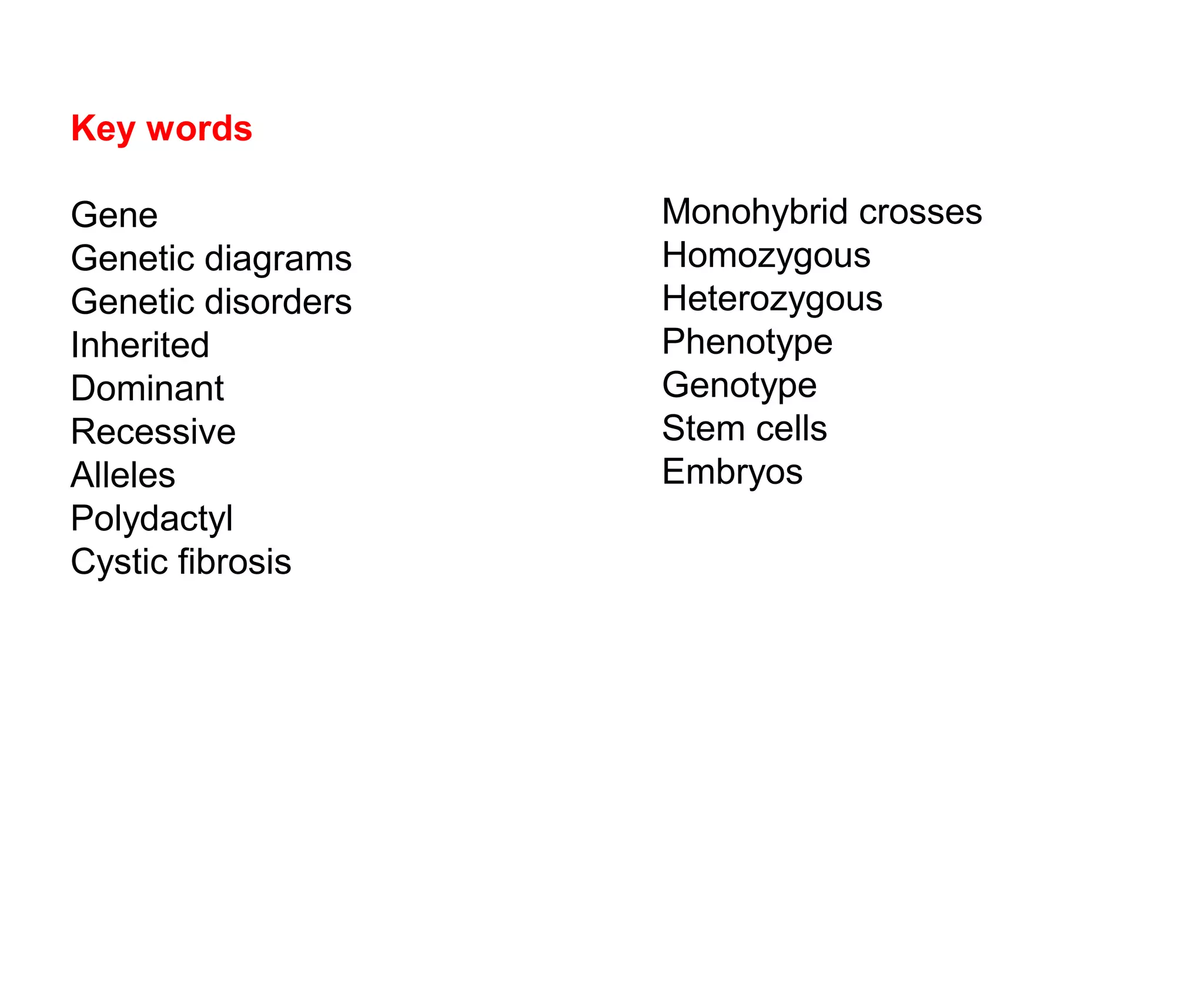
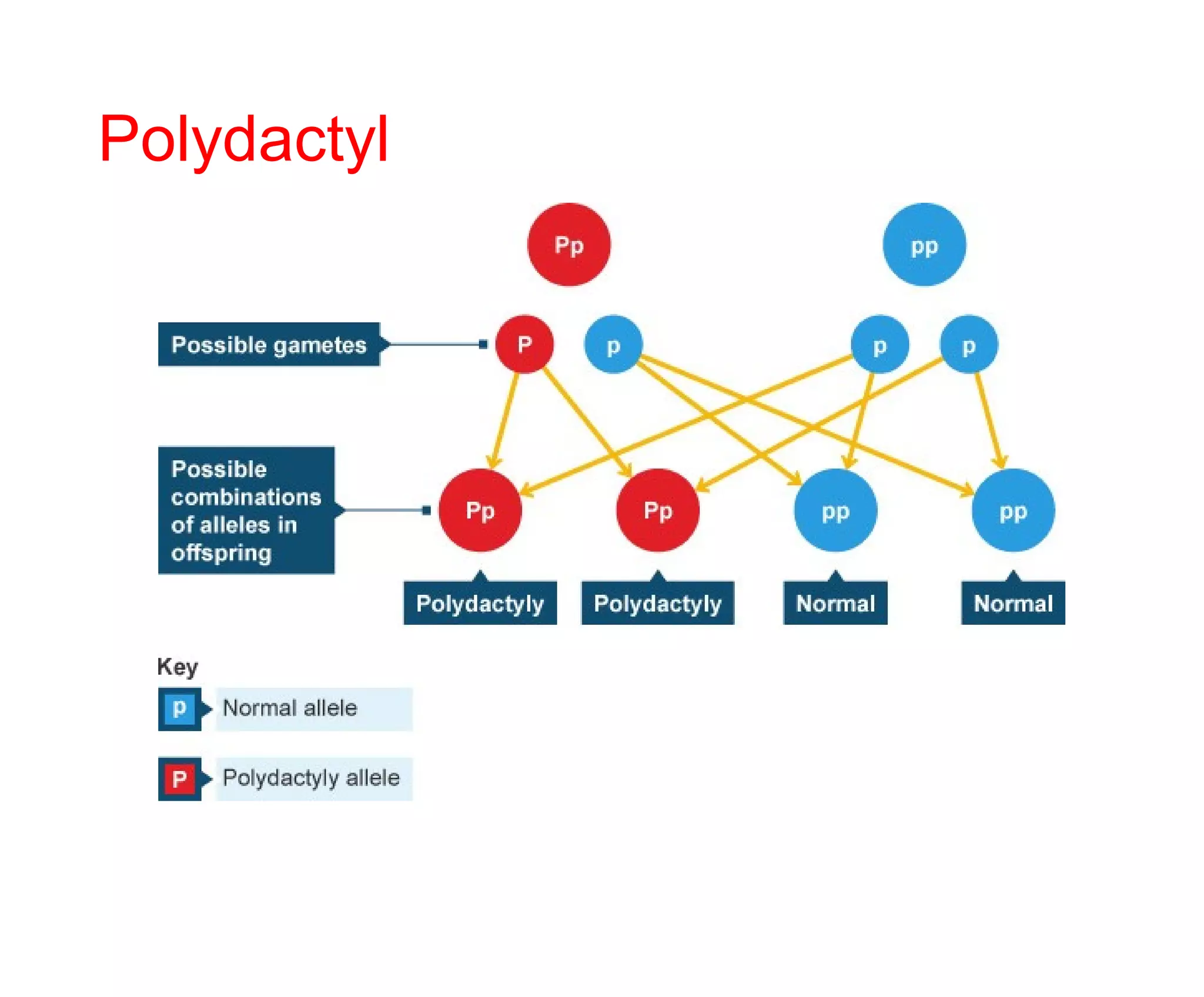
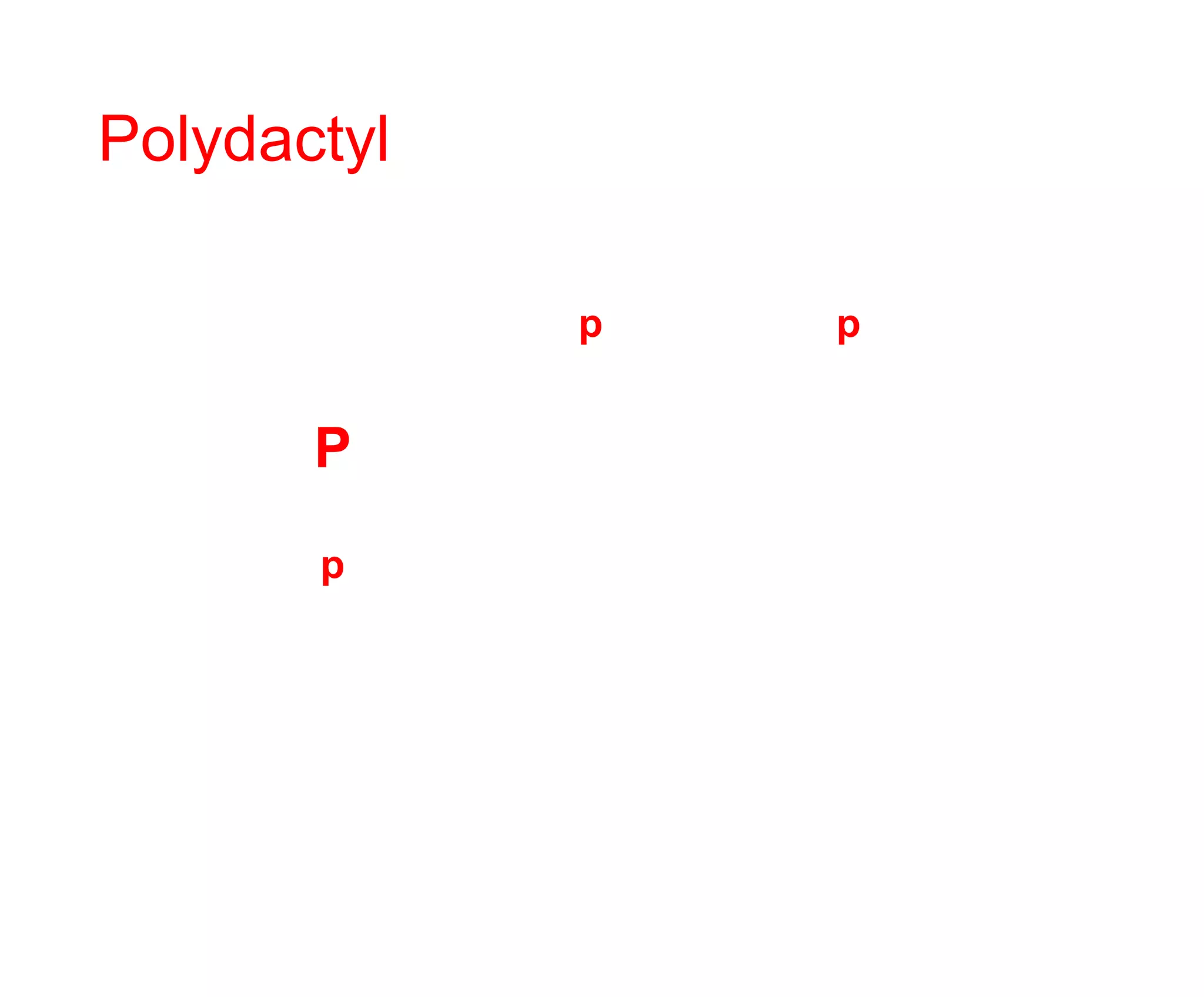
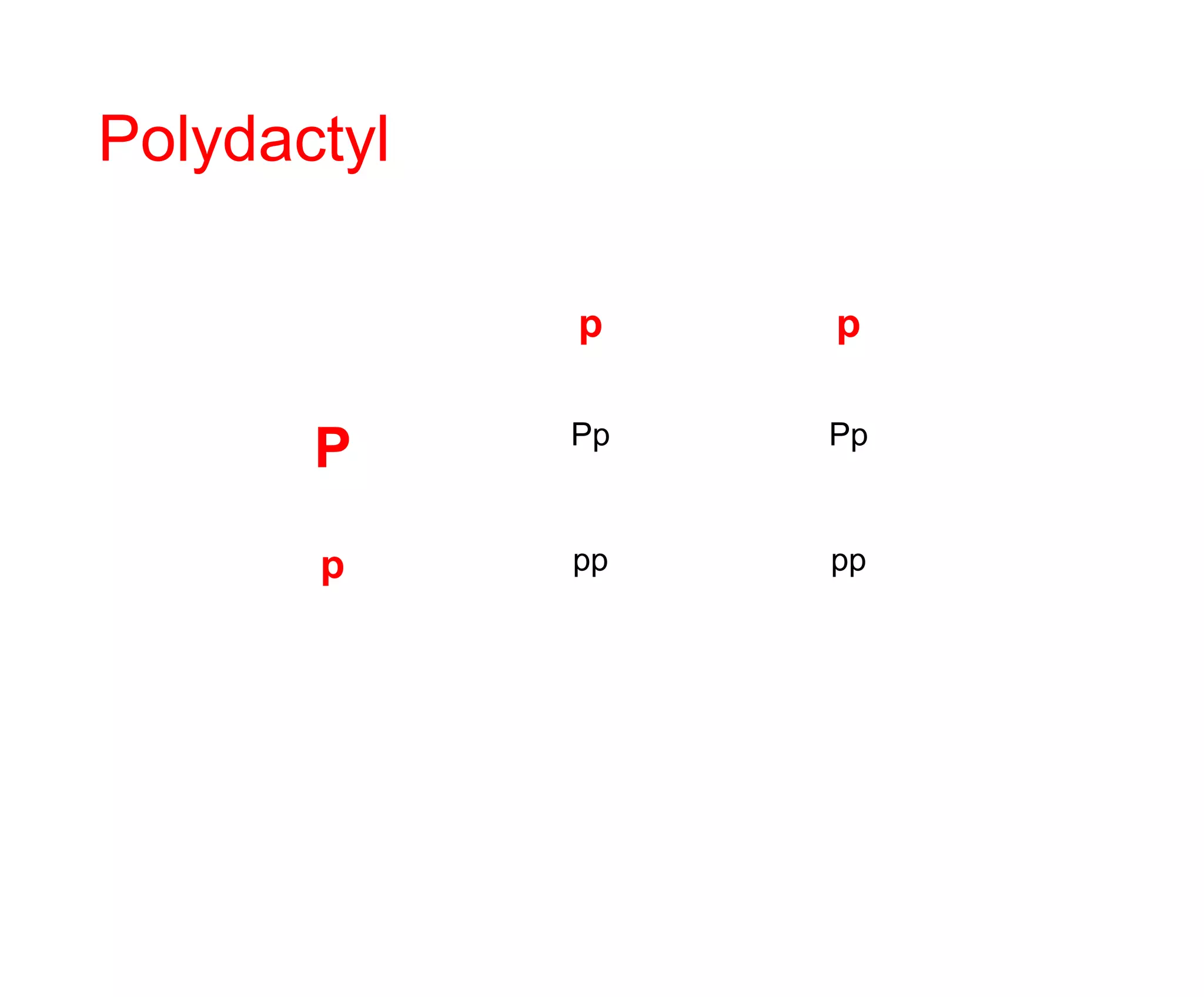
Polydactyly – having extra fingers or toes – is caused by a
dominant allele of a gene and can therefore be passed
on by only one parent who has the disorder
Polydactyl
Polydactyl
p p
P
p
Polydactyl
p p
P Pp Pp
p pp pp
Cystic Fibrosis
This is a disorder of cell membranes. It is caused by a recessive
allele so must be inherited from both parents. The parents may
be carriers of the disorder without actually having the disorder
themselves.
Cystic Fibrosis
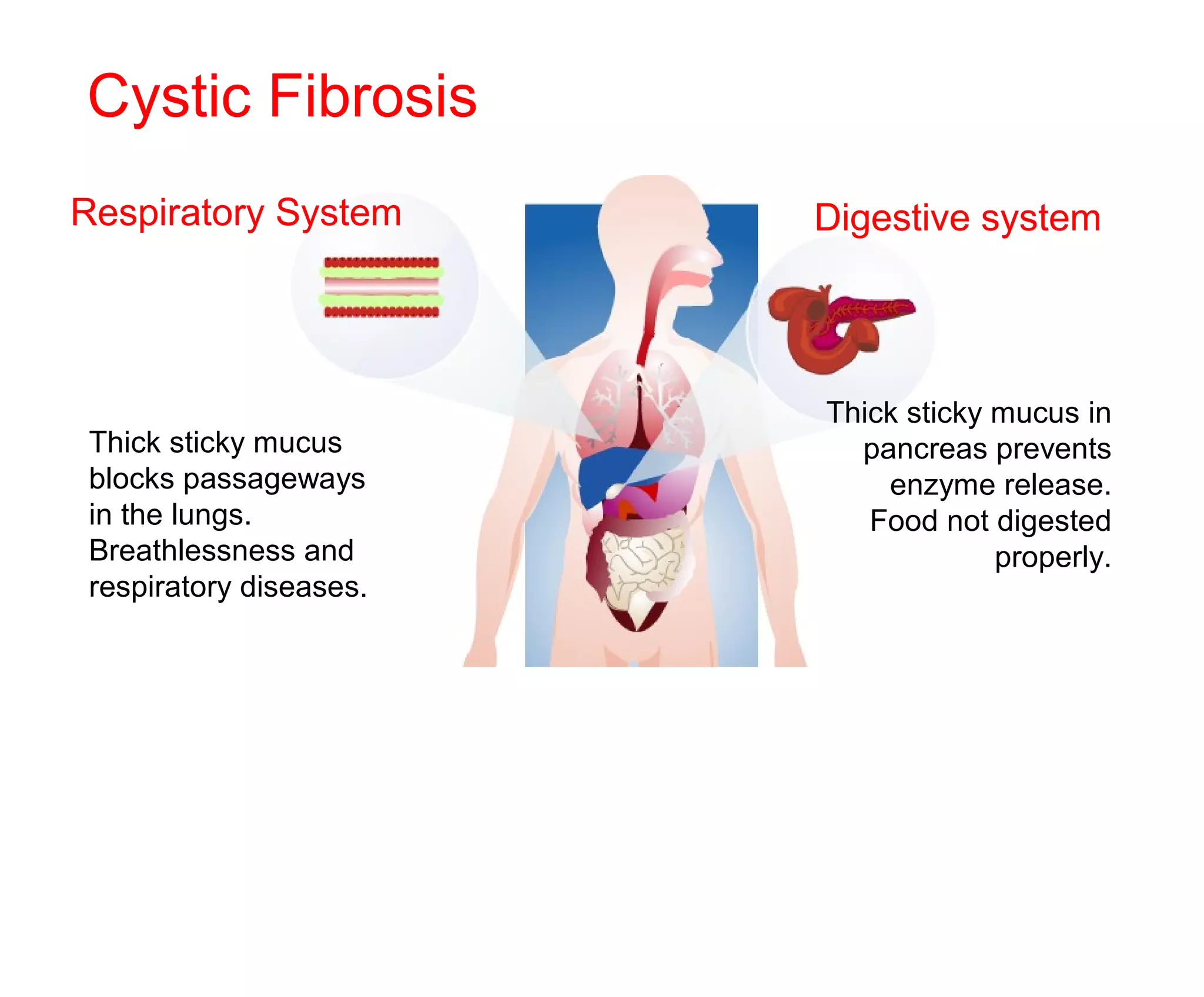
Digestive system
Thick sticky mucus in
pancreas prevents
enzyme release.
Food not digested
properly.
Respiratory System
Thick sticky mucus
blocks passageways
in the lungs.
Breathlessness and
respiratory diseases.
The faulty allele is recessive (f)
An individual with one recessive allele is a carrier
An individual with two recessive alleles has cystic fibrosis
Cystic Fibrosis
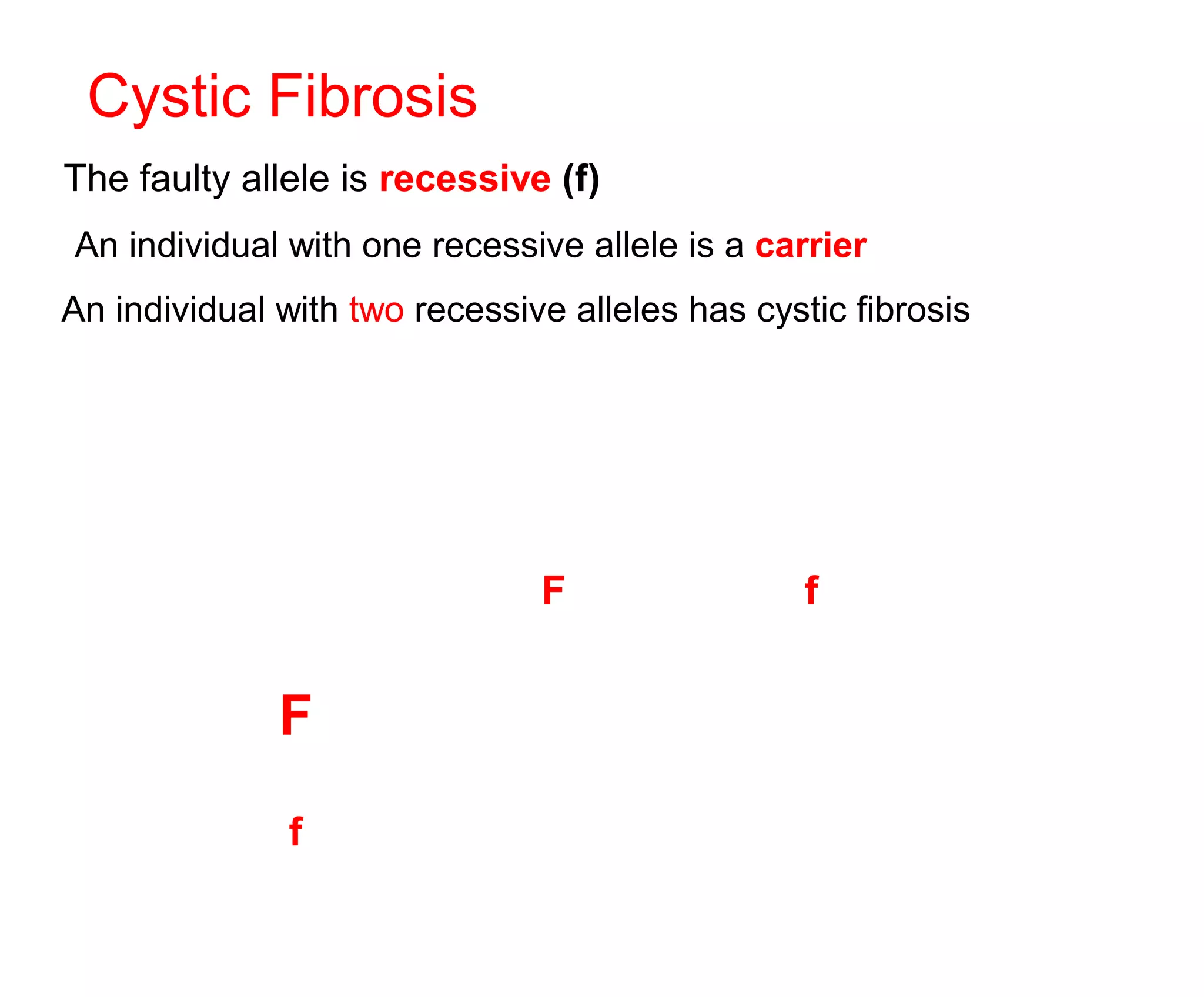
F f
F
f
Cystic Fibrosis
The faulty allele is recessive (f)
An individual with one recessive allele is a carrier
An individual with two recessive alleles has cystic fibrosis
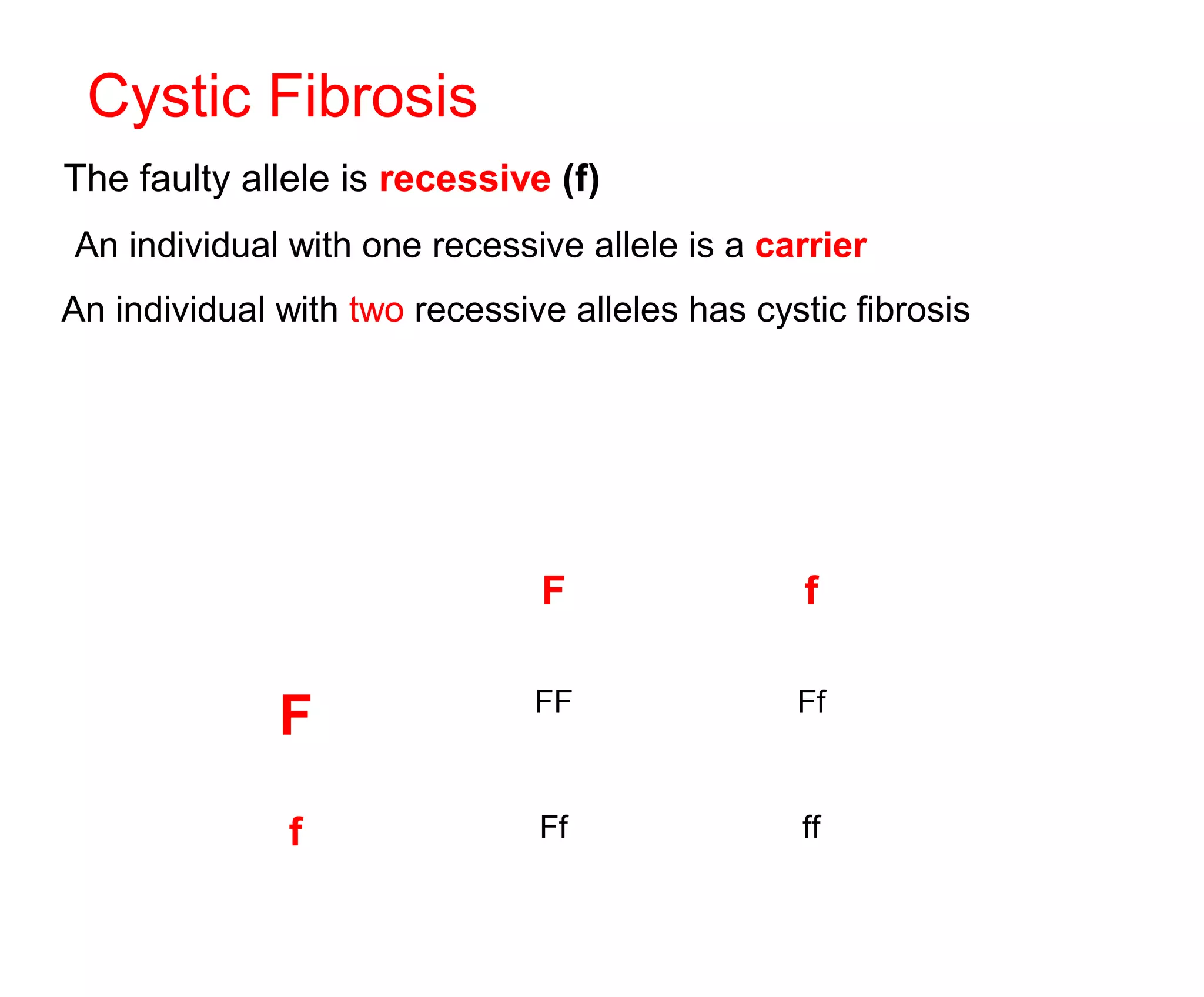
F f
F FF Ff
f Ff ff
Cystic Fibrosis
The faulty allele is recessive (f)
An individual with one recessive allele is a carrier
An individual with two recessive alleles has cystic fibrosis
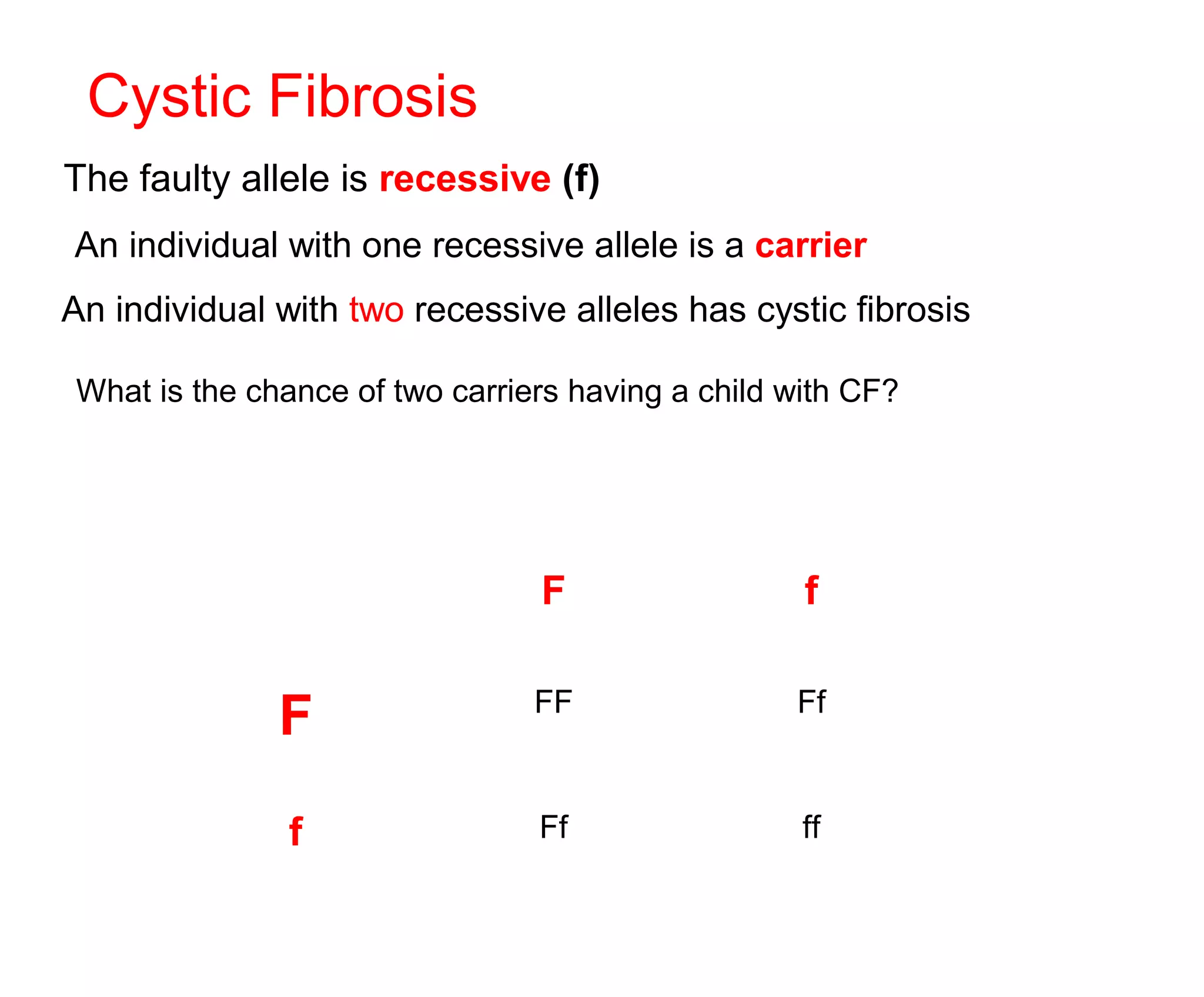
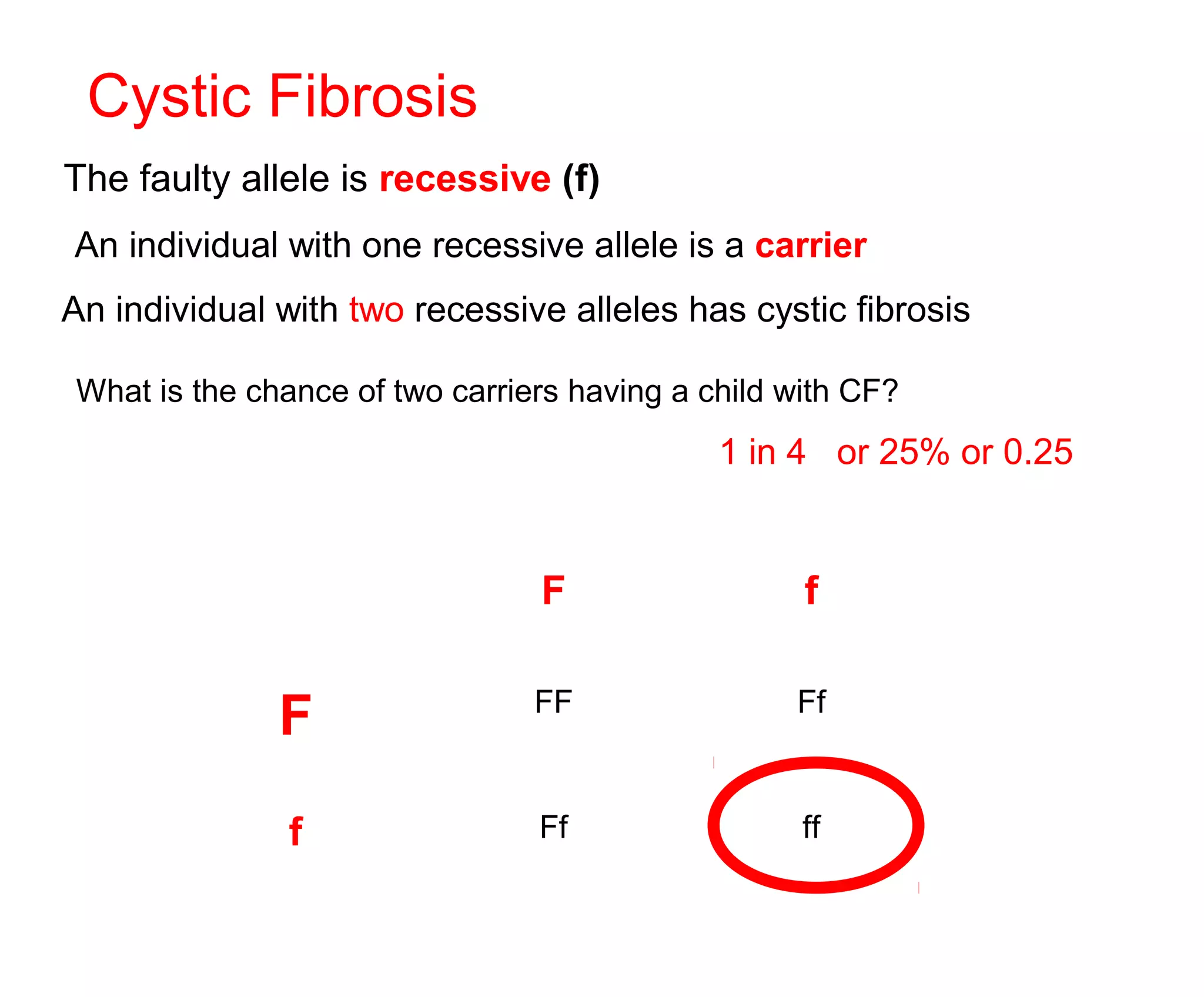
What is the chance of two carriers having a child with CF?
F f
F FF Ff
f Ff ff
Cystic Fibrosis
The faulty allele is recessive (f)
An individual with one recessive allele is a carrier
An individual with two recessive alleles has cystic fibrosis
What is the chance of two carriers having a child with CF?
F f
F FF Ff
f Ff ff
Cystic Fibrosis
The faulty allele is recessive (f)
An individual with one recessive allele is a carrier
An individual with two recessive alleles has cystic fibrosis
1 in 4 or 25% or 0.25
Symptoms
Loss of muscle control
Forgetfulness
Loss of understanding
Huntingdon’s Disease
individual with one
dominant alleles has
Huntington's Disease
Faulty allele is dominant
What can science
do about
genetic disease?
GENETIC TESTING
• adults, fetuses or embryos
• remove a cell
• test for disease causing allele
• adults may choose
not to have children
• termination of
fetus with disease
PRE-IMPLANTATION
GENETIC DIAGNOSIS
• fertilisation takes place in lab
• remove a cell from
8 cell embryo
• test for disease
causing allele
• only implant embryo
without disease
GENE THERAPY
• could be used to cure
genetic disease eg CF
• make lots of copies of
normal allele
• put alleles into virus
• virus 'infects' bone marrow cells
• genetically modified cells placed back inside body
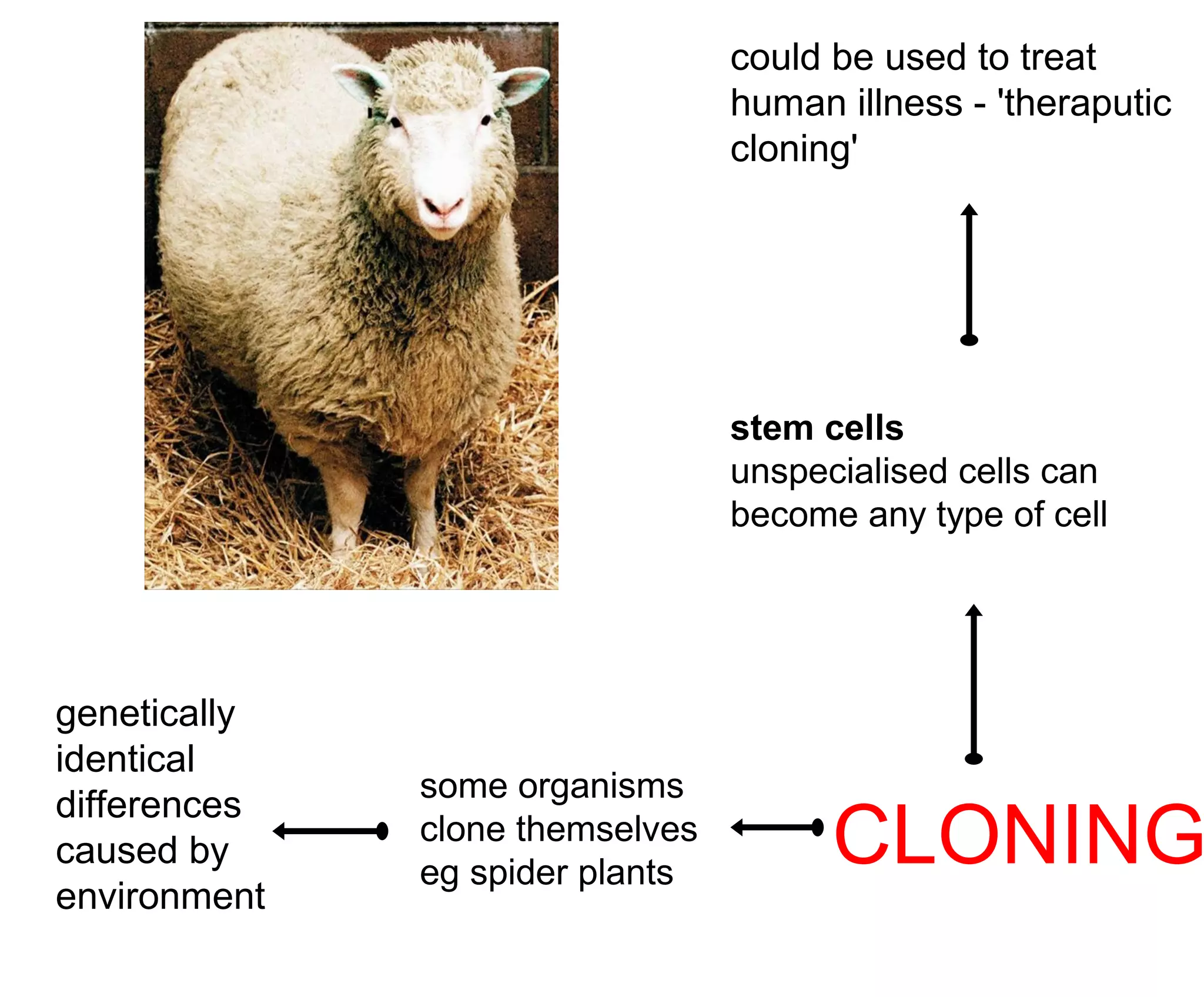
CLONING
stem cells
unspecialised cells can
become any type of cell
could be used to treat
human illness - 'theraputic
cloning'
some organisms
clone themselves
eg spider plants
genetically
identical
differences
caused by
environment
Some of the issues...
Should we test fetuses for genetic disorders?
Are you worried about employers or insurance
companies knowing your genetic information?
Is it ethical to terminate a fetus?
Is gene therapy playing God? Would you think so if
it could cure you of a terminal illness?
is cloning animals acceptable?
How about humans?
Why? why not?

B2.7 genetic disorders

  • 1.
  • 2.
    B2.7 Genetic disorders Inheriteddisorders: Polydactyl Cystic Fibrosis (CF) Huntington’s disease
  • 3.
    You are theresult of two things... and Key words Gene Genetic diagrams Genetic disorders Inherited Dominant Recessive Alleles Polydactyl Cystic fibrosis Monohybrid crosses Homozygous Heterozygous Phenotype Genotype Stem cells Embryos
  • 4.
    Polydactyl Polydactyly – havingextra fingers or toes – is caused by a dominant allele of a gene and can therefore be passed on by only one parent who has the disorder
  • 5.
  • 6.
  • 7.
  • 8.
    Cystic Fibrosis This isa disorder of cell membranes. It is caused by a recessive allele so must be inherited from both parents. The parents may be carriers of the disorder without actually having the disorder themselves.
  • 9.
    Cystic Fibrosis Digestive system Thicksticky mucus in pancreas prevents enzyme release. Food not digested properly. Respiratory System Thick sticky mucus blocks passageways in the lungs. Breathlessness and respiratory diseases.
  • 10.
    The faulty alleleis recessive (f) An individual with one recessive allele is a carrier An individual with two recessive alleles has cystic fibrosis Cystic Fibrosis
  • 11.
    F f F f Cystic Fibrosis Thefaulty allele is recessive (f) An individual with one recessive allele is a carrier An individual with two recessive alleles has cystic fibrosis
  • 12.
    F f F FFFf f Ff ff Cystic Fibrosis The faulty allele is recessive (f) An individual with one recessive allele is a carrier An individual with two recessive alleles has cystic fibrosis
  • 13.
    What is thechance of two carriers having a child with CF? F f F FF Ff f Ff ff Cystic Fibrosis The faulty allele is recessive (f) An individual with one recessive allele is a carrier An individual with two recessive alleles has cystic fibrosis
  • 14.
    What is thechance of two carriers having a child with CF? F f F FF Ff f Ff ff Cystic Fibrosis The faulty allele is recessive (f) An individual with one recessive allele is a carrier An individual with two recessive alleles has cystic fibrosis 1 in 4 or 25% or 0.25
  • 15.
    Symptoms Loss of musclecontrol Forgetfulness Loss of understanding Huntingdon’s Disease individual with one dominant alleles has Huntington's Disease Faulty allele is dominant
  • 17.
    What can science doabout genetic disease? GENETIC TESTING • adults, fetuses or embryos • remove a cell • test for disease causing allele • adults may choose not to have children • termination of fetus with disease PRE-IMPLANTATION GENETIC DIAGNOSIS • fertilisation takes place in lab • remove a cell from 8 cell embryo • test for disease causing allele • only implant embryo without disease GENE THERAPY • could be used to cure genetic disease eg CF • make lots of copies of normal allele • put alleles into virus • virus 'infects' bone marrow cells • genetically modified cells placed back inside body
  • 18.
    CLONING stem cells unspecialised cellscan become any type of cell could be used to treat human illness - 'theraputic cloning' some organisms clone themselves eg spider plants genetically identical differences caused by environment
  • 19.
    Some of theissues... Should we test fetuses for genetic disorders? Are you worried about employers or insurance companies knowing your genetic information? Is it ethical to terminate a fetus? Is gene therapy playing God? Would you think so if it could cure you of a terminal illness? is cloning animals acceptable? How about humans? Why? why not?