END STAGE RENAL DISEASE
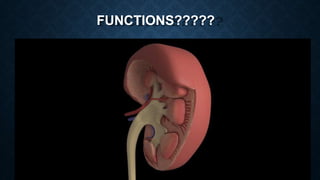
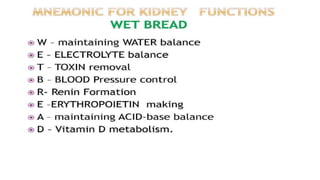
FUNCTIONS?????
INTRODUCTION
Chronic renal failure/ ESRD, is a
progressive, irreversible decline in
renal function body’s ability to
maintain metabolic and fluid and
electrolyte balance fails resulting in
uraemia or azotaemia (retention of
urea and other nitrogenous wastes in
the blood).
DEFINITION
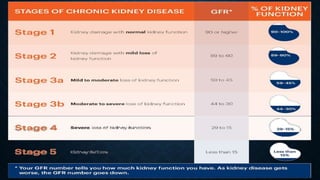
Glomerular filtration rate [GFR] less than 60 mL/min and albumin greater than 30
mg per gram of creatinine along with abnormalities of kidney structure or function for
greater than three months signifies chronic kidney disease
End-stage renal disease is defined as a GFR of less than 15 mL/min.
CAUSES OF ESRD
DIABETES MELLITUS
Hypertension
Vascular disease
Glomerular disease (primary or secondary)
Cystic kidney diseases
Tubulointerstitial disease
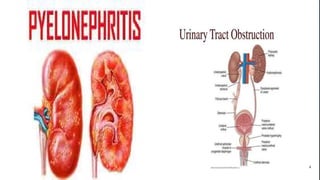
Urinary tract obstruction or dysfunction
Recurrent kidney stone disease
Congenital defects of the kidney or bladder
Unrecovered acute kidney injury
Certain medications, including non-steroidal anti-inflammatory drugs (NSAIDs),
calcineurin inhibitors, and antiretrovirals
SECONDARY TO SYSTEMIC DISEASES
Diabetes mellitus
Systemic lupus erythematosus
Rheumatoid arthritis
Mixed connective tissue disease
Scleroderma
Granulomatosis with polyangiitis (formerly known as Wegener granulomatosis)
Mixed cryoglobulinemia
Endocarditis
Hepatitis B and C
Syphilis
Human immunodeficiency virus (HIV) infection
ETIOLOGY
NEPHROTOXIC MEDICATIONS
RISK FACTORS
Diabetes with poor blood sugar control
Kidney disease that affects the glomeruli, the structures in the kidneys that filter
wastes from the blood
Polycystic kidney disease
Kidney disease after a kidney transplant
High blood pressure
Tobacco use
African-American descent
Male sex
Older age
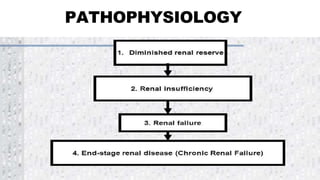
PATHOPHYSIOLOGY
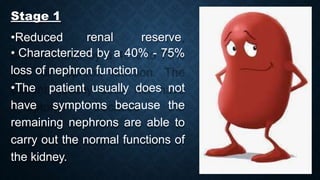
Stage 1
•Reduced renal reserve
• Characterized by a 40% - 75%
loss of nephron function
•The patient usually does not
have symptoms because the
remaining nephrons are able to
carry out the normal functions of
the kidney.
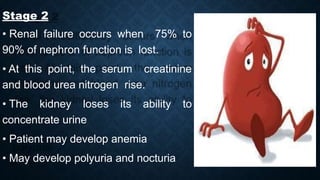
Stage 2
• Renal failure occurs when 75% to
90% of nephron function is lost.
• At this point, the serum creatinine
and blood urea nitrogen rise.
• The kidney loses its ability to
concentrate urine
• Patient may develop anemia
• May develop polyuria and nocturia
Stage 3
•End-stage renal disease (ESRD)
• Final stage of chronic renal
failure, occurs when there is less
<10 % nephron function remaining
• All regulatory, excretory and
hormonal functions of kidney are
severly impaired
•ESRD is evidenced by elevated creatinine and blood
urea nitrogen levels as well as electrolyte imbalances.
•Once the patient reaches this point, dialysis is usually
indicated.
•The rate of decline in renal function and progression of
chronic renal failure is related to the underlying
disorder, the urinary excretion of protein, and the
presence of hypertension.
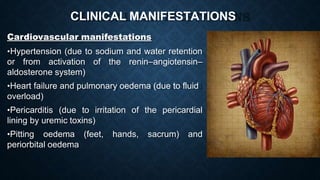
CLINICAL MANIFESTATIONS
Cardiovascular manifestations
•Hypertension (due to sodium and water retention
or from activation of the renin–angiotensin–
aldosterone system)
•Heart failure and pulmonary oedema (due to fluid
overload)
•Pericarditis (due to irritation of the pericardial
lining by uremic toxins)
•Pitting oedema (feet, hands, sacrum) and
periorbital oedema
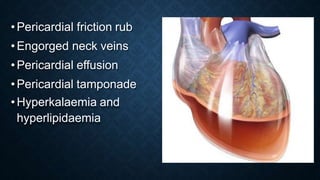
•Pericardial friction rub
•Engorged neck veins
•Pericardial effusion
•Pericardial tamponade
•Hyperkalaemia and
hyperlipidaemia
Neurologic manifestations
•Weakness and fatigue
•Confusion
•Inability to concentrate
•Disorientation
•Tremors
•Seizures
•Asterixis
•Restlessness of legs
•Burning of soles of feet
•Behaviour changes
Integumentary manifestations
•Gray-bronze skin color
•Dry, flaky skin
•Pruritus
•Ecchymosis
•Purpura
•Thin, brittle nails
•Coarse, thin hair
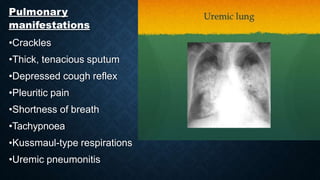
Pulmonary
manifestations
•Crackles
•Thick, tenacious sputum
•Depressed cough reflex
•Pleuritic pain
•Shortness of breath
•Tachypnoea
•Kussmaul-type respirations
•Uremic pneumonitis
Gastrointestinal manifestations
•Ammonia odour to breath (“uremic fetor”)
•Metallic taste
•Mouth ulcerations
•Bleeding
•Anorexia
•Nausea and vomiting
•Hiccups
•Constipation or diarrhoea
•Bleeding from gastrointestinal tract
Hematologic manifestations
•Anaemia
•Thrombocytopenia
Reproductive manifestations
•Amenorrhea
•Testicular atrophy
•Infertility
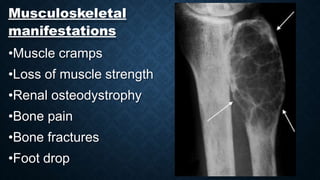
Musculoskeletal
manifestations
•Muscle cramps
•Loss of muscle strength
•Renal osteodystrophy
•Bone pain
•Bone fractures
•Foot drop
ASSESSMENT AND DIAGNOSTIC FINDINGS
Glomerular filtration rate
•Decreased GFR can be detected by obtaining
a 24-hour urinalysis for creatinine clearance.
•Serum creatinine: sensitive indicator of renal
function because of its constant production in
the body.
The BUN : affected not only by renal disease
but also by protein intake in the diet,
URINANALYSIS
A spot urine protein/creatinine ratio can be used to quantitate albuminuria.
• Value higher than 30 mg of albumin per gram of creatinine is considered abnormal
• Values> 300 mg/g are considered severely impaired renal function
24-hour urine protein can also be performed
• Value > 3.5 g is concerning for nephrotic range proteinuria.
Other investigations
•Renal Ultrasonography
•Voiding cystourethrogram
•CT/MRI
•Renal biopsy
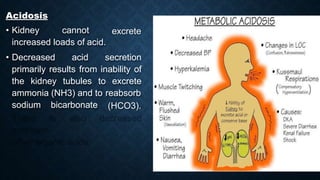
excrete
Acidosis
• Kidney cannot
increased loads of acid.
• Decreased acid secretion
primarily results from inability of
the kidney tubules to excrete
ammonia (NH3) and to reabsorb
bicarbonate (HCO3).
sodium
Anemia
•Inadequate erythropoietin
production
•Shortened life span of RBCs
•Nutritional deficiencies
•Patient’s tendency to bleed
Calcium and phosphorus imbalance
• The decreased serum calcium level causes
increased secretion of parathormone.
• In renal failure, however, the body does not
respond normally to the increased secretion of
parathormone; as a result, calcium leaves the
bone, often producing bone changes and bone
disease.
COMPLICATIONS
•Hyperkalaemia
• Coronary artery disease
•Pericarditis, pericardial effusion, and
pericardial tamponade
•Hypertension
•Anaemia
•Bone disease and metastatic calcifications
esrd-200430175414.pptx

esrd-200430175414.pptx

  • 1.
  • 2.
  • 4.
    INTRODUCTION Chronic renal failure/ESRD, is a progressive, irreversible decline in renal function body’s ability to maintain metabolic and fluid and electrolyte balance fails resulting in uraemia or azotaemia (retention of urea and other nitrogenous wastes in the blood).
  • 5.
    DEFINITION Glomerular filtration rate[GFR] less than 60 mL/min and albumin greater than 30 mg per gram of creatinine along with abnormalities of kidney structure or function for greater than three months signifies chronic kidney disease End-stage renal disease is defined as a GFR of less than 15 mL/min.
  • 6.
    CAUSES OF ESRD DIABETESMELLITUS Hypertension Vascular disease Glomerular disease (primary or secondary) Cystic kidney diseases Tubulointerstitial disease Urinary tract obstruction or dysfunction Recurrent kidney stone disease Congenital defects of the kidney or bladder Unrecovered acute kidney injury Certain medications, including non-steroidal anti-inflammatory drugs (NSAIDs), calcineurin inhibitors, and antiretrovirals
  • 7.
    SECONDARY TO SYSTEMICDISEASES Diabetes mellitus Systemic lupus erythematosus Rheumatoid arthritis Mixed connective tissue disease Scleroderma Granulomatosis with polyangiitis (formerly known as Wegener granulomatosis) Mixed cryoglobulinemia Endocarditis Hepatitis B and C Syphilis Human immunodeficiency virus (HIV) infection
  • 8.
  • 12.
  • 14.
    RISK FACTORS Diabetes withpoor blood sugar control Kidney disease that affects the glomeruli, the structures in the kidneys that filter wastes from the blood Polycystic kidney disease Kidney disease after a kidney transplant High blood pressure Tobacco use African-American descent Male sex Older age
  • 15.
  • 16.
    Stage 1 •Reduced renalreserve • Characterized by a 40% - 75% loss of nephron function •The patient usually does not have symptoms because the remaining nephrons are able to carry out the normal functions of the kidney.
  • 17.
    Stage 2 • Renalfailure occurs when 75% to 90% of nephron function is lost. • At this point, the serum creatinine and blood urea nitrogen rise. • The kidney loses its ability to concentrate urine • Patient may develop anemia • May develop polyuria and nocturia
  • 18.
    Stage 3 •End-stage renaldisease (ESRD) • Final stage of chronic renal failure, occurs when there is less <10 % nephron function remaining • All regulatory, excretory and hormonal functions of kidney are severly impaired
  • 20.
    •ESRD is evidencedby elevated creatinine and blood urea nitrogen levels as well as electrolyte imbalances. •Once the patient reaches this point, dialysis is usually indicated. •The rate of decline in renal function and progression of chronic renal failure is related to the underlying disorder, the urinary excretion of protein, and the presence of hypertension.
  • 21.
    CLINICAL MANIFESTATIONS Cardiovascular manifestations •Hypertension(due to sodium and water retention or from activation of the renin–angiotensin– aldosterone system) •Heart failure and pulmonary oedema (due to fluid overload) •Pericarditis (due to irritation of the pericardial lining by uremic toxins) •Pitting oedema (feet, hands, sacrum) and periorbital oedema
  • 22.
    •Pericardial friction rub •Engorgedneck veins •Pericardial effusion •Pericardial tamponade •Hyperkalaemia and hyperlipidaemia
  • 23.
    Neurologic manifestations •Weakness andfatigue •Confusion •Inability to concentrate •Disorientation •Tremors •Seizures •Asterixis •Restlessness of legs •Burning of soles of feet •Behaviour changes
  • 24.
    Integumentary manifestations •Gray-bronze skincolor •Dry, flaky skin •Pruritus •Ecchymosis •Purpura •Thin, brittle nails •Coarse, thin hair
  • 25.
    Pulmonary manifestations •Crackles •Thick, tenacious sputum •Depressedcough reflex •Pleuritic pain •Shortness of breath •Tachypnoea •Kussmaul-type respirations •Uremic pneumonitis
  • 26.
    Gastrointestinal manifestations •Ammonia odourto breath (“uremic fetor”) •Metallic taste •Mouth ulcerations •Bleeding •Anorexia •Nausea and vomiting •Hiccups •Constipation or diarrhoea •Bleeding from gastrointestinal tract
  • 27.
  • 28.
    Musculoskeletal manifestations •Muscle cramps •Loss ofmuscle strength •Renal osteodystrophy •Bone pain •Bone fractures •Foot drop
  • 29.
    ASSESSMENT AND DIAGNOSTICFINDINGS Glomerular filtration rate •Decreased GFR can be detected by obtaining a 24-hour urinalysis for creatinine clearance. •Serum creatinine: sensitive indicator of renal function because of its constant production in the body. The BUN : affected not only by renal disease but also by protein intake in the diet,
  • 30.
    URINANALYSIS A spot urineprotein/creatinine ratio can be used to quantitate albuminuria. • Value higher than 30 mg of albumin per gram of creatinine is considered abnormal • Values> 300 mg/g are considered severely impaired renal function 24-hour urine protein can also be performed • Value > 3.5 g is concerning for nephrotic range proteinuria.
  • 31.
    Other investigations •Renal Ultrasonography •Voidingcystourethrogram •CT/MRI •Renal biopsy
  • 32.
    excrete Acidosis • Kidney cannot increasedloads of acid. • Decreased acid secretion primarily results from inability of the kidney tubules to excrete ammonia (NH3) and to reabsorb bicarbonate (HCO3). sodium
  • 33.
    Anemia •Inadequate erythropoietin production •Shortened lifespan of RBCs •Nutritional deficiencies •Patient’s tendency to bleed
  • 34.
    Calcium and phosphorusimbalance • The decreased serum calcium level causes increased secretion of parathormone. • In renal failure, however, the body does not respond normally to the increased secretion of parathormone; as a result, calcium leaves the bone, often producing bone changes and bone disease.
  • 35.
    COMPLICATIONS •Hyperkalaemia • Coronary arterydisease •Pericarditis, pericardial effusion, and pericardial tamponade •Hypertension •Anaemia •Bone disease and metastatic calcifications