Energy Forms and 
Transformations 
Objective: Examine the various 
forms of energy in order to 
identify and describe specific 
energy transformations.
Energy 
• the “stuff” that makes “stuff 
do stuff” 
OR 
• the ability to do work. (W=F x 
D) 
(F=force d=distance)
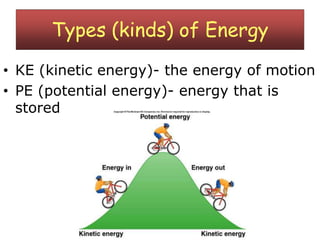
Types (kinds) of Energy 
• KE (kinetic energy)- the energy of motion 
• PE (potential energy)- energy that is 
stored
Forms of energy 
• Radiant or Light 
• Sound 
• Heat/Thermal 
• Electrical 
• Mechanical
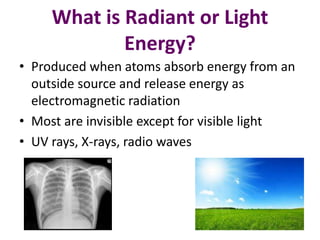
What is Radiant or Light 
Energy? 
• Produced when atoms absorb energy from an 
outside source and release energy as 
electromagnetic radiation 
• Most are invisible except for visible light 
• UV rays, X-rays, radio waves
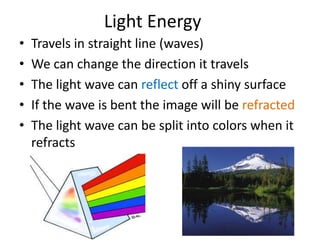
Light Energy 
• Travels in straight line (waves) 
• We can change the direction it travels 
• The light wave can reflect off a shiny surface 
• If the wave is bent the image will be refracted 
• The light wave can be split into colors when it 
refracts
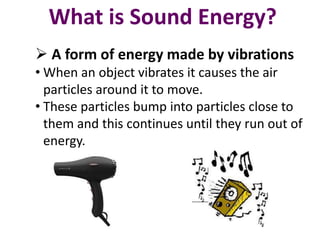
What is Sound Energy? 
 A form of energy made by vibrations 
• When an object vibrates it causes the air 
particles around it to move. 
• These particles bump into particles close to 
them and this continues until they run out of 
energy.
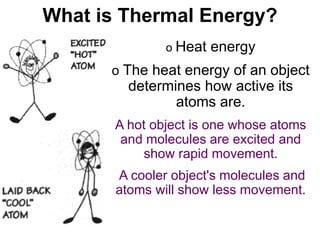
What is Thermal Energy? 
o Heat energy 
o The heat energy of an object 
determines how active its 
atoms are. 
A hot object is one whose atoms 
and molecules are excited and 
show rapid movement. 
A cooler object's molecules and 
atoms will show less movement.
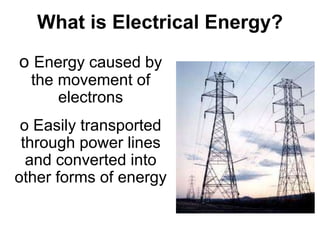
What is Electrical Energy? 
o Energy caused by 
the movement of 
electrons 
o Easily transported 
through power lines 
and converted into 
other forms of energy
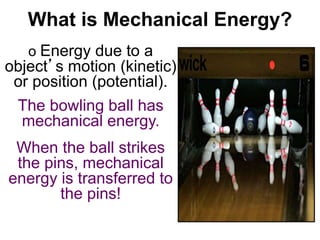
What is Mechanical Energy? 
o Energy due to a 
object’s motion (kinetic) 
or position (potential). 
The bowling ball has 
mechanical energy. 
When the ball strikes 
the pins, mechanical 
energy is transferred to 
the pins!
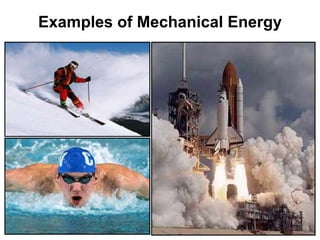
Examples of Mechanical Energy
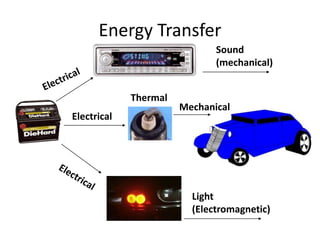
Energy Transfer 
Electrical 
Sound 
(mechanical) 
Light 
(Electromagnetic) 
Thermal 
Mechanical

Forms of energy overview powerpoint

  • 1.
    Energy Forms and Transformations Objective: Examine the various forms of energy in order to identify and describe specific energy transformations.
  • 2.
    Energy • the“stuff” that makes “stuff do stuff” OR • the ability to do work. (W=F x D) (F=force d=distance)
  • 3.
    Types (kinds) ofEnergy • KE (kinetic energy)- the energy of motion • PE (potential energy)- energy that is stored
  • 4.
    Forms of energy • Radiant or Light • Sound • Heat/Thermal • Electrical • Mechanical
  • 5.
    What is Radiantor Light Energy? • Produced when atoms absorb energy from an outside source and release energy as electromagnetic radiation • Most are invisible except for visible light • UV rays, X-rays, radio waves
  • 6.
    Light Energy •Travels in straight line (waves) • We can change the direction it travels • The light wave can reflect off a shiny surface • If the wave is bent the image will be refracted • The light wave can be split into colors when it refracts
  • 7.
    What is SoundEnergy?  A form of energy made by vibrations • When an object vibrates it causes the air particles around it to move. • These particles bump into particles close to them and this continues until they run out of energy.
  • 8.
    What is ThermalEnergy? o Heat energy o The heat energy of an object determines how active its atoms are. A hot object is one whose atoms and molecules are excited and show rapid movement. A cooler object's molecules and atoms will show less movement.
  • 9.
    What is ElectricalEnergy? o Energy caused by the movement of electrons o Easily transported through power lines and converted into other forms of energy
  • 10.
    What is MechanicalEnergy? o Energy due to a object’s motion (kinetic) or position (potential). The bowling ball has mechanical energy. When the ball strikes the pins, mechanical energy is transferred to the pins!
  • 11.
  • 12.
    Energy Transfer Electrical Sound (mechanical) Light (Electromagnetic) Thermal Mechanical