Energy Transformations and
Conservation
Energy Transformations
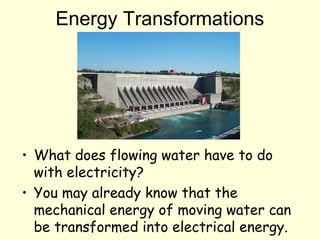
• What does flowing water have to do
with electricity?
• You may already know that the
mechanical energy of moving water can
be transformed into electrical energy.
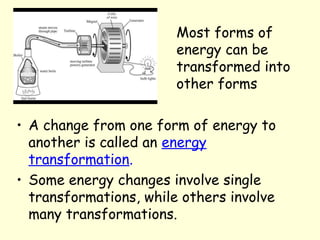
• A change from one form of energy to
another is called an energy
transformation.
• Some energy changes involve single
transformations, while others involve
many transformations.
Most forms of
energy can be
transformed into
other forms
Single Transformations
• Sometimes, one form of energy needs to be
transformed into another to get work done.
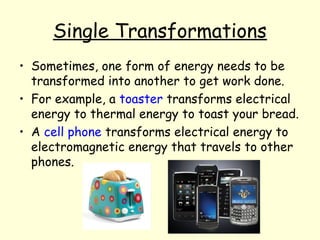
• For example, a toaster transforms electrical
energy to thermal energy to toast your bread.
• A cell phone transforms electrical energy to
electromagnetic energy that travels to other
phones.
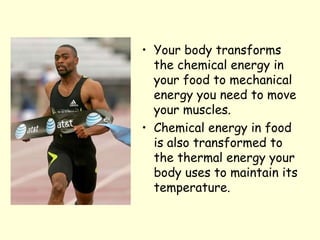
• Your body transforms
the chemical energy in
your food to mechanical
energy you need to move
your muscles.
• Chemical energy in food
is also transformed to
the thermal energy your
body uses to maintain its
temperature.
Multiple Transformations
• Often, a series of energy
transformations is needed to
do work.
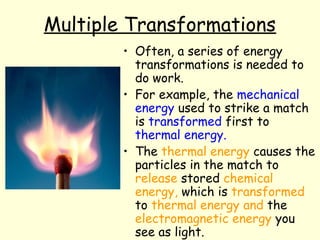
• For example, the mechanical
energy used to strike a match
is transformed first to
thermal energy.
• The thermal energy causes the
particles in the match to
release stored chemical
energy, which is transformed
to thermal energy and the
electromagnetic energy you
see as light.
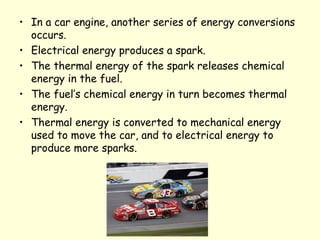
• In a car engine, another series of energy conversions
occurs.
• Electrical energy produces a spark.
• The thermal energy of the spark releases chemical
energy in the fuel.
• The fuel’s chemical energy in turn becomes thermal
energy.
• Thermal energy is converted to mechanical energy
used to move the car, and to electrical energy to
produce more sparks.
Transformations Between
Potential and Kinetic Energy
• One of the most common energy
transformations is the transformation
between potential energy and kinetic energy.
• In waterfalls such as Niagara Falls, potential
energy is transformed to kinetic energy.
• The water at the top of the falls has
gravitational potential energy.
• As the water plunges, its velocity increases.
• Its potential energy becomes kinetic energy.
Energy Transformation in Juggling
• Any object that rises or
falls experiences a change in
its kinetic and gravitational
potential energy.
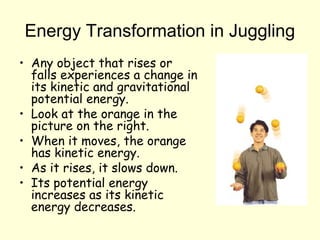
• Look at the orange in the
picture on the right.
• When it moves, the orange
has kinetic energy.
• As it rises, it slows down.
• Its potential energy
increases as its kinetic
energy decreases.
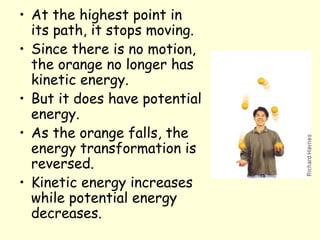
• At the highest point in
its path, it stops moving.
• Since there is no motion,
the orange no longer has
kinetic energy.
• But it does have potential
energy.
• As the orange falls, the
energy transformation is
reversed.
• Kinetic energy increases
while potential energy
decreases.
Energy Transformation in a Pendulum
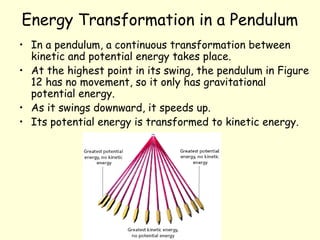
• In a pendulum, a continuous transformation between
kinetic and potential energy takes place.
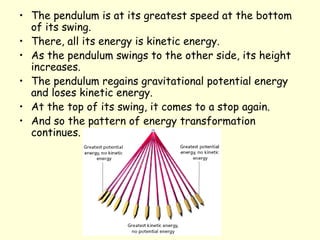
• At the highest point in its swing, the pendulum in Figure
12 has no movement, so it only has gravitational
potential energy.
• As it swings downward, it speeds up.
• Its potential energy is transformed to kinetic energy.
• The pendulum is at its greatest speed at the bottom
of its swing.
• There, all its energy is kinetic energy.
• As the pendulum swings to the other side, its height
increases.
• The pendulum regains gravitational potential energy
and loses kinetic energy.
• At the top of its swing, it comes to a stop again.
• And so the pattern of energy transformation
continues.
Energy Transformation in a Pole Vault
• A pole-vaulter
transforms kinetic
energy to elastic
potential energy, which
then becomes
gravitational potential
energy.
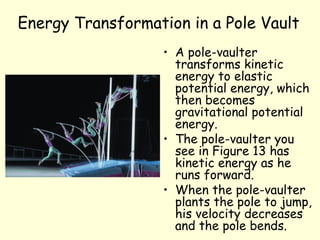
• The pole-vaulter you
see in Figure 13 has
kinetic energy as he
runs forward.
• When the pole-vaulter
plants the pole to jump,
his velocity decreases
and the pole bends.
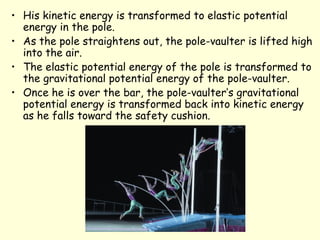
• His kinetic energy is transformed to elastic potential
energy in the pole.
• As the pole straightens out, the pole-vaulter is lifted high
into the air.
• The elastic potential energy of the pole is transformed to
the gravitational potential energy of the pole-vaulter.
• Once he is over the bar, the pole-vaulter’s gravitational
potential energy is transformed back into kinetic energy
as he falls toward the safety cushion.
Conservation of Energy
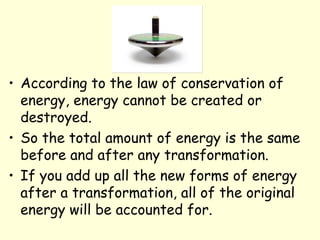
• If you set a spinning top in motion, will the top
remain in motion forever?
• No, it will not.
• Then what happens to its energy?
• Is the energy destroyed?
• Again, the answer is no.
• The law of conservation of energy states
that when one form of energy is transformed
to another, no energy is destroyed in the
process.
• According to the law of conservation of
energy, energy cannot be created or
destroyed.
• So the total amount of energy is the same
before and after any transformation.
• If you add up all the new forms of energy
after a transformation, all of the original
energy will be accounted for.
Energy and Friction
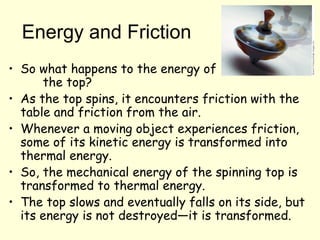
• So what happens to the energy of
the top?
• As the top spins, it encounters friction with the
table and friction from the air.
• Whenever a moving object experiences friction,
some of its kinetic energy is transformed into
thermal energy.
• So, the mechanical energy of the spinning top is
transformed to thermal energy.
• The top slows and eventually falls on its side, but
its energy is not destroyed—it is transformed.
• The fact that friction transforms mechanical
energy to thermal energy should not surprise you.
• The fact that friction transforms mechanical
energy to thermal energy explains why no machine
is 100 percent efficient.
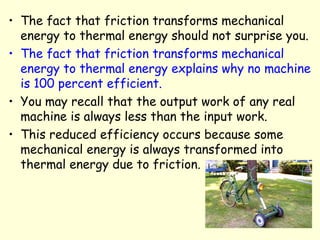
• You may recall that the output work of any real
machine is always less than the input work.
• This reduced efficiency occurs because some
mechanical energy is always transformed into
thermal energy due to friction.

Energy transformations and conservation

  • 1.
  • 2.
    Energy Transformations • Whatdoes flowing water have to do with electricity? • You may already know that the mechanical energy of moving water can be transformed into electrical energy.
  • 3.
    • A changefrom one form of energy to another is called an energy transformation. • Some energy changes involve single transformations, while others involve many transformations. Most forms of energy can be transformed into other forms
  • 4.
    Single Transformations • Sometimes,one form of energy needs to be transformed into another to get work done. • For example, a toaster transforms electrical energy to thermal energy to toast your bread. • A cell phone transforms electrical energy to electromagnetic energy that travels to other phones.
  • 5.
    • Your bodytransforms the chemical energy in your food to mechanical energy you need to move your muscles. • Chemical energy in food is also transformed to the thermal energy your body uses to maintain its temperature.
  • 6.
    Multiple Transformations • Often,a series of energy transformations is needed to do work. • For example, the mechanical energy used to strike a match is transformed first to thermal energy. • The thermal energy causes the particles in the match to release stored chemical energy, which is transformed to thermal energy and the electromagnetic energy you see as light.
  • 7.
    • In acar engine, another series of energy conversions occurs. • Electrical energy produces a spark. • The thermal energy of the spark releases chemical energy in the fuel. • The fuel’s chemical energy in turn becomes thermal energy. • Thermal energy is converted to mechanical energy used to move the car, and to electrical energy to produce more sparks.
  • 8.
    Transformations Between Potential andKinetic Energy • One of the most common energy transformations is the transformation between potential energy and kinetic energy. • In waterfalls such as Niagara Falls, potential energy is transformed to kinetic energy. • The water at the top of the falls has gravitational potential energy. • As the water plunges, its velocity increases. • Its potential energy becomes kinetic energy.
  • 9.
    Energy Transformation inJuggling • Any object that rises or falls experiences a change in its kinetic and gravitational potential energy. • Look at the orange in the picture on the right. • When it moves, the orange has kinetic energy. • As it rises, it slows down. • Its potential energy increases as its kinetic energy decreases.
  • 10.
    • At thehighest point in its path, it stops moving. • Since there is no motion, the orange no longer has kinetic energy. • But it does have potential energy. • As the orange falls, the energy transformation is reversed. • Kinetic energy increases while potential energy decreases.
  • 11.
    Energy Transformation ina Pendulum • In a pendulum, a continuous transformation between kinetic and potential energy takes place. • At the highest point in its swing, the pendulum in Figure 12 has no movement, so it only has gravitational potential energy. • As it swings downward, it speeds up. • Its potential energy is transformed to kinetic energy.
  • 12.
    • The pendulumis at its greatest speed at the bottom of its swing. • There, all its energy is kinetic energy. • As the pendulum swings to the other side, its height increases. • The pendulum regains gravitational potential energy and loses kinetic energy. • At the top of its swing, it comes to a stop again. • And so the pattern of energy transformation continues.
  • 13.
    Energy Transformation ina Pole Vault • A pole-vaulter transforms kinetic energy to elastic potential energy, which then becomes gravitational potential energy. • The pole-vaulter you see in Figure 13 has kinetic energy as he runs forward. • When the pole-vaulter plants the pole to jump, his velocity decreases and the pole bends.
  • 14.
    • His kineticenergy is transformed to elastic potential energy in the pole. • As the pole straightens out, the pole-vaulter is lifted high into the air. • The elastic potential energy of the pole is transformed to the gravitational potential energy of the pole-vaulter. • Once he is over the bar, the pole-vaulter’s gravitational potential energy is transformed back into kinetic energy as he falls toward the safety cushion.
  • 15.
    Conservation of Energy •If you set a spinning top in motion, will the top remain in motion forever? • No, it will not. • Then what happens to its energy? • Is the energy destroyed? • Again, the answer is no. • The law of conservation of energy states that when one form of energy is transformed to another, no energy is destroyed in the process.
  • 16.
    • According tothe law of conservation of energy, energy cannot be created or destroyed. • So the total amount of energy is the same before and after any transformation. • If you add up all the new forms of energy after a transformation, all of the original energy will be accounted for.
  • 17.
    Energy and Friction •So what happens to the energy of the top? • As the top spins, it encounters friction with the table and friction from the air. • Whenever a moving object experiences friction, some of its kinetic energy is transformed into thermal energy. • So, the mechanical energy of the spinning top is transformed to thermal energy. • The top slows and eventually falls on its side, but its energy is not destroyed—it is transformed.
  • 18.
    • The factthat friction transforms mechanical energy to thermal energy should not surprise you. • The fact that friction transforms mechanical energy to thermal energy explains why no machine is 100 percent efficient. • You may recall that the output work of any real machine is always less than the input work. • This reduced efficiency occurs because some mechanical energy is always transformed into thermal energy due to friction.