By: Areeba Sadiq
Energy causes things to happen around us. The proper
definition for energy is: "Energy Is the Ability to Do
Work.”
Energy makes everything happen and can be divided into
two types: Stored energy is called potential energy and
moving energy is called kinetic energy.
Energy can be found in a number of different forms which
will be described with detail in this PowerPoint.
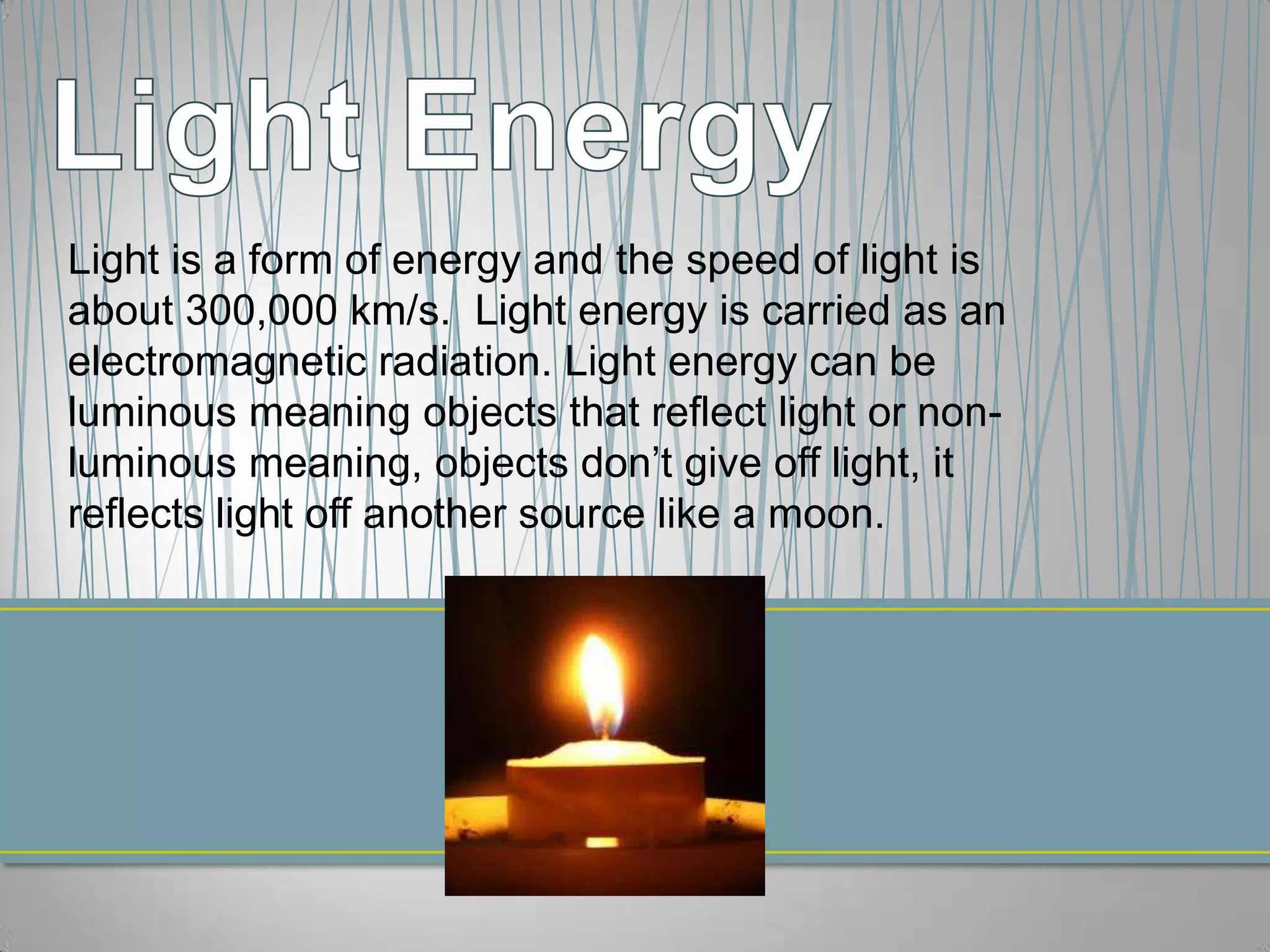
Light is a form of energy and the speed of light is
about 300,000 km/s. Light energy is carried as an
electromagnetic radiation. Light energy can be
luminous meaning objects that reflect light or non-
luminous meaning, objects don’t give off light, it
reflects light off another source like a moon.
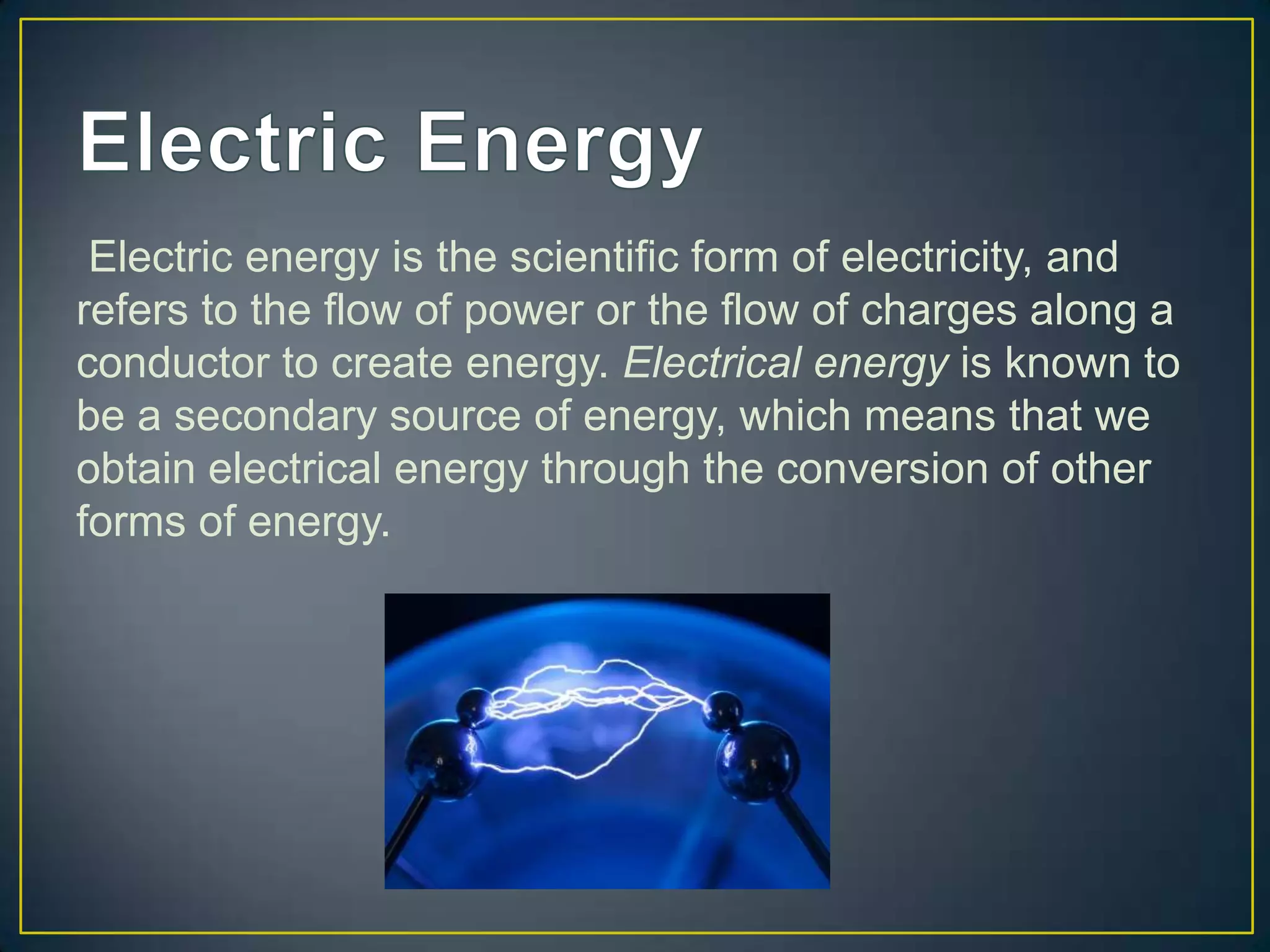
Electric energy is the scientific form of electricity, and
refers to the flow of power or the flow of charges along a
conductor to create energy. Electrical energy is known to
be a secondary source of energy, which means that we
obtain electrical energy through the conversion of other
forms of energy.
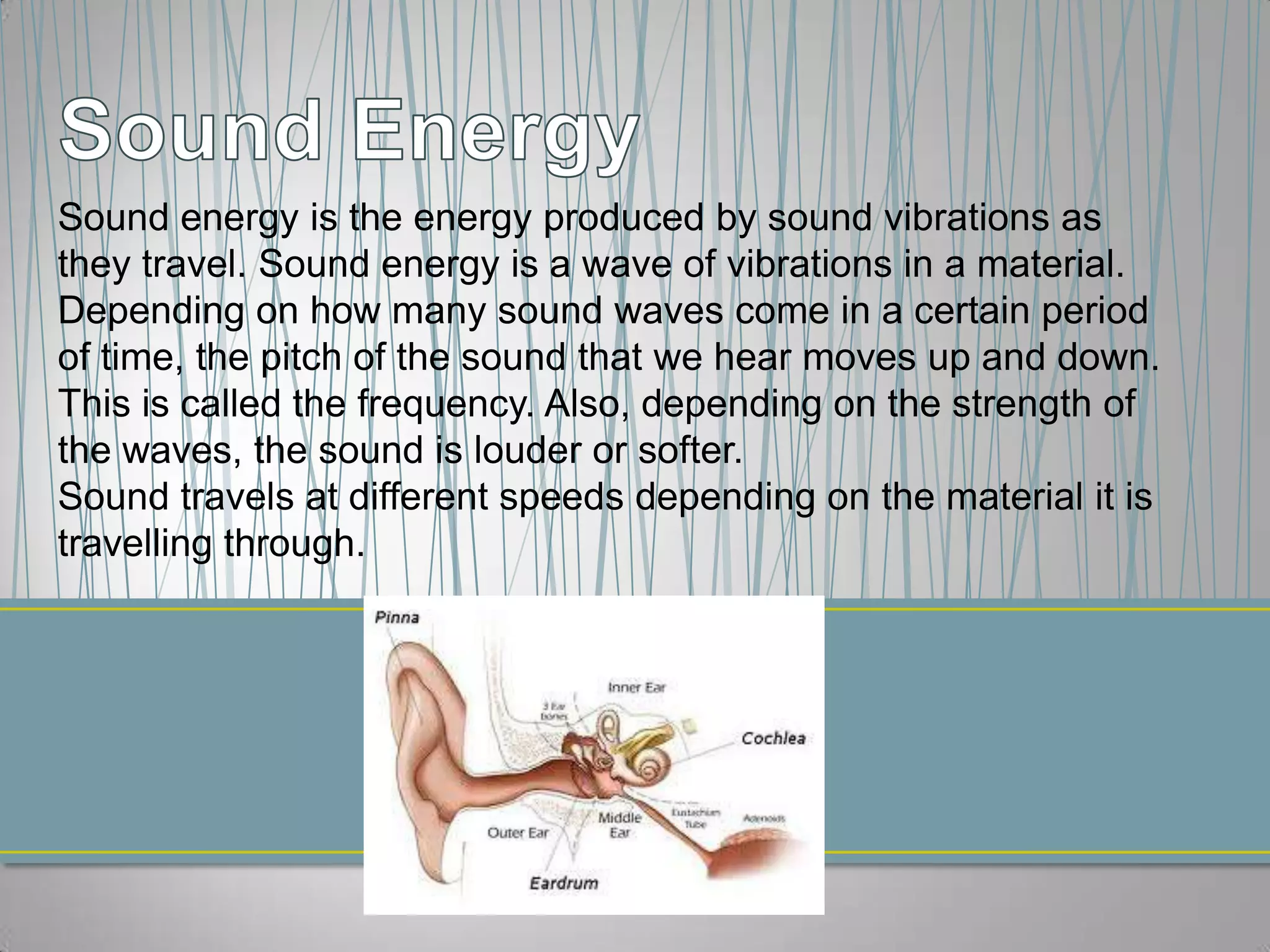
Sound energy is the energy produced by sound vibrations as
they travel. Sound energy is a wave of vibrations in a material.
Depending on how many sound waves come in a certain period
of time, the pitch of the sound that we hear moves up and down.
This is called the frequency. Also, depending on the strength of
the waves, the sound is louder or softer.
Sound travels at different speeds depending on the material it is
travelling through.
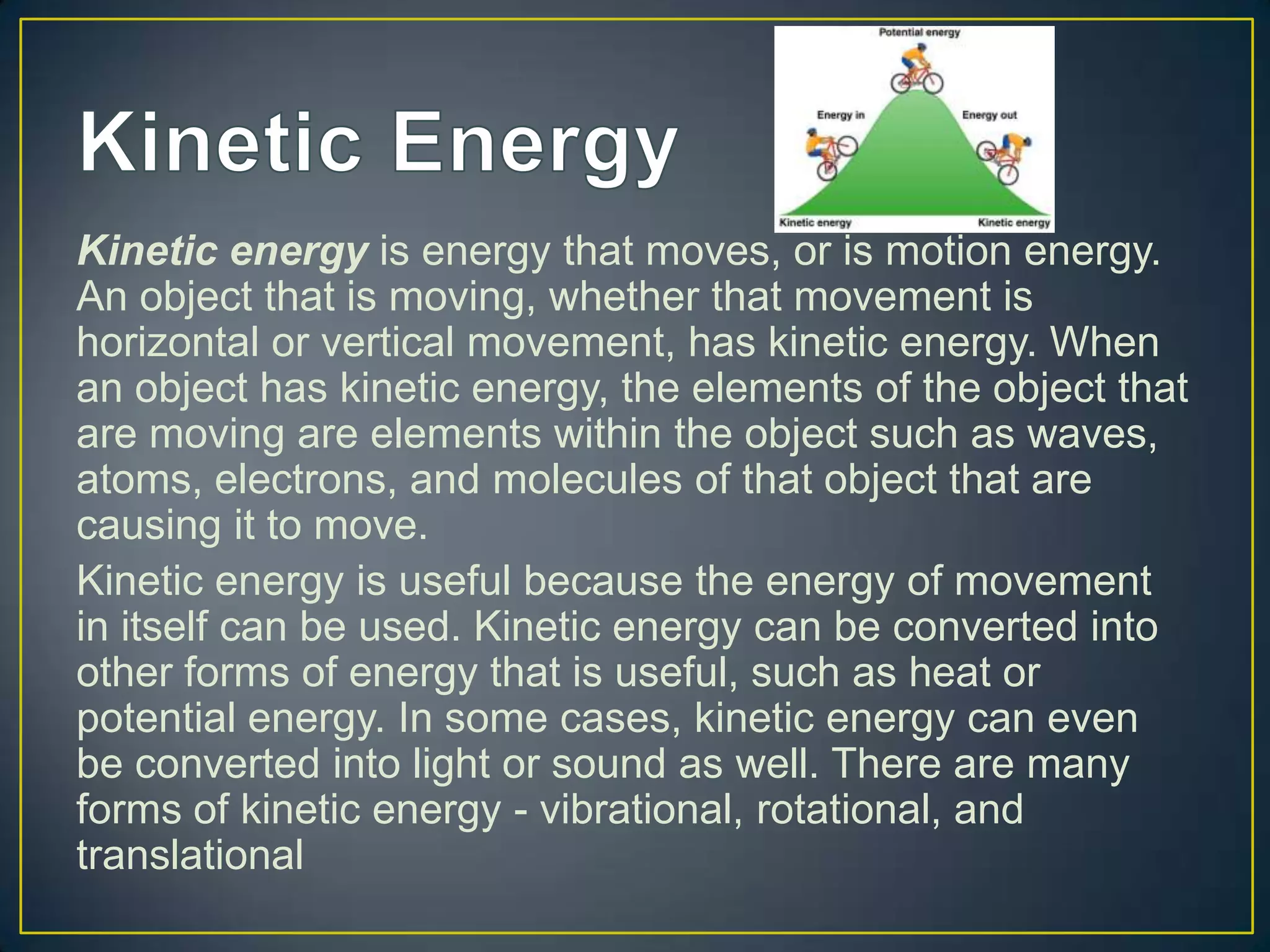
Kinetic energy is energy that moves, or is motion energy.
An object that is moving, whether that movement is
horizontal or vertical movement, has kinetic energy. When
an object has kinetic energy, the elements of the object that
are moving are elements within the object such as waves,
atoms, electrons, and molecules of that object that are
causing it to move.
Kinetic energy is useful because the energy of movement
in itself can be used. Kinetic energy can be converted into
other forms of energy that is useful, such as heat or
potential energy. In some cases, kinetic energy can even
be converted into light or sound as well. There are many
forms of kinetic energy - vibrational, rotational, and
translational
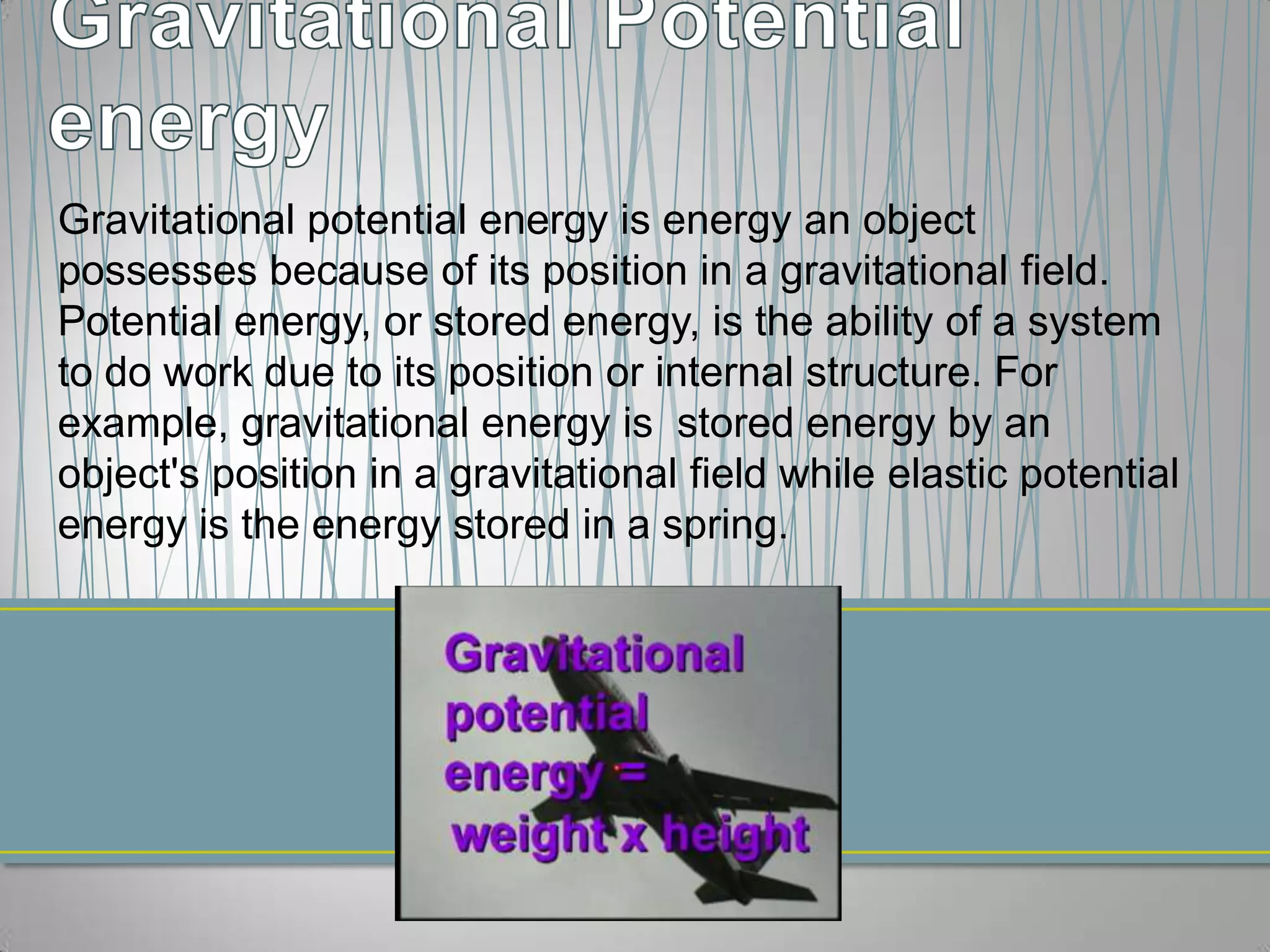
Gravitational potential energy is energy an object
possesses because of its position in a gravitational field.
Potential energy, or stored energy, is the ability of a system
to do work due to its position or internal structure. For
example, gravitational energy is stored energy by an
object's position in a gravitational field while elastic potential
energy is the energy stored in a spring.
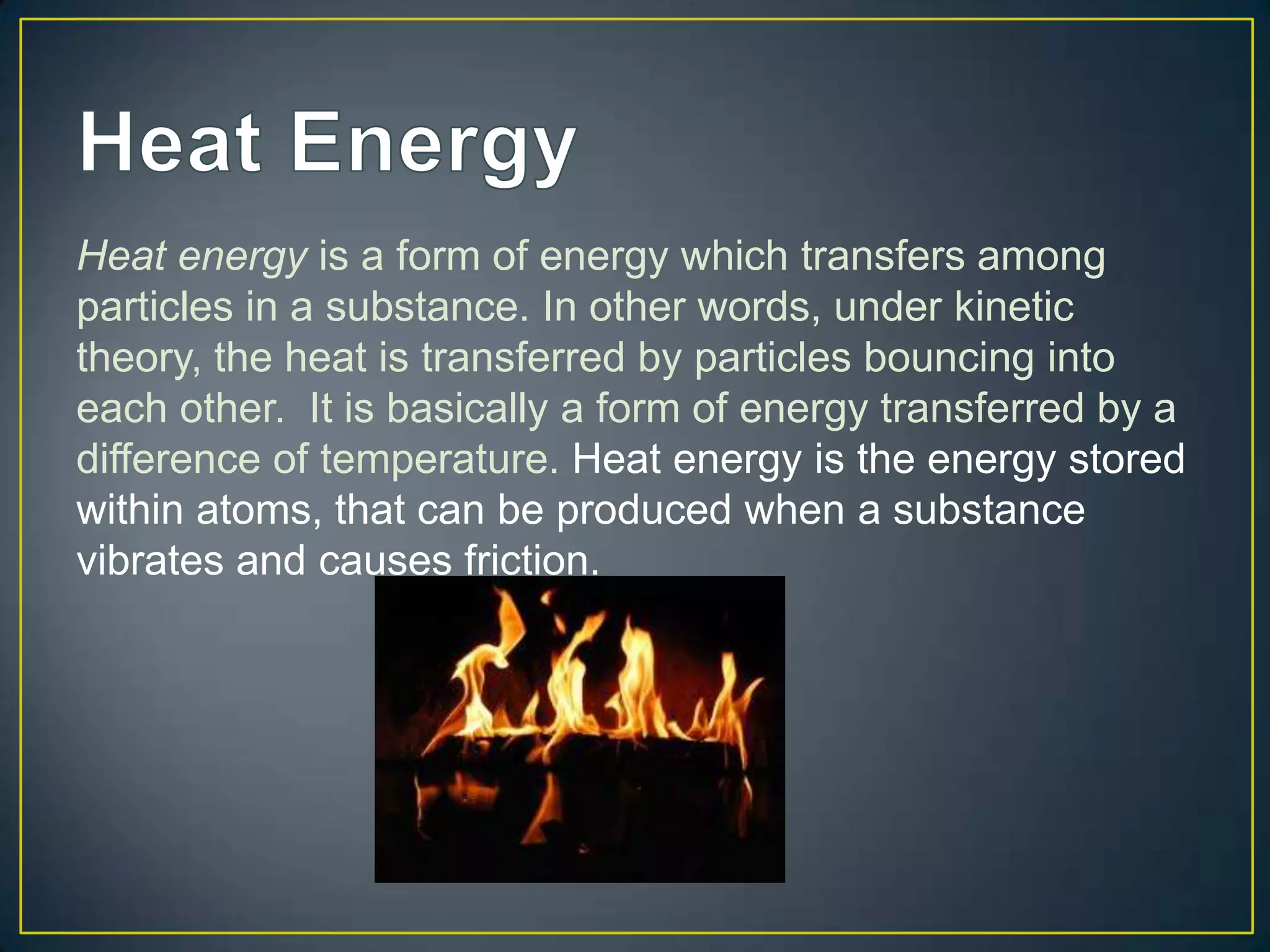
Heat energy is a form of energy which transfers among
particles in a substance. In other words, under kinetic
theory, the heat is transferred by particles bouncing into
each other. It is basically a form of energy transferred by a
difference of temperature. Heat energy is the energy stored
within atoms, that can be produced when a substance
vibrates and causes friction.
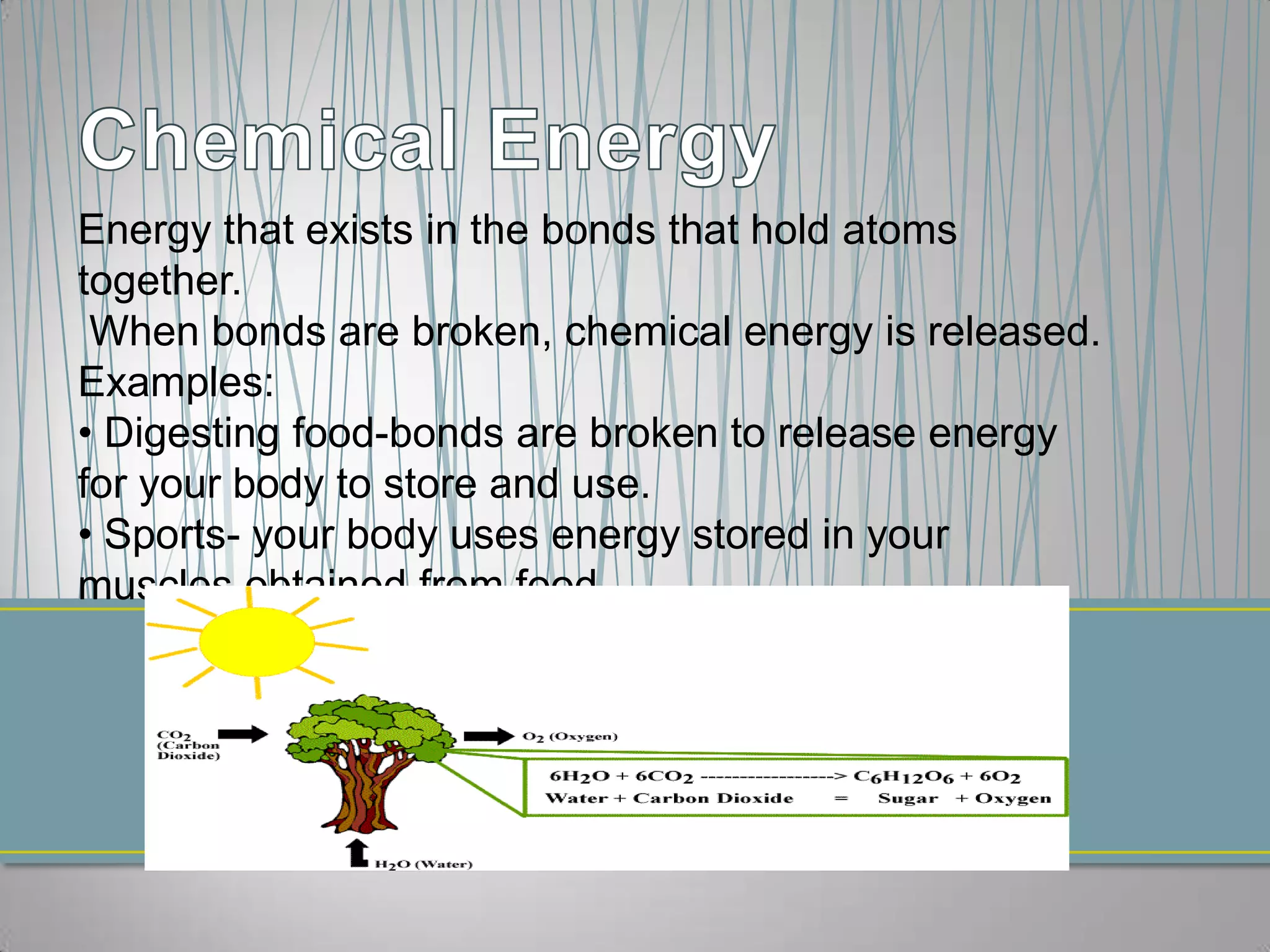
Energy that exists in the bonds that hold atoms
together.
 When bonds are broken, chemical energy is released.
Examples:
• Digesting food-bonds are broken to release energy
for your body to store and use.
• Sports- your body uses energy stored in your
muscles obtained from food.
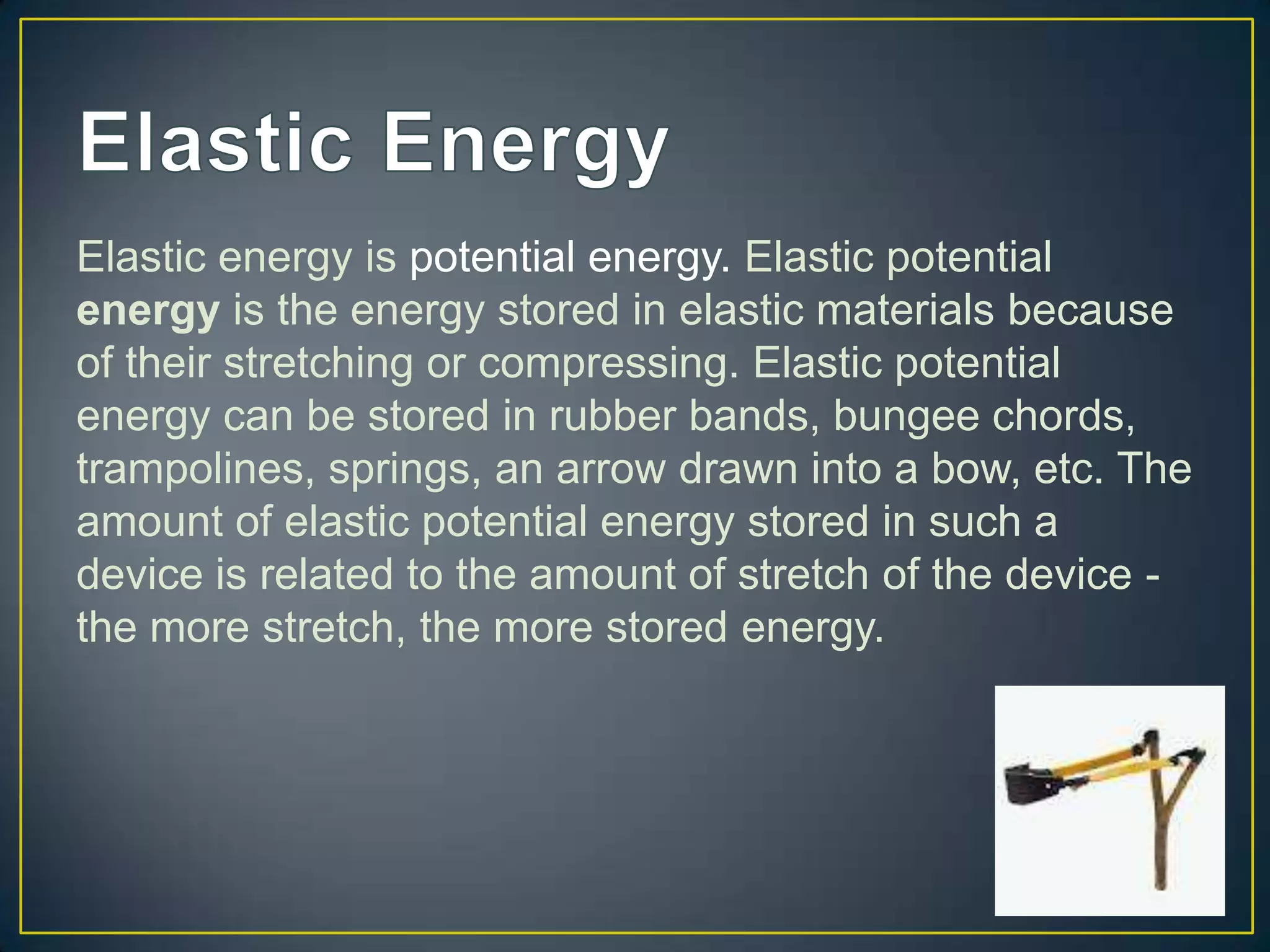
Elastic energy is potential energy. Elastic potential
energy is the energy stored in elastic materials because
of their stretching or compressing. Elastic potential
energy can be stored in rubber bands, bungee chords,
trampolines, springs, an arrow drawn into a bow, etc. The
amount of elastic potential energy stored in such a
device is related to the amount of stretch of the device -
the more stretch, the more stored energy.
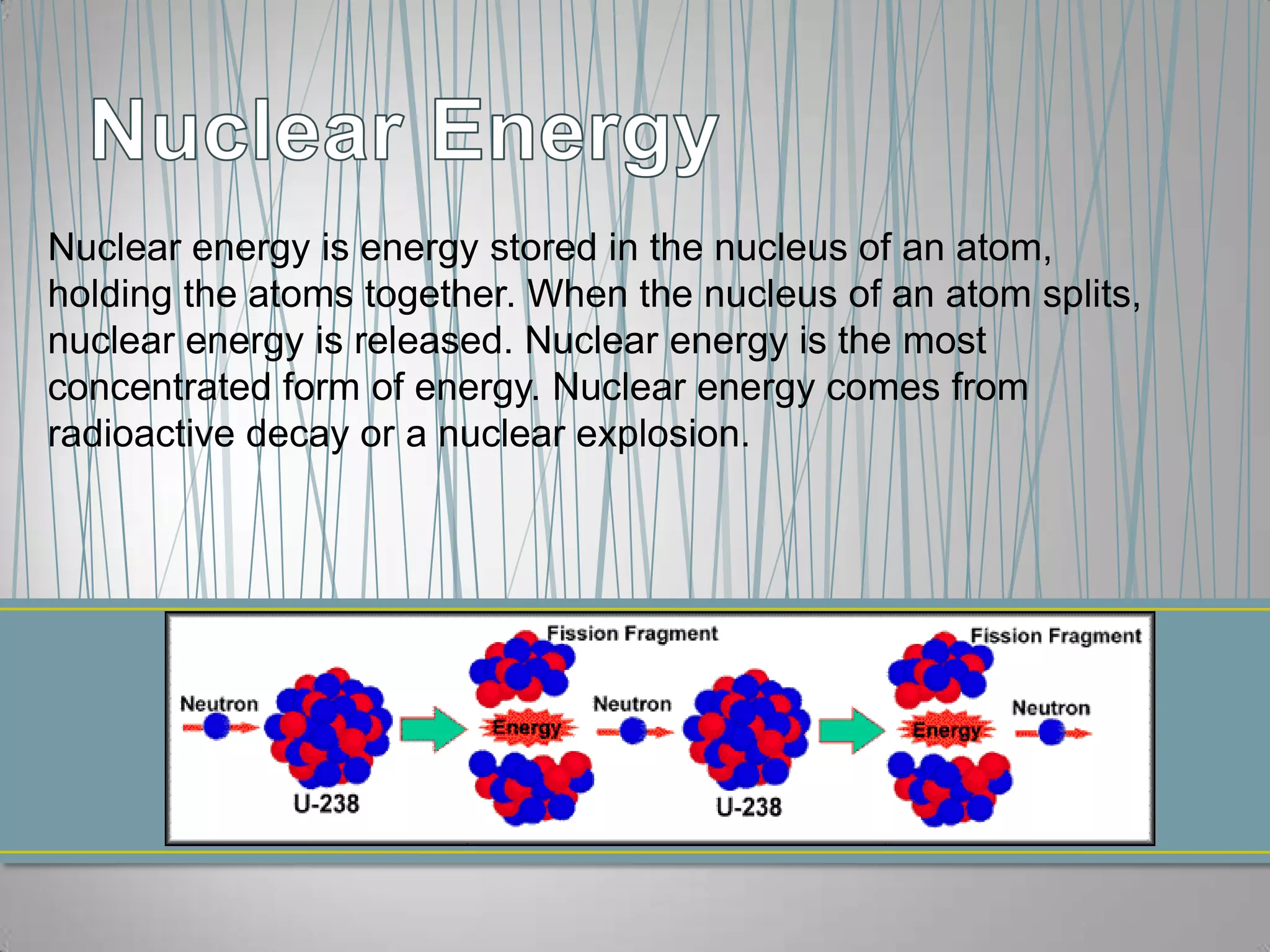
Nuclear energy is energy stored in the nucleus of an atom,
holding the atoms together. When the nucleus of an atom splits,
nuclear energy is released. Nuclear energy is the most
concentrated form of energy. Nuclear energy comes from
radioactive decay or a nuclear explosion.

Forms of energy!

  • 1.
  • 2.
    Energy causes thingsto happen around us. The proper definition for energy is: "Energy Is the Ability to Do Work.” Energy makes everything happen and can be divided into two types: Stored energy is called potential energy and moving energy is called kinetic energy. Energy can be found in a number of different forms which will be described with detail in this PowerPoint.
  • 3.
    Light is aform of energy and the speed of light is about 300,000 km/s. Light energy is carried as an electromagnetic radiation. Light energy can be luminous meaning objects that reflect light or non- luminous meaning, objects don’t give off light, it reflects light off another source like a moon.
  • 4.
    Electric energy isthe scientific form of electricity, and refers to the flow of power or the flow of charges along a conductor to create energy. Electrical energy is known to be a secondary source of energy, which means that we obtain electrical energy through the conversion of other forms of energy.
  • 5.
    Sound energy isthe energy produced by sound vibrations as they travel. Sound energy is a wave of vibrations in a material. Depending on how many sound waves come in a certain period of time, the pitch of the sound that we hear moves up and down. This is called the frequency. Also, depending on the strength of the waves, the sound is louder or softer. Sound travels at different speeds depending on the material it is travelling through.
  • 6.
    Kinetic energy isenergy that moves, or is motion energy. An object that is moving, whether that movement is horizontal or vertical movement, has kinetic energy. When an object has kinetic energy, the elements of the object that are moving are elements within the object such as waves, atoms, electrons, and molecules of that object that are causing it to move. Kinetic energy is useful because the energy of movement in itself can be used. Kinetic energy can be converted into other forms of energy that is useful, such as heat or potential energy. In some cases, kinetic energy can even be converted into light or sound as well. There are many forms of kinetic energy - vibrational, rotational, and translational
  • 7.
    Gravitational potential energyis energy an object possesses because of its position in a gravitational field. Potential energy, or stored energy, is the ability of a system to do work due to its position or internal structure. For example, gravitational energy is stored energy by an object's position in a gravitational field while elastic potential energy is the energy stored in a spring.
  • 8.
    Heat energy isa form of energy which transfers among particles in a substance. In other words, under kinetic theory, the heat is transferred by particles bouncing into each other. It is basically a form of energy transferred by a difference of temperature. Heat energy is the energy stored within atoms, that can be produced when a substance vibrates and causes friction.
  • 9.
    Energy that existsin the bonds that hold atoms together. When bonds are broken, chemical energy is released. Examples: • Digesting food-bonds are broken to release energy for your body to store and use. • Sports- your body uses energy stored in your muscles obtained from food.
  • 10.
    Elastic energy ispotential energy. Elastic potential energy is the energy stored in elastic materials because of their stretching or compressing. Elastic potential energy can be stored in rubber bands, bungee chords, trampolines, springs, an arrow drawn into a bow, etc. The amount of elastic potential energy stored in such a device is related to the amount of stretch of the device - the more stretch, the more stored energy.
  • 11.
    Nuclear energy isenergy stored in the nucleus of an atom, holding the atoms together. When the nucleus of an atom splits, nuclear energy is released. Nuclear energy is the most concentrated form of energy. Nuclear energy comes from radioactive decay or a nuclear explosion.