Energy
Physics Grade 7
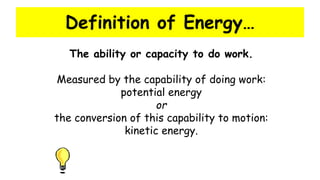
Definition of Energy…
The ability or capacity to do work.
Measured by the capability of doing work:
potential energy
or
the conversion of this capability to motion:
kinetic energy.
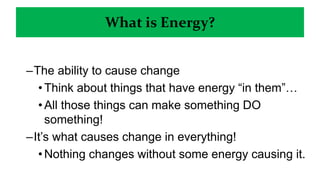
What is Energy?
–The ability to cause change
•Think about things that have energy “in them”…
•All those things can make something DO
something!
–It’s what causes change in everything!
•Nothing changes without some energy causing it.
• Earthquakes, Rain, even human growth is all because of energy.
Kinetic and Potential
Energy
2 types of energy
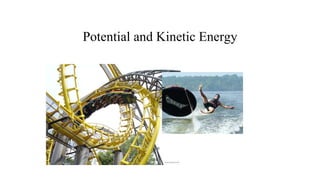
Potential and Kinetic Energy
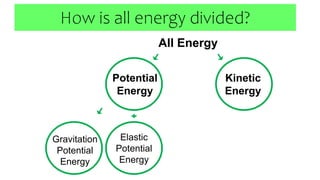
How is all energy divided?
Potential
Energy
Kinetic
Energy
All Energy
Gravitation
Potential
Energy
Elastic
Potential
Energy
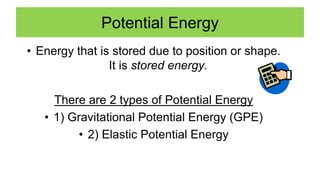
Potential Energy
• Energy that is stored due to position or shape.
It is stored energy.
There are 2 types of Potential Energy
• 1) Gravitational Potential Energy (GPE)
• 2) Elastic Potential Energy
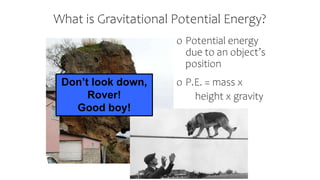
What is Gravitational Potential Energy?
o Potential energy
due to an object’s
position
o P.E. = mass x
height x gravity
Don’t look down,
Rover!
Good boy!
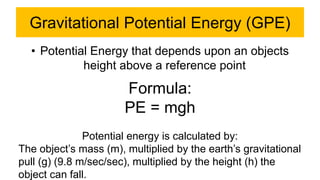
Gravitational Potential Energy (GPE)
• Potential Energy that depends upon an objects
height above a reference point
Formula:
PE = mgh
Potential energy is calculated by:
The object’s mass (m), multiplied by the earth’s gravitational
pull (g) (9.8 m/sec/sec), multiplied by the height (h) the
object can fall.
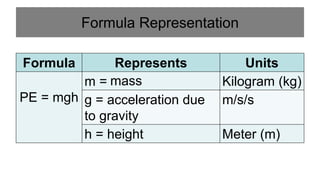
Formula Representation
Formula Represents Units
PE = mgh
m = Kilogram (kg)
g = acceleration due
to gravity
m/s/s
h = height Meter (m)
mass
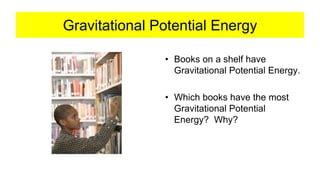
Gravitational Potential Energy
• Books on a shelf have
Gravitational Potential Energy.
• Which books have the most
Gravitational Potential
Energy? Why?
Gravitational Potential Energy
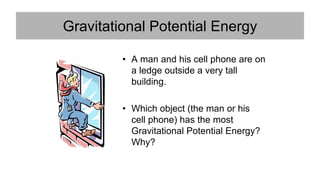
• A man and his cell phone are on
a ledge outside a very tall
building.
• Which object (the man or his
cell phone) has the most
Gravitational Potential Energy?
Why?
What does Potential Energy depend on
and how does it affect potential energy?
• Height – The higher the object, the more potential energy.
• Mass – The greater the mass of the object, the more
potential energy it has.
• Potential energy depends on both mass and height.
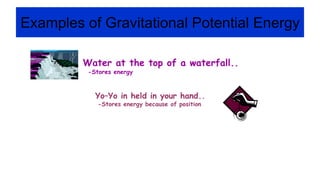
Examples of Gravitational Potential Energy
Water at the top of a waterfall..
-Stores energy
Yo–Yo in held in your hand..
-Stores energy because of position
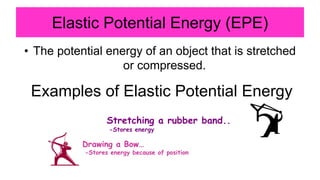
Elastic Potential Energy (EPE)
• The potential energy of an object that is stretched
or compressed.
Examples of Elastic Potential Energy
Stretching a rubber band..
-Stores energy
Drawing a Bow…
-Stores energy because of position
Elastic Potential Energy
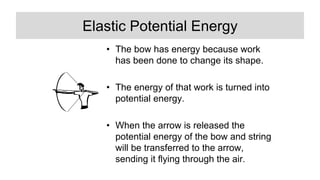
• The bow has energy because work
has been done to change its shape.
• The energy of that work is turned into
potential energy.
• When the arrow is released the
potential energy of the bow and string
will be transferred to the arrow,
sending it flying through the air.
Elastic Potential Energy
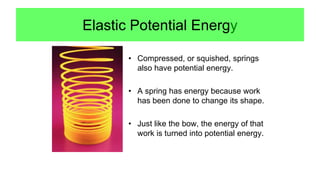
• Compressed, or squished, springs
also have potential energy.
• A spring has energy because work
has been done to change its shape.
• Just like the bow, the energy of that
work is turned into potential energy.
What is Elastic Potential Energy?
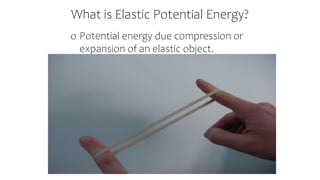
o Potential energy due compression or
expansion of an elastic object.
Notice the ball compressing
and expanding
Potential Energy Converted to Kinetic
Energy…
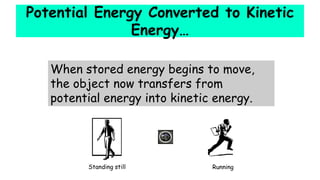
When stored energy begins to move,
the object now transfers from
potential energy into kinetic energy.
Standing still Running
Kinetic Energy Preview
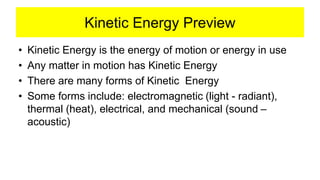
• Kinetic Energy is the energy of motion or energy in use
• Any matter in motion has Kinetic Energy
• There are many forms of Kinetic Energy
• Some forms include: electromagnetic (light - radiant),
thermal (heat), electrical, and mechanical (sound –
acoustic)
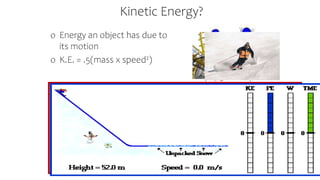
Kinetic Energy?
o Energy an object has due to
its motion
o K.E. = .5(mass x speed2)
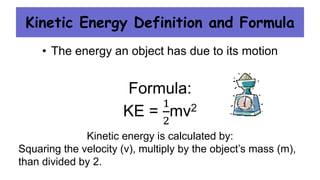
Kinetic Energy Definition and Formula
• The energy an object has due to its motion
Formula:
KE =
1
2
mv2
Kinetic energy is calculated by:
Squaring the velocity (v), multiply by the object’s mass (m),
than divided by 2.
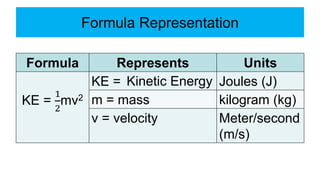
Formula Representation
Formula Represents Units
KE =
1
2
mv2
KE = Joules (J)
m = mass kilogram (kg)
v = velocity Meter/second
(m/s)
Kinetic Energy
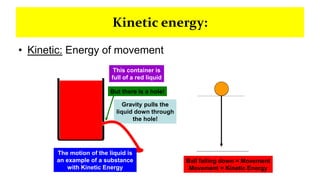
Kinetic energy:
• Kinetic: Energy of movement
Ball falling down = Movement
Movement = Kinetic Energy
Gravity pulls the
liquid down through
the hole!
This container is
full of a red liquid
But there is a hole!
The motion of the liquid is
an example of a substance
with Kinetic Energy
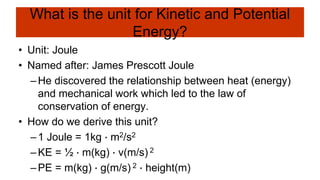
What is the unit for Kinetic and Potential
Energy?
• Unit: Joule
• Named after: James Prescott Joule
–He discovered the relationship between heat (energy)
and mechanical work which led to the law of
conservation of energy.
• How do we derive this unit?
–1 Joule = 1kg ∙ m2/s2
–KE = ½ ∙ m(kg) ∙ v(m/s) 2
–PE = m(kg) ∙ g(m/s) 2 ∙ height(m)
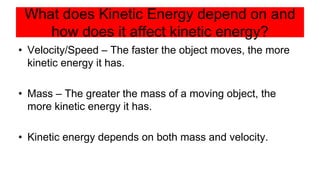
What does Kinetic Energy depend on and
how does it affect kinetic energy?
• Velocity/Speed – The faster the object moves, the more
kinetic energy it has.
• Mass – The greater the mass of a moving object, the
more kinetic energy it has.
• Kinetic energy depends on both mass and velocity.
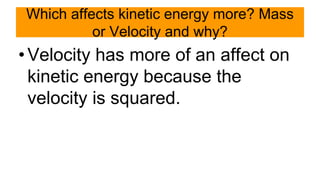
Which affects kinetic energy more? Mass
or Velocity and why?
•Velocity has more of an affect on
kinetic energy because the
velocity is squared.
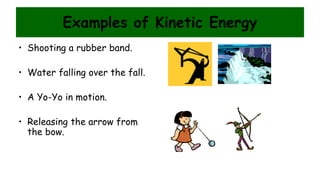
Examples of Kinetic Energy
• Shooting a rubber band.
• Water falling over the fall.
• A Yo-Yo in motion.
• Releasing the arrow from
the bow.
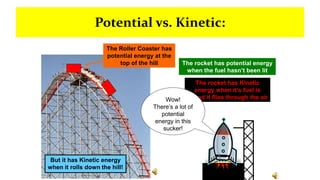
Potential vs. Kinetic:
The Roller Coaster has
potential energy at the
top of the hill
But it has Kinetic energy
when it rolls down the hill!
The rocket has potential energy
when the fuel hasn’t been lit
The rocket has Kinetic
energy when it’s fuel is
lit and it flies through the air
Wow!
There’s a lot of
potential
energy in this
sucker!
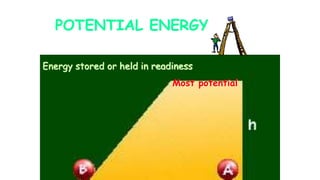
POTENTIAL ENERGY
Most potential
Energy stored or held in readiness
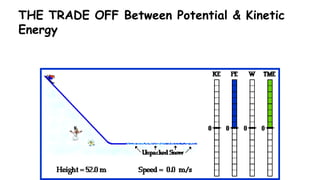
THE TRADE OFF Between Potential & Kinetic
Energy
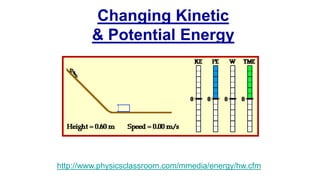
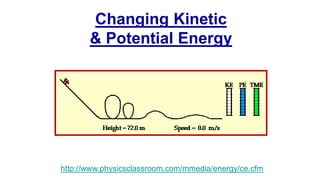
Changing Kinetic
& Potential Energy
http://www.physicsclassroom.com/mmedia/energy/ce.cfm
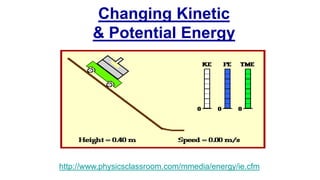
http://www.physicsclassroom.com/mmedia/energy/ie.cfm
Changing Kinetic
& Potential Energy
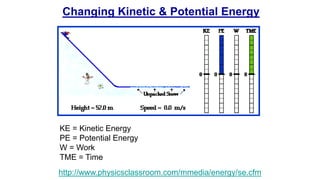
Changing Kinetic & Potential Energy
http://www.physicsclassroom.com/mmedia/energy/se.cfm
KE = Kinetic Energy
PE = Potential Energy
W = Work
TME = Time
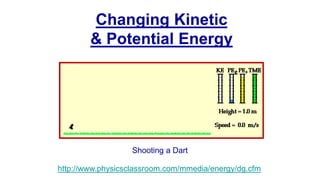
Changing Kinetic
& Potential Energy
Shooting a Dart
http://www.physicsclassroom.com/mmedia/energy/dg.cfm
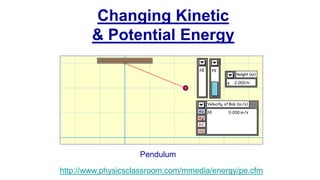
http://www.physicsclassroom.com/mmedia/energy/pe.cfm
Changing Kinetic
& Potential Energy
Pendulum
http://www.physicsclassroom.com/mmedia/energy/hw.cfm
Changing Kinetic
& Potential Energy
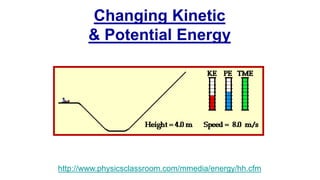
http://www.physicsclassroom.com/mmedia/energy/hh.cfm
Changing Kinetic
& Potential Energy
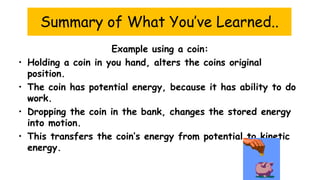
Summary of What You’ve Learned..
Example using a coin:
• Holding a coin in you hand, alters the coins original
position.
• The coin has potential energy, because it has ability to do
work.
• Dropping the coin in the bank, changes the stored energy
into motion.
• This transfers the coin’s energy from potential to kinetic
energy.
Big Ideas
• 2 main types of energy: Kinetic and Potential
• Kinetic energy is energy of motion and depends on
mass and velocity.
• Potential energy is stored energy
• Potential energy has 2 types: Gravitational and Elastic
• Gravitational potential energy depends on mass and
height.

Energy Kinetic and potential.pptx

  • 1.
  • 2.
    Definition of Energy… Theability or capacity to do work. Measured by the capability of doing work: potential energy or the conversion of this capability to motion: kinetic energy.
  • 3.
    What is Energy? –Theability to cause change •Think about things that have energy “in them”… •All those things can make something DO something! –It’s what causes change in everything! •Nothing changes without some energy causing it. • Earthquakes, Rain, even human growth is all because of energy.
  • 4.
  • 5.
  • 6.
    How is allenergy divided? Potential Energy Kinetic Energy All Energy Gravitation Potential Energy Elastic Potential Energy
  • 7.
    Potential Energy • Energythat is stored due to position or shape. It is stored energy. There are 2 types of Potential Energy • 1) Gravitational Potential Energy (GPE) • 2) Elastic Potential Energy
  • 8.
    What is GravitationalPotential Energy? o Potential energy due to an object’s position o P.E. = mass x height x gravity Don’t look down, Rover! Good boy!
  • 9.
    Gravitational Potential Energy(GPE) • Potential Energy that depends upon an objects height above a reference point Formula: PE = mgh Potential energy is calculated by: The object’s mass (m), multiplied by the earth’s gravitational pull (g) (9.8 m/sec/sec), multiplied by the height (h) the object can fall.
  • 10.
    Formula Representation Formula RepresentsUnits PE = mgh m = Kilogram (kg) g = acceleration due to gravity m/s/s h = height Meter (m) mass
  • 11.
    Gravitational Potential Energy •Books on a shelf have Gravitational Potential Energy. • Which books have the most Gravitational Potential Energy? Why?
  • 12.
    Gravitational Potential Energy •A man and his cell phone are on a ledge outside a very tall building. • Which object (the man or his cell phone) has the most Gravitational Potential Energy? Why?
  • 13.
    What does PotentialEnergy depend on and how does it affect potential energy? • Height – The higher the object, the more potential energy. • Mass – The greater the mass of the object, the more potential energy it has. • Potential energy depends on both mass and height.
  • 14.
    Examples of GravitationalPotential Energy Water at the top of a waterfall.. -Stores energy Yo–Yo in held in your hand.. -Stores energy because of position
  • 15.
    Elastic Potential Energy(EPE) • The potential energy of an object that is stretched or compressed. Examples of Elastic Potential Energy Stretching a rubber band.. -Stores energy Drawing a Bow… -Stores energy because of position
  • 16.
    Elastic Potential Energy •The bow has energy because work has been done to change its shape. • The energy of that work is turned into potential energy. • When the arrow is released the potential energy of the bow and string will be transferred to the arrow, sending it flying through the air.
  • 17.
    Elastic Potential Energy •Compressed, or squished, springs also have potential energy. • A spring has energy because work has been done to change its shape. • Just like the bow, the energy of that work is turned into potential energy.
  • 18.
    What is ElasticPotential Energy? o Potential energy due compression or expansion of an elastic object. Notice the ball compressing and expanding
  • 19.
    Potential Energy Convertedto Kinetic Energy… When stored energy begins to move, the object now transfers from potential energy into kinetic energy. Standing still Running
  • 20.
    Kinetic Energy Preview •Kinetic Energy is the energy of motion or energy in use • Any matter in motion has Kinetic Energy • There are many forms of Kinetic Energy • Some forms include: electromagnetic (light - radiant), thermal (heat), electrical, and mechanical (sound – acoustic)
  • 21.
    Kinetic Energy? o Energyan object has due to its motion o K.E. = .5(mass x speed2)
  • 22.
    Kinetic Energy Definitionand Formula • The energy an object has due to its motion Formula: KE = 1 2 mv2 Kinetic energy is calculated by: Squaring the velocity (v), multiply by the object’s mass (m), than divided by 2.
  • 23.
    Formula Representation Formula RepresentsUnits KE = 1 2 mv2 KE = Joules (J) m = mass kilogram (kg) v = velocity Meter/second (m/s) Kinetic Energy
  • 24.
    Kinetic energy: • Kinetic:Energy of movement Ball falling down = Movement Movement = Kinetic Energy Gravity pulls the liquid down through the hole! This container is full of a red liquid But there is a hole! The motion of the liquid is an example of a substance with Kinetic Energy
  • 25.
    What is theunit for Kinetic and Potential Energy? • Unit: Joule • Named after: James Prescott Joule –He discovered the relationship between heat (energy) and mechanical work which led to the law of conservation of energy. • How do we derive this unit? –1 Joule = 1kg ∙ m2/s2 –KE = ½ ∙ m(kg) ∙ v(m/s) 2 –PE = m(kg) ∙ g(m/s) 2 ∙ height(m)
  • 26.
    What does KineticEnergy depend on and how does it affect kinetic energy? • Velocity/Speed – The faster the object moves, the more kinetic energy it has. • Mass – The greater the mass of a moving object, the more kinetic energy it has. • Kinetic energy depends on both mass and velocity.
  • 27.
    Which affects kineticenergy more? Mass or Velocity and why? •Velocity has more of an affect on kinetic energy because the velocity is squared.
  • 28.
    Examples of KineticEnergy • Shooting a rubber band. • Water falling over the fall. • A Yo-Yo in motion. • Releasing the arrow from the bow.
  • 29.
    Potential vs. Kinetic: TheRoller Coaster has potential energy at the top of the hill But it has Kinetic energy when it rolls down the hill! The rocket has potential energy when the fuel hasn’t been lit The rocket has Kinetic energy when it’s fuel is lit and it flies through the air Wow! There’s a lot of potential energy in this sucker!
  • 30.
    POTENTIAL ENERGY Most potential Energystored or held in readiness
  • 31.
    THE TRADE OFFBetween Potential & Kinetic Energy
  • 32.
    Changing Kinetic & PotentialEnergy http://www.physicsclassroom.com/mmedia/energy/ce.cfm
  • 33.
  • 34.
    Changing Kinetic &Potential Energy http://www.physicsclassroom.com/mmedia/energy/se.cfm KE = Kinetic Energy PE = Potential Energy W = Work TME = Time
  • 35.
    Changing Kinetic & PotentialEnergy Shooting a Dart http://www.physicsclassroom.com/mmedia/energy/dg.cfm
  • 36.
  • 37.
  • 38.
  • 39.
    Summary of WhatYou’ve Learned.. Example using a coin: • Holding a coin in you hand, alters the coins original position. • The coin has potential energy, because it has ability to do work. • Dropping the coin in the bank, changes the stored energy into motion. • This transfers the coin’s energy from potential to kinetic energy.
  • 40.
    Big Ideas • 2main types of energy: Kinetic and Potential • Kinetic energy is energy of motion and depends on mass and velocity. • Potential energy is stored energy • Potential energy has 2 types: Gravitational and Elastic • Gravitational potential energy depends on mass and height.