By:
Devinda V.S, Firman Otto
Energy Transformation
What is Energy Transformation?
 All changes you can detect around you are due to
energy transformation
 Vital to survival
 Energy cannot be made or destroyed
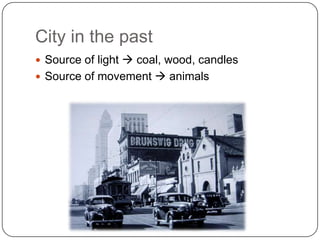
City in the past
 Source of light  coal, wood, candles
 Source of movement  animals
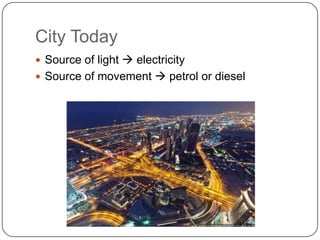
City Today
 Source of light  electricity
 Source of movement  petrol or diesel
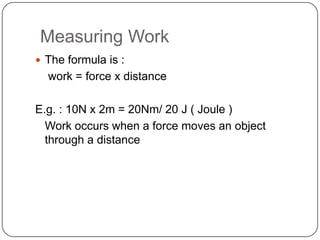
Measuring Work
 The formula is :
work = force x distance
E.g. : 10N x 2m = 20Nm/ 20 J ( Joule )
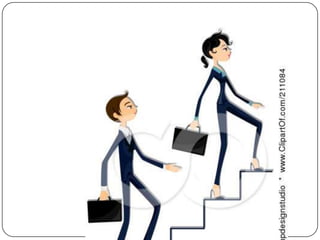
Work occurs when a force moves an object
through a distance
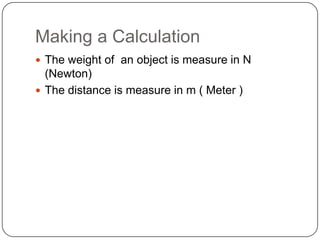
Making a Calculation
 The weight of an object is measure in N
(Newton)
 The distance is measure in m ( Meter )
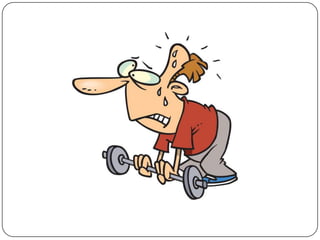
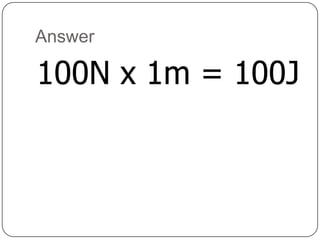
Answer
100N x 1m = 100J
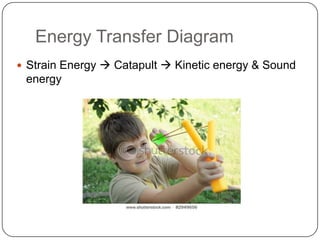
Energy Transfer Diagram
 Strain Energy  Catapult  Kinetic energy & Sound
energy
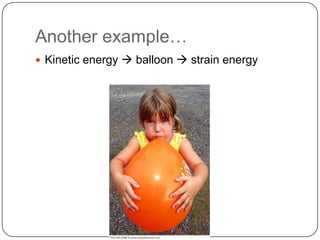
Another example…
 Kinetic energy  balloon  strain energy
Sankey Diagram
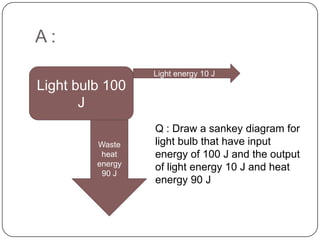
 It is the other way to show energy transformation,
the width of the arrows indicate the amount of
energy
A :
Light bulb 100
J
Light energy 10 J
Waste
heat
energy
90 J
Q : Draw a sankey diagram for
light bulb that have input
energy of 100 J and the output
of light energy 10 J and heat
energy 90 J
Plants and Energy
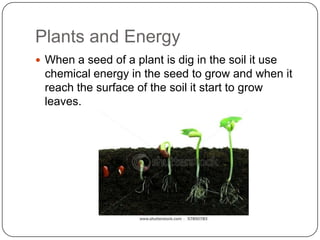
 When a seed of a plant is dig in the soil it use
chemical energy in the seed to grow and when it
reach the surface of the soil it start to grow
leaves.
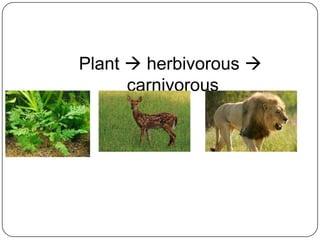
Plant  herbivorous 
carnivorous
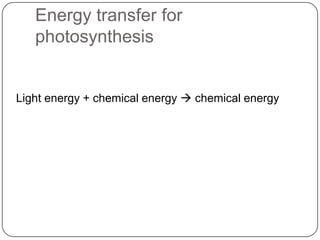
Energy transfer for
photosynthesis
Light energy + chemical energy  chemical energy
Energy and Ourselves
 In a can of food there is amount of energy written.
This are measure in Joule and Kilo Joule.
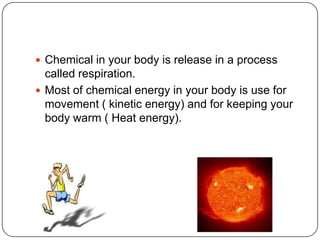
 Chemical in your body is release in a process
called respiration.
 Most of chemical energy in your body is use for
movement ( kinetic energy) and for keeping your
body warm ( Heat energy).
Generating Electricity
 It is a very useful form of energy
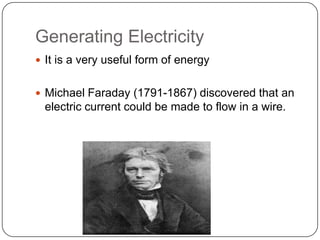
 Michael Faraday (1791-1867) discovered that an
electric current could be made to flow in a wire.
Bicycle dynamo
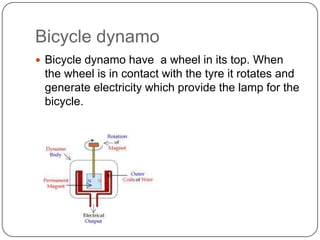
 Bicycle dynamo have a wheel in its top. When
the wheel is in contact with the tyre it rotates and
generate electricity which provide the lamp for the
bicycle.
The power station generator
 The water is boiled and change into steam.
 The steam turn the turbine.
 The electromagnet producing electricity in the
coils and direct it to the transformer.
 The transformer change the voltage to the higher
one and ready to being given to the public.
Conservation of energy
Thank You For Your Attention

Energy transformation

  • 1.
    By: Devinda V.S, FirmanOtto Energy Transformation
  • 2.
    What is EnergyTransformation?  All changes you can detect around you are due to energy transformation  Vital to survival  Energy cannot be made or destroyed
  • 3.
    City in thepast  Source of light  coal, wood, candles  Source of movement  animals
  • 4.
    City Today  Sourceof light  electricity  Source of movement  petrol or diesel
  • 5.
    Measuring Work  Theformula is : work = force x distance E.g. : 10N x 2m = 20Nm/ 20 J ( Joule ) Work occurs when a force moves an object through a distance
  • 7.
    Making a Calculation The weight of an object is measure in N (Newton)  The distance is measure in m ( Meter )
  • 9.
  • 10.
    Energy Transfer Diagram Strain Energy  Catapult  Kinetic energy & Sound energy
  • 11.
    Another example…  Kineticenergy  balloon  strain energy
  • 12.
    Sankey Diagram  Itis the other way to show energy transformation, the width of the arrows indicate the amount of energy
  • 13.
    A : Light bulb100 J Light energy 10 J Waste heat energy 90 J Q : Draw a sankey diagram for light bulb that have input energy of 100 J and the output of light energy 10 J and heat energy 90 J
  • 14.
    Plants and Energy When a seed of a plant is dig in the soil it use chemical energy in the seed to grow and when it reach the surface of the soil it start to grow leaves.
  • 15.
    Plant  herbivorous carnivorous
  • 16.
    Energy transfer for photosynthesis Lightenergy + chemical energy  chemical energy
  • 17.
    Energy and Ourselves In a can of food there is amount of energy written. This are measure in Joule and Kilo Joule.
  • 18.
     Chemical inyour body is release in a process called respiration.  Most of chemical energy in your body is use for movement ( kinetic energy) and for keeping your body warm ( Heat energy).
  • 19.
    Generating Electricity  Itis a very useful form of energy  Michael Faraday (1791-1867) discovered that an electric current could be made to flow in a wire.
  • 20.
    Bicycle dynamo  Bicycledynamo have a wheel in its top. When the wheel is in contact with the tyre it rotates and generate electricity which provide the lamp for the bicycle.
  • 21.
    The power stationgenerator  The water is boiled and change into steam.  The steam turn the turbine.  The electromagnet producing electricity in the coils and direct it to the transformer.  The transformer change the voltage to the higher one and ready to being given to the public.
  • 22.
  • 23.
    Thank You ForYour Attention