Unit 2  Chapter 6 Section 1  : Energy Changes
What is Energy? The word  energy  comes from the  Greek word “Energos ”  which means  active Energy  is the ability to  cause change
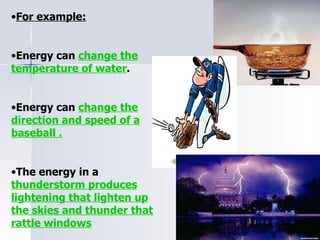
For example: Energy can  change the temperature of water . Energy can  change the direction and speed of a baseball . The energy in a  thunderstorm produces lightening that lighten up the skies and thunder that rattle windows
Forms of energy  Energy comes in different forms from many sources. Food provides energy in the form of  chemical energy. Your body  converts  the  chemical energy  in the food you eat  into the energy it needs to move
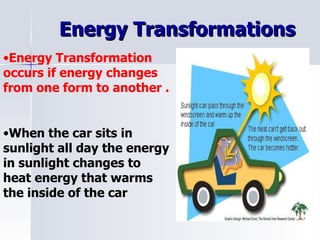
Energy Transformations Energy Transformation occurs if energy changes from one form to another . When the car sits in sunlight all day the energy in sunlight changes to heat energy that warms the inside of the car
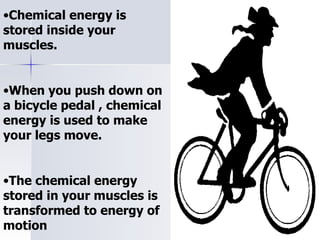
Chemical energy is stored inside your muscles. When you push down on a bicycle pedal , chemical energy is used to make your legs move. The chemical energy stored in your muscles is transformed to energy of motion
During energy transformation the total amount of energy remains the same. Energy is never lost or gained it only changes form
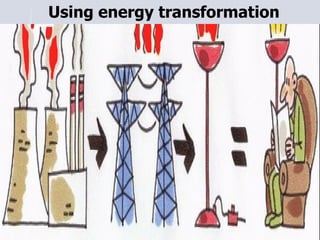
Using energy transformation
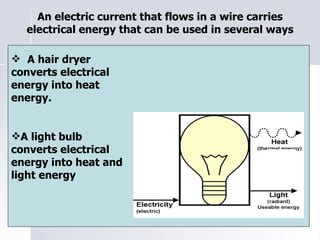
An electric current that flows in a wire carries electrical energy that can be used in several ways A hair dryer converts electrical energy into heat energy. A light bulb converts electrical energy into heat and light energy
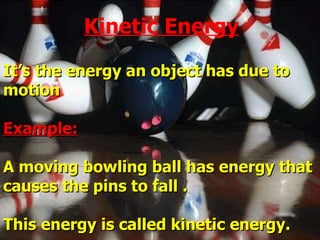
Kinetic energy: It’s the energy an object has due to motion Example: A moving bowling ball has energy that causes the pins to fall . This energy is called kinetic energy. Kinetic Energy
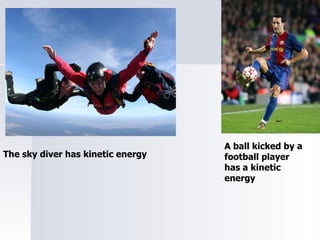
The sky diver has kinetic energy A ball kicked by a football player has a kinetic energy
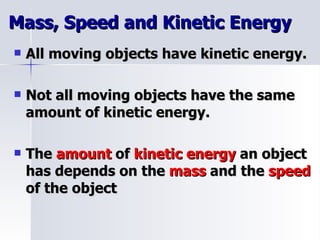
Mass, Speed and Kinetic Energy All moving objects have kinetic energy. Not all moving objects have the same amount of kinetic energy. The  amount  of  kinetic energy  an object has depends on the  mass  and the  speed  of the object
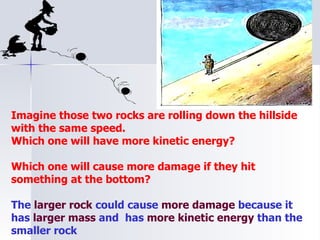
Imagine those two rocks are rolling down the hillside with the same speed. Which one will have more kinetic energy? Which one will cause more damage if they hit something at the bottom? The  larger rock  could cause  more damage  because it has  larger mass  and  has  more kinetic energy  than the smaller rock
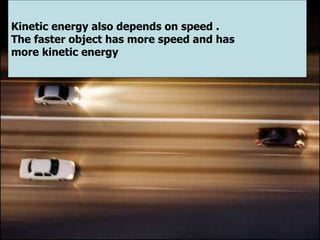
Kinetic energy also depends on speed . The faster object has more speed and has  more kinetic energy
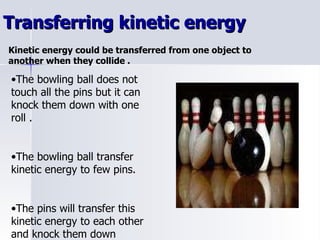
Transferring kinetic energy Kinetic energy could be transferred from one object to another when they collide . The bowling ball does not touch all the pins but it can knock them down with one roll . The bowling ball transfer kinetic energy to few pins. The pins will transfer this kinetic energy to each other and knock them down
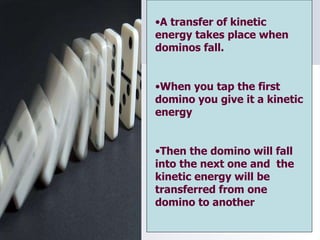
A transfer of kinetic energy takes place when dominos fall. When you tap the first domino you give it a kinetic energy  Then the domino will fall into the next one and  the kinetic energy will be transferred from one domino to another
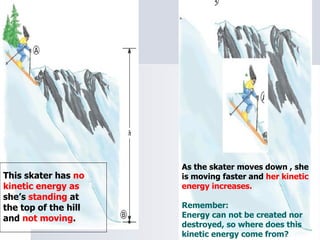
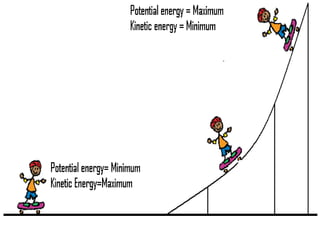
This skater has  no kinetic energy as  she’s  standing  at the top of the hill and  not moving . As the skater moves down , she is moving faster and  her kinetic energy increases. Remember: Energy can not be created nor destroyed, so where does this kinetic energy come from?
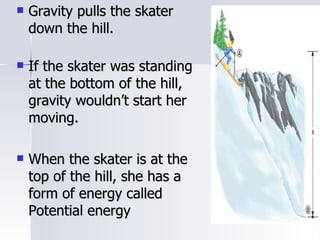
Gravity pulls the skater down the hill. If the skater was standing at the bottom of the hill, gravity wouldn’t start her moving. When the skater is at the top of the hill, she has a form of energy called Potential energy
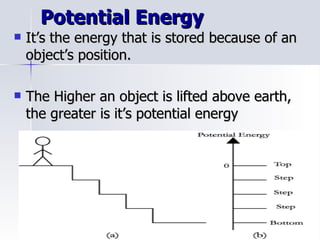
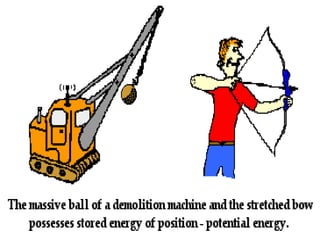
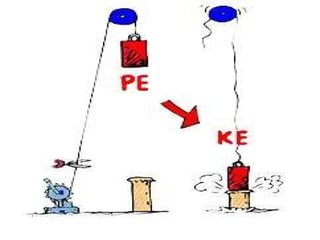
Potential Energy It’s the energy that is stored because of an object’s position. The Higher an object is lifted above earth, the greater is it’s potential energy
 
Converting potential and kinetic energy
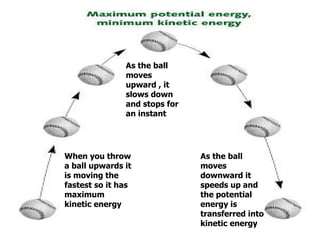
When you throw a ball upwards it is moving the fastest so it has maximum kinetic energy As the ball moves upward , it slows down and stops for an instant As the ball moves downward it speeds up and the potential energy is transferred into kinetic energy
 
 
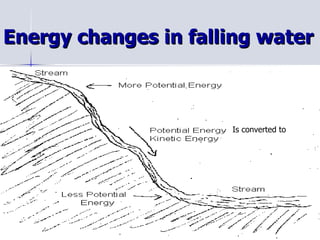
Energy changes in falling water Is converted to
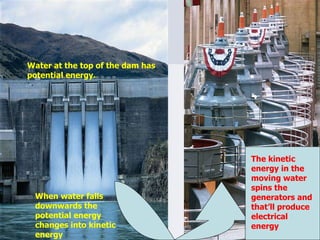
Water at the top of the dam has potential energy. When water falls downwards the potential energy changes into kinetic energy The kinetic energy in the moving water spins the generators and that’ll produce electrical energy
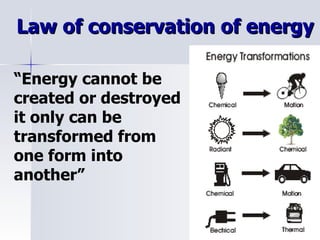
Law of conservation of energy “ Energy cannot be created or destroyed it only can be transformed from one form into another”
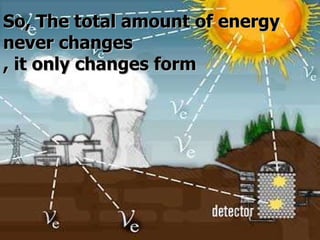
So, The total amount of energy never changes , it only changes form

Kinetic and potential energy

  • 1.
    Unit 2 Chapter 6 Section 1 : Energy Changes
  • 2.
    What is Energy?The word energy comes from the Greek word “Energos ” which means active Energy is the ability to cause change
  • 3.
    For example: Energycan change the temperature of water . Energy can change the direction and speed of a baseball . The energy in a thunderstorm produces lightening that lighten up the skies and thunder that rattle windows
  • 4.
    Forms of energy Energy comes in different forms from many sources. Food provides energy in the form of chemical energy. Your body converts the chemical energy in the food you eat into the energy it needs to move
  • 5.
    Energy Transformations EnergyTransformation occurs if energy changes from one form to another . When the car sits in sunlight all day the energy in sunlight changes to heat energy that warms the inside of the car
  • 6.
    Chemical energy isstored inside your muscles. When you push down on a bicycle pedal , chemical energy is used to make your legs move. The chemical energy stored in your muscles is transformed to energy of motion
  • 7.
    During energy transformationthe total amount of energy remains the same. Energy is never lost or gained it only changes form
  • 8.
  • 9.
    An electric currentthat flows in a wire carries electrical energy that can be used in several ways A hair dryer converts electrical energy into heat energy. A light bulb converts electrical energy into heat and light energy
  • 10.
    Kinetic energy: It’sthe energy an object has due to motion Example: A moving bowling ball has energy that causes the pins to fall . This energy is called kinetic energy. Kinetic Energy
  • 11.
    The sky diverhas kinetic energy A ball kicked by a football player has a kinetic energy
  • 12.
    Mass, Speed andKinetic Energy All moving objects have kinetic energy. Not all moving objects have the same amount of kinetic energy. The amount of kinetic energy an object has depends on the mass and the speed of the object
  • 13.
    Imagine those tworocks are rolling down the hillside with the same speed. Which one will have more kinetic energy? Which one will cause more damage if they hit something at the bottom? The larger rock could cause more damage because it has larger mass and has more kinetic energy than the smaller rock
  • 14.
    Kinetic energy alsodepends on speed . The faster object has more speed and has more kinetic energy
  • 15.
    Transferring kinetic energyKinetic energy could be transferred from one object to another when they collide . The bowling ball does not touch all the pins but it can knock them down with one roll . The bowling ball transfer kinetic energy to few pins. The pins will transfer this kinetic energy to each other and knock them down
  • 16.
    A transfer ofkinetic energy takes place when dominos fall. When you tap the first domino you give it a kinetic energy Then the domino will fall into the next one and the kinetic energy will be transferred from one domino to another
  • 17.
    This skater has no kinetic energy as she’s standing at the top of the hill and not moving . As the skater moves down , she is moving faster and her kinetic energy increases. Remember: Energy can not be created nor destroyed, so where does this kinetic energy come from?
  • 18.
    Gravity pulls theskater down the hill. If the skater was standing at the bottom of the hill, gravity wouldn’t start her moving. When the skater is at the top of the hill, she has a form of energy called Potential energy
  • 19.
    Potential Energy It’sthe energy that is stored because of an object’s position. The Higher an object is lifted above earth, the greater is it’s potential energy
  • 20.
  • 21.
  • 22.
    When you throwa ball upwards it is moving the fastest so it has maximum kinetic energy As the ball moves upward , it slows down and stops for an instant As the ball moves downward it speeds up and the potential energy is transferred into kinetic energy
  • 23.
  • 24.
  • 25.
    Energy changes infalling water Is converted to
  • 26.
    Water at thetop of the dam has potential energy. When water falls downwards the potential energy changes into kinetic energy The kinetic energy in the moving water spins the generators and that’ll produce electrical energy
  • 27.
    Law of conservationof energy “ Energy cannot be created or destroyed it only can be transformed from one form into another”
  • 28.
    So, The totalamount of energy never changes , it only changes form