By Shalu Thariwal
 Latin word, foris= outside
 Include all uncultivated and uninhabited land.
 Jungle=collection of trees, shrubs etc.
 It is natural ecosystem having multi species and
multi aged trees as dominant community.
 1/3rd of the earth total area is covered by forest.
 In India, forest coverage is 22.74% but it should
be 33% prescribed under national forest
policy(1988).
IMPORTANCE OF FOREST
 Protective functions: protective role against soil
erosion, drought, floods,etc.
 Productive functions: forests are source of wood
and products like gums, fibers, medicines, honey,
paper etc.
 Regulative functions: like storage, absorption,
release of gases, water, minerals,regulate floods,
drought, and many gaseous cycles. Improve
atmospheric conditions.
 Accessory functions: recreation, aesthetics etc.
DEFORESTATION
 Three important factors
 1 .deforestation
 2. forest grazing
 3 .forest fires.
 Deforestation: Cutting of forest trees of commercial
use without planting new tree in return is called
deforestation
 Cut for timber
 For making paper
 Fuelwood.
DEFORESTATION RESULTS IN
 Soil erosion
 Extinction of animals and plants
 Loss of biodiversity
 Change in the local and global climates(global warming)
 Decrease in rainfall
 Destructed of wild life
 Absence or scarcity of soil moisture create drought
 Increase in soil surface evaporation
 Crop productivity is affected
 Over-grazing reduced the regenerative capacity
of forest
 ecosystem gets totally disturbed
CAUSES OF DEFORESTATION
 Explosion of human population = scarcity of land for
living purpose
 Increased requirement of timber and fuel wood.
 Expansion of crops land for increased production of
food grains
 Overgrazing(cattle graze in the forest and destroy
forest floor vegetation)
 Large scale demand of forest produce(rubbers
,gums , honey, dyes etc)
FOREST CONSERVATION
 Forest conservation act(1980)
 Production from fires:
 Use of fire breaker, use of back firing, aeoro spraying of
fire, use of high capacity strong air blowers to change
direction of winds etc.
 Maintenance of forest trees:
 Cutting of unwanted trees, removal of abnormally grown
branches, removal of weeds, promote growth of useful
trees.
 Protection from grazing
 Protection from insects and pests(spray chemical and
fungicides)
 Protection of wild life(from hunters and fisher mans)
CASE STUDY
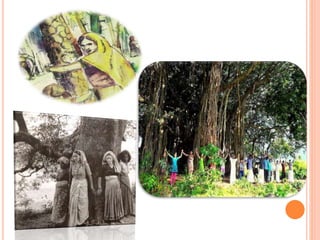
 ‘Chipko movement’
 started in Tehri-Garhwal to protest against tree
felling. Women hugged the tree and demanded to
be cut to pieces along with the trees being
cut.(under the leadership of Sunder Lal bahuguna)
 Demanding ban on forest denudation
 Slogan of planting five “fs”-food, fodder, fuel, fiber
and fertilizer.
 Legislation came to this effect- well stocked forests
are declared national parks and sanctuaries(limited
human activity)
TIMBER EXTRACTION-EFFECTS ON FOREST
 Timber and wood used for industries and in railway.
 It may take a few years for the plant to bloom into a
tree.
 It is necessary to see that the trees left behind after
the harvest, have the same opportunity to grow as
before to get future returns.
DAM AND MINING EFFECTS
 Protection and conservation of forests in the watershed
and mine spoil areas ,maintain water balance and soil
erosion.
 13 river valley projects (mahanadi, chambal, Sutlej,
ramganga, damodar valley),not more than one fifth of
the watershed areas are covered with forests.
 The land that are destroyed by mining are called mining
spoils.
 These lands can be reclaimed by extensive plantation
only.
 Mining waste disposal back fill is the solution
 Afforestation
 Degraded forest land should be brought back to proper
condition.
TRIBALS
 Life and economy of tribals are intimately
concerned with forests.
 Tribals of MP, Orissa, and North Eastern states
 Practice shifting cultivation
 Direct employment
 Depend on MFP(minor forest produce) like flowers,
sal seeds, tender leaves, fruits, resins, etc.
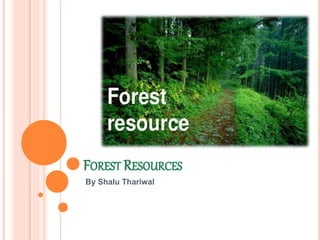
Forest resources

Forest resources

  • 1.
  • 2.
     Latin word,foris= outside  Include all uncultivated and uninhabited land.  Jungle=collection of trees, shrubs etc.  It is natural ecosystem having multi species and multi aged trees as dominant community.  1/3rd of the earth total area is covered by forest.  In India, forest coverage is 22.74% but it should be 33% prescribed under national forest policy(1988).
  • 3.
    IMPORTANCE OF FOREST Protective functions: protective role against soil erosion, drought, floods,etc.  Productive functions: forests are source of wood and products like gums, fibers, medicines, honey, paper etc.  Regulative functions: like storage, absorption, release of gases, water, minerals,regulate floods, drought, and many gaseous cycles. Improve atmospheric conditions.  Accessory functions: recreation, aesthetics etc.
  • 4.
    DEFORESTATION  Three importantfactors  1 .deforestation  2. forest grazing  3 .forest fires.  Deforestation: Cutting of forest trees of commercial use without planting new tree in return is called deforestation  Cut for timber  For making paper  Fuelwood.
  • 5.
    DEFORESTATION RESULTS IN Soil erosion  Extinction of animals and plants  Loss of biodiversity  Change in the local and global climates(global warming)  Decrease in rainfall  Destructed of wild life  Absence or scarcity of soil moisture create drought  Increase in soil surface evaporation  Crop productivity is affected  Over-grazing reduced the regenerative capacity of forest  ecosystem gets totally disturbed
  • 6.
    CAUSES OF DEFORESTATION Explosion of human population = scarcity of land for living purpose  Increased requirement of timber and fuel wood.  Expansion of crops land for increased production of food grains  Overgrazing(cattle graze in the forest and destroy forest floor vegetation)  Large scale demand of forest produce(rubbers ,gums , honey, dyes etc)
  • 7.
    FOREST CONSERVATION  Forestconservation act(1980)  Production from fires:  Use of fire breaker, use of back firing, aeoro spraying of fire, use of high capacity strong air blowers to change direction of winds etc.  Maintenance of forest trees:  Cutting of unwanted trees, removal of abnormally grown branches, removal of weeds, promote growth of useful trees.  Protection from grazing  Protection from insects and pests(spray chemical and fungicides)  Protection of wild life(from hunters and fisher mans)
  • 8.
    CASE STUDY  ‘Chipkomovement’  started in Tehri-Garhwal to protest against tree felling. Women hugged the tree and demanded to be cut to pieces along with the trees being cut.(under the leadership of Sunder Lal bahuguna)  Demanding ban on forest denudation  Slogan of planting five “fs”-food, fodder, fuel, fiber and fertilizer.  Legislation came to this effect- well stocked forests are declared national parks and sanctuaries(limited human activity)
  • 10.
    TIMBER EXTRACTION-EFFECTS ONFOREST  Timber and wood used for industries and in railway.  It may take a few years for the plant to bloom into a tree.  It is necessary to see that the trees left behind after the harvest, have the same opportunity to grow as before to get future returns.
  • 11.
    DAM AND MININGEFFECTS  Protection and conservation of forests in the watershed and mine spoil areas ,maintain water balance and soil erosion.  13 river valley projects (mahanadi, chambal, Sutlej, ramganga, damodar valley),not more than one fifth of the watershed areas are covered with forests.  The land that are destroyed by mining are called mining spoils.  These lands can be reclaimed by extensive plantation only.  Mining waste disposal back fill is the solution  Afforestation  Degraded forest land should be brought back to proper condition.
  • 12.
    TRIBALS  Life andeconomy of tribals are intimately concerned with forests.  Tribals of MP, Orissa, and North Eastern states  Practice shifting cultivation  Direct employment  Depend on MFP(minor forest produce) like flowers, sal seeds, tender leaves, fruits, resins, etc.