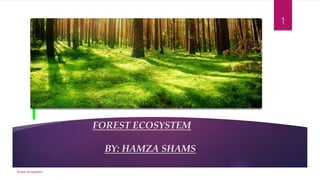
FOREST ECOSYSTEM
BY: HAMZA SHAMS
forest ecosystem
1
Ecosystem & forest-ecosystem
 An ecosystem is a biological community of
interacting organisms and their physical
environment.
 A forest ecosystem is a terrestrial unit of living
organisms (plants, animals and microorganisms), all
interacting among themselves and with the
environment (soil, climate, water and light) in which
they live.
forest ecosystem
2
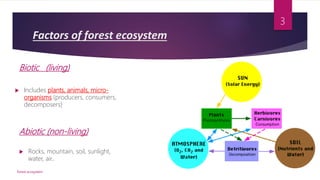
Factors of forest ecosystem
Biotic (living)
 Includes plants, animals, micro-
organisms (producers, consumers,
decomposers)
Abiotic (non-living)
 Rocks, mountain, soil, sunlight,
water, air..
forest ecosystem
3
Forests food web..
forest ecosystem
4
Generally..
 Has three main layers:
 canopy
 Understory
 forest floor
 In rainforests, coniferous,
coastal, mangrove
forests.
forest ecosystem
5
Types of forests
 Generally we have;
1. Deciduous forests
2. Rainforests
1. Tropical rain forests
2. Temperate rain forests
3. Coastal forests
4. Coniferous forests
5. Broad leaves forests
6. Thorn forests
7. Mangrove forestsforest ecosystem
6
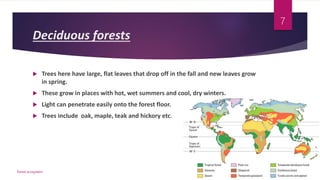
Deciduous forests
 Trees here have large, flat leaves that drop off in the fall and new leaves grow
in spring.
 These grow in places with hot, wet summers and cool, dry winters.
 Light can penetrate easily onto the forest floor.
 Trees include oak, maple, teak and hickory etc.
forest ecosystem
7
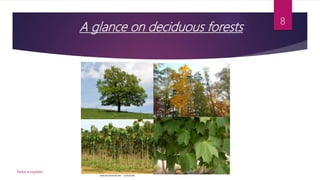
A glance on deciduous forests
forest ecosystem
8
RAINFORESTS
Trees are very tall and leaves are always green.
Ample amount of rain occurs.
Tropical rainforests
 located near the equator.
 One third of the world's tropical rainforests
are in Brazil.
 located in Southeast Asia and the Pacific
Islands (25% of the world's tropical
rainforests) and West Africa (18%).
Temperate rainforests
 found along some coasts in
temperate zones.
 largest temperate rainforests are
found on the Pacific coast of North
America.
 Norway, Japan, New Zealand, and
southern Australia
forest ecosystem
9
Continued
forest ecosystem
10
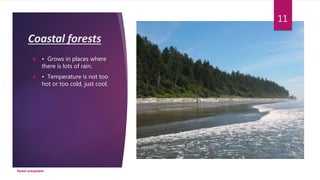
Coastal forests
 • Grows in places where
there is lots of rain.
 • Temperature is not too
hot or too cold, just cool.
forest ecosystem
11
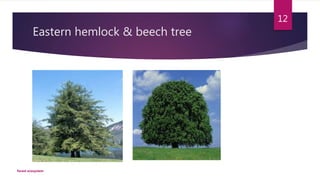
Eastern hemlock & beech tree
forest ecosystem
12
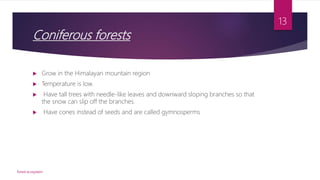
Coniferous forests
 Grow in the Himalayan mountain region
 Temperature is low.
 Have tall trees with needle-like leaves and downward sloping branches so that
the snow can slip off the branches.
 Have cones instead of seeds and are called gymnosperms
forest ecosystem
13
Different plants in coniferous forests
forest ecosystem
14
A glance of coniferous
forest..
forest ecosystem
15
Broad leaves
forests
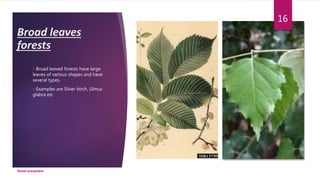
Broad leaved forests have large
leaves of various shapes and have
several types.
Examples are Silver birch, Ulmus
glabra etc
forest ecosystem
16
Trees and shrubs found in broad leaves forests..
forest ecosystem
17
Thorn forests
• are found in the semi- arid regions.
• Trees are scattered and are surrounded
by open grassy areas.
• can conserve water.
• Have long and fibrous roots to reach
water at great depths.
• reduce loss of water – some species have
small leaves and some have thick waxy
leaves.
• have thorns – protect plants from
herbivores.
forest ecosystem
18
Flora and fauna of thorn forests..
forest ecosystem
19
Mangrove forests
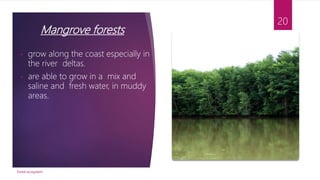
• grow along the coast especially in
the river deltas.
• are able to grow in a mix and
saline and fresh water, in muddy
areas.
forest ecosystem
20
Flora and fauna of mangrove forests..
forest ecosystem
21
Forests map of Pakistan..
forest ecosystem
22
Uses of forests
ecosystem
Fruits, flowers, food,
medicines, wood, fodder etc
forest ecosystem
23
Services of forest
ecosystem
• Control flow of water
• Watershed protection
• Help increase ground Water level
• Prevent soil erosion
• Control temperature
• Absorb CO2
forest ecosystem
24
Threats to forest
ecosystems
• Deforestation
• Poaching
• Overexploitation of
resources
• Development activities
(mining, dams)
• Changing land use
patterns
• Fragmentation
• Habitat degradation
forest ecosystem
25
CONSERVATION OF FOREST ECOSYSTEMS
 Use resources carefully
 Alternate source of energy for fuel wood
 Afforestation
 NP and Wildlife Sanctuaries
 Control population
forest ecosystem
26
BE A PART TO KEEP THE BALANCE OF
FORESTS ECOSYSTEM..
forest ecosystem
27

Forest ecosystem

  • 1.
    FOREST ECOSYSTEM BY: HAMZASHAMS forest ecosystem 1
  • 2.
    Ecosystem & forest-ecosystem An ecosystem is a biological community of interacting organisms and their physical environment.  A forest ecosystem is a terrestrial unit of living organisms (plants, animals and microorganisms), all interacting among themselves and with the environment (soil, climate, water and light) in which they live. forest ecosystem 2
  • 3.
    Factors of forestecosystem Biotic (living)  Includes plants, animals, micro- organisms (producers, consumers, decomposers) Abiotic (non-living)  Rocks, mountain, soil, sunlight, water, air.. forest ecosystem 3
  • 4.
  • 5.
    Generally..  Has threemain layers:  canopy  Understory  forest floor  In rainforests, coniferous, coastal, mangrove forests. forest ecosystem 5
  • 6.
    Types of forests Generally we have; 1. Deciduous forests 2. Rainforests 1. Tropical rain forests 2. Temperate rain forests 3. Coastal forests 4. Coniferous forests 5. Broad leaves forests 6. Thorn forests 7. Mangrove forestsforest ecosystem 6
  • 7.
    Deciduous forests  Treeshere have large, flat leaves that drop off in the fall and new leaves grow in spring.  These grow in places with hot, wet summers and cool, dry winters.  Light can penetrate easily onto the forest floor.  Trees include oak, maple, teak and hickory etc. forest ecosystem 7
  • 8.
    A glance ondeciduous forests forest ecosystem 8
  • 9.
    RAINFORESTS Trees are verytall and leaves are always green. Ample amount of rain occurs. Tropical rainforests  located near the equator.  One third of the world's tropical rainforests are in Brazil.  located in Southeast Asia and the Pacific Islands (25% of the world's tropical rainforests) and West Africa (18%). Temperate rainforests  found along some coasts in temperate zones.  largest temperate rainforests are found on the Pacific coast of North America.  Norway, Japan, New Zealand, and southern Australia forest ecosystem 9
  • 10.
  • 11.
    Coastal forests  •Grows in places where there is lots of rain.  • Temperature is not too hot or too cold, just cool. forest ecosystem 11
  • 12.
    Eastern hemlock &beech tree forest ecosystem 12
  • 13.
    Coniferous forests  Growin the Himalayan mountain region  Temperature is low.  Have tall trees with needle-like leaves and downward sloping branches so that the snow can slip off the branches.  Have cones instead of seeds and are called gymnosperms forest ecosystem 13
  • 14.
    Different plants inconiferous forests forest ecosystem 14
  • 15.
    A glance ofconiferous forest.. forest ecosystem 15
  • 16.
    Broad leaves forests Broad leavedforests have large leaves of various shapes and have several types. Examples are Silver birch, Ulmus glabra etc forest ecosystem 16
  • 17.
    Trees and shrubsfound in broad leaves forests.. forest ecosystem 17
  • 18.
    Thorn forests • arefound in the semi- arid regions. • Trees are scattered and are surrounded by open grassy areas. • can conserve water. • Have long and fibrous roots to reach water at great depths. • reduce loss of water – some species have small leaves and some have thick waxy leaves. • have thorns – protect plants from herbivores. forest ecosystem 18
  • 19.
    Flora and faunaof thorn forests.. forest ecosystem 19
  • 20.
    Mangrove forests • growalong the coast especially in the river deltas. • are able to grow in a mix and saline and fresh water, in muddy areas. forest ecosystem 20
  • 21.
    Flora and faunaof mangrove forests.. forest ecosystem 21
  • 22.
    Forests map ofPakistan.. forest ecosystem 22
  • 23.
    Uses of forests ecosystem Fruits,flowers, food, medicines, wood, fodder etc forest ecosystem 23
  • 24.
    Services of forest ecosystem •Control flow of water • Watershed protection • Help increase ground Water level • Prevent soil erosion • Control temperature • Absorb CO2 forest ecosystem 24
  • 25.
    Threats to forest ecosystems •Deforestation • Poaching • Overexploitation of resources • Development activities (mining, dams) • Changing land use patterns • Fragmentation • Habitat degradation forest ecosystem 25
  • 26.
    CONSERVATION OF FORESTECOSYSTEMS  Use resources carefully  Alternate source of energy for fuel wood  Afforestation  NP and Wildlife Sanctuaries  Control population forest ecosystem 26
  • 27.
    BE A PARTTO KEEP THE BALANCE OF FORESTS ECOSYSTEM.. forest ecosystem 27