Presented by: Shalu Thariwal
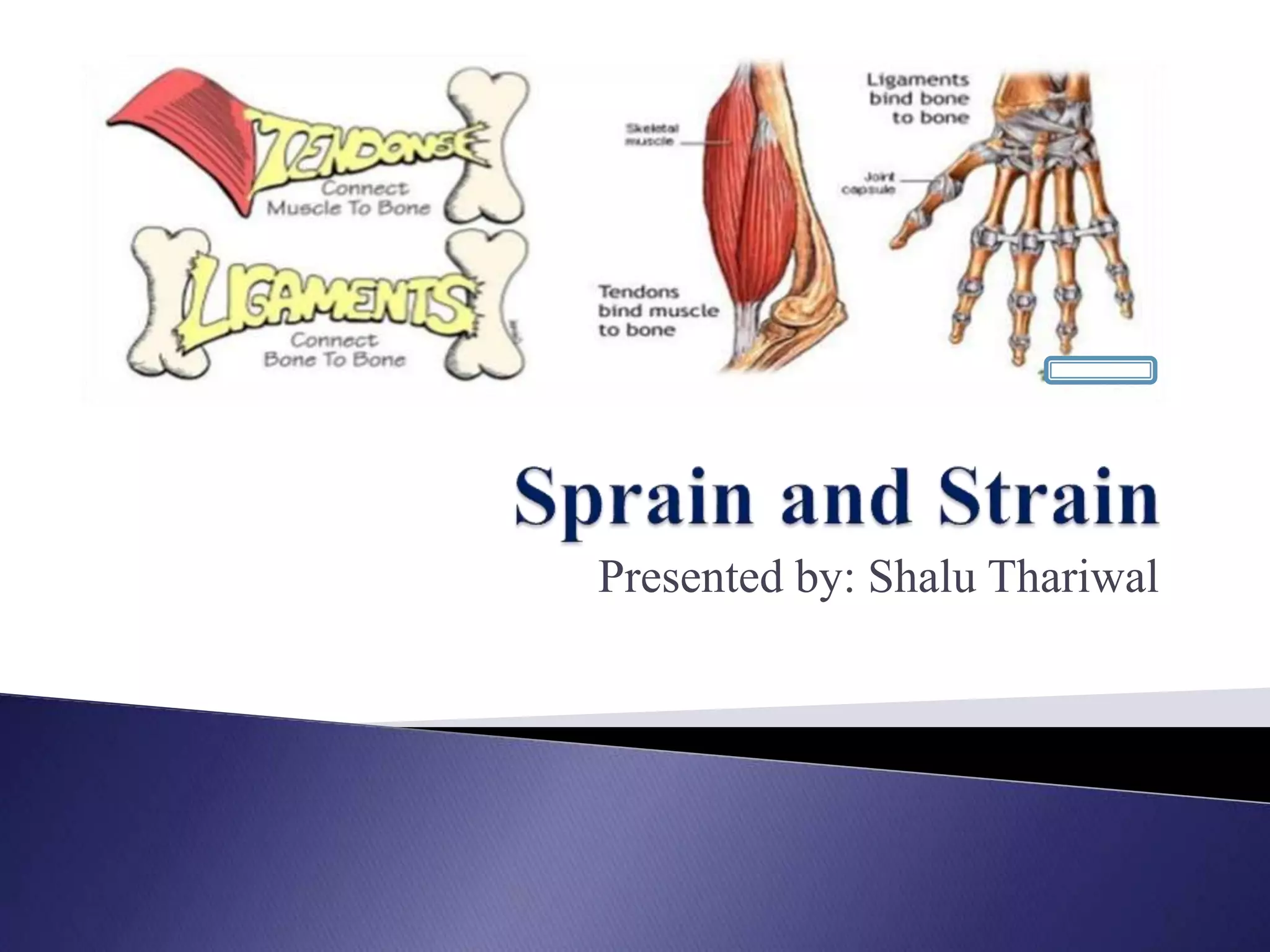
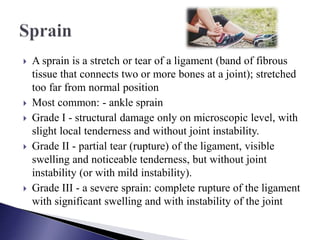
 A sprain is a stretch or tear of a ligament (band of fibrous
tissue that connects two or more bones at a joint); stretched
too far from normal position
 Most common: - ankle sprain
 Grade I - structural damage only on microscopic level, with
slight local tenderness and without joint instability.
 Grade II - partial tear (rupture) of the ligament, visible
swelling and noticeable tenderness, but without joint
instability (or with mild instability).
 Grade III - a severe sprain: complete rupture of the ligament
with significant swelling and with instability of the joint
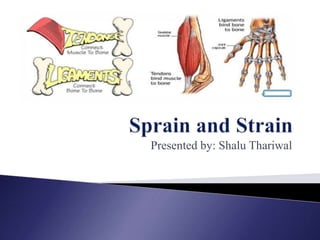
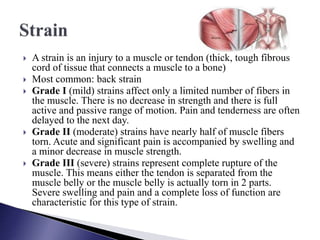
 A strain is an injury to a muscle or tendon (thick, tough fibrous
cord of tissue that connects a muscle to a bone)
 Most common: back strain
 Grade I (mild) strains affect only a limited number of fibers in
the muscle. There is no decrease in strength and there is full
active and passive range of motion. Pain and tenderness are often
delayed to the next day.
 Grade II (moderate) strains have nearly half of muscle fibers
torn. Acute and significant pain is accompanied by swelling and
a minor decrease in muscle strength.
 Grade III (severe) strains represent complete rupture of the
muscle. This means either the tendon is separated from the
muscle belly or the muscle belly is actually torn in 2 parts.
Severe swelling and pain and a complete loss of function are
characteristic for this type of strain.
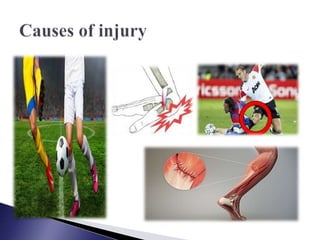
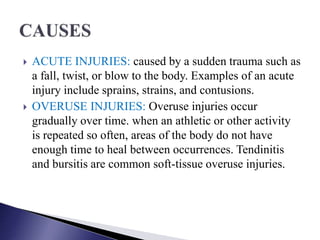
 ACUTE INJURIES: caused by a sudden trauma such as
a fall, twist, or blow to the body. Examples of an acute
injury include sprains, strains, and contusions.
 OVERUSE INJURIES: Overuse injuries occur
gradually over time. when an athletic or other activity
is repeated so often, areas of the body do not have
enough time to heal between occurrences. Tendinitis
and bursitis are common soft-tissue overuse injuries.
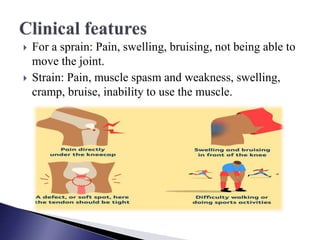
 For a sprain: Pain, swelling, bruising, not being able to
move the joint.
 Strain: Pain, muscle spasm and weakness, swelling,
cramp, bruise, inability to use the muscle.
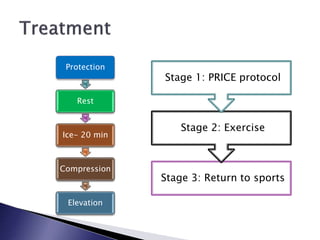
Protection
Rest
Ice- 20 min
Compression
Elevation
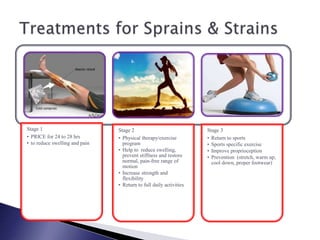
Stage 3: Return to sports
Stage 2: Exercise
Stage 1: PRICE protocol
Stage 1
• PRICE for 24 to 28 hrs
• to reduce swelling and pain
Stage 2
• Physical therapy/exercise
program
• Help to reduce swelling,
prevent stiffness and restore
normal, pain-free range of
motion
• Increase strength and
flexibility
• Return to full daily activities
Stage 3
• Return to sports
• Sports specific exercise
• Improve proprioception
• Prevention (stretch, warm up,
cool down, proper footwear)
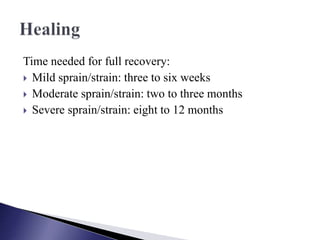
Time needed for full recovery:
 Mild sprain/strain: three to six weeks
 Moderate sprain/strain: two to three months
 Severe sprain/strain: eight to 12 months
Sprain and Strain

Sprain and Strain

  • 1.
  • 2.
     A sprainis a stretch or tear of a ligament (band of fibrous tissue that connects two or more bones at a joint); stretched too far from normal position  Most common: - ankle sprain  Grade I - structural damage only on microscopic level, with slight local tenderness and without joint instability.  Grade II - partial tear (rupture) of the ligament, visible swelling and noticeable tenderness, but without joint instability (or with mild instability).  Grade III - a severe sprain: complete rupture of the ligament with significant swelling and with instability of the joint
  • 3.
     A strainis an injury to a muscle or tendon (thick, tough fibrous cord of tissue that connects a muscle to a bone)  Most common: back strain  Grade I (mild) strains affect only a limited number of fibers in the muscle. There is no decrease in strength and there is full active and passive range of motion. Pain and tenderness are often delayed to the next day.  Grade II (moderate) strains have nearly half of muscle fibers torn. Acute and significant pain is accompanied by swelling and a minor decrease in muscle strength.  Grade III (severe) strains represent complete rupture of the muscle. This means either the tendon is separated from the muscle belly or the muscle belly is actually torn in 2 parts. Severe swelling and pain and a complete loss of function are characteristic for this type of strain.
  • 6.
     ACUTE INJURIES:caused by a sudden trauma such as a fall, twist, or blow to the body. Examples of an acute injury include sprains, strains, and contusions.  OVERUSE INJURIES: Overuse injuries occur gradually over time. when an athletic or other activity is repeated so often, areas of the body do not have enough time to heal between occurrences. Tendinitis and bursitis are common soft-tissue overuse injuries.
  • 7.
     For asprain: Pain, swelling, bruising, not being able to move the joint.  Strain: Pain, muscle spasm and weakness, swelling, cramp, bruise, inability to use the muscle.
  • 8.
    Protection Rest Ice- 20 min Compression Elevation Stage3: Return to sports Stage 2: Exercise Stage 1: PRICE protocol
  • 9.
    Stage 1 • PRICEfor 24 to 28 hrs • to reduce swelling and pain Stage 2 • Physical therapy/exercise program • Help to reduce swelling, prevent stiffness and restore normal, pain-free range of motion • Increase strength and flexibility • Return to full daily activities Stage 3 • Return to sports • Sports specific exercise • Improve proprioception • Prevention (stretch, warm up, cool down, proper footwear)
  • 10.
    Time needed forfull recovery:  Mild sprain/strain: three to six weeks  Moderate sprain/strain: two to three months  Severe sprain/strain: eight to 12 months