Natural_Resources-forest.ppt for Environmental science
1.
What is Resource
Everythingavailable in our environment
which can be used to satisfy our needs,
provided, it is technologically accessible,
economically feasible and culturally
acceptable can be termed as ‘Resource’.
What is anOre Mineral?
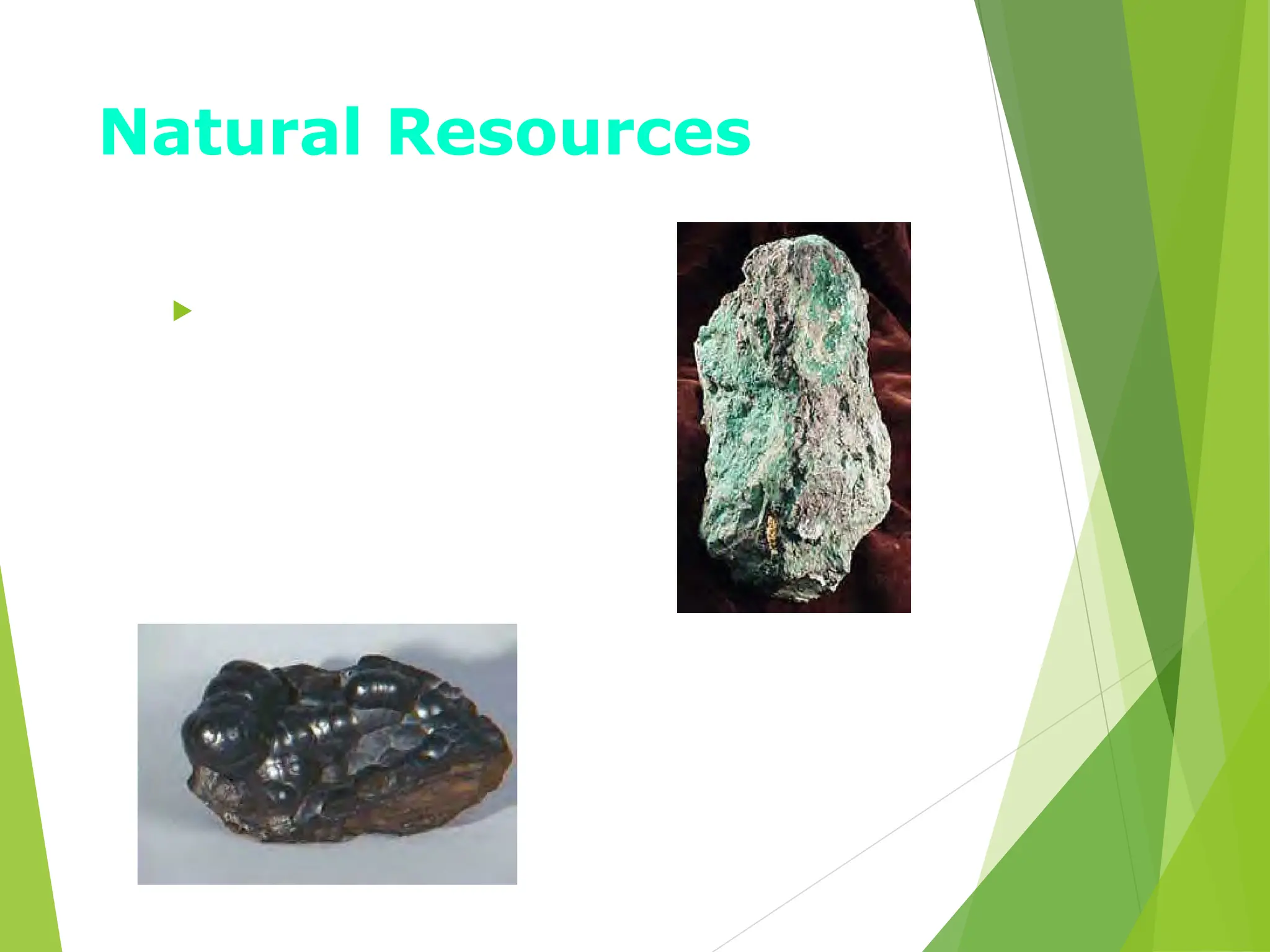
The metallic element or valuable mineral part of
the rock is known as the Ore Mineral
The remaining part of the rock is called the
Gangue
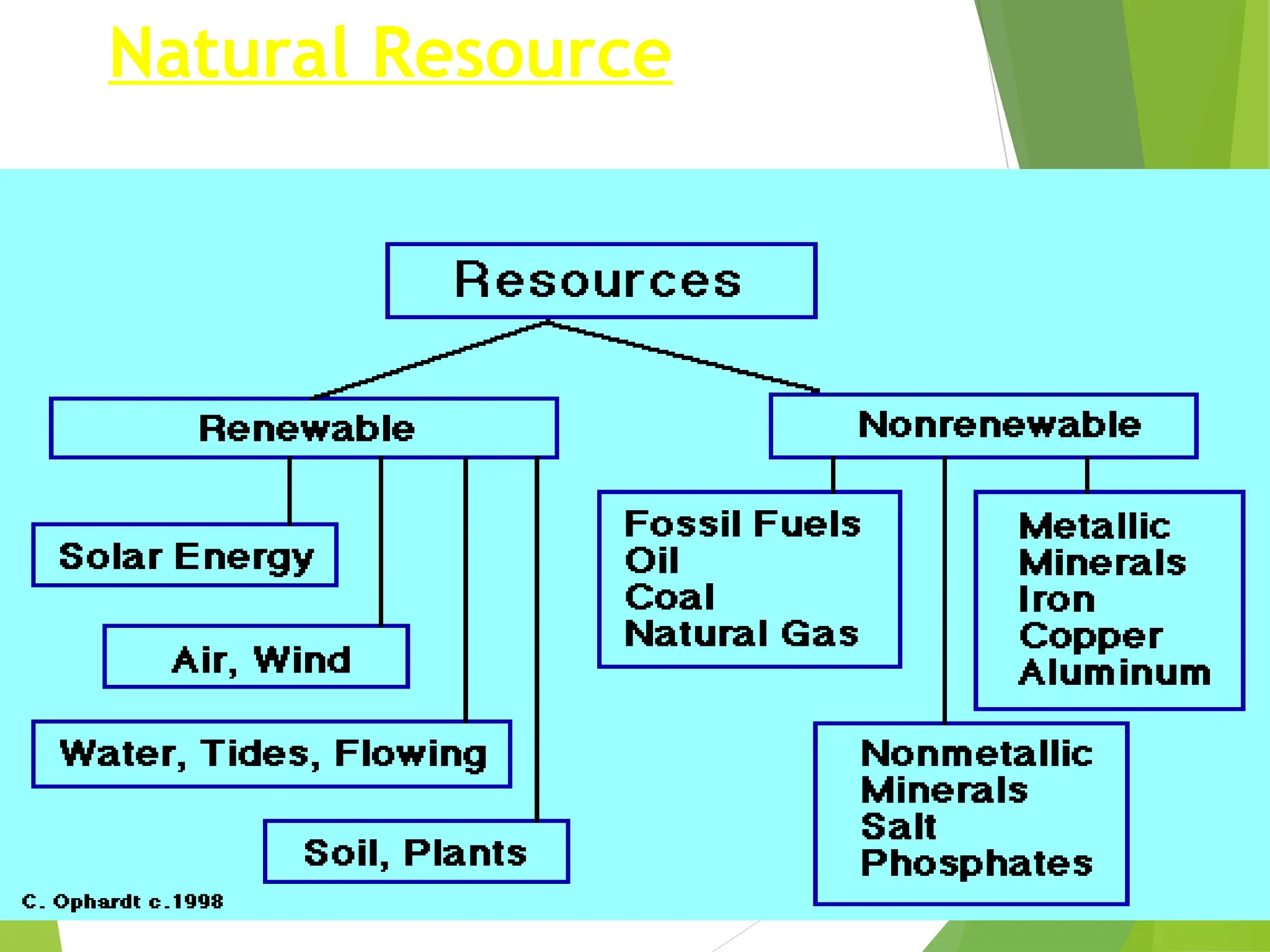
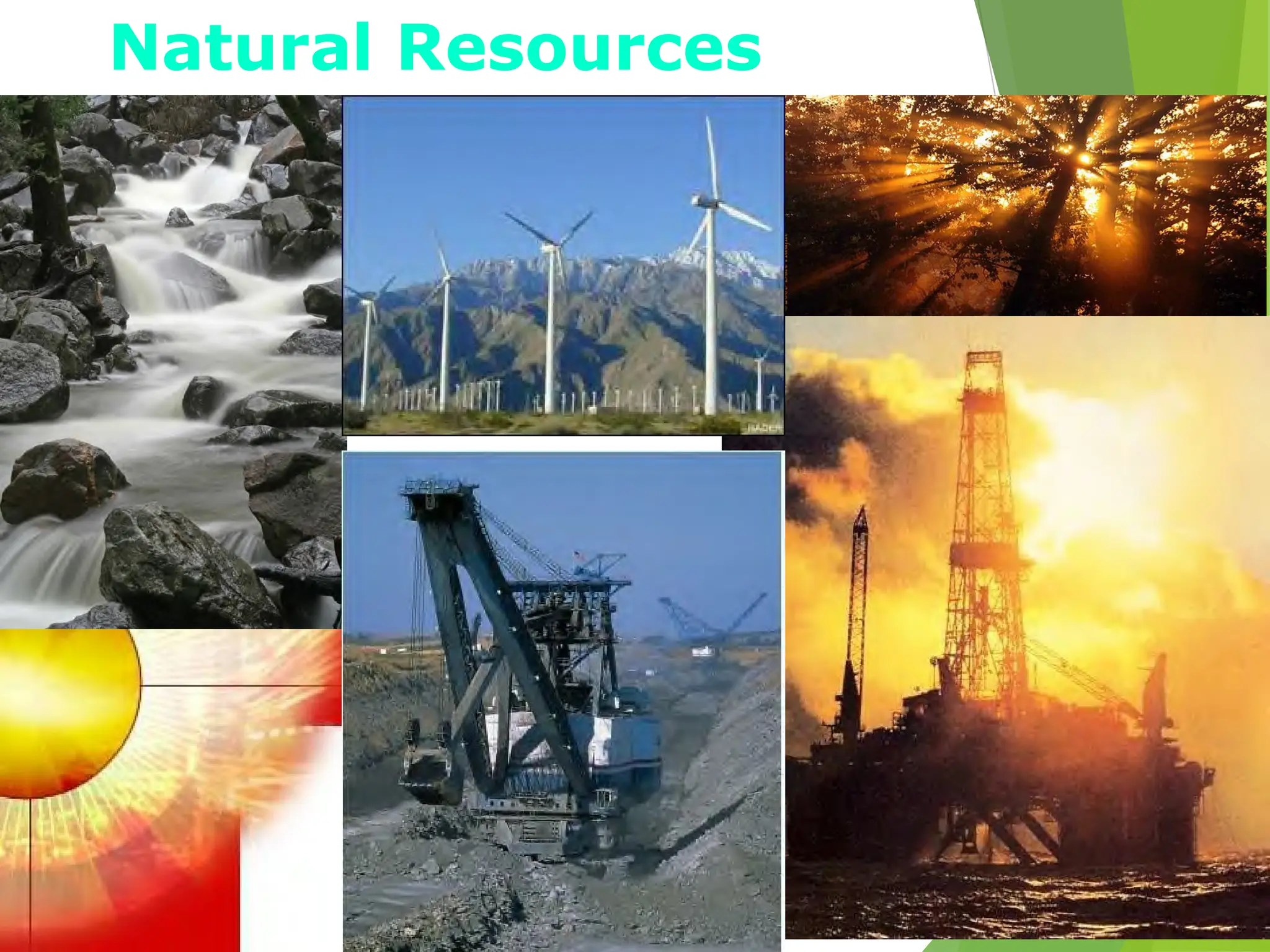
6. Renewable EnergyResources
Water
Wind
Sun
Geothermal Energy
Have less of an impact on
the environment and
promote sustainability
(the ability for future
generations to have the
same resources that we do)
8.
5. Nonrenewable Energy
Resources
A. Fossil Fuels are nonrenewable and
may cause pollution
They are relatively cheap and easy to
extract and use. (Examples include: Coal,
Oil, Petroleum, and Natural Gas)
B. Nuclear power: energy is created by
atomic fission. It produces very little air
pollution, but it does produce toxic waste
that takes millions of years to
decompose. It uses the radioactive
mineral Uranium, which is nonrenewable.
Topics
• Introduction
• Forestresources
• Forest resources-Indian Scenario
• Functions of forests
• Importance of forests
• Ecological and Economical Importance
• Types of Forests
• Deforestation Causes & Effects
• Forest Degradation in India
11.
Important Questions
Explainhow forest helps in maintaining
ecological balance.
Afforestation is the need of the hour.
Justify.
Give the classification of forests and
discuss the effects of deforestation on
society.
Describe in detail types of forest resources
and what are problems created by
deforestations in India ?
12.
Important Questions
• Describetypes of forest resources and their uses
and overuses and effects of that activity of human.
• Explain Desertification highlighting its causes.
• What are the causes of Deforestation? Describe in
brief some major engineering projects which
caused deforestation problems in India.
• What are importance of Forest resources for
Economic and Ecological wealth of a country.
• Enlist the functions of forest and explain any one
briefly.
13.
Introduction
Forest resourcesplay an important role in the economy
of any country. It is highly complex, changing
environment made up of a living and non living things.
Living things include trees, shrubs, wildlife etc. and
non-living things include water, nutrients, rocks,
sunlight and air. Forest vary a great deal in composition
and density and are distinct from meadows and
pastures. Forest are important to humans and the
natural world. For humans, they have many aesthetics,
recreational, economic, historical, cultural and religious
values. Forest provide fuel, wood, timber, wildlife,
habitat, industrial, forest products, climate regulations,
medicinal etc.
14.
Forest Resources
Theword forest is derived from a Latin word
“ Foris” means Outside
Forest are one of the most important natural
resources of the earth.
Approximately 1/3rd of the earth’s total area is
covered by forests
15.
Indian Scenario
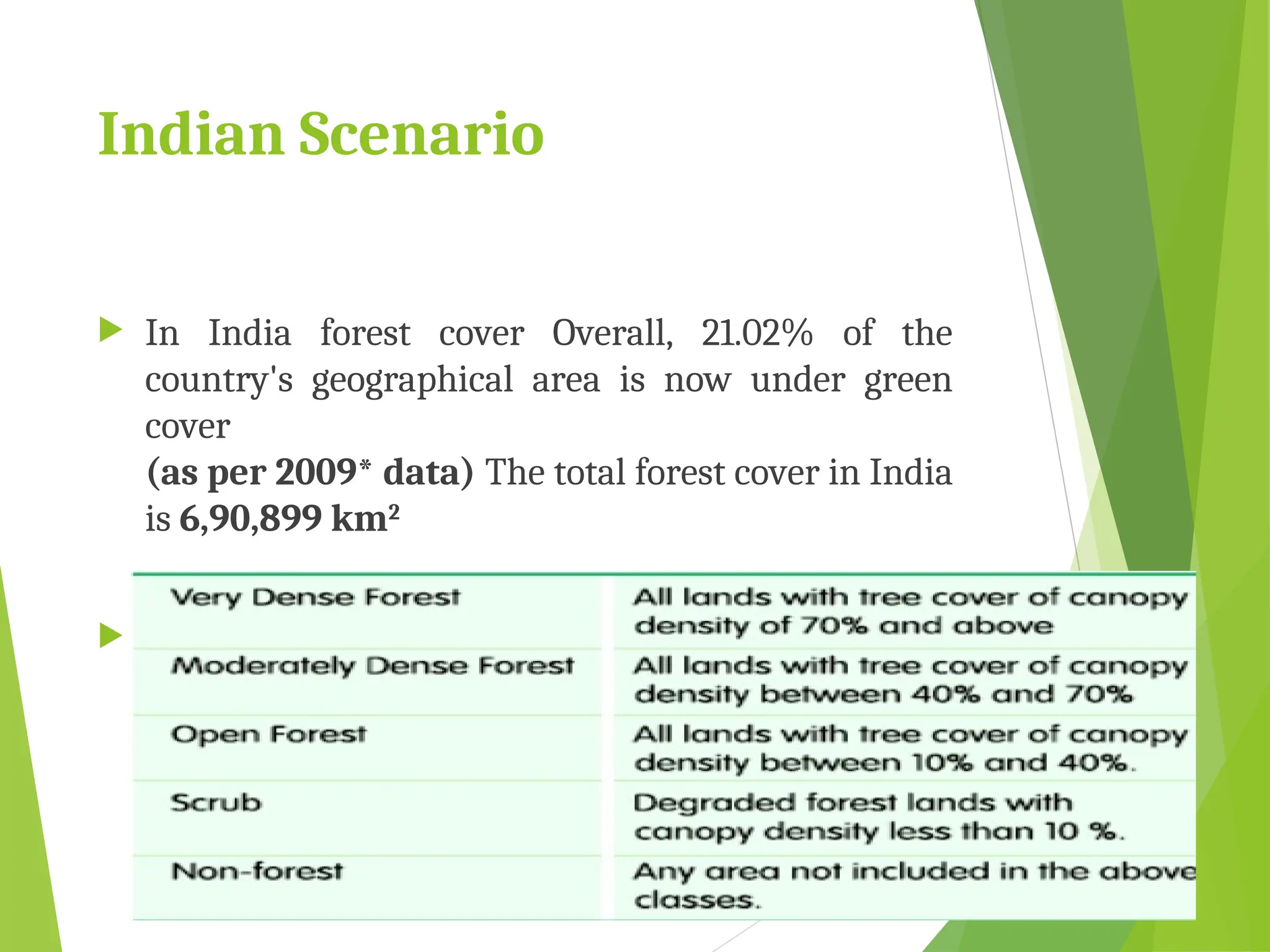
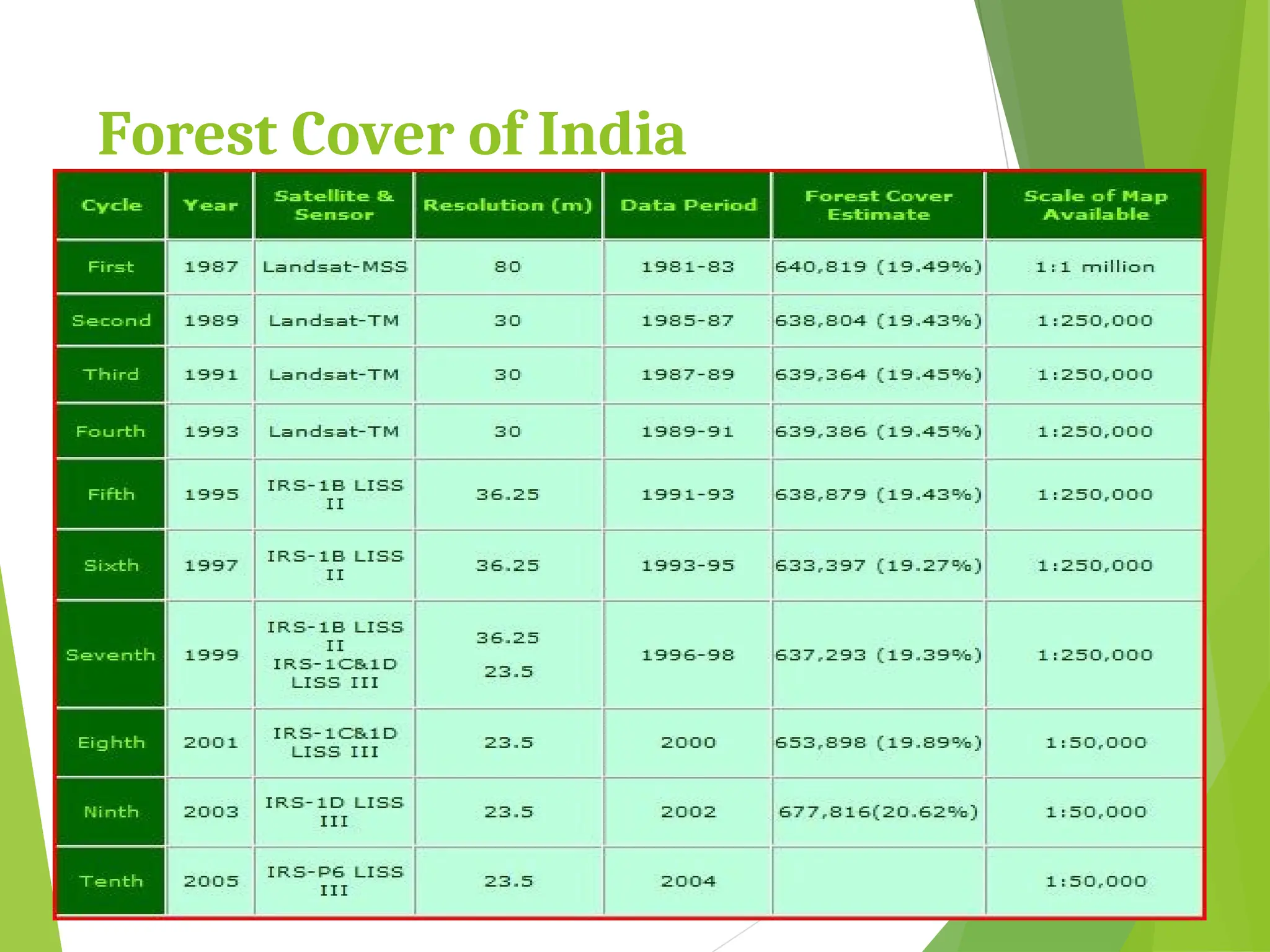
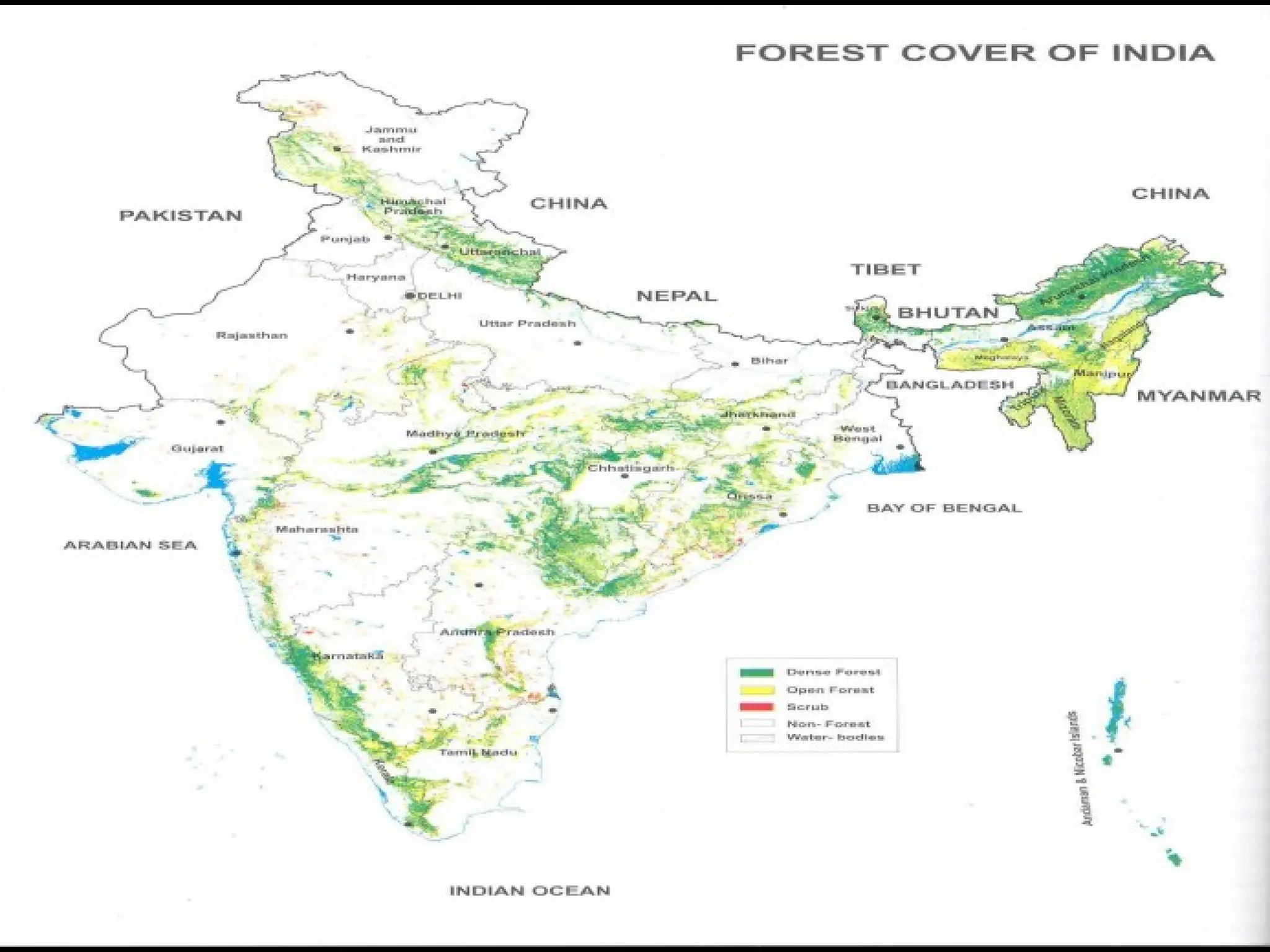
InIndia forest cover Overall, 21.02% of the
country's geographical area is now under green
cover
(as per 2009* data) The total forest cover in India
is 6,90,899 km2
Forest cover in India is defined as all lands, more
than one hectare in area with a tree canopy density
of more than 10%.
Functions of Forests
The functions of forest may broadly classified into
following categories
Protective Function
Productive Function
Regulative Function
Accessory Function
19.
Protective Functions
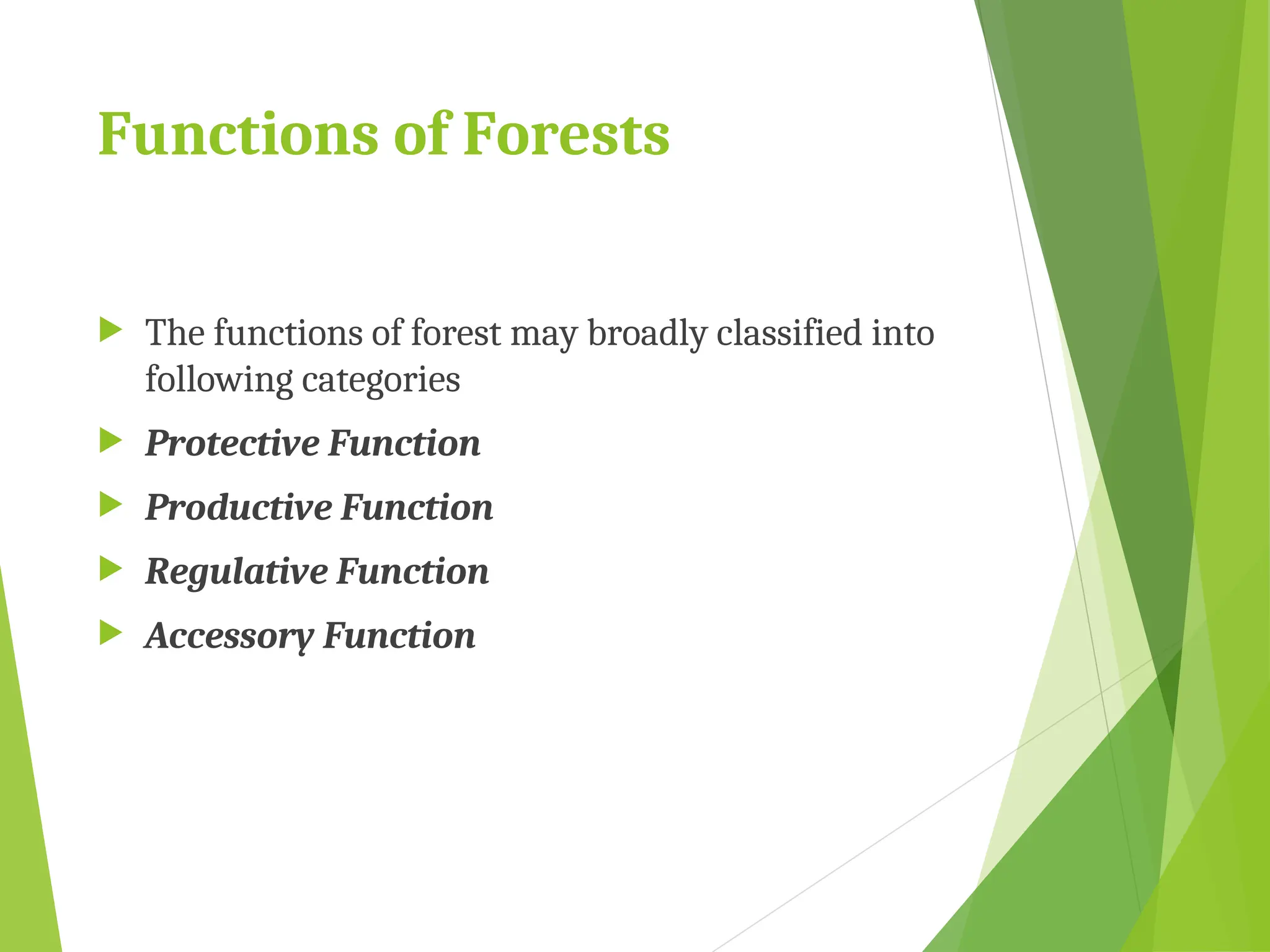
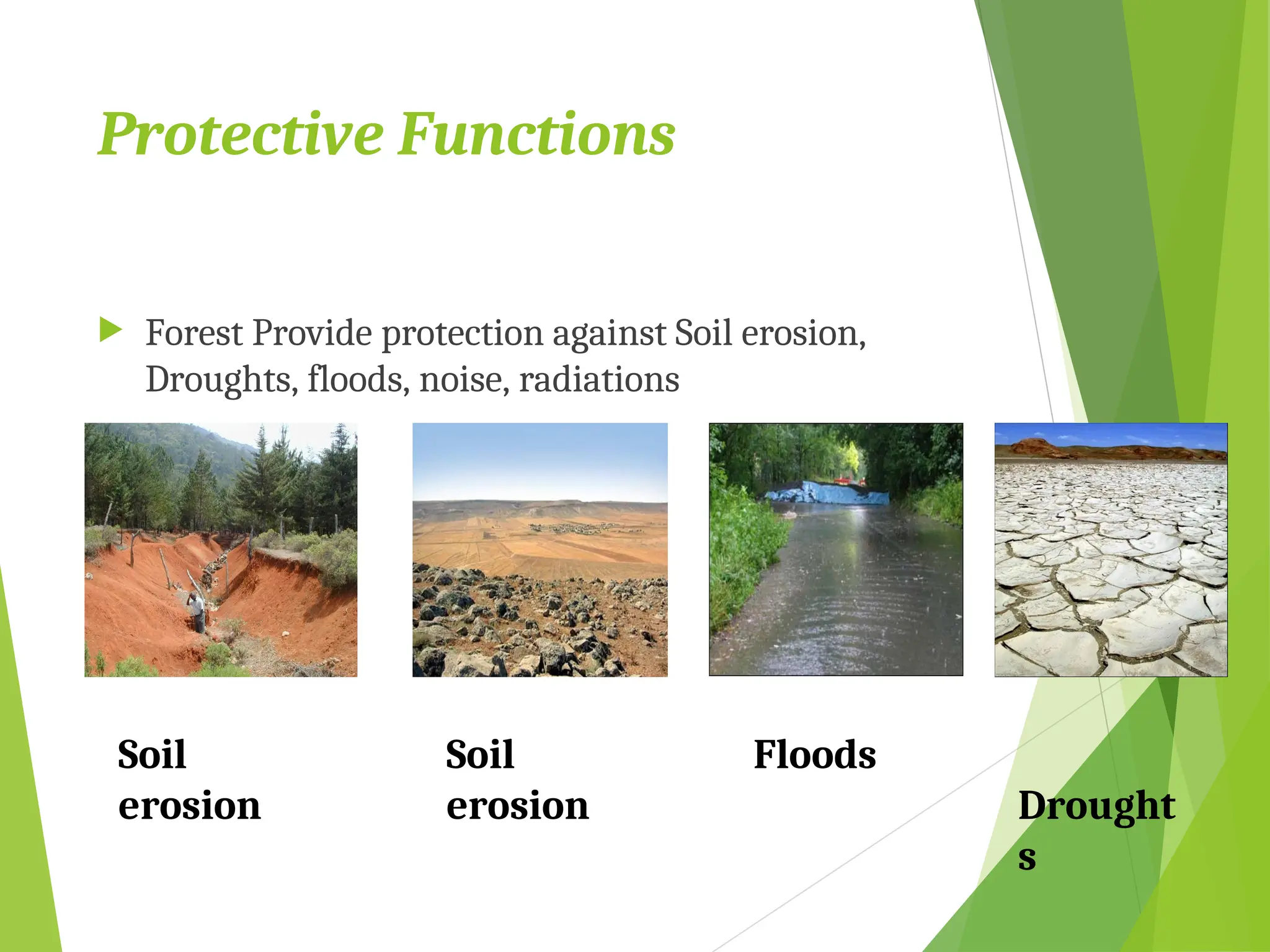
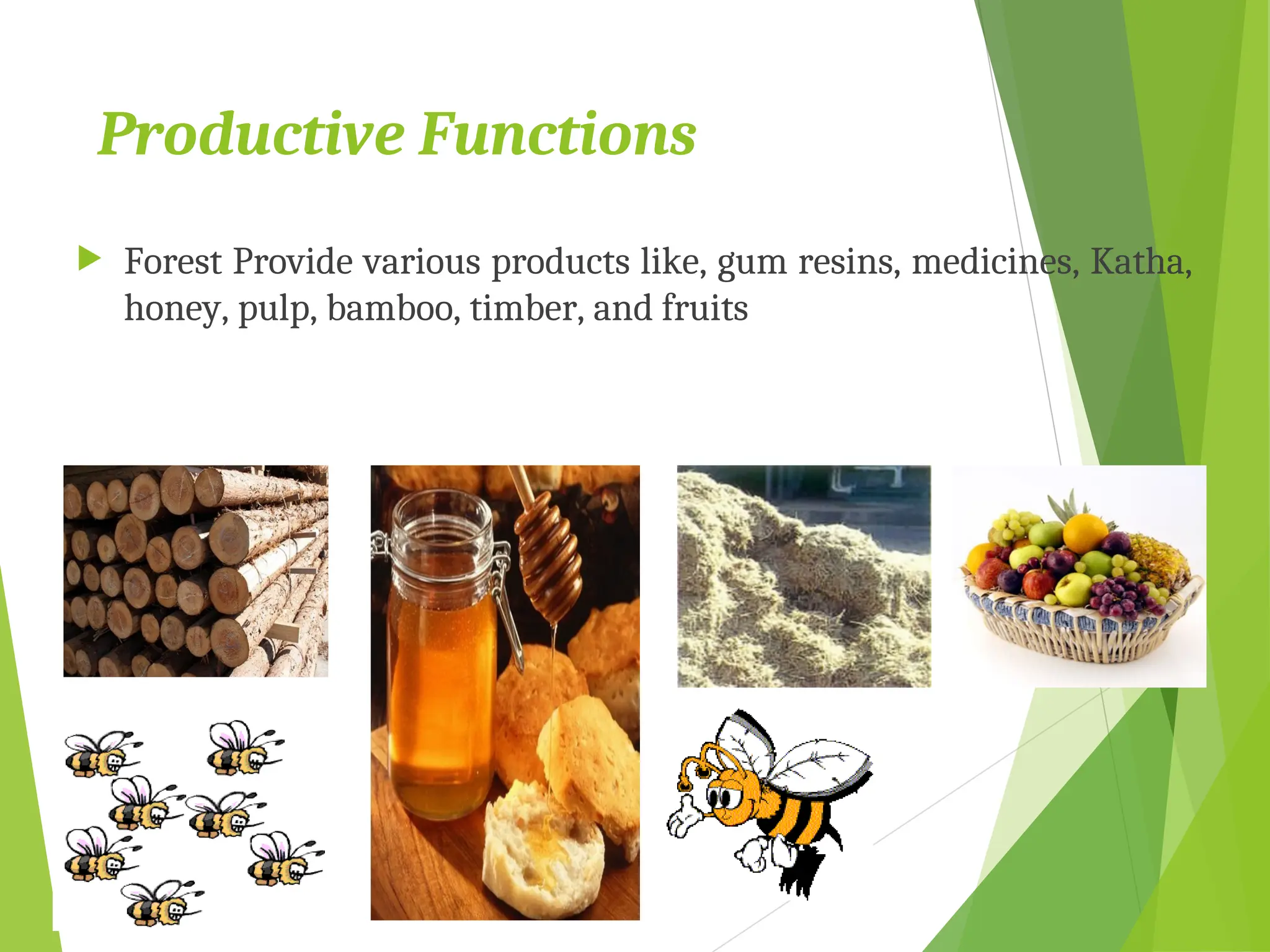
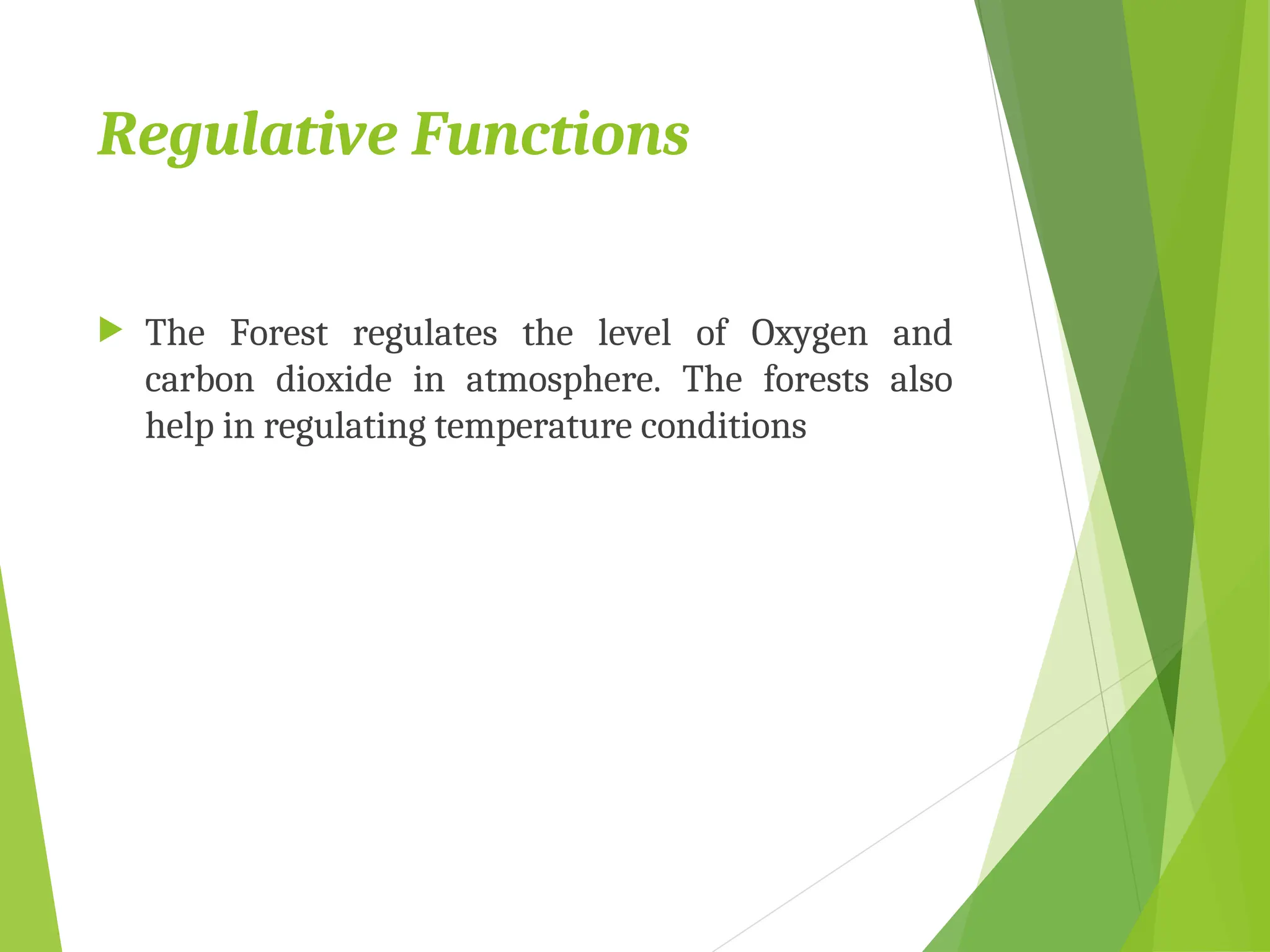
ForestProvide protection against Soil erosion,
Droughts, floods, noise, radiations
Soil
erosion
Floods
Soil
erosion Drought
s
20.
Productive Functions
ForestProvide various products like, gum resins, medicines, Katha,
honey, pulp, bamboo, timber, and fruits
21.
Regulative Functions
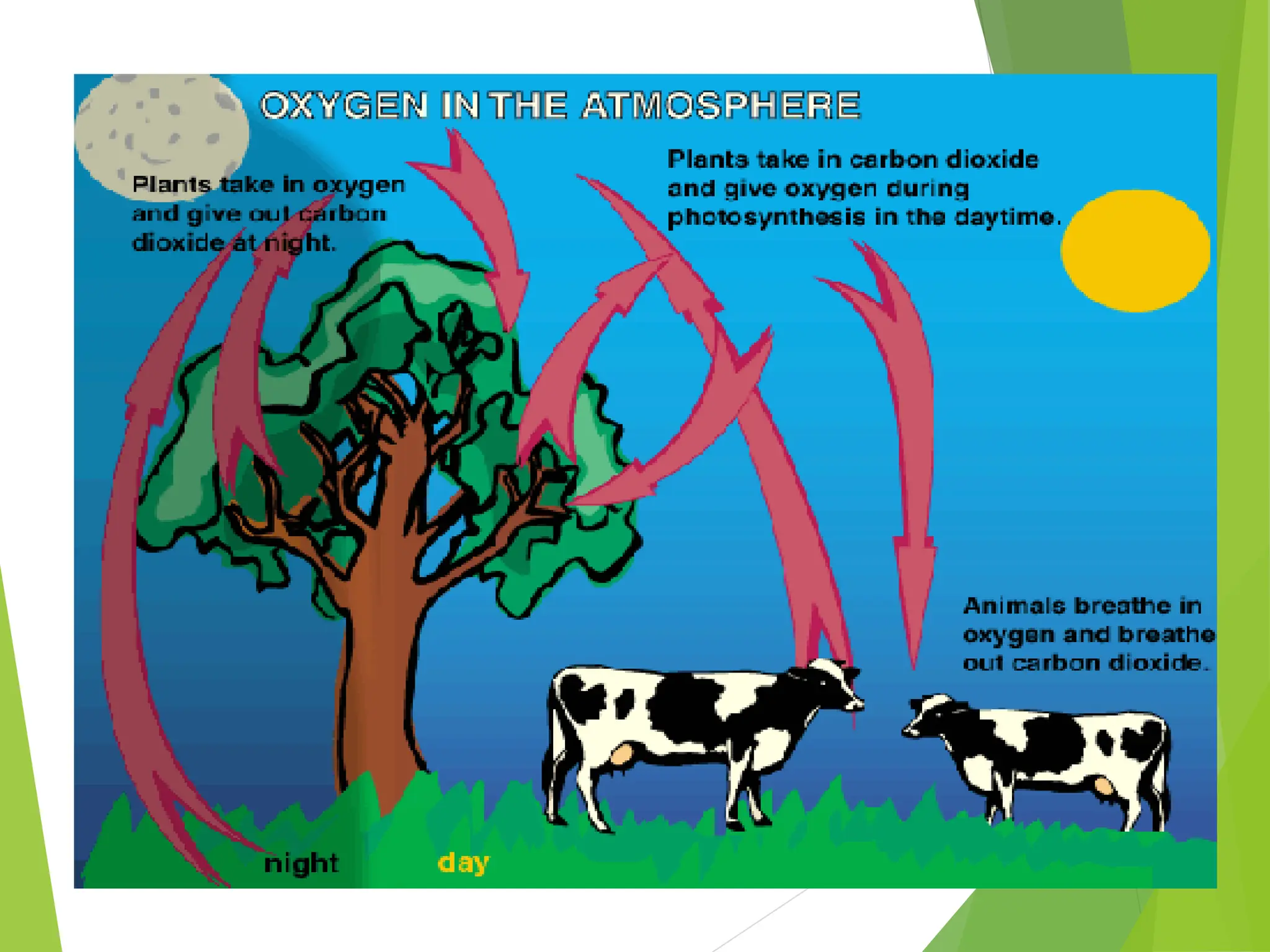
TheForest regulates the level of Oxygen and
carbon dioxide in atmosphere. The forests also
help in regulating temperature conditions
24.
Accessory Function
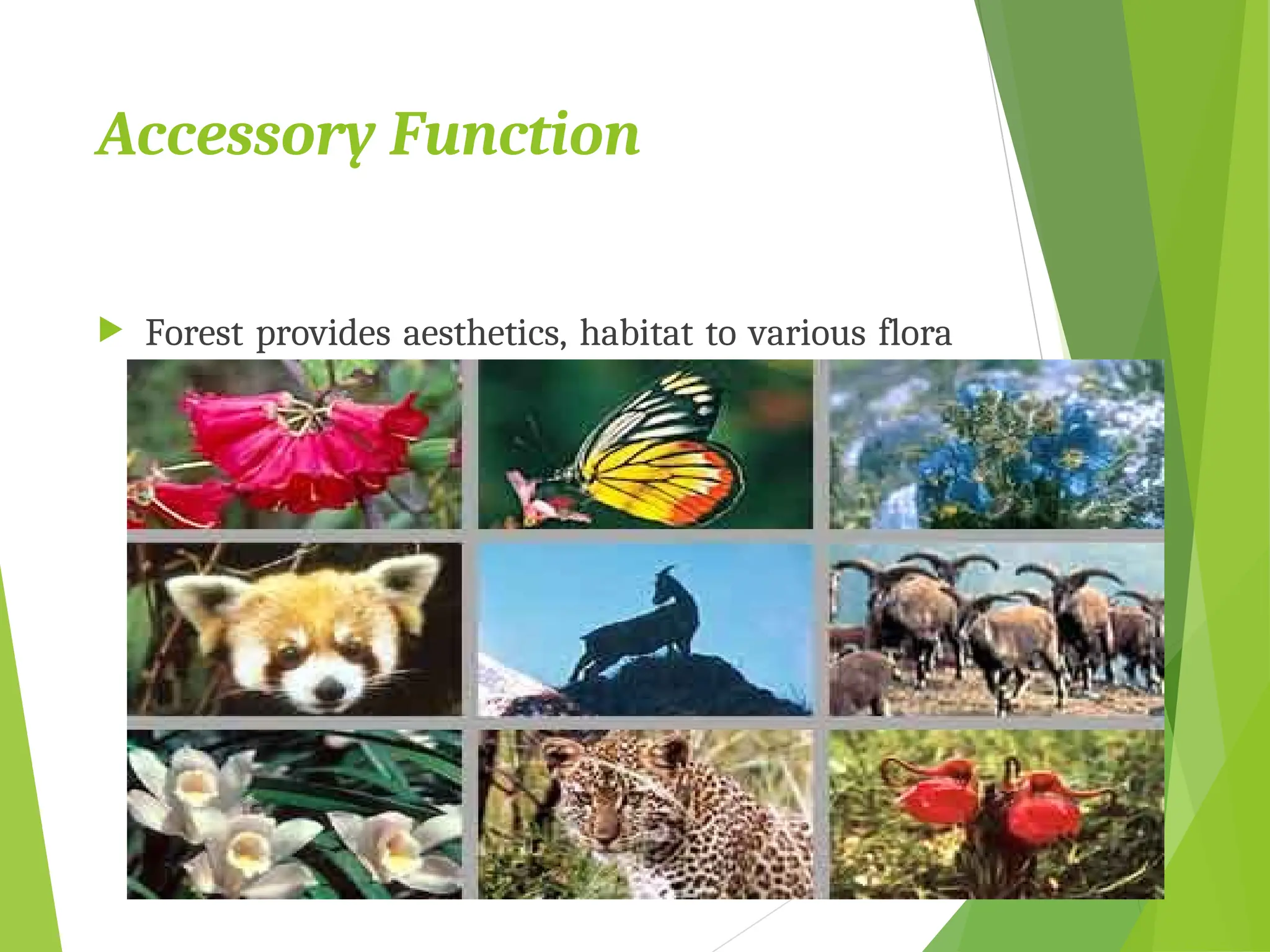
Forestprovides aesthetics, habitat to various flora
and fauna besides that it also has an recreational
value.
25.
Ecological Importance oruses
of Forests
Regulation of global climate and
temperature
Forest play a crucial role in regulation of global
climate and temperature as forest cover absorb the
solar radiations that would otherwise be reflected
back into the atmosphere by bare surface of the
earth.
Transpiration of plants increases the atmosphere
humidity which affects the rainfall, cools the
atmosphere and thus regulate the hydrological
cycle
26.
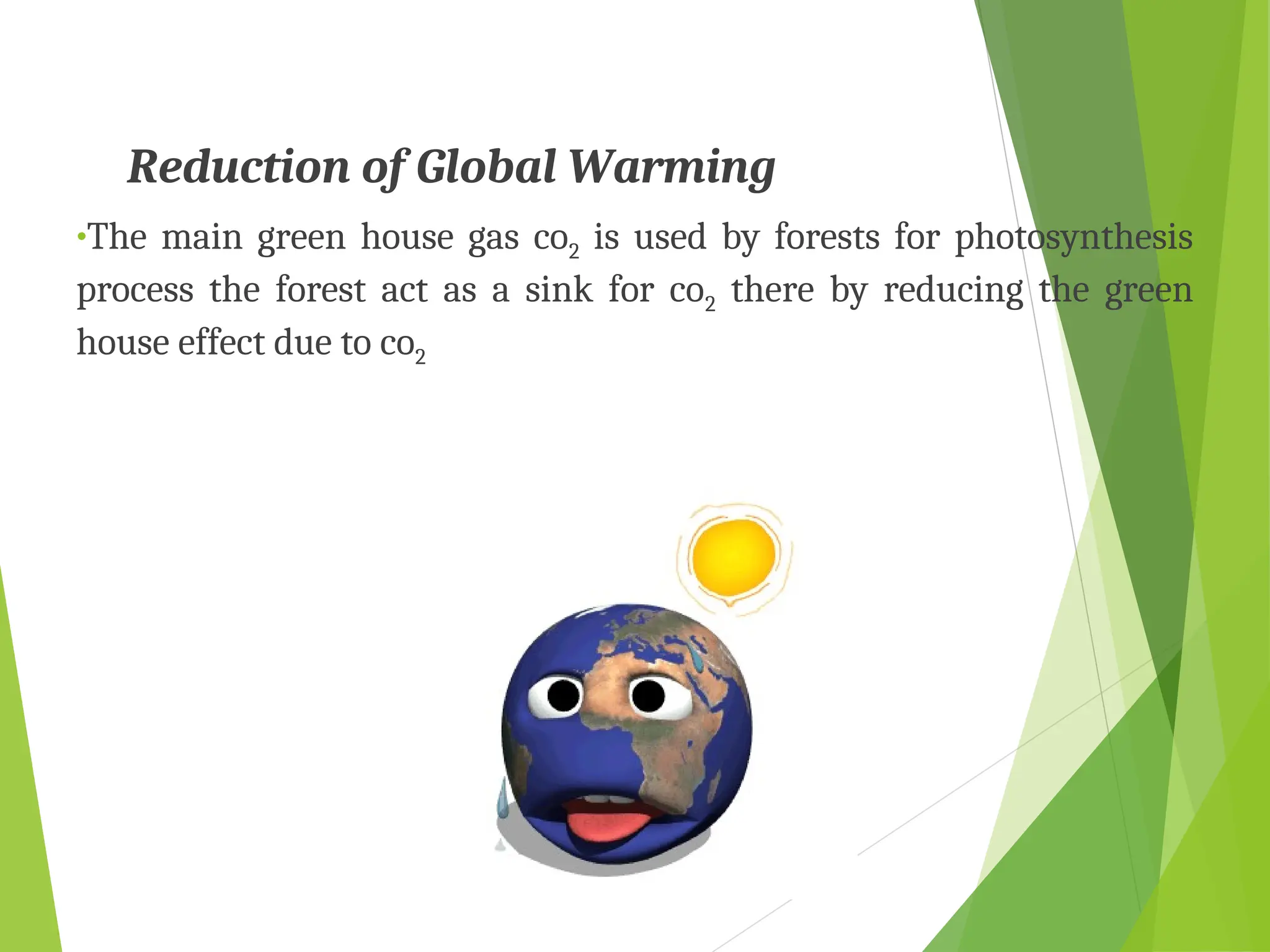
Reduction of GlobalWarming
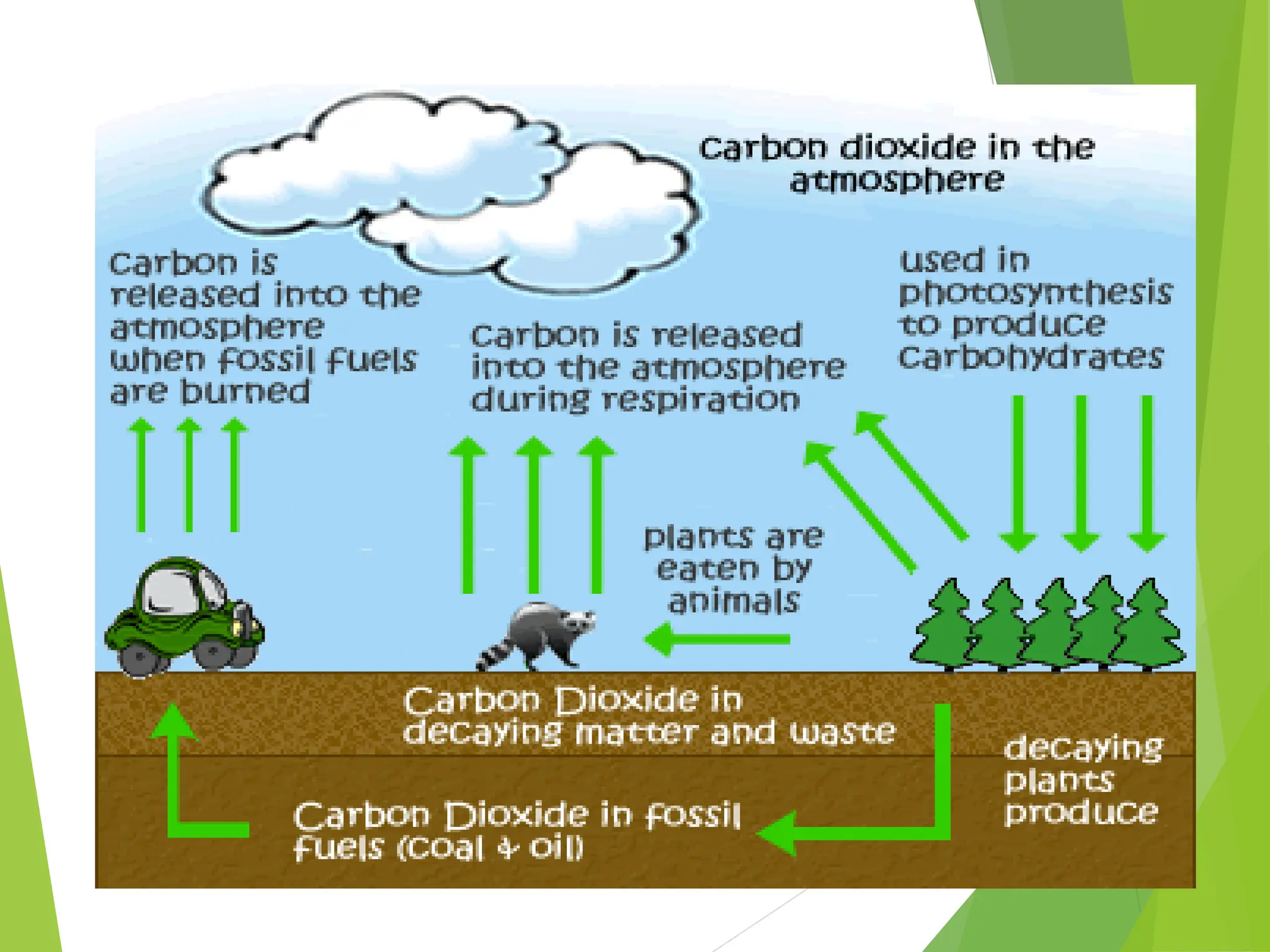
•The main green house gas co2 is used by forests for photosynthesis
process the forest act as a sink for co2 there by reducing the green
house effect due to co2
27.
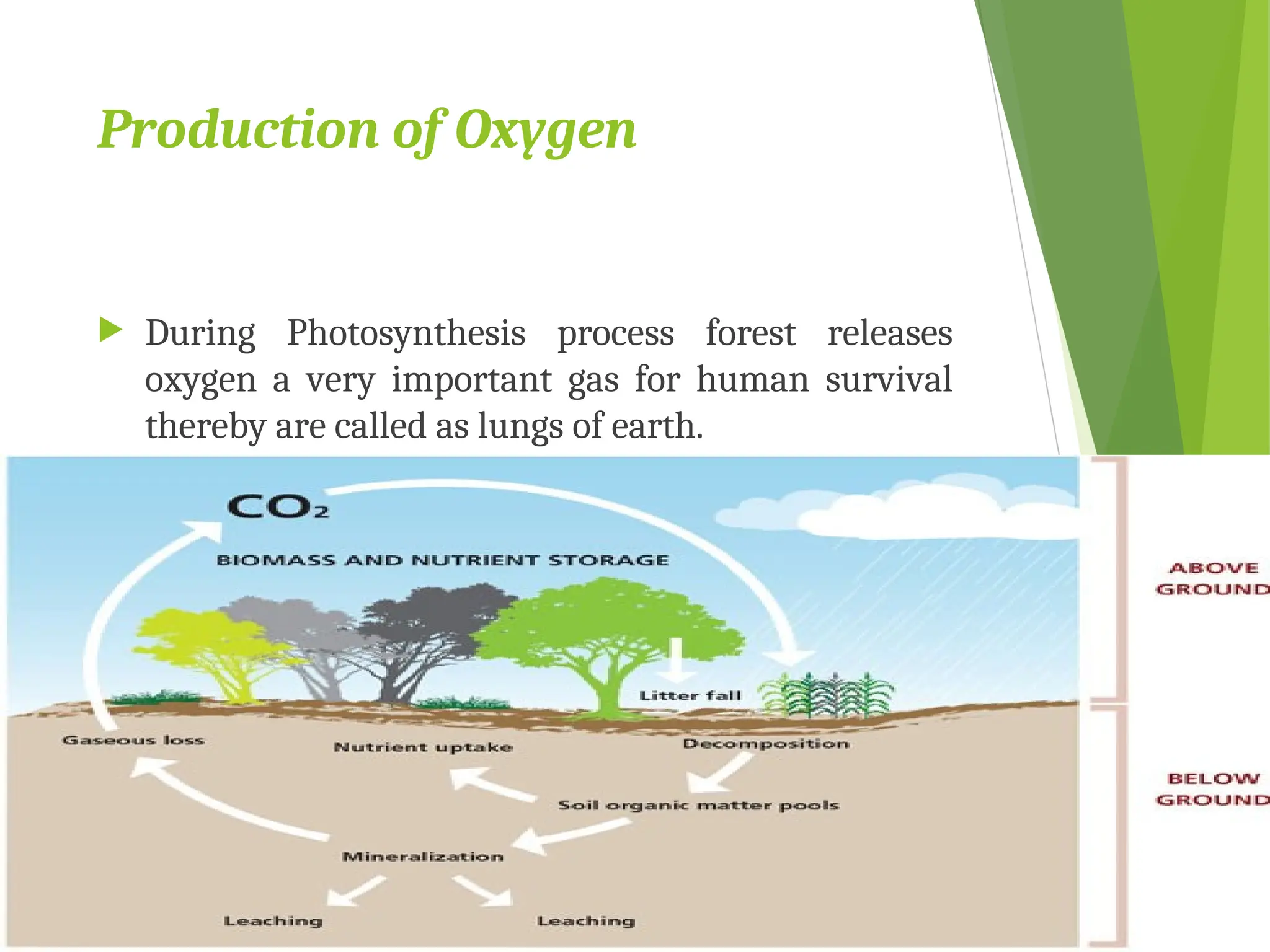
Production of Oxygen
During Photosynthesis process forest releases
oxygen a very important gas for human survival
thereby are called as lungs of earth.
28.
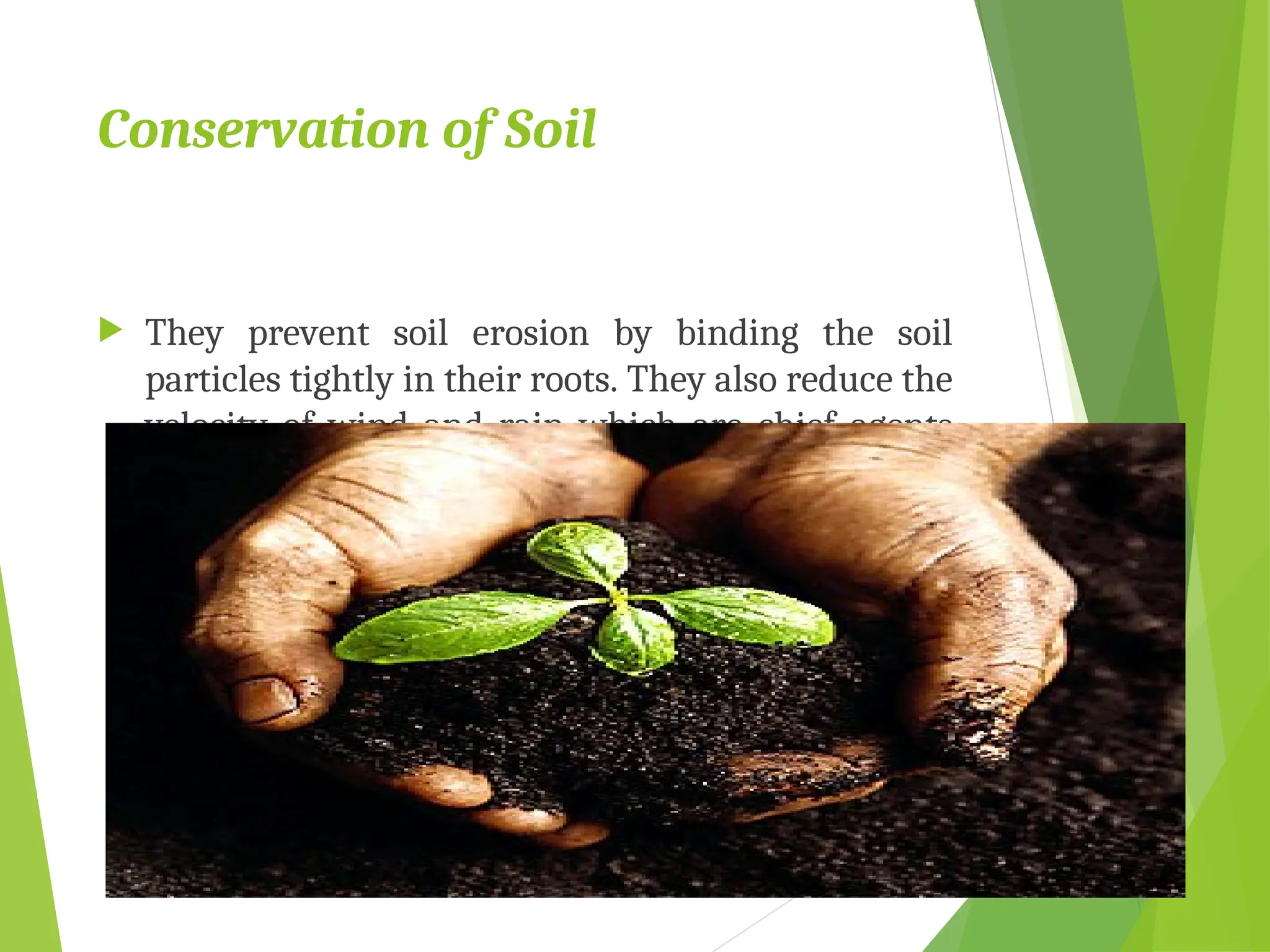
Conservation of Soil
They prevent soil erosion by binding the soil
particles tightly in their roots. They also reduce the
velocity of wind and rain which are chief agents
causing erosion
29.
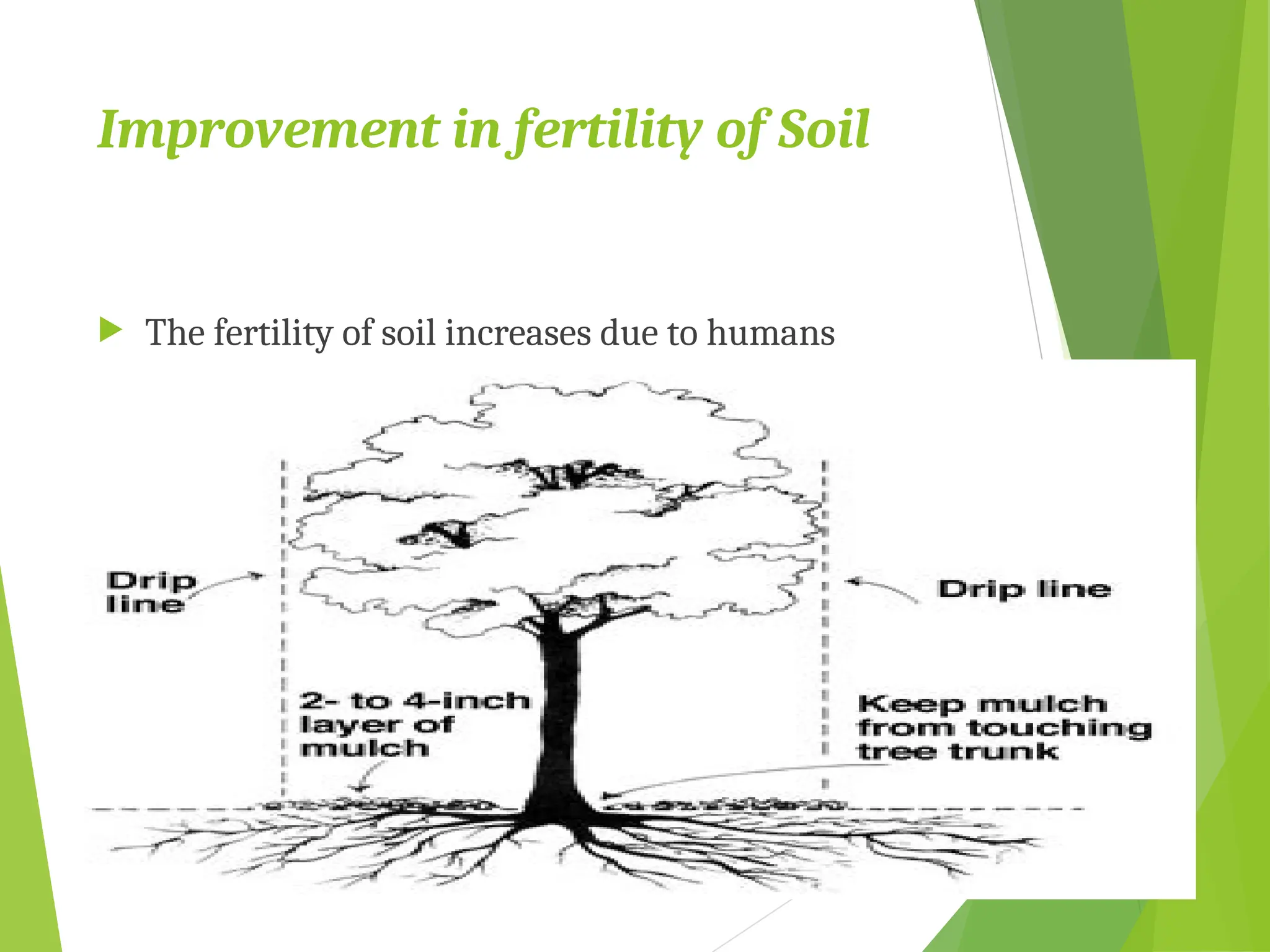
Improvement in fertilityof Soil
The fertility of soil increases due to humans
formed by the decay of forest litter
30.
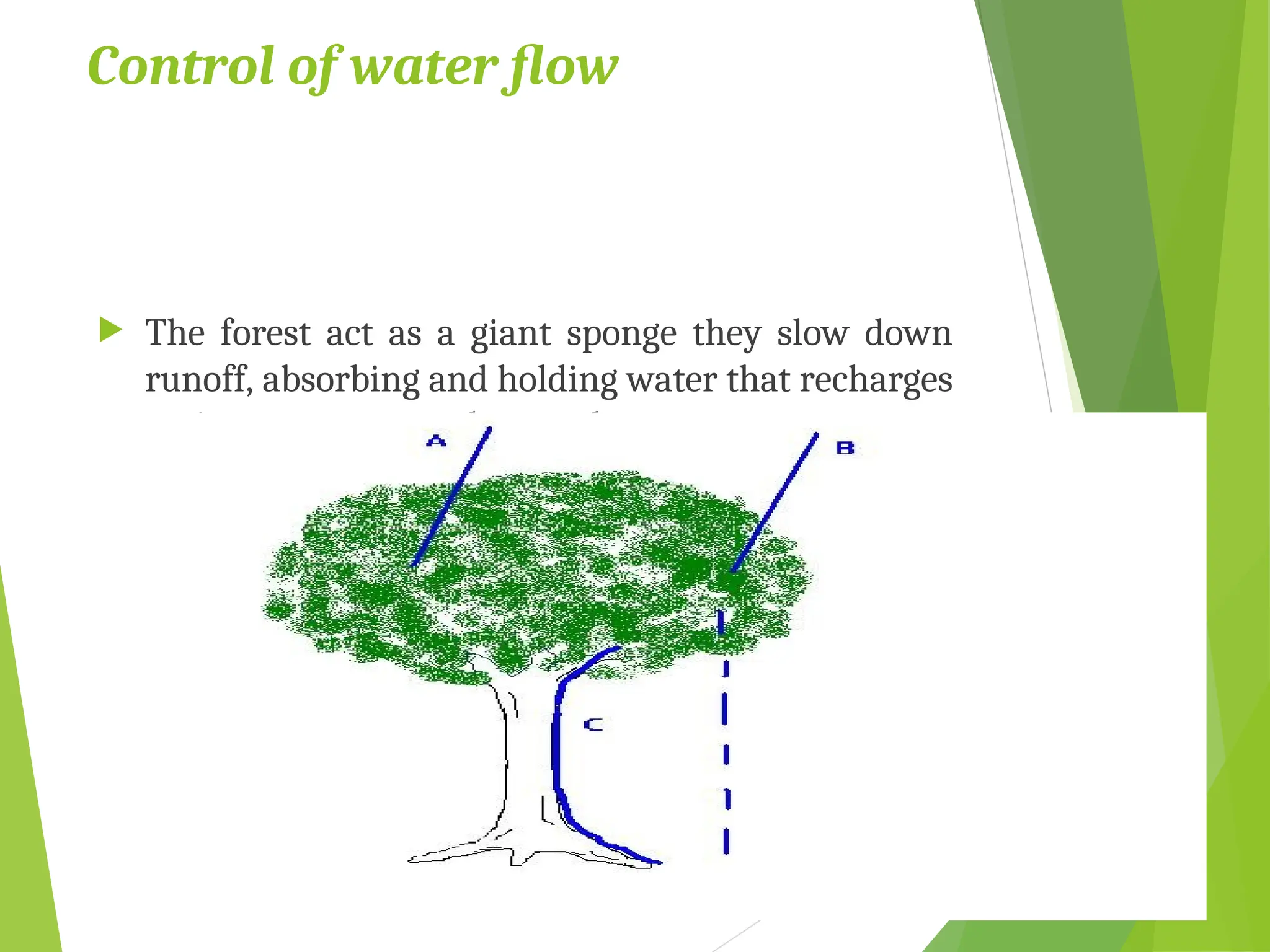
Control of waterflow
The forest act as a giant sponge they slow down
runoff, absorbing and holding water that recharges
springs, streams, and ground water.
31.
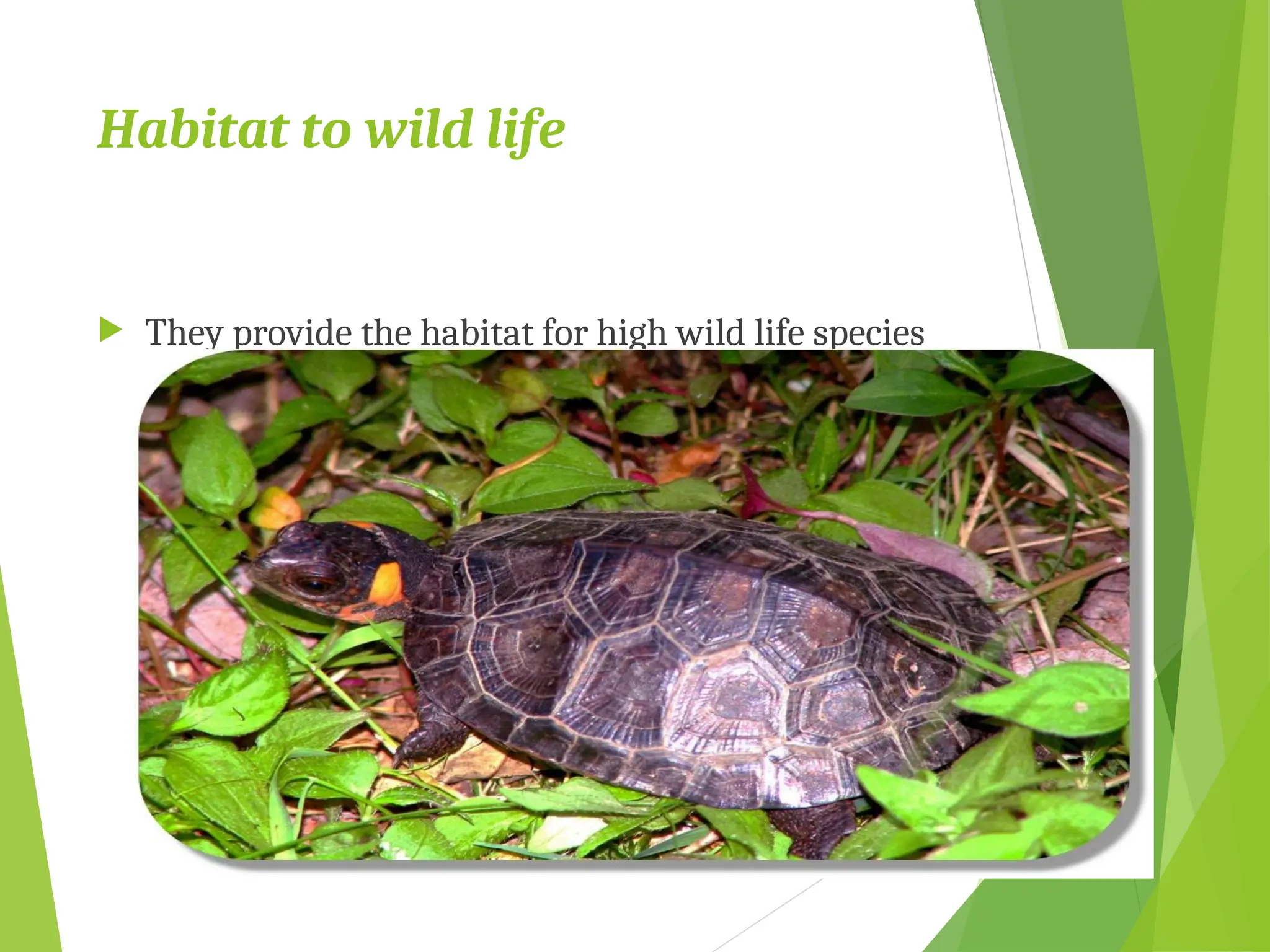
Habitat to wildlife
They provide the habitat for high wild life species
32.
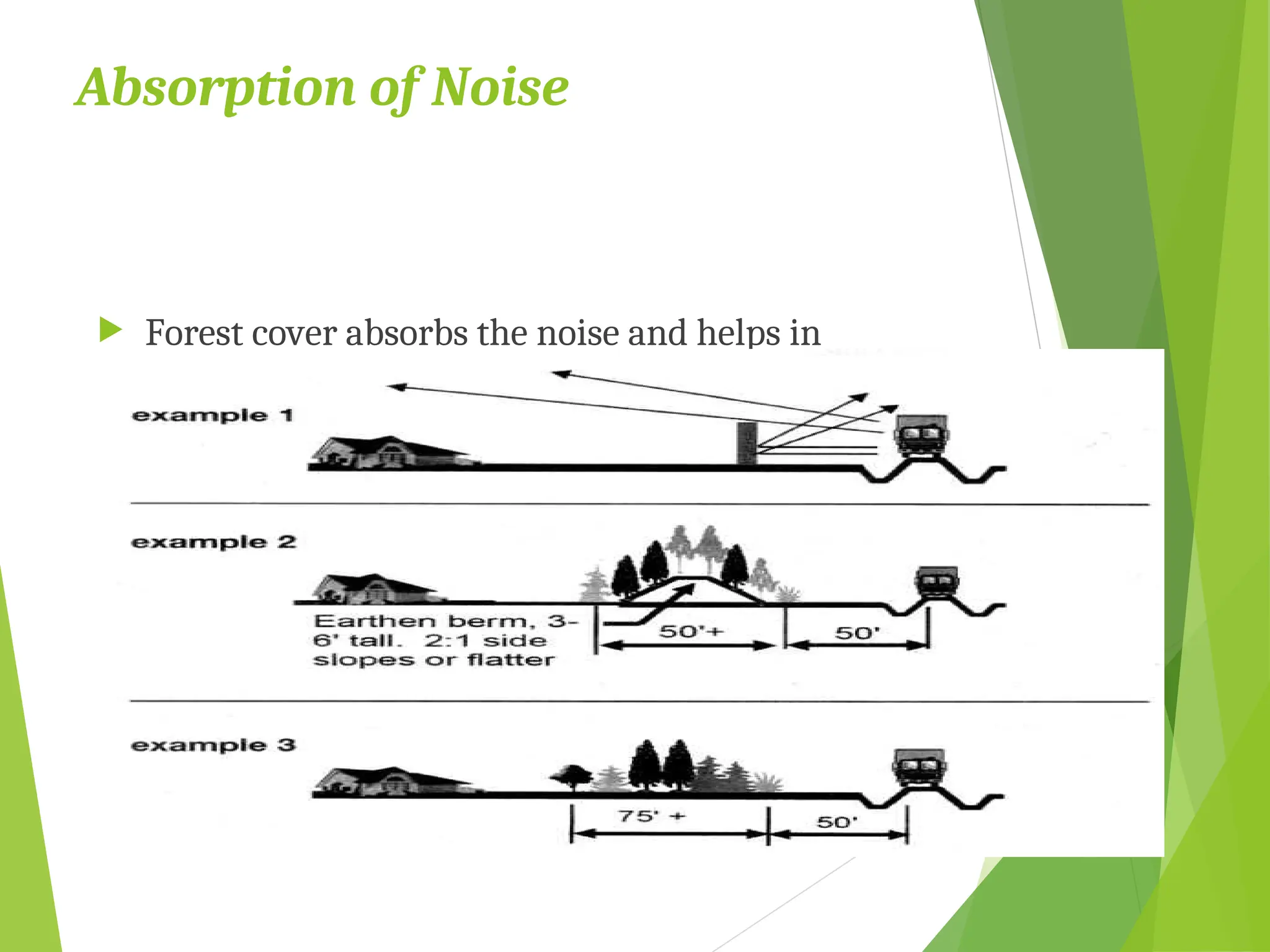
Absorption of Noise
Forest cover absorbs the noise and helps in
preventing noise pollution
33.
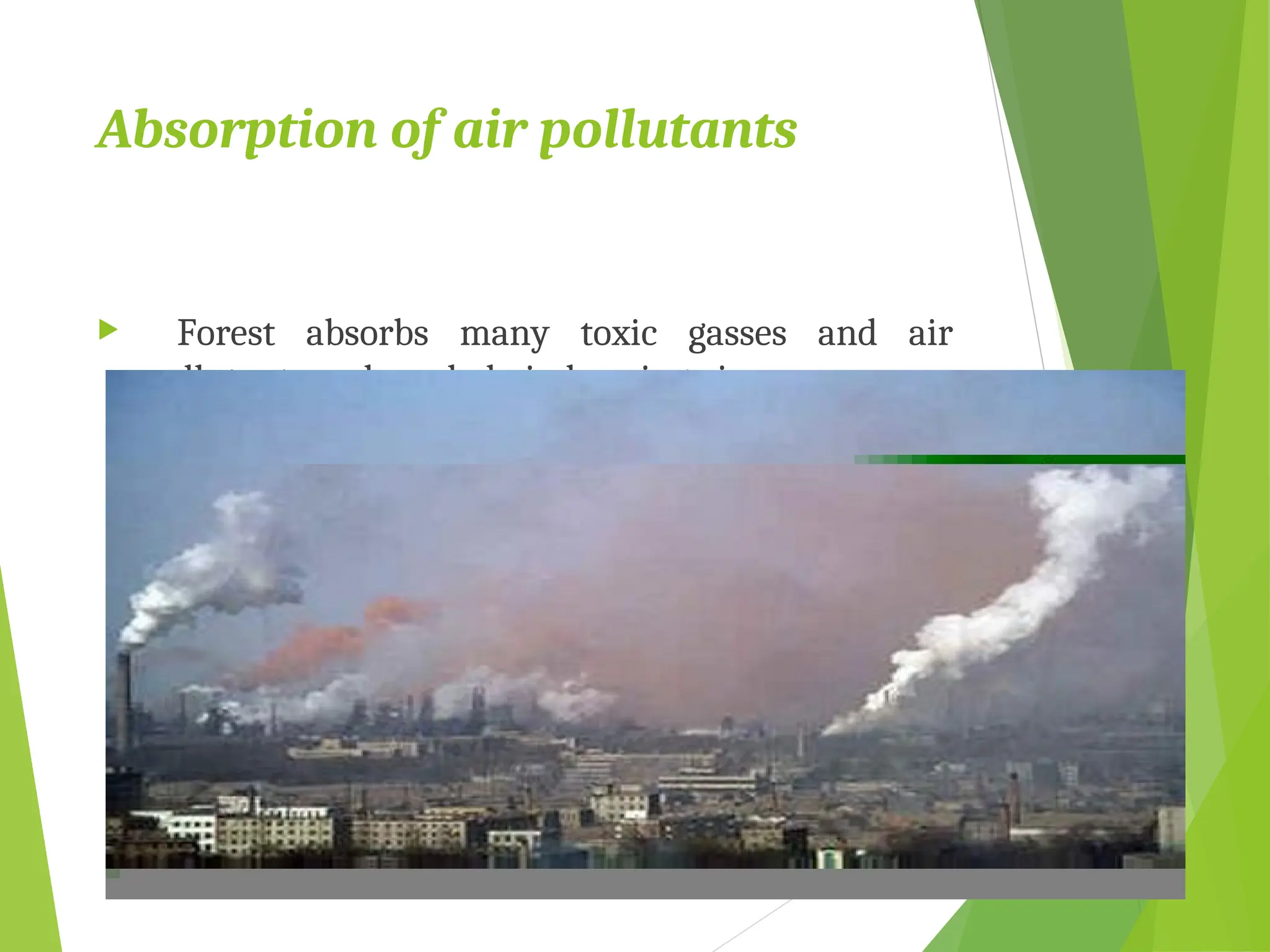
Absorption of airpollutants
Forest absorbs many toxic gasses and air
pollutants and can help in keeping air pure.
34.
Economical Importance of
Forest
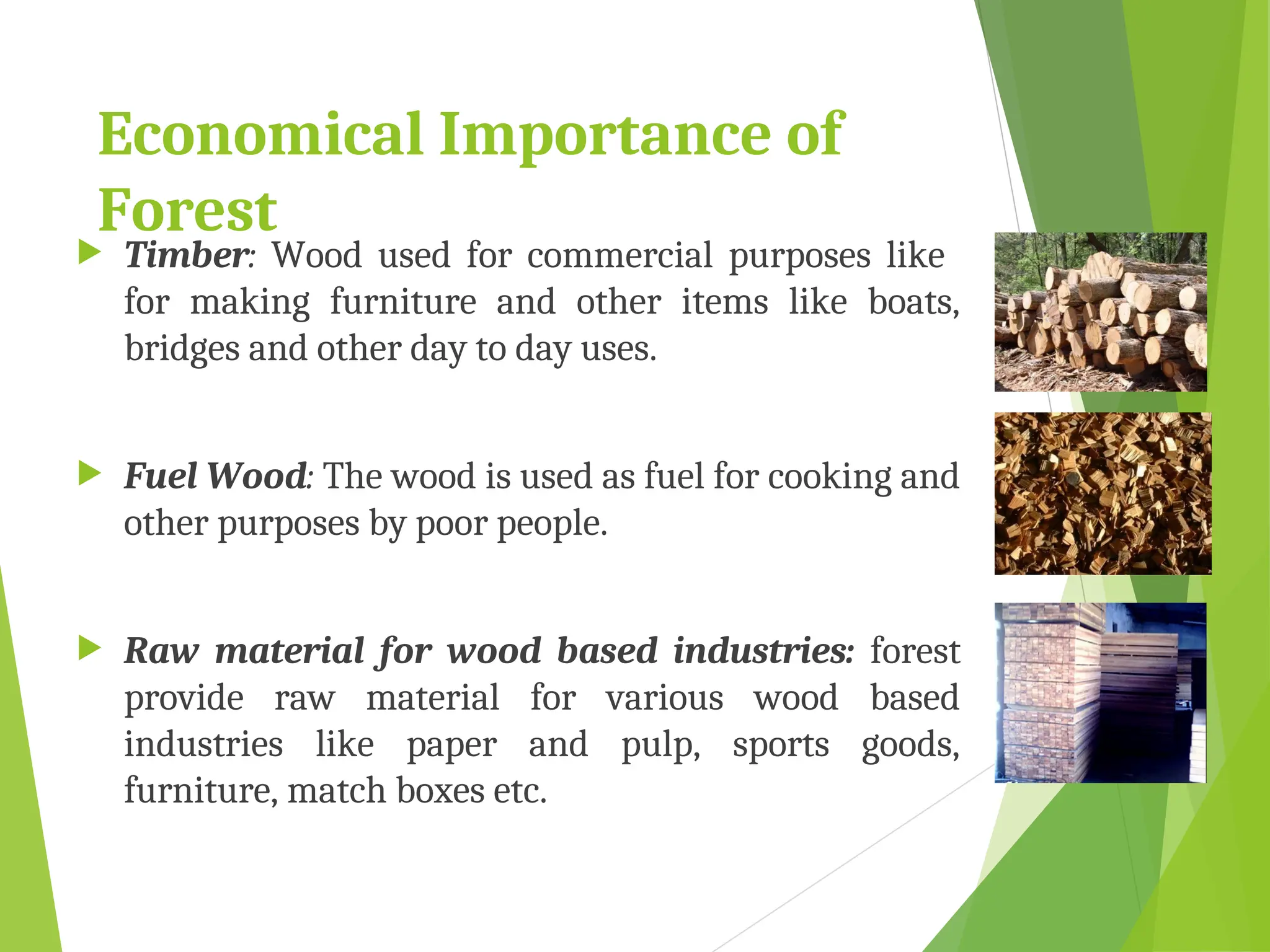
Timber: Wood used for commercial purposes like
for making furniture and other items like boats,
bridges and other day to day uses.
Fuel Wood: The wood is used as fuel for cooking and
other purposes by poor people.
Raw material for wood based industries: forest
provide raw material for various wood based
industries like paper and pulp, sports goods,
furniture, match boxes etc.
35.
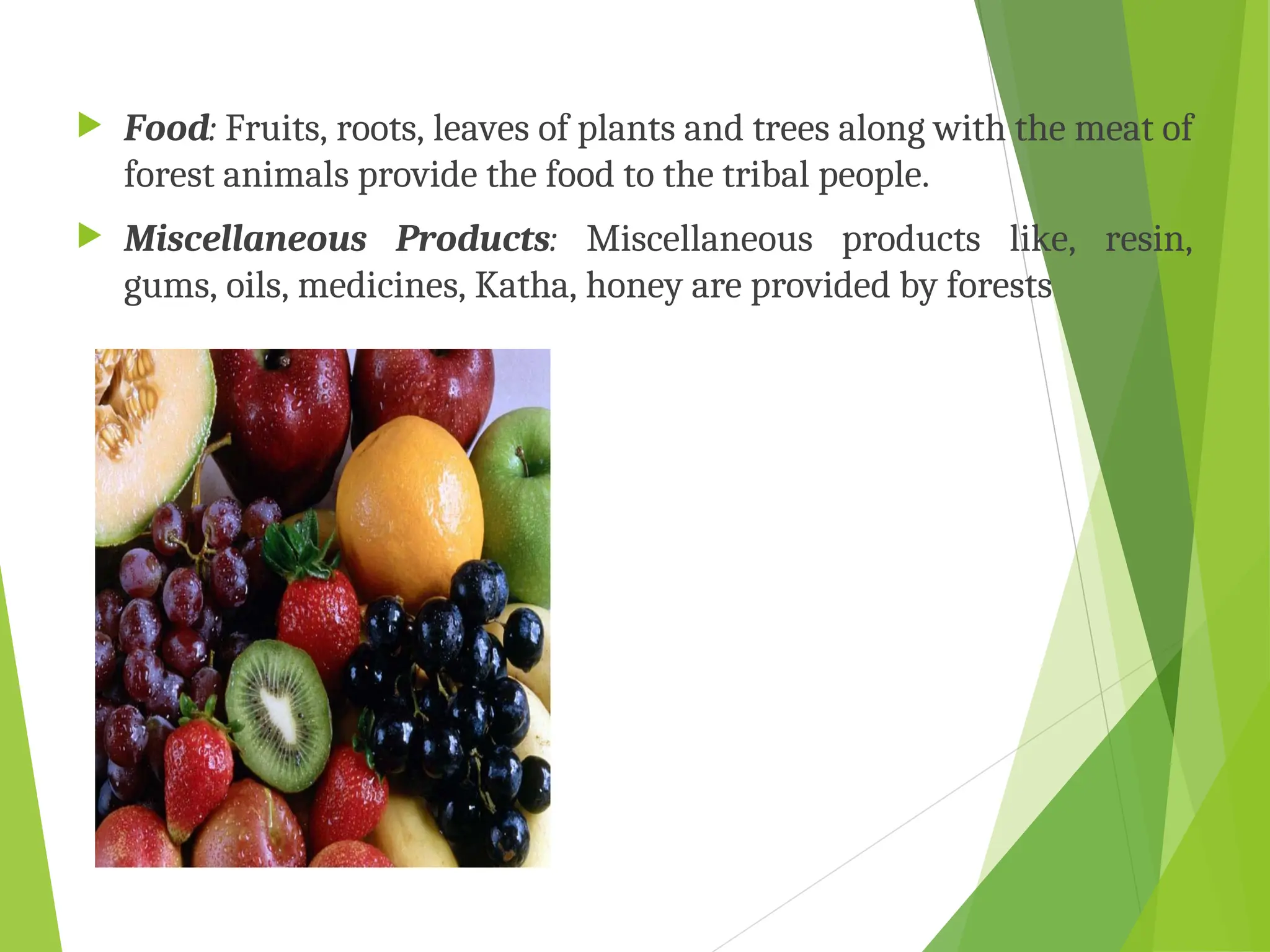
Food: Fruits,roots, leaves of plants and trees along with the meat of
forest animals provide the food to the tribal people.
Miscellaneous Products: Miscellaneous products like, resin,
gums, oils, medicines, Katha, honey are provided by forests
Types of Forestsin India
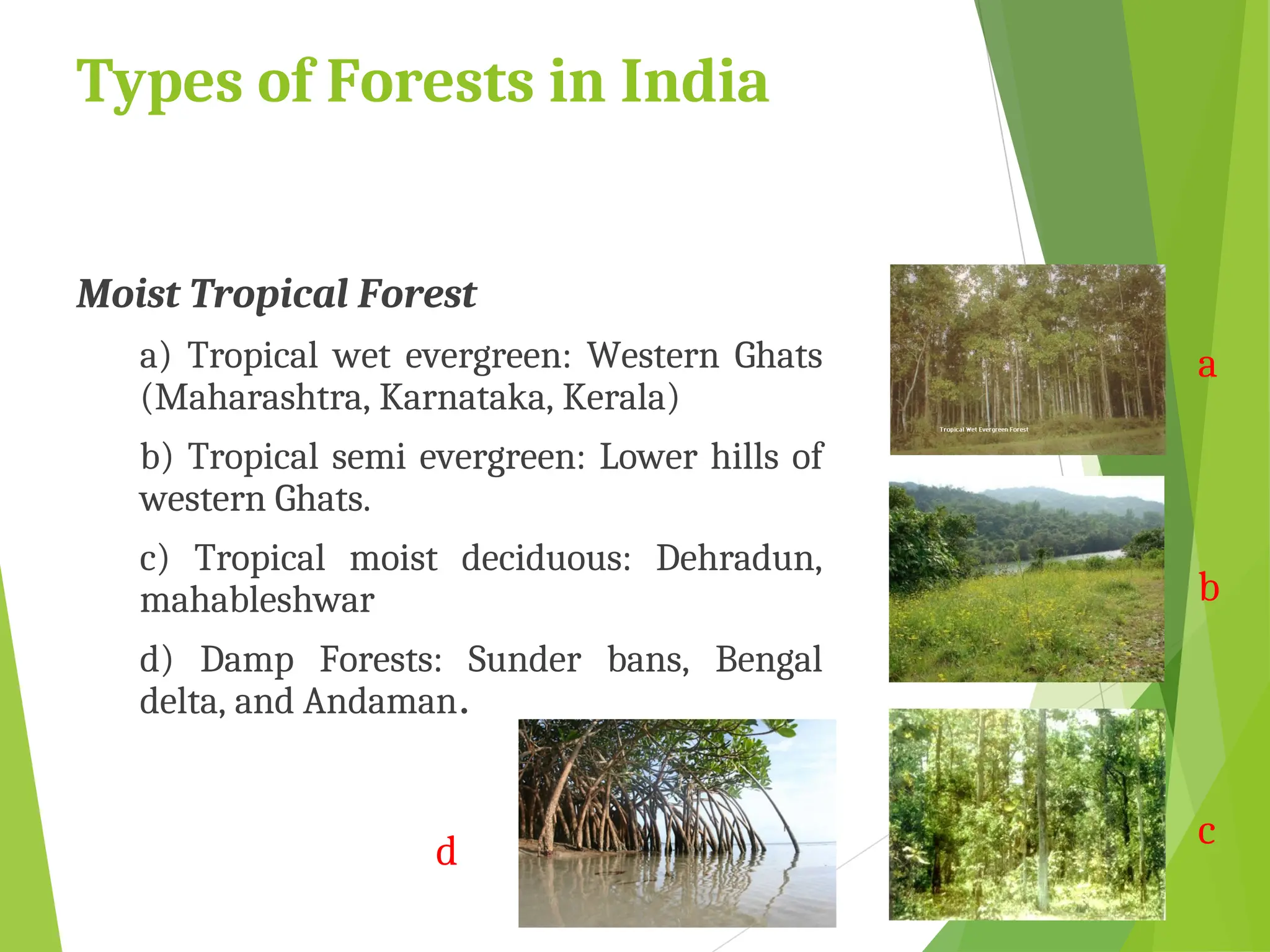
Moist Tropical Forest
a) Tropical wet evergreen: Western Ghats
(Maharashtra, Karnataka, Kerala)
b) Tropical semi evergreen: Lower hills of
western Ghats.
c) Tropical moist deciduous: Dehradun,
mahableshwar
d) Damp Forests: Sunder bans, Bengal
delta, and Andaman.
a
b
d
c
38.
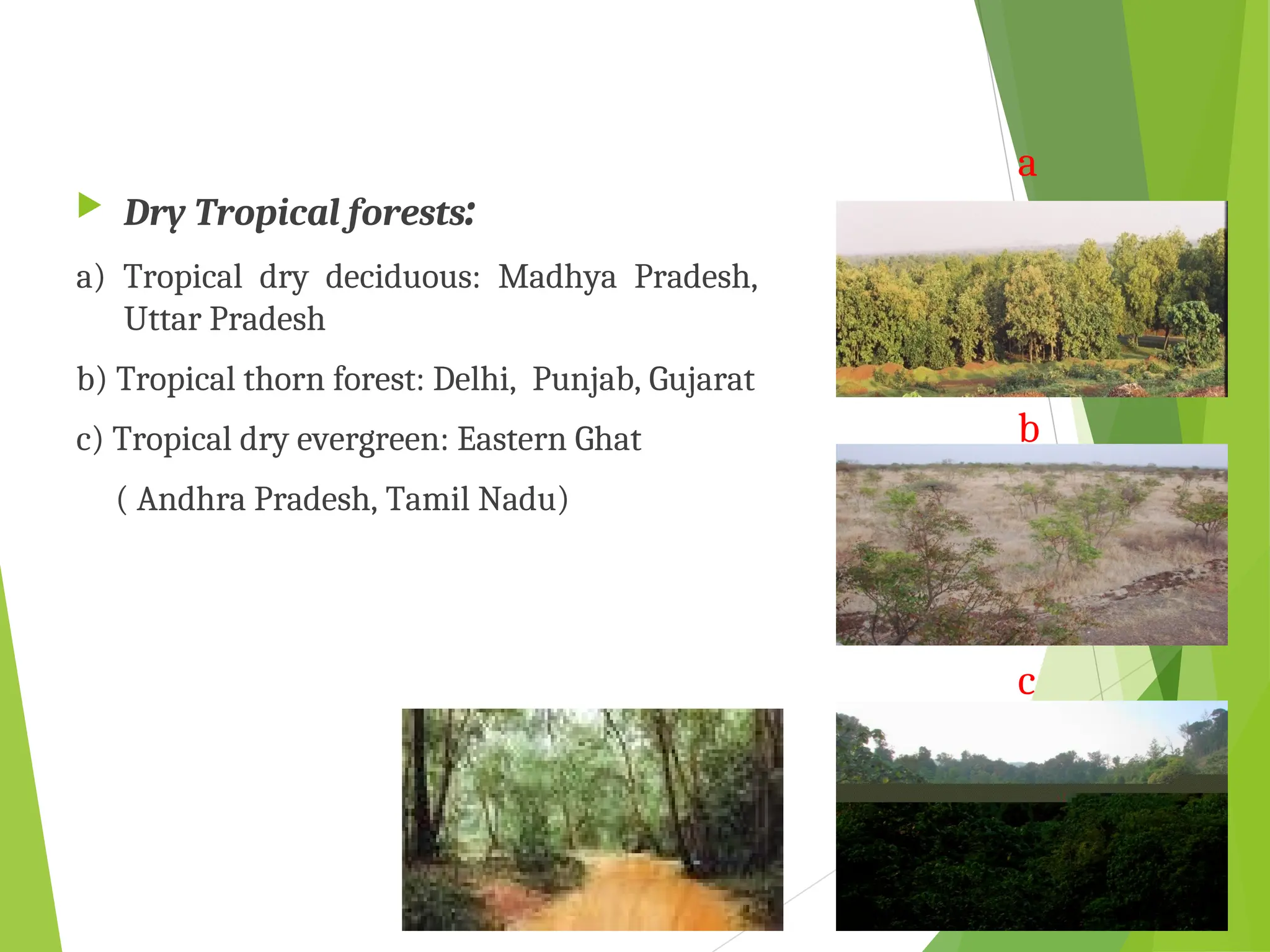
Dry Tropicalforests:
a) Tropical dry deciduous: Madhya Pradesh,
Uttar Pradesh
b) Tropical thorn forest: Delhi, Punjab, Gujarat
c) Tropical dry evergreen: Eastern Ghat
( Andhra Pradesh, Tamil Nadu)
a
b
c
39.
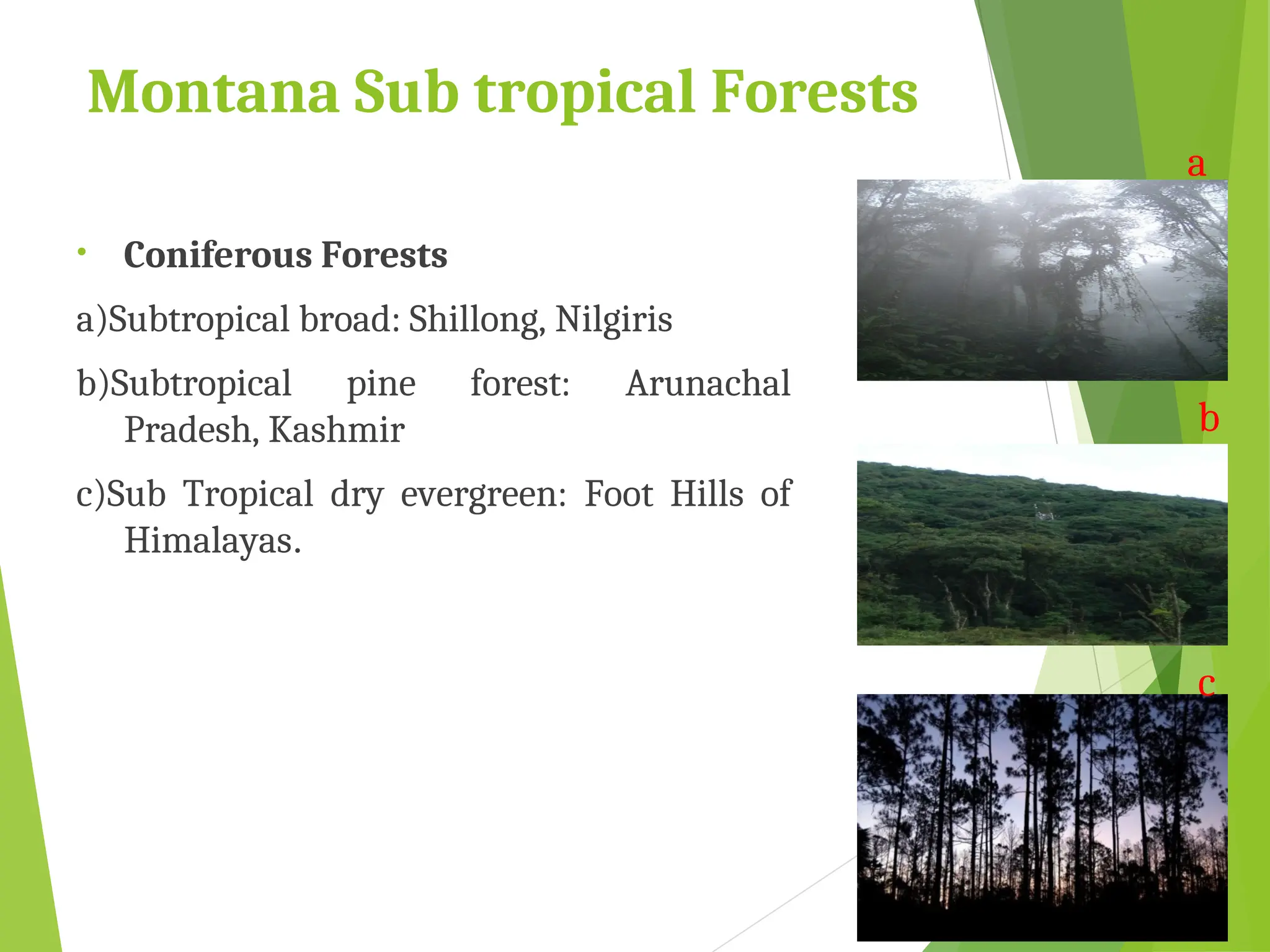
Montana Sub tropicalForests
• Coniferous Forests
a)Subtropical broad: Shillong, Nilgiris
b)Subtropical pine forest: Arunachal
Pradesh, Kashmir
c)Sub Tropical dry evergreen: Foot Hills of
Himalayas.
a
b
c
40.
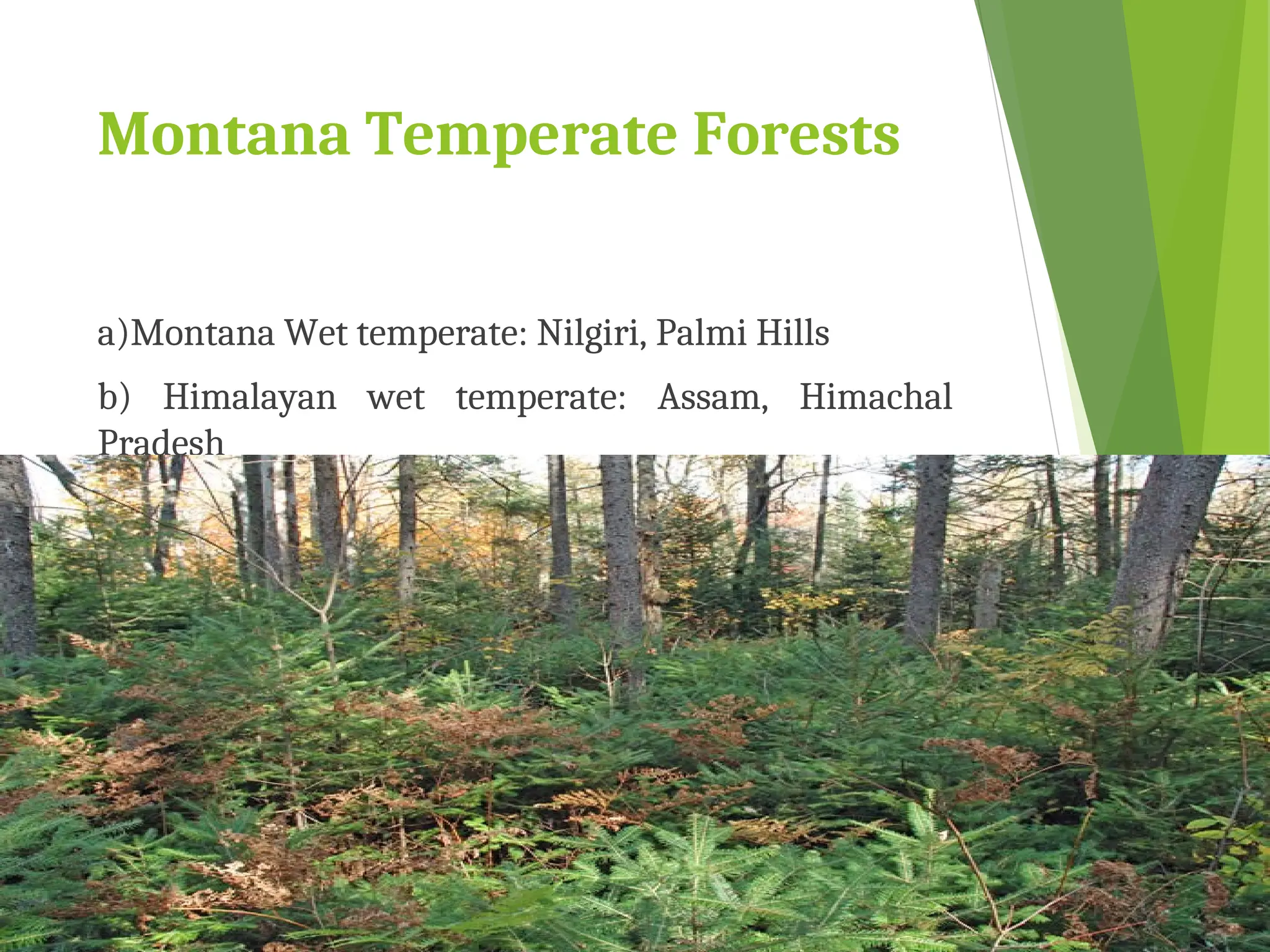
Montana Temperate Forests
a)MontanaWet temperate: Nilgiri, Palmi Hills
b) Himalayan wet temperate: Assam, Himachal
Pradesh
c) Himalayan dry temperate: Kashmir
Among the16 different forest types of the country, the most
common is
Tropical dry deciduous (38.7%)
Tropical moist deciduous (30.9%)
Tropical thorn (6.9 %)
These 3 types of tropical deciduous forests accounts for more than
76.5 % of forest area in India. Nearly 96 % of forests are owned by
government and, 2.6 % by corporate bodies and rest are in private
ownership.
43.
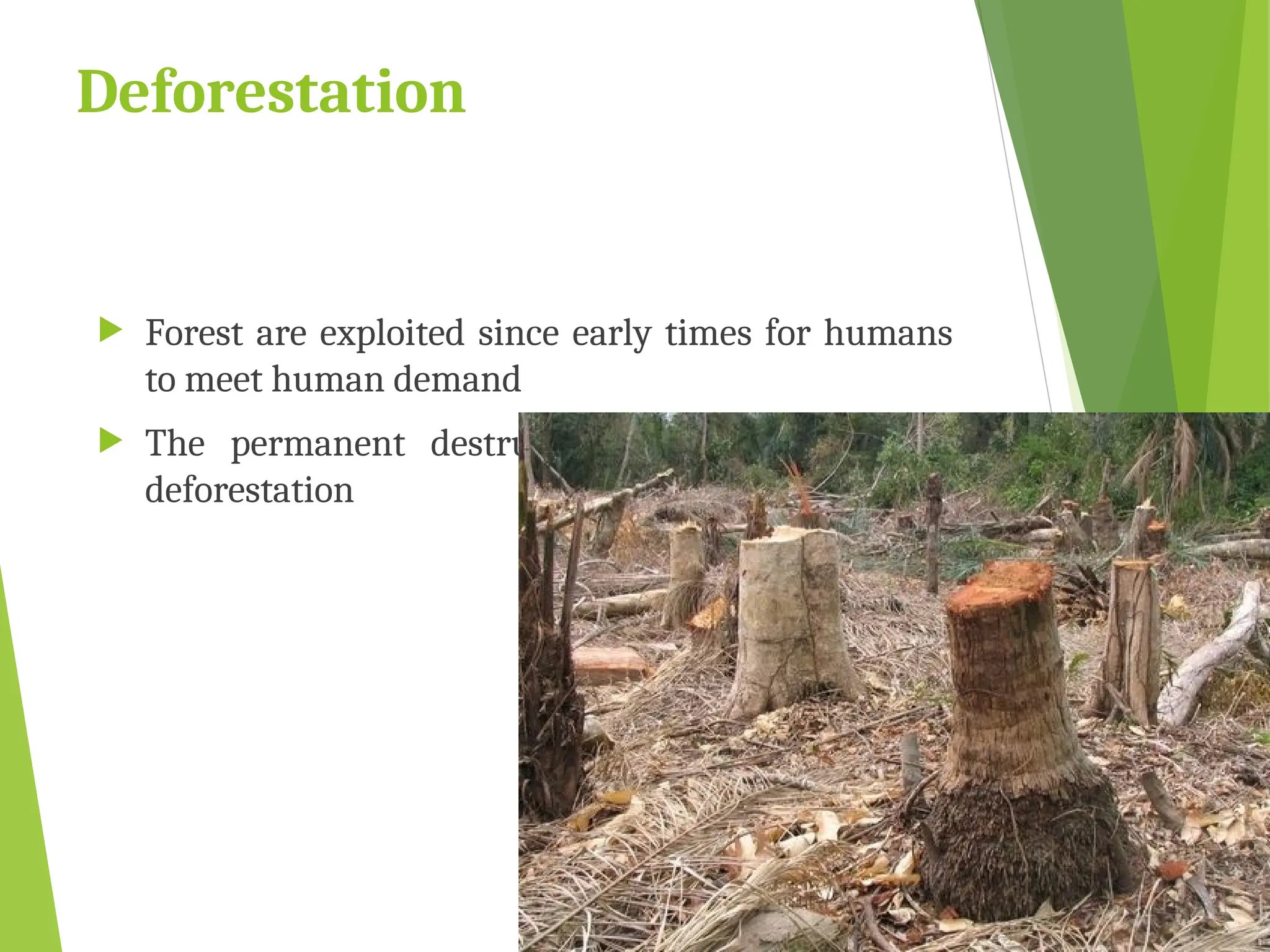
Deforestation
Forest areexploited since early times for humans
to meet human demand
The permanent destruction of forest is called
deforestation
44.
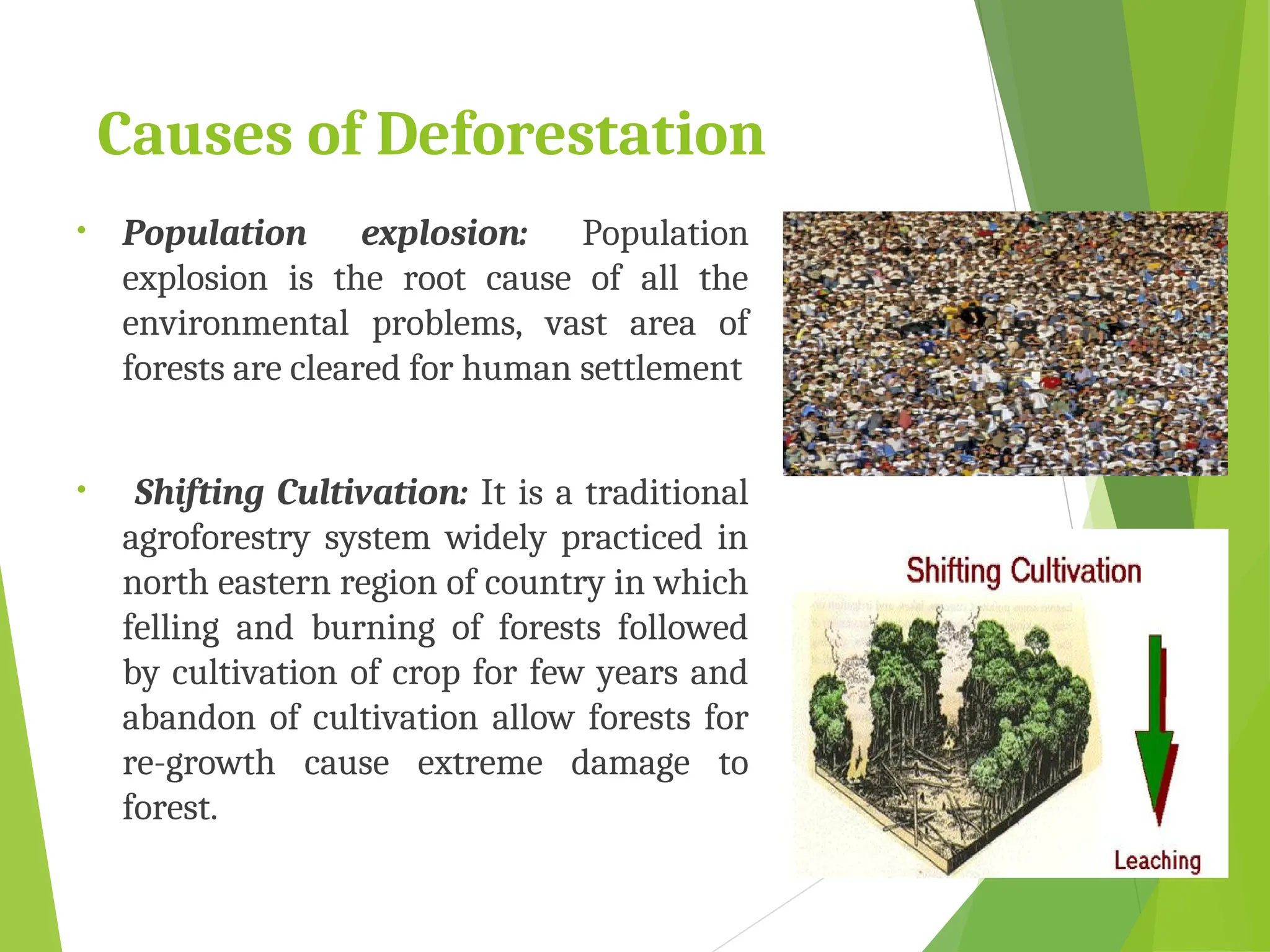
Causes of Deforestation
•Population explosion: Population
explosion is the root cause of all the
environmental problems, vast area of
forests are cleared for human settlement
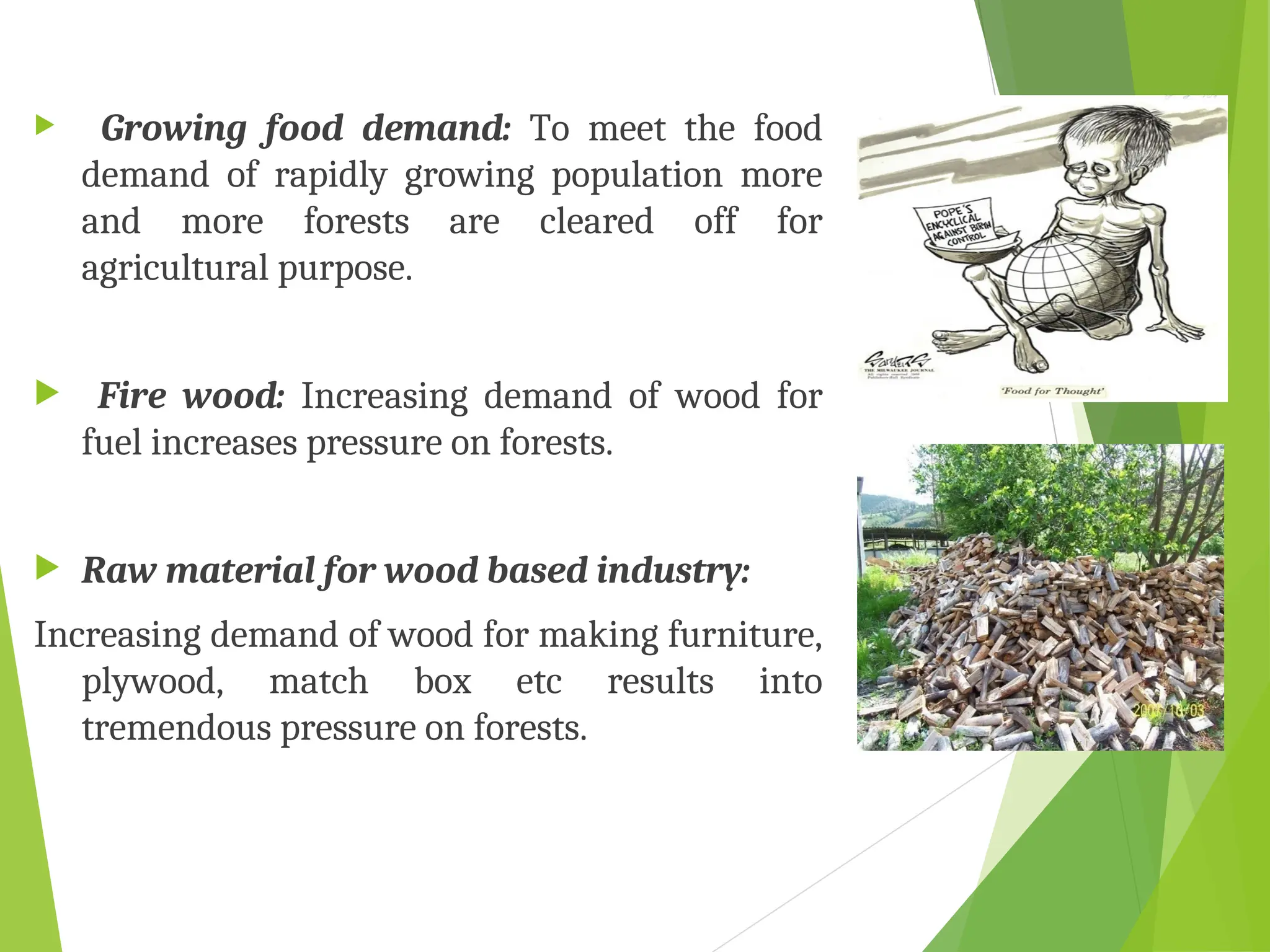
• Shifting Cultivation: It is a traditional
agroforestry system widely practiced in
north eastern region of country in which
felling and burning of forests followed
by cultivation of crop for few years and
abandon of cultivation allow forests for
re-growth cause extreme damage to
forest.
45.
Growing fooddemand: To meet the food
demand of rapidly growing population more
and more forests are cleared off for
agricultural purpose.
Fire wood: Increasing demand of wood for
fuel increases pressure on forests.
Raw material for wood based industry:
Increasing demand of wood for making furniture,
plywood, match box etc results into
tremendous pressure on forests.
46.
Infrastructure development:Massive
destruction of forest occurs for various
infrastructure development like, big
dams, highways projects etc.
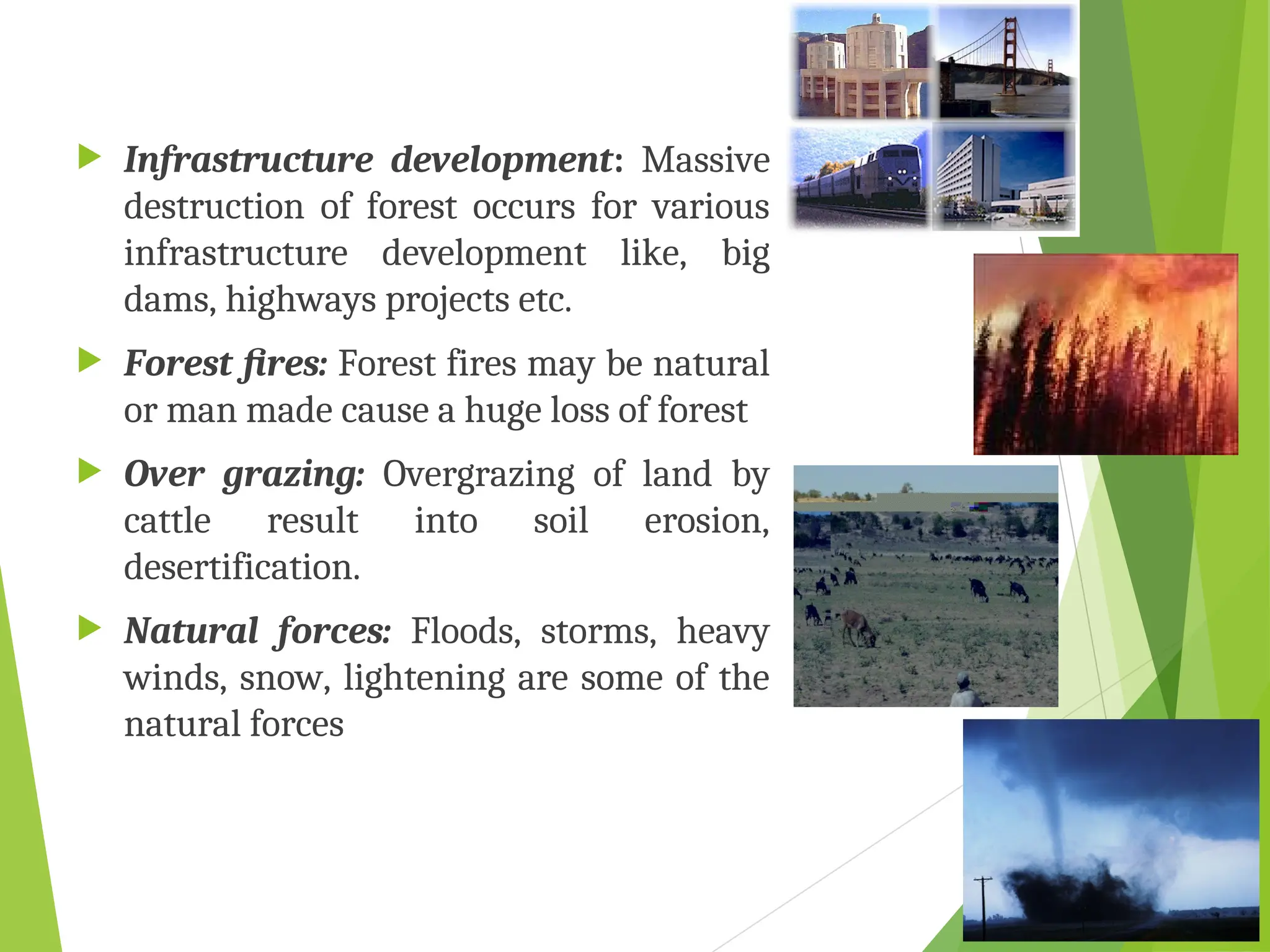
Forest fires: Forest fires may be natural
or man made cause a huge loss of forest
Over grazing: Overgrazing of land by
cattle result into soil erosion,
desertification.
Natural forces: Floods, storms, heavy
winds, snow, lightening are some of the
natural forces
47.
Effects of Deforestation
Deforestation adversely affects and
damages the environment
The adverse effect of deforestation are
discussed below:
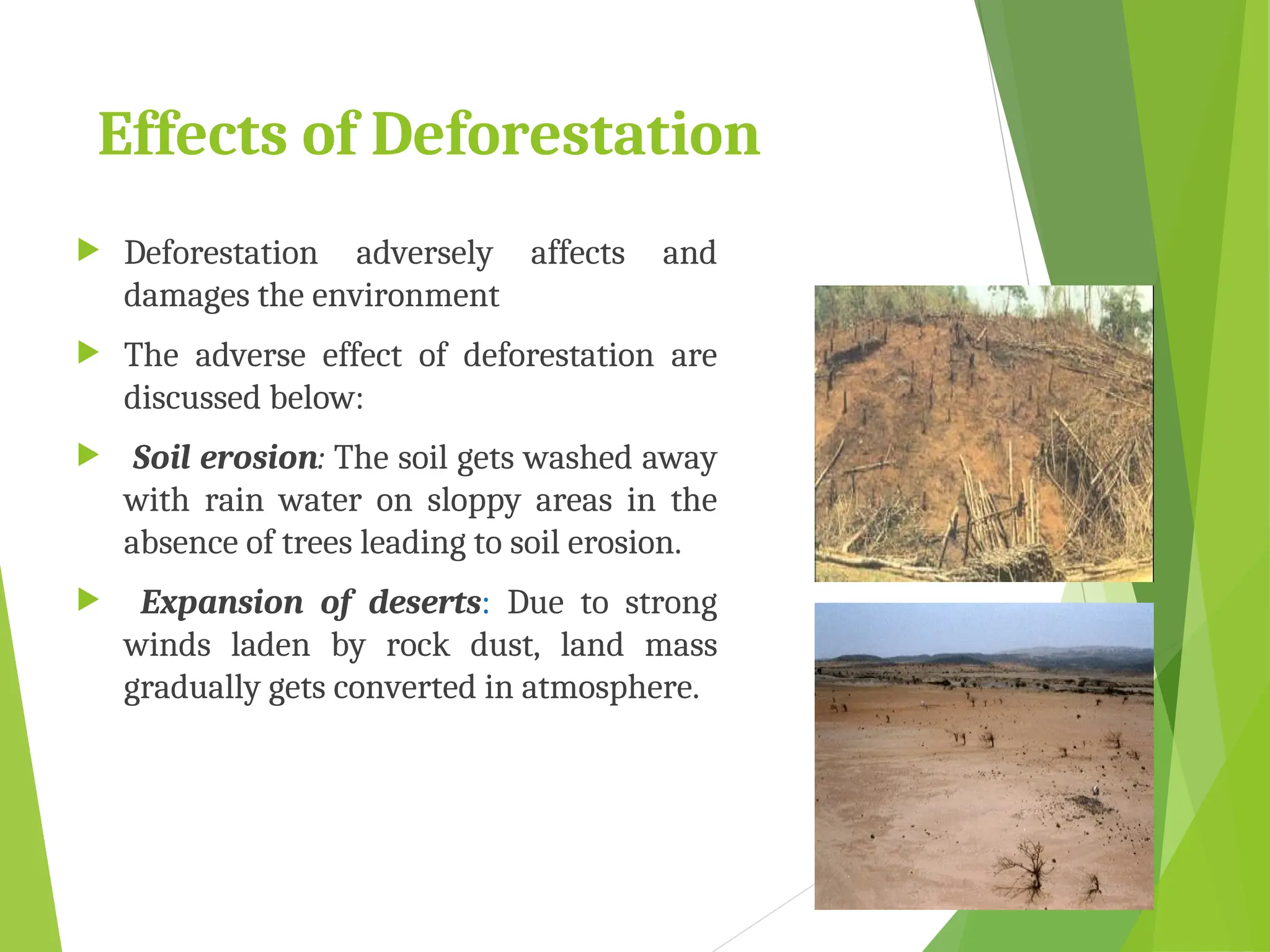
Soil erosion: The soil gets washed away
with rain water on sloppy areas in the
absence of trees leading to soil erosion.
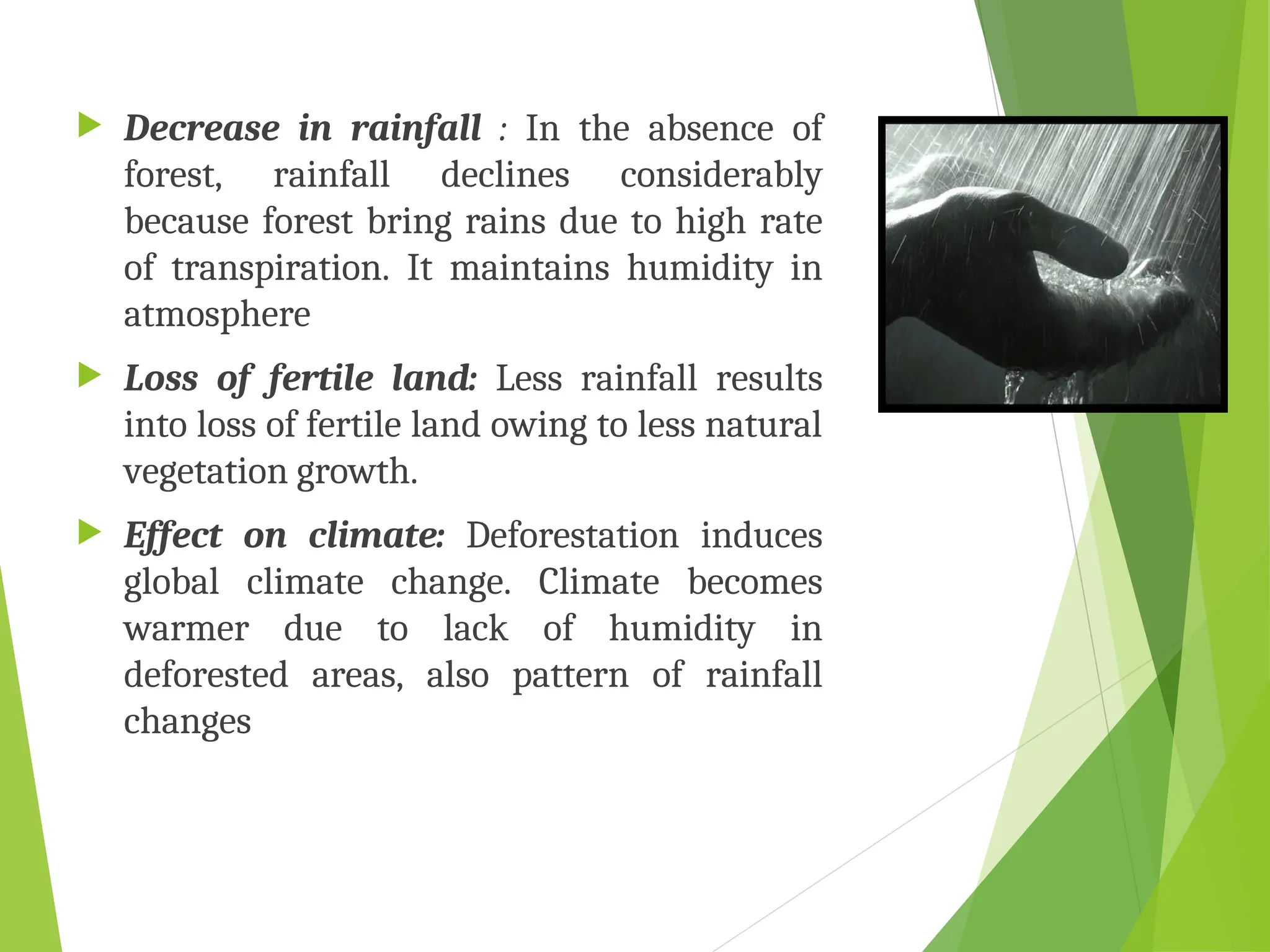
Expansion of deserts: Due to strong
winds laden by rock dust, land mass
gradually gets converted in atmosphere.
48.
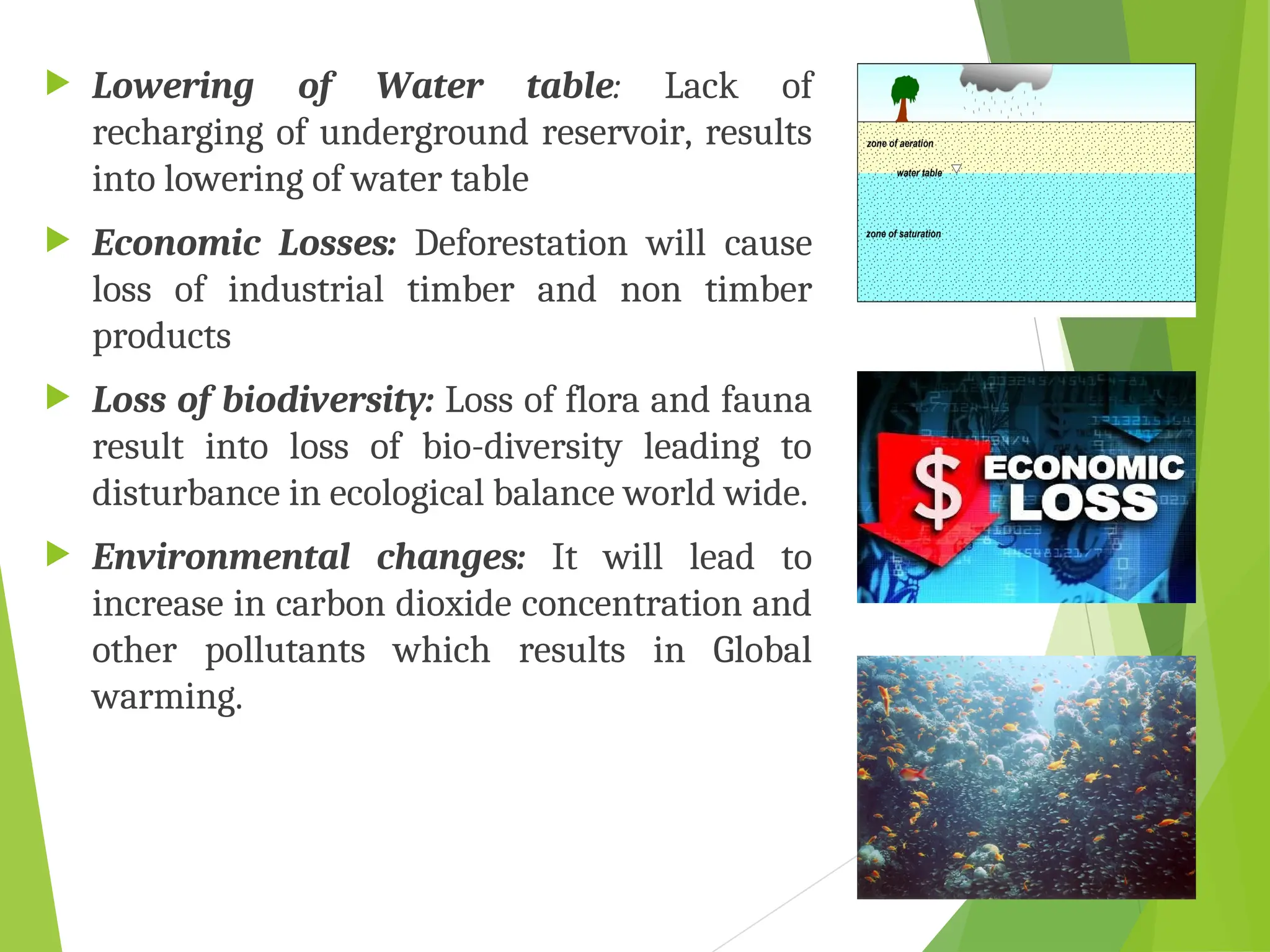
Decrease inrainfall : In the absence of
forest, rainfall declines considerably
because forest bring rains due to high rate
of transpiration. It maintains humidity in
atmosphere
Loss of fertile land: Less rainfall results
into loss of fertile land owing to less natural
vegetation growth.
Effect on climate: Deforestation induces
global climate change. Climate becomes
warmer due to lack of humidity in
deforested areas, also pattern of rainfall
changes
49.
Lowering ofWater table: Lack of
recharging of underground reservoir, results
into lowering of water table
Economic Losses: Deforestation will cause
loss of industrial timber and non timber
products
Loss of biodiversity: Loss of flora and fauna
result into loss of bio-diversity leading to
disturbance in ecological balance world wide.
Environmental changes: It will lead to
increase in carbon dioxide concentration and
other pollutants which results in Global
warming.
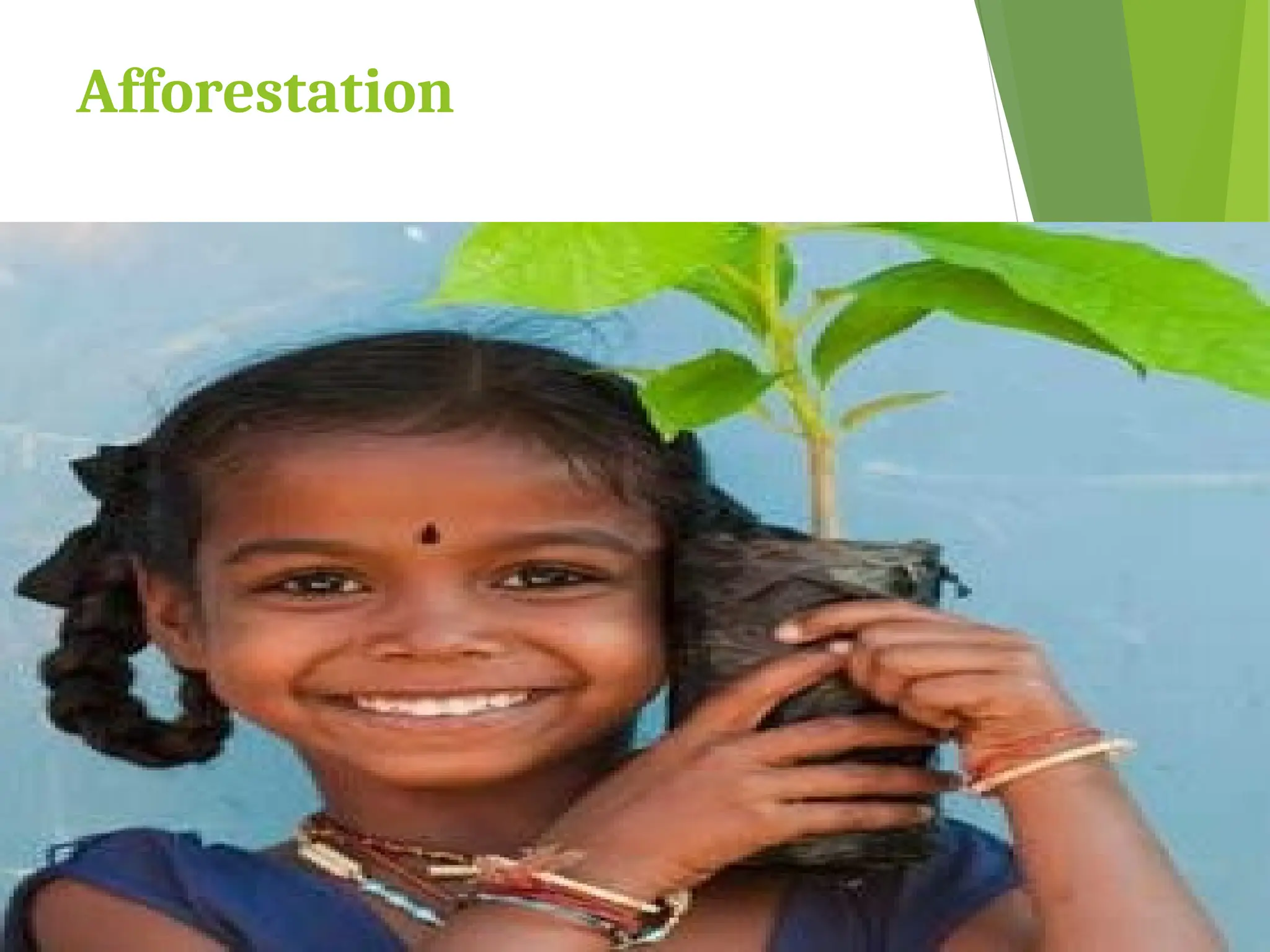
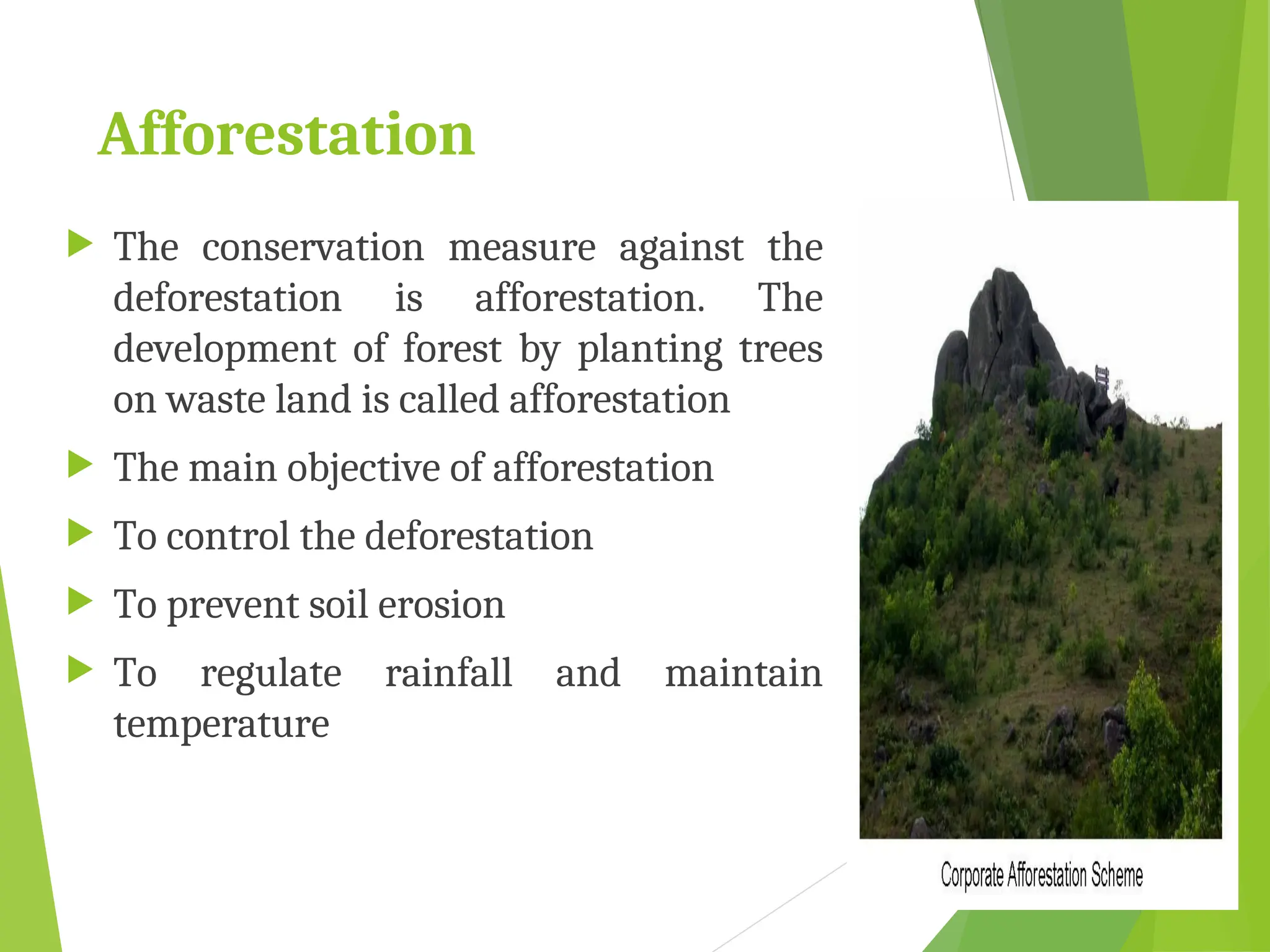
Afforestation
The conservationmeasure against the
deforestation is afforestation. The
development of forest by planting trees
on waste land is called afforestation
The main objective of afforestation
To control the deforestation
To prevent soil erosion
To regulate rainfall and maintain
temperature
52.
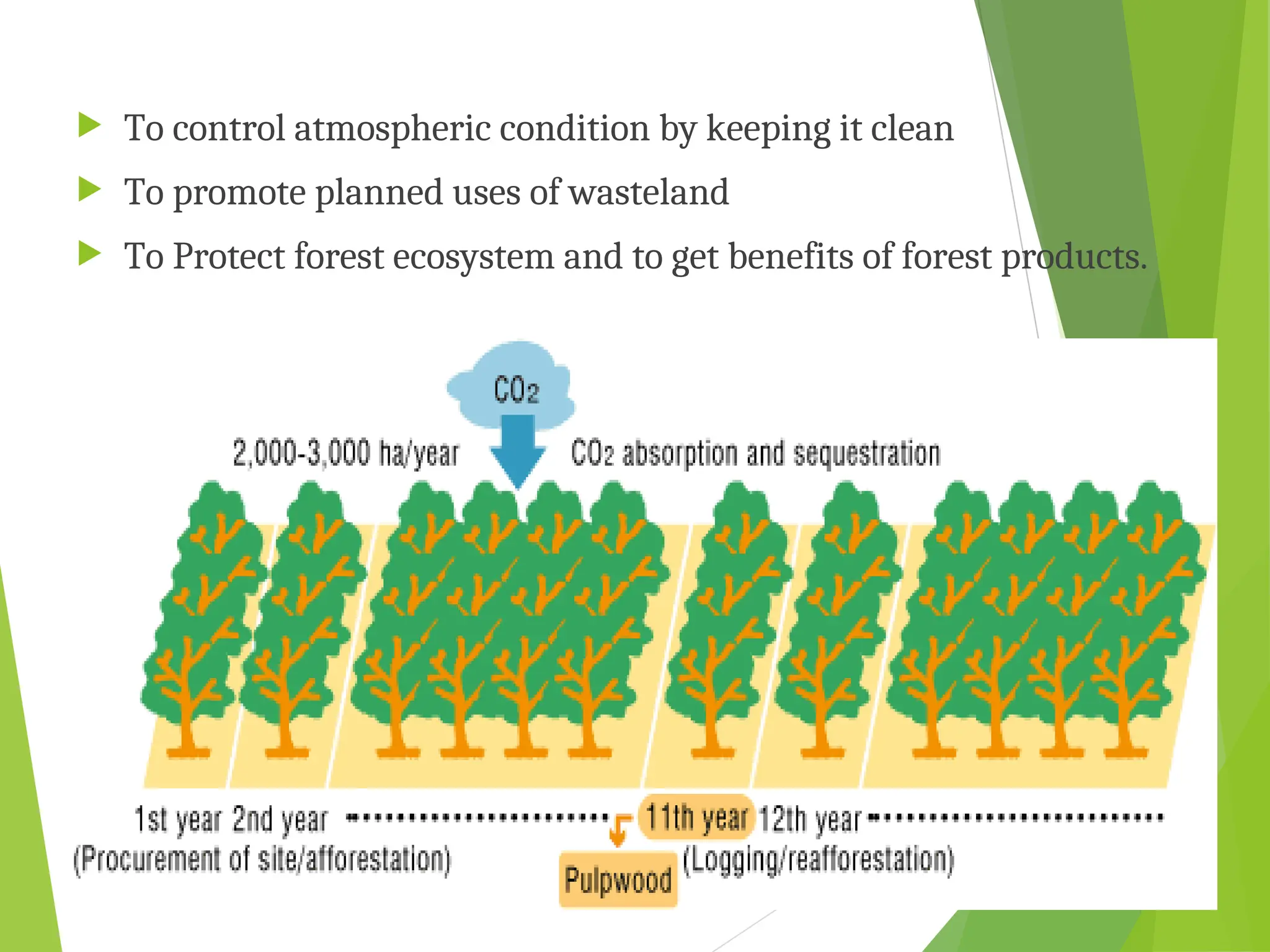
To controlatmospheric condition by keeping it clean
To promote planned uses of wasteland
To Protect forest ecosystem and to get benefits of forest products.
53.
Forest Degradation in
India
At the beginning of 20th
century about 30 % of land in India
was covered with forests but by the end of 20th
century the
forest cover was reduced to 19.4%
As a result of exploitation, the tropical forest cover in India,
is now only reduced to coastal western Ghats and northern
India
We have a huge population size and a very low precipitate
forest area 0.075 Ha per capita as compared to 0.64 ha/
capita of world forest area
54.
The Nationalforest policy has recommended 33 % forest area for
plains and 67 % for hills
The deforestation rate per unit population in India is lowest among
the major tropical countries
For effective forest management of country we have to take the
confidence of tribal who have been living in forest.
55.
Dams and theireffects on Forest
and Tribal People
When a dam is constructed across any river a huge artificial
lake is developed in the catchment area of that dam. It is also
known as back waters. The backwaters covering a large
surface area. Create a lot of ill-effects on the living
environment. They are as follows:
It creates the loss of forest which are submerged under the
back waters of the dam.
It creates danger to the habitat of the wild life. The wild life
are forced to migrate.
It also affects the land under cultivation, in the catchment area
as the crops get submerged under water.
The roads, already in existence are put under water after the
construction of dam. So the road network is damaged.
56.
Activity
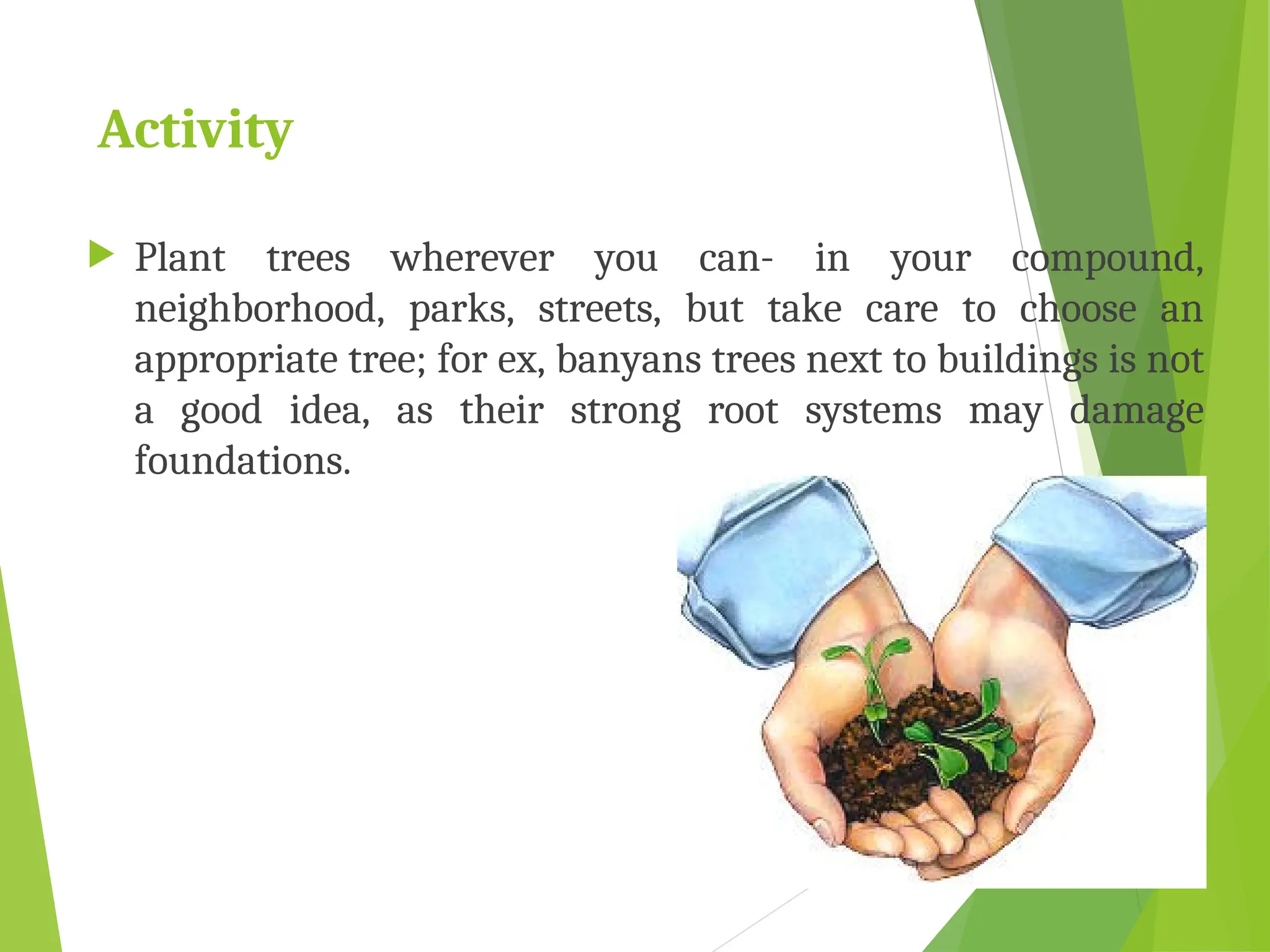
Plant treeswherever you can- in your compound,
neighborhood, parks, streets, but take care to choose an
appropriate tree; for ex, banyans trees next to buildings is not
a good idea, as their strong root systems may damage
foundations.