WOUND PRODUCTION
REQUIREMENTS:
1) Force
2) Body / tissue
3) Weapon / object
4) Contact between weapon & body tissue &
transfer of energy due to impact
MECHANISM OF WOUND PRODUCTION
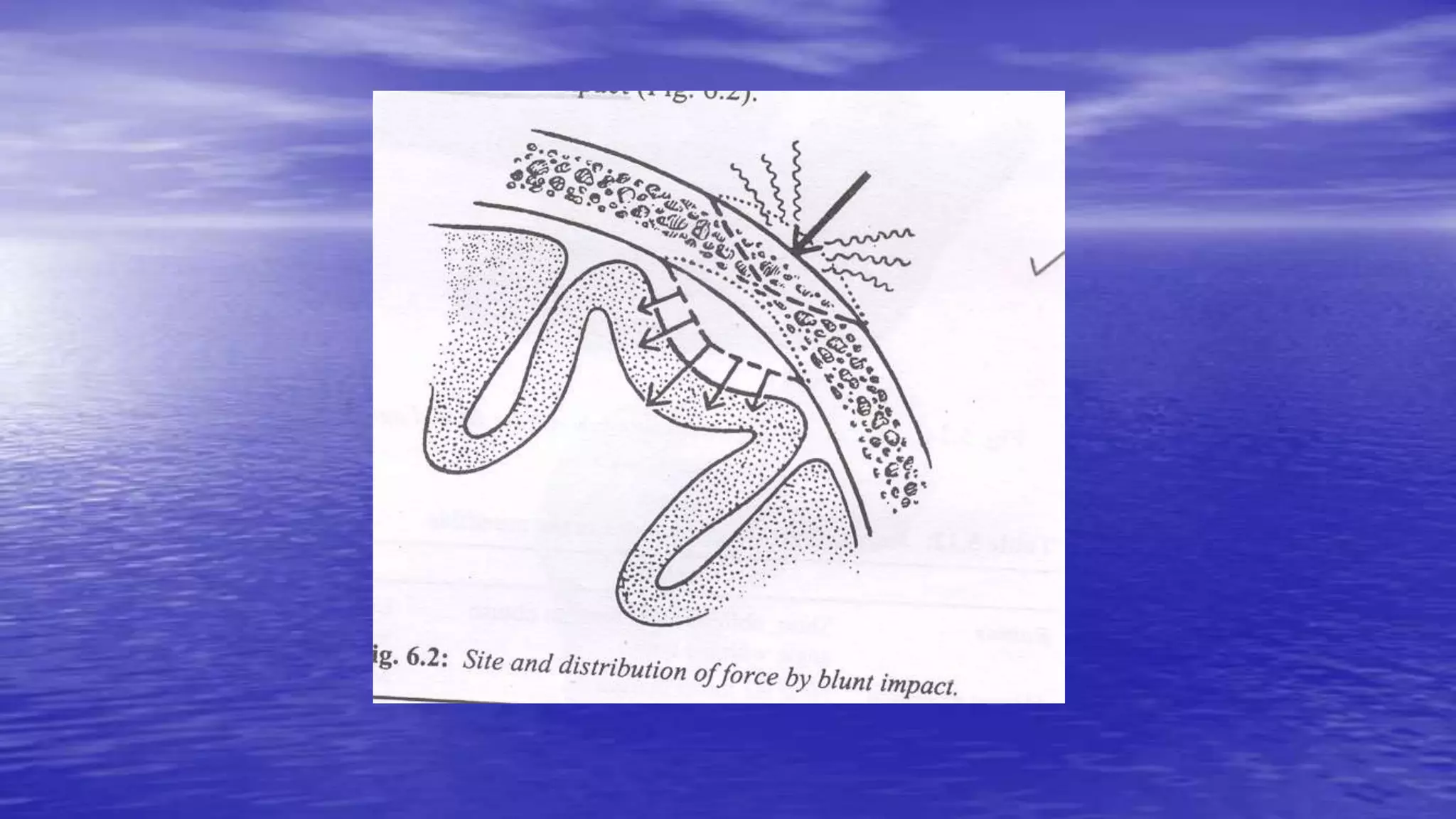
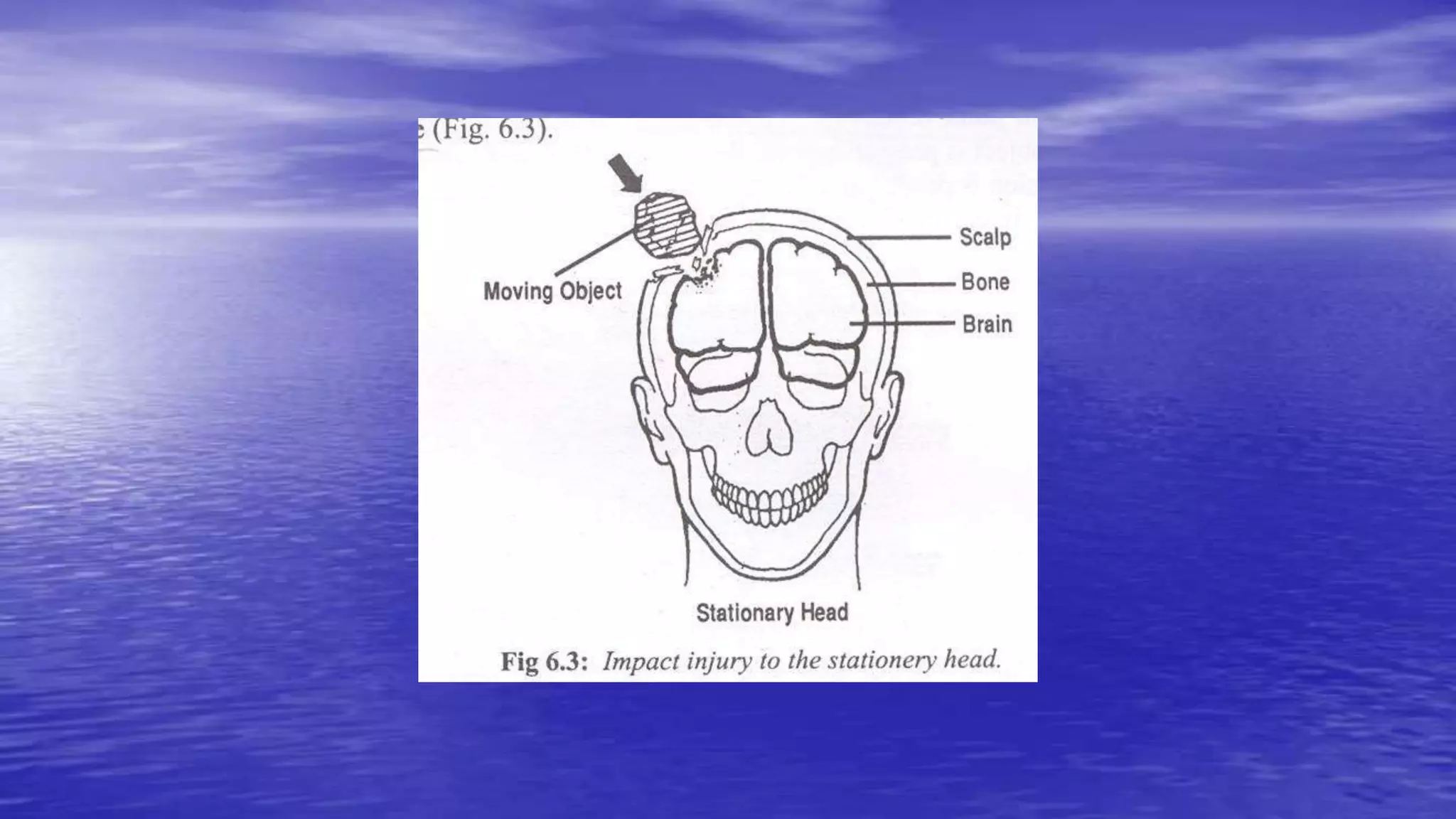
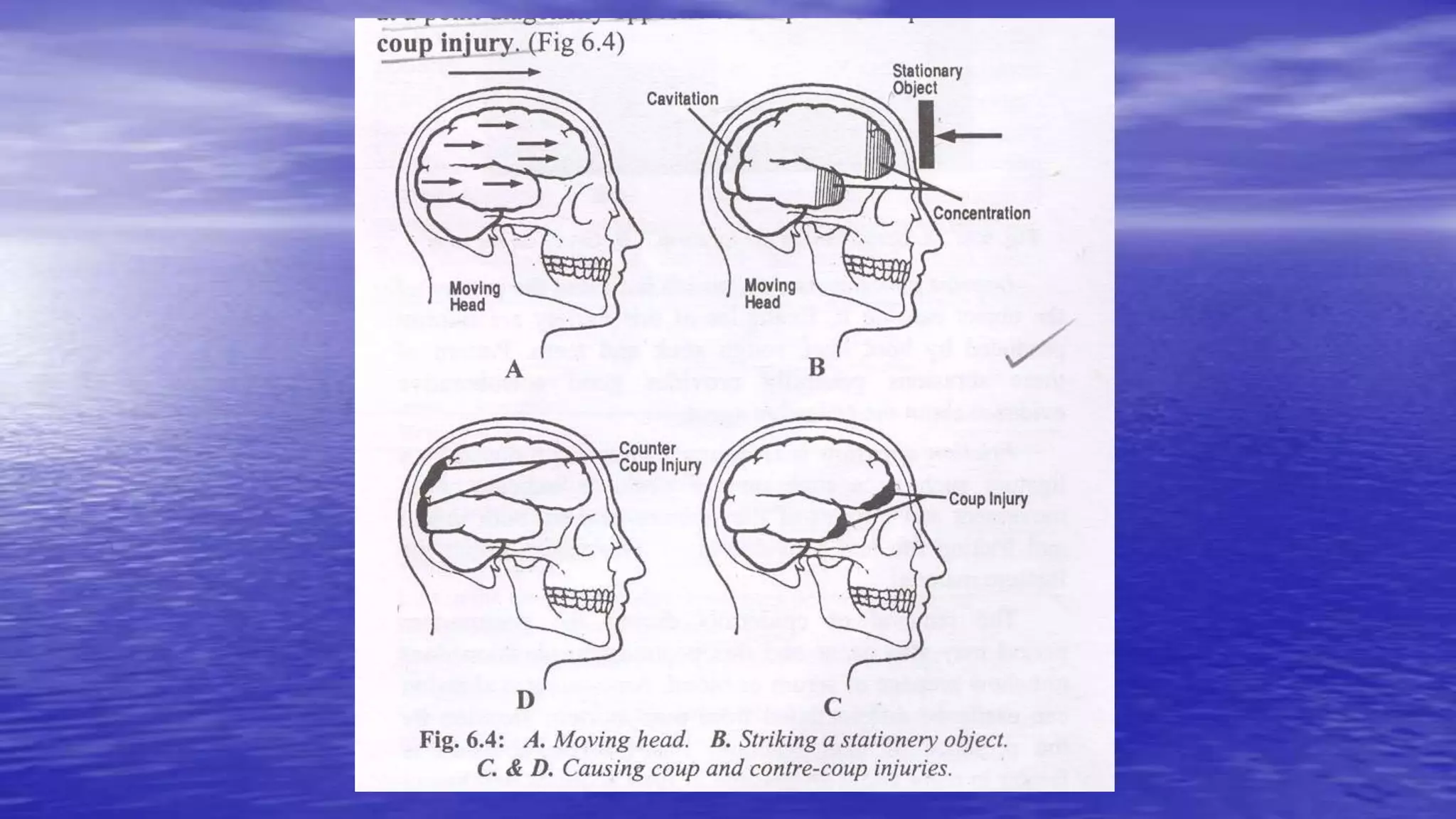
Force / Energy required for
production of a wound is transferred
to the tissue as a result of impact
between propelling force and counter
force.
PROPELLING FORCE:
Movement of object / weapon
Movement of the body
Combination of above
COUNTER FORCE:
Inertia of the body
Object against which body strikes
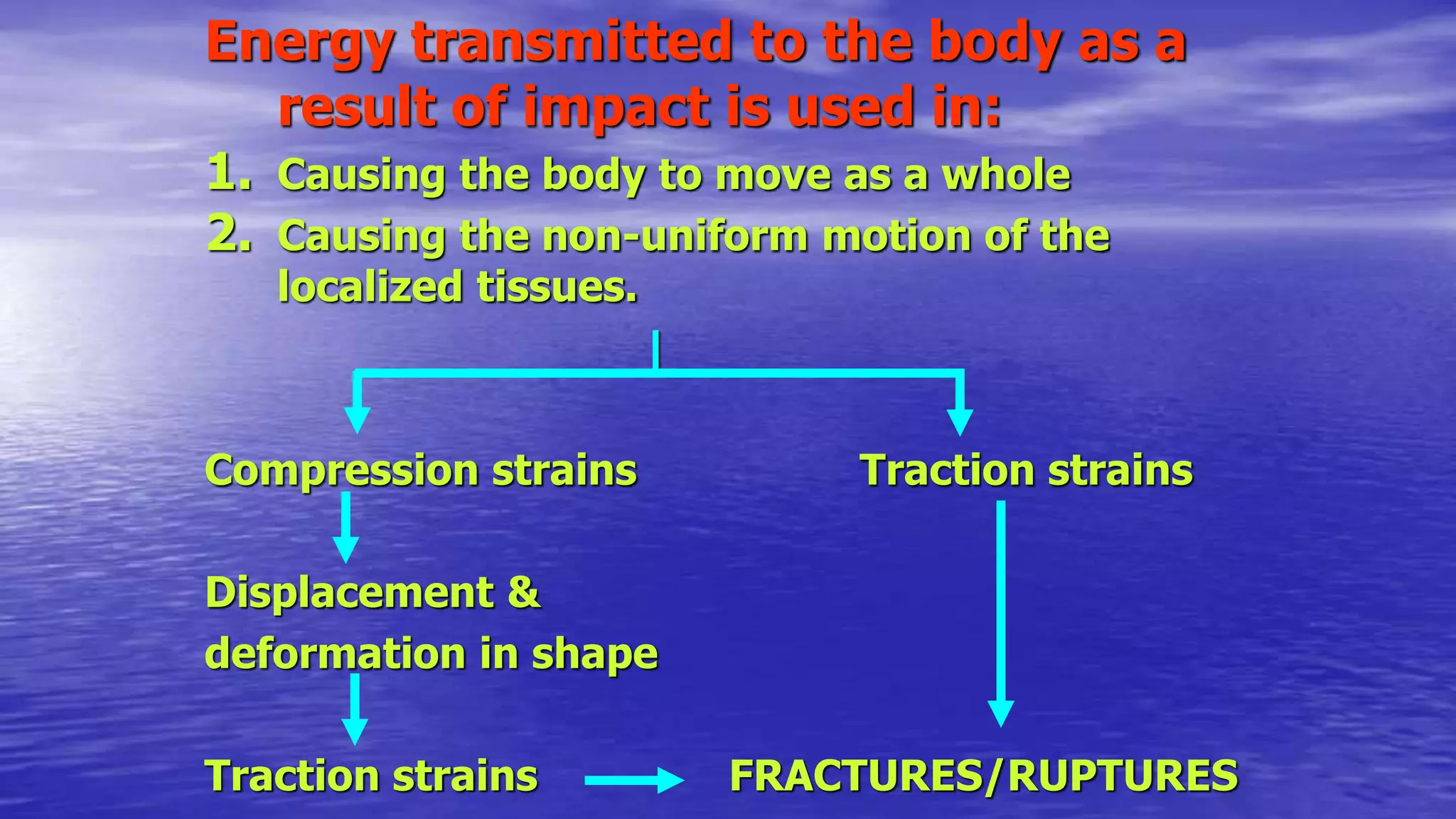
Energy transmitted to the body as a
result of impact is used in:
1. Causing the body to move as a whole
2. Causing the non-uniform motion of the
localized tissues.
|
Compression strains Traction strains
Displacement &
deformation in shape
Traction strains FRACTURES/RUPTURES
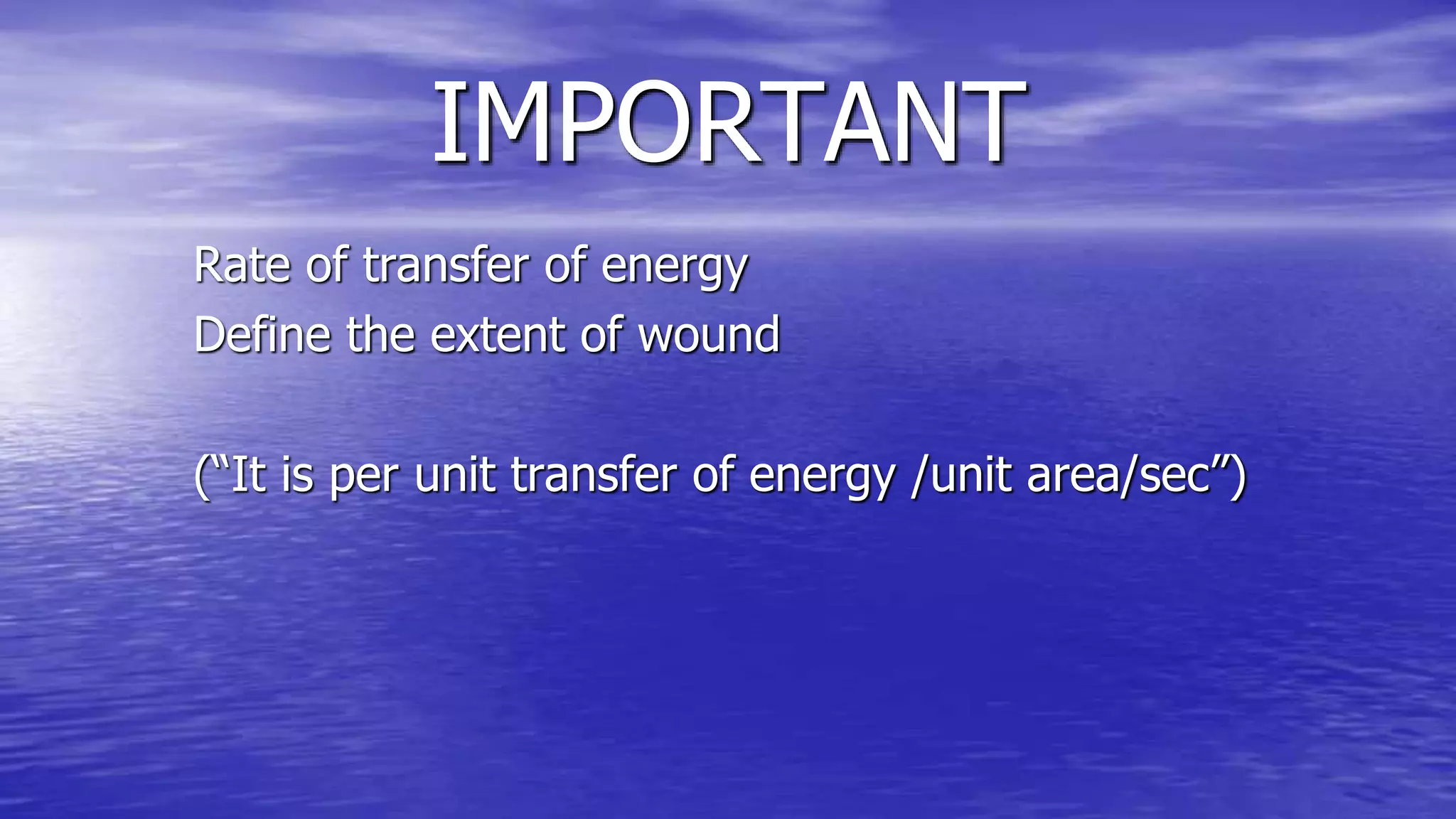
IMPORTANT
Rate of transfer of energy
Define the extent of wound
(“It is per unit transfer of energy /unit area/sec”)
FACTORS GOVERNING THE EXTENT AND
NATURE OF WOUND
1) Amount of energy discharged during
impact
2) Nature of the object causing wound /
Weapon
Type of weapon
Mechanical Force (Direct & Indirect)
3) Weight & velocity of weapon (1/2 mv2)
4) Architecture of tissue
5) Resistance of the tissue
6) Movement of the part struck
7) Time period over which energy is
discharged
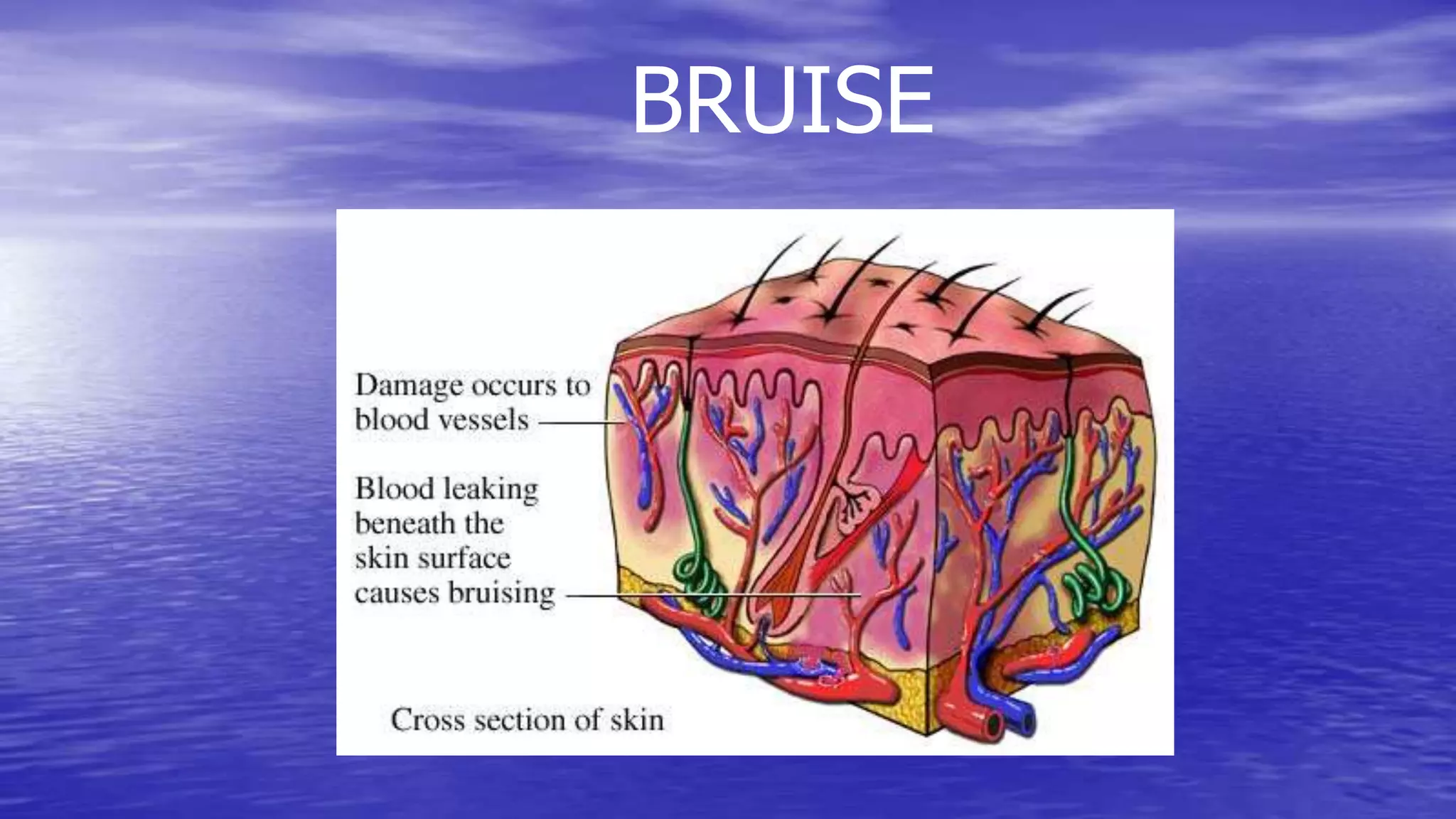
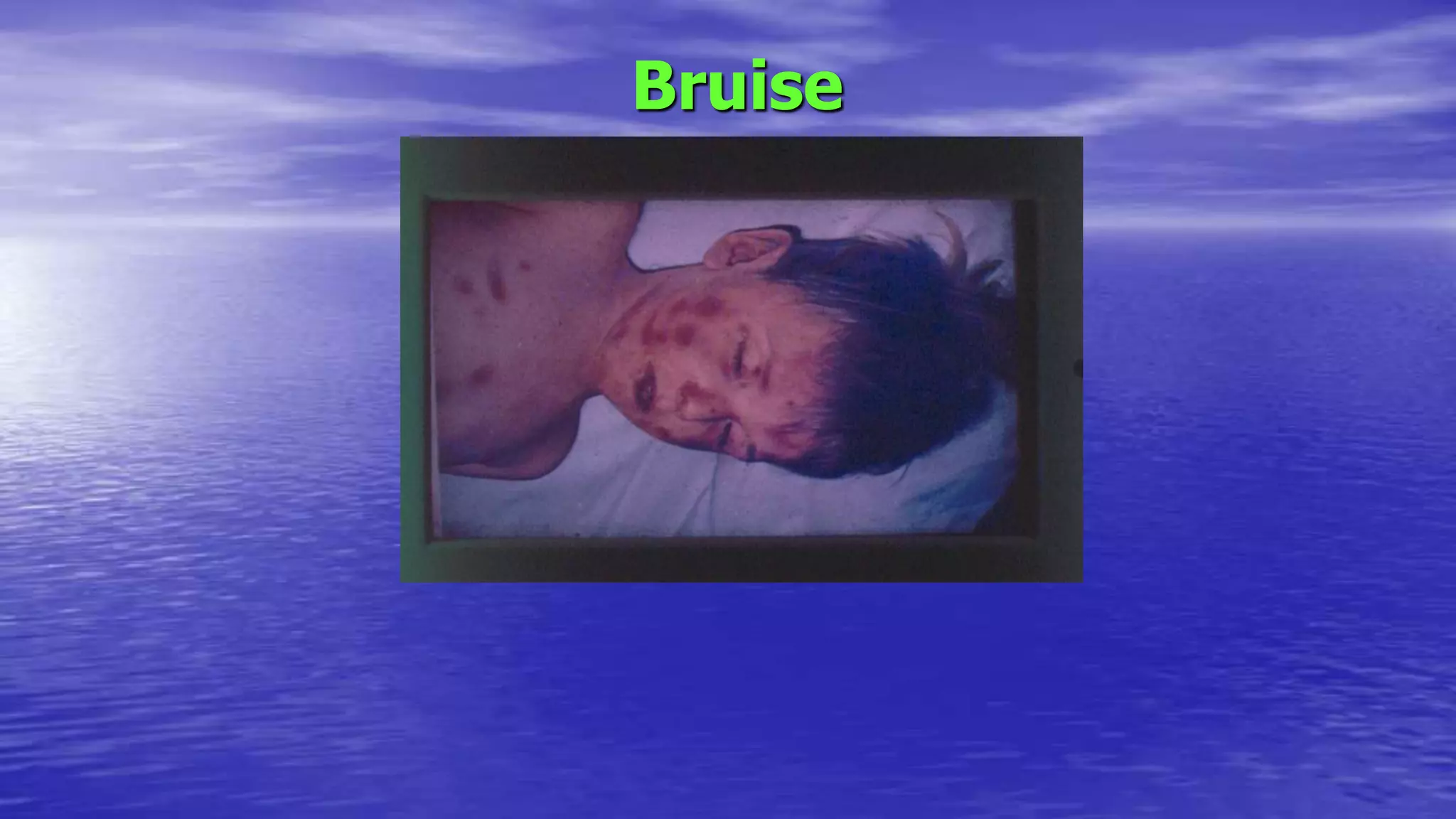
BRUISE
BRUISE OR CONTUSION
“It is an extravasation of blood into
the tissue due to application of blunt
force”.
Damage may not be so evident
macroscopically but may be
appreciated microscopically.
Mechanism of Production:
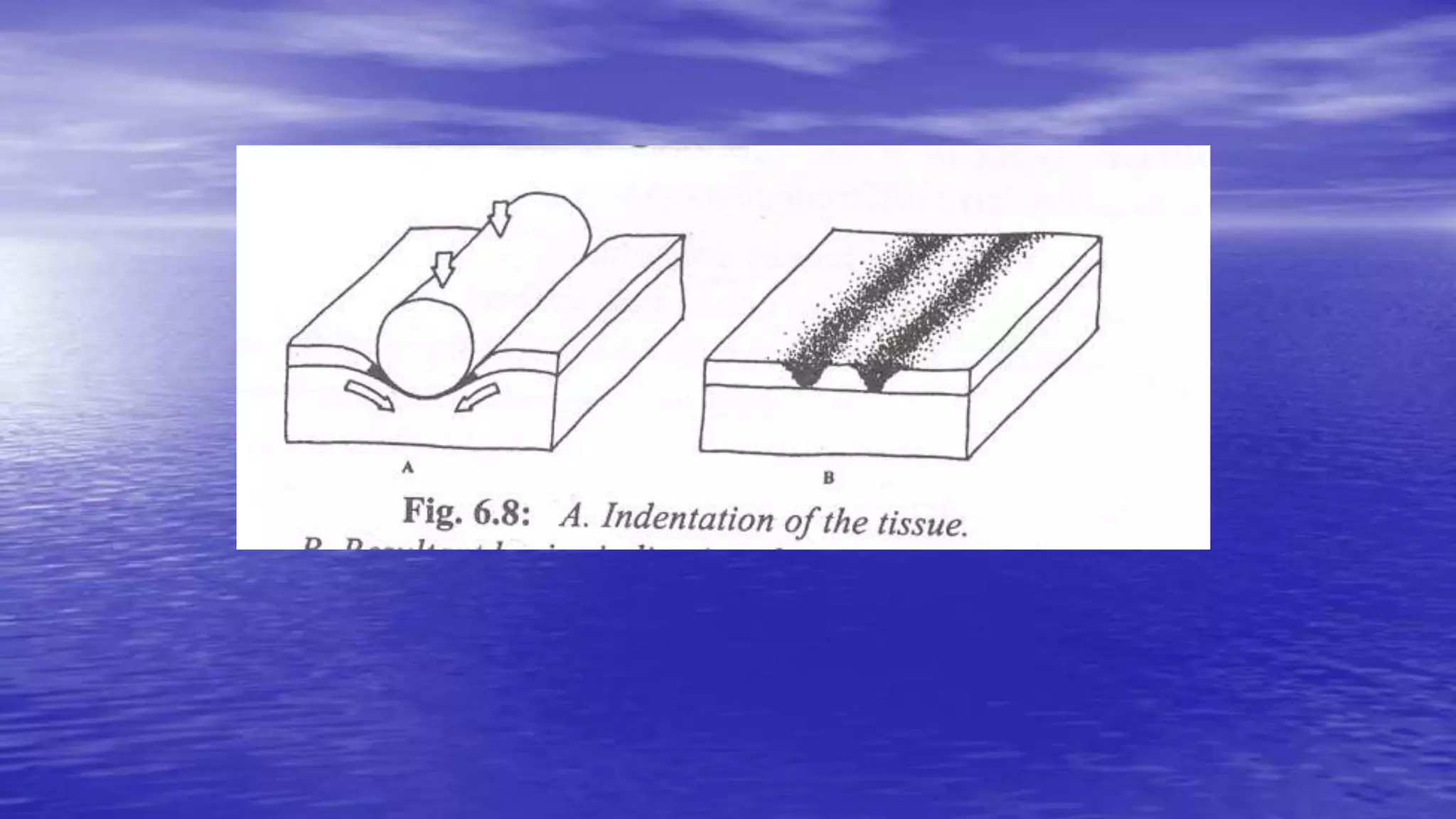
Sudden pressure to the tissue due to
impact.
Clinical Manifestations:
● Pain ● Redness ● Swelling
● Epidermis may not show any damage.
APPEARANCE:
Shape may or may not correspond the
shape of the weapon.
FACTORS CONTROLLING
APPEARANCE OF BRUISE
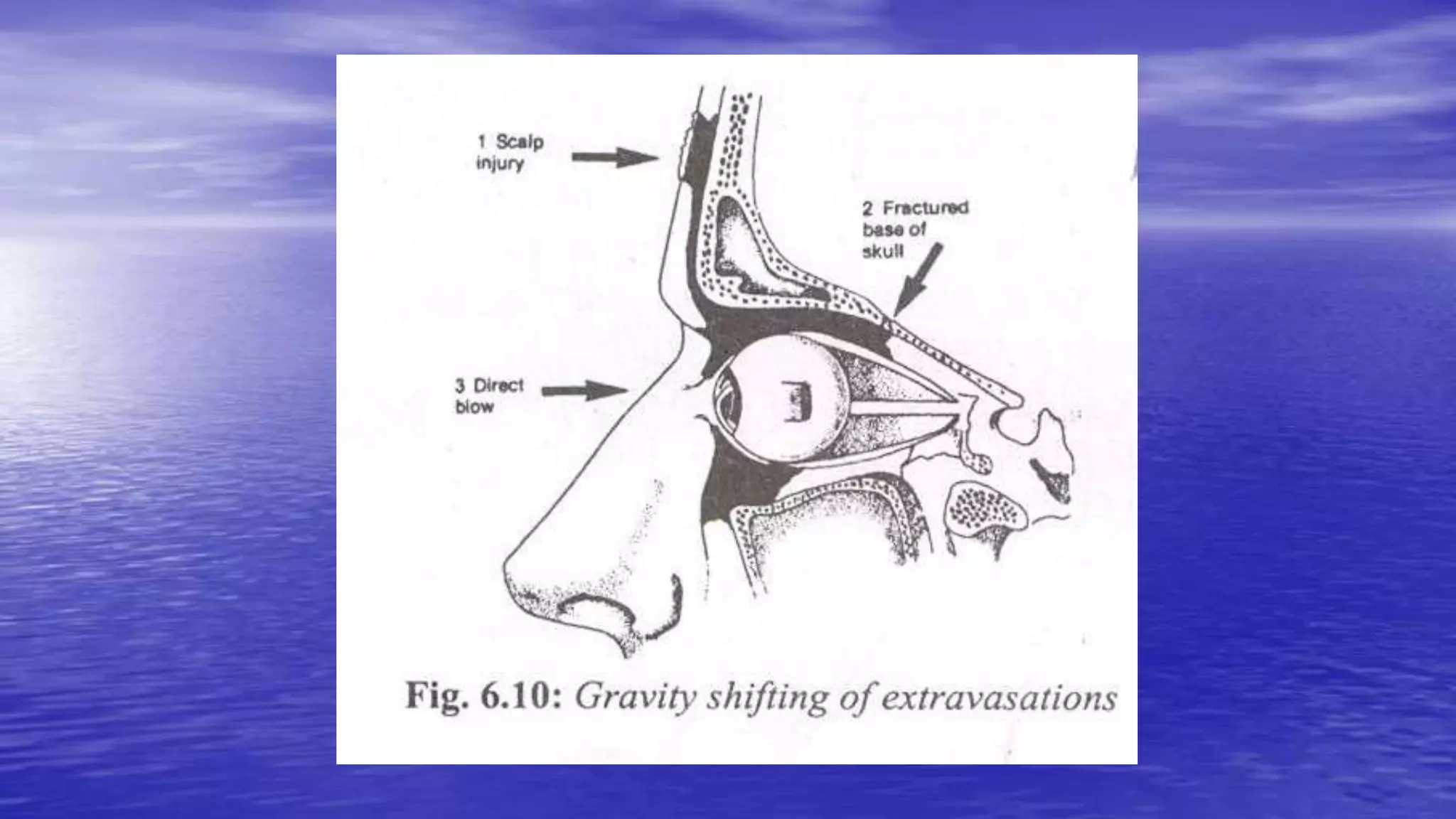
A) Type of Tissue:
More lax tissue- easier for blood to spread-
extravasations may move along tissue line
(Between muscle bundles) under gravity influence
(GRAVITY SHIFTING).
B) Color of Skin:
Visibility is better/clear in fair persons.
C) Age:
Children and aged bruise easily.
D) Natural Diseases:
Coagulation factor’s deficiencies – disease
of blood vessels – diminished platelets.
E) Vascularity of the Part:
Bruising directly proportional to Vascularity.
F) Sex:
Female especially obese bruise easily.
MEDICOLEGAL IMPORTANCE OF BRUISE
1) It is evidence of application of blunt force.
2) Helps in identification of weapon.
3) Indicates degree of violence.
4) Tells time of infliction of injury.
ESTIMATION OF AGE OF BRUISE
There are two methods
i. From colour changes
Due to action of tissue enzyme on the
extravasated blood.
ii. Histologically
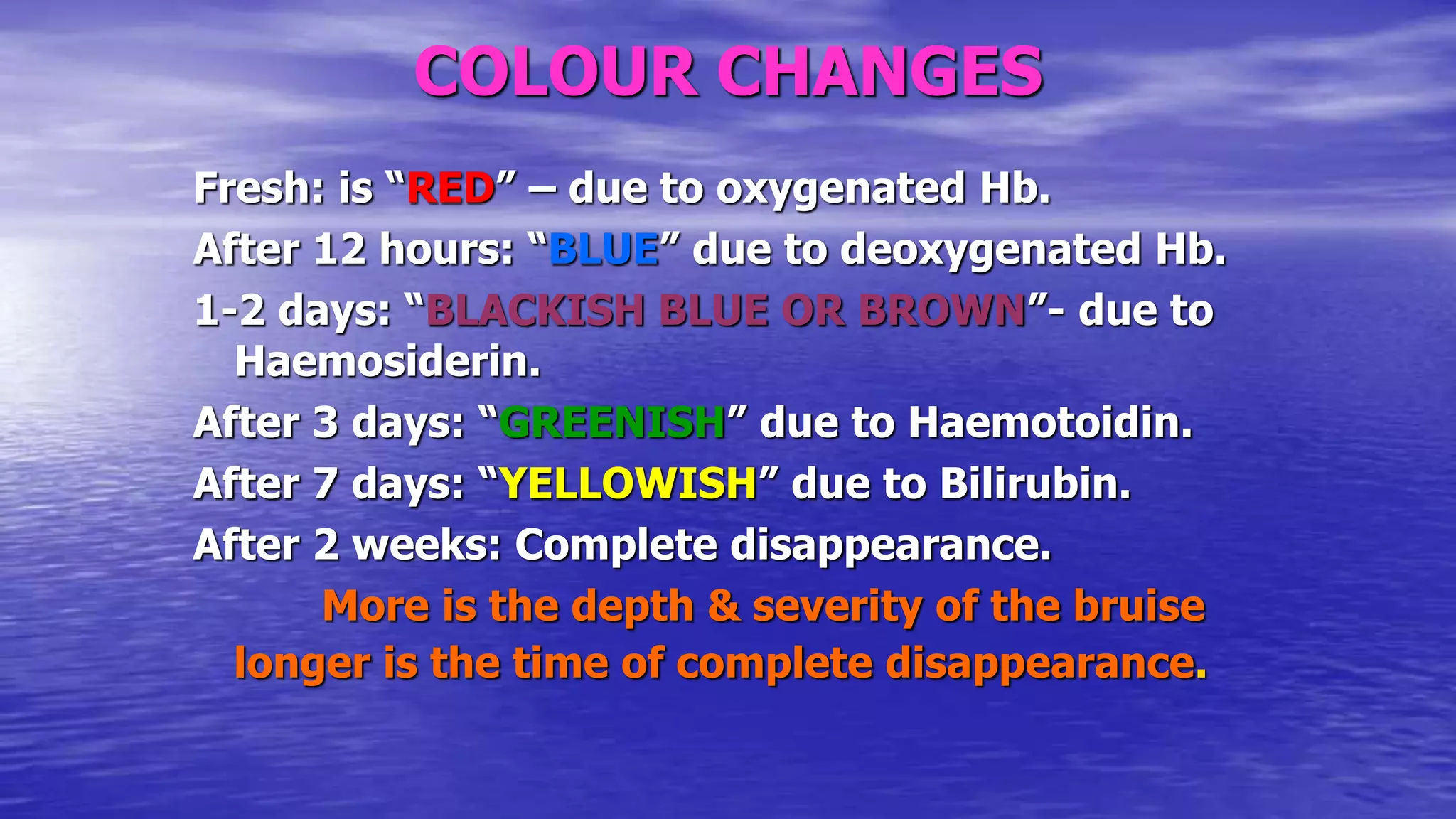
COLOUR CHANGES
Fresh: is “RED” – due to oxygenated Hb.
After 12 hours: “BLUE” due to deoxygenated Hb.
1-2 days: “BLACKISH BLUE OR BROWN”- due to
Haemosiderin.
After 3 days: “GREENISH” due to Haemotoidin.
After 7 days: “YELLOWISH” due to Bilirubin.
After 2 weeks: Complete disappearance.
More is the depth & severity of the bruise
longer is the time of complete disappearance.
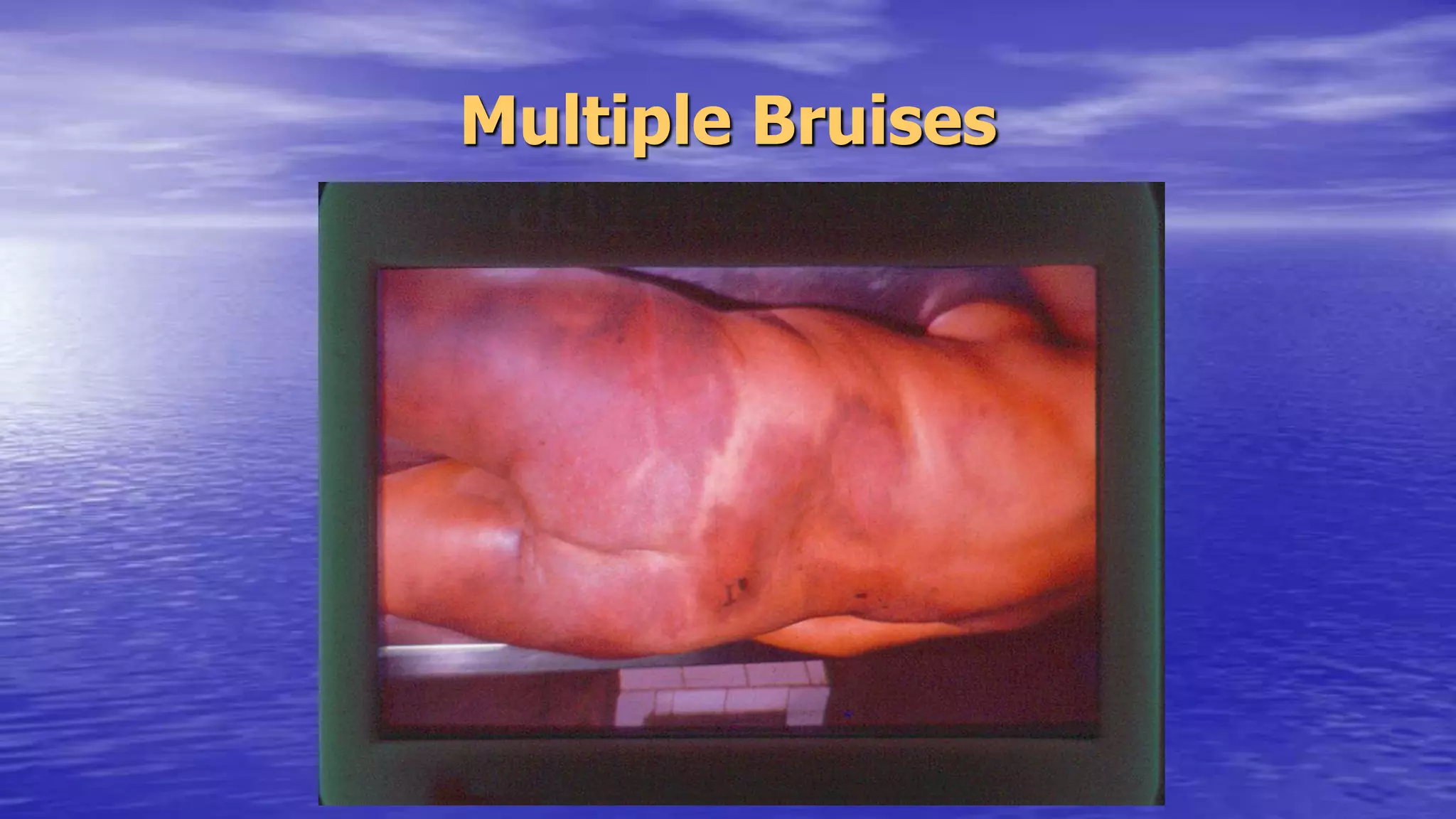
Multiple Bruises
Bruise
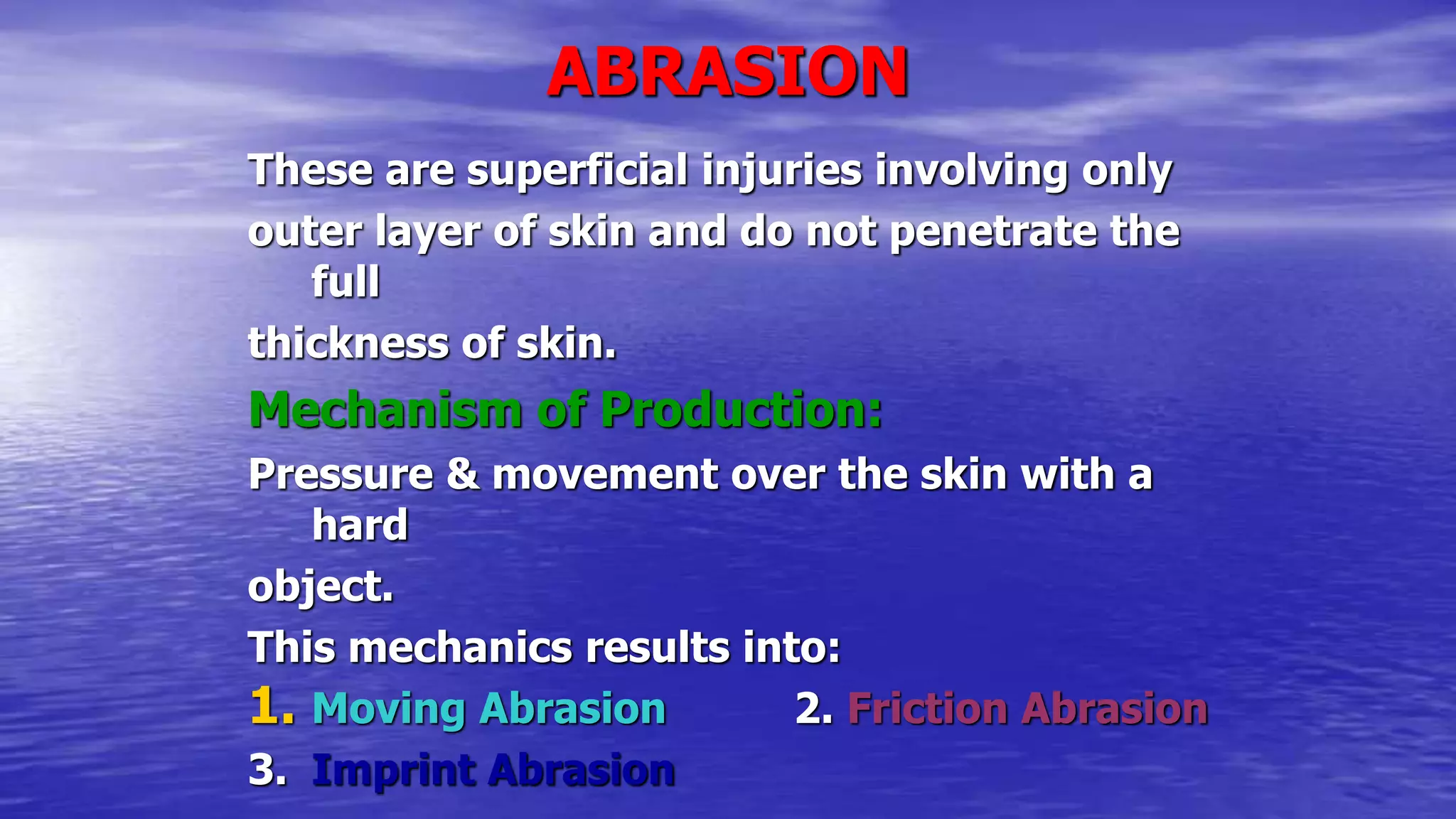
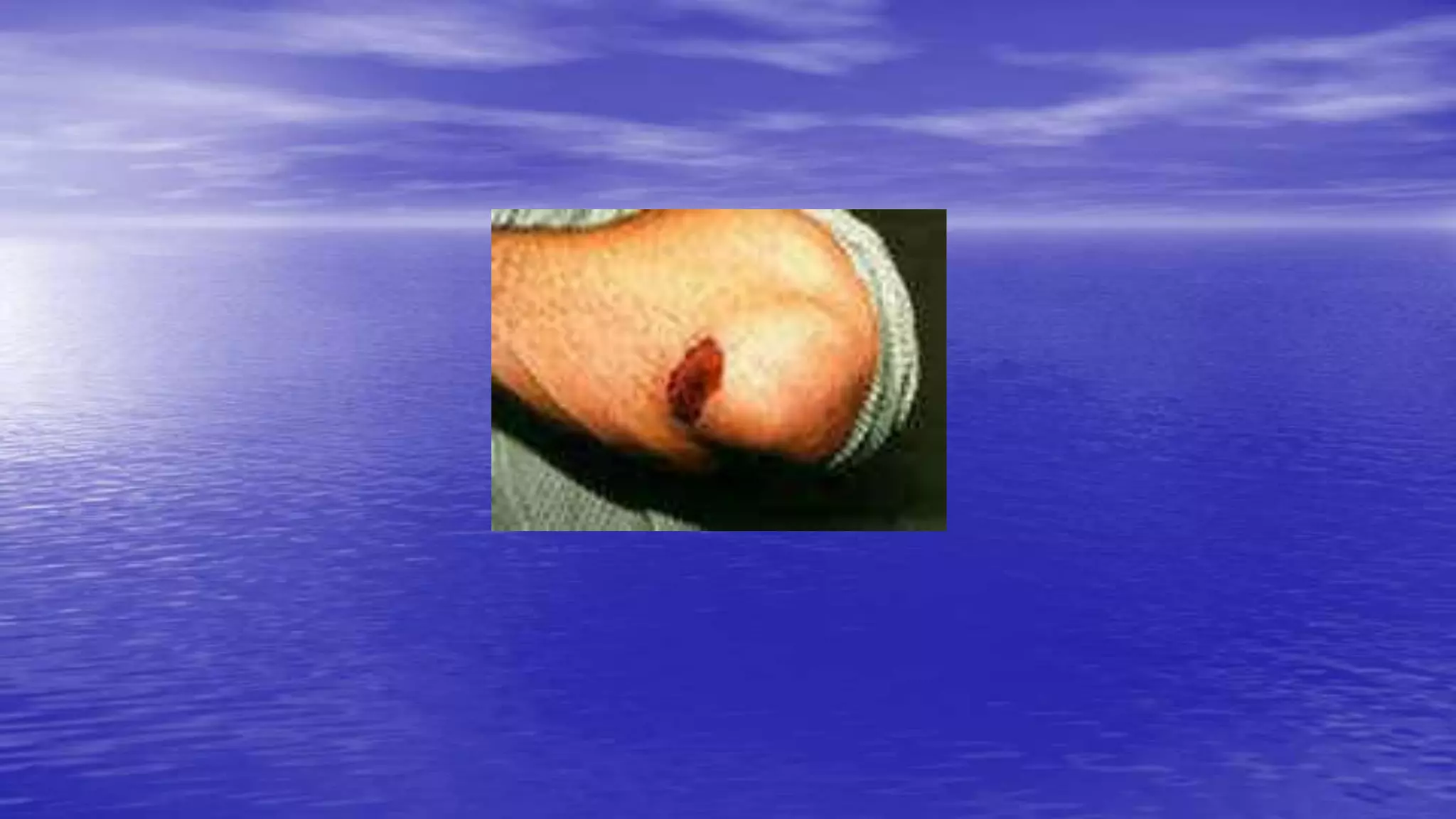
ABRASION
These are superficial injuries involving only
outer layer of skin and do not penetrate the
full
thickness of skin.
Mechanism of Production:
Pressure & movement over the skin with a
hard
object.
This mechanics results into:
1. Moving Abrasion 2. Friction Abrasion
3. Imprint Abrasion
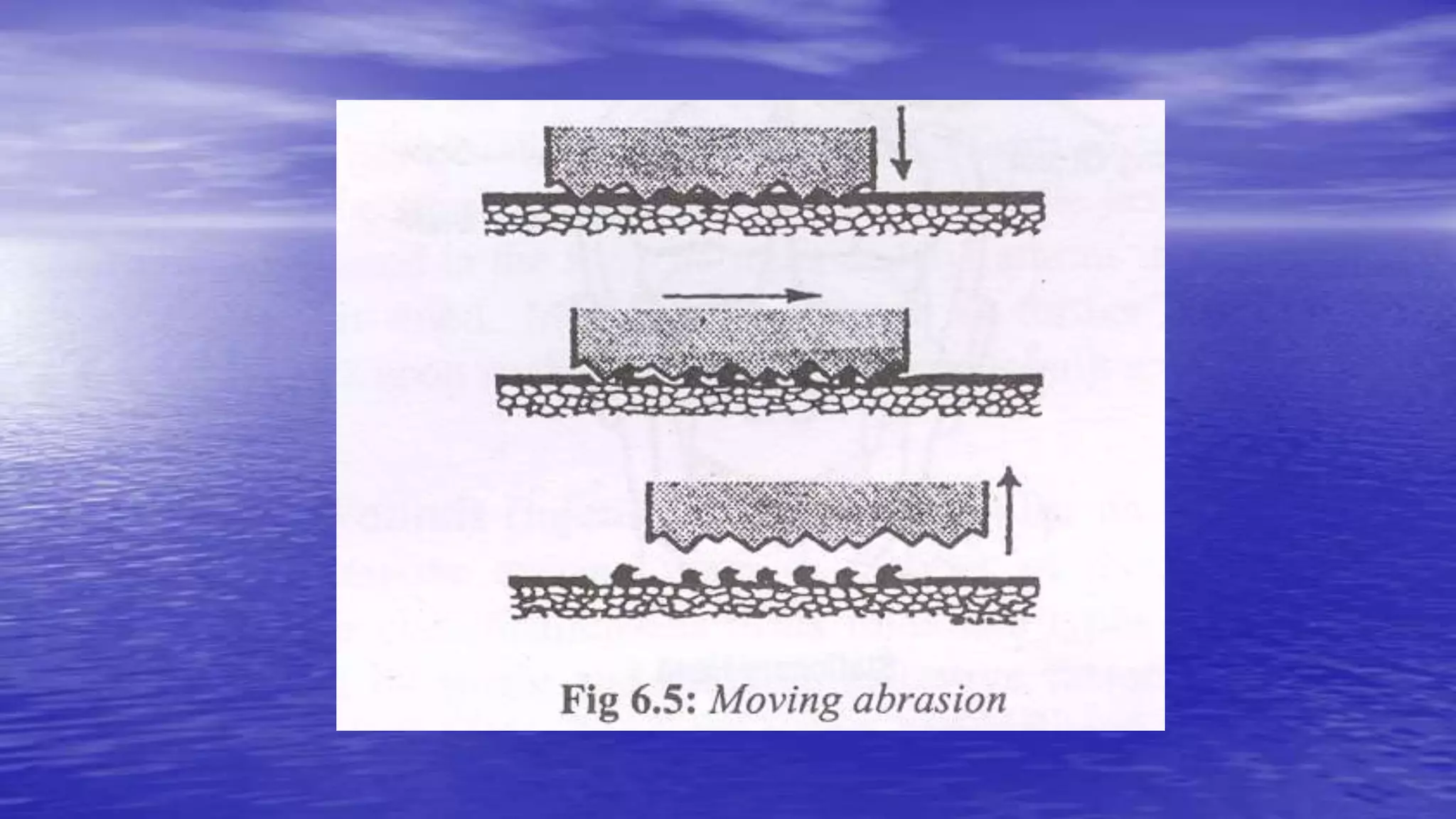
MOVING ABRASIONS
Gives evidence of direction by pile-up or heaping of
epidermis at the far end.
Types
A). Scratch
B). Graze
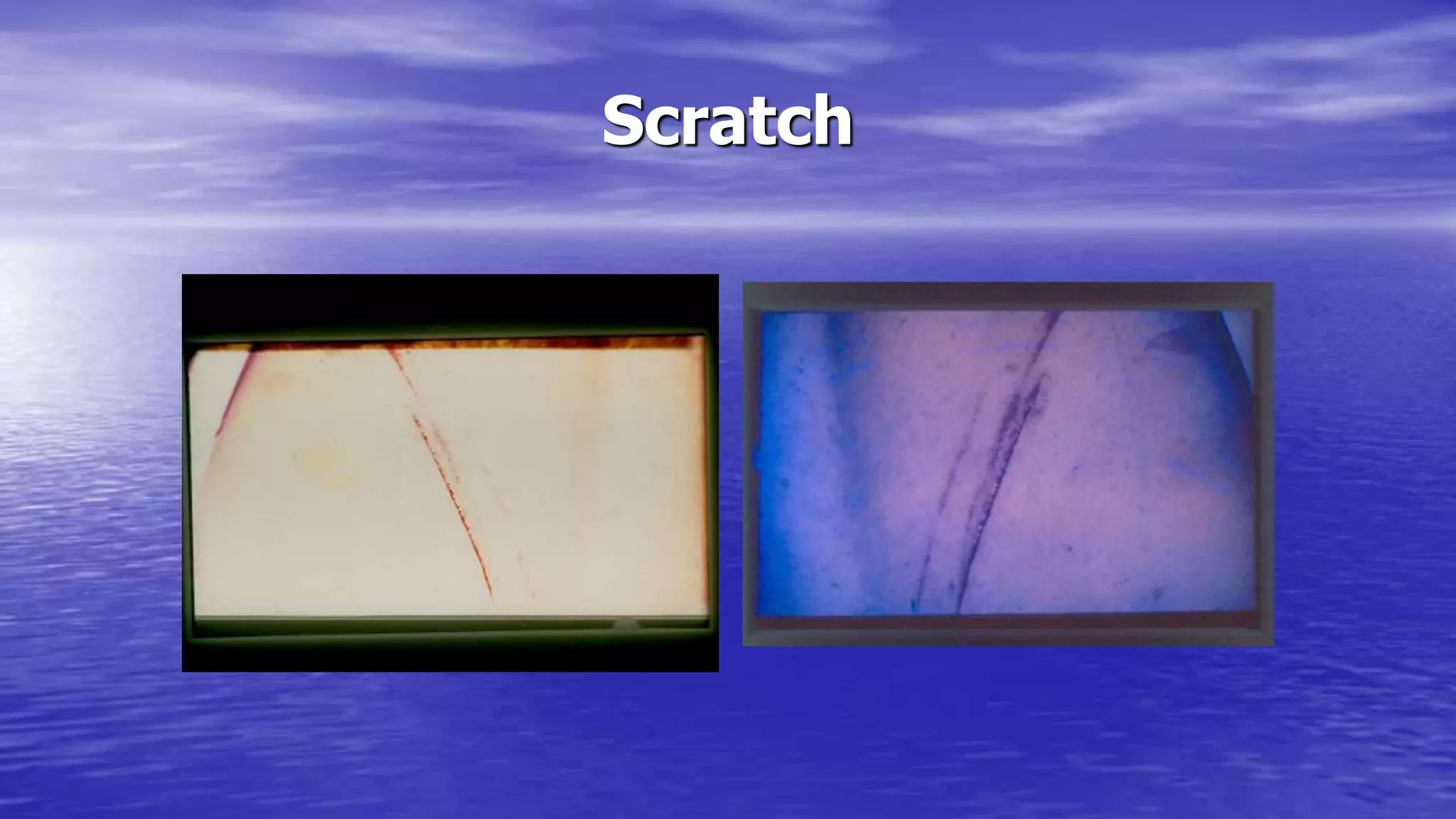
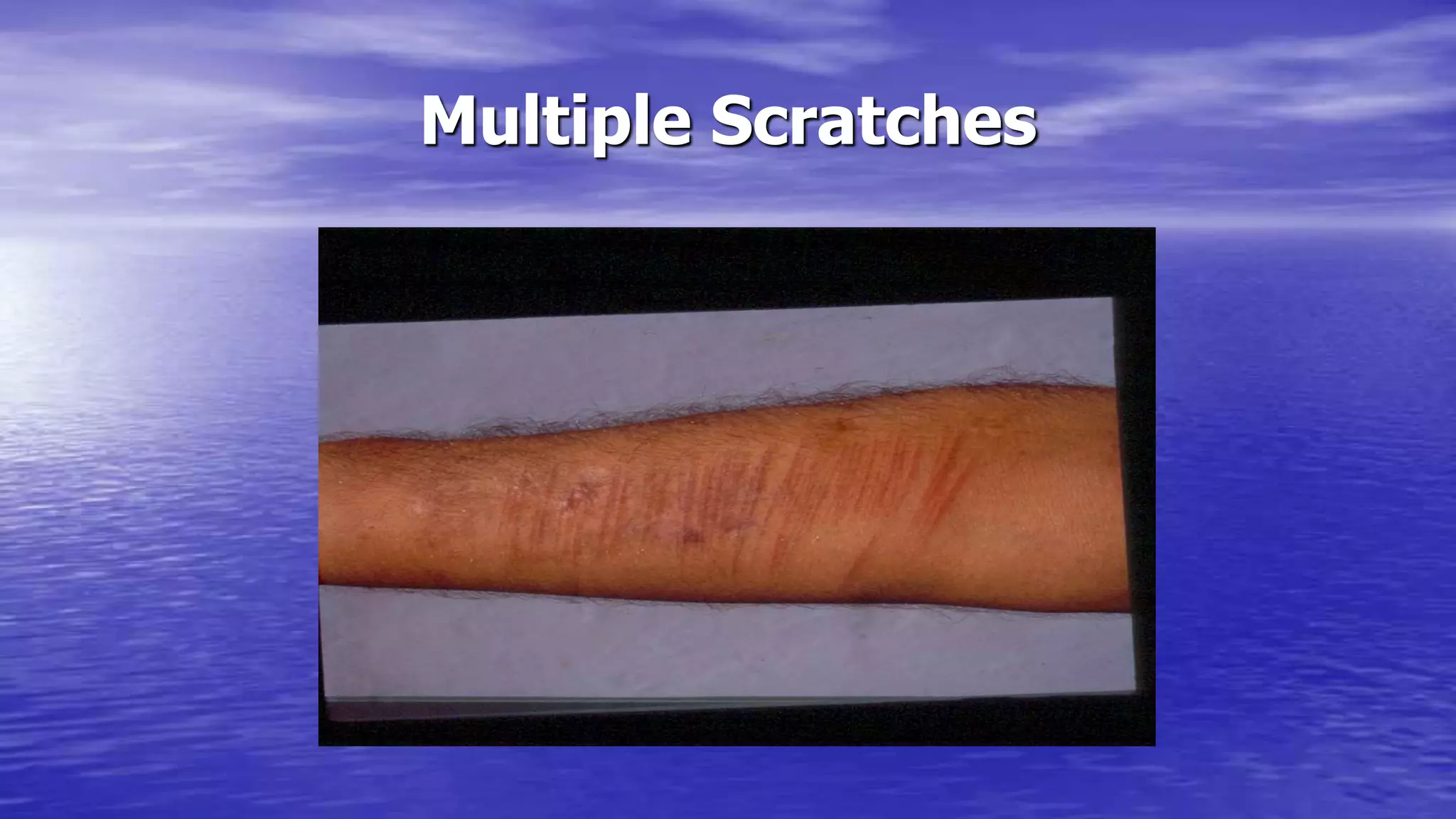
SCRATCH
It is due to pointed object passing across the skin,
moving the surface layer in front of it. It causes
heaping up of epithelium & indicates the direction
of force. It also indicates the object which has
caused it e.g. marks of the finger nail are
Crescentic.
Scratch
Multiple Scratches
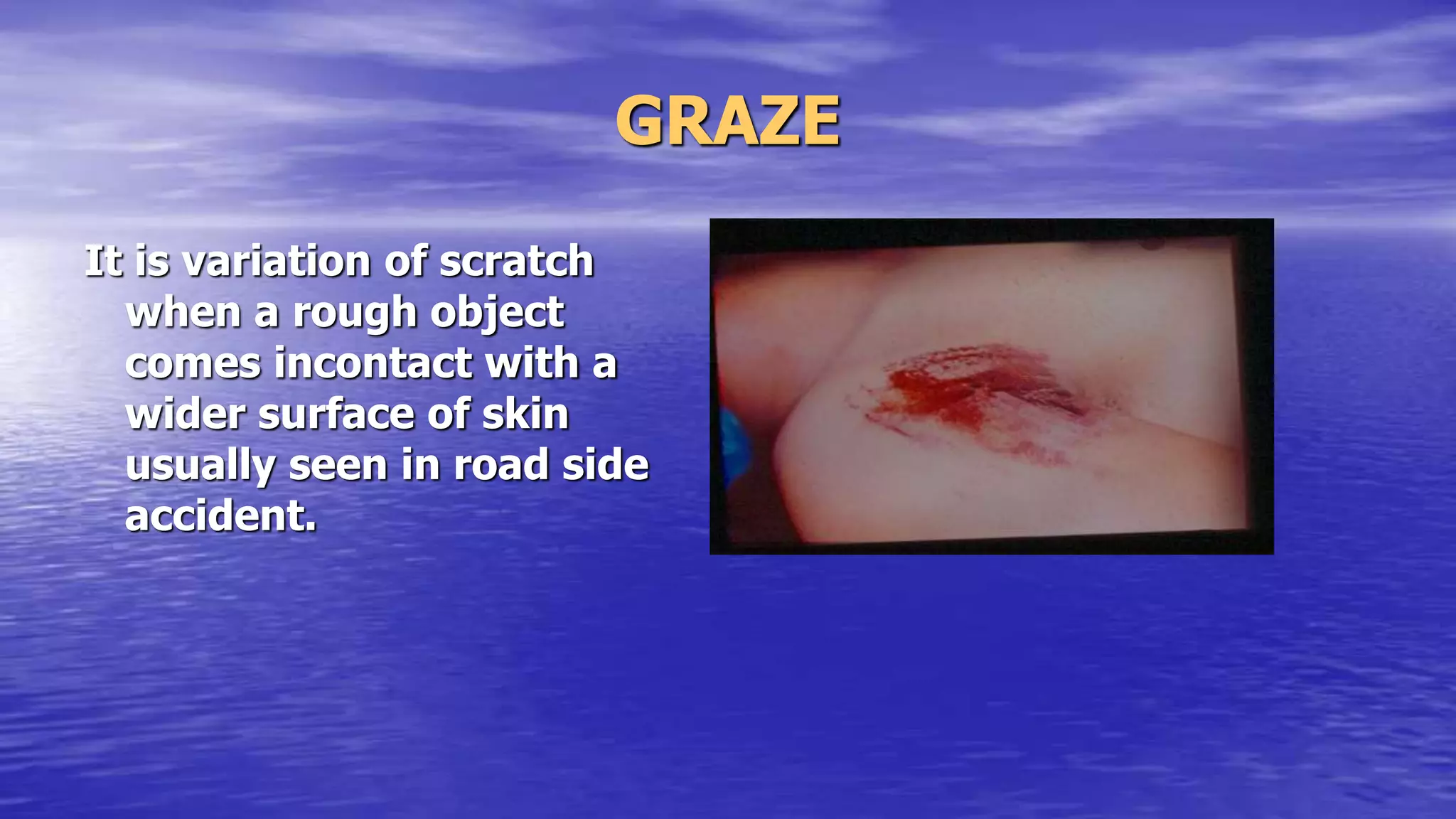
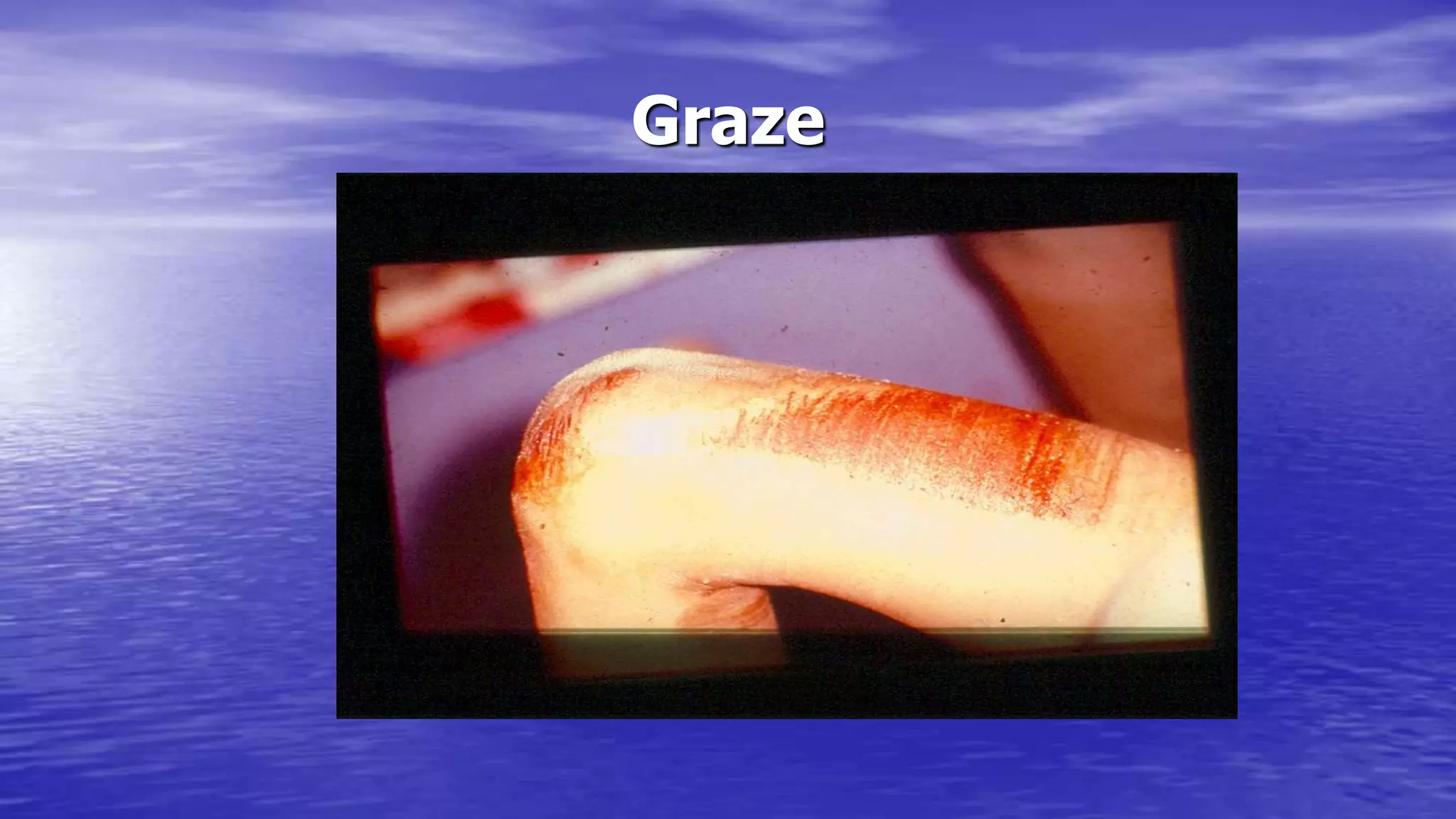
GRAZE
It is variation of scratch
when a rough object
comes incontact with a
wider surface of skin
usually seen in road side
accident.
Graze
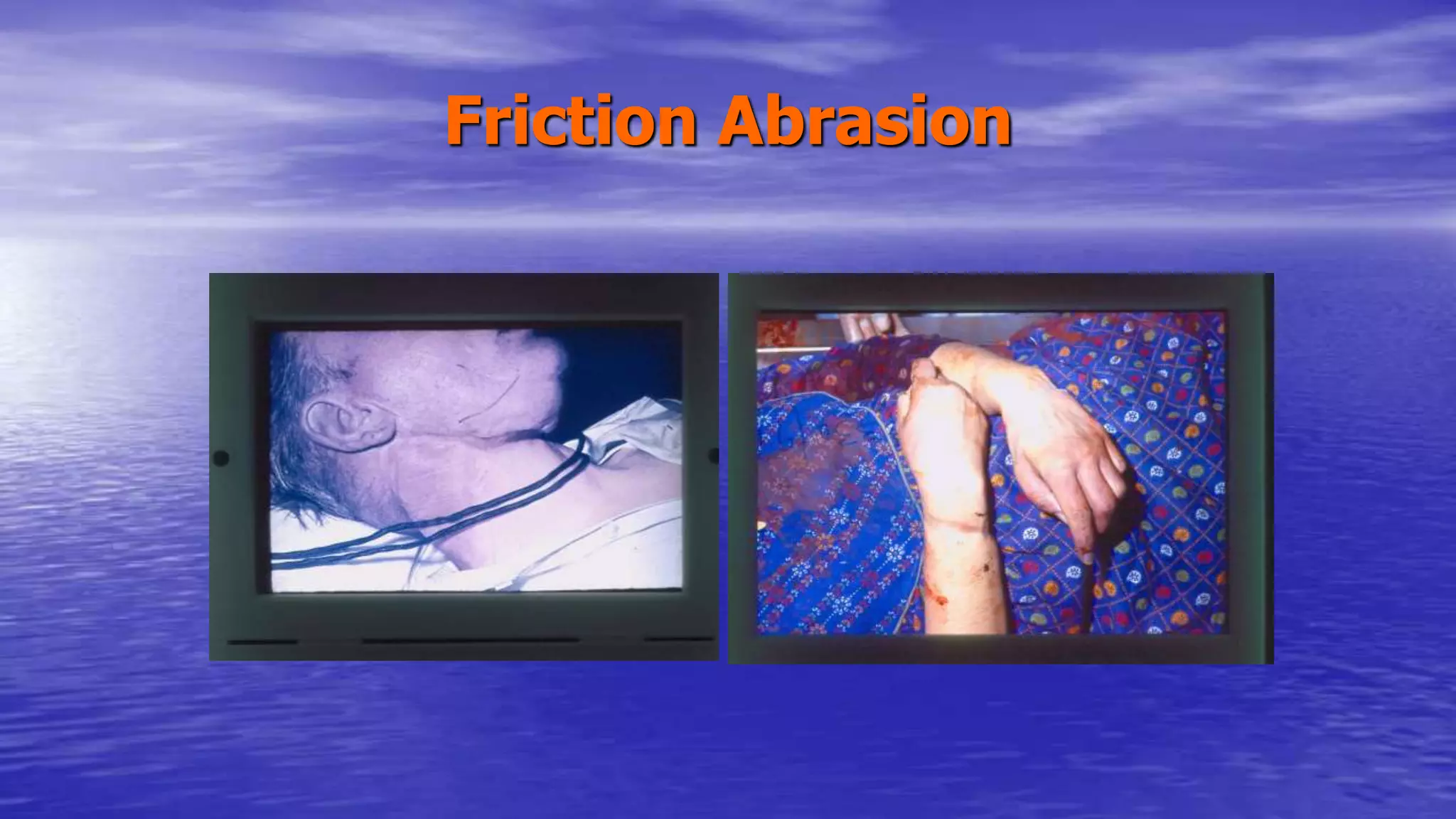
FRICTION ABRASION
It is caused by pressure upon the skin
accompanied by movement e.g. Ligature
mark by a rope in hanging or
strangulation and lashes with a whip.
Friction Abrasion
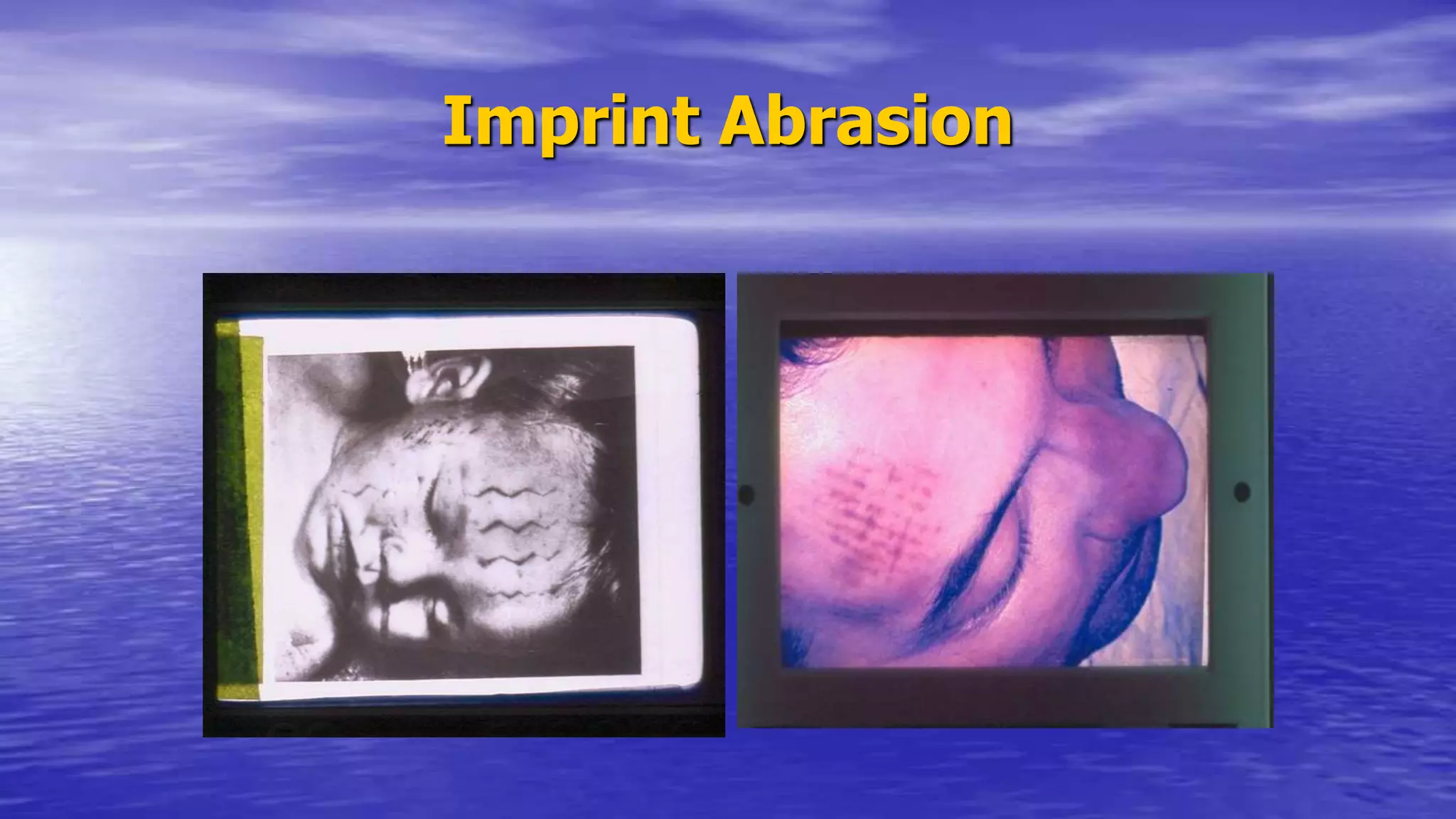
IMPRINT ABRASION
Also called “Patterned Abrasion” In this abrasion
pattern of impacting object is stamped on the
body when the force is applied at or near at a
right angle to the skin surface e.g. when motor
tyre passes over the skin or there is impact of
design of motor vehicle radiator on the skin.
Imprint Abrasion
AGE OF ABRASION
Fresh Abrasion: is bright in color lymph or blood is oozing.
Scab Formation: Occur within 24 hours
Reddish Brown: Within 2-3 days
Shedding of the scab and re-epithelization:
Within one week
Complete Healing: Within two weeks.
MEDICO LEGAL IMPORTANC
1) May indicate severe internal injury.
2) Gives nature of object causing it.
3) Tells direction of force.
4) Gives timing of injury.
5) Indicates manner of infliction.
LACERATION
It is a tear or breach in the tissue caused by a blunt
force e.g. Blows from blunt objects, falls or
impact from vehicles.
Mechanisms of Production:
1) Crushing of tissues between two hard objects.
2) Over stretching of tissue.
3) Grinding compression by weight.
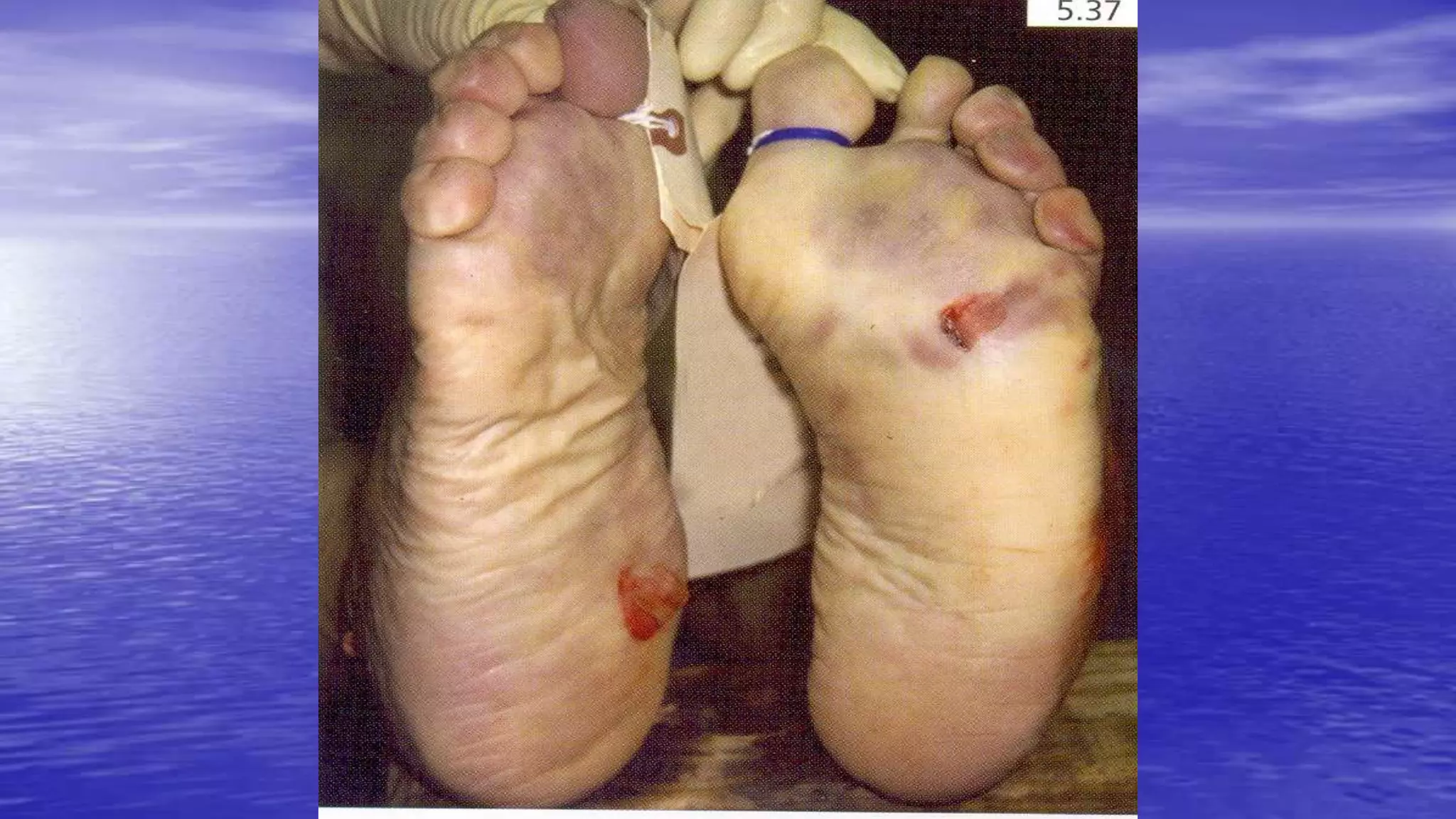
TYPES OF LACERATION
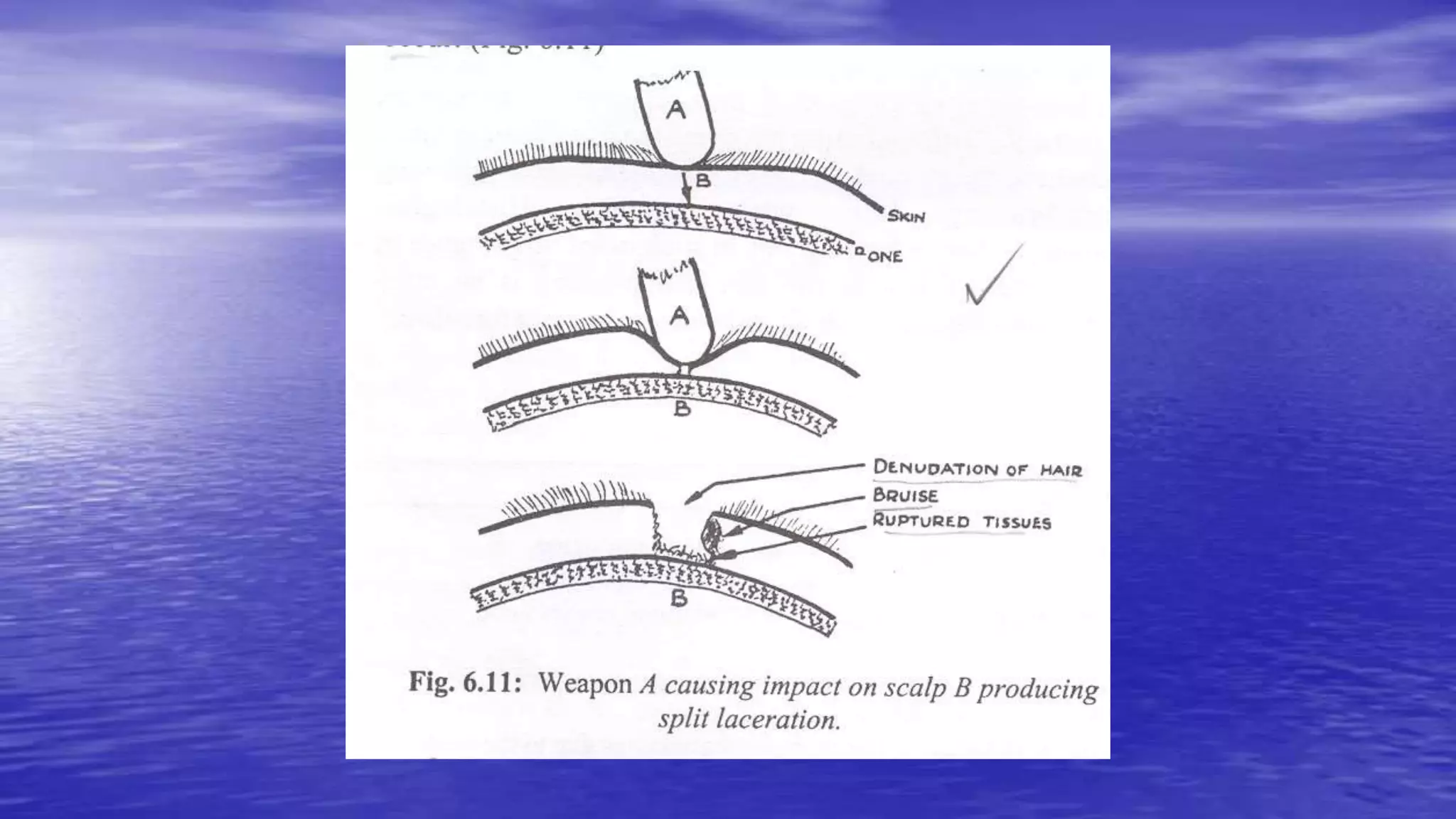
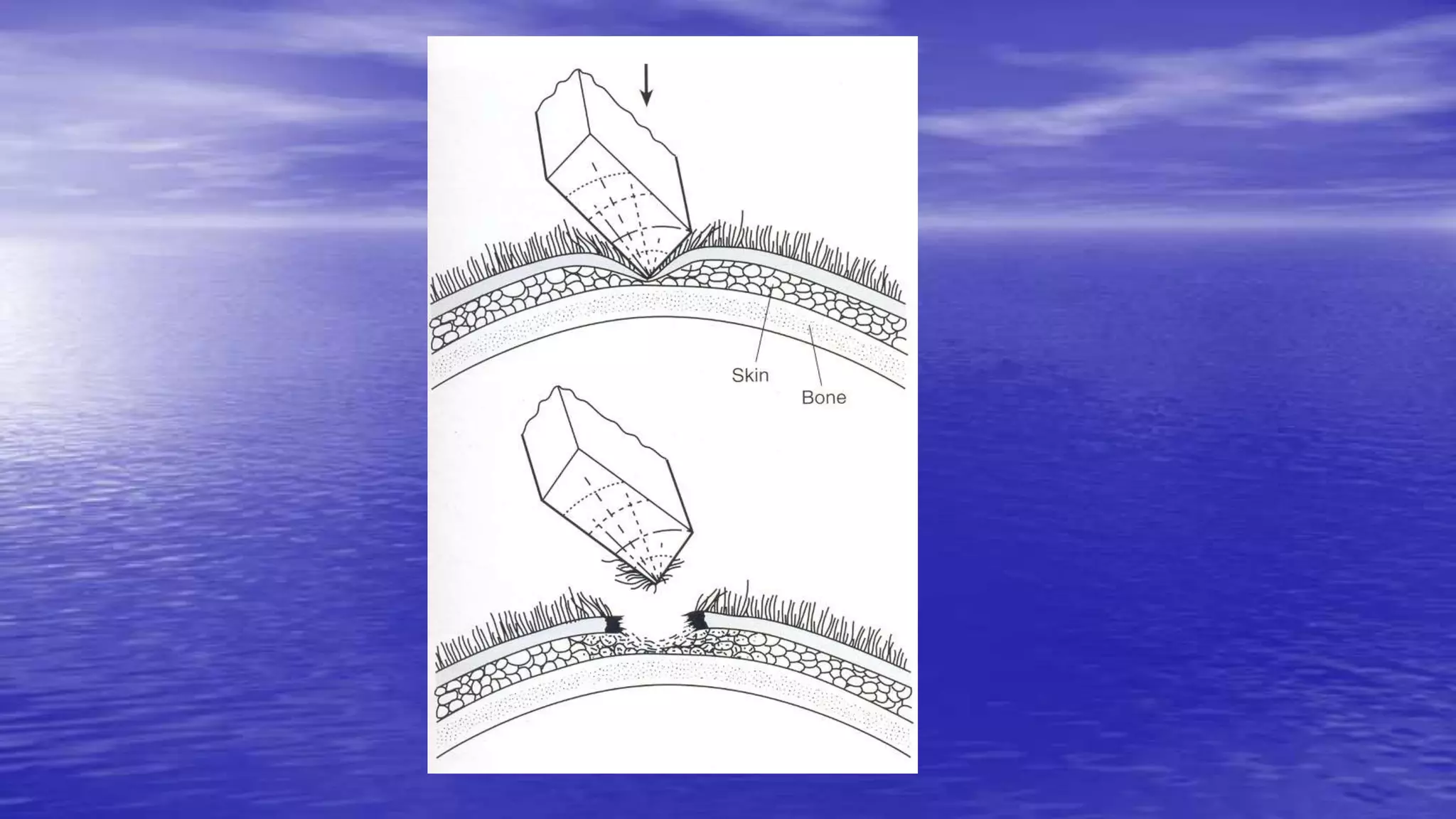
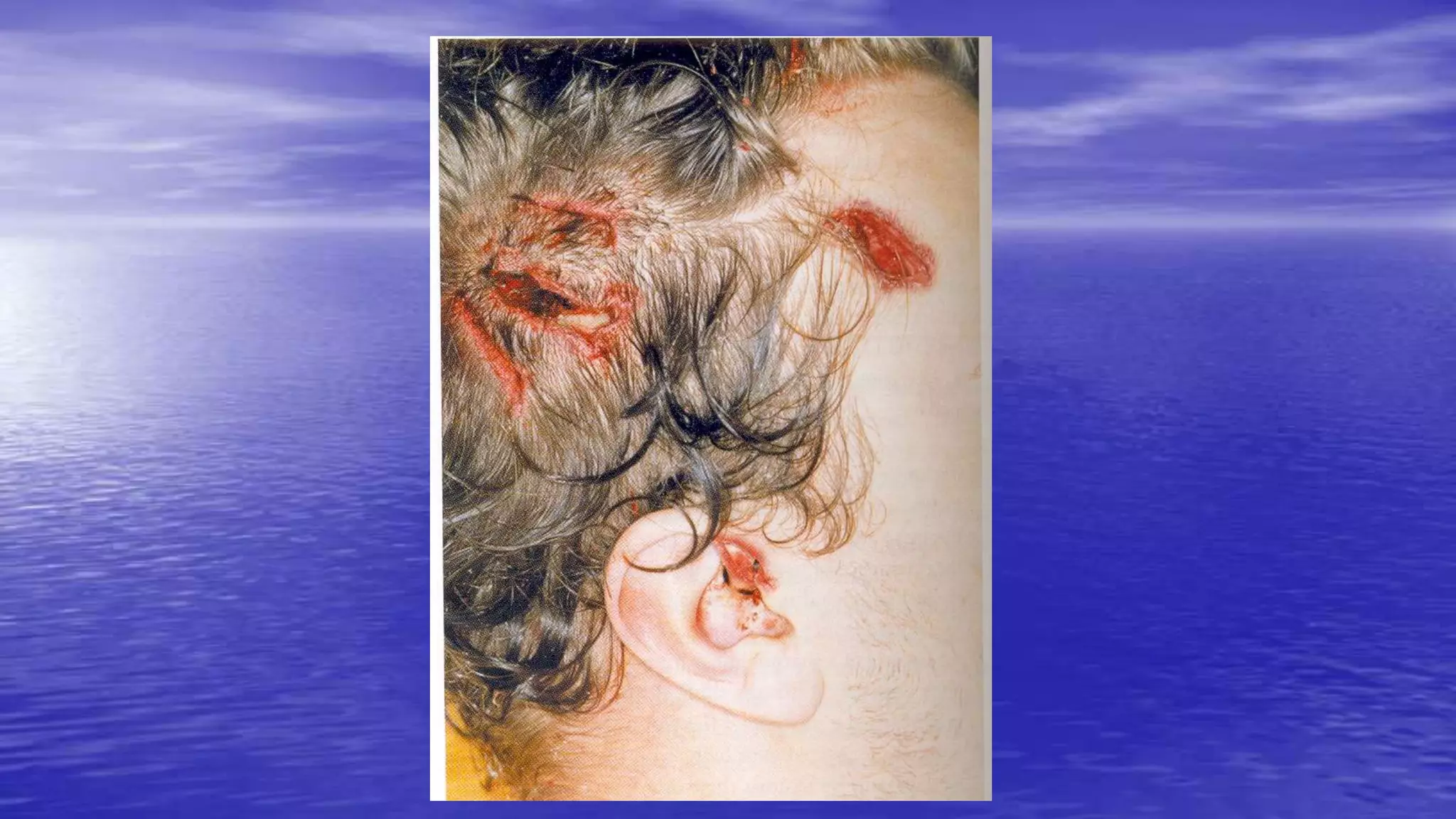
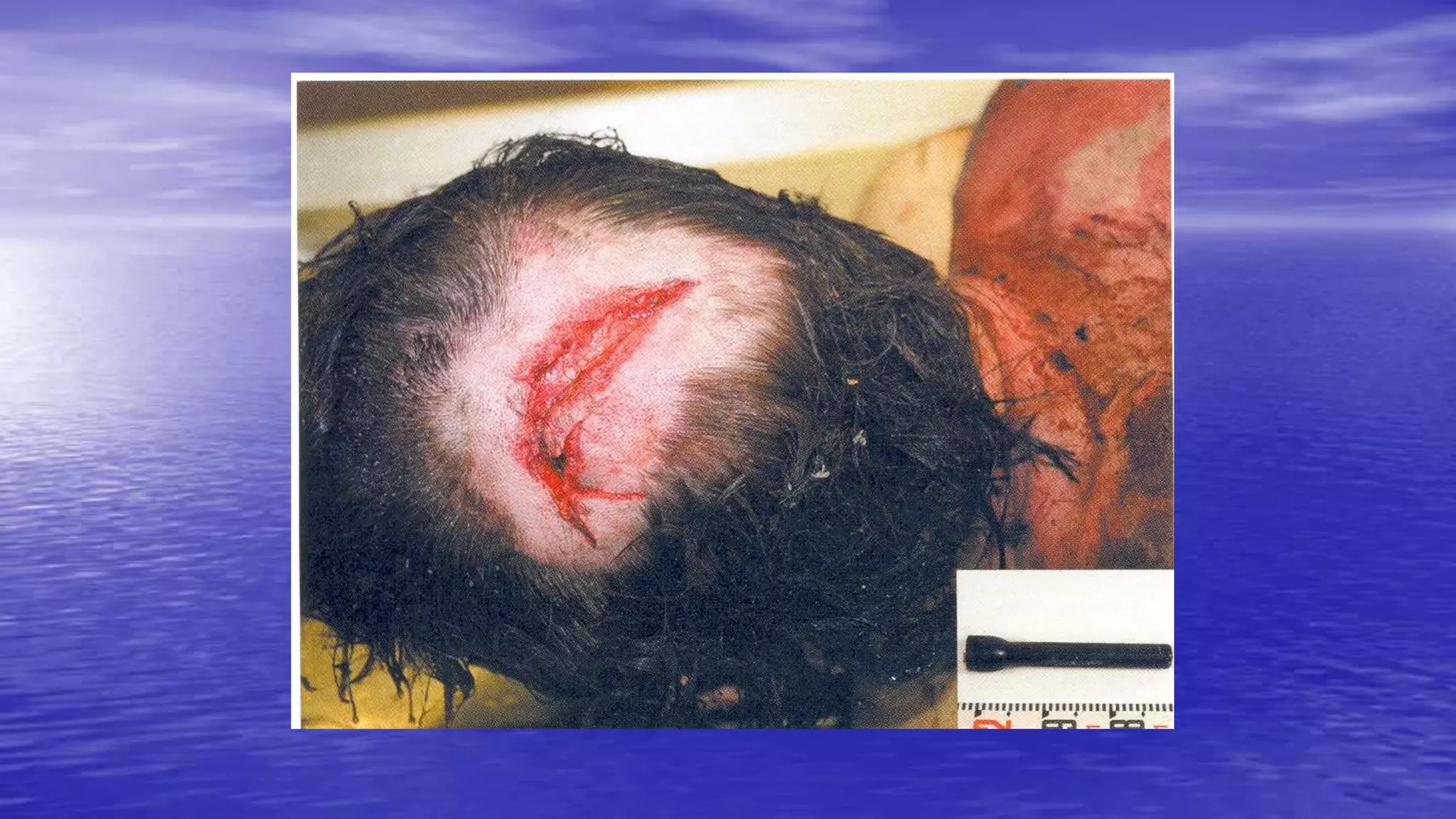
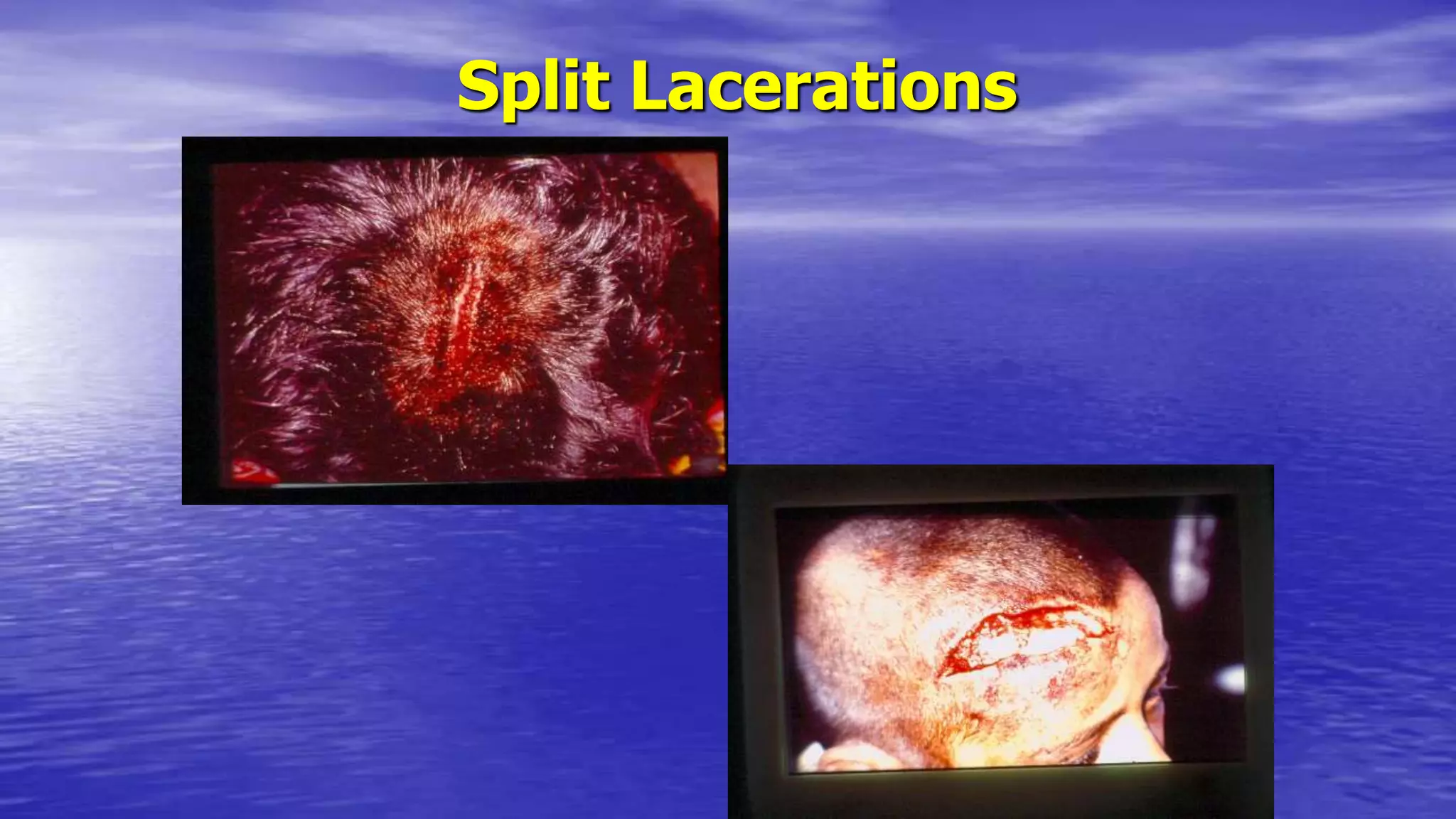
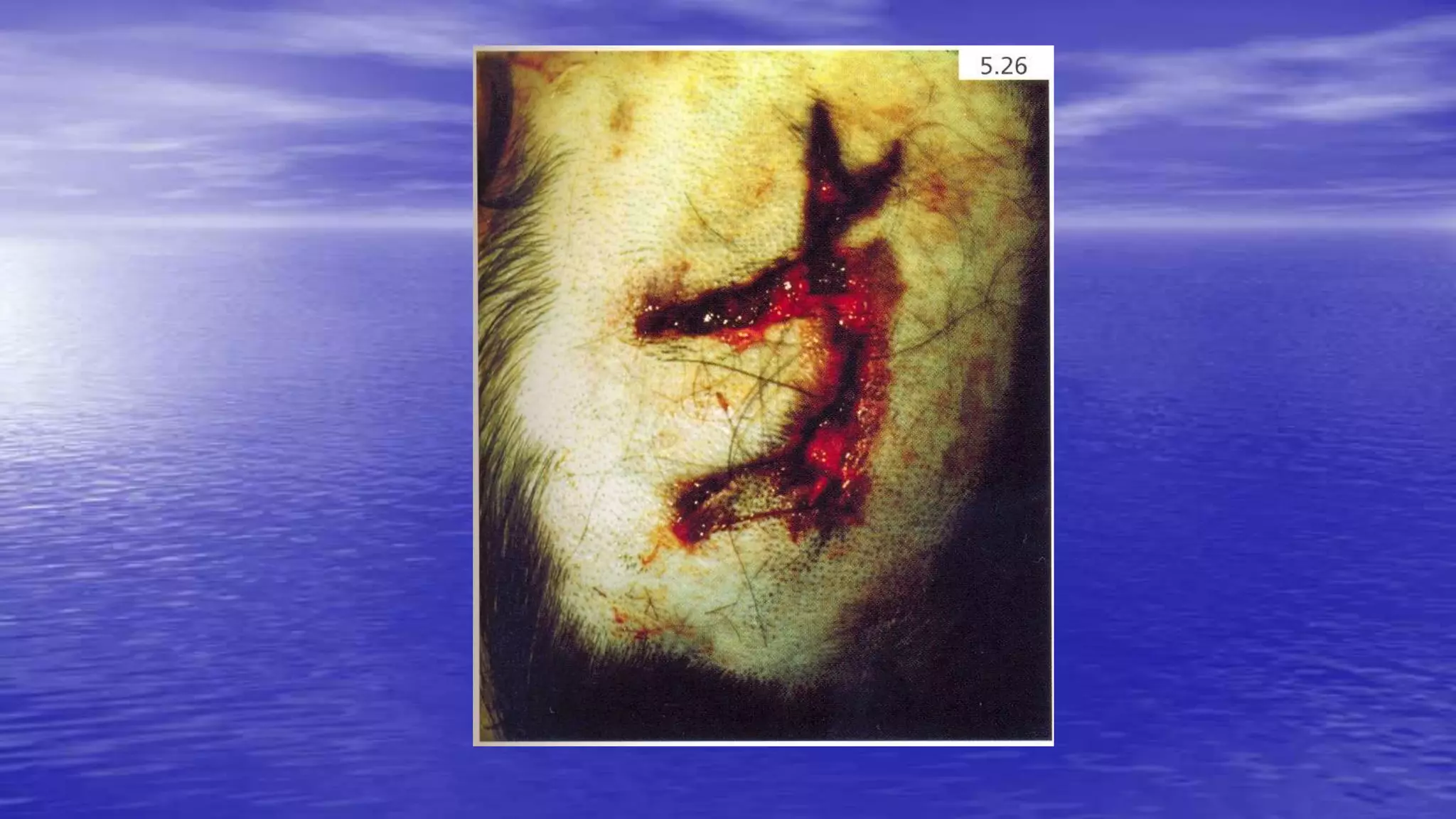
Split Laceration : Produced due to sudden
compression between two hard objects i.e.
weapon & underlying bone on areas like scalp,
chin, eyebrow etc.
Split Lacerations
FEATURES
1) Breach of tissue.
2) External haemorrhage minimal.
3) Bruising of the edges and
surrounding tissue.
4) Elements such as hair or denudation
of hair present in the wound.
5) Crushing of hair bulbs
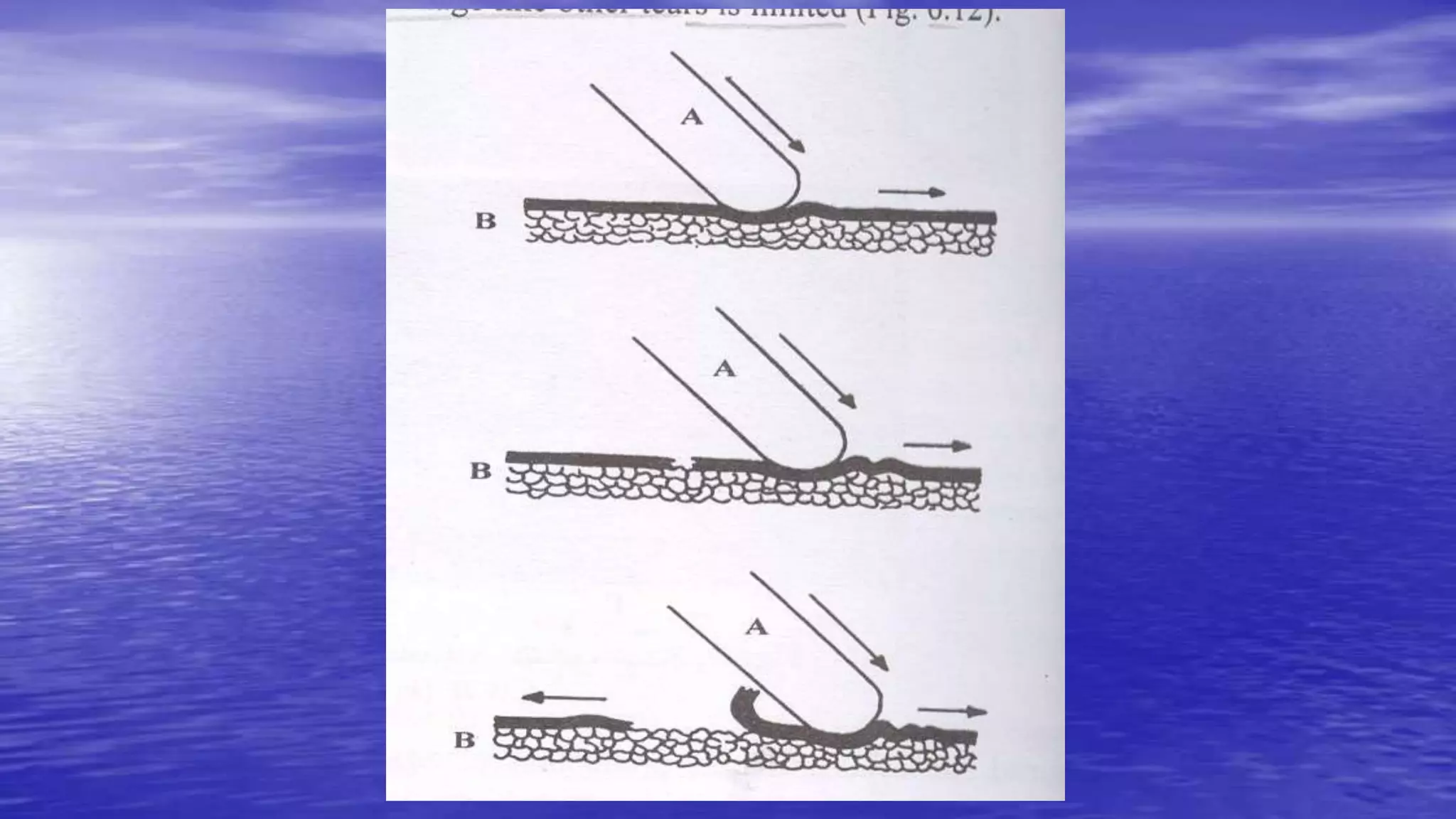
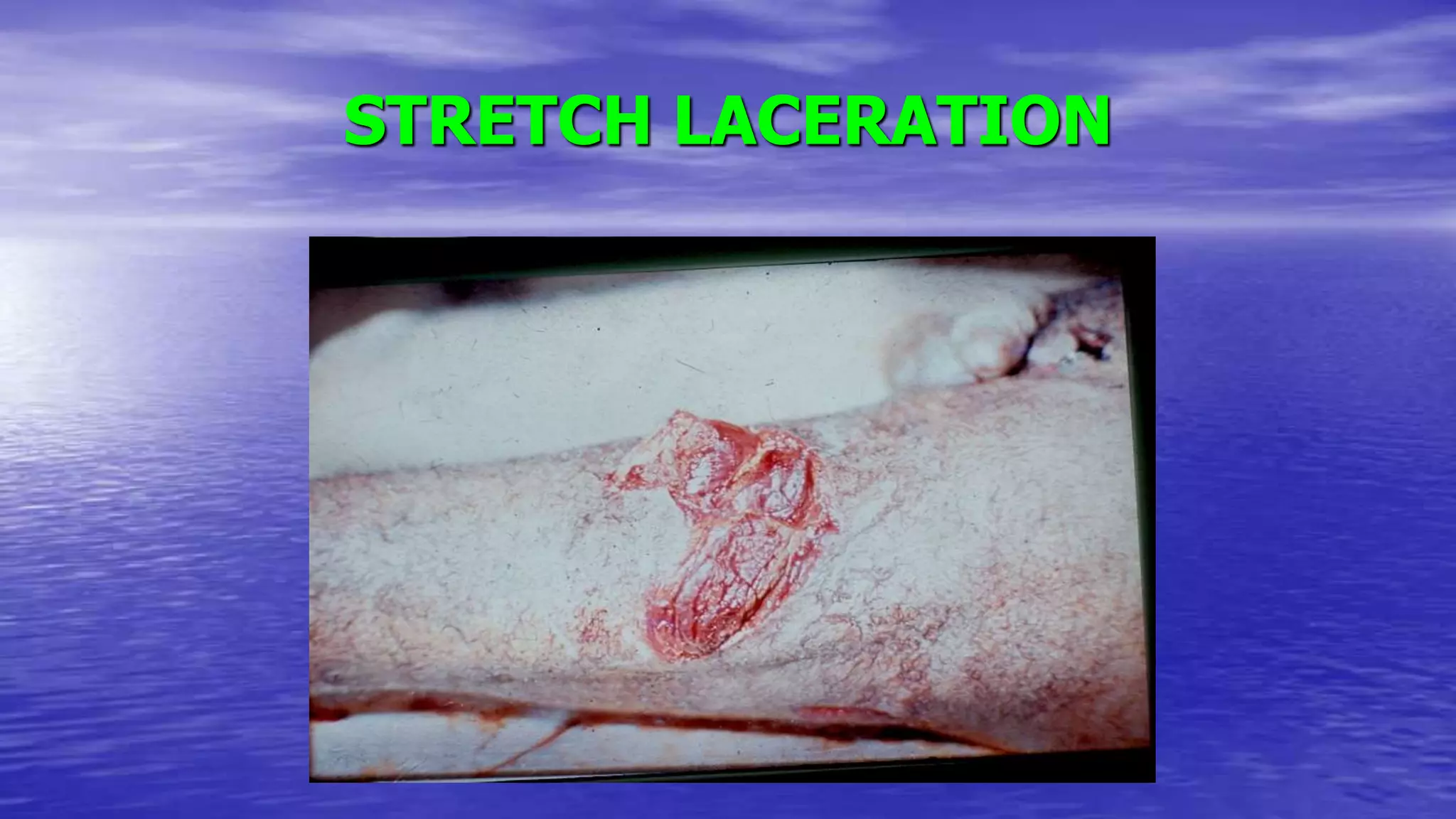
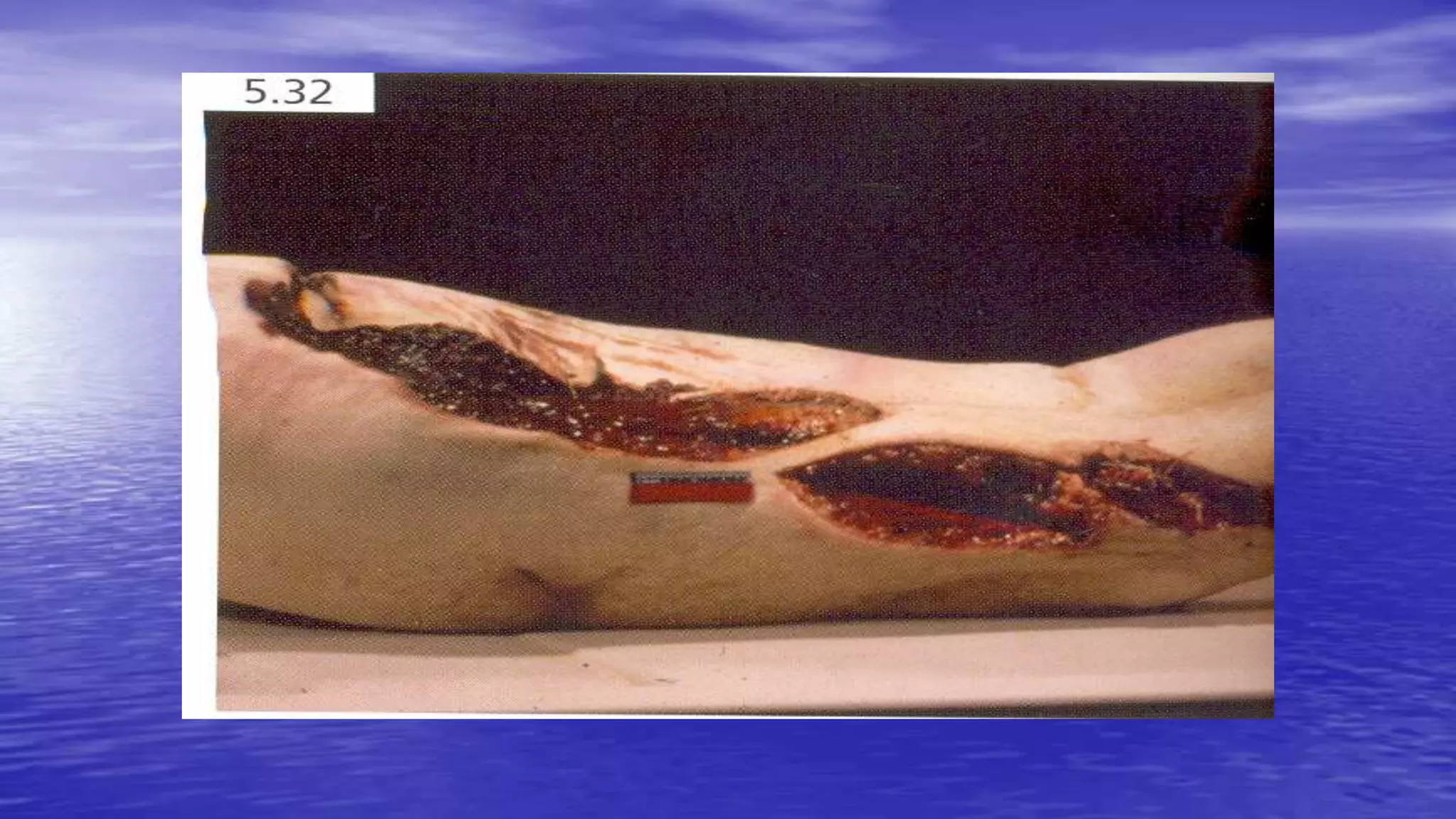
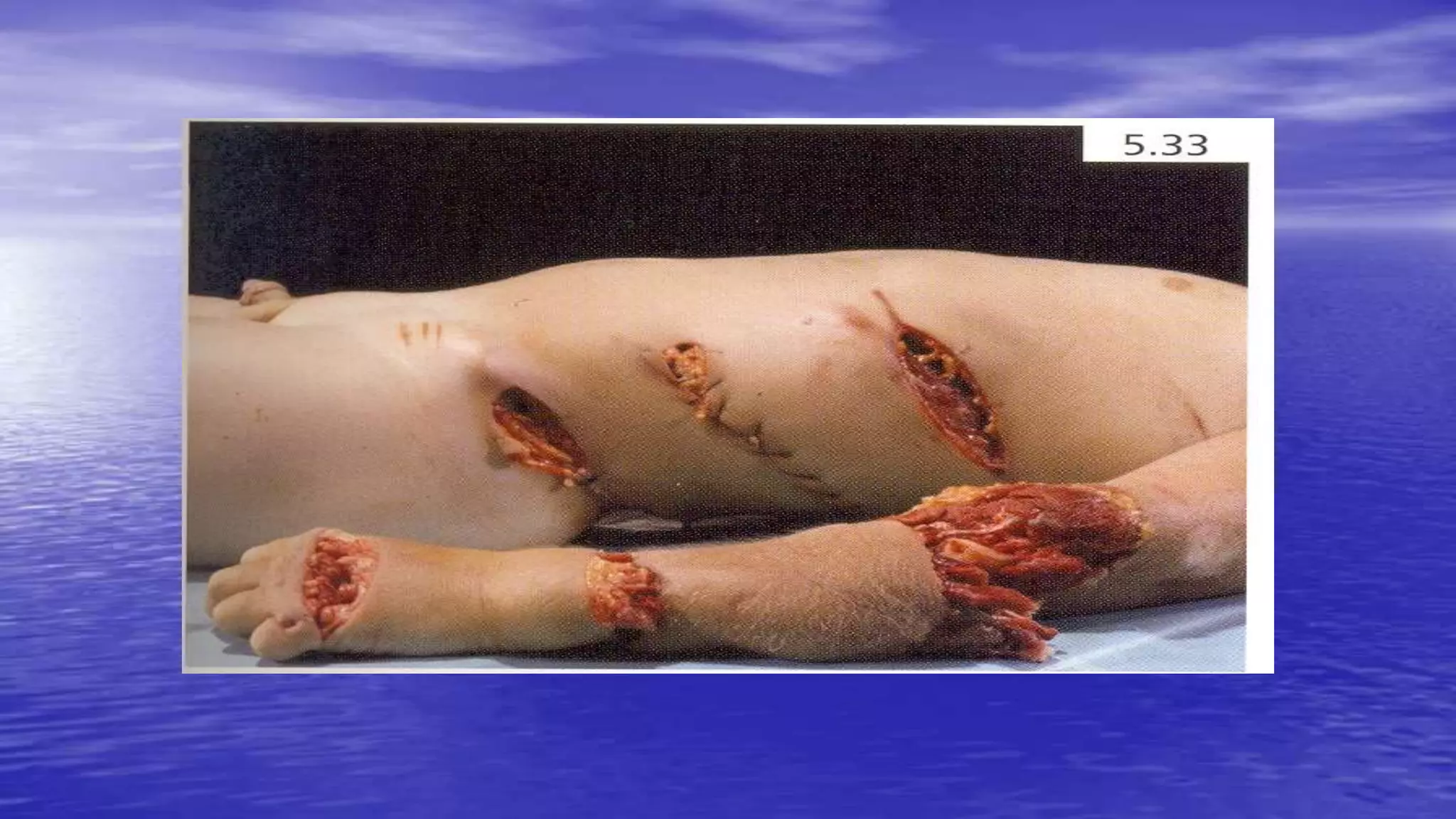
STRETCH LACERATION
Breach of the skin is due to over
stretching slightly away from the
point of contract – more seen in
industry/vehicular accidents when
parts of the body get trapped or when
a bone is bent and broken and there is
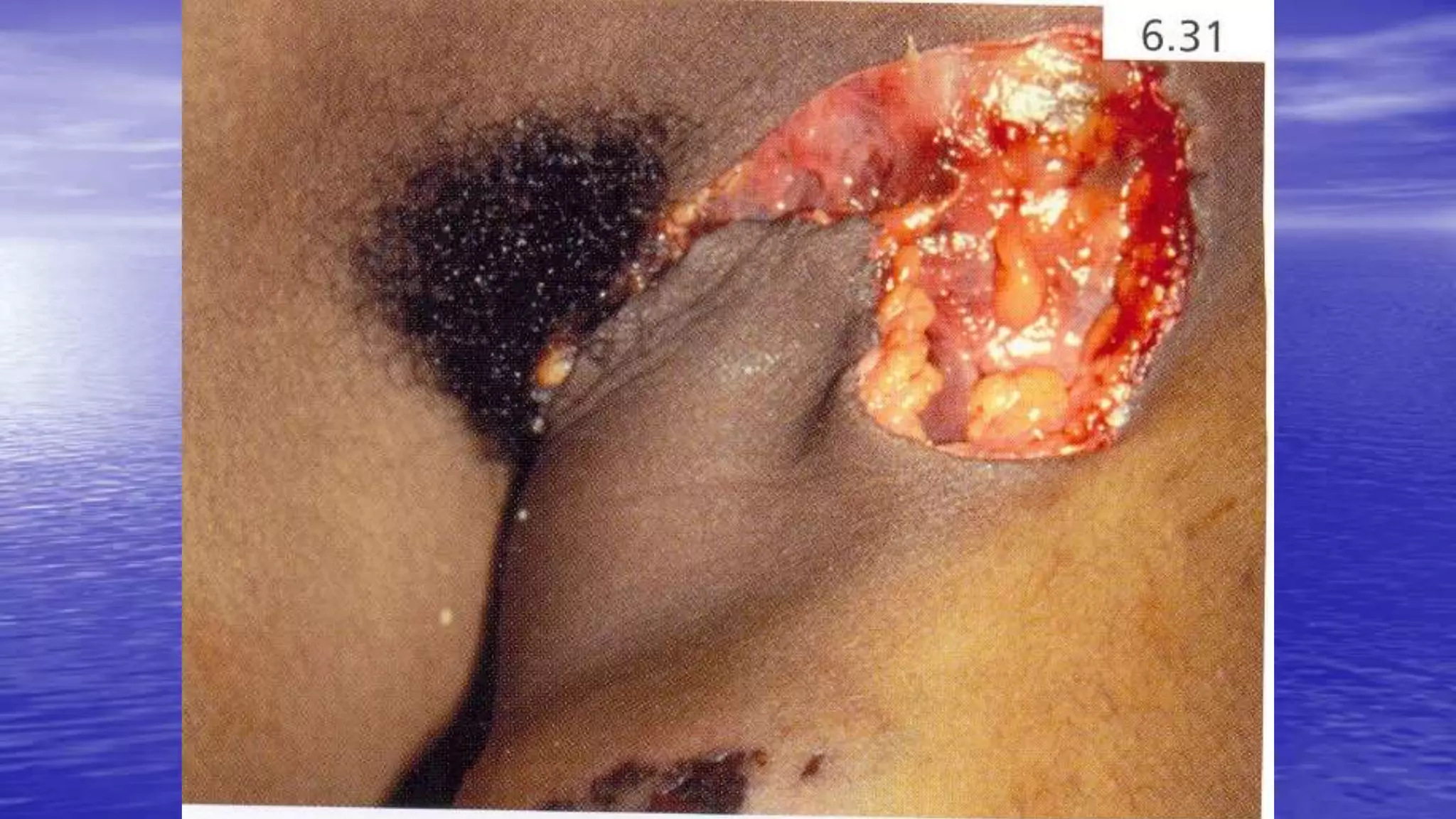
traction strain over skin.
STRETCH LACERATION
FEATURES
1) Breach of skin / soft tissue.
2) External haemorrhage.
3) Irregular edges.
4) Flapping of skin in the direction of stretch.
5) Bruising at the point of pressure, not edges.
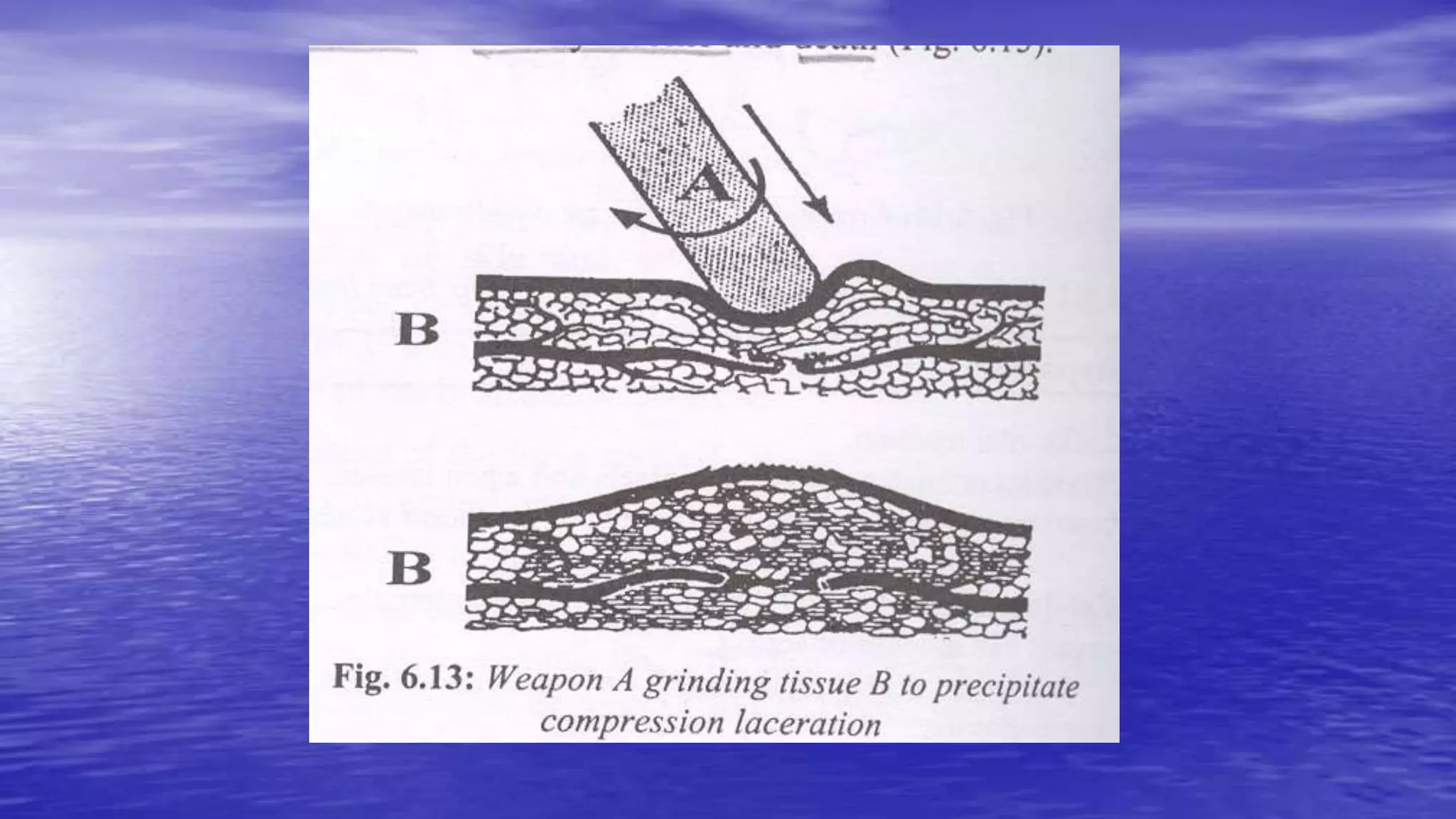
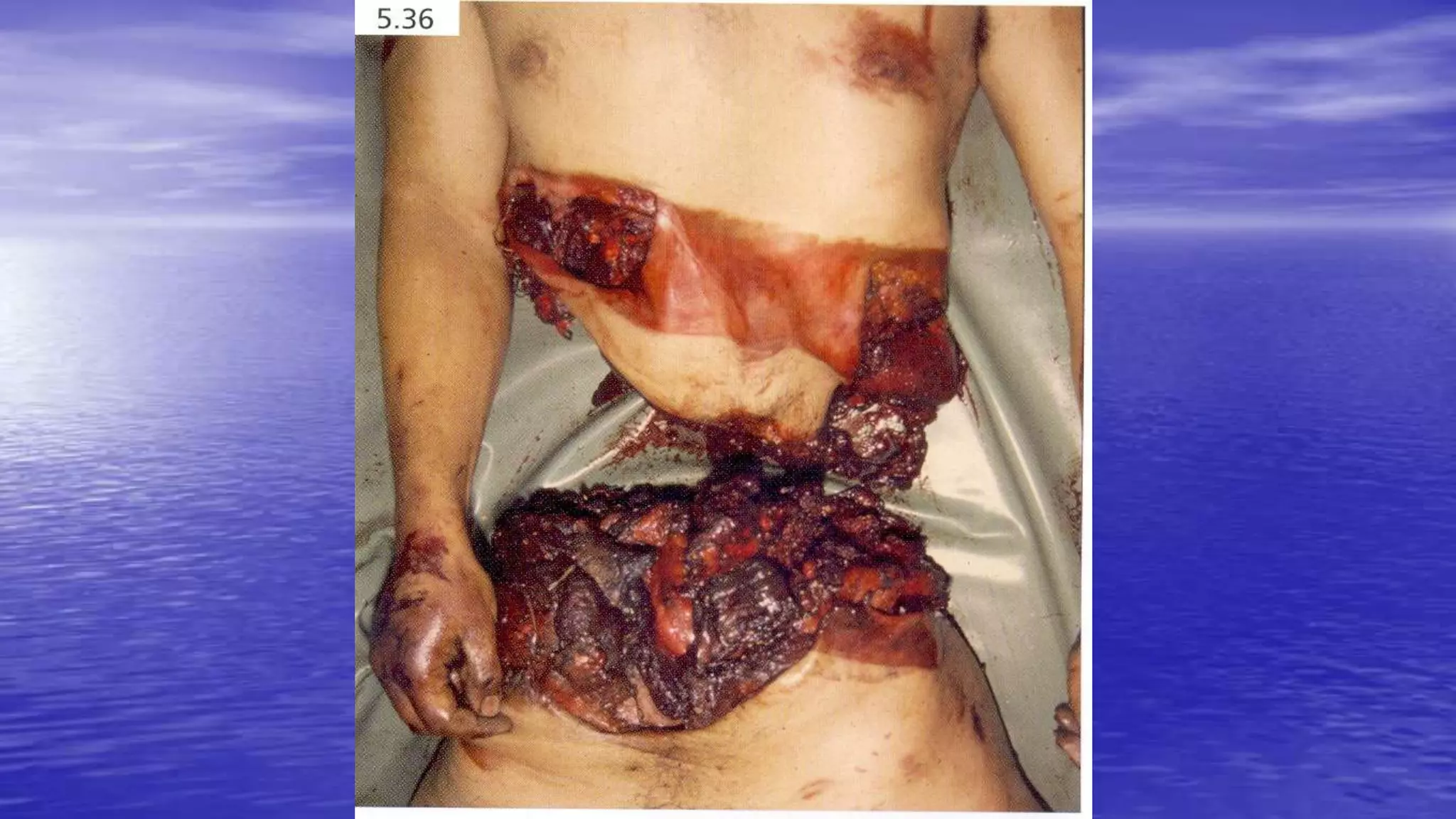
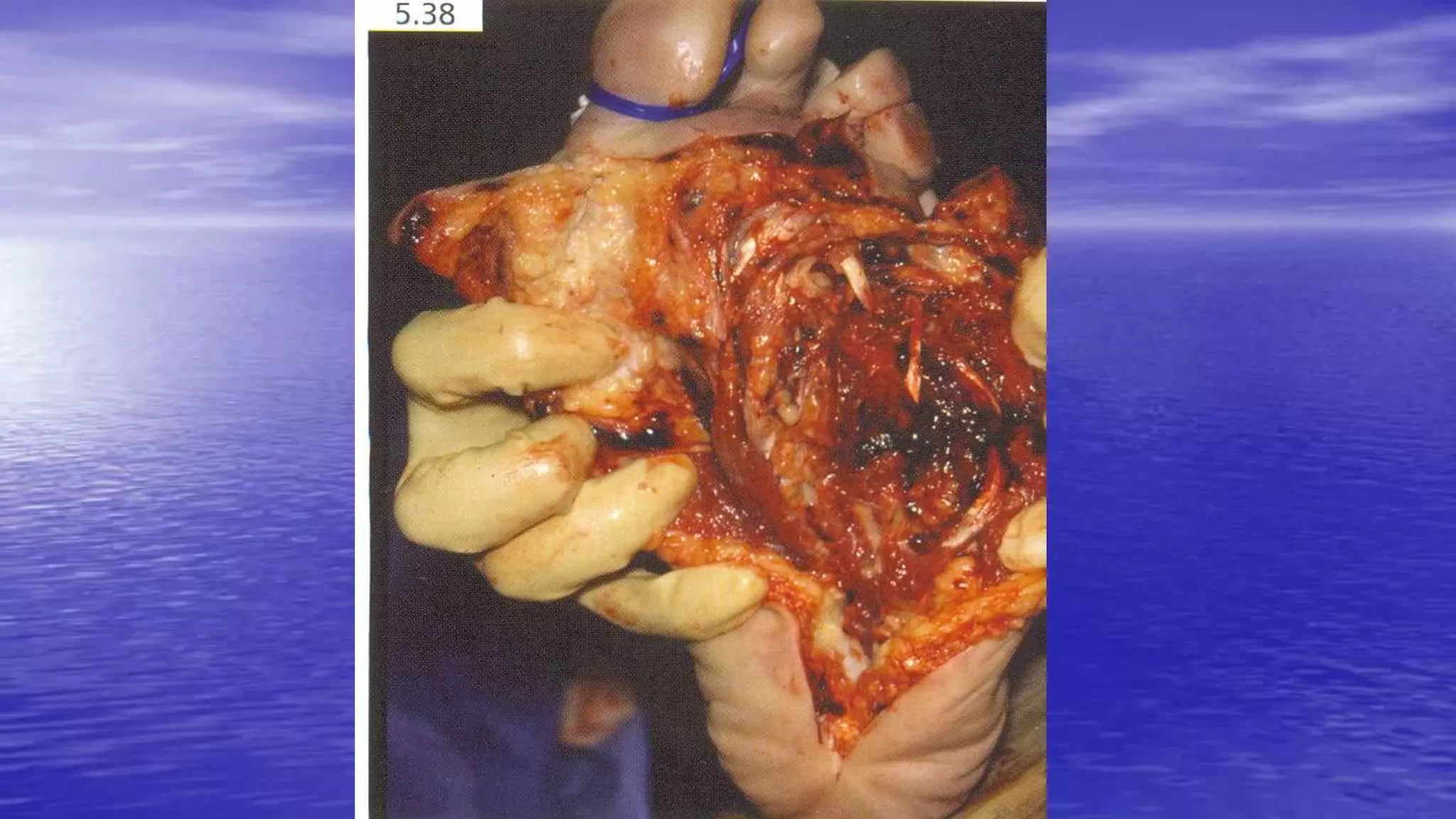
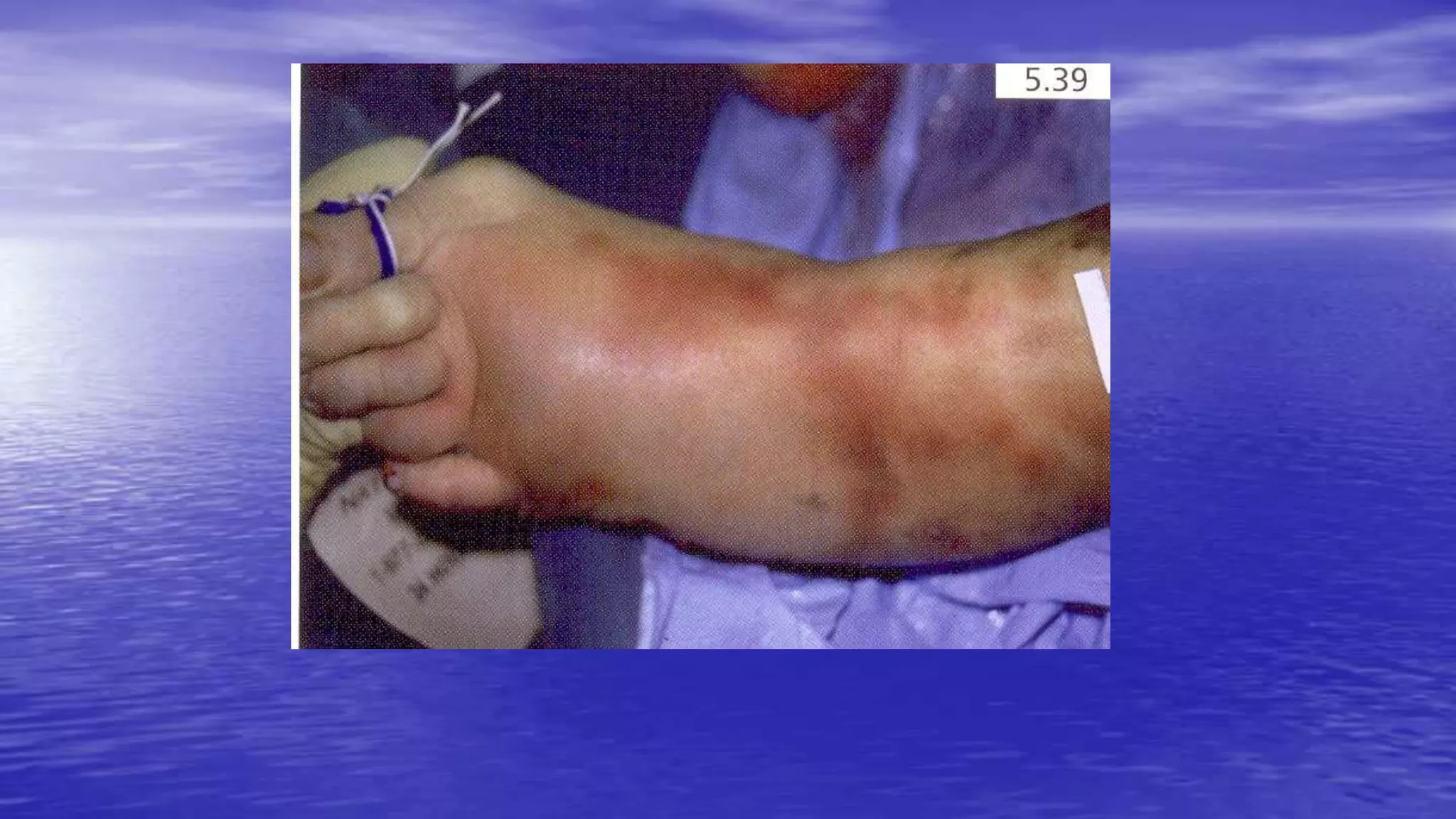
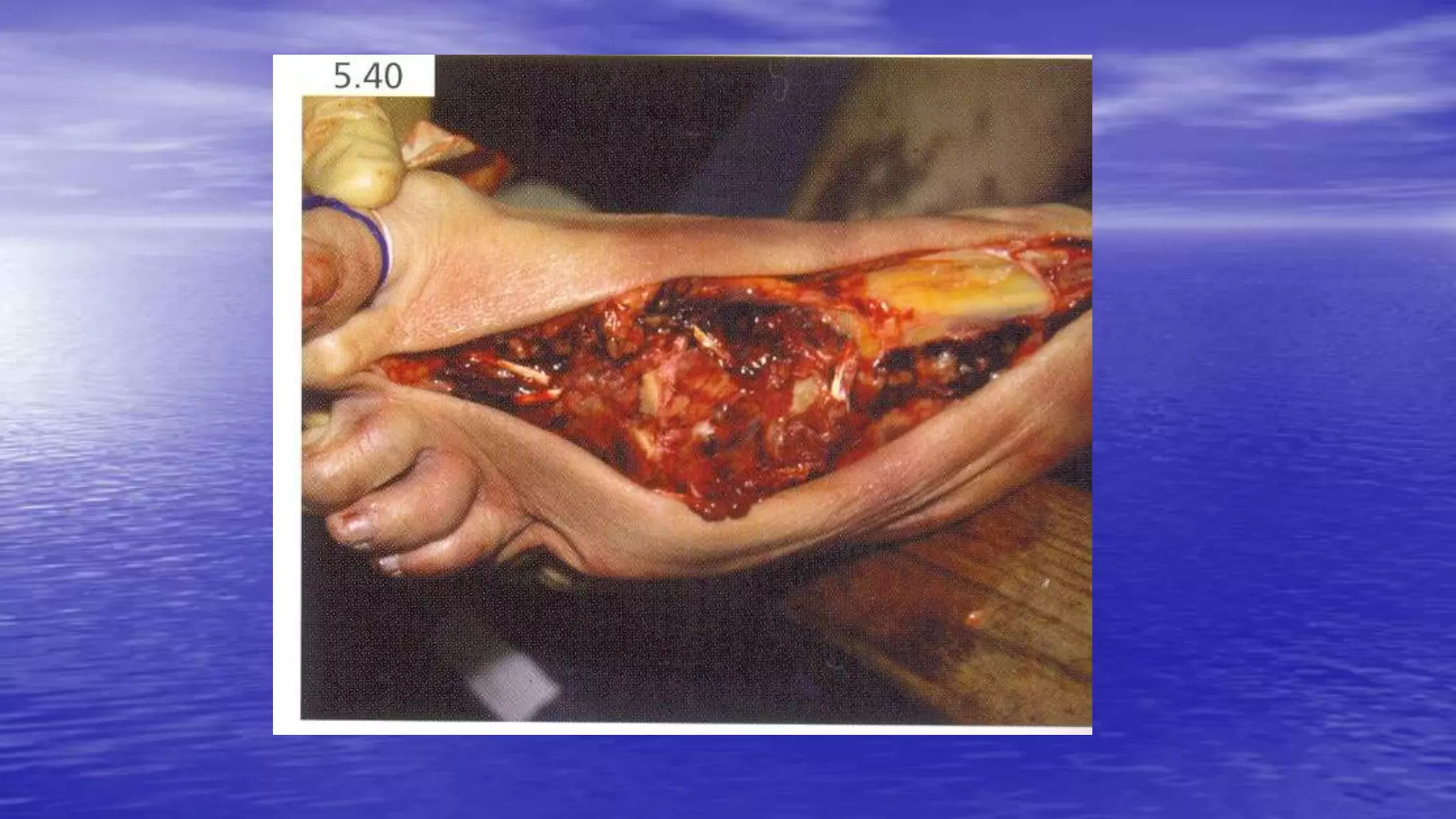
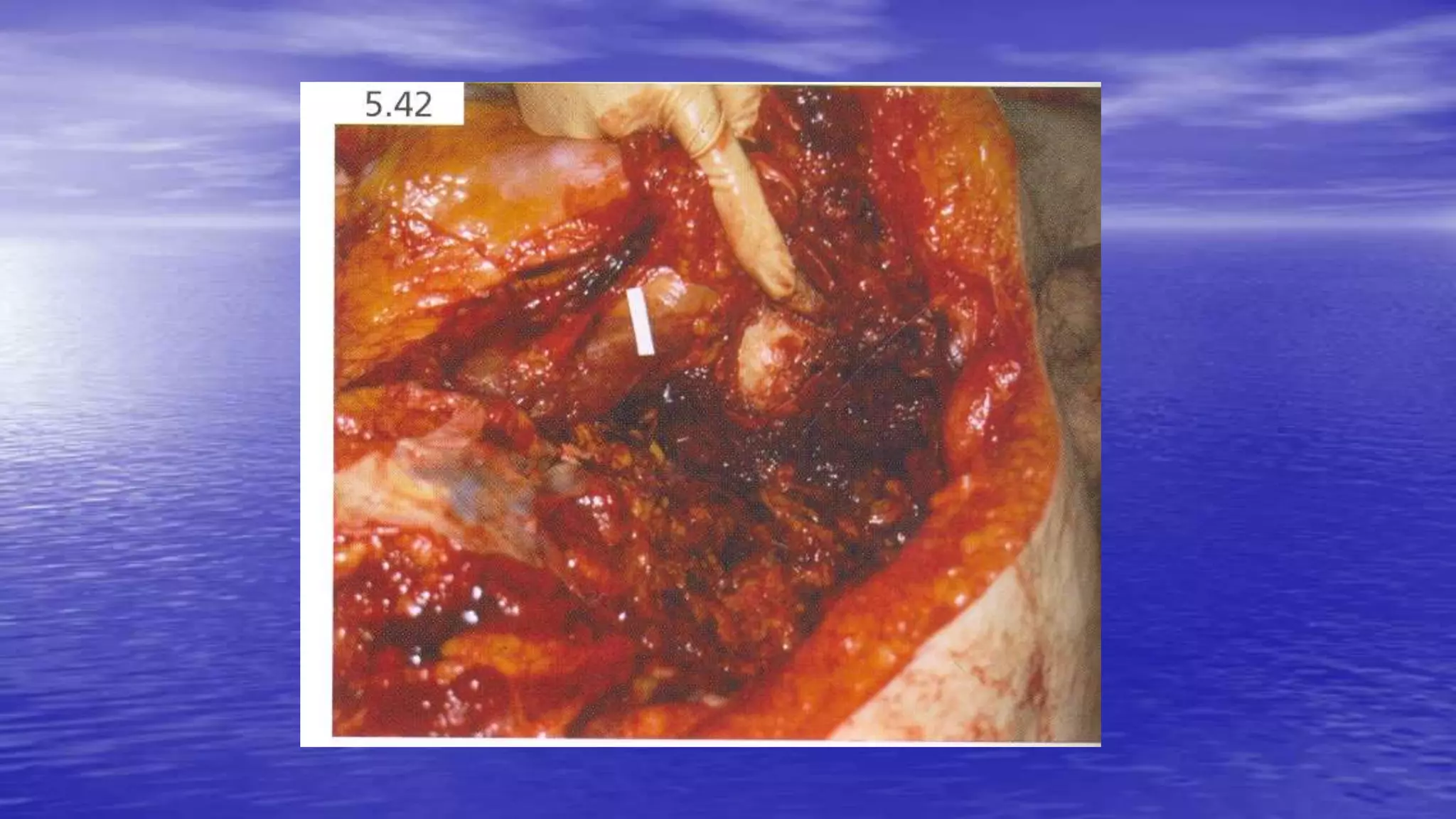
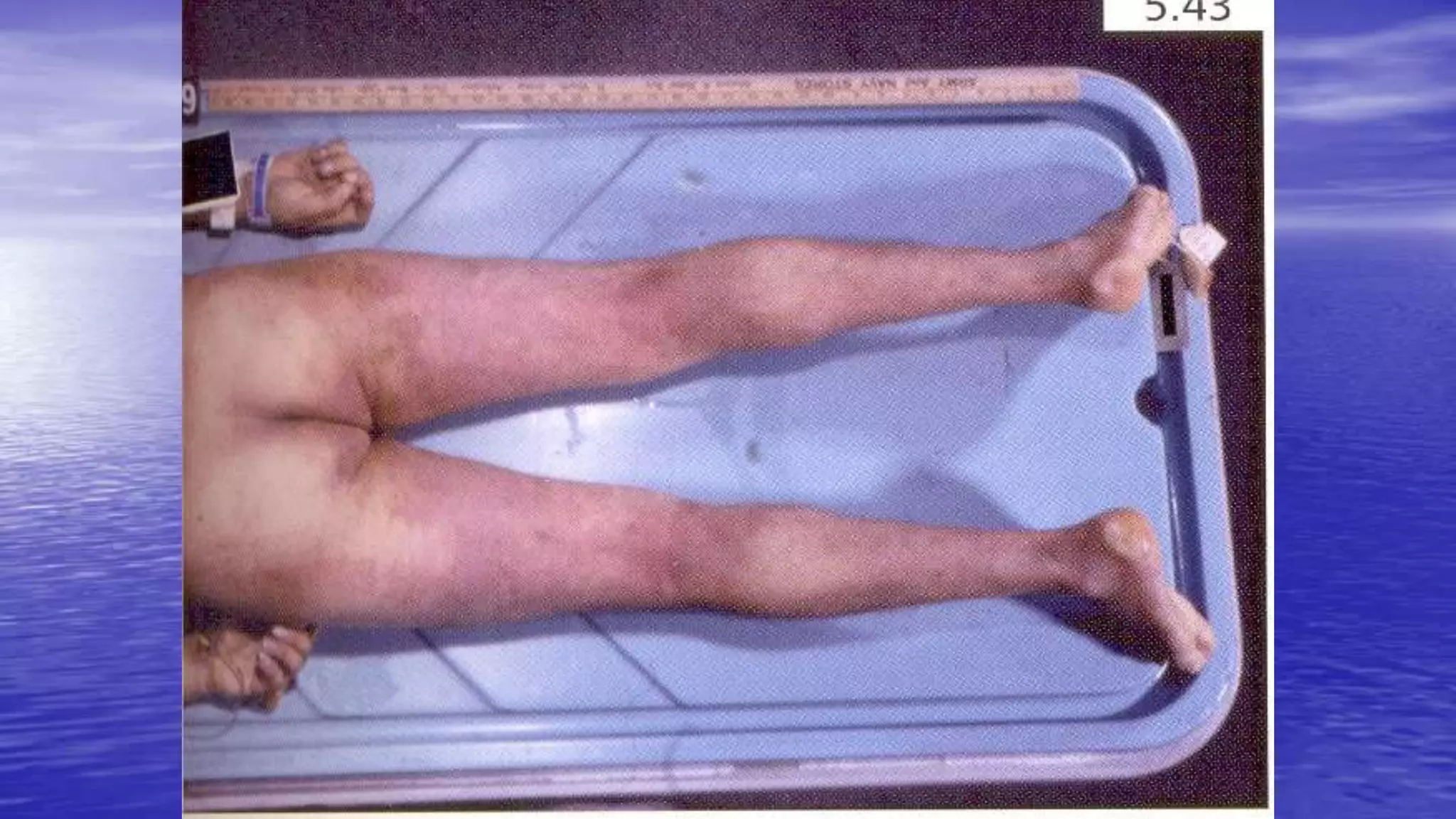
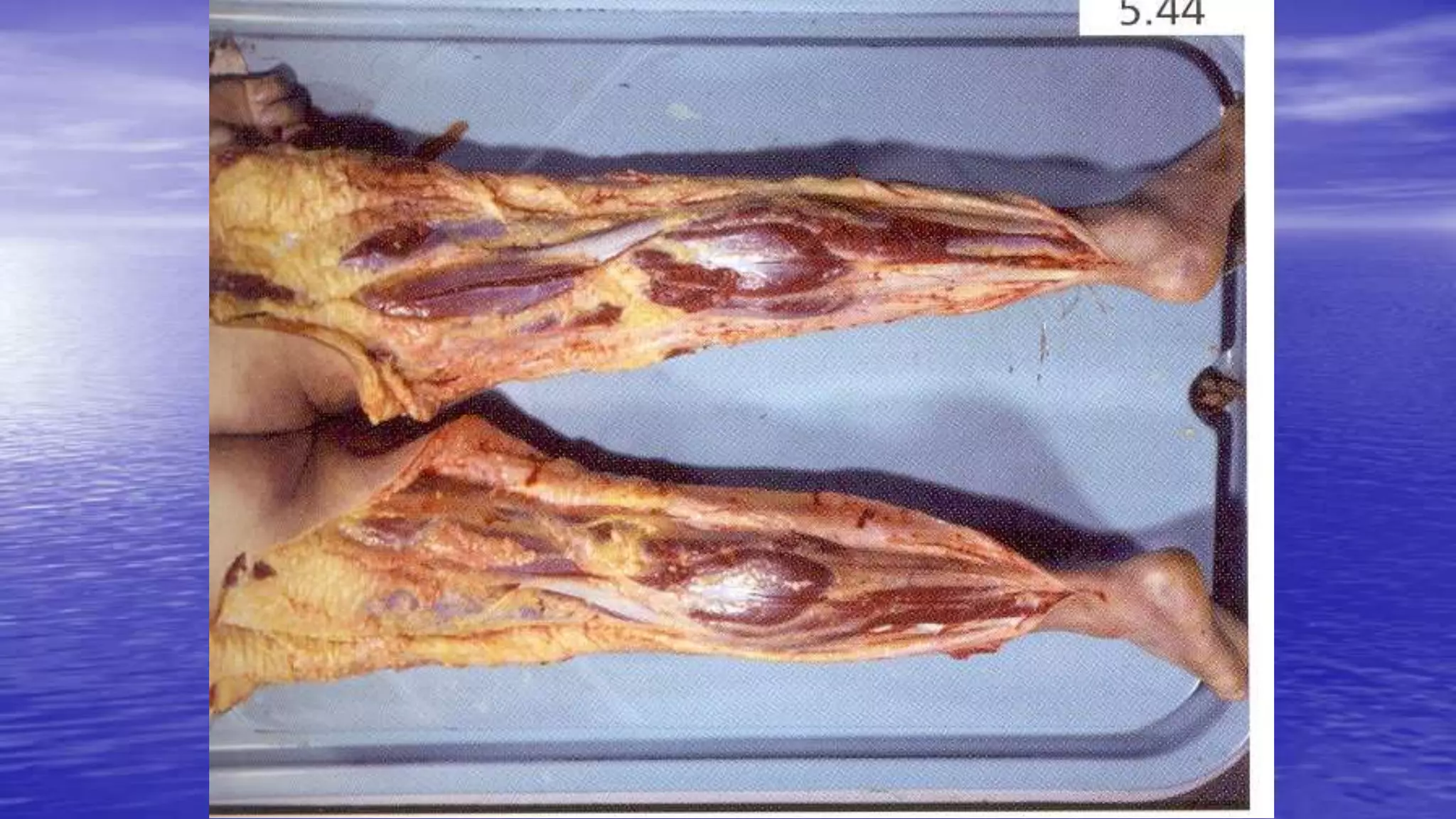
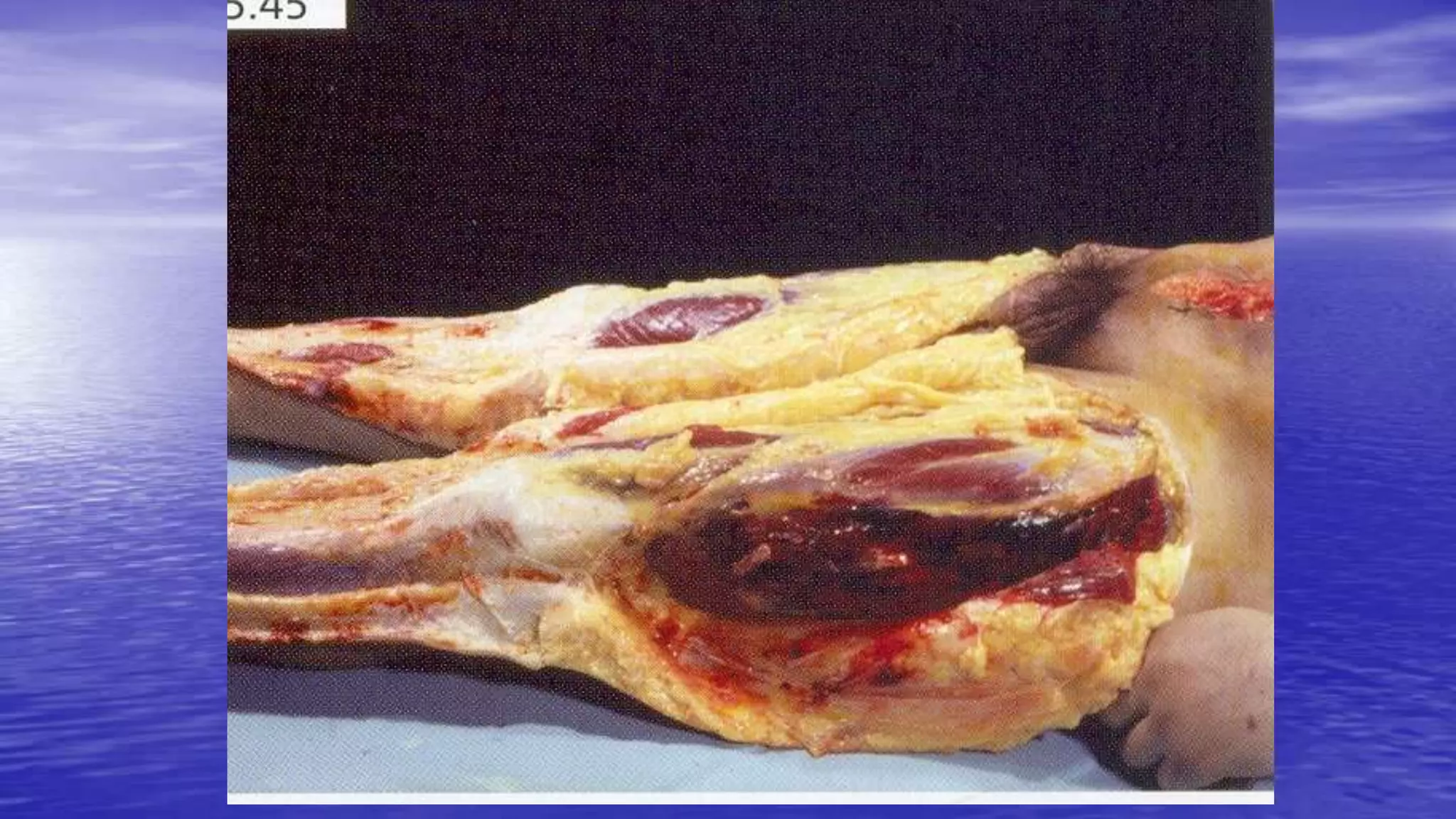
LACERATION BECAUSE OF
GRINDING COMPRESSION BY WEIGHT
Localized pressure by heavy weight
causes tear and separation of the
skin from underlying tissues –
underlying tissue is crushed / minced
e.g. passing a vehicular wheel over a
limb.
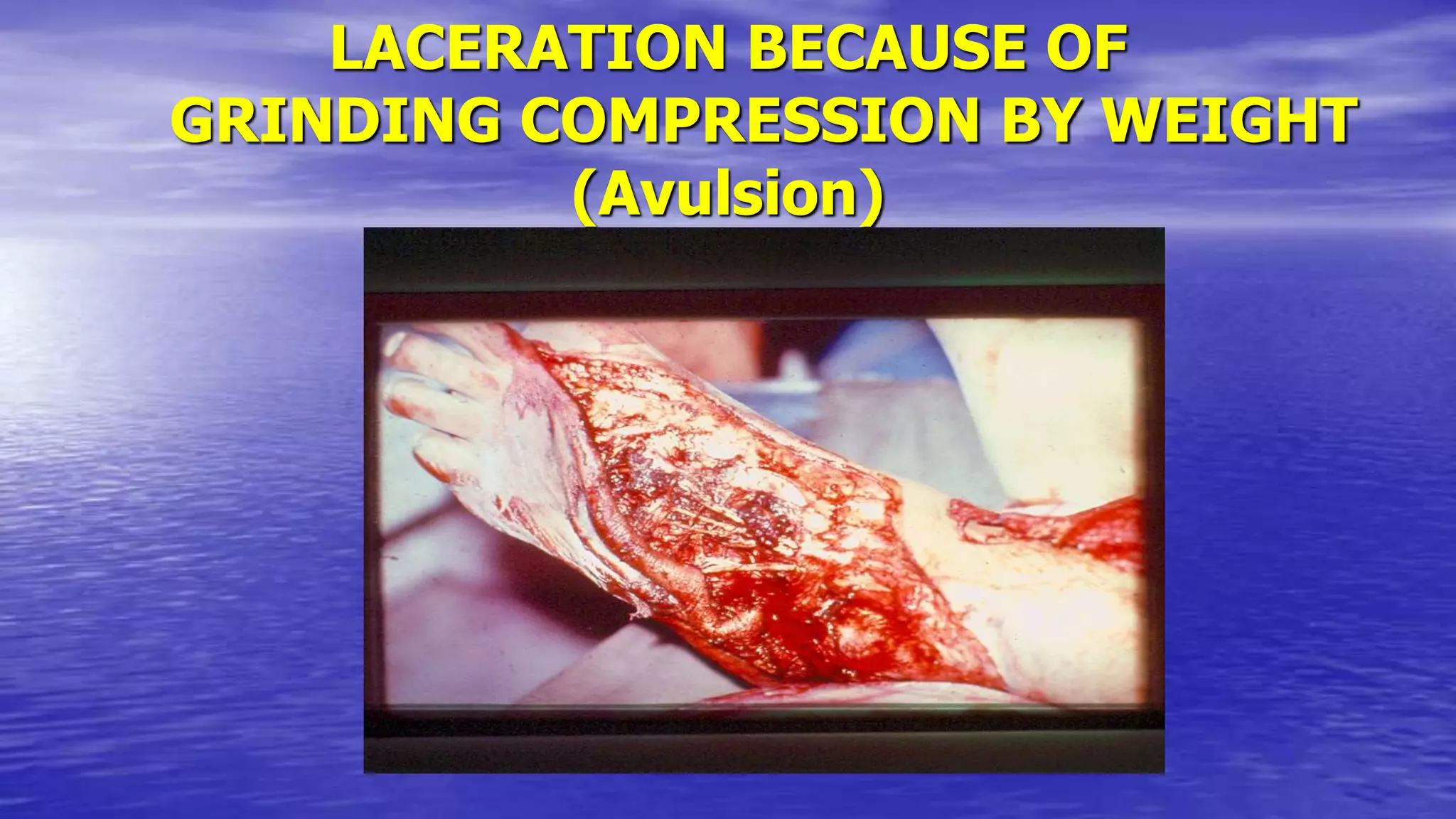
LACERATION BECAUSE OF
GRINDING COMPRESSION BY WEIGHT
(Avulsion)
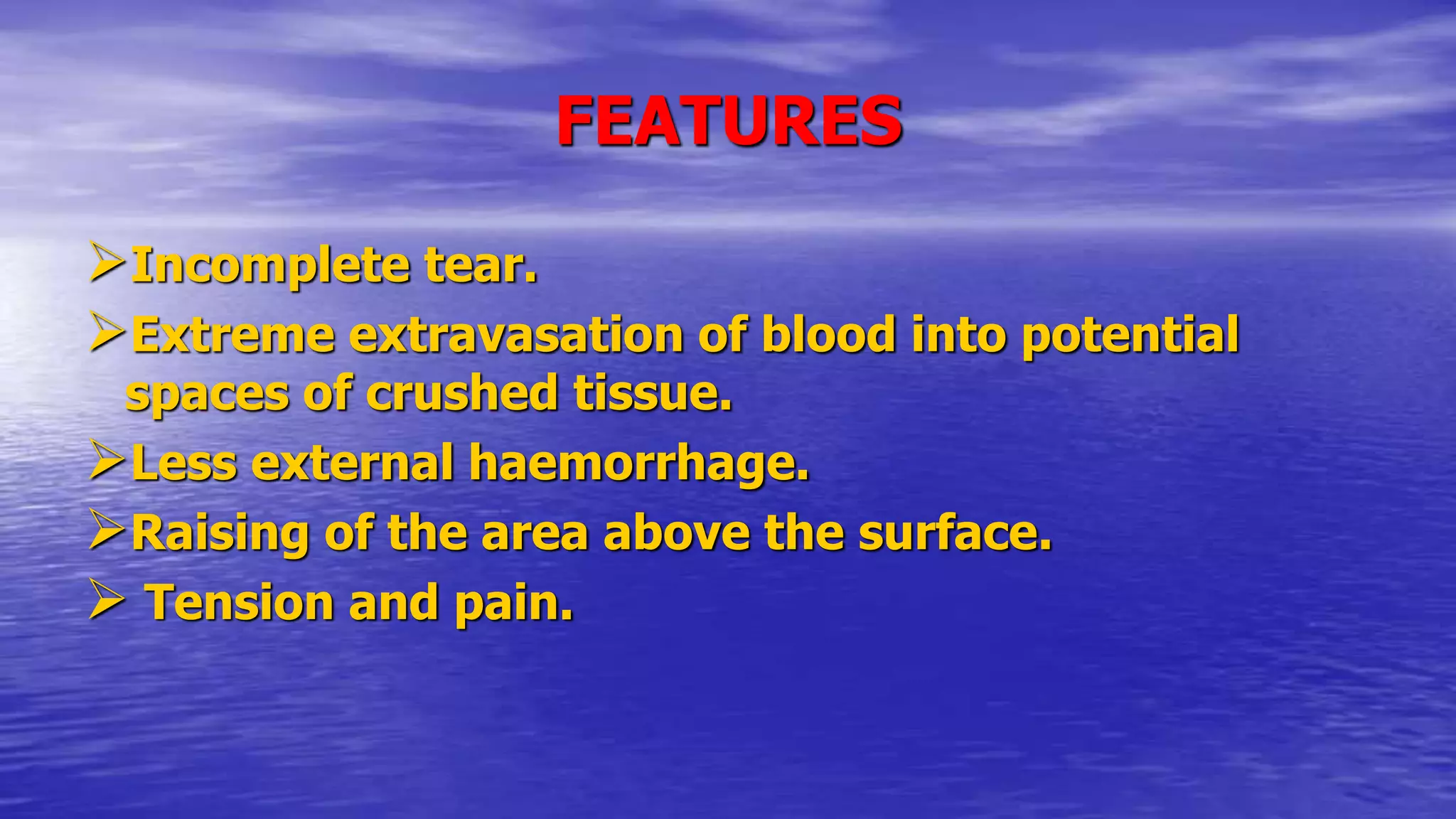
FEATURES
Incomplete tear.
Extreme extravasation of blood into potential
spaces of crushed tissue.
Less external haemorrhage.
Raising of the area above the surface.
 Tension and pain.
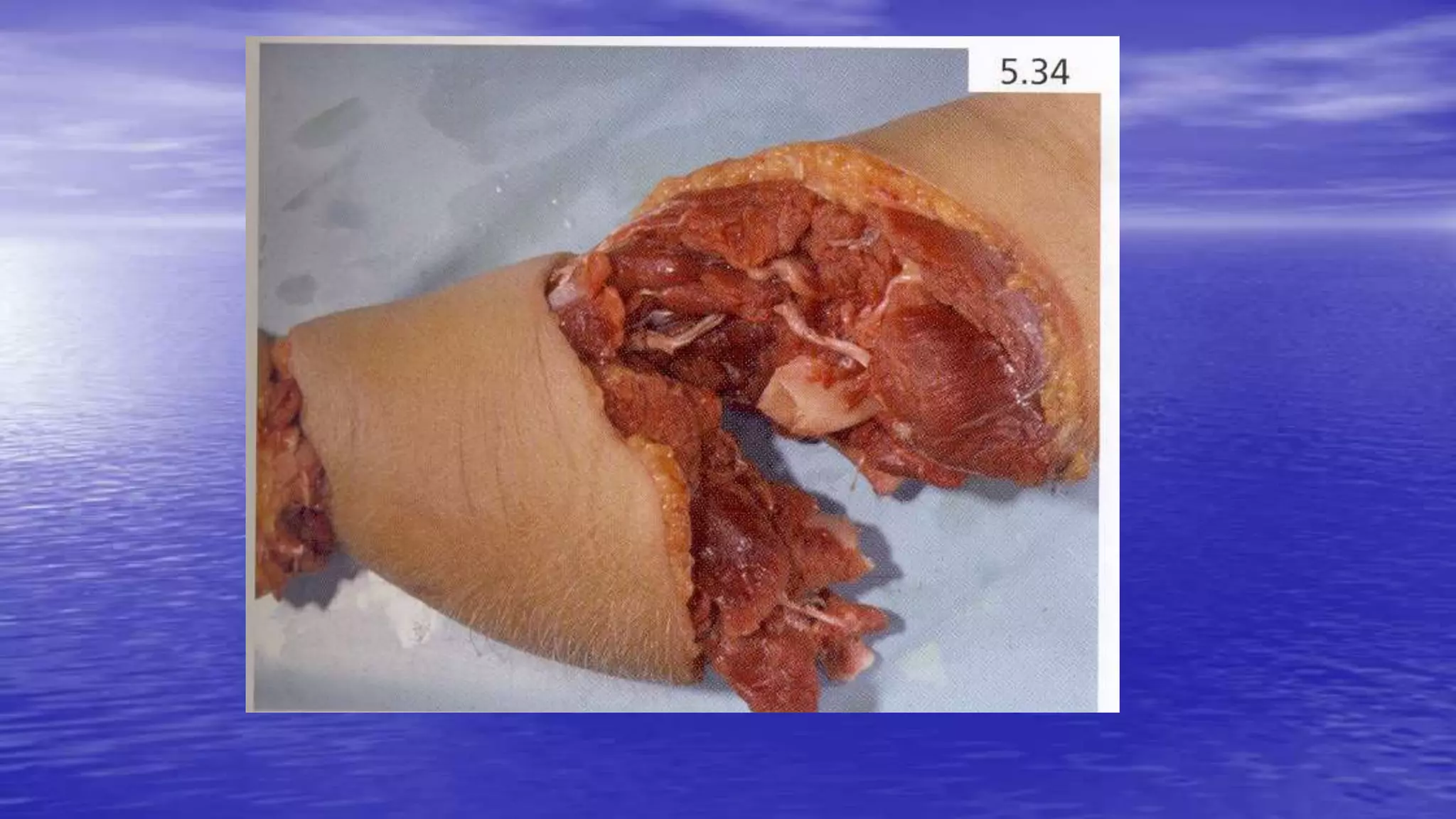
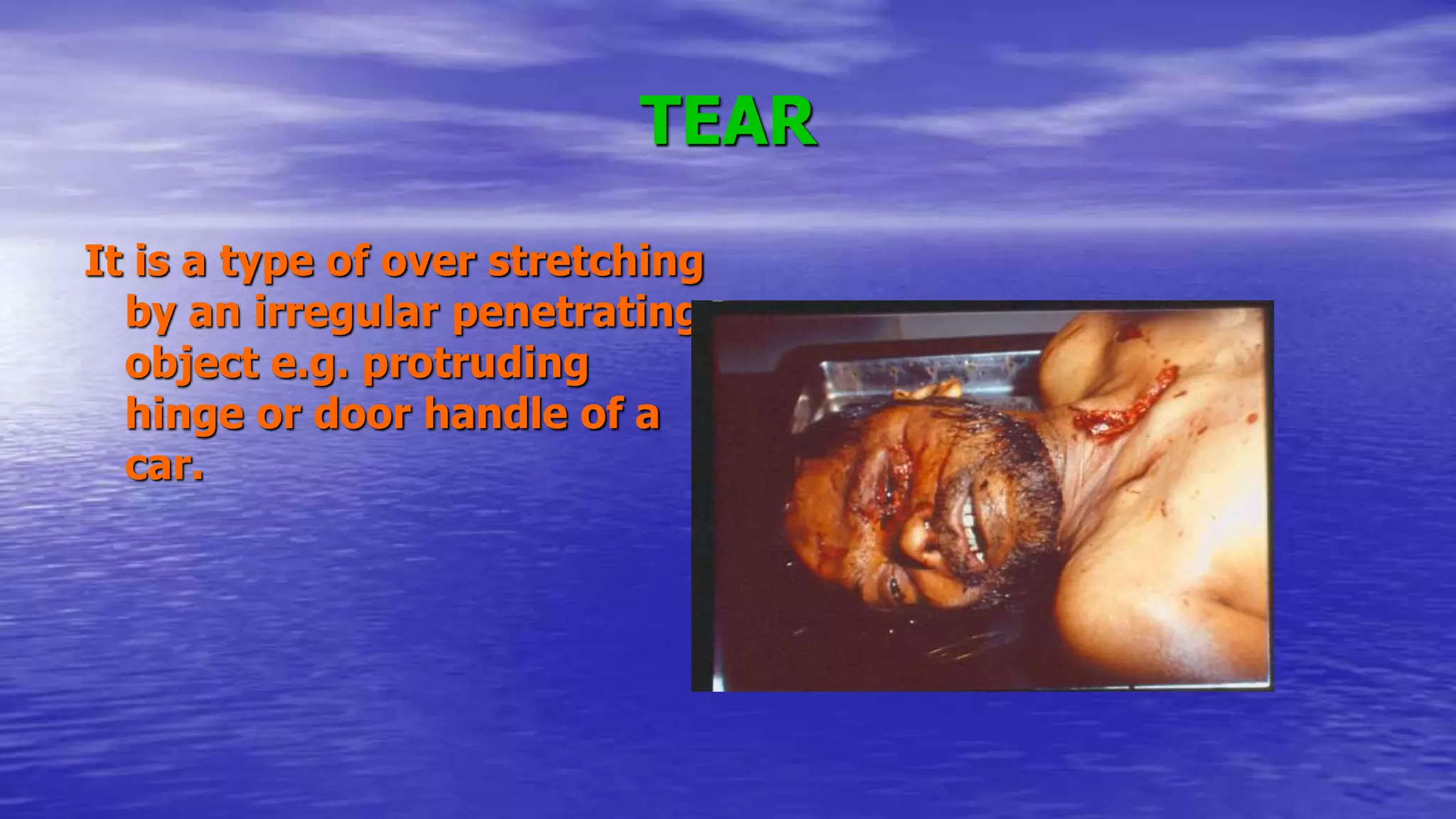
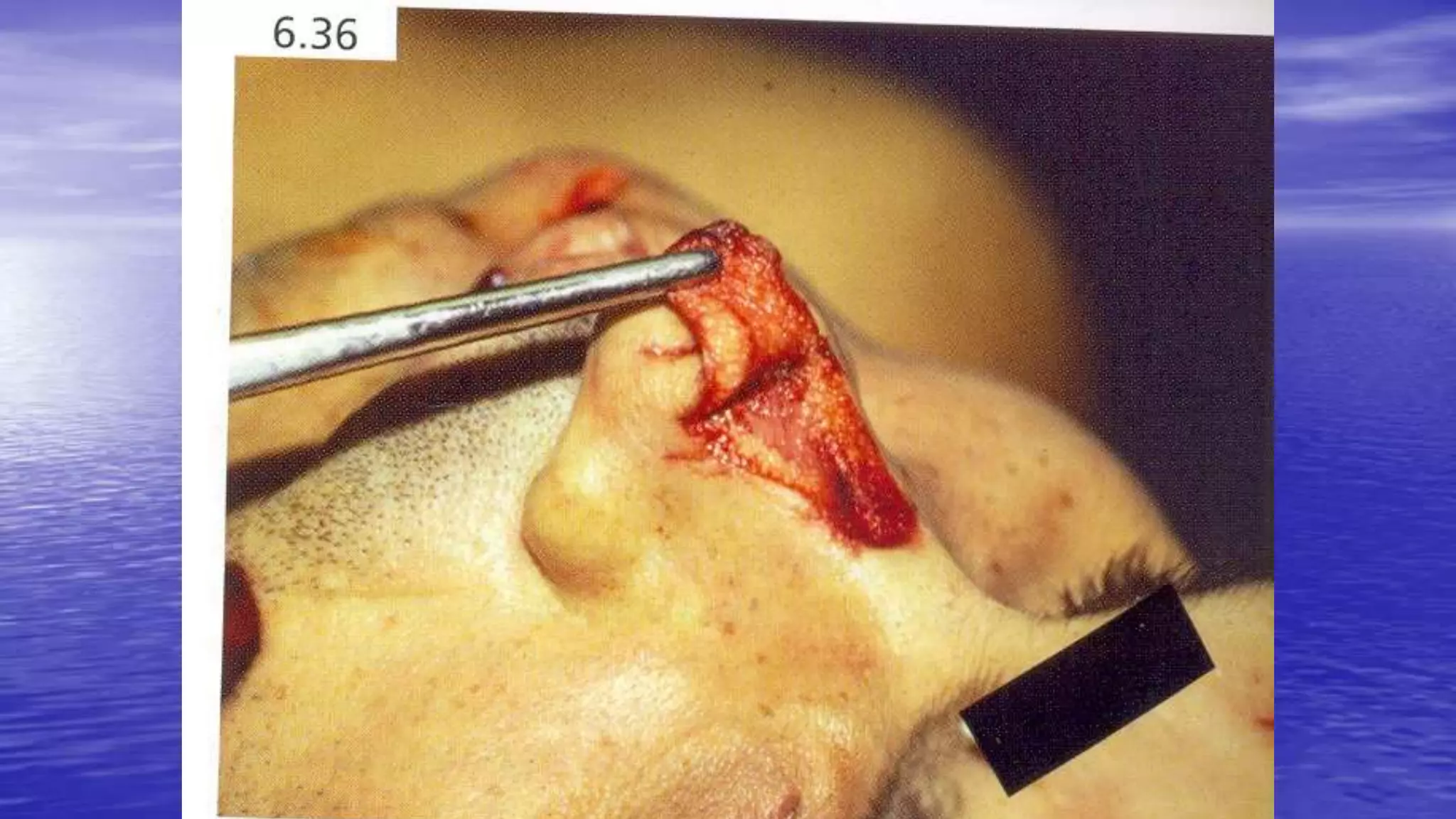
TEAR
It is a type of over stretching
by an irregular penetrating
object e.g. protruding
hinge or door handle of a
car.
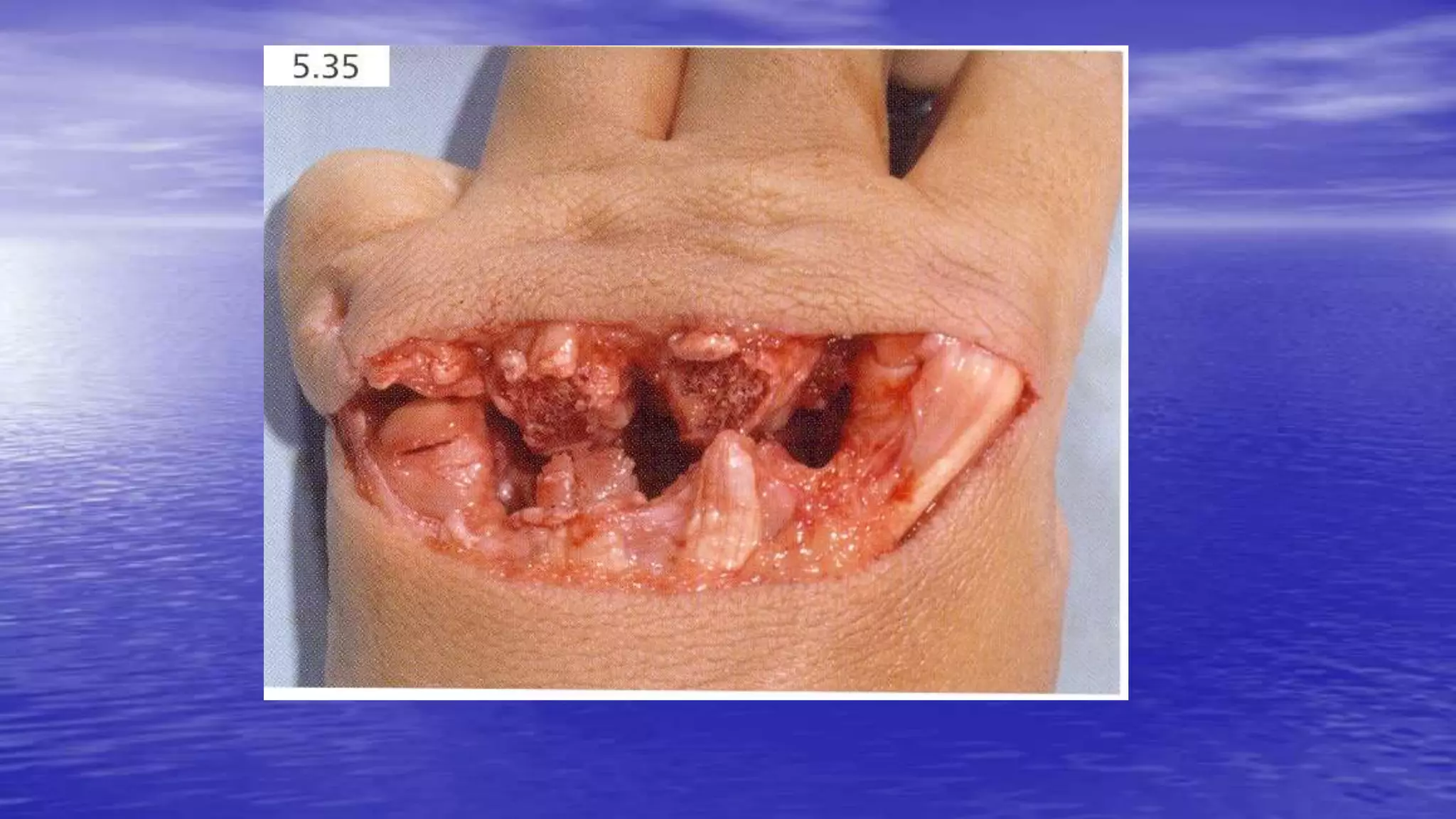
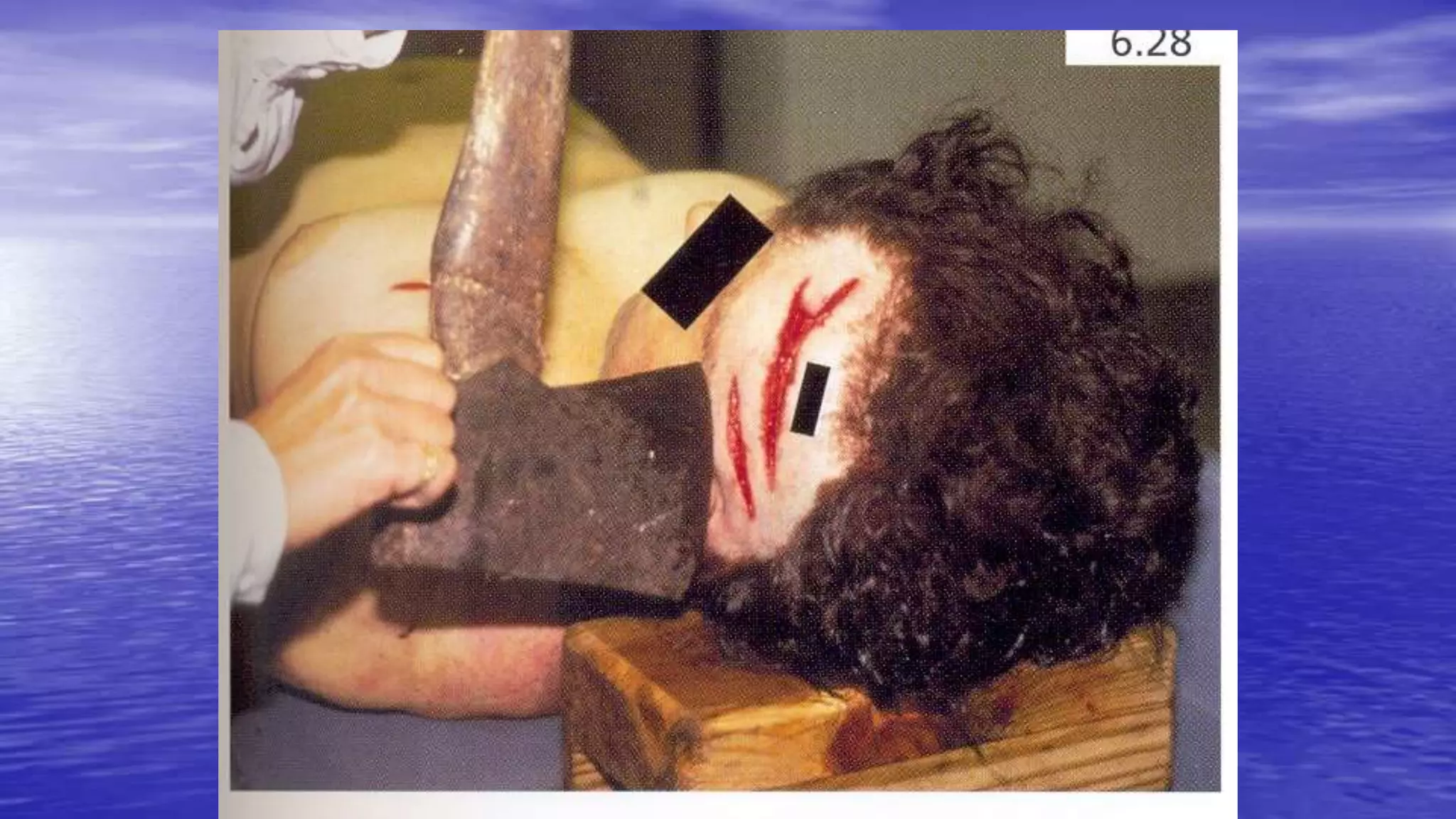
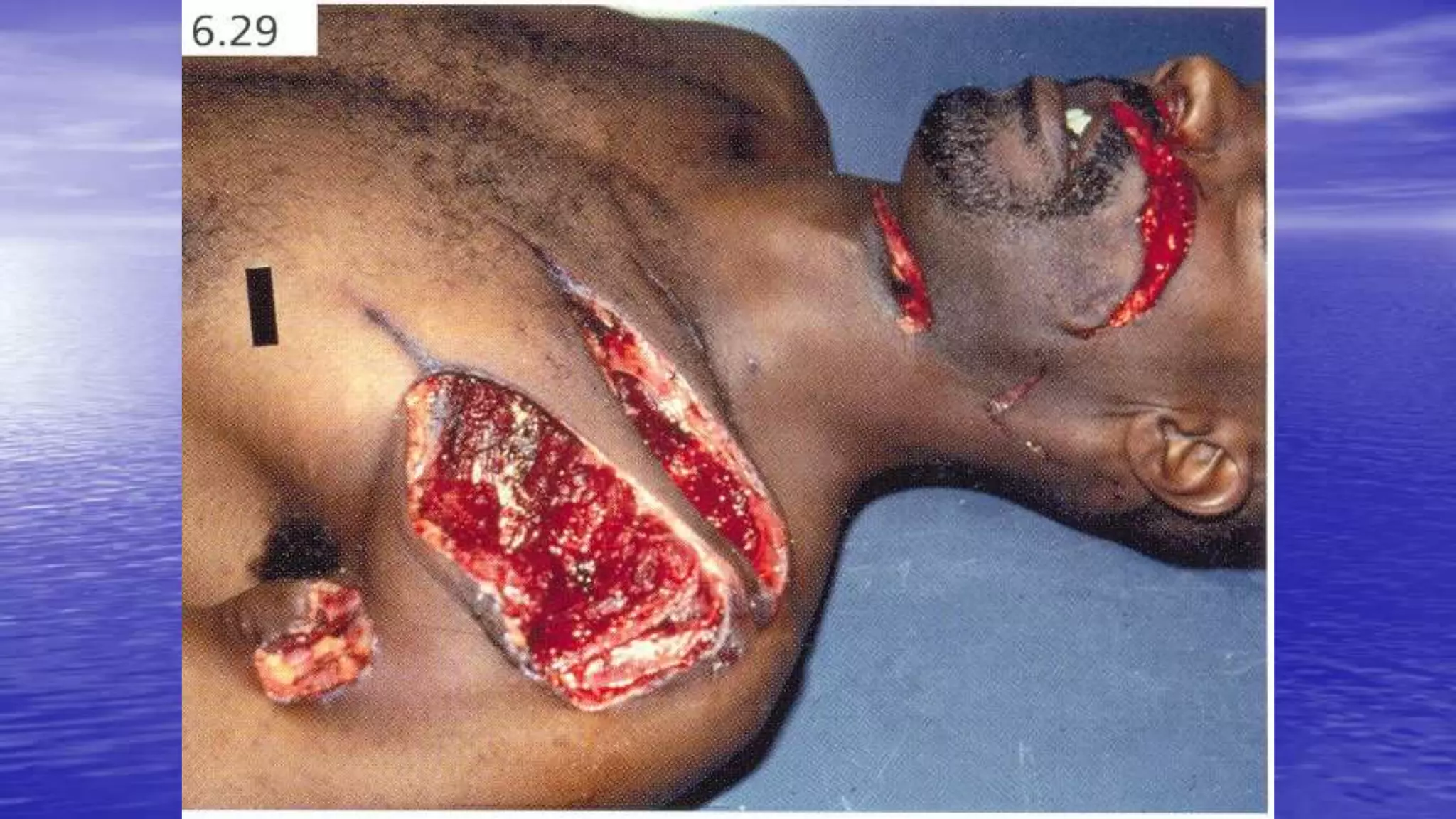
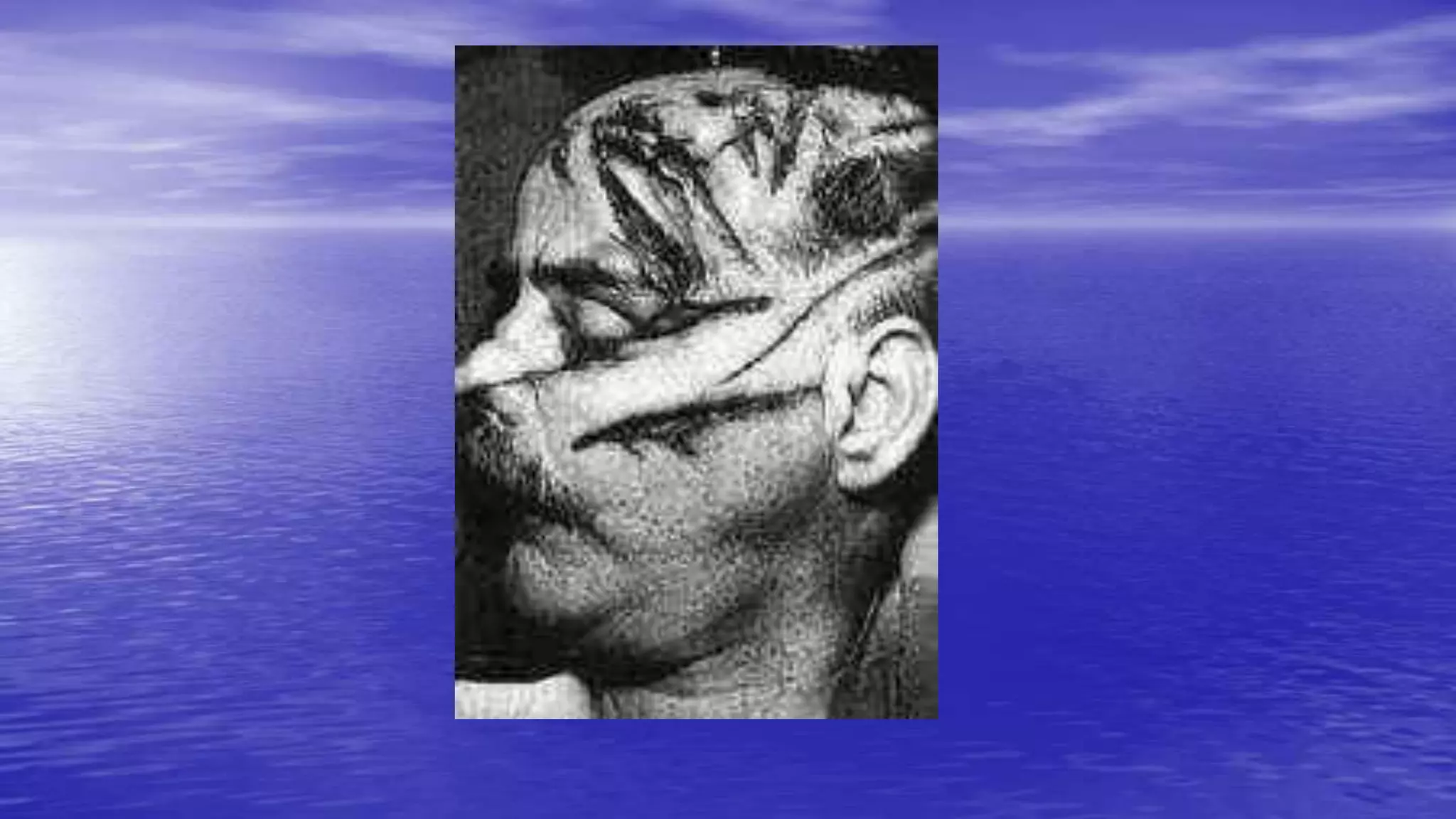
CUT LACERATION
OR
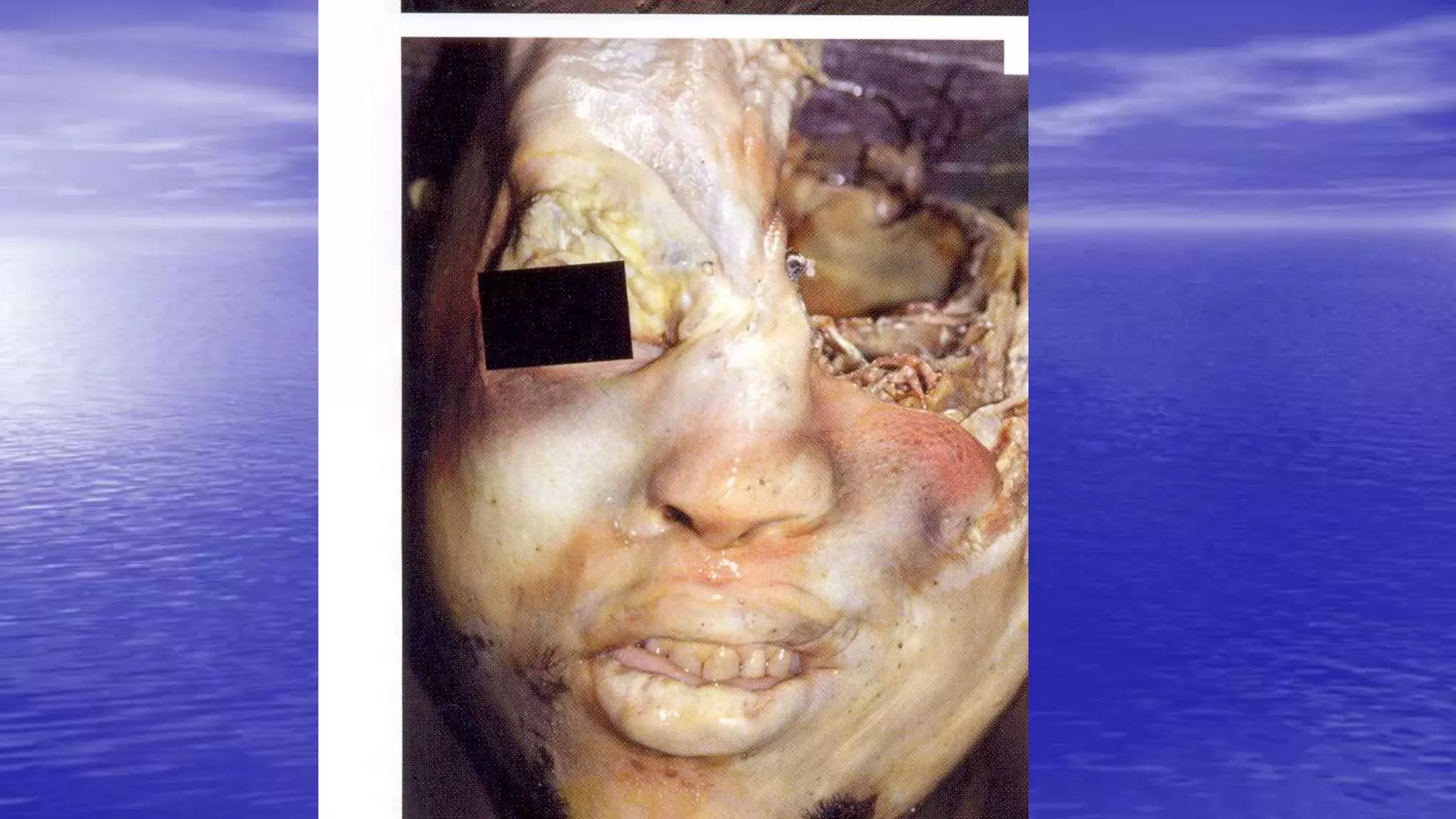
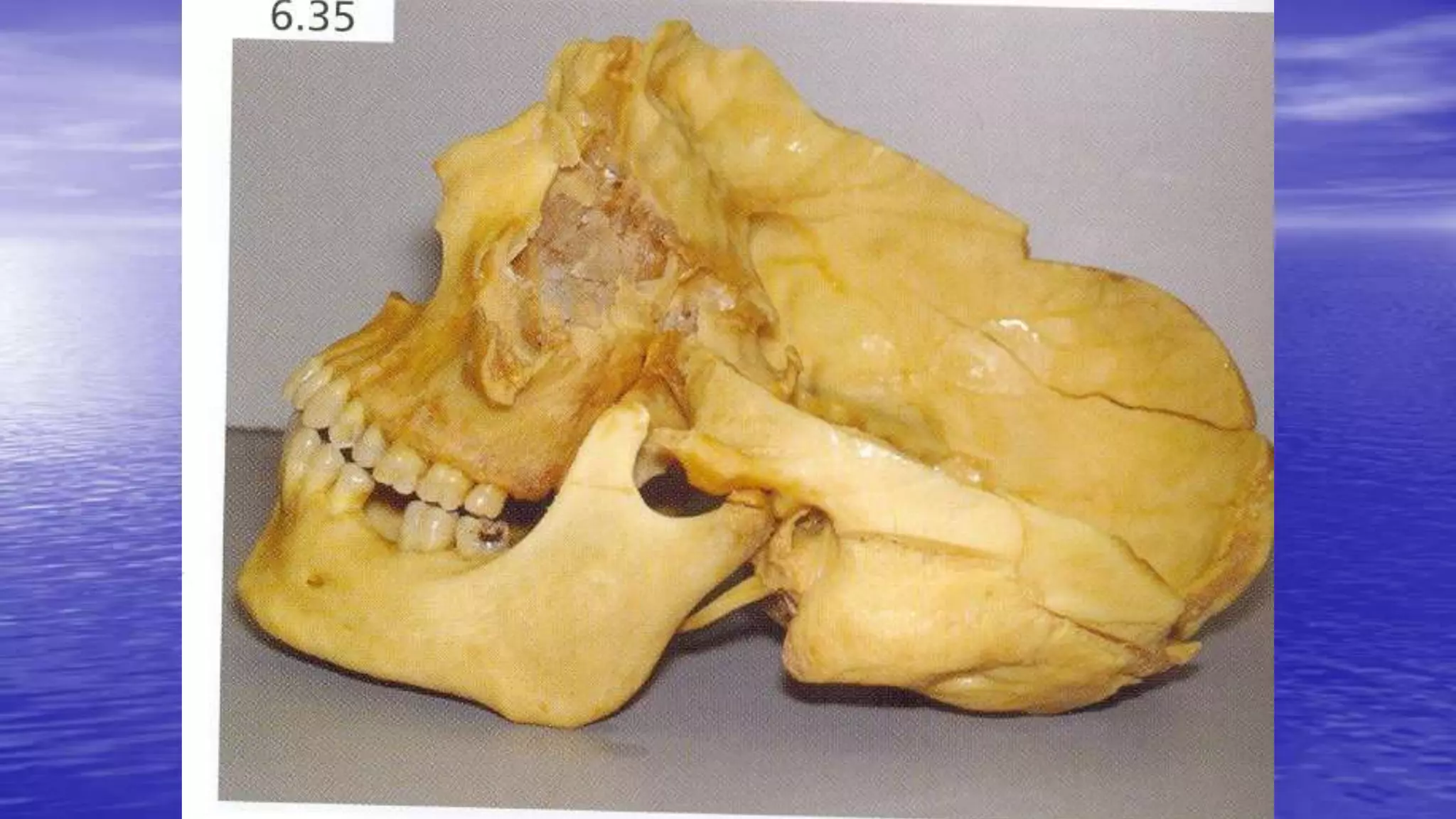
CHOP INJURIES
By heavy edged weapon such as chopper or hatchet.
FEATURES
1) Breach
2) Bruised edges
3) Hair forced in
4) Under lying bone usually cut

[Forensics] traumatology 2.ppt

  • 1.
    WOUND PRODUCTION REQUIREMENTS: 1) Force 2)Body / tissue 3) Weapon / object 4) Contact between weapon & body tissue & transfer of energy due to impact
  • 2.
    MECHANISM OF WOUNDPRODUCTION Force / Energy required for production of a wound is transferred to the tissue as a result of impact between propelling force and counter force.
  • 4.
    PROPELLING FORCE: Movement ofobject / weapon Movement of the body Combination of above COUNTER FORCE: Inertia of the body Object against which body strikes
  • 5.
    Energy transmitted tothe body as a result of impact is used in: 1. Causing the body to move as a whole 2. Causing the non-uniform motion of the localized tissues. | Compression strains Traction strains Displacement & deformation in shape Traction strains FRACTURES/RUPTURES
  • 6.
    IMPORTANT Rate of transferof energy Define the extent of wound (“It is per unit transfer of energy /unit area/sec”)
  • 9.
    FACTORS GOVERNING THEEXTENT AND NATURE OF WOUND 1) Amount of energy discharged during impact 2) Nature of the object causing wound / Weapon Type of weapon Mechanical Force (Direct & Indirect) 3) Weight & velocity of weapon (1/2 mv2) 4) Architecture of tissue 5) Resistance of the tissue 6) Movement of the part struck 7) Time period over which energy is discharged
  • 10.
  • 13.
    BRUISE OR CONTUSION “Itis an extravasation of blood into the tissue due to application of blunt force”. Damage may not be so evident macroscopically but may be appreciated microscopically.
  • 14.
    Mechanism of Production: Suddenpressure to the tissue due to impact. Clinical Manifestations: ● Pain ● Redness ● Swelling ● Epidermis may not show any damage. APPEARANCE: Shape may or may not correspond the shape of the weapon.
  • 16.
    FACTORS CONTROLLING APPEARANCE OFBRUISE A) Type of Tissue: More lax tissue- easier for blood to spread- extravasations may move along tissue line (Between muscle bundles) under gravity influence (GRAVITY SHIFTING).
  • 17.
    B) Color ofSkin: Visibility is better/clear in fair persons. C) Age: Children and aged bruise easily. D) Natural Diseases: Coagulation factor’s deficiencies – disease of blood vessels – diminished platelets. E) Vascularity of the Part: Bruising directly proportional to Vascularity. F) Sex: Female especially obese bruise easily.
  • 18.
    MEDICOLEGAL IMPORTANCE OFBRUISE 1) It is evidence of application of blunt force. 2) Helps in identification of weapon. 3) Indicates degree of violence. 4) Tells time of infliction of injury.
  • 19.
    ESTIMATION OF AGEOF BRUISE There are two methods i. From colour changes Due to action of tissue enzyme on the extravasated blood. ii. Histologically
  • 20.
    COLOUR CHANGES Fresh: is“RED” – due to oxygenated Hb. After 12 hours: “BLUE” due to deoxygenated Hb. 1-2 days: “BLACKISH BLUE OR BROWN”- due to Haemosiderin. After 3 days: “GREENISH” due to Haemotoidin. After 7 days: “YELLOWISH” due to Bilirubin. After 2 weeks: Complete disappearance. More is the depth & severity of the bruise longer is the time of complete disappearance.
  • 21.
  • 22.
  • 23.
    ABRASION These are superficialinjuries involving only outer layer of skin and do not penetrate the full thickness of skin. Mechanism of Production: Pressure & movement over the skin with a hard object. This mechanics results into: 1. Moving Abrasion 2. Friction Abrasion 3. Imprint Abrasion
  • 26.
    MOVING ABRASIONS Gives evidenceof direction by pile-up or heaping of epidermis at the far end. Types A). Scratch B). Graze
  • 27.
    SCRATCH It is dueto pointed object passing across the skin, moving the surface layer in front of it. It causes heaping up of epithelium & indicates the direction of force. It also indicates the object which has caused it e.g. marks of the finger nail are Crescentic.
  • 28.
  • 29.
  • 30.
    GRAZE It is variationof scratch when a rough object comes incontact with a wider surface of skin usually seen in road side accident.
  • 31.
  • 32.
    FRICTION ABRASION It iscaused by pressure upon the skin accompanied by movement e.g. Ligature mark by a rope in hanging or strangulation and lashes with a whip.
  • 33.
  • 34.
    IMPRINT ABRASION Also called“Patterned Abrasion” In this abrasion pattern of impacting object is stamped on the body when the force is applied at or near at a right angle to the skin surface e.g. when motor tyre passes over the skin or there is impact of design of motor vehicle radiator on the skin.
  • 35.
  • 36.
    AGE OF ABRASION FreshAbrasion: is bright in color lymph or blood is oozing. Scab Formation: Occur within 24 hours Reddish Brown: Within 2-3 days Shedding of the scab and re-epithelization: Within one week Complete Healing: Within two weeks.
  • 37.
    MEDICO LEGAL IMPORTANC 1)May indicate severe internal injury. 2) Gives nature of object causing it. 3) Tells direction of force. 4) Gives timing of injury. 5) Indicates manner of infliction.
  • 38.
    LACERATION It is atear or breach in the tissue caused by a blunt force e.g. Blows from blunt objects, falls or impact from vehicles. Mechanisms of Production: 1) Crushing of tissues between two hard objects. 2) Over stretching of tissue. 3) Grinding compression by weight.
  • 40.
    TYPES OF LACERATION SplitLaceration : Produced due to sudden compression between two hard objects i.e. weapon & underlying bone on areas like scalp, chin, eyebrow etc.
  • 45.
  • 47.
    FEATURES 1) Breach oftissue. 2) External haemorrhage minimal. 3) Bruising of the edges and surrounding tissue. 4) Elements such as hair or denudation of hair present in the wound. 5) Crushing of hair bulbs
  • 48.
    STRETCH LACERATION Breach ofthe skin is due to over stretching slightly away from the point of contract – more seen in industry/vehicular accidents when parts of the body get trapped or when a bone is bent and broken and there is traction strain over skin.
  • 50.
  • 51.
    FEATURES 1) Breach ofskin / soft tissue. 2) External haemorrhage. 3) Irregular edges. 4) Flapping of skin in the direction of stretch. 5) Bruising at the point of pressure, not edges.
  • 52.
    LACERATION BECAUSE OF GRINDINGCOMPRESSION BY WEIGHT Localized pressure by heavy weight causes tear and separation of the skin from underlying tissues – underlying tissue is crushed / minced e.g. passing a vehicular wheel over a limb.
  • 54.
    LACERATION BECAUSE OF GRINDINGCOMPRESSION BY WEIGHT (Avulsion)
  • 69.
    FEATURES Incomplete tear. Extreme extravasationof blood into potential spaces of crushed tissue. Less external haemorrhage. Raising of the area above the surface.  Tension and pain.
  • 70.
    TEAR It is atype of over stretching by an irregular penetrating object e.g. protruding hinge or door handle of a car.
  • 71.
    CUT LACERATION OR CHOP INJURIES Byheavy edged weapon such as chopper or hatchet.
  • 78.
    FEATURES 1) Breach 2) Bruisededges 3) Hair forced in 4) Under lying bone usually cut