
FOOD- WHERE DOES IT COME FROM-2
CLASS-VI
CBSE
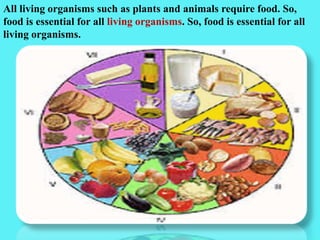
All living organisms such as plants and animals require food. So,
food is essential for all living organisms. So, food is essential for all
living organisms.
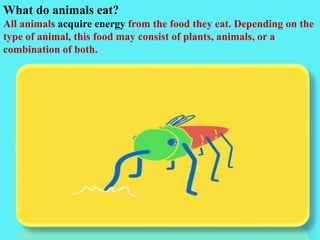
What do animals eat?
All animals acquire energy from the food they eat. Depending on the
type of animal, this food may consist of plants, animals, or a
combination of both.
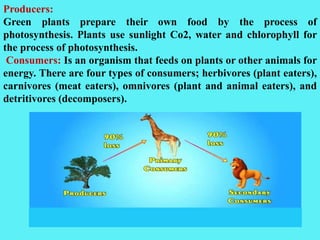
Producers:
Green plants prepare their own food by the process of
photosynthesis. Plants use sunlight Co2, water and chlorophyll for
the process of photosynthesis.
Consumers: Is an organism that feeds on plants or other animals for
energy. There are four types of consumers; herbivores (plant eaters),
carnivores (meat eaters), omnivores (plant and animal eaters), and
detritivores (decomposers).
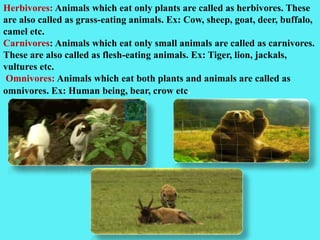
Herbivores: Animals which eat only plants are called as herbivores. These
are also called as grass-eating animals. Ex: Cow, sheep, goat, deer, buffalo,
camel etc.
Carnivores: Animals which eat only small animals are called as carnivores.
These are also called as flesh-eating animals. Ex: Tiger, lion, jackals,
vultures etc.
Omnivores: Animals which eat both plants and animals are called as
omnivores. Ex: Human being, bear, crow etc.
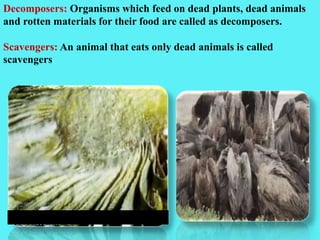
Decomposers: Organisms which feed on dead plants, dead animals
and rotten materials for their food are called as decomposers.
Scavengers: An animal that eats only dead animals is called
scavengers.
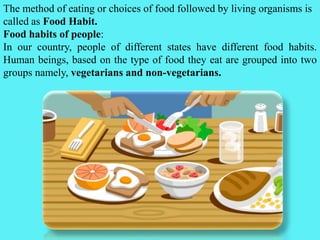
The method of eating or choices of food followed by living organisms is
called as Food Habit.
Food habits of people:
In our country, people of different states have different food habits.
Human beings, based on the type of food they eat are grouped into two
groups namely, vegetarians and non-vegetarians.
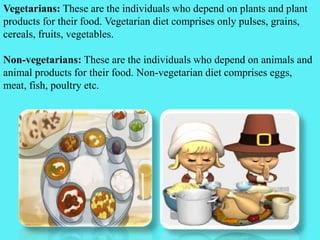
Vegetarians: These are the individuals who depend on plants and plant
products for their food. Vegetarian diet comprises only pulses, grains,
cereals, fruits, vegetables.
Non-vegetarians: These are the individuals who depend on animals and
animal products for their food. Non-vegetarian diet comprises eggs,
meat, fish, poultry etc.
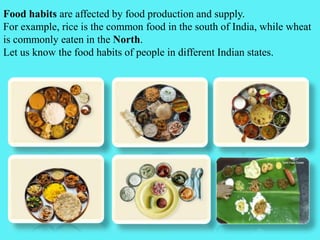
Food habits are affected by food production and supply.
For example, rice is the common food in the south of India, while wheat
is commonly eaten in the North.
Let us know the food habits of people in different Indian states.
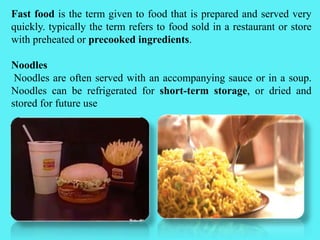
Fast food is the term given to food that is prepared and served very
quickly. typically the term refers to food sold in a restaurant or store
with preheated or precooked ingredients.
Noodles
Noodles are often served with an accompanying sauce or in a soup.
Noodles can be refrigerated for short-term storage, or dried and
stored for future use
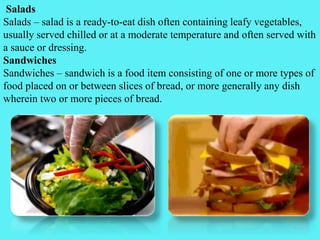
Salads
Salads – salad is a ready-to-eat dish often containing leafy vegetables,
usually served chilled or at a moderate temperature and often served with
a sauce or dressing.
Sandwiches
Sandwiches – sandwich is a food item consisting of one or more types of
food placed on or between slices of bread, or more generally any dish
wherein two or more pieces of bread.
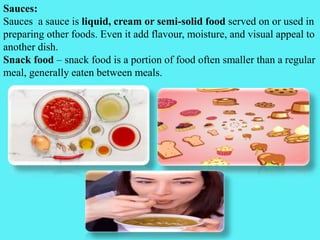
Sauces:
Sauces a sauce is liquid, cream or semi-solid food served on or used in
preparing other foods. Even it add flavour, moisture, and visual appeal to
another dish.
Snack food – snack food is a portion of food often smaller than a regular
meal, generally eaten between meals.
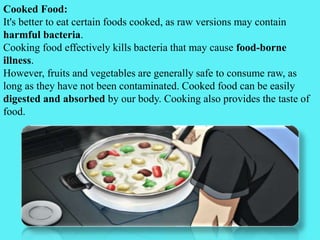
Cooked Food:
It's better to eat certain foods cooked, as raw versions may contain
harmful bacteria.
Cooking food effectively kills bacteria that may cause food-borne
illness.
However, fruits and vegetables are generally safe to consume raw, as
long as they have not been contaminated. Cooked food can be easily
digested and absorbed by our body. Cooking also provides the taste of
food.
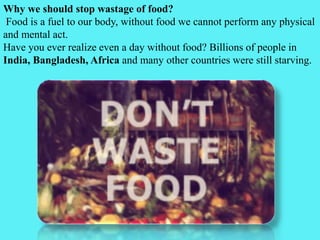
Why we should stop wastage of food?
Food is a fuel to our body, without food we cannot perform any physical
and mental act.
Have you ever realize even a day without food? Billions of people in
India, Bangladesh, Africa and many other countries were still starving.
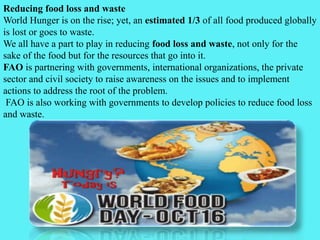
Reducing food loss and waste
World Hunger is on the rise; yet, an estimated 1/3 of all food produced globally
is lost or goes to waste.
We all have a part to play in reducing food loss and waste, not only for the
sake of the food but for the resources that go into it.
FAO is partnering with governments, international organizations, the private
sector and civil society to raise awareness on the issues and to implement
actions to address the root of the problem.
FAO is also working with governments to develop policies to reduce food loss
and waste.
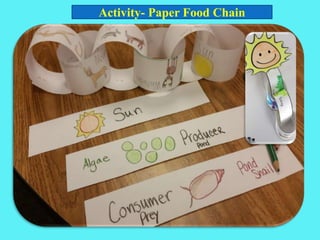
Activity- Paper Food Chain
THANKYOU
BY
NANDITHAAKUNURI
YOUTUBE VIDEO: https://youtu.be/LmiRADdTiyo
GOOGLE FORM WORKSHEET: https://forms.gle/eMfsS8sUyfJU6DmT8

FOOD: WHERE DOES IT COME FROM? - 2 CLASS VI (CBSE)

  • 1.
    FOOD- WHERE DOESIT COME FROM-2 CLASS-VI CBSE
  • 2.
    All living organismssuch as plants and animals require food. So, food is essential for all living organisms. So, food is essential for all living organisms.
  • 3.
    What do animalseat? All animals acquire energy from the food they eat. Depending on the type of animal, this food may consist of plants, animals, or a combination of both.
  • 4.
    Producers: Green plants preparetheir own food by the process of photosynthesis. Plants use sunlight Co2, water and chlorophyll for the process of photosynthesis. Consumers: Is an organism that feeds on plants or other animals for energy. There are four types of consumers; herbivores (plant eaters), carnivores (meat eaters), omnivores (plant and animal eaters), and detritivores (decomposers).
  • 5.
    Herbivores: Animals whicheat only plants are called as herbivores. These are also called as grass-eating animals. Ex: Cow, sheep, goat, deer, buffalo, camel etc. Carnivores: Animals which eat only small animals are called as carnivores. These are also called as flesh-eating animals. Ex: Tiger, lion, jackals, vultures etc. Omnivores: Animals which eat both plants and animals are called as omnivores. Ex: Human being, bear, crow etc.
  • 6.
    Decomposers: Organisms whichfeed on dead plants, dead animals and rotten materials for their food are called as decomposers. Scavengers: An animal that eats only dead animals is called scavengers.
  • 7.
    The method ofeating or choices of food followed by living organisms is called as Food Habit. Food habits of people: In our country, people of different states have different food habits. Human beings, based on the type of food they eat are grouped into two groups namely, vegetarians and non-vegetarians.
  • 8.
    Vegetarians: These arethe individuals who depend on plants and plant products for their food. Vegetarian diet comprises only pulses, grains, cereals, fruits, vegetables. Non-vegetarians: These are the individuals who depend on animals and animal products for their food. Non-vegetarian diet comprises eggs, meat, fish, poultry etc.
  • 9.
    Food habits areaffected by food production and supply. For example, rice is the common food in the south of India, while wheat is commonly eaten in the North. Let us know the food habits of people in different Indian states.
  • 10.
    Fast food isthe term given to food that is prepared and served very quickly. typically the term refers to food sold in a restaurant or store with preheated or precooked ingredients. Noodles Noodles are often served with an accompanying sauce or in a soup. Noodles can be refrigerated for short-term storage, or dried and stored for future use
  • 11.
    Salads Salads – saladis a ready-to-eat dish often containing leafy vegetables, usually served chilled or at a moderate temperature and often served with a sauce or dressing. Sandwiches Sandwiches – sandwich is a food item consisting of one or more types of food placed on or between slices of bread, or more generally any dish wherein two or more pieces of bread.
  • 12.
    Sauces: Sauces a sauceis liquid, cream or semi-solid food served on or used in preparing other foods. Even it add flavour, moisture, and visual appeal to another dish. Snack food – snack food is a portion of food often smaller than a regular meal, generally eaten between meals.
  • 13.
    Cooked Food: It's betterto eat certain foods cooked, as raw versions may contain harmful bacteria. Cooking food effectively kills bacteria that may cause food-borne illness. However, fruits and vegetables are generally safe to consume raw, as long as they have not been contaminated. Cooked food can be easily digested and absorbed by our body. Cooking also provides the taste of food.
  • 14.
    Why we shouldstop wastage of food? Food is a fuel to our body, without food we cannot perform any physical and mental act. Have you ever realize even a day without food? Billions of people in India, Bangladesh, Africa and many other countries were still starving.
  • 15.
    Reducing food lossand waste World Hunger is on the rise; yet, an estimated 1/3 of all food produced globally is lost or goes to waste. We all have a part to play in reducing food loss and waste, not only for the sake of the food but for the resources that go into it. FAO is partnering with governments, international organizations, the private sector and civil society to raise awareness on the issues and to implement actions to address the root of the problem. FAO is also working with governments to develop policies to reduce food loss and waste.
  • 16.
  • 17.
    THANKYOU BY NANDITHAAKUNURI YOUTUBE VIDEO: https://youtu.be/LmiRADdTiyo GOOGLEFORM WORKSHEET: https://forms.gle/eMfsS8sUyfJU6DmT8