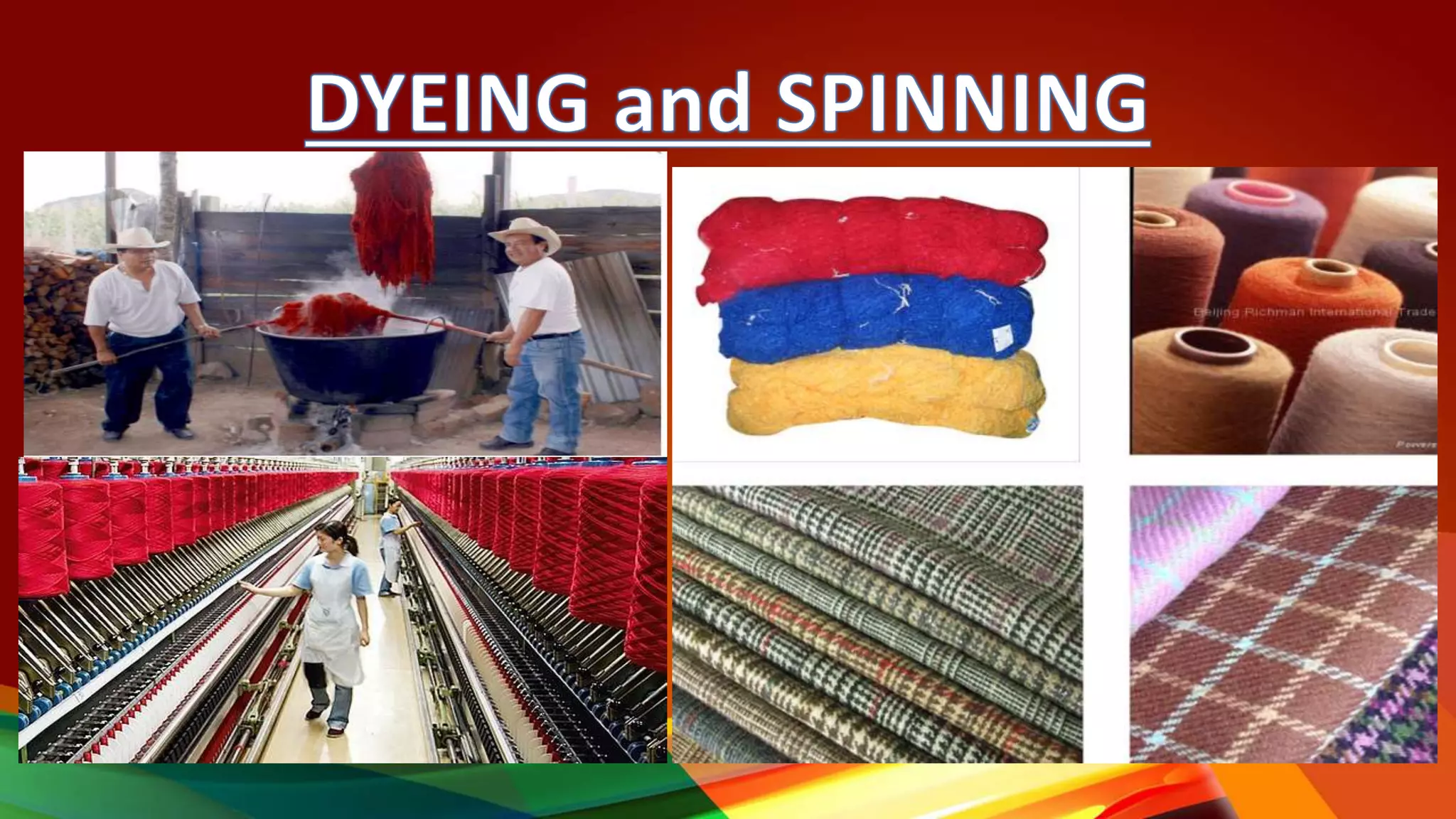
FIBRE TO FABRIC
• A fiber is the smallest visible
unit of any textile product.
Fibers are flexible and may
be spun into yarn and made
into fabrics. Fibers naturally
occur in both plants and
animals. More than half of
the fibers produced are
natural fibers. Natural
fibers include cotton, hair,
fur, silk, and wool.
• A fabric is a material made
through weaving, knitting,
spreading, crocheting, or
bonding that may be used
in production of further
goods (garments, etc.).
Cloth may be used
synonymously
with fabric but is often a
piece of fabric that has
been processed.
Flax.
TYPES OF SHEEP FIBRES
• The hairy skin of sheep has two types of
fibres that form its fleece:
(i) the coarse beard hair,
(ii) the fine soft under hair close to the
skin.
The fine hair provide the fibres for making
wool.
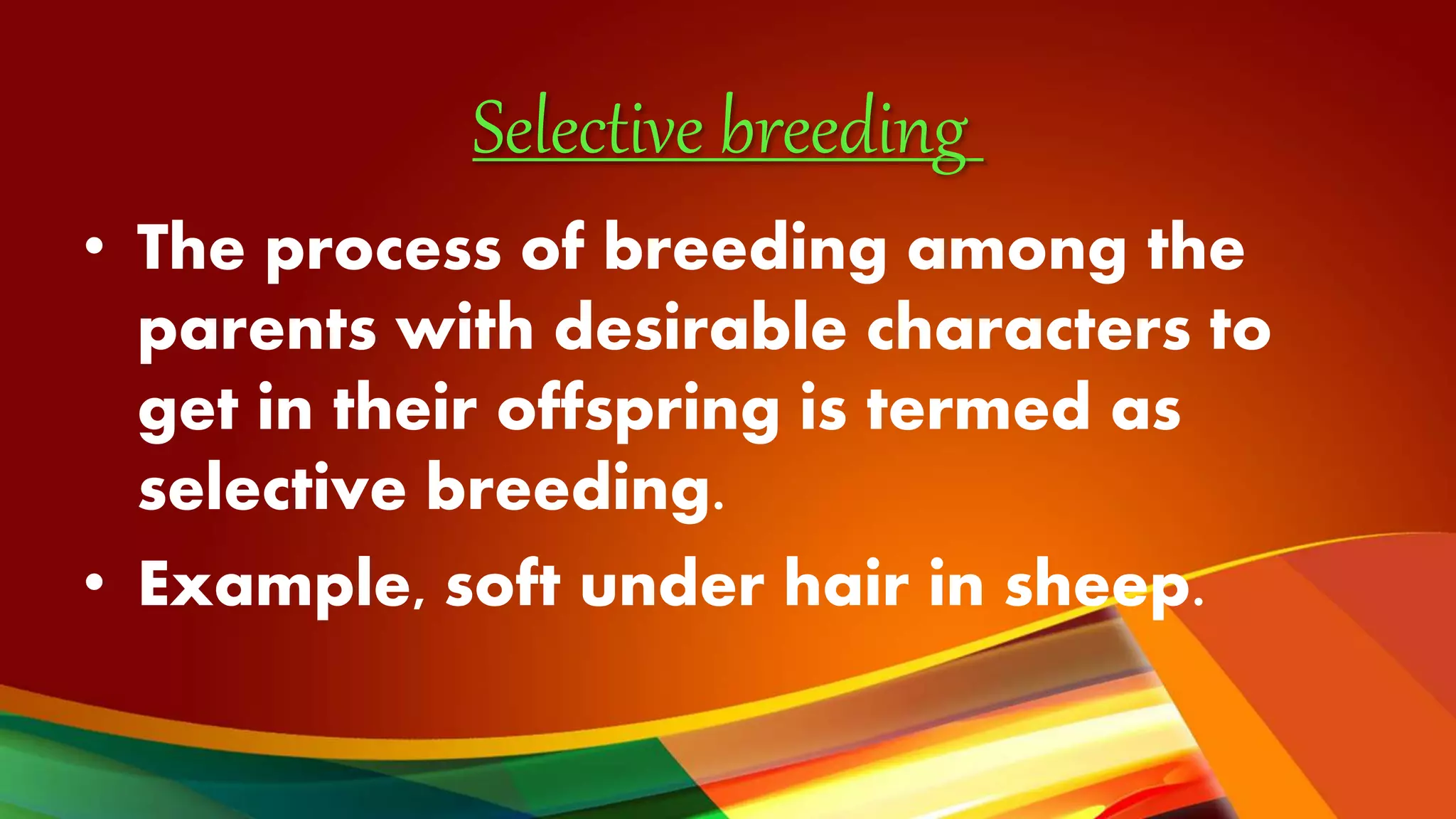
Selective breeding
• The process of breeding among the
parents with desirable characters to
get in their offspring is termed as
selective breeding.
• Example, soft under hair in sheep.
ANIMAL FIBRE - WOOL
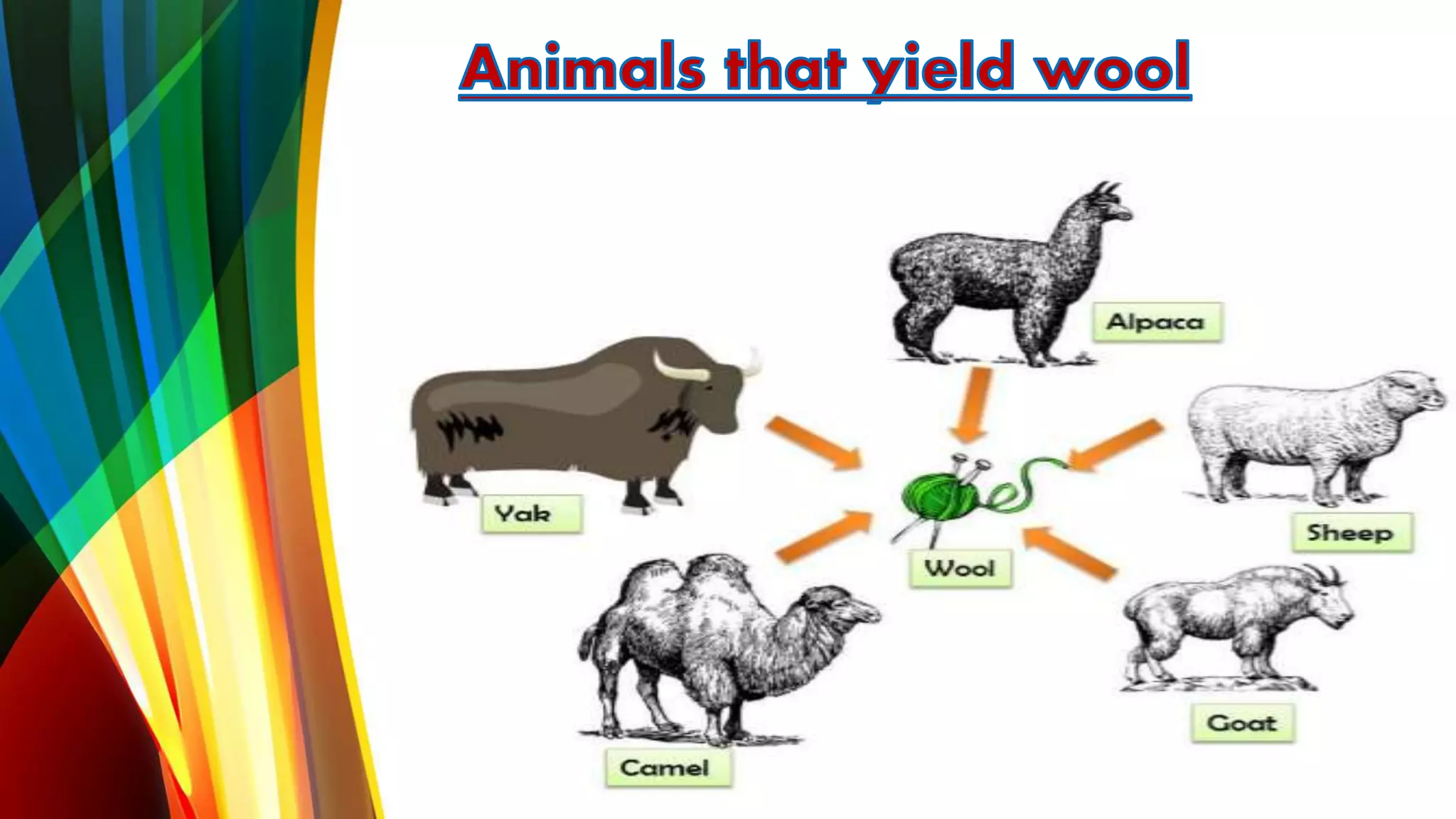
The under fur of Kashmiri goat is soft. It is woven into
fine shawls called Pashmina Shawls.
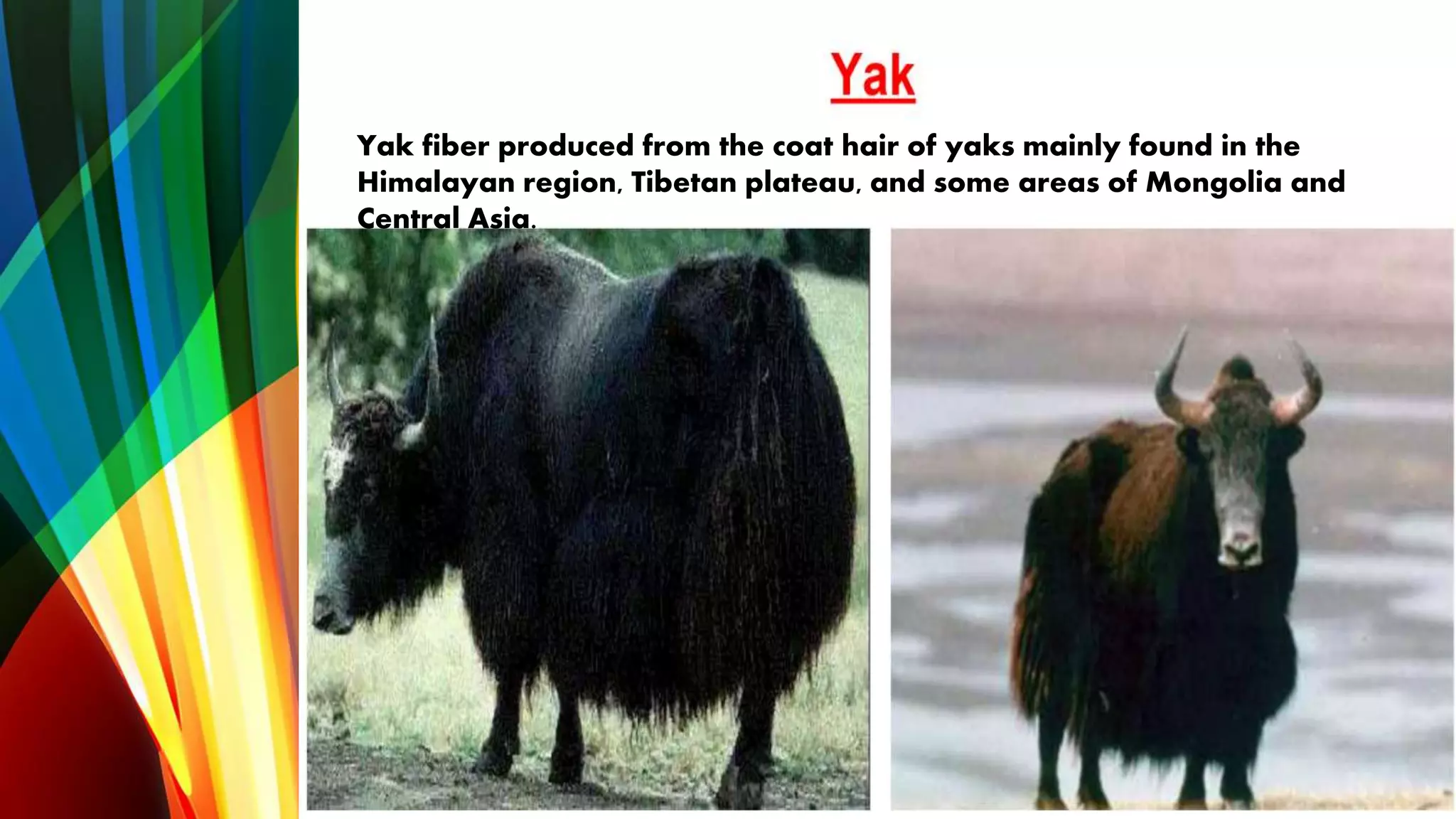
Yak fiber produced from the coat hair of yaks mainly found in the
Himalayan region, Tibetan plateau, and some areas of Mongolia and
Central Asia.
The fur on the body
of camel is also used
as wool.
LIAMA Llama and Alpaca found in South America , yield
wool.
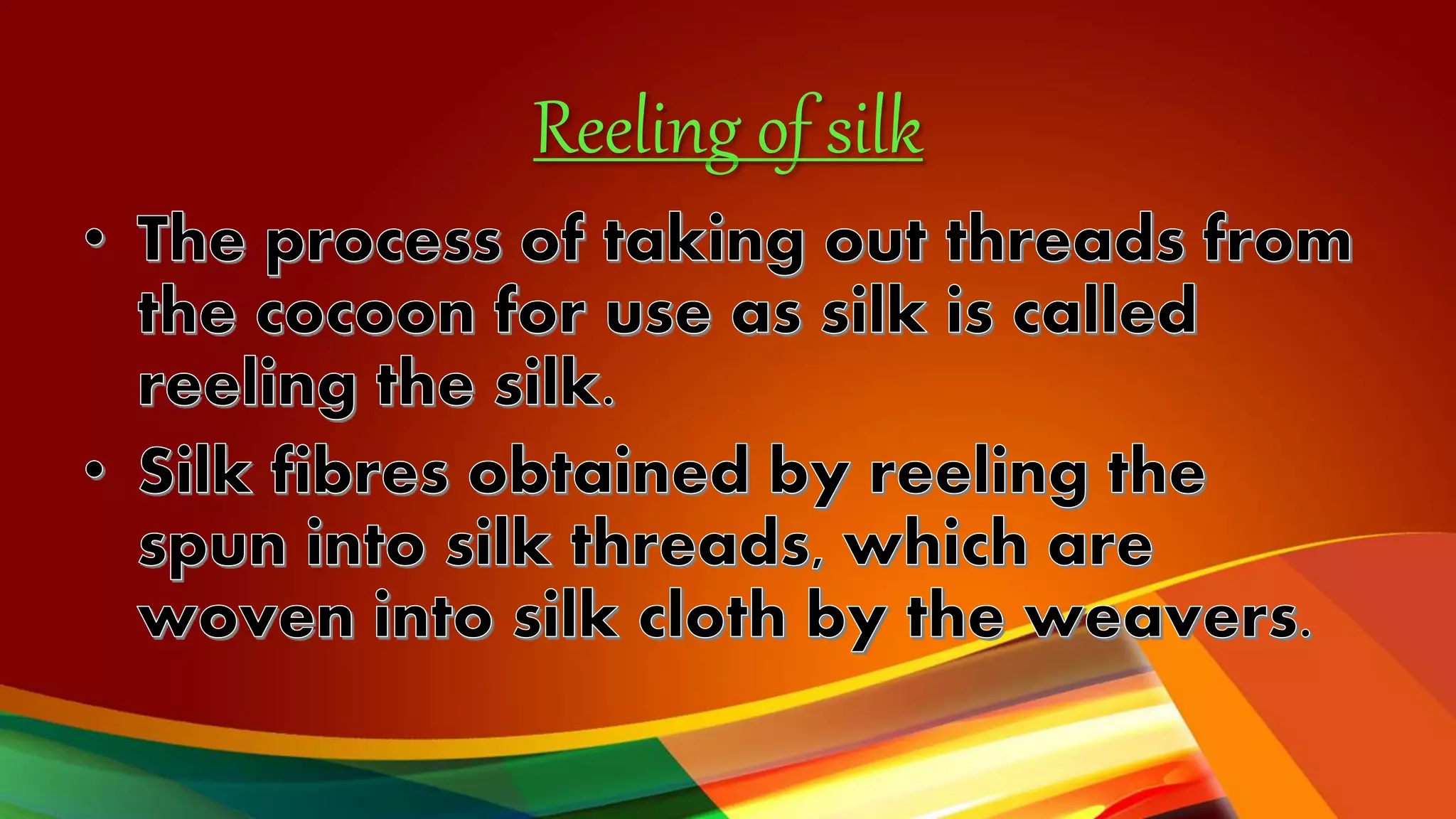
Reeling of silk
TYPES OF SILK
• Artificial silk are the man-made silk made in
factories by using certain kind of
chemicals. Natural silk are those silk which are
obtained from silkworm or simply as from nature.
• To identify the difference, burn the silk you have.
If the smell of burning hair comes out, then it will
be natural silk and if it is a paper burning smell
then it will be artificial silk.
occupational hazards in WOOL industry
• It spreads by the sheep to the sorters by a bacterium
called ANTHRAX
• Sorter's disease is a disease caused by sheep's small
feather that eject in our nose when we breath. This
feather contains bacteria called as 'bacillus anthracx
which causes a fatal blood disease called ‘SORTER’S
DISEASE’.
occupational hazards in silk industry
• High noise exposure - can lead to hearing
impairment, hypertension, disturbance in sleep.
• Breathing problems- inhalation of cotton and other
fabric dust leads to lung diseases and other
respiratory diseases.
• Chemical exposure- to harmful pesticides and
chemicals from the processing and dyeing of
materials.
END OF THE LESSON

Fibre to fabric Class VII

  • 2.
    FIBRE TO FABRIC •A fiber is the smallest visible unit of any textile product. Fibers are flexible and may be spun into yarn and made into fabrics. Fibers naturally occur in both plants and animals. More than half of the fibers produced are natural fibers. Natural fibers include cotton, hair, fur, silk, and wool. • A fabric is a material made through weaving, knitting, spreading, crocheting, or bonding that may be used in production of further goods (garments, etc.). Cloth may be used synonymously with fabric but is often a piece of fabric that has been processed.
  • 4.
  • 6.
    TYPES OF SHEEPFIBRES • The hairy skin of sheep has two types of fibres that form its fleece: (i) the coarse beard hair, (ii) the fine soft under hair close to the skin. The fine hair provide the fibres for making wool.
  • 7.
    Selective breeding • Theprocess of breeding among the parents with desirable characters to get in their offspring is termed as selective breeding. • Example, soft under hair in sheep.
  • 10.
  • 11.
    The under furof Kashmiri goat is soft. It is woven into fine shawls called Pashmina Shawls.
  • 12.
    Yak fiber producedfrom the coat hair of yaks mainly found in the Himalayan region, Tibetan plateau, and some areas of Mongolia and Central Asia.
  • 13.
    The fur onthe body of camel is also used as wool.
  • 14.
    LIAMA Llama andAlpaca found in South America , yield wool.
  • 28.
  • 30.
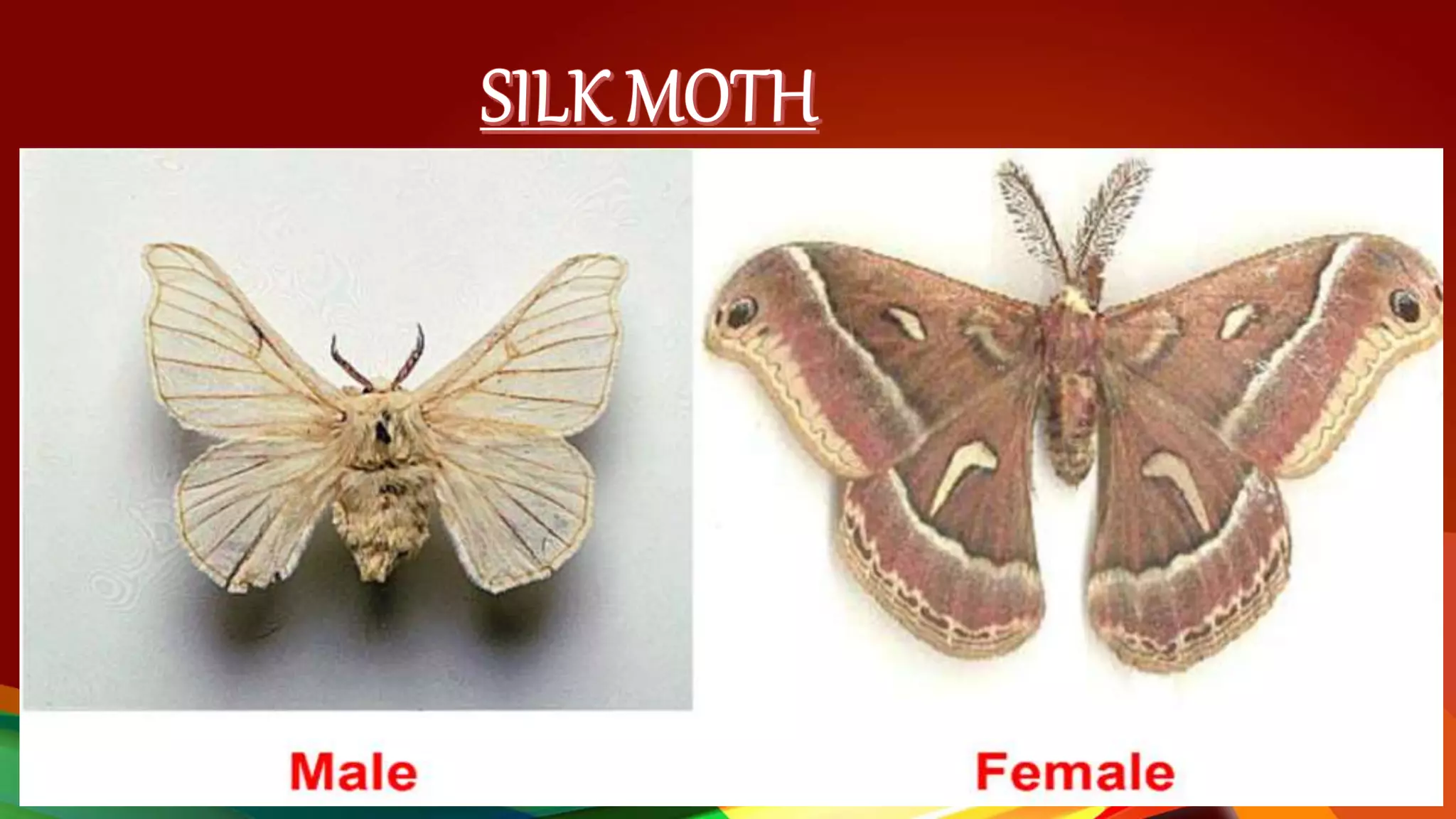
    TYPES OF SILK •Artificial silk are the man-made silk made in factories by using certain kind of chemicals. Natural silk are those silk which are obtained from silkworm or simply as from nature. • To identify the difference, burn the silk you have. If the smell of burning hair comes out, then it will be natural silk and if it is a paper burning smell then it will be artificial silk.
  • 31.
    occupational hazards inWOOL industry • It spreads by the sheep to the sorters by a bacterium called ANTHRAX • Sorter's disease is a disease caused by sheep's small feather that eject in our nose when we breath. This feather contains bacteria called as 'bacillus anthracx which causes a fatal blood disease called ‘SORTER’S DISEASE’.
  • 32.
    occupational hazards insilk industry • High noise exposure - can lead to hearing impairment, hypertension, disturbance in sleep. • Breathing problems- inhalation of cotton and other fabric dust leads to lung diseases and other respiratory diseases. • Chemical exposure- to harmful pesticides and chemicals from the processing and dyeing of materials.
  • 33.
    END OF THELESSON