When you google “american food”:FOOD
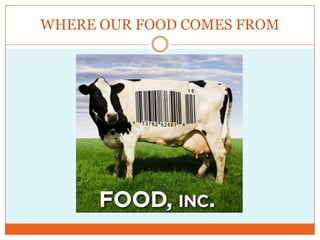
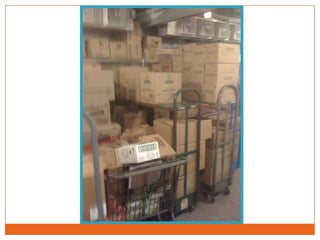
WHERE OUR FOOD COMES FROM
LIVESTOCKLoose standards for treatment of animalsAnimals raised in cramped pens or cagesGrowth hormones are used to make the animals grow fasterAntibiotics used to control disease
LIVESTOCKFree range might not be a good alternativeChickens kept for eggs can not be kept in cages but can still be confined in shedsChickens for meat must have access to outdoors, but no certain sizeCows and sheep must be kept on a range and be grass fed, also no certain sizeNo hormones used, but feed can still have pesticides
FISHINGSmall boat fisherman catch for themselves and sell what is left overMany have lost their jobsHuge ships can catch millions of fish in a few daysThis makes it easy for fish to be over harvested and cause shortagesFish farming keeps lots of fish in cramped tanksThis leads to the spread of disease between the fishThe farmers need to put poisons in the water to stop the spread of disease
FARMSMost food in the store comes from industrial farms.Large amounts of food can be produced and distributed world wideGuarantees you will have what you need when you need itRelies heavily on pesticides and fossil fuelsCan cause harm to the environmentCan also be grown organicallyNo pesticides used in growing the cropsTakes more skill to grow the cropsUsually does not produce as many crops as industrial farmsUsually sold locally for more money
PROCESSINGAlmost all the food we buy has been processed in some wayIt is done to make food last longer or taste betterExamples of preserving include; drying, freezing, pickling, canning, bottling, and saltingThe most common ways to make food taste better are to add either sugar, salt, and/or fatFood is a huge business and they will do whatever they can to make money
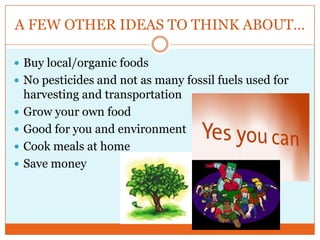
A FEW OTHER IDEAS TO THINK ABOUT…Buy local/organic foodsNo pesticides and not as many fossil fuels used for harvesting and transportationGrow your own foodGood for you and environmentCook meals at homeSave money
RULE #1: DON’T FUCK WITH PEOPLE WHO HANDLE YOUR FOODhttp://www.youtube.com/watch?v=_v1mp8X6EI0&feature=player_embedded
FAST FOOD & RESTAURANTSFast food is food which is prepared and served quickly at outlets called fast-food restaurants but before you take a bite of a fast food, do you ever stop to consider what has been involved in the preparation of it and it was prepared?How sanitary was the process? Do you ever stop to consider that you could be putting yourself at risk each and every time you choose to trust others in the preparation of your food?http://www.youtube.com/watch?v=OhBmWxQpedI&feature=relatedhttp://www.youtube.com/watch?v=1T0GZt00kL
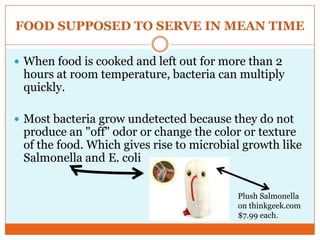
FOOD SUPPOSED TO SERVE IN MEAN TIMEWhen food is cooked and left out for more than 2 hours at room temperature, bacteria can multiply quickly. Most bacteria grow undetected because they do not produce an "off" odor or change the color or texture of the food. Which gives rise to microbial growth like Salmonella and E. coli Plush Salmonella on thinkgeek.com$7.99 each.
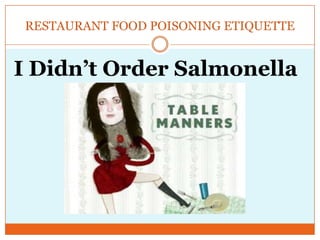
RESTAURANT FOOD POISONING ETIQUETTE I Didn’t Order Salmonella
WHAT DOES MCDONALD’S DO TO PRESERVE THEIR FOOD?McDonald's seems to be the villain in the never ending battle of good food versus evil food. There is so much information floating around out there about the famous golden arches, that it's hard to know what is true and what is just hype.http://www.youtube.com/watch?v=4IGtDPG4UfI&feature=related
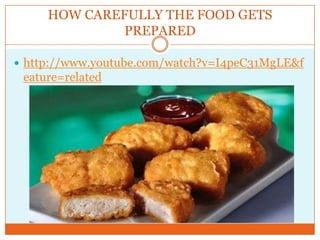
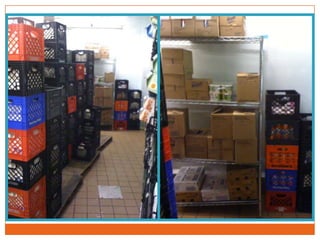
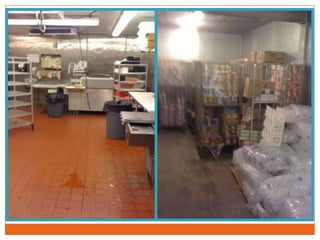
HOW CAREFULLY THE FOOD GETS PREPAREDhttp://www.youtube.com/watch?v=I4peC31MgLE&feature=related
Where Does Our Food Come From?
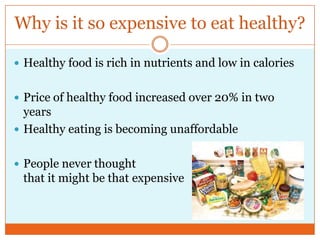
Why is it so expensive to eat healthy?http://abcnews.go.com/Technology/DiabetesResource/story?id=4021965&page=1Healthy food is rich in nutrients and low in caloriesPrice of healthy food increased over 20% in two yearsHealthy eating is becoming unaffordablePeople never thought                                                    that it might be that expensive
Organic Food & Vegetarian DietsOrganic foodReally regulated industry, special certificatesNot everybody can afford it, healthyhttp://www.organic.org/goorganic/Vegetarian dietsA diet on plant-based foodsUsually people who concerned with animal rights, environmentMust eat wide variety of food to meet their needshttp://www.nlm.nih.gov/medlineplus/vegetariandiet.html
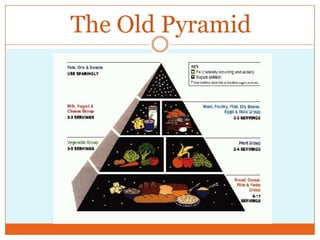
The Old Pyramid
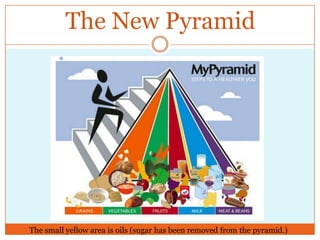
The New PyramidThe small yellow area is oils (sugar has been removed from the pyramid.)
Why the Change?Many blamed the old pyramid for childhood obesity.Many people misunderstood the range in what to eat and how much they should consume or couldn’t understand it.The new pyramid is more interactive.No more servings, just recommendations (according to a 2,000 calorie diet) along with better eating and exercise habits.
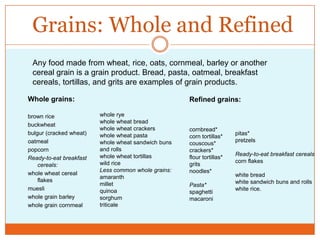
Grains: Whole and RefinedAny food made from wheat, rice, oats, cornmeal, barley or another cereal grain is a grain product. Bread, pasta, oatmeal, breakfast cereals, tortillas, and grits are examples of grain products.Refined grains:cornbread*corn tortillas*couscous*crackers*flour tortillas*gritsnoodles*Pasta*spaghettimacaroniWhole grains:brown ricebuckwheatbulgur (cracked wheat)oatmealpopcornReady-to-eat breakfast cereals:whole wheat cereal flakesmuesliwhole grain barleywhole grain cornmealwhole ryewhole wheat breadwhole wheat crackerswhole wheat pastawhole wheat sandwich buns and rollswhole wheat tortillaswild riceLess common whole grains:amaranthmilletquinoasorghumtriticalepitas*pretzelsReady-to-eat breakfast cerealscorn flakeswhite breadwhite sandwich buns and rollswhite rice.
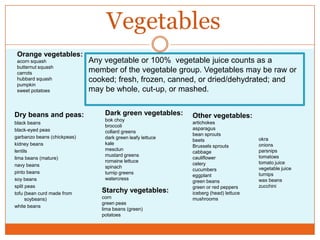
VegetablesOrange vegetables:acorn squashbutternut squashcarrotshubbard squashpumpkinsweet potatoesAny vegetable or 100%  vegetable juice counts as a member of the vegetable group. Vegetables may be raw or cooked; fresh, frozen, canned, or dried/dehydrated; and may be whole, cut-up, or mashed.okraonionsparsnipstomatoestomato juicevegetable juiceturnipswax beanszucchiniDry beans and peas:black beansblack-eyed peasgarbanzo beans (chickpeas)kidney beanslentilslima beans (mature)navy beanspinto beanssoy beanssplit peastofu (bean curd made from soybeans)white beansDark green vegetables:bokchoybroccoli collard greensdark green leafy lettucekalemesclunmustard greensromaine lettucespinachturnip greenswatercressOther vegetables:artichokesasparagusbean sproutsbeetsBrussels sproutscabbagecauliflowercelerycucumberseggplantgreen beansgreen or red peppersiceberg (head) lettucemushroomsStarchy vegetables:corngreen peaslima beans (green)potatoes
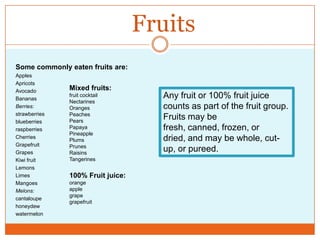
FruitsSome commonly eaten fruits are: ApplesApricotsAvocadoBananasBerries:strawberriesblueberriesraspberriesCherriesGrapefruitGrapesKiwi fruitLemonsLimesMangoesMelons:cantaloupehoneydewwatermelonMixed fruits:fruit cocktailNectarinesOrangesPeachesPearsPapayaPineapplePlumsPrunesRaisinsTangerines100% Fruit juice:orangeapplegrapegrapefruitAny fruit or 100% fruit juice counts as part of the fruit group. Fruits may be fresh, canned, frozen, or dried, and may be whole, cut-up, or pureed.
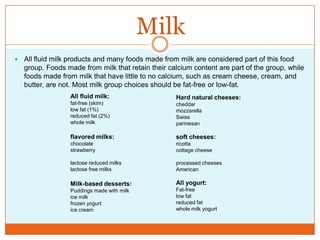
MilkAll fluid milk products and many foods made from milk are considered part of this food group. Foods made from milk that retain their calcium content are part of the group, while foods made from milk that have little to no calcium, such as cream cheese, cream, and butter, are not. Most milk group choices should be fat-free or low-fat.All fluid milk:fat-free (skim)low fat (1%)reduced fat (2%)whole milkflavored milks:chocolatestrawberrylactose reduced milkslactose free milksMilk-based desserts:Puddings made with milkice milkfrozen yogurtice creamHard natural cheeses:cheddarmozzarellaSwissparmesansoft cheeses:ricottacottage cheeseprocessed cheesesAmericanAll yogurt:Fat-freelow fatreduced fatwhole milk yogurt
Nick Heppner“Eat this, not that.”http://www.youtube.com/watch?v=j7QpBm07Gl8&NR=1The Essential 6 Nutrient Groupshttp://www.nms.on.ca/Elementary/exploring_nutrition.htm
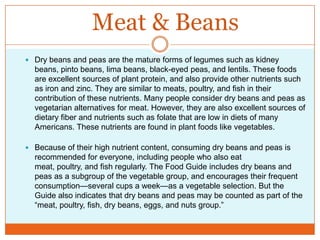
Meat & BeansDry beans and peas are the mature forms of legumes such as kidney beans, pinto beans, lima beans, black-eyed peas, and lentils. These foods are excellent sources of plant protein, and also provide other nutrients such as iron and zinc. They are similar to meats, poultry, and fish in their contribution of these nutrients. Many people consider dry beans and peas as vegetarian alternatives for meat. However, they are also excellent sources of dietary fiber and nutrients such as folate that are low in diets of many Americans. These nutrients are found in plant foods like vegetables.Because of their high nutrient content, consuming dry beans and peas is recommended for everyone, including people who also eat meat, poultry, and fish regularly. The Food Guide includes dry beans and peas as a subgroup of the vegetable group, and encourages their frequent consumption—several cups a week—as a vegetable selection. But the Guide also indicates that dry beans and peas may be counted as part of the “meat, poultry, fish, dry beans, eggs, and nuts group.”
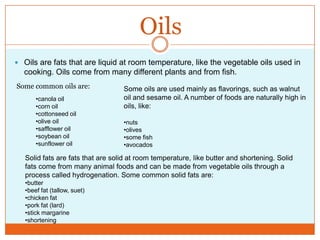
OilsOils are fats that are liquid at room temperature, like the vegetable oils used in cooking. Oils come from many different plants and from fish. Some common oils are:Some oils are used mainly as flavorings, such as walnut oil and sesame oil. A number of foods are naturally high in oils, like:nuts
olives
some fish

Food 2

  • 1.
    When you google“american food”:FOOD
  • 2.
    WHERE OUR FOODCOMES FROM
  • 3.
    LIVESTOCKLoose standards fortreatment of animalsAnimals raised in cramped pens or cagesGrowth hormones are used to make the animals grow fasterAntibiotics used to control disease
  • 4.
    LIVESTOCKFree range mightnot be a good alternativeChickens kept for eggs can not be kept in cages but can still be confined in shedsChickens for meat must have access to outdoors, but no certain sizeCows and sheep must be kept on a range and be grass fed, also no certain sizeNo hormones used, but feed can still have pesticides
  • 5.
    FISHINGSmall boat fishermancatch for themselves and sell what is left overMany have lost their jobsHuge ships can catch millions of fish in a few daysThis makes it easy for fish to be over harvested and cause shortagesFish farming keeps lots of fish in cramped tanksThis leads to the spread of disease between the fishThe farmers need to put poisons in the water to stop the spread of disease
  • 6.
    FARMSMost food inthe store comes from industrial farms.Large amounts of food can be produced and distributed world wideGuarantees you will have what you need when you need itRelies heavily on pesticides and fossil fuelsCan cause harm to the environmentCan also be grown organicallyNo pesticides used in growing the cropsTakes more skill to grow the cropsUsually does not produce as many crops as industrial farmsUsually sold locally for more money
  • 7.
    PROCESSINGAlmost all thefood we buy has been processed in some wayIt is done to make food last longer or taste betterExamples of preserving include; drying, freezing, pickling, canning, bottling, and saltingThe most common ways to make food taste better are to add either sugar, salt, and/or fatFood is a huge business and they will do whatever they can to make money
  • 8.
    A FEW OTHERIDEAS TO THINK ABOUT…Buy local/organic foodsNo pesticides and not as many fossil fuels used for harvesting and transportationGrow your own foodGood for you and environmentCook meals at homeSave money
  • 9.
    RULE #1: DON’TFUCK WITH PEOPLE WHO HANDLE YOUR FOODhttp://www.youtube.com/watch?v=_v1mp8X6EI0&feature=player_embedded
  • 10.
    FAST FOOD &RESTAURANTSFast food is food which is prepared and served quickly at outlets called fast-food restaurants but before you take a bite of a fast food, do you ever stop to consider what has been involved in the preparation of it and it was prepared?How sanitary was the process? Do you ever stop to consider that you could be putting yourself at risk each and every time you choose to trust others in the preparation of your food?http://www.youtube.com/watch?v=OhBmWxQpedI&feature=relatedhttp://www.youtube.com/watch?v=1T0GZt00kL
  • 11.
    FOOD SUPPOSED TOSERVE IN MEAN TIMEWhen food is cooked and left out for more than 2 hours at room temperature, bacteria can multiply quickly. Most bacteria grow undetected because they do not produce an "off" odor or change the color or texture of the food. Which gives rise to microbial growth like Salmonella and E. coli Plush Salmonella on thinkgeek.com$7.99 each.
  • 12.
    RESTAURANT FOOD POISONINGETIQUETTE I Didn’t Order Salmonella
  • 13.
    WHAT DOES MCDONALD’SDO TO PRESERVE THEIR FOOD?McDonald's seems to be the villain in the never ending battle of good food versus evil food. There is so much information floating around out there about the famous golden arches, that it's hard to know what is true and what is just hype.http://www.youtube.com/watch?v=4IGtDPG4UfI&feature=related
  • 14.
    HOW CAREFULLY THEFOOD GETS PREPAREDhttp://www.youtube.com/watch?v=I4peC31MgLE&feature=related
  • 15.
    Where Does OurFood Come From?
  • 19.
    Why is itso expensive to eat healthy?http://abcnews.go.com/Technology/DiabetesResource/story?id=4021965&page=1Healthy food is rich in nutrients and low in caloriesPrice of healthy food increased over 20% in two yearsHealthy eating is becoming unaffordablePeople never thought that it might be that expensive
  • 20.
    Organic Food &Vegetarian DietsOrganic foodReally regulated industry, special certificatesNot everybody can afford it, healthyhttp://www.organic.org/goorganic/Vegetarian dietsA diet on plant-based foodsUsually people who concerned with animal rights, environmentMust eat wide variety of food to meet their needshttp://www.nlm.nih.gov/medlineplus/vegetariandiet.html
  • 21.
  • 22.
    The New PyramidThesmall yellow area is oils (sugar has been removed from the pyramid.)
  • 23.
    Why the Change?Manyblamed the old pyramid for childhood obesity.Many people misunderstood the range in what to eat and how much they should consume or couldn’t understand it.The new pyramid is more interactive.No more servings, just recommendations (according to a 2,000 calorie diet) along with better eating and exercise habits.
  • 24.
    Grains: Whole andRefinedAny food made from wheat, rice, oats, cornmeal, barley or another cereal grain is a grain product. Bread, pasta, oatmeal, breakfast cereals, tortillas, and grits are examples of grain products.Refined grains:cornbread*corn tortillas*couscous*crackers*flour tortillas*gritsnoodles*Pasta*spaghettimacaroniWhole grains:brown ricebuckwheatbulgur (cracked wheat)oatmealpopcornReady-to-eat breakfast cereals:whole wheat cereal flakesmuesliwhole grain barleywhole grain cornmealwhole ryewhole wheat breadwhole wheat crackerswhole wheat pastawhole wheat sandwich buns and rollswhole wheat tortillaswild riceLess common whole grains:amaranthmilletquinoasorghumtriticalepitas*pretzelsReady-to-eat breakfast cerealscorn flakeswhite breadwhite sandwich buns and rollswhite rice.
  • 25.
    VegetablesOrange vegetables:acorn squashbutternutsquashcarrotshubbard squashpumpkinsweet potatoesAny vegetable or 100% vegetable juice counts as a member of the vegetable group. Vegetables may be raw or cooked; fresh, frozen, canned, or dried/dehydrated; and may be whole, cut-up, or mashed.okraonionsparsnipstomatoestomato juicevegetable juiceturnipswax beanszucchiniDry beans and peas:black beansblack-eyed peasgarbanzo beans (chickpeas)kidney beanslentilslima beans (mature)navy beanspinto beanssoy beanssplit peastofu (bean curd made from soybeans)white beansDark green vegetables:bokchoybroccoli collard greensdark green leafy lettucekalemesclunmustard greensromaine lettucespinachturnip greenswatercressOther vegetables:artichokesasparagusbean sproutsbeetsBrussels sproutscabbagecauliflowercelerycucumberseggplantgreen beansgreen or red peppersiceberg (head) lettucemushroomsStarchy vegetables:corngreen peaslima beans (green)potatoes
  • 26.
    FruitsSome commonly eatenfruits are: ApplesApricotsAvocadoBananasBerries:strawberriesblueberriesraspberriesCherriesGrapefruitGrapesKiwi fruitLemonsLimesMangoesMelons:cantaloupehoneydewwatermelonMixed fruits:fruit cocktailNectarinesOrangesPeachesPearsPapayaPineapplePlumsPrunesRaisinsTangerines100% Fruit juice:orangeapplegrapegrapefruitAny fruit or 100% fruit juice counts as part of the fruit group. Fruits may be fresh, canned, frozen, or dried, and may be whole, cut-up, or pureed.
  • 27.
    MilkAll fluid milkproducts and many foods made from milk are considered part of this food group. Foods made from milk that retain their calcium content are part of the group, while foods made from milk that have little to no calcium, such as cream cheese, cream, and butter, are not. Most milk group choices should be fat-free or low-fat.All fluid milk:fat-free (skim)low fat (1%)reduced fat (2%)whole milkflavored milks:chocolatestrawberrylactose reduced milkslactose free milksMilk-based desserts:Puddings made with milkice milkfrozen yogurtice creamHard natural cheeses:cheddarmozzarellaSwissparmesansoft cheeses:ricottacottage cheeseprocessed cheesesAmericanAll yogurt:Fat-freelow fatreduced fatwhole milk yogurt
  • 28.
    Nick Heppner“Eat this,not that.”http://www.youtube.com/watch?v=j7QpBm07Gl8&NR=1The Essential 6 Nutrient Groupshttp://www.nms.on.ca/Elementary/exploring_nutrition.htm
  • 29.
    Meat & BeansDrybeans and peas are the mature forms of legumes such as kidney beans, pinto beans, lima beans, black-eyed peas, and lentils. These foods are excellent sources of plant protein, and also provide other nutrients such as iron and zinc. They are similar to meats, poultry, and fish in their contribution of these nutrients. Many people consider dry beans and peas as vegetarian alternatives for meat. However, they are also excellent sources of dietary fiber and nutrients such as folate that are low in diets of many Americans. These nutrients are found in plant foods like vegetables.Because of their high nutrient content, consuming dry beans and peas is recommended for everyone, including people who also eat meat, poultry, and fish regularly. The Food Guide includes dry beans and peas as a subgroup of the vegetable group, and encourages their frequent consumption—several cups a week—as a vegetable selection. But the Guide also indicates that dry beans and peas may be counted as part of the “meat, poultry, fish, dry beans, eggs, and nuts group.”
  • 30.
    OilsOils are fatsthat are liquid at room temperature, like the vegetable oils used in cooking. Oils come from many different plants and from fish. Some common oils are:Some oils are used mainly as flavorings, such as walnut oil and sesame oil. A number of foods are naturally high in oils, like:nuts
  • 31.
  • 32.