Fluorescence-activated Cell
Sorting (FACS)
Submitted to,
Dr. Nevin K G
HoD
Dept. of Marine Biosciences
KUFOS
Submitted by,
Alok K
2nd Marine Biology
KUFOS
What is FACS?
 Fluorescence-activated cell sorting (FACS) is a
specialized type of flow cytometry.
 It provides a method for sorting a heterogeneous
mixture of biological cells into two or more
containers, one cell at a time, based upon the
specific light scattering and fluorescent
characteristics of each cell.
 It is a useful scientific instrument, as it provides fast,
objective and quantitative recording of
fluorescent signals from individual cells as well as
physical separation of cells of particular interest.
What is Flow Cytometry?
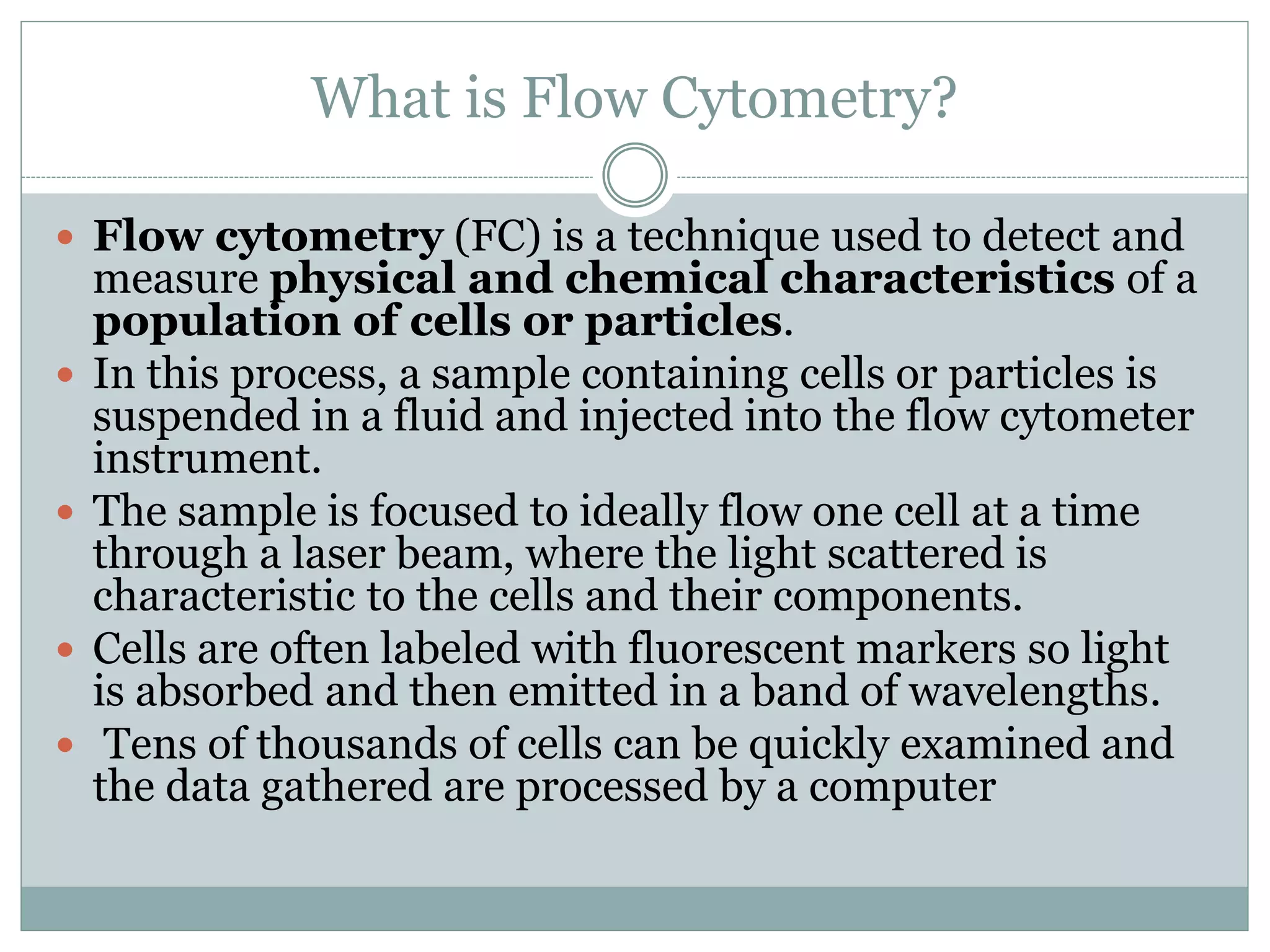
 Flow cytometry (FC) is a technique used to detect and
measure physical and chemical characteristics of a
population of cells or particles.
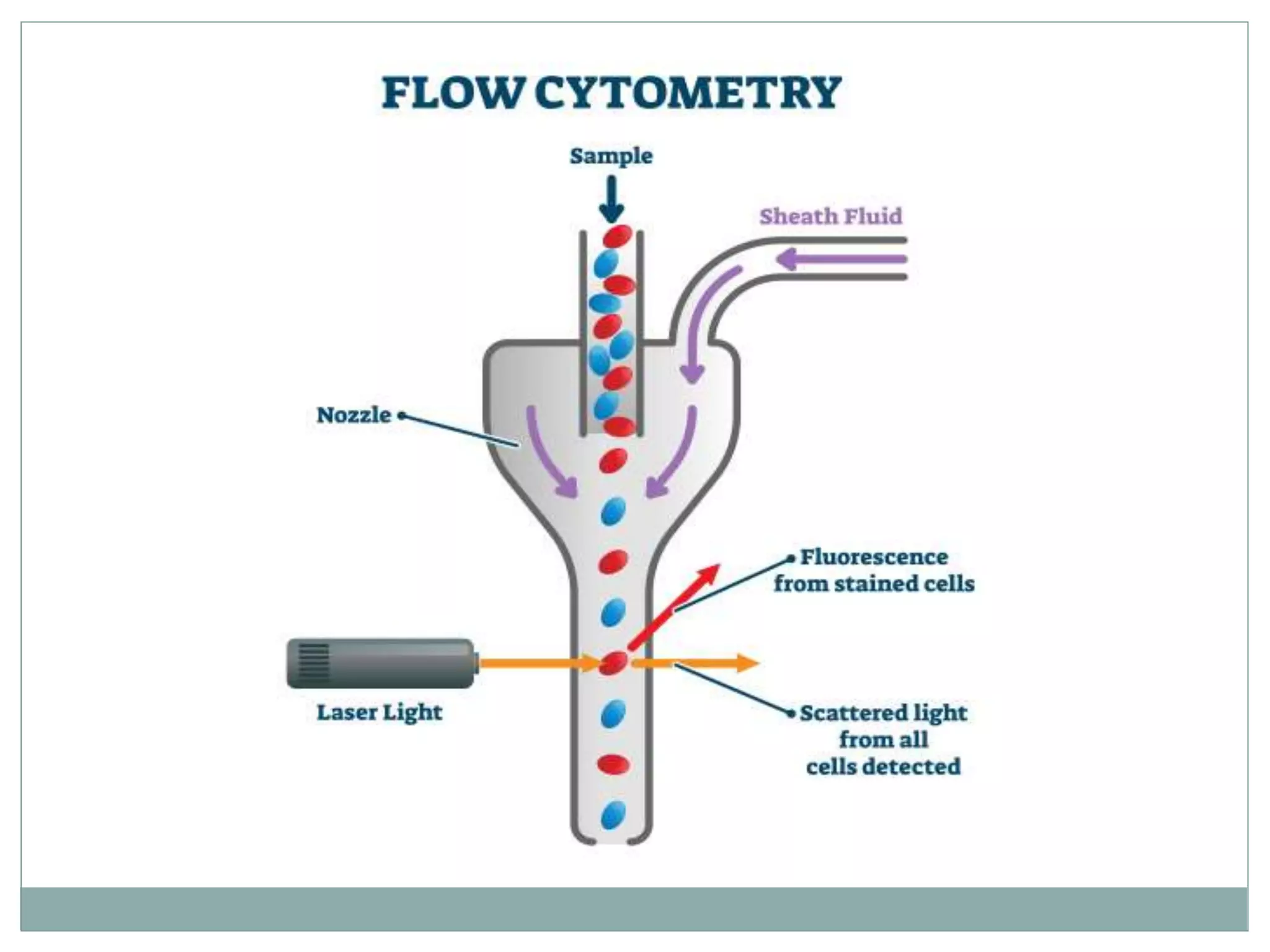
 In this process, a sample containing cells or particles is
suspended in a fluid and injected into the flow cytometer
instrument.
 The sample is focused to ideally flow one cell at a time
through a laser beam, where the light scattered is
characteristic to the cells and their components.
 Cells are often labeled with fluorescent markers so light
is absorbed and then emitted in a band of wavelengths.
 Tens of thousands of cells can be quickly examined and
the data gathered are processed by a computer
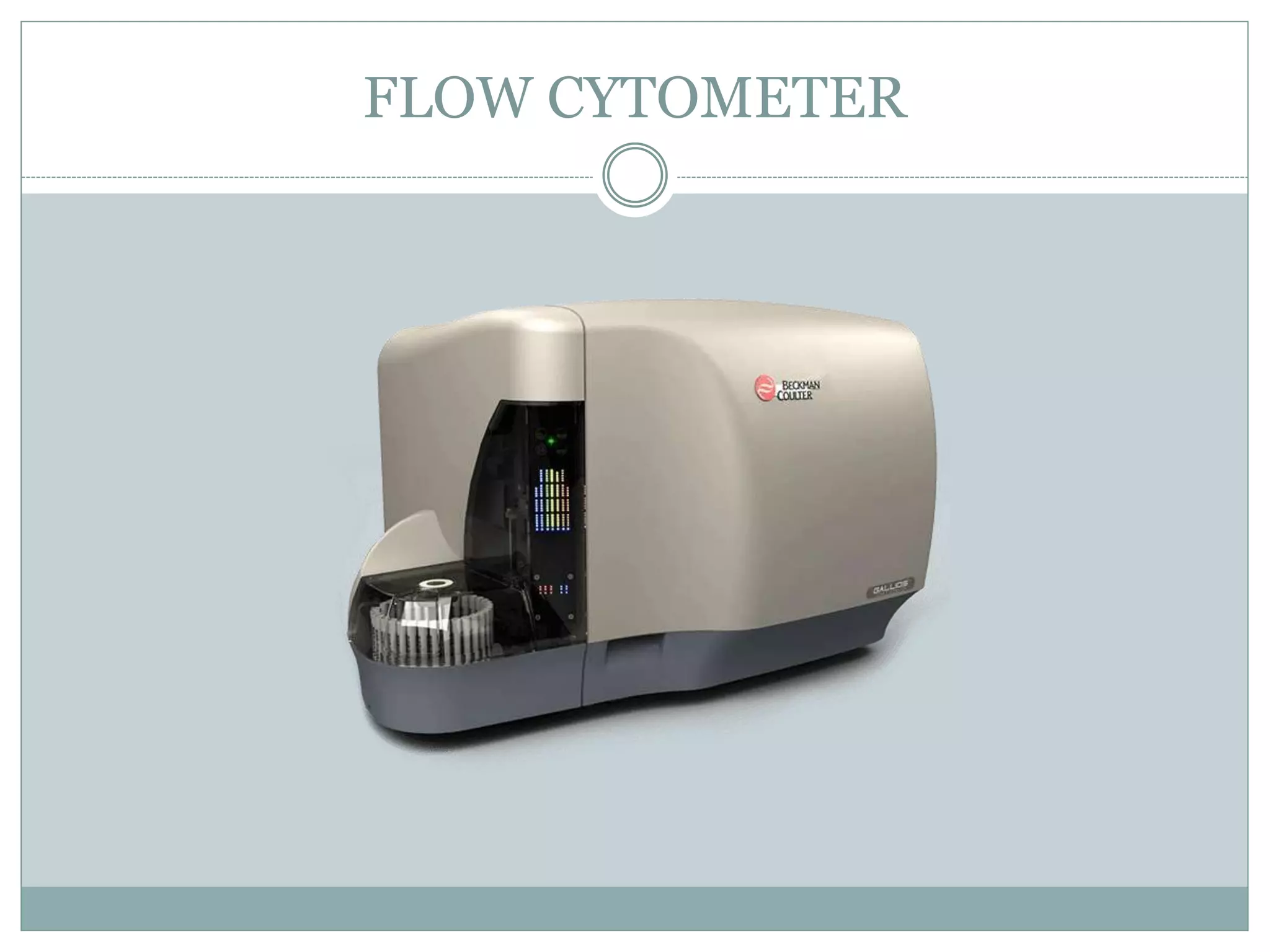
FLOW CYTOMETER
How a flow cytometer works
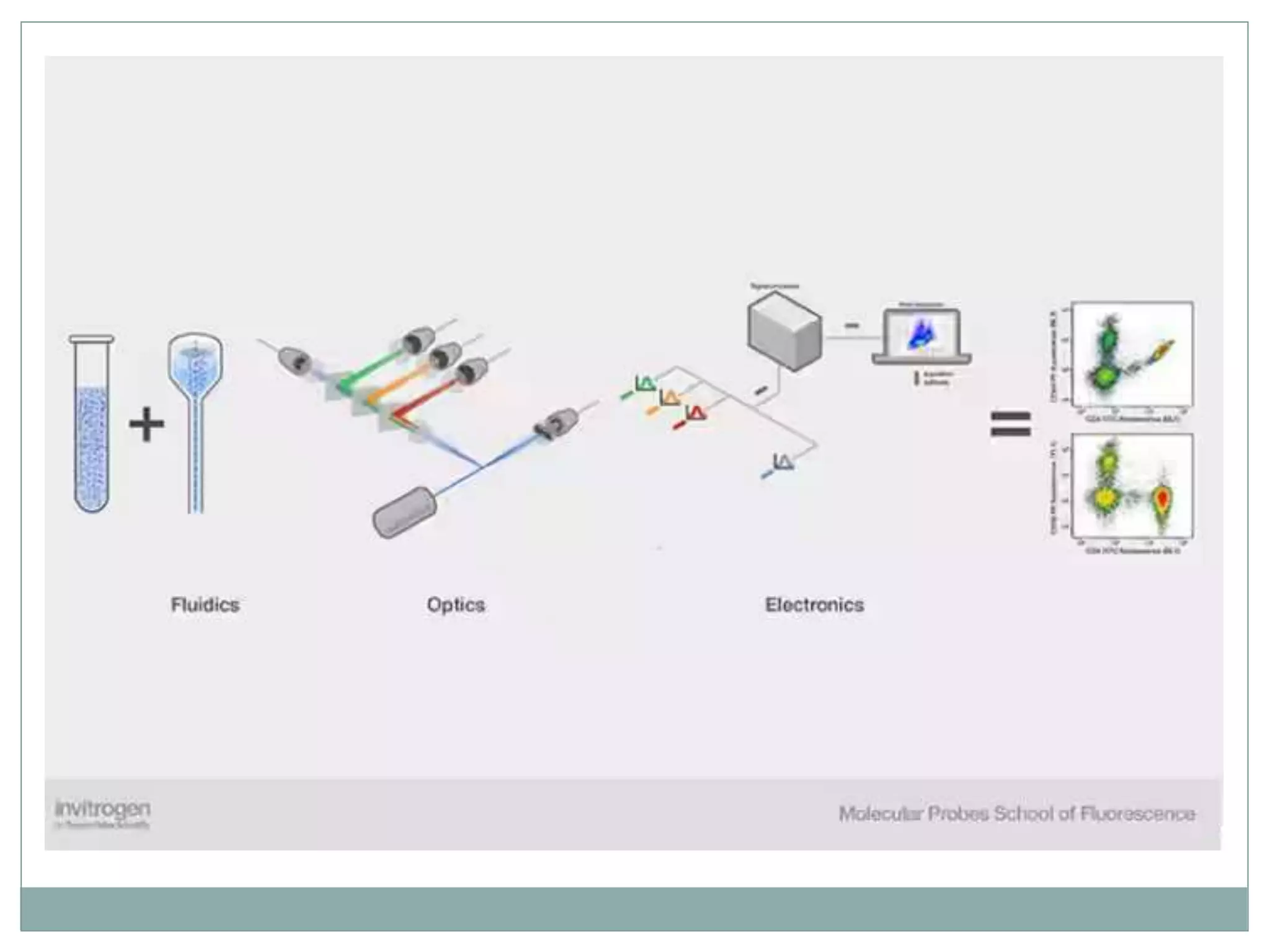
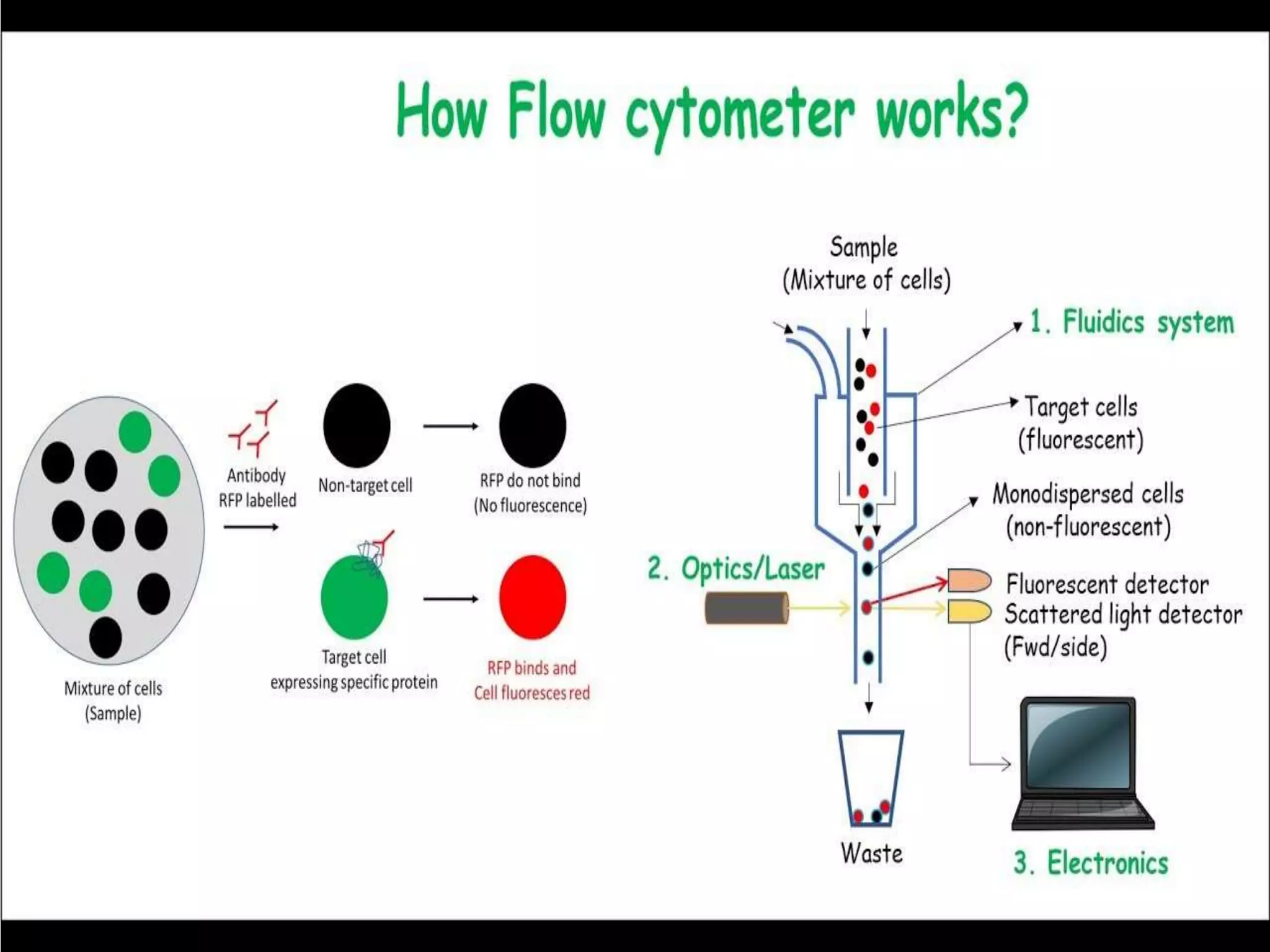
 The three main components of a flow cytometer are the fluidics,
optics, and electronics .
 The fluidics system of a flow cytometer is responsible for
transporting sample from the sample tube to the flow cell. Once
through the flow cell (and past the laser), the sample is either sorted
(in the case of cell sorters) or transported to waste.
 The components of the optical system include excitation light
sources, lenses, and filters used to collect and move light around the
instrument and the detection system that generates the
photocurrent.
 The electronics are the brains of the flow cytometer. Here, the
photocurrent from the detector is digitized and processed to be
saved for subsequent analysis.
Sample uptake into the instrument
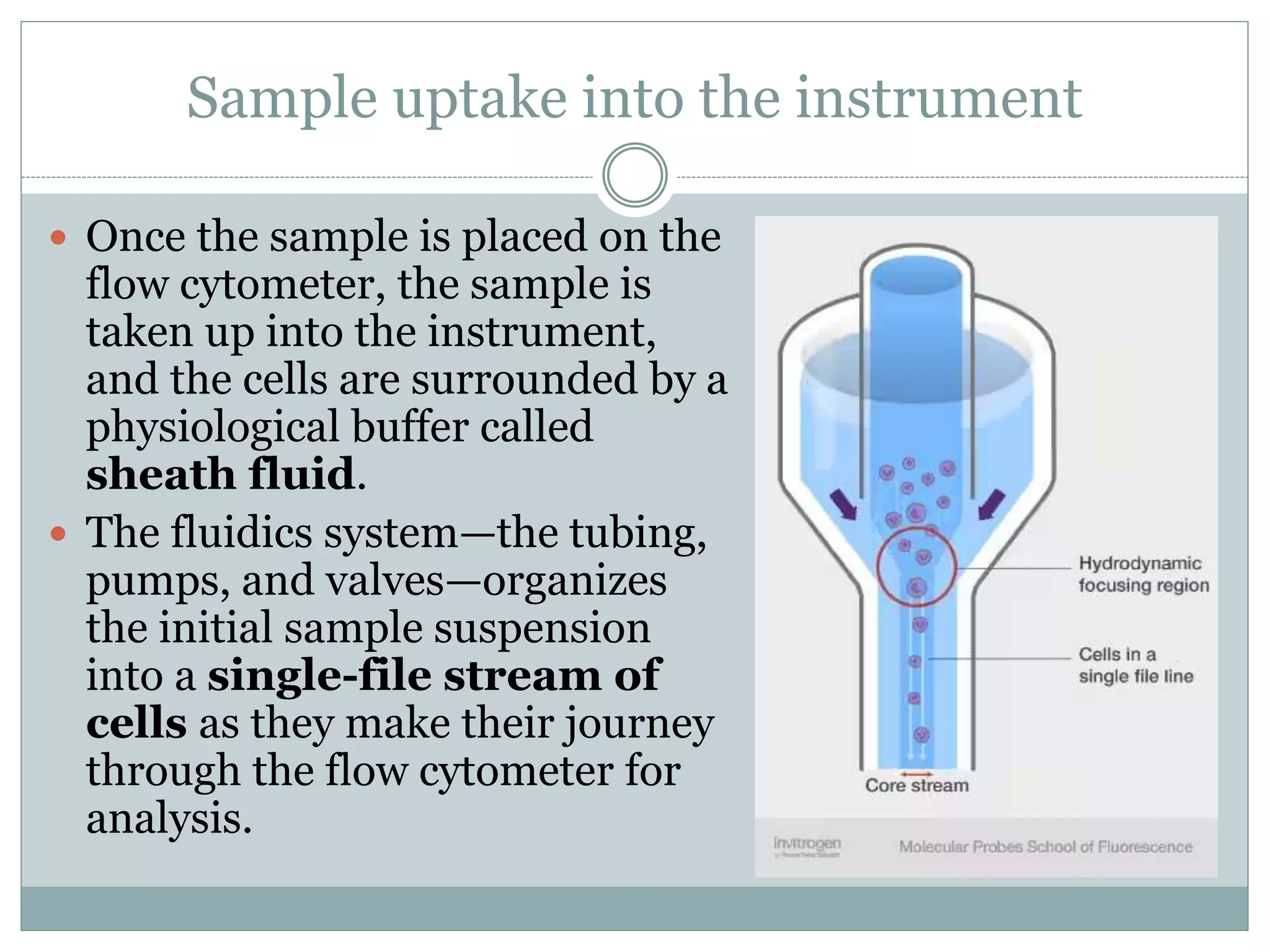
 Once the sample is placed on the
flow cytometer, the sample is
taken up into the instrument,
and the cells are surrounded by a
physiological buffer called
sheath fluid.
 The fluidics system—the tubing,
pumps, and valves—organizes
the initial sample suspension
into a single-file stream of
cells as they make their journey
through the flow cytometer for
analysis.
Interrogation point
 The place where the cells interact with laser light is called
the interrogation point.
 When the laser light beam illuminates a single cell, some of the light
will strike physical structures within the cell, causing the light to
scatter.
 This light scatter can be measured and correlated with relative cell
size and structures inside the cell.
 These measurements are termed forward angle
scatter(FSC) and side angle scatter (SSC), depending on where
the light is collected with respect to the path of the laser.
 Nearly simultaneously, light from the laser will excite all
fluorophores associated with the cell, which produces a fluorescence
emission.
 All of this light is collected by the detector and processed through
the electronics component of the flow cytometer.
 After passing through the interrogation point, the cell is no longer
needed and is carried by the fluidics system to the waste container.
FACS
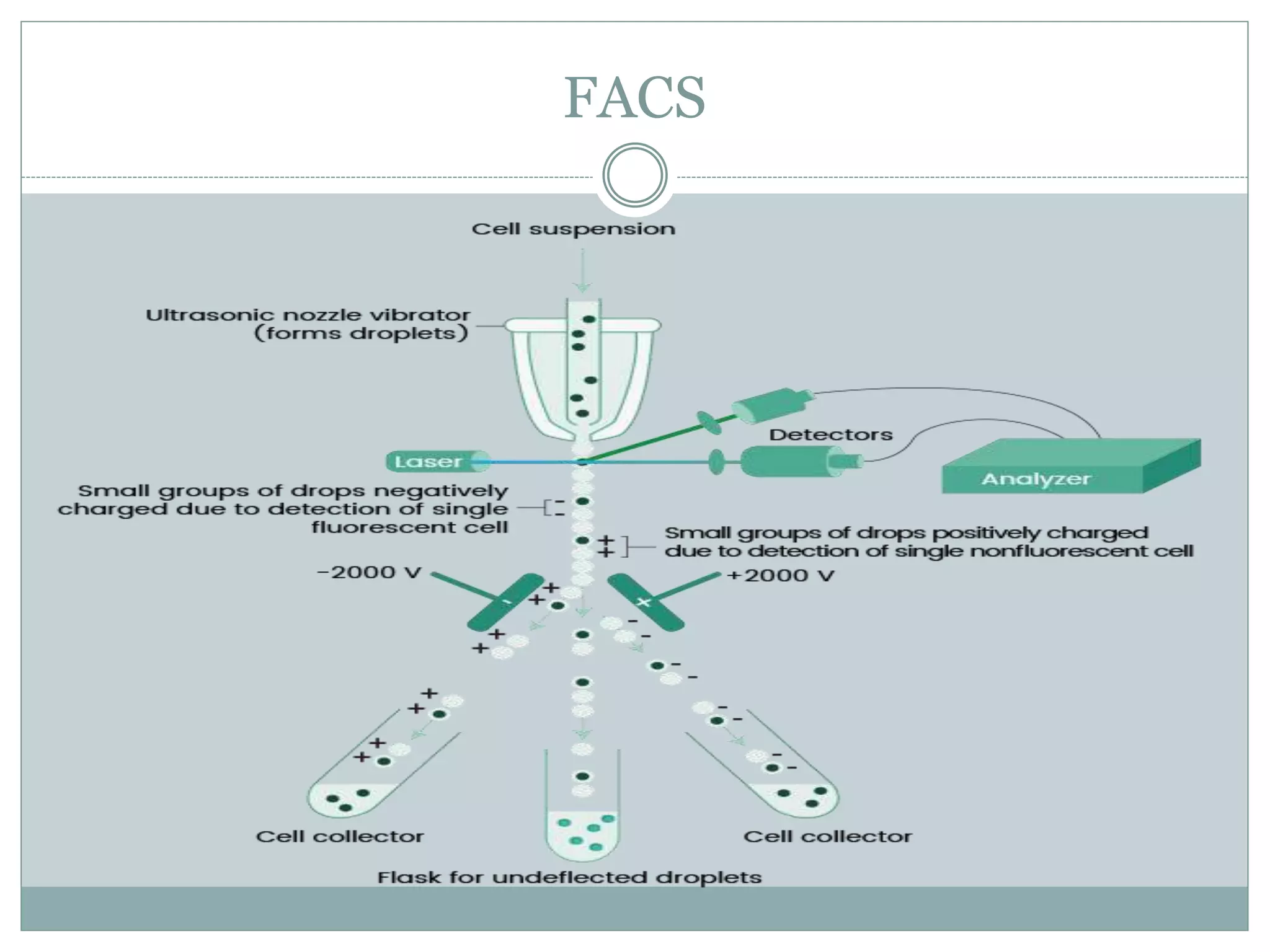
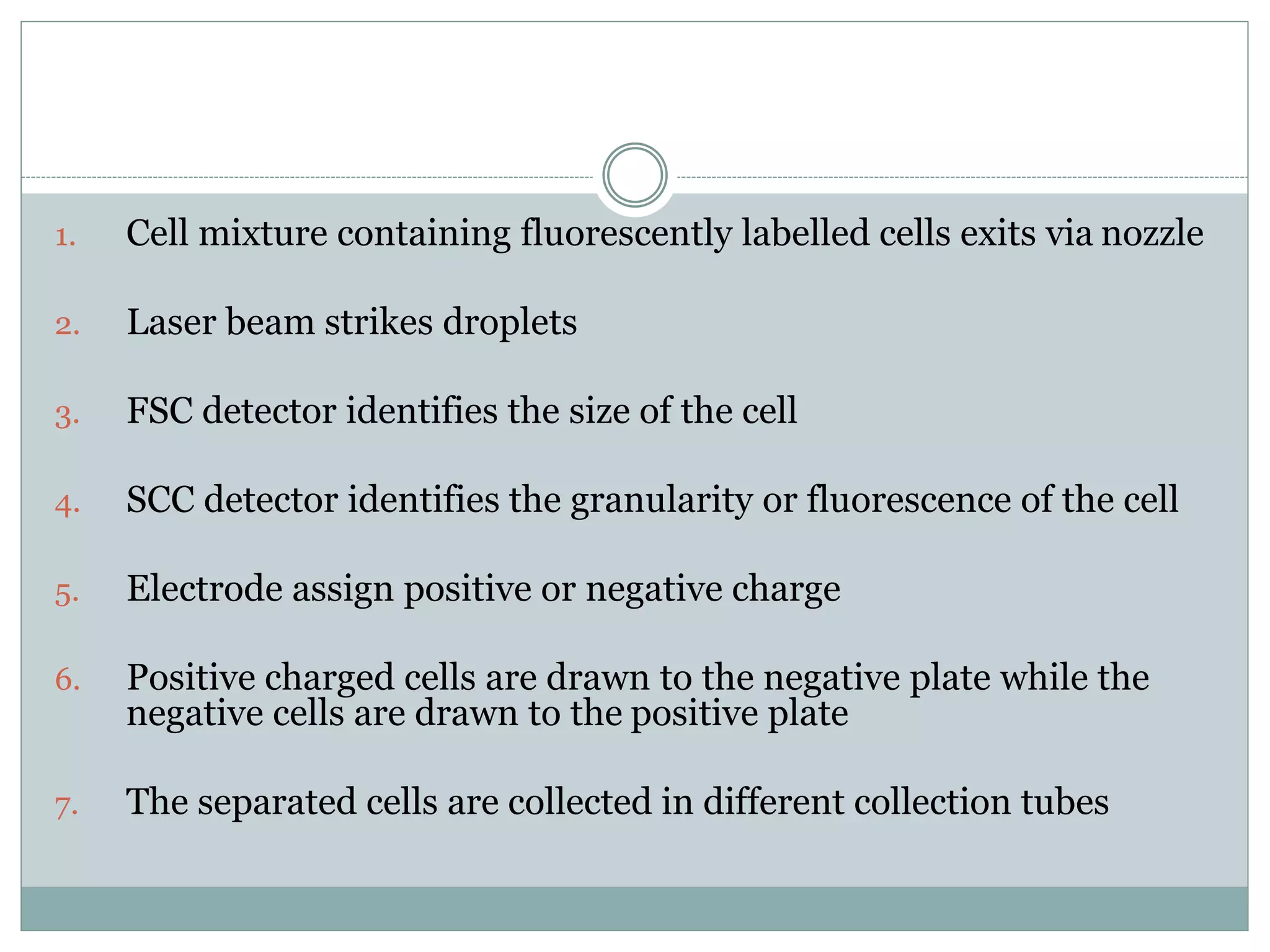
1. Cell mixture containing fluorescently labelled cells exits via nozzle
2. Laser beam strikes droplets
3. FSC detector identifies the size of the cell
4. SCC detector identifies the granularity or fluorescence of the cell
5. Electrode assign positive or negative charge
6. Positive charged cells are drawn to the negative plate while the
negative cells are drawn to the positive plate
7. The separated cells are collected in different collection tubes
Applications
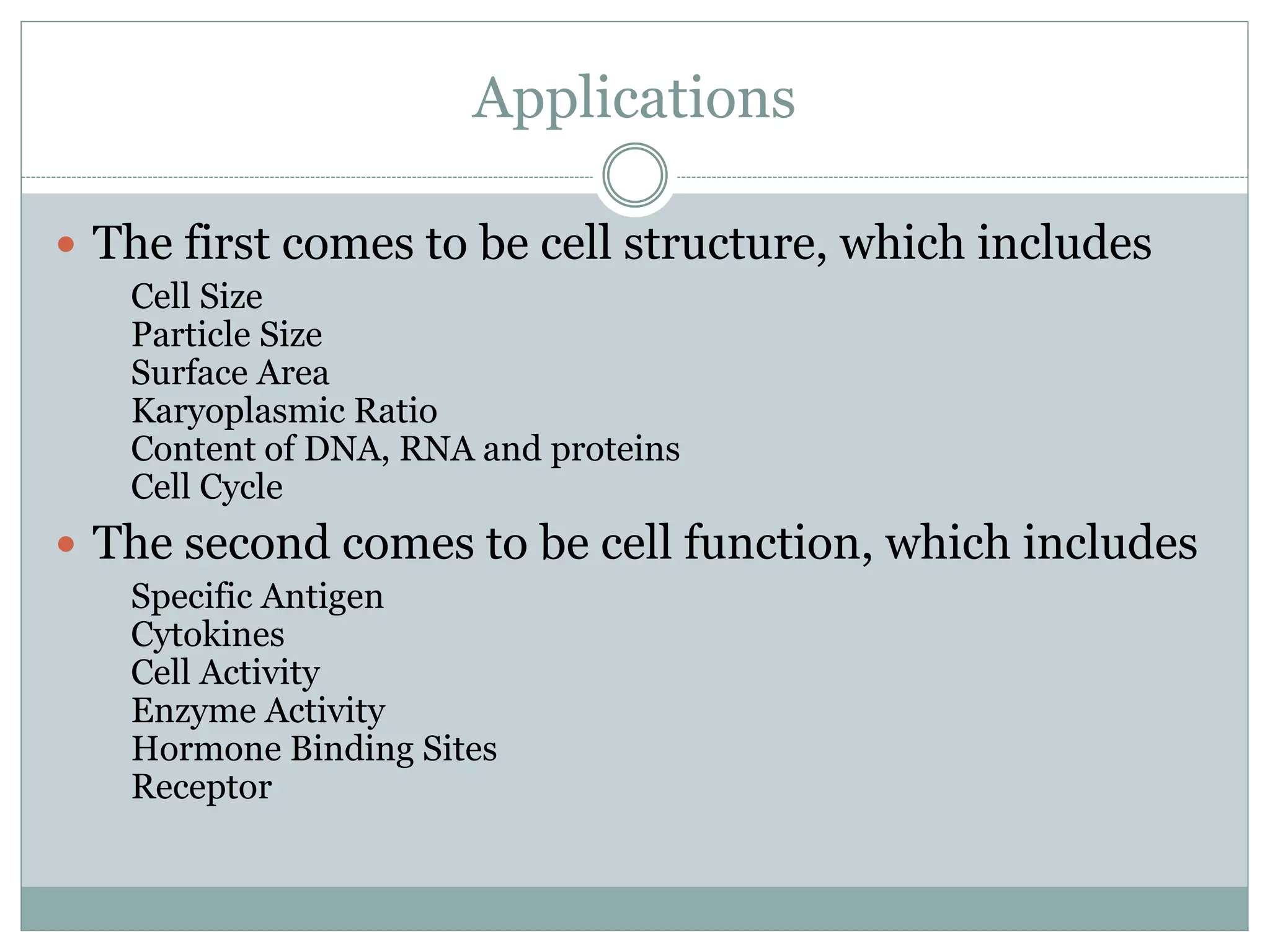
 The first comes to be cell structure, which includes
Cell Size
Particle Size
Surface Area
Karyoplasmic Ratio
Content of DNA, RNA and proteins
Cell Cycle
 The second comes to be cell function, which includes
Specific Antigen
Cytokines
Cell Activity
Enzyme Activity
Hormone Binding Sites
Receptor
Applications
 Immunophenotyping: This is a methodology that identifies and quantifies multiple
populations of cells in one heterogeneous sample. This includes peripheral blood, bone marrow,
and lymph material
 Cell Sorting: Advancements in cell sorters are geared towards the gentle isolation of cells into
separate tubes.
 Cell Cycle Analysis: With flow cytometry and FACS, the cell can be analyzed and measured in
all four distinct phases of the entire cell cycle.
 Apoptosis: These two distinct types of cell death, apoptosis and necrosis, can be identified via
flow cytometric methodology and used to determine morphological, biochemical and molecular
changes occurring in dying cells.
 Cell Proliferation Assays: As the cells divide, half of the original dye is passed on to each
daughter cell. By measuring the reduction of the fluorescence signal, researchers can calculate
cellular activation and proliferation.
 Intracellular Calcium Flux: The flow cytometer is able to detect the flux of calcium into the
cell and provide detailed measurement data.
Conclusion
 Fluorescence-activated cell sorting (FACS),
sometimes called fluorescence-assisted cell sorting,
is a specialized type of flow cytometry that uses
fluorescent markers to target and isolate cell groups.
 This cell sorting technique is commonly used in
hematopoiesis, oncology, and stem cell biology
research.
Reference
 https://www.sinobiological.com/category/fcm-facs-
facs
 https://nanocellect.com/blog/flow-cytometry-vs-
facs/

Fluorescence-activated Cell Sorting (FACS).pptx

  • 1.
    Fluorescence-activated Cell Sorting (FACS) Submittedto, Dr. Nevin K G HoD Dept. of Marine Biosciences KUFOS Submitted by, Alok K 2nd Marine Biology KUFOS
  • 2.
    What is FACS? Fluorescence-activated cell sorting (FACS) is a specialized type of flow cytometry.  It provides a method for sorting a heterogeneous mixture of biological cells into two or more containers, one cell at a time, based upon the specific light scattering and fluorescent characteristics of each cell.  It is a useful scientific instrument, as it provides fast, objective and quantitative recording of fluorescent signals from individual cells as well as physical separation of cells of particular interest.
  • 3.
    What is FlowCytometry?  Flow cytometry (FC) is a technique used to detect and measure physical and chemical characteristics of a population of cells or particles.  In this process, a sample containing cells or particles is suspended in a fluid and injected into the flow cytometer instrument.  The sample is focused to ideally flow one cell at a time through a laser beam, where the light scattered is characteristic to the cells and their components.  Cells are often labeled with fluorescent markers so light is absorbed and then emitted in a band of wavelengths.  Tens of thousands of cells can be quickly examined and the data gathered are processed by a computer
  • 5.
  • 6.
    How a flowcytometer works  The three main components of a flow cytometer are the fluidics, optics, and electronics .  The fluidics system of a flow cytometer is responsible for transporting sample from the sample tube to the flow cell. Once through the flow cell (and past the laser), the sample is either sorted (in the case of cell sorters) or transported to waste.  The components of the optical system include excitation light sources, lenses, and filters used to collect and move light around the instrument and the detection system that generates the photocurrent.  The electronics are the brains of the flow cytometer. Here, the photocurrent from the detector is digitized and processed to be saved for subsequent analysis.
  • 8.
    Sample uptake intothe instrument  Once the sample is placed on the flow cytometer, the sample is taken up into the instrument, and the cells are surrounded by a physiological buffer called sheath fluid.  The fluidics system—the tubing, pumps, and valves—organizes the initial sample suspension into a single-file stream of cells as they make their journey through the flow cytometer for analysis.
  • 9.
    Interrogation point  Theplace where the cells interact with laser light is called the interrogation point.  When the laser light beam illuminates a single cell, some of the light will strike physical structures within the cell, causing the light to scatter.  This light scatter can be measured and correlated with relative cell size and structures inside the cell.  These measurements are termed forward angle scatter(FSC) and side angle scatter (SSC), depending on where the light is collected with respect to the path of the laser.  Nearly simultaneously, light from the laser will excite all fluorophores associated with the cell, which produces a fluorescence emission.  All of this light is collected by the detector and processed through the electronics component of the flow cytometer.  After passing through the interrogation point, the cell is no longer needed and is carried by the fluidics system to the waste container.
  • 11.
  • 12.
    1. Cell mixturecontaining fluorescently labelled cells exits via nozzle 2. Laser beam strikes droplets 3. FSC detector identifies the size of the cell 4. SCC detector identifies the granularity or fluorescence of the cell 5. Electrode assign positive or negative charge 6. Positive charged cells are drawn to the negative plate while the negative cells are drawn to the positive plate 7. The separated cells are collected in different collection tubes
  • 13.
    Applications  The firstcomes to be cell structure, which includes Cell Size Particle Size Surface Area Karyoplasmic Ratio Content of DNA, RNA and proteins Cell Cycle  The second comes to be cell function, which includes Specific Antigen Cytokines Cell Activity Enzyme Activity Hormone Binding Sites Receptor
  • 14.
    Applications  Immunophenotyping: Thisis a methodology that identifies and quantifies multiple populations of cells in one heterogeneous sample. This includes peripheral blood, bone marrow, and lymph material  Cell Sorting: Advancements in cell sorters are geared towards the gentle isolation of cells into separate tubes.  Cell Cycle Analysis: With flow cytometry and FACS, the cell can be analyzed and measured in all four distinct phases of the entire cell cycle.  Apoptosis: These two distinct types of cell death, apoptosis and necrosis, can be identified via flow cytometric methodology and used to determine morphological, biochemical and molecular changes occurring in dying cells.  Cell Proliferation Assays: As the cells divide, half of the original dye is passed on to each daughter cell. By measuring the reduction of the fluorescence signal, researchers can calculate cellular activation and proliferation.  Intracellular Calcium Flux: The flow cytometer is able to detect the flux of calcium into the cell and provide detailed measurement data.
  • 15.
    Conclusion  Fluorescence-activated cellsorting (FACS), sometimes called fluorescence-assisted cell sorting, is a specialized type of flow cytometry that uses fluorescent markers to target and isolate cell groups.  This cell sorting technique is commonly used in hematopoiesis, oncology, and stem cell biology research.
  • 16.