Department of Presented By
Chemical Engineering, KAMALJEET CHAUHAN
UIET, Kanpur CSJMA14001390203
A
Power Point Presentation
on
FLUID COKING
FLUID COKING
 Fluid coking is a continuous fluid bed technology.
 It thermally converts heavy hydrocarbons such as vacuum
residuum, atmospheric residuum, oil sands bitumen, heavy
whole crudes, deasphalter bottoms, or FCC bottoms to lighter
products.
 Fluid Coking is currently used commercially in refineries for
deep conversion and as the resource to upgrade heavy
oils/bitumens.
FLUID COKING
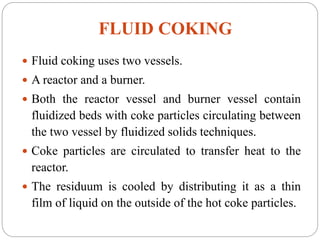
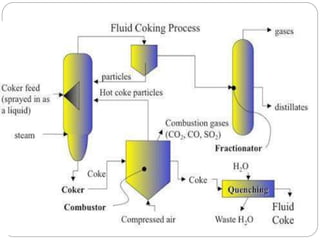
 Fluid coking uses two vessels.
 A reactor and a burner.
 Both the reactor vessel and burner vessel contain
fluidized beds with coke particles circulating between
the two vessel by fluidized solids techniques.
 Coke particles are circulated to transfer heat to the
reactor.
 The residuum is cooled by distributing it as a thin
film of liquid on the outside of the hot coke particles.
Fluid coking process
PROCESS DESCRIPTION
 Heated by the produced coke
 Cracking reactions occur inside the heater and the fluidized-bed reactor.
 The fluid coke is partially formed in the heater.
 Hot coke slurry from the heater is recycled to the fluid reactor to
provide the heat required for the cracking reactions.
 Fluid coke is formed by spraying the hot feed on the already-formed
coke particles.
 Reactor temperature is about 520°C, and the conversion into coke is
immediate, with complete disorientation of the crystallites of product
coke.
 The burning process in fluid coking tends to concentrate the metals, but
it does not reduce the sulfur content of the coke.
 Characteristics of fluid coke:
 High sulfur content,
 Low volatility, poor crystalline structure, and low
grindability index.
 Flexicoking, integrates fluid coking with coke
gasification.
 Most of the coke is gasified. Flexicoking
gasification produces a substantial concentration of
the metals in the coke product.
Flexicoking
Flexicoking process integrates
conventional fluid coking with coke
gasification process for upgrading heavy
resids.
The gasification is effected by the
addition of air and steam to a fluidized
solids vessels.
The gaseous products are subsequently
treated to produce a clean fuel gas.
Process description
Conventional flexicoking
process.
Dual gasification
flexicoking process.
Conventional
flexicoking
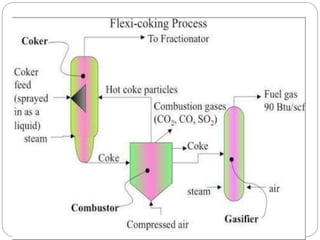
In the simplified flexicoking process residuum
feed is injected into the reactor where it is
thermally cracked to a full range of vaporized
products plus coke, which is deposited on the
fluidized coke particles.
The heavier fractions are condensed in the
scrubber and are normally recycled back to the
coking reactor.
The lighter fractions proceeds overhead from
the scrubber to a conventional fractionator.
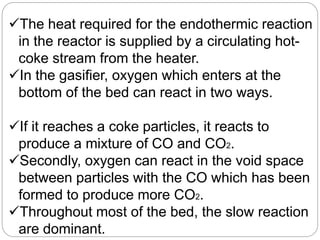
The heat required for the endothermic reaction
in the reactor is supplied by a circulating hot-
coke stream from the heater.
In the gasifier, oxygen which enters at the
bottom of the bed can react in two ways.
If it reaches a coke particles, it reacts to
produce a mixture of CO and CO2.
Secondly, oxygen can react in the void space
between particles with the CO which has been
formed to produce more CO2.
Throughout most of the bed, the slow reaction
are dominant.
Figure: Convection flexicoking process.
Dual gasification
flexicoking
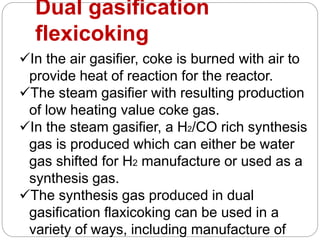
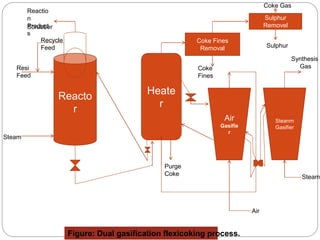
In the air gasifier, coke is burned with air to
provide heat of reaction for the reactor.
The steam gasifier with resulting production
of low heating value coke gas.
In the steam gasifier, a H2/CO rich synthesis
gas is produced which can either be water
gas shifted for H2 manufacture or used as a
synthesis gas.
The synthesis gas produced in dual
gasification flaxicoking can be used in a
variety of ways, including manufacture of
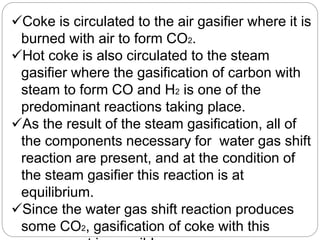
Coke is circulated to the air gasifier where it is
burned with air to form CO2.
Hot coke is also circulated to the steam
gasifier where the gasification of carbon with
steam to form CO and H2 is one of the
predominant reactions taking place.
As the result of the steam gasification, all of
the components necessary for water gas shift
reaction are present, and at the condition of
the steam gasifier this reaction is at
equilibrium.
Since the water gas shift reaction produces
some CO2, gasification of coke with this
Synthesis
Gas
Coke Gas
Steam
Figure: Dual gasification flexicoking process.
Steam
Heate
r
Reacto
r
Air
Gasifie
r
Steanm
Gasifier
Coke Fines
Removal
Sulphur
Removel
Sulphur
Resi
Feed
Recycle
Feed
Scrubber
Reactio
n
Product
s
Purge
Coke
Air
Coke
Fines
FLUID COKING

FLUID COKING

  • 1.
    Department of PresentedBy Chemical Engineering, KAMALJEET CHAUHAN UIET, Kanpur CSJMA14001390203 A Power Point Presentation on FLUID COKING
  • 2.
    FLUID COKING  Fluidcoking is a continuous fluid bed technology.  It thermally converts heavy hydrocarbons such as vacuum residuum, atmospheric residuum, oil sands bitumen, heavy whole crudes, deasphalter bottoms, or FCC bottoms to lighter products.  Fluid Coking is currently used commercially in refineries for deep conversion and as the resource to upgrade heavy oils/bitumens.
  • 3.
    FLUID COKING  Fluidcoking uses two vessels.  A reactor and a burner.  Both the reactor vessel and burner vessel contain fluidized beds with coke particles circulating between the two vessel by fluidized solids techniques.  Coke particles are circulated to transfer heat to the reactor.  The residuum is cooled by distributing it as a thin film of liquid on the outside of the hot coke particles.
  • 4.
  • 5.
    PROCESS DESCRIPTION  Heatedby the produced coke  Cracking reactions occur inside the heater and the fluidized-bed reactor.  The fluid coke is partially formed in the heater.  Hot coke slurry from the heater is recycled to the fluid reactor to provide the heat required for the cracking reactions.  Fluid coke is formed by spraying the hot feed on the already-formed coke particles.  Reactor temperature is about 520°C, and the conversion into coke is immediate, with complete disorientation of the crystallites of product coke.  The burning process in fluid coking tends to concentrate the metals, but it does not reduce the sulfur content of the coke.
  • 6.
     Characteristics offluid coke:  High sulfur content,  Low volatility, poor crystalline structure, and low grindability index.  Flexicoking, integrates fluid coking with coke gasification.  Most of the coke is gasified. Flexicoking gasification produces a substantial concentration of the metals in the coke product.
  • 7.
    Flexicoking Flexicoking process integrates conventionalfluid coking with coke gasification process for upgrading heavy resids. The gasification is effected by the addition of air and steam to a fluidized solids vessels. The gaseous products are subsequently treated to produce a clean fuel gas.
  • 8.
  • 9.
    Conventional flexicoking In the simplifiedflexicoking process residuum feed is injected into the reactor where it is thermally cracked to a full range of vaporized products plus coke, which is deposited on the fluidized coke particles. The heavier fractions are condensed in the scrubber and are normally recycled back to the coking reactor. The lighter fractions proceeds overhead from the scrubber to a conventional fractionator.
  • 10.
    The heat requiredfor the endothermic reaction in the reactor is supplied by a circulating hot- coke stream from the heater. In the gasifier, oxygen which enters at the bottom of the bed can react in two ways. If it reaches a coke particles, it reacts to produce a mixture of CO and CO2. Secondly, oxygen can react in the void space between particles with the CO which has been formed to produce more CO2. Throughout most of the bed, the slow reaction are dominant.
  • 11.
  • 12.
    Dual gasification flexicoking In theair gasifier, coke is burned with air to provide heat of reaction for the reactor. The steam gasifier with resulting production of low heating value coke gas. In the steam gasifier, a H2/CO rich synthesis gas is produced which can either be water gas shifted for H2 manufacture or used as a synthesis gas. The synthesis gas produced in dual gasification flaxicoking can be used in a variety of ways, including manufacture of
  • 13.
    Coke is circulatedto the air gasifier where it is burned with air to form CO2. Hot coke is also circulated to the steam gasifier where the gasification of carbon with steam to form CO and H2 is one of the predominant reactions taking place. As the result of the steam gasification, all of the components necessary for water gas shift reaction are present, and at the condition of the steam gasifier this reaction is at equilibrium. Since the water gas shift reaction produces some CO2, gasification of coke with this
  • 14.
    Synthesis Gas Coke Gas Steam Figure: Dualgasification flexicoking process. Steam Heate r Reacto r Air Gasifie r Steanm Gasifier Coke Fines Removal Sulphur Removel Sulphur Resi Feed Recycle Feed Scrubber Reactio n Product s Purge Coke Air Coke Fines