Naphtha Cracking


   A presentation by :
   Niteesh Kumar Vats
   ME, Chemical Engg.
   IISc Bangalore
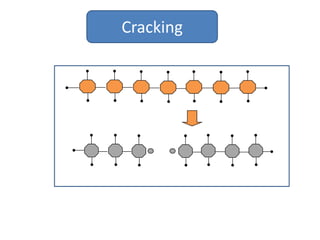
Cracking
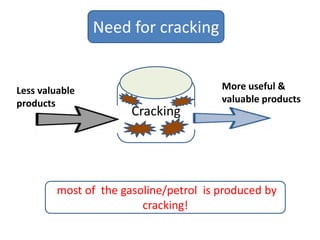
Need for cracking


Less valuable                          More useful &
products                               valuable products
                      Cracking


        most of the gasoline/petrol is produced by
                        cracking!
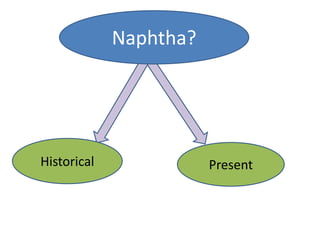
Naphtha?


Historical              Present
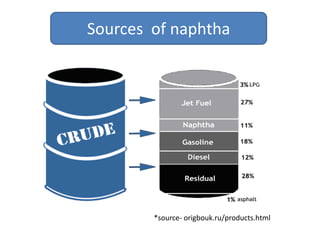
Sources of naphtha


        *source- origbouk.ru/products.html
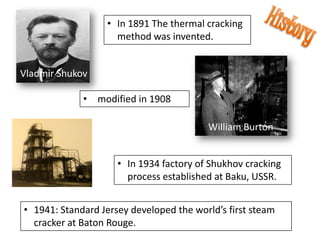
• In 1891 The thermal cracking
                    method was invented.


Vladmir Shukov

             • modified in 1908

                                         William Burton


                     • In 1934 factory of Shukhov cracking
                       process established at Baku, USSR.


• 1941: Standard Jersey developed the world’s first steam
  cracker at Baton Rouge.
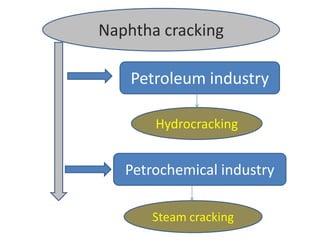
Naphtha cracking

    Petroleum industry

       Hydrocracking


   Petrochemical industry

       Steam cracking
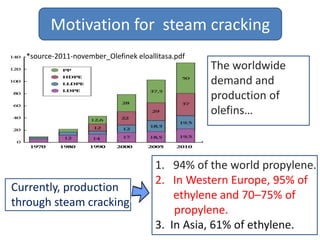
Motivation for steam cracking
  *source-2011-november_Olefinek eloallitasa.pdf
                                                   The worldwide
                                                   demand and
                                                   production of
                                                   olefins…


                                       1. 94% of the world propylene.
                                       2. In Western Europe, 95% of
Currently, production
                                       `````ethylene and 70–75% of
through steam cracking
                                       111propylene.
                                       3. In Asia, 61% of ethylene.
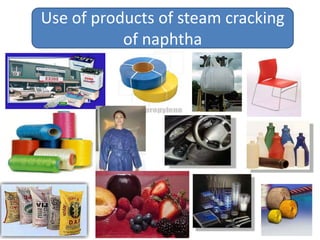
Use of products of steam cracking
           of naphtha
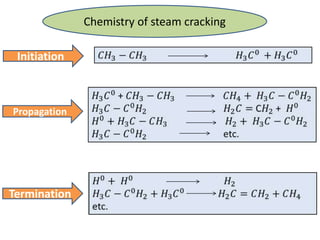
Chemistry of steam cracking

 Initiation


Propagation


Termination
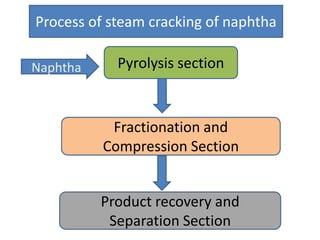
Process of steam cracking of naphtha

Naphtha     Pyrolysis section


           Fractionation and
          Compression Section


          Product recovery and
           Separation Section
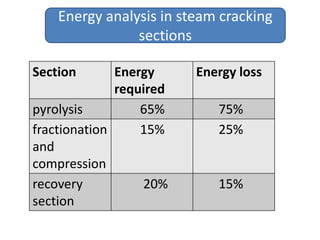
Energy analysis in steam cracking
                sections

Section       Energy     Energy loss
              required
pyrolysis         65%       75%
fractionation     15%       25%
and
compression
recovery          20%       15%
section
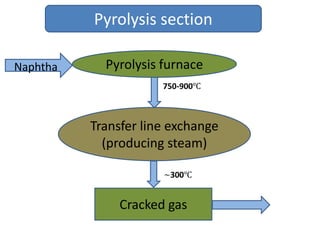
Pyrolysis section

Naphtha     Pyrolysis furnace


          Transfer line exchange
            (producing steam)


               Cracked gas
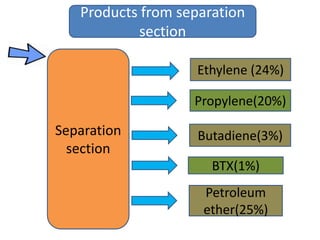
Products from separation
           section

                    Ethylene (24%)

                   Propylene(20%)

Separation          Butadiene(3%)
  section
                      BTX(1%)
                     Petroleum
                     ether(25%)
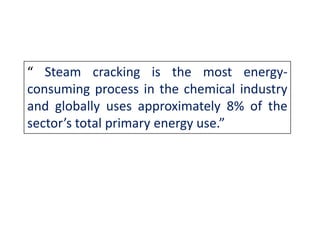
“ Steam cracking is the most energy-
consuming process in the chemical industry
and globally uses approximately 8% of the
sector’s total primary energy use.”
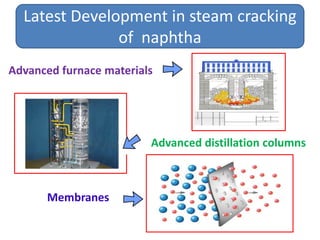
Latest Development in steam cracking
               of naphtha
Advanced furnace materials


                         Advanced distillation columns


      Membranes
“These latest developments in
naphtha cracking can lead to
approximately 10% savings on the
process energy used.”
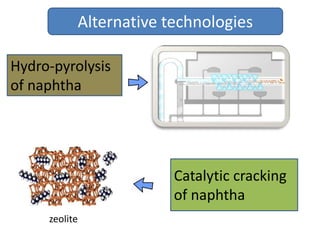
Alternative technologies

Hydro-pyrolysis
of naphtha


                        Catalytic cracking
                        of naphtha
     zeolite
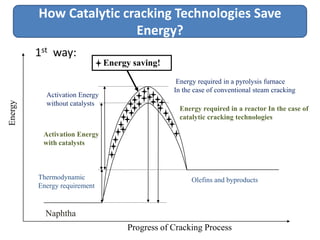
How Catalytic cracking Technologies Save
                         Energy?
         1st way:
                               Energy saving!

                                                 Energy required in a pyrolysis furnace
                                                In the case of conventional steam cracking
           Activation Energy
Energy


           without catalysts
                                                  Energy required in a reactor In the case of
                                                  catalytic cracking technologies

          Activation Energy
          with catalysts


         Thermodynamic                                Olefins and byproducts
         Energy requirement


           Naphtha
                                    Progress of Cracking Process
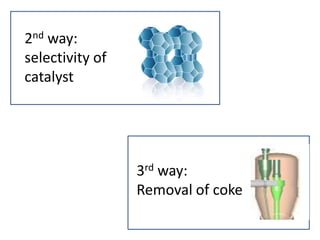
2nd way:
selectivity of
catalyst


                 3rd way:
                 Removal of coke
Conclusion

Plenty of room for energy savings is possible in
steam cracking. And Catalytic cracking technologies
can lead to energy saving up to 20%.


          90% chemical processes
      already benefits from catalysis,
           so can steam cracking!
References
• Olefins from conventional and heavy feedstock's:
  Energy use in steam cracking and alternative
  processes. Energy 31 (2006) 425-251
            By Tao Ren, Martin Patel, Kornelis Blok
• James. G. Speight (2006). The Chemistry and
  Technology of Petroleum (4th ed.). CRC Press.
• Dr. Ram Prasad (2010). Petroleum refining
  Technology (1st edition). Khanna publishers

Naphtha cracking

  • 1.
    Naphtha Cracking A presentation by : Niteesh Kumar Vats ME, Chemical Engg. IISc Bangalore
  • 2.
  • 3.
    Need for cracking Lessvaluable More useful & products valuable products Cracking most of the gasoline/petrol is produced by cracking!
  • 4.
  • 5.
    Sources of naphtha *source- origbouk.ru/products.html
  • 6.
    • In 1891The thermal cracking method was invented. Vladmir Shukov • modified in 1908 William Burton • In 1934 factory of Shukhov cracking process established at Baku, USSR. • 1941: Standard Jersey developed the world’s first steam cracker at Baton Rouge.
  • 7.
    Naphtha cracking Petroleum industry Hydrocracking Petrochemical industry Steam cracking
  • 8.
    Motivation for steamcracking *source-2011-november_Olefinek eloallitasa.pdf The worldwide demand and production of olefins… 1. 94% of the world propylene. 2. In Western Europe, 95% of Currently, production `````ethylene and 70–75% of through steam cracking 111propylene. 3. In Asia, 61% of ethylene.
  • 9.
    Use of productsof steam cracking of naphtha
  • 10.
    Chemistry of steamcracking Initiation Propagation Termination
  • 11.
    Process of steamcracking of naphtha Naphtha Pyrolysis section Fractionation and Compression Section Product recovery and Separation Section
  • 12.
    Energy analysis insteam cracking sections Section Energy Energy loss required pyrolysis 65% 75% fractionation 15% 25% and compression recovery 20% 15% section
  • 13.
    Pyrolysis section Naphtha Pyrolysis furnace Transfer line exchange (producing steam) Cracked gas
  • 14.
    Products from separation section Ethylene (24%) Propylene(20%) Separation Butadiene(3%) section BTX(1%) Petroleum ether(25%)
  • 15.
    “ Steam crackingis the most energy- consuming process in the chemical industry and globally uses approximately 8% of the sector’s total primary energy use.”
  • 16.
    Latest Development insteam cracking of naphtha Advanced furnace materials Advanced distillation columns Membranes
  • 17.
    “These latest developmentsin naphtha cracking can lead to approximately 10% savings on the process energy used.”
  • 18.
    Alternative technologies Hydro-pyrolysis of naphtha Catalytic cracking of naphtha zeolite
  • 19.
    How Catalytic crackingTechnologies Save Energy? 1st way: Energy saving! Energy required in a pyrolysis furnace In the case of conventional steam cracking Activation Energy Energy without catalysts Energy required in a reactor In the case of catalytic cracking technologies Activation Energy with catalysts Thermodynamic Olefins and byproducts Energy requirement Naphtha Progress of Cracking Process
  • 20.
    2nd way: selectivity of catalyst 3rd way: Removal of coke
  • 21.
    Conclusion Plenty of roomfor energy savings is possible in steam cracking. And Catalytic cracking technologies can lead to energy saving up to 20%. 90% chemical processes already benefits from catalysis, so can steam cracking!
  • 22.
    References • Olefins fromconventional and heavy feedstock's: Energy use in steam cracking and alternative processes. Energy 31 (2006) 425-251 By Tao Ren, Martin Patel, Kornelis Blok • James. G. Speight (2006). The Chemistry and Technology of Petroleum (4th ed.). CRC Press. • Dr. Ram Prasad (2010). Petroleum refining Technology (1st edition). Khanna publishers