

Government Engineering College,
Bhavnagar.
Civil Engineering Department
Hydrology and Water Resource
Engineering
Introduction
 Flooding generally caused by high rainfall and inability
of land to drain water effectively - aggravated further
when ground saturated
 Flooding frequently leads to serious water pollution
and epidemiological problems
 Flood control or Flood management is define as the
prevention or reduction of flood damage
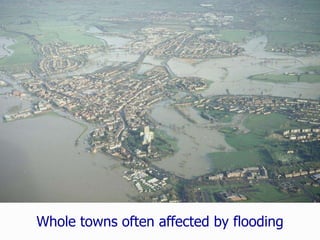
Whole towns often affected by flooding
Causes of flooding
 Intense rainfall
 Topography of the catchment
 Sedimentation of rivers and reservoirs
 Obstruction in the river flow
 Failure of dam
 Failure of river embankment
 Contraction of water way
 Inadequate cross drainage works
Recent floods
“India’s previous Prime Minister Manmohan Singh says floods in
the northern state of Bihar are a "national calamity". He
has visited areas where 55 people have died and some two
million are displaced after the Kosi River breached its banks,
changing course*.” BBC News: 28 Aug 2008 (*by 120 km)
“In north India, where water is receding after two weeks of
floods, health workers are starting a clear up. About 28m
people have been affected by the floods in India,
Bangladesh and Nepal.” BBC News: 9 Aug 2007
“The army, navy and air force have been deployed in flood
affected areas. Floods have also forced the evacuation of 200
villages in the central states of Chattisgarh and Madhya
Pradesh.” BBC News: 9 Aug 2006
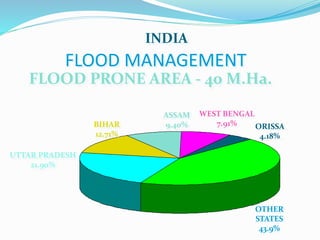
FLOOD MANAGEMENT
INDIA
FLOOD PRONE AREA - 40 M.Ha.
OTHER
STATES
43.9%
UTTAR PRADESH
21.90%
BIHAR
12.71%
ASSAM
9.40%
WEST BENGAL
7.91% ORISSA
4.18%
Methods Flood control
1. To modify flood
2. To modify susceptibility of flood damage
3. To reduce the loss
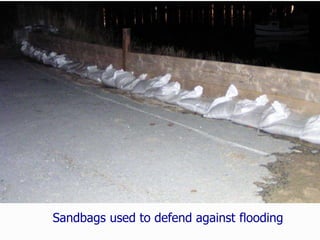
Sandbags used to defend against flooding
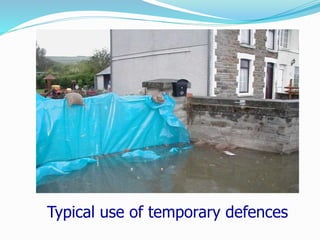
Typical use of temporary defences
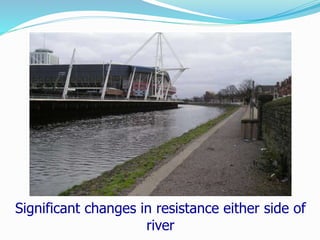
Significant changes in resistance either side of
river
FLOOD MANAGEMENT
Dams & reservoirs
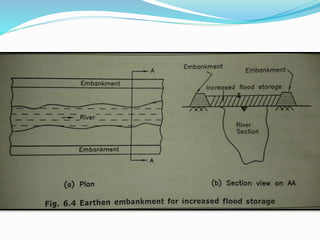
Embankment
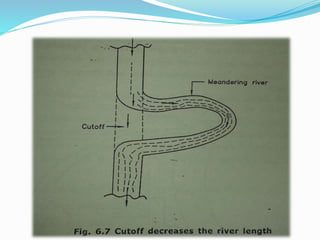
Channel improvement
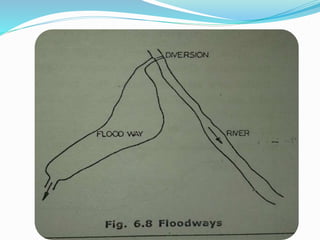
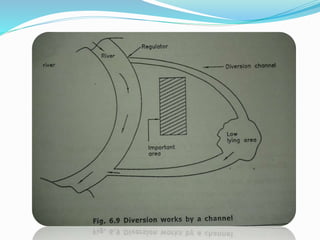
River diversion
Flood walls
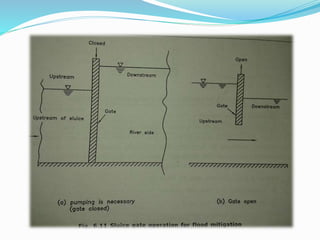
Sluice
STRUCTURAL MEASURES
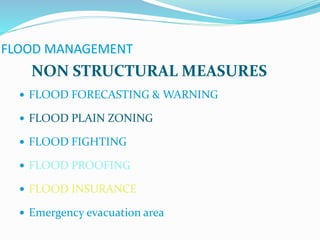
FLOOD MANAGEMENT
 FLOOD FORECASTING & WARNING
 FLOOD PLAIN ZONING
 FLOOD FIGHTING
 FLOOD PROOFING
 FLOOD INSURANCE
 Emergency evacuation area
NON STRUCTURAL MEASURES
Thank You For Bearing

Flood management

  • 1.
  • 2.
    Hydrology and WaterResource Engineering
  • 3.
    Introduction  Flooding generallycaused by high rainfall and inability of land to drain water effectively - aggravated further when ground saturated  Flooding frequently leads to serious water pollution and epidemiological problems  Flood control or Flood management is define as the prevention or reduction of flood damage
  • 4.
    Whole towns oftenaffected by flooding
  • 5.
    Causes of flooding Intense rainfall  Topography of the catchment  Sedimentation of rivers and reservoirs  Obstruction in the river flow  Failure of dam  Failure of river embankment  Contraction of water way  Inadequate cross drainage works
  • 6.
    Recent floods “India’s previousPrime Minister Manmohan Singh says floods in the northern state of Bihar are a "national calamity". He has visited areas where 55 people have died and some two million are displaced after the Kosi River breached its banks, changing course*.” BBC News: 28 Aug 2008 (*by 120 km) “In north India, where water is receding after two weeks of floods, health workers are starting a clear up. About 28m people have been affected by the floods in India, Bangladesh and Nepal.” BBC News: 9 Aug 2007 “The army, navy and air force have been deployed in flood affected areas. Floods have also forced the evacuation of 200 villages in the central states of Chattisgarh and Madhya Pradesh.” BBC News: 9 Aug 2006
  • 7.
    FLOOD MANAGEMENT INDIA FLOOD PRONEAREA - 40 M.Ha. OTHER STATES 43.9% UTTAR PRADESH 21.90% BIHAR 12.71% ASSAM 9.40% WEST BENGAL 7.91% ORISSA 4.18%
  • 8.
    Methods Flood control 1.To modify flood 2. To modify susceptibility of flood damage 3. To reduce the loss
  • 9.
    Sandbags used todefend against flooding
  • 10.
    Typical use oftemporary defences
  • 11.
    Significant changes inresistance either side of river
  • 12.
    FLOOD MANAGEMENT Dams &reservoirs Embankment Channel improvement River diversion Flood walls Sluice STRUCTURAL MEASURES
  • 19.
    FLOOD MANAGEMENT  FLOODFORECASTING & WARNING  FLOOD PLAIN ZONING  FLOOD FIGHTING  FLOOD PROOFING  FLOOD INSURANCE  Emergency evacuation area NON STRUCTURAL MEASURES
  • 20.