Floods
Presented by :
CHETAMKUMAR BANAKAR
Jr Msc (Agri.) In Ag.Maco.
PALB518
INTRODUCTION
• A flood is usually caused
by rain, heavy
thunderstorms.
• Its considered to be a
temporary condition of
two or more acres of dry
land either:
• Overflowed with inland or
tidal waters
• Rapid or runoff of surface
waters
• Mudflows
How does Flooding Start and end?
• The shore or land by or surrounding a body of water
erodes and this erosion causes waves currents that result
in a flood.
• Flood disasters have been increased because of the
expansion of settlements and growth in floodplains.
• Floods could be slow or fast but usually occur over a
matter of days.
• After the water eventually goes down or dries up. On
coastal floods, low tides and high tides makes a change in
heights.
Why does it occur??
• A flood is too much water in the wrong
place.
• Collapse of land along the shore of a lake or
another body of water. This results in waves
or currents during a flood
• Flooding is the most worldwide natural disaster. It occurs
in every country and wherever there is rainfall or coastal
hazards.
• They are most likely to happen in tropical areas and
tsunamis.
• Most common floods happen around the world’s
largest/greatest rivers.
• Believe it or not, smaller rivers could cause more damage
even though people don’t pay as much attention to them.
• Most Flooding occurs during the beginning of spring.
Characteristics of a Flood
• Velocity- high velocities of flow create erosive
forces and can do things like destroy foundations.
• Depth of Water- floatation, failures on foundation,
vegetation survival, etc..
• Rate of Rise- is the rate at which the water level
increases.
• Seasonal- the land during growing season, the
effects on agriculture production and other things
like that.
Effects on the Environment
• Sometimes it’s a good thing when a flood
occurs. The environmental benefits of flooding
are fisheries, wetlands, and irrigation.
• Flood plains have one of the highest
development potential when it comes to
economic development.
• It also makes a mess of the environment. The
soil becomes poor because the oxygen is
limited due to so much water. The pH in soil
decreases, rate decomposition of organic matter
in flooded soil tends only to be half that
unflooded soil
• .
Conti…
• Trees are effected as well. It effects the
height, age, vigor, roots, and species.
• During the growing season flooding is very
harmful especially to woody plants
compared a flood in a dormant season.
• Floods could carry chemicals from
agricultural fields, sewage,etc. and can’t
handle large bodies of water.
• Crops die because they can’t survive
because of the conditions
Flash Floods
• Flash floods happen in a
short time, they have a great
volume of water, and are
local floods.
• The runoff of intense rain
results in high flood waves.
• Flash floods result in failure
of dams and more.
• It usually happens in desert
areas and mountain regions.
• They are a threat in steep
land, high runoff rates,
thunderstorms, and narrow
streams.
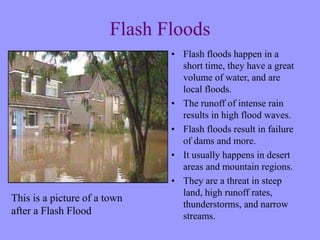
This is a picture of a town
after a Flash Flood
River Floods
• River floods are
caused by melting of
snow and precipitation
over large areas. They
take place in rivers.
Floods in large rivers
take hours to days.
• The ground conditions
effects the runoff.
Coastal Floods
• Coastal floods are caused by
tides, storms, tropical
cyclones, or tsunamis.
• They happen in the ocean
and effects the general
public and maritime interests
along the coastline.
• They are caused by heavy
surf, tidal piling, and storm
surges,
• Other factors are tidal cycles,
behaviors of the storm, river
or stream runoff, no offshore
reefs or other barriers, and
high winds.
Lakeshore Floods
• Lakeshore floods affect
the general public as well
as some areas of the Great
Lakes.
• These floods extend from
the beaches to rivers that
flow into lakes.
• The flow of periodically
changing direction of the
surface of a landlocked
body of water (like a lake)
that varies from a few
minutes to several hours.
Deaths during Floods
• Floods often result in death, especially
along river banks and low-lying areas.
• Floods kill more Americans than any other
natural disaster each year. You may be
surprised but only 6 inches of fast moving
water can sweep a person off their feet and
cars will float of move in only two feet of
water.
This is where the latest floods have occurred in the world. It
was taken by NASA satellite.
Northern California
Brazil
Tunisia
Zambia Southeastern Africa
Madagascar
Indonesia
Western Australia
Northern
Australia
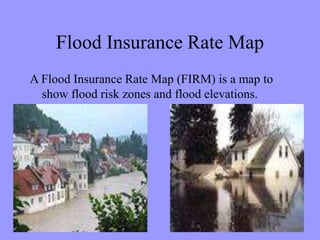
Flood Insurance Rate Map
A Flood Insurance Rate Map (FIRM) is a map to
show flood risk zones and flood elevations.
Flood Hazard Boundary Map
A Flood Hazard Boundary Map(FHBM) is for an
area and outlines the special flood areas but
doesn’t include and elevation information. It
shows flood insurance risk zones. Its for 100-500
year flood areas.
Thank you…

Floods. disaster management

  • 1.
    Floods Presented by : CHETAMKUMARBANAKAR Jr Msc (Agri.) In Ag.Maco. PALB518
  • 2.
    INTRODUCTION • A floodis usually caused by rain, heavy thunderstorms. • Its considered to be a temporary condition of two or more acres of dry land either: • Overflowed with inland or tidal waters • Rapid or runoff of surface waters • Mudflows
  • 3.
    How does FloodingStart and end? • The shore or land by or surrounding a body of water erodes and this erosion causes waves currents that result in a flood. • Flood disasters have been increased because of the expansion of settlements and growth in floodplains. • Floods could be slow or fast but usually occur over a matter of days. • After the water eventually goes down or dries up. On coastal floods, low tides and high tides makes a change in heights.
  • 4.
    Why does itoccur?? • A flood is too much water in the wrong place. • Collapse of land along the shore of a lake or another body of water. This results in waves or currents during a flood
  • 5.
    • Flooding isthe most worldwide natural disaster. It occurs in every country and wherever there is rainfall or coastal hazards. • They are most likely to happen in tropical areas and tsunamis. • Most common floods happen around the world’s largest/greatest rivers. • Believe it or not, smaller rivers could cause more damage even though people don’t pay as much attention to them. • Most Flooding occurs during the beginning of spring.
  • 6.
    Characteristics of aFlood • Velocity- high velocities of flow create erosive forces and can do things like destroy foundations. • Depth of Water- floatation, failures on foundation, vegetation survival, etc.. • Rate of Rise- is the rate at which the water level increases. • Seasonal- the land during growing season, the effects on agriculture production and other things like that.
  • 7.
    Effects on theEnvironment • Sometimes it’s a good thing when a flood occurs. The environmental benefits of flooding are fisheries, wetlands, and irrigation. • Flood plains have one of the highest development potential when it comes to economic development. • It also makes a mess of the environment. The soil becomes poor because the oxygen is limited due to so much water. The pH in soil decreases, rate decomposition of organic matter in flooded soil tends only to be half that unflooded soil • .
  • 8.
    Conti… • Trees areeffected as well. It effects the height, age, vigor, roots, and species. • During the growing season flooding is very harmful especially to woody plants compared a flood in a dormant season. • Floods could carry chemicals from agricultural fields, sewage,etc. and can’t handle large bodies of water. • Crops die because they can’t survive because of the conditions
  • 9.
    Flash Floods • Flashfloods happen in a short time, they have a great volume of water, and are local floods. • The runoff of intense rain results in high flood waves. • Flash floods result in failure of dams and more. • It usually happens in desert areas and mountain regions. • They are a threat in steep land, high runoff rates, thunderstorms, and narrow streams. This is a picture of a town after a Flash Flood
  • 10.
    River Floods • Riverfloods are caused by melting of snow and precipitation over large areas. They take place in rivers. Floods in large rivers take hours to days. • The ground conditions effects the runoff.
  • 11.
    Coastal Floods • Coastalfloods are caused by tides, storms, tropical cyclones, or tsunamis. • They happen in the ocean and effects the general public and maritime interests along the coastline. • They are caused by heavy surf, tidal piling, and storm surges, • Other factors are tidal cycles, behaviors of the storm, river or stream runoff, no offshore reefs or other barriers, and high winds.
  • 12.
    Lakeshore Floods • Lakeshorefloods affect the general public as well as some areas of the Great Lakes. • These floods extend from the beaches to rivers that flow into lakes. • The flow of periodically changing direction of the surface of a landlocked body of water (like a lake) that varies from a few minutes to several hours.
  • 13.
    Deaths during Floods •Floods often result in death, especially along river banks and low-lying areas. • Floods kill more Americans than any other natural disaster each year. You may be surprised but only 6 inches of fast moving water can sweep a person off their feet and cars will float of move in only two feet of water.
  • 14.
    This is wherethe latest floods have occurred in the world. It was taken by NASA satellite. Northern California Brazil Tunisia Zambia Southeastern Africa Madagascar Indonesia Western Australia Northern Australia
  • 15.
    Flood Insurance RateMap A Flood Insurance Rate Map (FIRM) is a map to show flood risk zones and flood elevations.
  • 16.
    Flood Hazard BoundaryMap A Flood Hazard Boundary Map(FHBM) is for an area and outlines the special flood areas but doesn’t include and elevation information. It shows flood insurance risk zones. Its for 100-500 year flood areas.
  • 17.