Downloaded 13 times
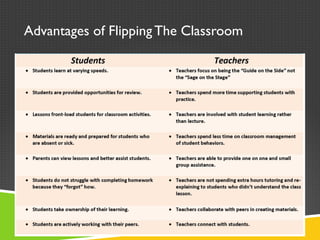
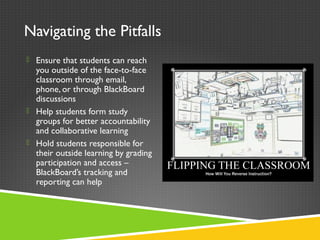
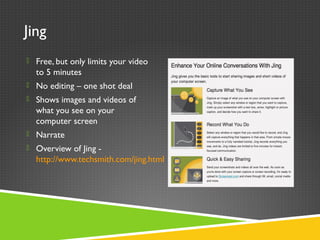
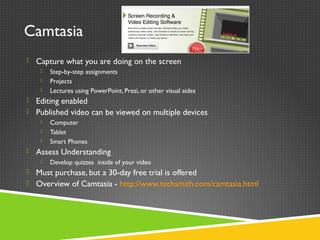
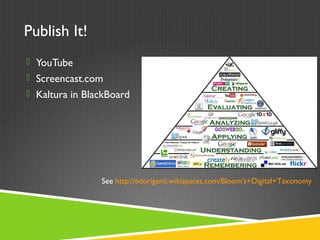

This document discusses flipping the classroom by having students do instruction at home through videos or other online content, and doing activities and projects in class under teacher guidance. It outlines advantages like gaining class time, and challenges like ensuring students understand concepts on their own and have access to instruction. It recommends ensuring students can contact the teacher, forming study groups, and providing alternatives for students without home access. Tools like Jing and Camtasia are introduced to create instructional videos, and publishing options like YouTube, Screencast, and Blackboard are presented.


