 A holistic and personalized approach to
professional development in online/blended
learning and teaching
 Multiple opportunities for feedback and
evaluation while developing and teaching a
new course
 Faculty get to know one another better
across disciplines
 Mentor faculty will work
with faculty Course
Developers to meet
personalized course
design goals
 Each course is reviewed
with the Quality Matters
rubric
 Download the rubric and
more:
https://www.dropbox.co
m/sh/7bwhoit985wcgt0/
AACYABAPMR_OTwbPL
0xVp-Cea?dl=0
 Can be from any department
 Can be any type of course – new, existing,
online, traditional, hybrid
 Mentors can choose to work with faculty
across multiple departments
 Stay in regular communication with mentors
throughout the academic year
 Support!
 Your Guide and Center forTeaching and Learning are here
to help
 New course modules and more effective materials!
 Whether it’s an existing course or something brand new,
you will have something you know is quality
 A stipend!
 For participating, developing your course to meet your
goals, and going through QM review, you receive $1000
 A chance to be a Mentor next year!
 With a course that “passes” the Quality Matters rubric,
you’ll be certified to serve as a Mentor
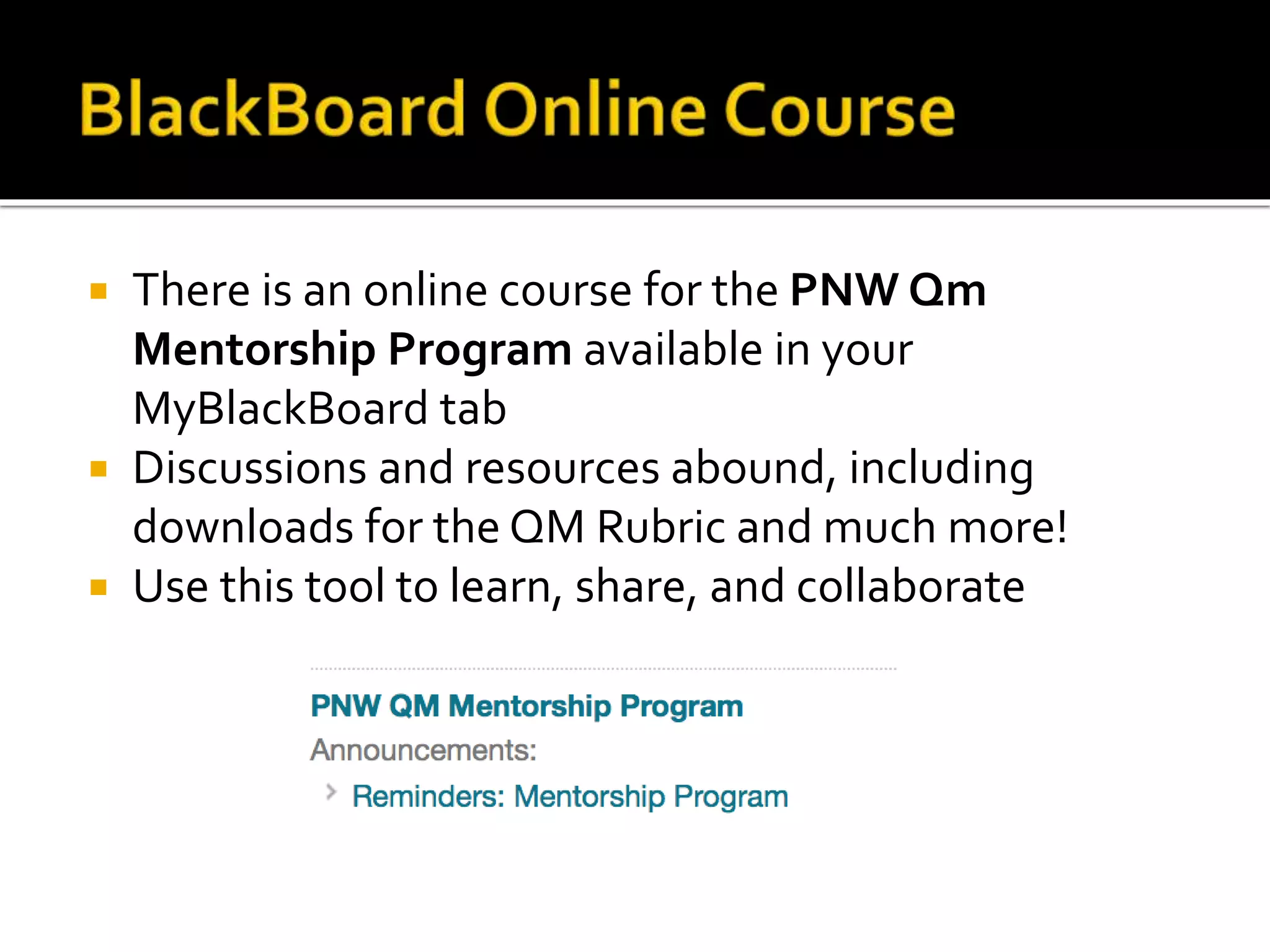
 There is an online course for the PNW Qm
Mentorship Program available in your
MyBlackBoard tab
 Discussions and resources abound, including
downloads for the QM Rubric and much more!
 Use this tool to learn, share, and collaborate
 Note: Your timeline may vary depending on
individual goals and needs
 Fall 2016: CTL hosts monthly workshops on
different topics (recommended but not required
for Course Developers)
 Meet with Mentor periodically during the semester
 Guides provide informal QM evaluation
 Upcoming workshops:
 November 2: Scholarship ofTeaching and Learning
 November 7-10 National Distance LearningWeek –
TECH 298, 12pm – 1:30pm,
http://centers.pnw.edu/teaching/calendar/
 Spring 2017: Continue your work!
 You may be teaching the course you developed –
great!We will help
 Keep meeting with mentors
 Keep an eye on upcoming workshops available
 Reach out if you need help meeting your goals
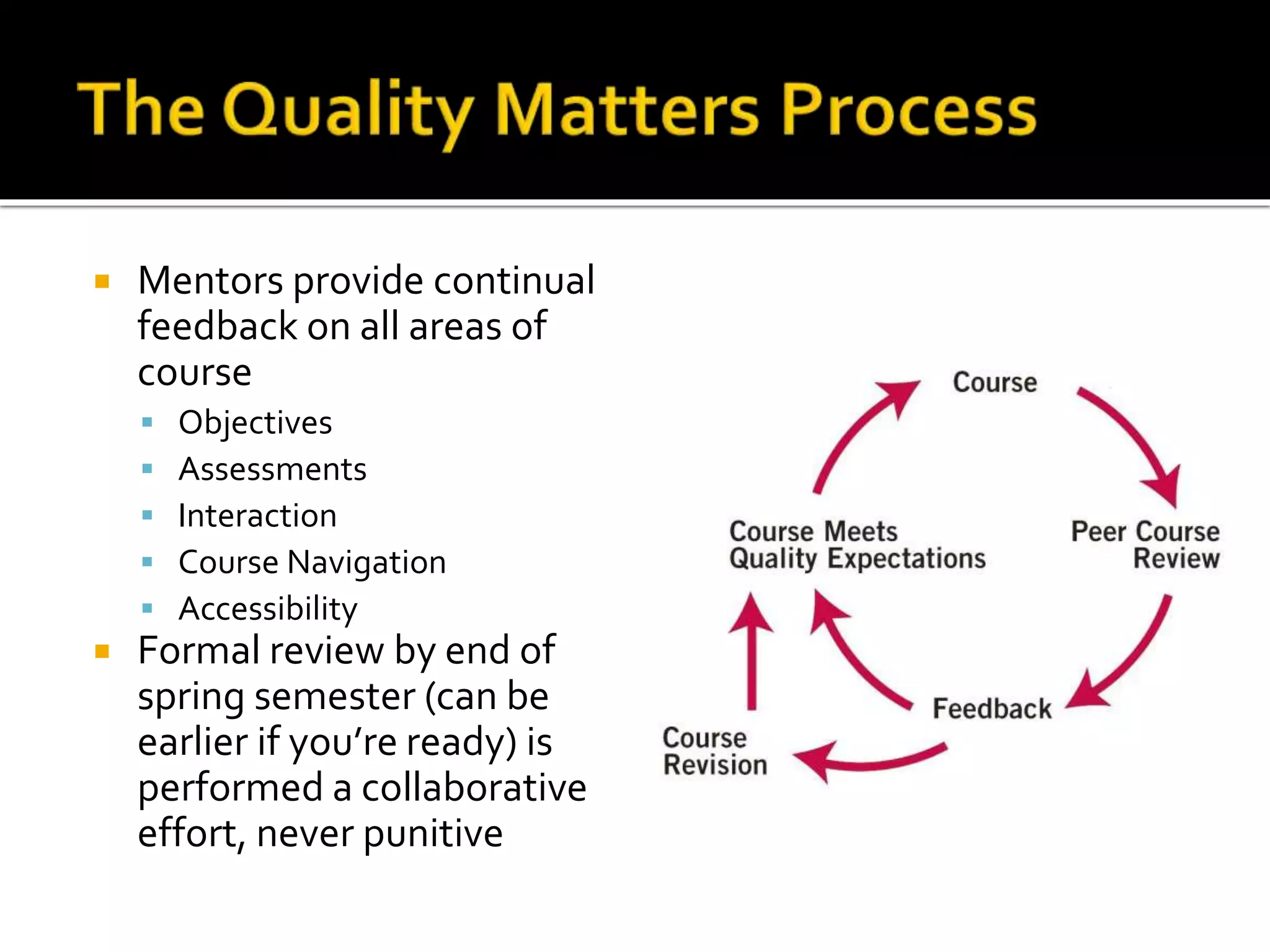
 By End of Spring 2017: Mentors will evaluate
all courses and make determinations and
recommendations with the full QM rubric
 Mentors provide continual
feedback on all areas of
course
 Objectives
 Assessments
 Interaction
 Course Navigation
 Accessibility
 Formal review by end of
spring semester (can be
earlier if you’re ready) is
performed a collaborative
effort, never punitive
 Get to know the QM rubric and ask questions
if you have any
 You can use the rubric as a checklist to keep
your course in top shape
 Many items involve simple fixes, such as:
 adding the instructor’s availability times
 organizing course content into modules or units
for easier navigation
 making grading more transparent
 Alignment is key – all course objectives should
align to lessons, activities, and assessments
 What do you absolutely need students to get from
your course?
 How do they get there? How do they know what
your expectations are for getting there?
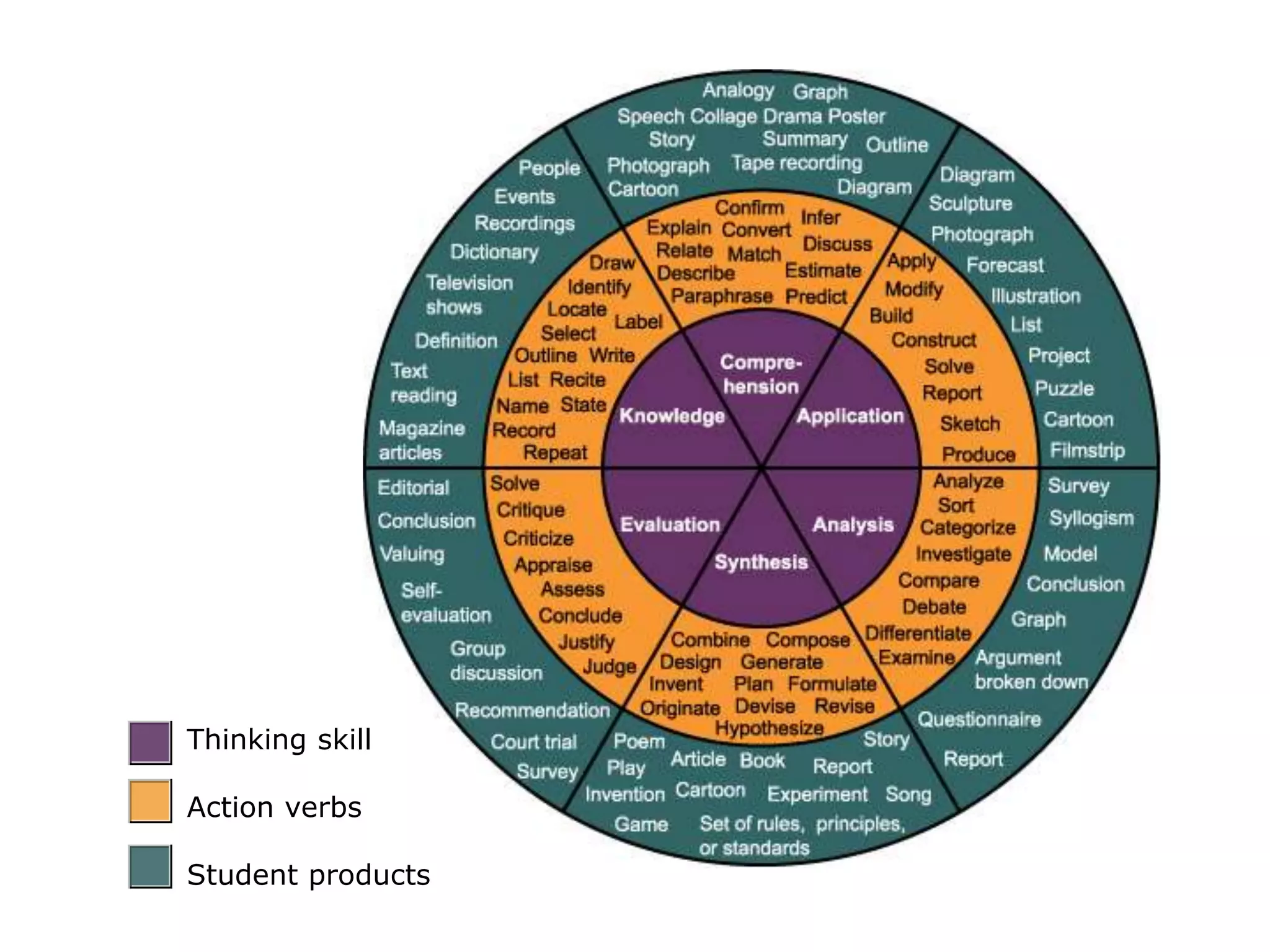
 Objectives should use “action verbs” – if you
can see someone doing it, it’s a good verb!
 Avoid the use of words like “learn” and
“understand” in course objectives
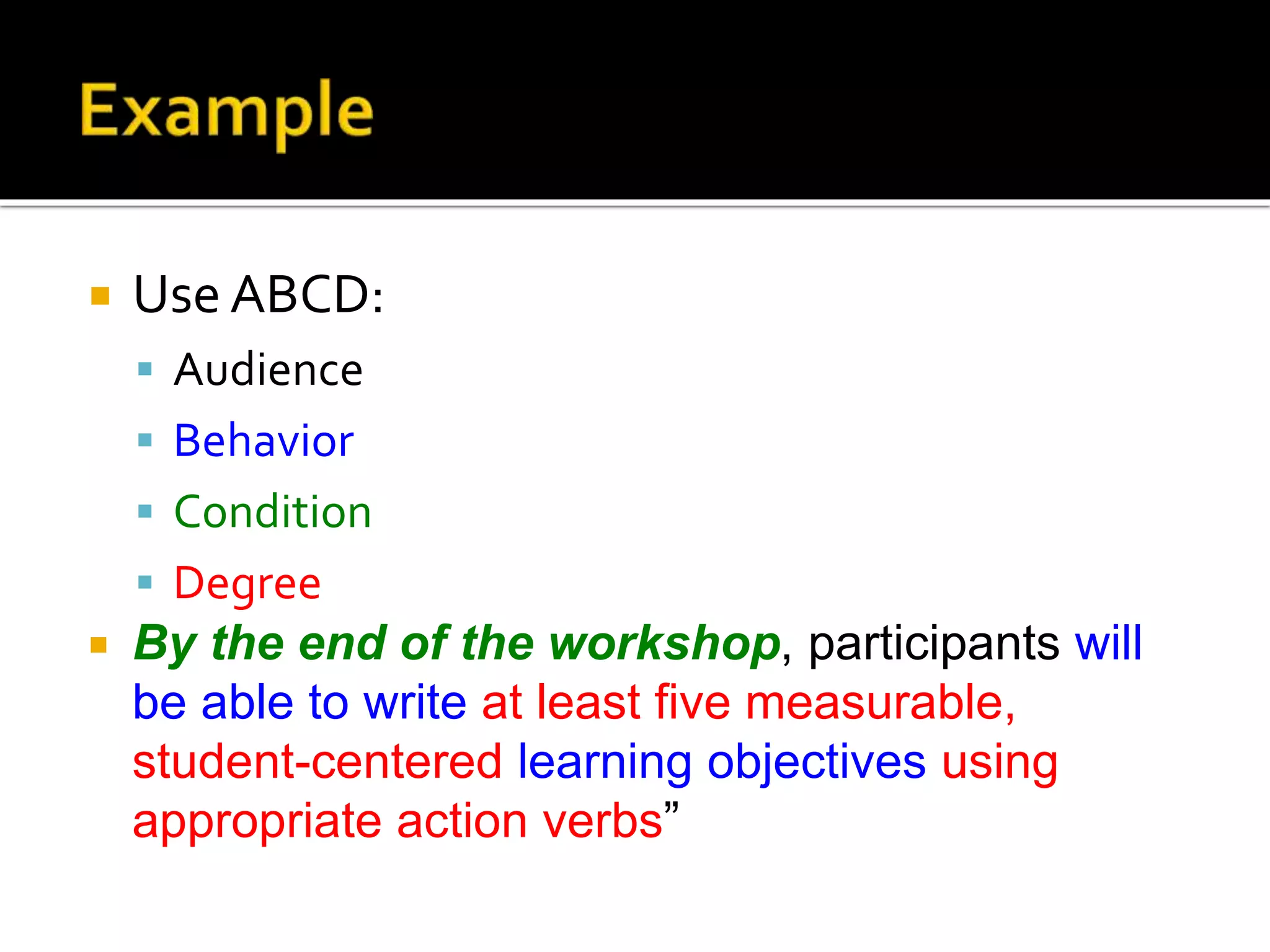
 Use ABCD:
 Audience
 Behavior
 Condition
 Degree
 By the end of the workshop, participants will
be able to write at least five measurable,
student-centered learning objectives using
appropriate action verbs”
Thinking skill
Action verbs
Student products
 Ask yourself some
questions:
 What do you want your
course to look like?
 Where do you want
students to click and what
do you want them to do?
 Consider using plain old
pen and paper to draw
an outline of what your
ideal course looks like,
and work from there
 CTLWorkshop Library:
http://centers.pnw.edu/teaching/workshop-
materials-archive/
 Designing Exemplary BlackBoard Courses from
NIU:
http://www.jasonrhode.com/bbecpworkshop13
 Dr. Curt Bonk’sYouTube feed with wonderful
videos about teaching online:
https://www.youtube.com/user/TravelinEdMan
 Course design resources:
http://centers.pnw.edu/teaching/coursedesign/

2016-2017 Mentorship Program details

  • 2.
     A holisticand personalized approach to professional development in online/blended learning and teaching  Multiple opportunities for feedback and evaluation while developing and teaching a new course  Faculty get to know one another better across disciplines
  • 3.
     Mentor facultywill work with faculty Course Developers to meet personalized course design goals  Each course is reviewed with the Quality Matters rubric  Download the rubric and more: https://www.dropbox.co m/sh/7bwhoit985wcgt0/ AACYABAPMR_OTwbPL 0xVp-Cea?dl=0
  • 4.
     Can befrom any department  Can be any type of course – new, existing, online, traditional, hybrid  Mentors can choose to work with faculty across multiple departments  Stay in regular communication with mentors throughout the academic year
  • 5.
     Support!  YourGuide and Center forTeaching and Learning are here to help  New course modules and more effective materials!  Whether it’s an existing course or something brand new, you will have something you know is quality  A stipend!  For participating, developing your course to meet your goals, and going through QM review, you receive $1000  A chance to be a Mentor next year!  With a course that “passes” the Quality Matters rubric, you’ll be certified to serve as a Mentor
  • 6.
     There isan online course for the PNW Qm Mentorship Program available in your MyBlackBoard tab  Discussions and resources abound, including downloads for the QM Rubric and much more!  Use this tool to learn, share, and collaborate
  • 7.
     Note: Yourtimeline may vary depending on individual goals and needs  Fall 2016: CTL hosts monthly workshops on different topics (recommended but not required for Course Developers)  Meet with Mentor periodically during the semester  Guides provide informal QM evaluation  Upcoming workshops:  November 2: Scholarship ofTeaching and Learning  November 7-10 National Distance LearningWeek – TECH 298, 12pm – 1:30pm, http://centers.pnw.edu/teaching/calendar/
  • 8.
     Spring 2017:Continue your work!  You may be teaching the course you developed – great!We will help  Keep meeting with mentors  Keep an eye on upcoming workshops available  Reach out if you need help meeting your goals  By End of Spring 2017: Mentors will evaluate all courses and make determinations and recommendations with the full QM rubric
  • 9.
     Mentors providecontinual feedback on all areas of course  Objectives  Assessments  Interaction  Course Navigation  Accessibility  Formal review by end of spring semester (can be earlier if you’re ready) is performed a collaborative effort, never punitive
  • 10.
     Get toknow the QM rubric and ask questions if you have any  You can use the rubric as a checklist to keep your course in top shape  Many items involve simple fixes, such as:  adding the instructor’s availability times  organizing course content into modules or units for easier navigation  making grading more transparent
  • 11.
     Alignment iskey – all course objectives should align to lessons, activities, and assessments  What do you absolutely need students to get from your course?  How do they get there? How do they know what your expectations are for getting there?  Objectives should use “action verbs” – if you can see someone doing it, it’s a good verb!  Avoid the use of words like “learn” and “understand” in course objectives
  • 12.
     Use ABCD: Audience  Behavior  Condition  Degree  By the end of the workshop, participants will be able to write at least five measurable, student-centered learning objectives using appropriate action verbs”
  • 13.
  • 14.
     Ask yourselfsome questions:  What do you want your course to look like?  Where do you want students to click and what do you want them to do?  Consider using plain old pen and paper to draw an outline of what your ideal course looks like, and work from there
  • 15.
     CTLWorkshop Library: http://centers.pnw.edu/teaching/workshop- materials-archive/ Designing Exemplary BlackBoard Courses from NIU: http://www.jasonrhode.com/bbecpworkshop13  Dr. Curt Bonk’sYouTube feed with wonderful videos about teaching online: https://www.youtube.com/user/TravelinEdMan  Course design resources: http://centers.pnw.edu/teaching/coursedesign/