Independence, Critical Thinking,
and Blended Learning
ANASTASIA M. TREKLES, PH.D.
CLINICAL ASSOCIATE PROFESSOR
PURDUE UNIVERSITY NORTHWEST
GET THESE SLIDES: HTTP://PADLET.COM/ATREKLES/BLENDED
Objectives
 This session will help you:
 Discuss and network with other educators about your
blended learning experiences
 Incorporate scaffolding in the online arena that
promotes independent learning
 Adapt and use research-based, future-ready frameworks
for online and blended curriculum development
What is Blended Learning?
 Some people call it hybrid, digital learning, or some
other name
 The NMC Horizon Report tells us that distance and
blended learning is still on the rise in schools
nationwide; more and more Indiana schools are
embracing it
 Is your school doing online snow days? Blended
lessons? Flipped classrooms? Using an LMS?
Here’s the real question:
What makes blended learning
work well?
Add your ideas to the Padlet:
https://padlet.com/atrekles/blended
Student Readiness for Online Learning
 Students (and teachers!) should be independent and
intrinsically motivated
 Technology support should be readily available and
skills adequate for the tasks required – “digital natives”
aren’t always as tech-savvy as you may think!
 Time management skills are key – students unable to
budget their time will have difficulty
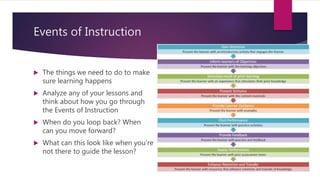
Events of Instruction
 The things we need to do to make
sure learning happens
 Analyze any of your lessons and
think about how you go through
the Events of Instruction
 When do you loop back? When
can you move forward?
 What can this look like when you’re
not there to guide the lesson?
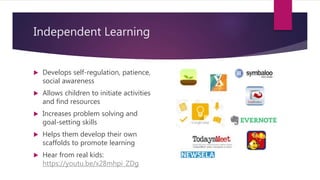
Independent Learning
 Develops self-regulation, patience,
social awareness
 Allows children to initiate activities
and find resources
 Increases problem solving and
goal-setting skills
 Helps them develop their own
scaffolds to promote learning
 Hear from real kids:
https://youtu.be/x28mhpi_ZDg
Question Time! (add to the Padlet)
 What does your blended or online program
look like now? (if you have one)
What’s good about it?
How could it be better?
 Don’t have a program yet but want one?
What needs do you have to consider?
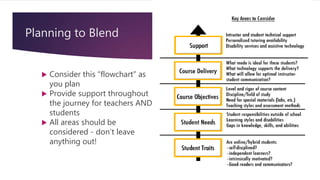
Planning to Blend
 Consider this “flowchart” as
you plan
 Provide support throughout
the journey for teachers AND
students
 All areas should be
considered - don’t leave
anything out!
What Does Good Blended Learning Look
Like?
 Can take lots of forms
 Sometimes your technology
dictates certain functionality, but
the right components should
always be present:
 Intuitive navigation
 Clear learning objectives and
scaffolded structure
 Just-in-time support
 Some examples:
 Walkthroughs from winners of
BlackBoard exemplary course
program
 Canvas example courses
 Walkthrough of Google Classroom
example courses
 Log in to example courses from a
school using Schoology
Assessing Your Blend
 Even when you’re doing
“blended” and not “online”
these rubrics help ensure the
support is there for
independent learning to
happen
 Several great rubrics are
available to act as a “checklist”
of best practices
 Quality Matters
 Rubric for Online Instruction from
CSU
 Assessment tool from
Massachusetts Department of
Education
 iNACOL National Standards for
Quality Online Courses
More Resources
 List of quizzes for online student readiness
 K-12 Blended and Online Learning open
educational resource from Kennesaw State
University
Questions? Ideas?
Contact me: atrekles@pnw.edu
@iceindiana
@instruct_tech

Independence, Critical Thinking, and Blended Learning

  • 1.
    Independence, Critical Thinking, andBlended Learning ANASTASIA M. TREKLES, PH.D. CLINICAL ASSOCIATE PROFESSOR PURDUE UNIVERSITY NORTHWEST GET THESE SLIDES: HTTP://PADLET.COM/ATREKLES/BLENDED
  • 2.
    Objectives  This sessionwill help you:  Discuss and network with other educators about your blended learning experiences  Incorporate scaffolding in the online arena that promotes independent learning  Adapt and use research-based, future-ready frameworks for online and blended curriculum development
  • 3.
    What is BlendedLearning?  Some people call it hybrid, digital learning, or some other name  The NMC Horizon Report tells us that distance and blended learning is still on the rise in schools nationwide; more and more Indiana schools are embracing it  Is your school doing online snow days? Blended lessons? Flipped classrooms? Using an LMS?
  • 4.
    Here’s the realquestion: What makes blended learning work well? Add your ideas to the Padlet: https://padlet.com/atrekles/blended
  • 5.
    Student Readiness forOnline Learning  Students (and teachers!) should be independent and intrinsically motivated  Technology support should be readily available and skills adequate for the tasks required – “digital natives” aren’t always as tech-savvy as you may think!  Time management skills are key – students unable to budget their time will have difficulty
  • 6.
    Events of Instruction The things we need to do to make sure learning happens  Analyze any of your lessons and think about how you go through the Events of Instruction  When do you loop back? When can you move forward?  What can this look like when you’re not there to guide the lesson?
  • 7.
    Independent Learning  Developsself-regulation, patience, social awareness  Allows children to initiate activities and find resources  Increases problem solving and goal-setting skills  Helps them develop their own scaffolds to promote learning  Hear from real kids: https://youtu.be/x28mhpi_ZDg
  • 8.
    Question Time! (addto the Padlet)  What does your blended or online program look like now? (if you have one) What’s good about it? How could it be better?  Don’t have a program yet but want one? What needs do you have to consider?
  • 9.
    Planning to Blend Consider this “flowchart” as you plan  Provide support throughout the journey for teachers AND students  All areas should be considered - don’t leave anything out!
  • 10.
    What Does GoodBlended Learning Look Like?  Can take lots of forms  Sometimes your technology dictates certain functionality, but the right components should always be present:  Intuitive navigation  Clear learning objectives and scaffolded structure  Just-in-time support  Some examples:  Walkthroughs from winners of BlackBoard exemplary course program  Canvas example courses  Walkthrough of Google Classroom example courses  Log in to example courses from a school using Schoology
  • 11.
    Assessing Your Blend Even when you’re doing “blended” and not “online” these rubrics help ensure the support is there for independent learning to happen  Several great rubrics are available to act as a “checklist” of best practices  Quality Matters  Rubric for Online Instruction from CSU  Assessment tool from Massachusetts Department of Education  iNACOL National Standards for Quality Online Courses
  • 12.
    More Resources  Listof quizzes for online student readiness  K-12 Blended and Online Learning open educational resource from Kennesaw State University
  • 13.
    Questions? Ideas? Contact me:atrekles@pnw.edu @iceindiana @instruct_tech

Editor's Notes

  • #8 Apps that promote independent learning for students can include: Symbaloo Forest Pattern Google Keep TodaysMeet Newsela Kidspiration Evernote LiveBinder