REFORMing Classroom Instruction and
     Educational Leadership


           Sarah Ward
             EDU 597
         Samford University
 Homework         videos utilize educational
  technology
   • Teachers post 3-5 videos per week
 In class activities have a strong project-based
  influence and put learning content into
  genuine practice
 Teacher serves as more of a facilitator of
  learning
   • “Sage on the Stage” to “Guide on the Side”
 Students resume responsibility for learning
  the content before class
The Flipped Classroom Model
 Driving   forces:
  • - poor learning outcomes with traditional, teacher-
    centered lecture instruction
  • -lack of student engagement from “digital native”
    students
 Aaron   Sams and Jonathan Bergman:
  • (Woodmont, Co) credited for the “flipped
   classroom” for using Camtasia to record lecture
   notes as videos for their students (2007)
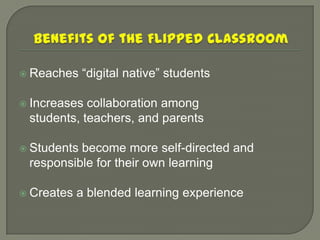
 Reaches    “digital native” students

 Increases collaboration among
 students, teachers, and parents

 Studentsbecome more self-directed and
 responsible for their own learning

 Creates   a blended learning experience
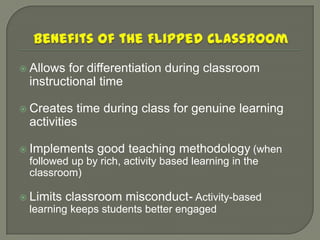
 Allows for differentiation during classroom
 instructional time

 Creates  time during class for genuine learning
 activities

 Implements    good teaching methodology (when
 followed up by rich, activity based learning in the
 classroom)

 Limits   classroom misconduct- Activity-based
 learning keeps students better engaged
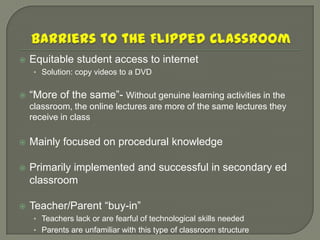
   Equitable student access to internet
     • Solution: copy videos to a DVD


   “More of the same”- Without genuine learning activities in the
    classroom, the online lectures are more of the same lectures they
    receive in class

   Mainly focused on procedural knowledge

   Primarily implemented and successful in secondary ed
    classroom

   Teacher/Parent “buy-in”
     • Teachers lack or are fearful of technological skills needed
     • Parents are unfamiliar with this type of classroom structure
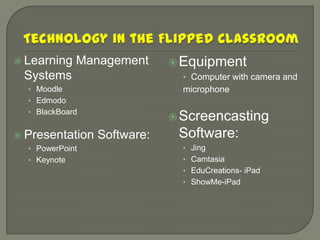
 Learning    Management      Equipment
 Systems                       • Computer with camera and
  • Moodle                     microphone
  • Edmodo
  • BlackBoard
                              Screencasting
 Presentation   Software:    Software:
  • PowerPoint                 • Jing
  • Keynote                    • Camtasia
                               • EduCreations- iPad
                               • ShowMe-iPad
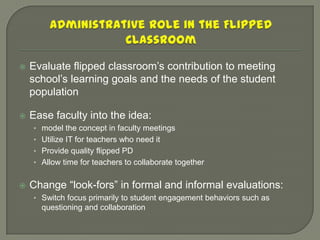
   Evaluate flipped classroom’s contribution to meeting
    school’s learning goals and the needs of the student
    population

   Ease faculty into the idea:
    • model the concept in faculty meetings
    • Utilize IT for teachers who need it
    • Provide quality flipped PD
    • Allow time for teachers to collaborate together


   Change “look-fors” in formal and informal evaluations:
    • Switch focus primarily to student engagement behaviors such as
      questioning and collaboration

The flipped classroom

  • 1.
    REFORMing Classroom Instructionand Educational Leadership Sarah Ward EDU 597 Samford University
  • 2.
     Homework videos utilize educational technology • Teachers post 3-5 videos per week  In class activities have a strong project-based influence and put learning content into genuine practice  Teacher serves as more of a facilitator of learning • “Sage on the Stage” to “Guide on the Side”  Students resume responsibility for learning the content before class The Flipped Classroom Model
  • 3.
     Driving forces: • - poor learning outcomes with traditional, teacher- centered lecture instruction • -lack of student engagement from “digital native” students  Aaron Sams and Jonathan Bergman: • (Woodmont, Co) credited for the “flipped classroom” for using Camtasia to record lecture notes as videos for their students (2007)
  • 4.
     Reaches “digital native” students  Increases collaboration among students, teachers, and parents  Studentsbecome more self-directed and responsible for their own learning  Creates a blended learning experience
  • 5.
     Allows fordifferentiation during classroom instructional time  Creates time during class for genuine learning activities  Implements good teaching methodology (when followed up by rich, activity based learning in the classroom)  Limits classroom misconduct- Activity-based learning keeps students better engaged
  • 6.
     Equitable student access to internet • Solution: copy videos to a DVD  “More of the same”- Without genuine learning activities in the classroom, the online lectures are more of the same lectures they receive in class  Mainly focused on procedural knowledge  Primarily implemented and successful in secondary ed classroom  Teacher/Parent “buy-in” • Teachers lack or are fearful of technological skills needed • Parents are unfamiliar with this type of classroom structure
  • 7.
     Learning Management  Equipment Systems • Computer with camera and • Moodle microphone • Edmodo • BlackBoard  Screencasting  Presentation Software: Software: • PowerPoint • Jing • Keynote • Camtasia • EduCreations- iPad • ShowMe-iPad
  • 8.
     Evaluate flipped classroom’s contribution to meeting school’s learning goals and the needs of the student population  Ease faculty into the idea: • model the concept in faculty meetings • Utilize IT for teachers who need it • Provide quality flipped PD • Allow time for teachers to collaborate together  Change “look-fors” in formal and informal evaluations: • Switch focus primarily to student engagement behaviors such as questioning and collaboration