Flight Management System
Presented By: Pravin Londhe
Technology Design Services & Solutions
Software | Embedded System | ASIC/FPGA
CONTENTS

Introduction

What is FMS?

FMS Components

FMS Database
-Navigation Database -Performance Database

Flight Management Computer Input/Output

FMS Operation

FMS Advantages

FMS Disadvantages
Introduction

Modern aircraft are filled with the latest technolgy.

Technology which greatly reduces workload if the
systems are understood and used properly.

The heart of all these systems is the FMS.
What is FMS?

FMS is stand for Flight Management System(FMS) is a
specialized computer system that automates a wide
variety of in-flight tasks.

FMS acts as the 'brain' of the aircraft navigation
system.
FMS Components

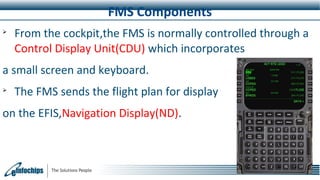
From the cockpit,the FMS is normally controlled through a
Control Display Unit(CDU) which incorporates
a small screen and keyboard.

The FMS sends the flight plan for display
on the EFIS,Navigation Display(ND).
FMS Database
FMS Contains two types database which are:

NAVIGATION DATABASE

PERFORMANCE DATABASE
FMS Navigation Database
All FMS contain a navigation database.

The navigation database contains the elements from which
the flight plan is constructed.

Navigation Database include
-Waypoints, -Airways(highways in the sky)
-Radio navigation aids(DME,VOR,ILS)
-Airports(Runways),Holding patterns
-And a variety of other related information
FMS Performance Database

During preflight,other information relevant to managing
the flight plan is entered.

This can include performance information such as
-Maximum take-off weight,
-Fuel weight
-Center of gravity.
-It will include altitudes including the initial cruise altitude.
FMS Operation

Pilot key in input route information to CDU of FMS.

The navigation and aircraft performance database must be
verified.

Routing must be confirmed accurate and correct and any
ATC changes to expected routing must be entered
manually.

The pilot becomes a manager of this sophisticated system,
monitoring progress and updating or changing parameters
as necessary.
FMS Advantages

FMS are designed to:
-Improve Navigation
-Aid Fuel Efficiency
-Reduce Crew Workload
-More Accurate
FMS Advantages

FMS are designed to:
-Navigation

A principal task of the FMS is to determine the aircraft's
position

Given the flight plan and the aircraft's position,the FMS
calculates the course to follow.

Autopilot can be set to follow the course.
-
FMS Advantages
-Aid Fuel Efficiency

It calculates performance data and the most fuel-efficient
route to be flown based on typical aircraft parameters such
as weight,cruise altitude and actual aircraft
position,regardless of weather conditions.
-Reduce Crew Workload

Allows pilots more time to analyze and make decisions.
(drink coffee to)
FMS Advantages
-More Accurate.

Computer generated efficiency profiles are more accurate.

Navigation accuracy is improved through integration and
cross referencing of multiple sources.
FMS Disadvantages
Error Data Entry.
-Reliant on pilot input.
-There is potential of misinterpretation or erroneous data
entry.

Loss of situational awareness
-Loss of situational awareness.Pilots may becomes so
involved in operating and monitoring the system that they
forget to look outside.

Expensive
Thank You
15

Flight Management System

  • 1.
    Flight Management System PresentedBy: Pravin Londhe Technology Design Services & Solutions Software | Embedded System | ASIC/FPGA
  • 2.
    CONTENTS  Introduction  What is FMS?  FMSComponents  FMS Database -Navigation Database -Performance Database  Flight Management Computer Input/Output  FMS Operation  FMS Advantages  FMS Disadvantages
  • 3.
    Introduction  Modern aircraft arefilled with the latest technolgy.  Technology which greatly reduces workload if the systems are understood and used properly.  The heart of all these systems is the FMS.
  • 4.
    What is FMS?  FMSis stand for Flight Management System(FMS) is a specialized computer system that automates a wide variety of in-flight tasks.  FMS acts as the 'brain' of the aircraft navigation system.
  • 5.
    FMS Components  From thecockpit,the FMS is normally controlled through a Control Display Unit(CDU) which incorporates a small screen and keyboard.  The FMS sends the flight plan for display on the EFIS,Navigation Display(ND).
  • 6.
    FMS Database FMS Containstwo types database which are:  NAVIGATION DATABASE  PERFORMANCE DATABASE
  • 7.
    FMS Navigation Database AllFMS contain a navigation database.  The navigation database contains the elements from which the flight plan is constructed.  Navigation Database include -Waypoints, -Airways(highways in the sky) -Radio navigation aids(DME,VOR,ILS) -Airports(Runways),Holding patterns -And a variety of other related information
  • 8.
    FMS Performance Database  Duringpreflight,other information relevant to managing the flight plan is entered.  This can include performance information such as -Maximum take-off weight, -Fuel weight -Center of gravity. -It will include altitudes including the initial cruise altitude.
  • 9.
    FMS Operation  Pilot keyin input route information to CDU of FMS.  The navigation and aircraft performance database must be verified.  Routing must be confirmed accurate and correct and any ATC changes to expected routing must be entered manually.  The pilot becomes a manager of this sophisticated system, monitoring progress and updating or changing parameters as necessary.
  • 10.
    FMS Advantages  FMS aredesigned to: -Improve Navigation -Aid Fuel Efficiency -Reduce Crew Workload -More Accurate
  • 11.
    FMS Advantages  FMS aredesigned to: -Navigation  A principal task of the FMS is to determine the aircraft's position  Given the flight plan and the aircraft's position,the FMS calculates the course to follow.  Autopilot can be set to follow the course. -
  • 12.
    FMS Advantages -Aid FuelEfficiency  It calculates performance data and the most fuel-efficient route to be flown based on typical aircraft parameters such as weight,cruise altitude and actual aircraft position,regardless of weather conditions. -Reduce Crew Workload  Allows pilots more time to analyze and make decisions. (drink coffee to)
  • 13.
    FMS Advantages -More Accurate.  Computergenerated efficiency profiles are more accurate.  Navigation accuracy is improved through integration and cross referencing of multiple sources.
  • 14.
    FMS Disadvantages Error DataEntry. -Reliant on pilot input. -There is potential of misinterpretation or erroneous data entry.  Loss of situational awareness -Loss of situational awareness.Pilots may becomes so involved in operating and monitoring the system that they forget to look outside.  Expensive
  • 15.

Editor's Notes

  • #3 Aero Engine Generic overview