Avionics Systems
Instruments

By
Michael Bseliss
AVIONICS
The electronic systems used on aircraft, artificial
satellites, and spacecraft
Avionic systems include communications, navigation,
the display and management of all systems that are
fitted to aircraft to perform individual functions
1. Basic Flight Instruments

To display information about:
• Heading
• Altitude
• Airspeed
• Rate of turn
• Rate of climb (or descent)
• Attitude (relative to the horizon)
1. Basic Flight Instruments

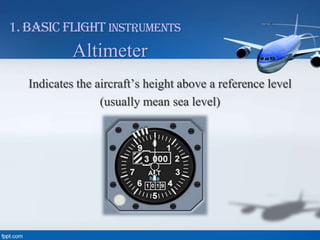
Altimeter
Indicates the aircraft’s height above a reference level
(usually mean sea level)
1. Basic Flight Instruments

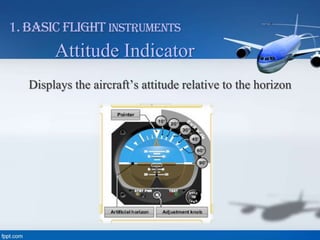
Attitude Indicator
Displays the aircraft’s attitude relative to the horizon
1. Basic Flight Instruments

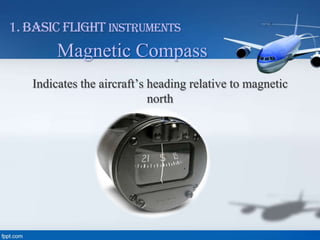
Magnetic Compass
Indicates the aircraft’s heading relative to magnetic
north
1. Basic Flight Instruments

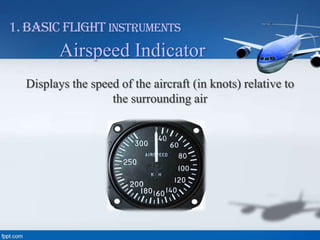
Airspeed Indicator
Displays the speed of the aircraft (in knots) relative to
the surrounding air
1. Basic Flight Instruments

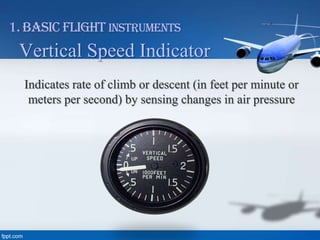
Vertical Speed Indicator
Indicates rate of climb or descent (in feet per minute or
meters per second) by sensing changes in air pressure
2. Cabin Pressurization

The crew and passengers can’t breath without the need
for extra oxygen
3. Air Conditioning System

Human body is unable to withstand the effects of a lowpressure atmosphere, that’s why the AC and
pressurization system is a vital component of modern
flight
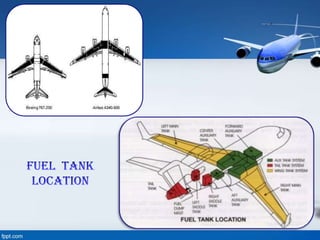
4. Aircraft Fuel System

Enables fuel to be loaded, stored, managed and delivered
to the propulsion system
5. Autopilot System

An autopilot is a mechanical, electrical, or hydraulic system
used to guide an aircraft without assistance from the pilot
5. Autopilot System

All autopilot systems contain the same basic components:
1. Gyro: To sense what the aircraft is doing.
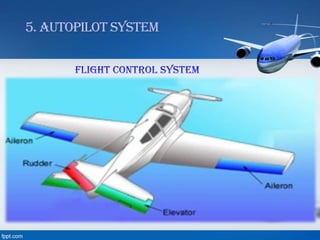
2. Servo: To move the Flight Control Surfaces.
3. An amplifier: To increase the strength of gyro signals
enough to operate the servos.
4. A controller: To allow manual control of the aircraft through
the autopilot system.
5. Autopilot System
6. Electrical Power System

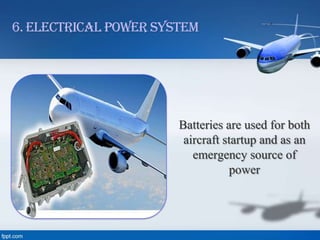
Batteries are used for both
aircraft startup and as an
emergency source of
power
Thank you

Avionics Systems Instruments

  • 1.
  • 2.
    AVIONICS The electronic systemsused on aircraft, artificial satellites, and spacecraft Avionic systems include communications, navigation, the display and management of all systems that are fitted to aircraft to perform individual functions
  • 4.
    1. Basic FlightInstruments To display information about: • Heading • Altitude • Airspeed • Rate of turn • Rate of climb (or descent) • Attitude (relative to the horizon)
  • 5.
    1. Basic FlightInstruments Altimeter Indicates the aircraft’s height above a reference level (usually mean sea level)
  • 6.
    1. Basic FlightInstruments Attitude Indicator Displays the aircraft’s attitude relative to the horizon
  • 7.
    1. Basic FlightInstruments Magnetic Compass Indicates the aircraft’s heading relative to magnetic north
  • 8.
    1. Basic FlightInstruments Airspeed Indicator Displays the speed of the aircraft (in knots) relative to the surrounding air
  • 9.
    1. Basic FlightInstruments Vertical Speed Indicator Indicates rate of climb or descent (in feet per minute or meters per second) by sensing changes in air pressure
  • 11.
    2. Cabin Pressurization Thecrew and passengers can’t breath without the need for extra oxygen
  • 13.
    3. Air ConditioningSystem Human body is unable to withstand the effects of a lowpressure atmosphere, that’s why the AC and pressurization system is a vital component of modern flight
  • 15.
    4. Aircraft FuelSystem Enables fuel to be loaded, stored, managed and delivered to the propulsion system
  • 18.
    5. Autopilot System Anautopilot is a mechanical, electrical, or hydraulic system used to guide an aircraft without assistance from the pilot
  • 19.
    5. Autopilot System Allautopilot systems contain the same basic components: 1. Gyro: To sense what the aircraft is doing. 2. Servo: To move the Flight Control Surfaces. 3. An amplifier: To increase the strength of gyro signals enough to operate the servos. 4. A controller: To allow manual control of the aircraft through the autopilot system.
  • 20.
  • 22.
    6. Electrical PowerSystem Batteries are used for both aircraft startup and as an emergency source of power
  • 23.