Presentation by: ANKIT
X-D
 Introduction
 Purpose of First Aid
 Principle of First Aid (4 C’s)
 Action Plan
 Assessing Skills of a First Aider
 Responsibilities of First Aider
 DR ABC
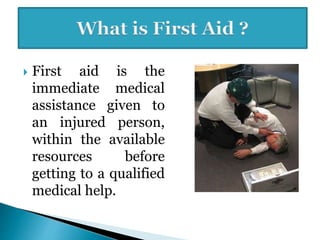
 First aid is the
immediate medical
assistance given to
an injured person,
within the available
resources before
getting to a qualified
medical help.
 Every one should know something about first aid as you never
know when you may be called upon to use it.
 At the most unexpected of times, accidents could occur,
involving loved ones, close relatives or total strangers.
 Whoever is in need of help, you should be in a position to offer
first aid.
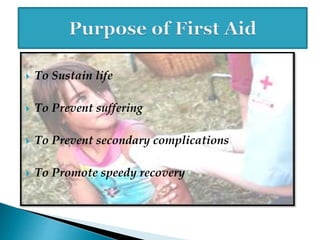
 To Sustain life
 To Prevent suffering
 To Prevent secondary complications
 To Promote speedy recovery
DO’S
 Before handling the
casualty use:
◦ Mask
◦ Gloves
◦ Head Cover
◦ Apron
DON’Ts
 First Aider can
never
◦ Prescribe Medicine
◦ Declare Death
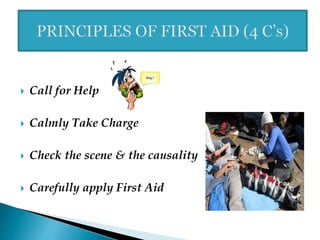
 Call for Help
 Calmly Take Charge
 Check the scene & the causality
 Carefully apply First Aid
 Assess the Situation
 Safety of yourself & the casualty.
 Assess the casualty
 Treat the Casualty
 Arrange removal of casualty to hospital or safe
area.
 Write a Report / Communicate the status.
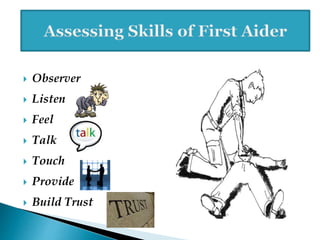
 Observer
 Listen
 Feel
 Talk
 Touch
 Provide
 Build Trust
 To assess a situation quickly & safely & call for
appropriate help
 To identify the level of injury or the nature of the
illness affecting the casualty/victim
 To give early and appropriate treatment in a
sensible order of priority
 To make & pass on a report, & give further help if
required
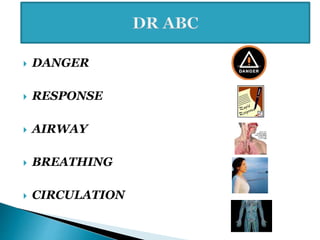
 DANGER
 RESPONSE
 AIRWAY
 BREATHING
 CIRCULATION
 To Yourself
 To Others
 To Casualty
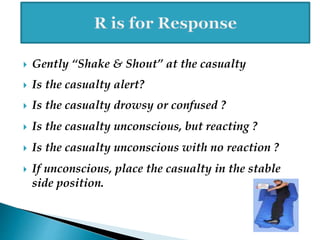
 Gently “Shake & Shout” at the casualty
 Is the casualty alert?
 Is the casualty drowsy or confused ?
 Is the casualty unconscious, but reacting ?
 Is the casualty unconscious with no reaction ?
 If unconscious, place the casualty in the stable
side position.
 Is the airway open & clear ?
 Is there noisy breathing ?
 Are the Potential obstruction such as blood etc ?
 If so , open & clear the airway!
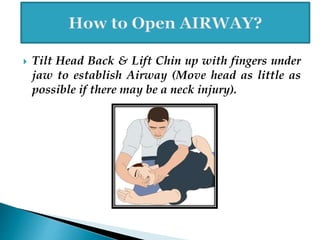
 Tilt Head Back & Lift Chin up with fingers under
jaw to establish Airway (Move head as little as
possible if there may be a neck injury).
 Look for chest movements
 Listen for sounds of breathing
 Feel for breathes on your cheek
 If not breathing give 2 rescue breathes.
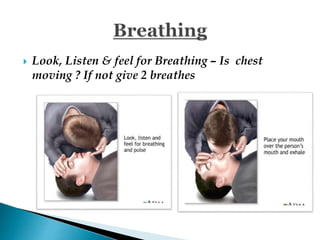
 Look, Listen & feel for Breathing – Is chest
moving ? If not give 2 breathes
 Is there a carotid pulse ?
 Is it strong ?
 Is it regular ?
 Is there major blood loss ?
 IF NO PULSE PRESENT THEN START
CPR (CIRCULATION PULSE RESPIRATION)
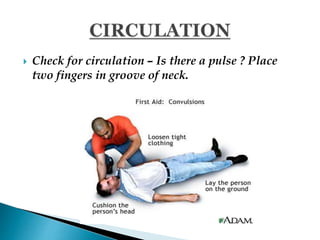
 Check for circulation – Is there a pulse ? Place
two fingers in groove of neck.
 Giving First Aid can be dangerous.
 Always be careful for your personal safety.
 Do Not Put Yourself @ Risk
First aid PPT with sound effects

First aid PPT with sound effects

  • 1.
  • 2.
     Introduction  Purposeof First Aid  Principle of First Aid (4 C’s)  Action Plan  Assessing Skills of a First Aider  Responsibilities of First Aider  DR ABC
  • 3.
     First aidis the immediate medical assistance given to an injured person, within the available resources before getting to a qualified medical help.
  • 4.
     Every oneshould know something about first aid as you never know when you may be called upon to use it.  At the most unexpected of times, accidents could occur, involving loved ones, close relatives or total strangers.  Whoever is in need of help, you should be in a position to offer first aid.
  • 5.
     To Sustainlife  To Prevent suffering  To Prevent secondary complications  To Promote speedy recovery
  • 6.
    DO’S  Before handlingthe casualty use: ◦ Mask ◦ Gloves ◦ Head Cover ◦ Apron DON’Ts  First Aider can never ◦ Prescribe Medicine ◦ Declare Death
  • 8.
     Call forHelp  Calmly Take Charge  Check the scene & the causality  Carefully apply First Aid
  • 9.
     Assess theSituation  Safety of yourself & the casualty.  Assess the casualty  Treat the Casualty  Arrange removal of casualty to hospital or safe area.  Write a Report / Communicate the status.
  • 10.
     Observer  Listen Feel  Talk  Touch  Provide  Build Trust
  • 11.
     To assessa situation quickly & safely & call for appropriate help  To identify the level of injury or the nature of the illness affecting the casualty/victim  To give early and appropriate treatment in a sensible order of priority  To make & pass on a report, & give further help if required
  • 12.
     DANGER  RESPONSE AIRWAY  BREATHING  CIRCULATION
  • 13.
     To Yourself To Others  To Casualty
  • 14.
     Gently “Shake& Shout” at the casualty  Is the casualty alert?  Is the casualty drowsy or confused ?  Is the casualty unconscious, but reacting ?  Is the casualty unconscious with no reaction ?  If unconscious, place the casualty in the stable side position.
  • 15.
     Is theairway open & clear ?  Is there noisy breathing ?  Are the Potential obstruction such as blood etc ?  If so , open & clear the airway!
  • 16.
     Tilt HeadBack & Lift Chin up with fingers under jaw to establish Airway (Move head as little as possible if there may be a neck injury).
  • 17.
     Look forchest movements  Listen for sounds of breathing  Feel for breathes on your cheek  If not breathing give 2 rescue breathes.
  • 18.
     Look, Listen& feel for Breathing – Is chest moving ? If not give 2 breathes
  • 19.
     Is therea carotid pulse ?  Is it strong ?  Is it regular ?  Is there major blood loss ?  IF NO PULSE PRESENT THEN START CPR (CIRCULATION PULSE RESPIRATION)
  • 20.
     Check forcirculation – Is there a pulse ? Place two fingers in groove of neck.
  • 21.
     Giving FirstAid can be dangerous.  Always be careful for your personal safety.  Do Not Put Yourself @ Risk