Submitted to: Submitted by:
Asst. Prof. Mrs. Subhadra Mishra Abhipsa Biswal
13 mca/16 ( 5th sem )
 What is Gesture?
 Types of Gestures
 What is Gesture Recognition
 Basic working of GestureTechnology
 Types of Gesture Recognition
 Technology behind it / Input devices
 Uses
 Advantages & Disadvantages
 Conclusion
 References
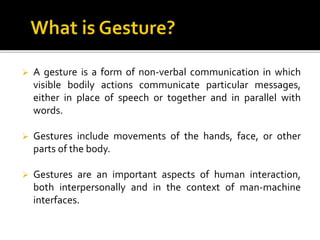
 A gesture is a form of non-verbal communication in which
visible bodily actions communicate particular messages,
either in place of speech or together and in parallel with
words.
 Gestures include movements of the hands, face, or other
parts of the body.
 Gestures are an important aspects of human interaction,
both interpersonally and in the context of man-machine
interfaces.
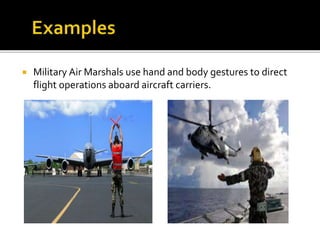
 Military Air Marshals use hand and body gestures to direct
flight operations aboard aircraft carriers.
 In computer interfaces, two types of gestures are
distinguished.
 Offline gestures: Those gestures that are processed after
the user interaction with the object. An example is to
activate a menu.
 Online gestures: Direct manipulation gestures. They are
used to scale or rotate a tangible object.
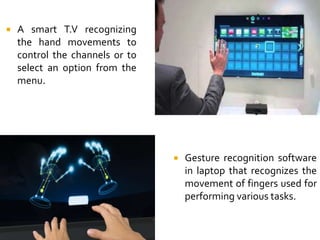
 A smart T.V recognizing
the hand movements to
control the channels or to
select an option from the
menu.
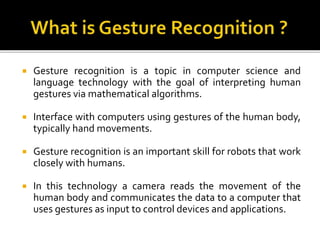
 Gesture recognition software
in laptop that recognizes the
movement of fingers used for
performing various tasks.
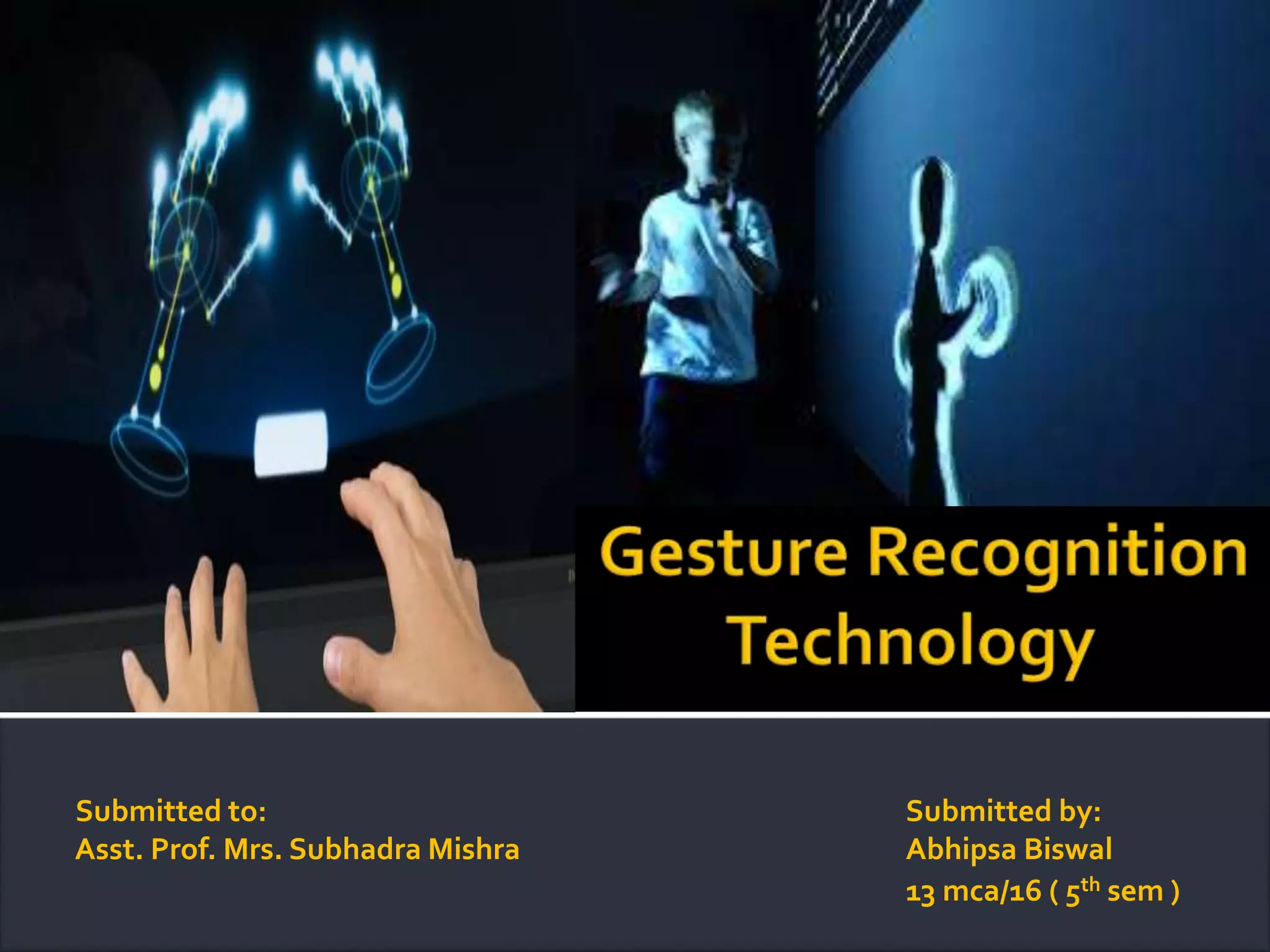
 Gesture recognition is a topic in computer science and
language technology with the goal of interpreting human
gestures via mathematical algorithms.
 Interface with computers using gestures of the human body,
typically hand movements.
 Gesture recognition is an important skill for robots that work
closely with humans.
 In this technology a camera reads the movement of the
human body and communicates the data to a computer that
uses gestures as input to control devices and applications.
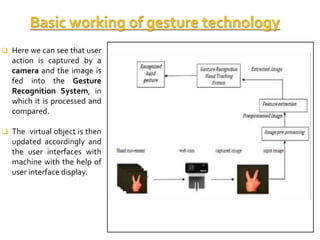
 Here we can see that user
action is captured by a
camera and the image is
fed into the Gesture
Recognition System, in
which it is processed and
compared.
 The virtual object is then
updated accordingly and
the user interfaces with
machine with the help of
user interface display.
a) Hand gesture recognition
b) Facial gesture recognition
c) Sign language recognition
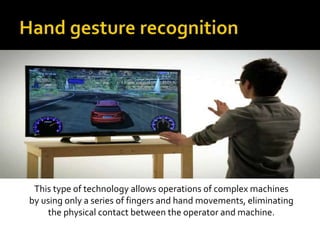
This type of technology allows operations of complex machines
by using only a series of fingers and hand movements, eliminating
the physical contact between the operator and machine.
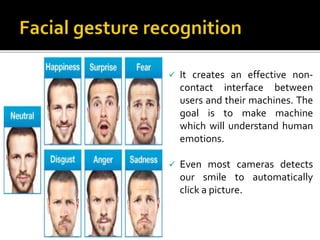
 It creates an effective non-
contact interface between
users and their machines. The
goal is to make machine
which will understand human
emotions.
 Even most cameras detects
our smile to automatically
click a picture.
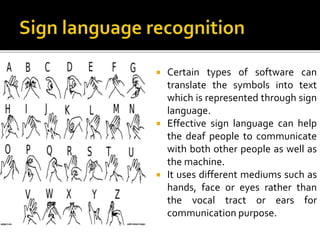
 Certain types of software can
translate the symbols into text
which is represented through sign
language.
 Effective sign language can help
the deaf people to communicate
with both other people as well as
the machine.
 It uses different mediums such as
hands, face or eyes rather than
the vocal tract or ears for
communication purpose.
 Input devices are used to track a person’s movement and
they will determine what actions they may be performing.
Such input devices are:
 Wired gloves
 Stereo cameras
 Depth-aware cameras
 Thermal cameras
 Controller based gesture
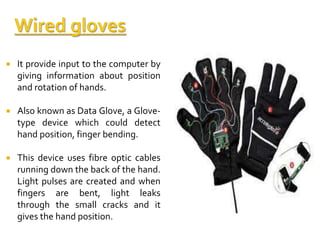
 It provide input to the computer by
giving information about position
and rotation of hands.
 Also known as Data Glove, a Glove-
type device which could detect
hand position, finger bending.
 This device uses fibre optic cables
running down the back of the hand.
Light pulses are created and when
fingers are bent, light leaks
through the small cracks and it
gives the hand position.
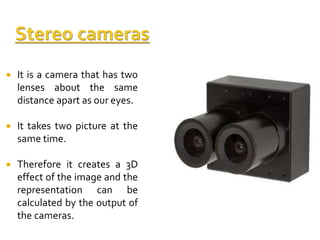
 It is a camera that has two
lenses about the same
distance apart as our eyes.
 It takes two picture at the
same time.
 Therefore it creates a 3D
effect of the image and the
representation can be
calculated by the output of
the cameras.
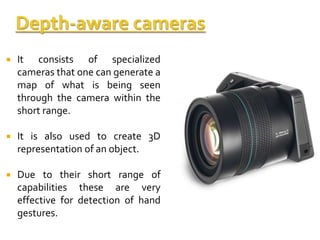
 It consists of specialized
cameras that one can generate a
map of what is being seen
through the camera within the
short range.
 It is also used to create 3D
representation of an object.
 Due to their short range of
capabilities these are very
effective for detection of hand
gestures.
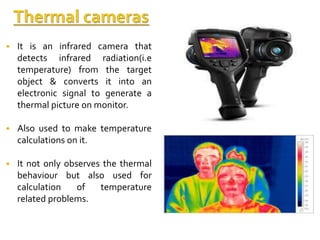
 It is an infrared camera that
detects infrared radiation(i.e
temperature) from the target
object & converts it into an
electronic signal to generate a
thermal picture on monitor.
 Also used to make temperature
calculations on it.
 It not only observes the thermal
behaviour but also used for
calculation of temperature
related problems.
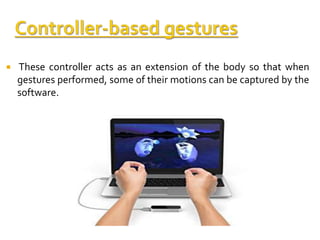
 These controller acts as an extension of the body so that when
gestures performed, some of their motions can be captured by the
software.
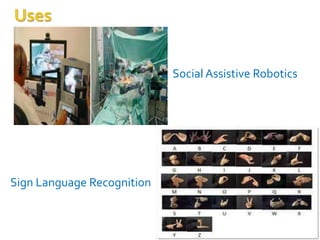
Social Assistive Robotics
Sign Language Recognition
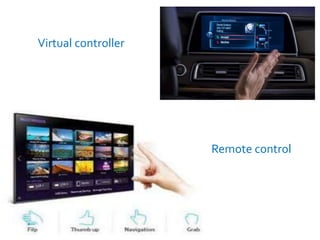
Virtual controller
Remote control
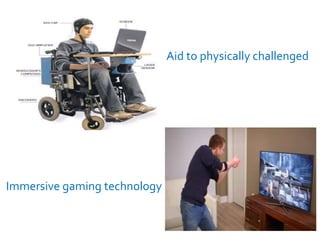
Aid to physically challenged
Immersive gaming technology
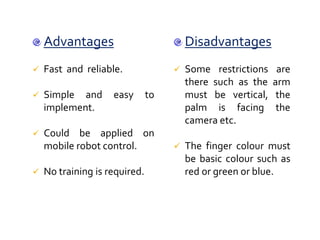
Disadvantages
 Some restrictions are
there such as the arm
must be vertical, the
palm is facing the
camera etc.
 The finger colour must
be basic colour such as
red or green or blue.
Advantages
 Fast and reliable.
 Simple and easy to
implement.
 Could be applied on
mobile robot control.
 No training is required.
 The importance of gesture recognition lies in building
efficient human machine interaction. Its applications range
from sign language recognition through medical rehabilitation
to virtual reality. Gesture recognition soft computing tools
pose another promising application to static hand gesture
identification. Thus, gesture recognition promises wide-
ranging applications in fields from photo journalism through
medical technology to biometrics.
 https://en.wikipedia.org
 https://www.marxentlabs.com
 https://techtarget.com
 https://webopedia.com
Gesture recognition technology ppt

Gesture recognition technology ppt

  • 1.
    Submitted to: Submittedby: Asst. Prof. Mrs. Subhadra Mishra Abhipsa Biswal 13 mca/16 ( 5th sem )
  • 2.
     What isGesture?  Types of Gestures  What is Gesture Recognition  Basic working of GestureTechnology  Types of Gesture Recognition  Technology behind it / Input devices  Uses  Advantages & Disadvantages  Conclusion  References
  • 3.
     A gestureis a form of non-verbal communication in which visible bodily actions communicate particular messages, either in place of speech or together and in parallel with words.  Gestures include movements of the hands, face, or other parts of the body.  Gestures are an important aspects of human interaction, both interpersonally and in the context of man-machine interfaces.
  • 4.
     Military AirMarshals use hand and body gestures to direct flight operations aboard aircraft carriers.
  • 5.
     In computerinterfaces, two types of gestures are distinguished.  Offline gestures: Those gestures that are processed after the user interaction with the object. An example is to activate a menu.  Online gestures: Direct manipulation gestures. They are used to scale or rotate a tangible object.
  • 6.
     A smartT.V recognizing the hand movements to control the channels or to select an option from the menu.  Gesture recognition software in laptop that recognizes the movement of fingers used for performing various tasks.
  • 7.
     Gesture recognitionis a topic in computer science and language technology with the goal of interpreting human gestures via mathematical algorithms.  Interface with computers using gestures of the human body, typically hand movements.  Gesture recognition is an important skill for robots that work closely with humans.  In this technology a camera reads the movement of the human body and communicates the data to a computer that uses gestures as input to control devices and applications.
  • 8.
     Here wecan see that user action is captured by a camera and the image is fed into the Gesture Recognition System, in which it is processed and compared.  The virtual object is then updated accordingly and the user interfaces with machine with the help of user interface display.
  • 9.
    a) Hand gesturerecognition b) Facial gesture recognition c) Sign language recognition
  • 10.
    This type oftechnology allows operations of complex machines by using only a series of fingers and hand movements, eliminating the physical contact between the operator and machine.
  • 12.
     It createsan effective non- contact interface between users and their machines. The goal is to make machine which will understand human emotions.  Even most cameras detects our smile to automatically click a picture.
  • 13.
     Certain typesof software can translate the symbols into text which is represented through sign language.  Effective sign language can help the deaf people to communicate with both other people as well as the machine.  It uses different mediums such as hands, face or eyes rather than the vocal tract or ears for communication purpose.
  • 14.
     Input devicesare used to track a person’s movement and they will determine what actions they may be performing. Such input devices are:  Wired gloves  Stereo cameras  Depth-aware cameras  Thermal cameras  Controller based gesture
  • 15.
     It provideinput to the computer by giving information about position and rotation of hands.  Also known as Data Glove, a Glove- type device which could detect hand position, finger bending.  This device uses fibre optic cables running down the back of the hand. Light pulses are created and when fingers are bent, light leaks through the small cracks and it gives the hand position.
  • 16.
     It isa camera that has two lenses about the same distance apart as our eyes.  It takes two picture at the same time.  Therefore it creates a 3D effect of the image and the representation can be calculated by the output of the cameras.
  • 17.
     It consistsof specialized cameras that one can generate a map of what is being seen through the camera within the short range.  It is also used to create 3D representation of an object.  Due to their short range of capabilities these are very effective for detection of hand gestures.
  • 18.
     It isan infrared camera that detects infrared radiation(i.e temperature) from the target object & converts it into an electronic signal to generate a thermal picture on monitor.  Also used to make temperature calculations on it.  It not only observes the thermal behaviour but also used for calculation of temperature related problems.
  • 19.
     These controlleracts as an extension of the body so that when gestures performed, some of their motions can be captured by the software.
  • 20.
    Social Assistive Robotics SignLanguage Recognition
  • 21.
  • 22.
    Aid to physicallychallenged Immersive gaming technology
  • 23.
    Disadvantages  Some restrictionsare there such as the arm must be vertical, the palm is facing the camera etc.  The finger colour must be basic colour such as red or green or blue. Advantages  Fast and reliable.  Simple and easy to implement.  Could be applied on mobile robot control.  No training is required.
  • 24.
     The importanceof gesture recognition lies in building efficient human machine interaction. Its applications range from sign language recognition through medical rehabilitation to virtual reality. Gesture recognition soft computing tools pose another promising application to static hand gesture identification. Thus, gesture recognition promises wide- ranging applications in fields from photo journalism through medical technology to biometrics.
  • 25.
     https://en.wikipedia.org  https://www.marxentlabs.com https://techtarget.com  https://webopedia.com