PRINCIPLES OF MANAGEMENT 
PRESENTED BY 
JAYASREE.U 
B.ED COMMERCE
FAYOL'S PRINCIPLES OF 
MANAGEMENT 
Began his career as an Engineer in a Mining Company. 
Later became the Managing Director of the company. 
He formulated fourteen principles of management. 
He has been rightly called the “Father of Modern 
Management.”
 Division of Work. 
Work should be divided into small 
tasks. Each task should be assigned to 
a specific employee.
 Authority and Responsibility. 
Authority means right to give orders 
to the subordinates. 
Responsibility means obligation to 
perform the work in the manner desired and 
directed by the authority.
 Discipline 
Discipline is essential for the 
smooth running of all organisations.It 
means respect for authority.
 Unity of Command 
It states that an employee should 
receive orders from one superior only.
 Unity of Direction 
It states that the activities which 
have a common objective must be grouped 
together and must be under one head.
 Subordination of individual interest to 
general interest. 
The business enterprises is superior 
to individuals. When individuals work in a 
group ,group interest should prevail over 
that of each individual.
 Remuneration of Personnel. 
Remuneration of work done must 
be fair and reasonable. Employees should 
be honest and sincere.
CLASS 2 
BY 
JAYASREE 
B.ED COMMERCE
 Centralisation and Decentralisation 
Centralisation refers to concentration of 
authority at one place or one level in the 
organisation. 
Decentralisation means dispersal of 
authority to the lower levels in the 
organisation.
 Scalar Chain 
It refers to the line of authority or the 
chain of superiors starting from the highest 
and moving towards the lowest rank.
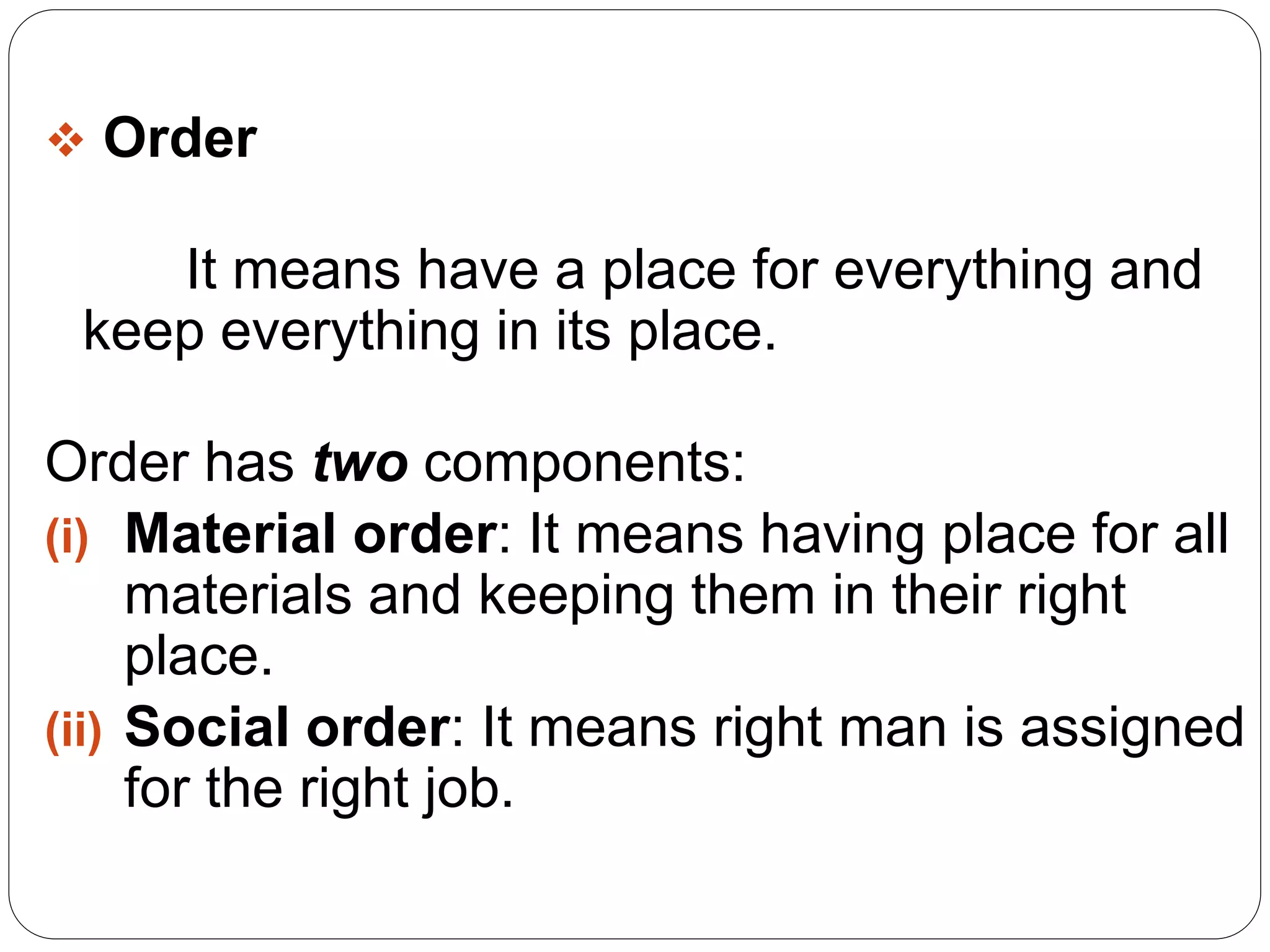
 Order 
It means have a place for everything and 
keep everything in its place. 
Order has two components: 
(i) Material order: It means having place for all 
materials and keeping them in their right 
place. 
(ii) Social order: It means right man is assigned 
for the right job.
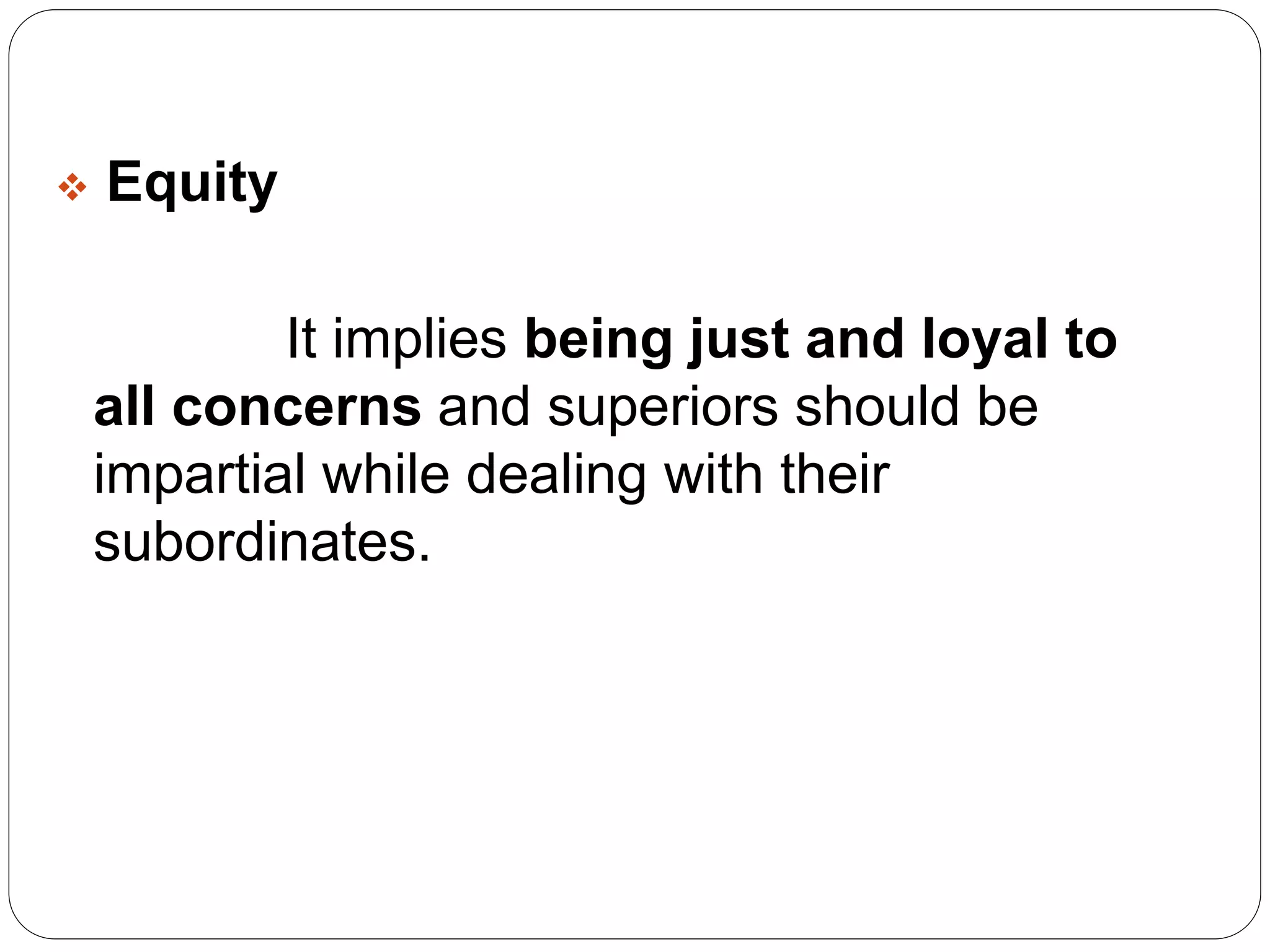
 Equity 
It implies being just and loyal to 
all concerns and superiors should be 
impartial while dealing with their 
subordinates.
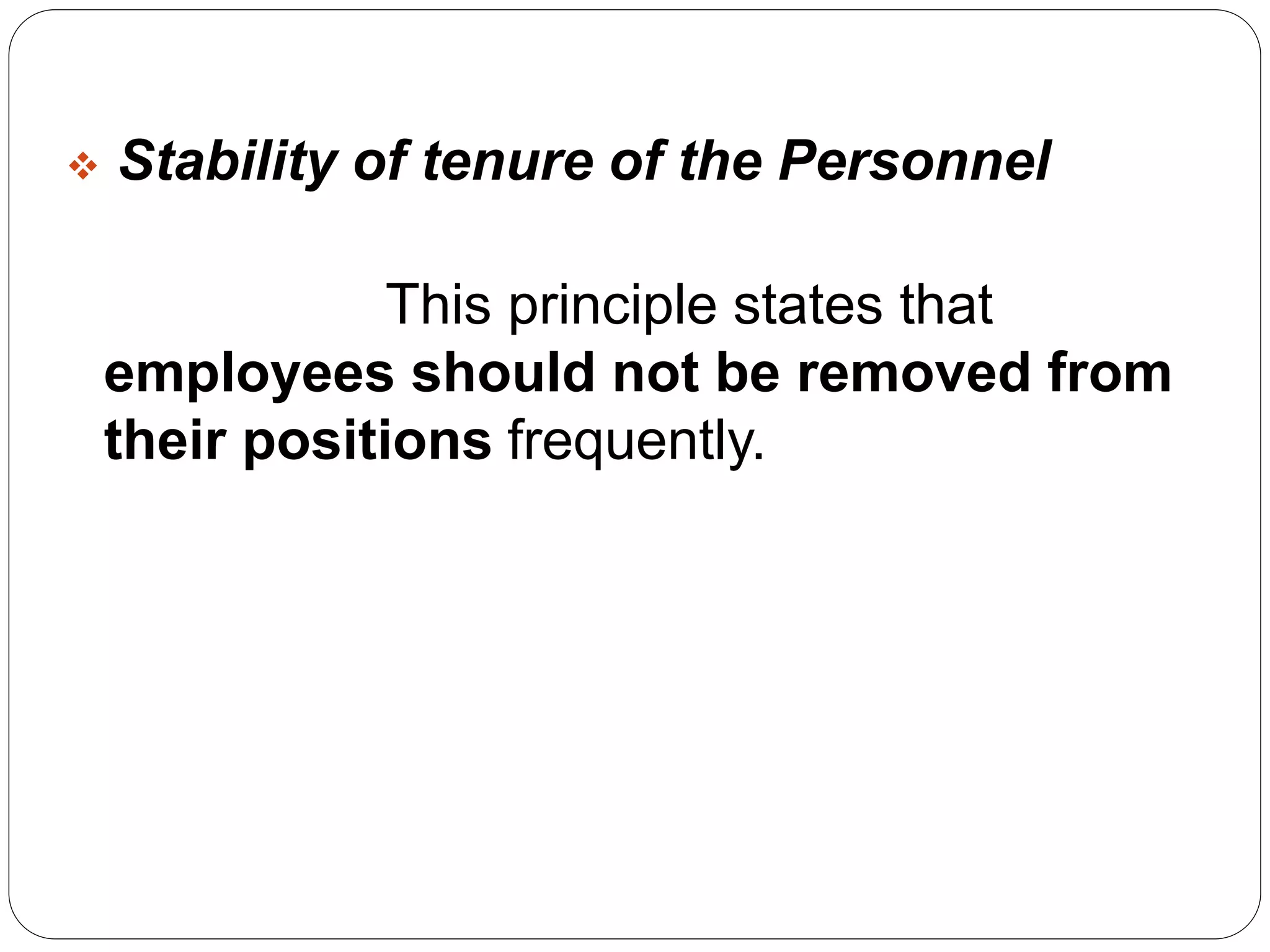
 Stability of tenure of the Personnel 
This principle states that 
employees should not be removed from 
their positions frequently.
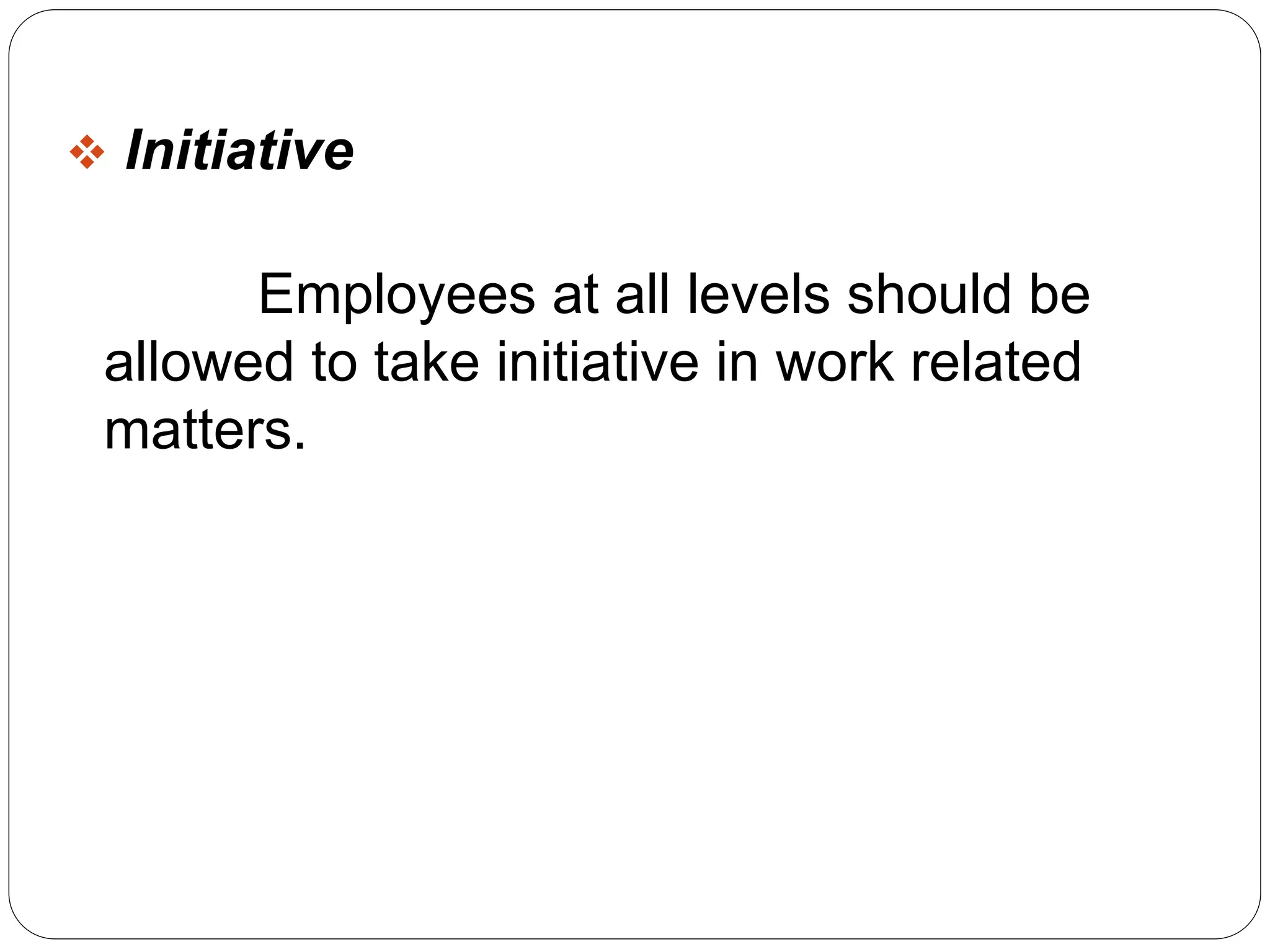
 Initiative 
Employees at all levels should be 
allowed to take initiative in work related 
matters.
 Espirit de corps. 
“Union is strength” is a well 
accepted principle. The contribution of a 
team is far better than that of individuals.
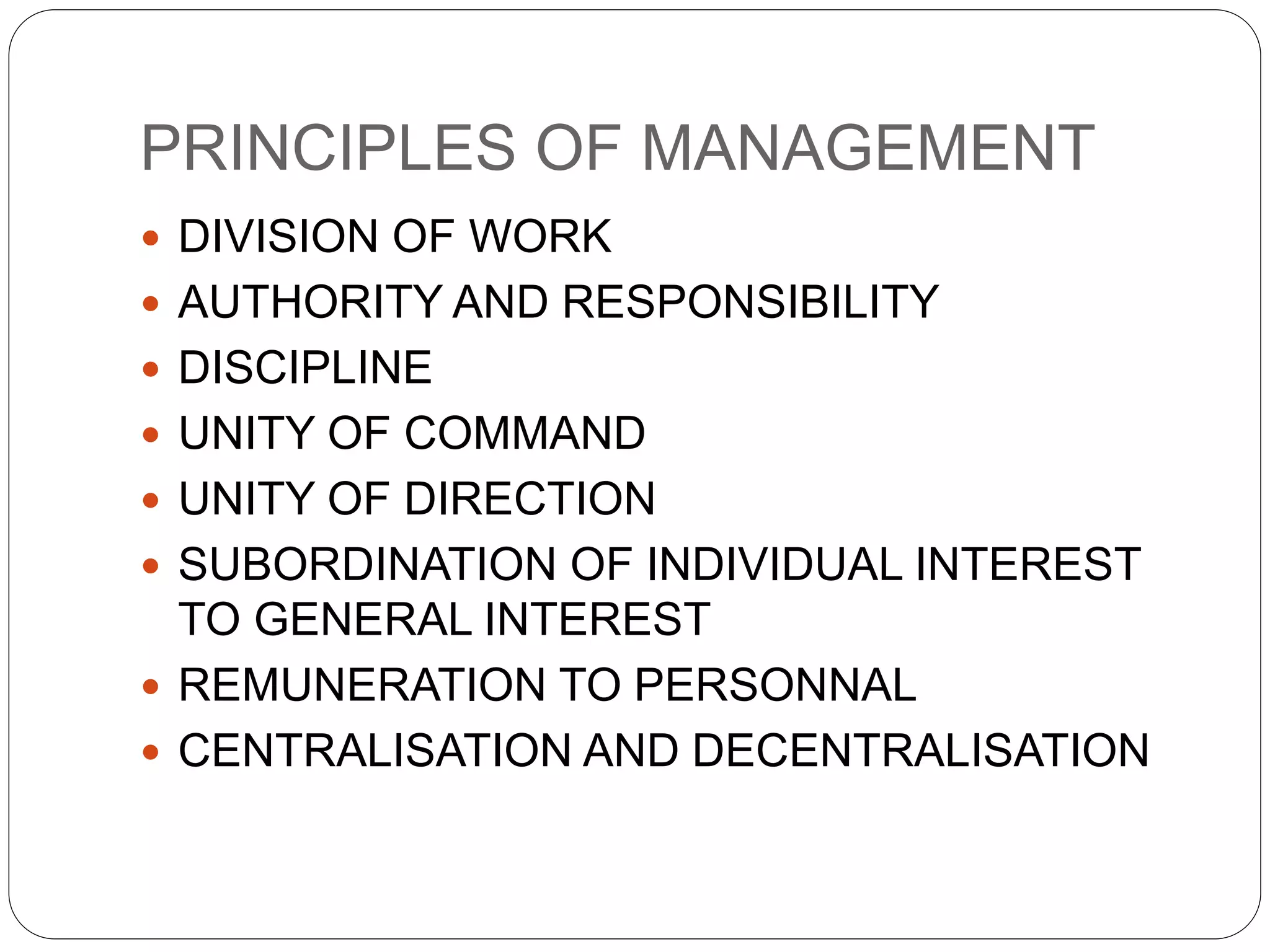
PRINCIPLES OF MANAGEMENT 
 DIVISION OF WORK 
 AUTHORITY AND RESPONSIBILITY 
 DISCIPLINE 
 UNITY OF COMMAND 
 UNITY OF DIRECTION 
 SUBORDINATION OF INDIVIDUAL INTEREST 
TO GENERAL INTEREST 
 REMUNERATION TO PERSONNAL 
 CENTRALISATION AND DECENTRALISATION
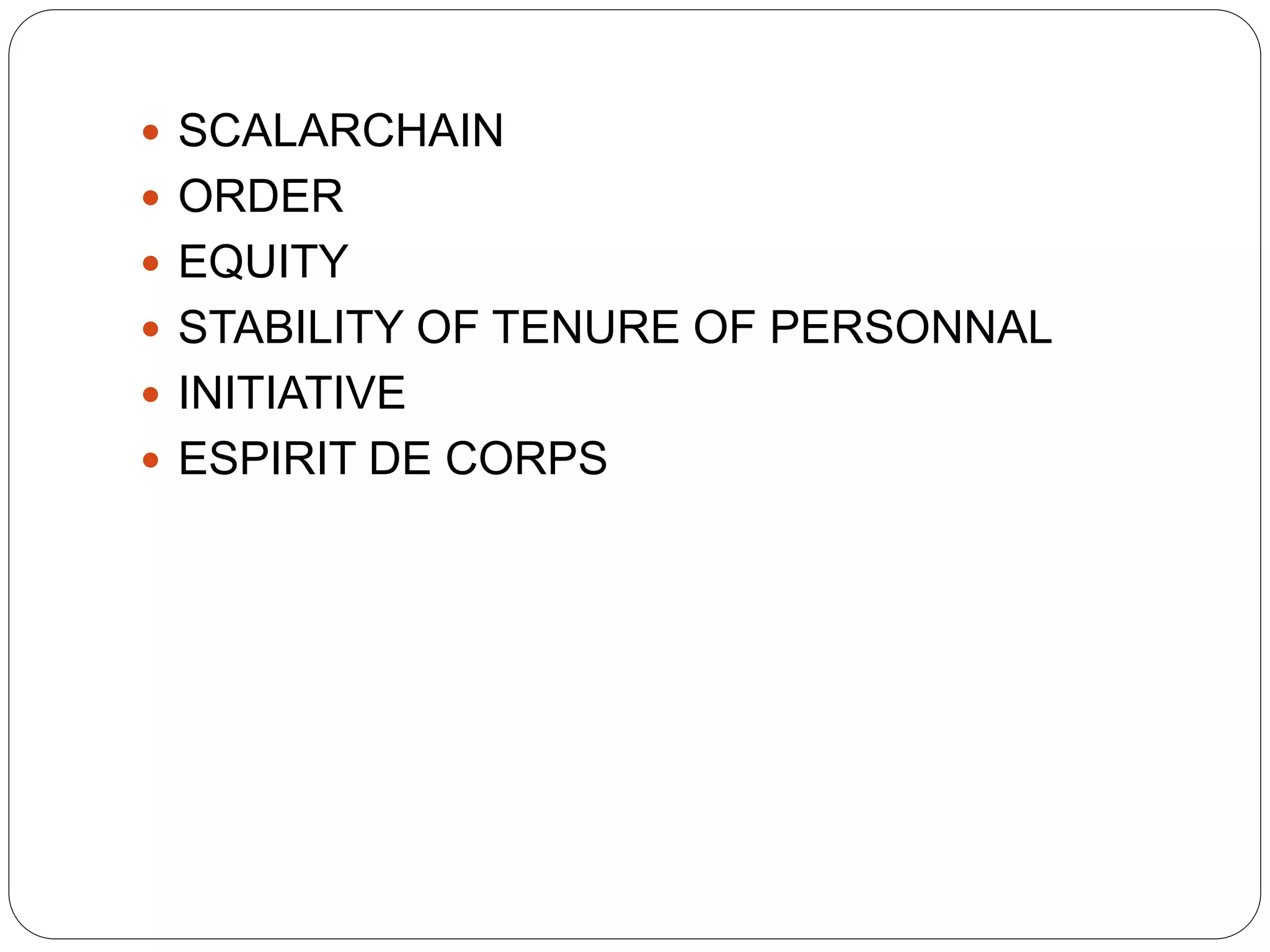
 SCALARCHAIN 
 ORDER 
 EQUITY 
 STABILITY OF TENURE OF PERSONNAL 
 INITIATIVE 
 ESPIRIT DE CORPS

Fayol's principles of management

  • 1.
    PRINCIPLES OF MANAGEMENT PRESENTED BY JAYASREE.U B.ED COMMERCE
  • 2.
    FAYOL'S PRINCIPLES OF MANAGEMENT Began his career as an Engineer in a Mining Company. Later became the Managing Director of the company. He formulated fourteen principles of management. He has been rightly called the “Father of Modern Management.”
  • 3.
     Division ofWork. Work should be divided into small tasks. Each task should be assigned to a specific employee.
  • 4.
     Authority andResponsibility. Authority means right to give orders to the subordinates. Responsibility means obligation to perform the work in the manner desired and directed by the authority.
  • 5.
     Discipline Disciplineis essential for the smooth running of all organisations.It means respect for authority.
  • 6.
     Unity ofCommand It states that an employee should receive orders from one superior only.
  • 7.
     Unity ofDirection It states that the activities which have a common objective must be grouped together and must be under one head.
  • 8.
     Subordination ofindividual interest to general interest. The business enterprises is superior to individuals. When individuals work in a group ,group interest should prevail over that of each individual.
  • 9.
     Remuneration ofPersonnel. Remuneration of work done must be fair and reasonable. Employees should be honest and sincere.
  • 10.
    CLASS 2 BY JAYASREE B.ED COMMERCE
  • 11.
     Centralisation andDecentralisation Centralisation refers to concentration of authority at one place or one level in the organisation. Decentralisation means dispersal of authority to the lower levels in the organisation.
  • 12.
     Scalar Chain It refers to the line of authority or the chain of superiors starting from the highest and moving towards the lowest rank.
  • 13.
     Order Itmeans have a place for everything and keep everything in its place. Order has two components: (i) Material order: It means having place for all materials and keeping them in their right place. (ii) Social order: It means right man is assigned for the right job.
  • 14.
     Equity Itimplies being just and loyal to all concerns and superiors should be impartial while dealing with their subordinates.
  • 15.
     Stability oftenure of the Personnel This principle states that employees should not be removed from their positions frequently.
  • 16.
     Initiative Employeesat all levels should be allowed to take initiative in work related matters.
  • 17.
     Espirit decorps. “Union is strength” is a well accepted principle. The contribution of a team is far better than that of individuals.
  • 18.
    PRINCIPLES OF MANAGEMENT  DIVISION OF WORK  AUTHORITY AND RESPONSIBILITY  DISCIPLINE  UNITY OF COMMAND  UNITY OF DIRECTION  SUBORDINATION OF INDIVIDUAL INTEREST TO GENERAL INTEREST  REMUNERATION TO PERSONNAL  CENTRALISATION AND DECENTRALISATION
  • 19.
     SCALARCHAIN ORDER  EQUITY  STABILITY OF TENURE OF PERSONNAL  INITIATIVE  ESPIRIT DE CORPS