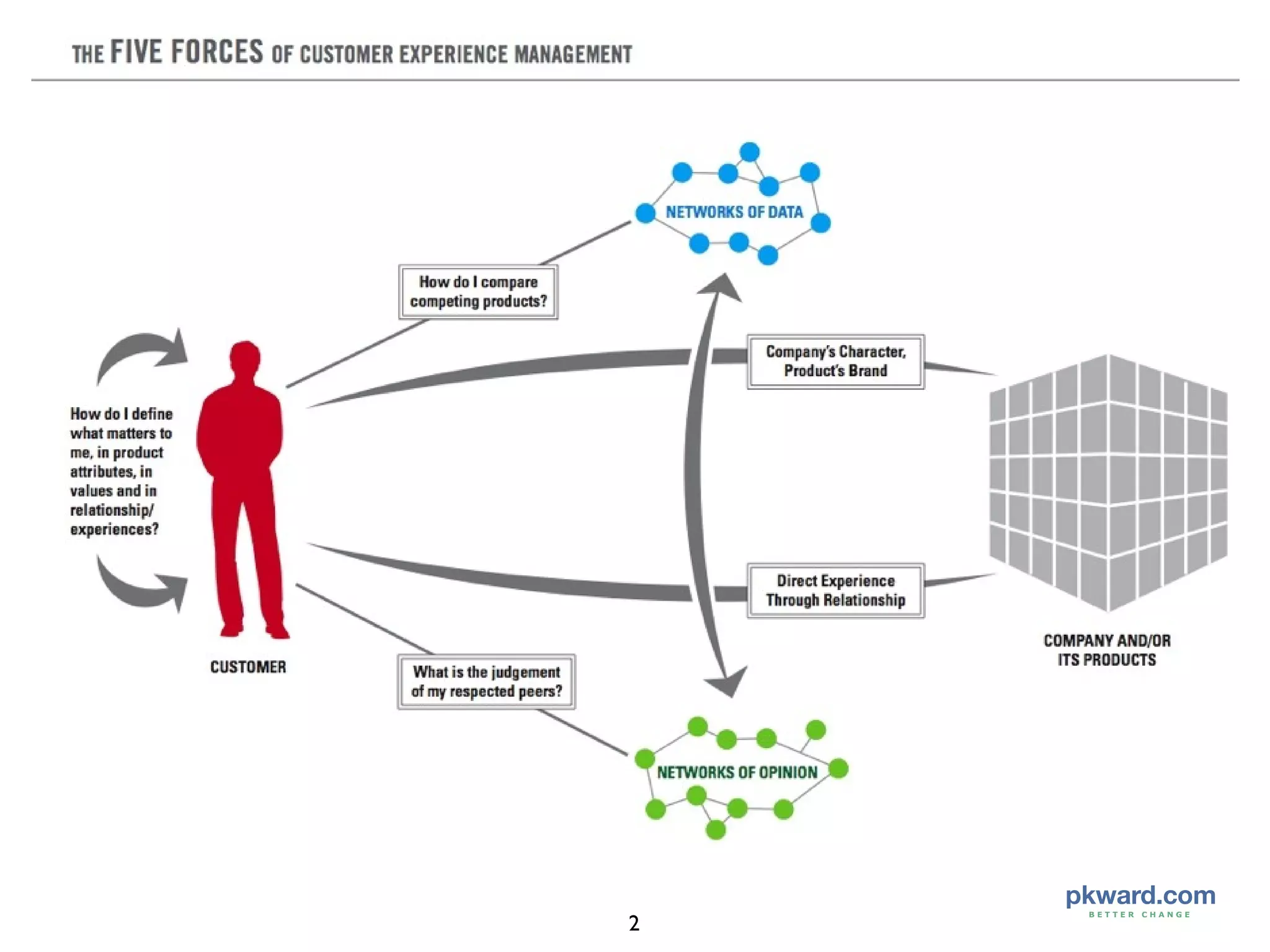
The Five Forces of CEM Why Companies Must Operate With Clear Knowledge of the Customer’s Emotions and Values
 
1. The Customer How do I define  value? Cheaper? Better? More options? How do I define  values? Privacy? Social and family values? Respect for authority? Independence?
2. Networks of Data What information about a company or its services can I find: On my cell phone? On the Internet? In guides and reviews?
3. Networks of Opinion Word of mouth has a significant impact on company performance You must create memorable experiences that delight the customer But these experiences must also reinforce your most authentic brand values
Defined by a (self-reported) propensity to recommend  NPS subtracts the percent of customer extremely likely to recommend (90 percent or greater agreement) from the percent of customers scoring 60 percent or lower agreement  “Promoters” - “Detractors” Net Promoter Score
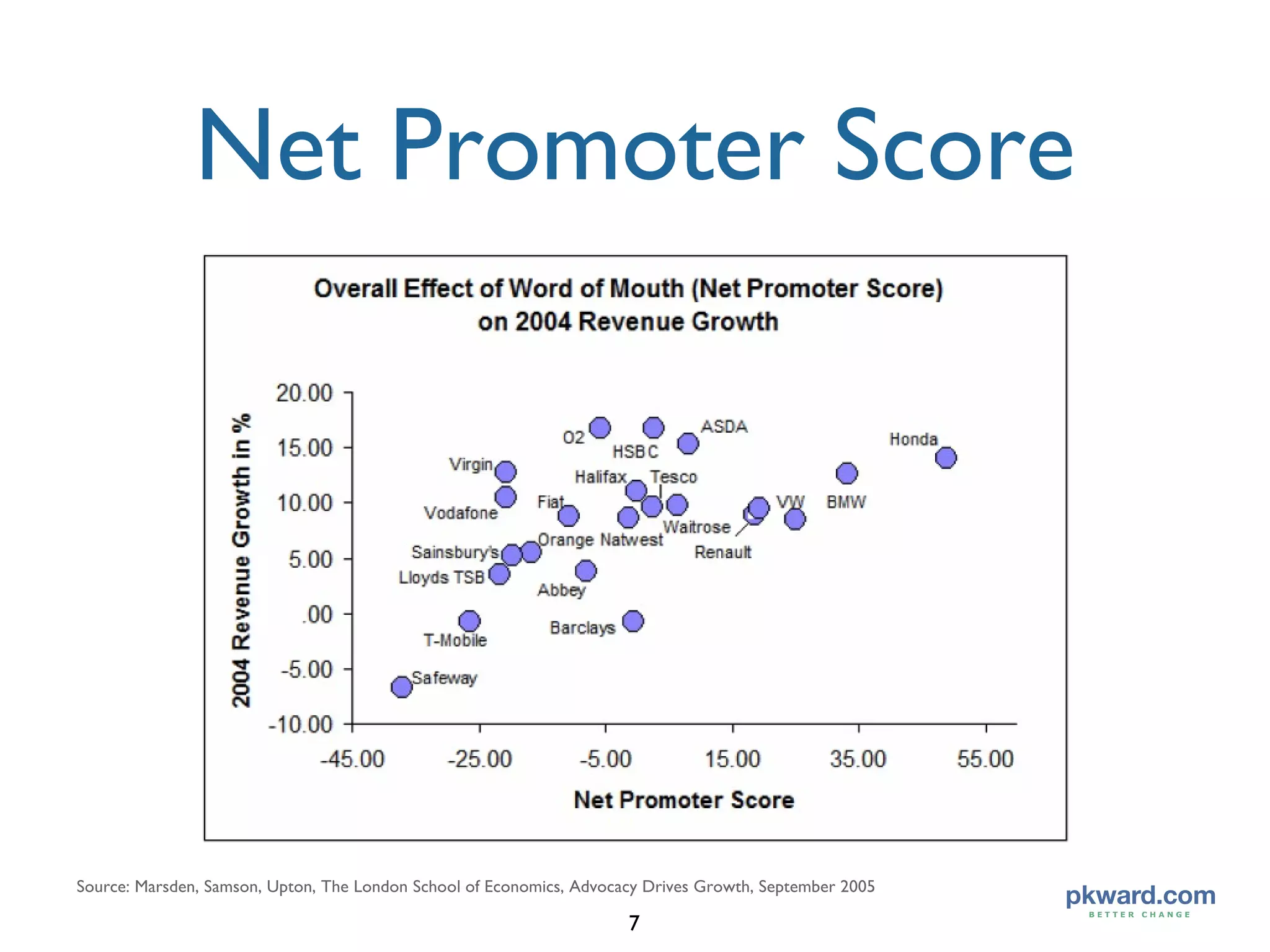
Net Promoter Score Source: Marsden, Samson, Upton, The London School of Economics, Advocacy Drives Growth, September 2005
4. Company’s Character Does it make promises it can keep? Are they relevant promises? Important to the brand? How should marketers and operations directors work together to improve promise-keeping? Does the company live its values?
5. Experience Of all the forces, one’s direct experience with a company is the most powerful Must reinforce the best of the other forces (products, services, character, value/values, word-of-mouth, etc.) Must focus on being  branded ,  memorable  and “ tellable ”
Wal-Mart in Germany Read the Case Study Discuss the five forces as they affected Wal-Mart’s position in Germany
The 5 Forces of CEM Values: What to measure Many frameworks Each is multidimensional Not all dimensions apply in all cultures
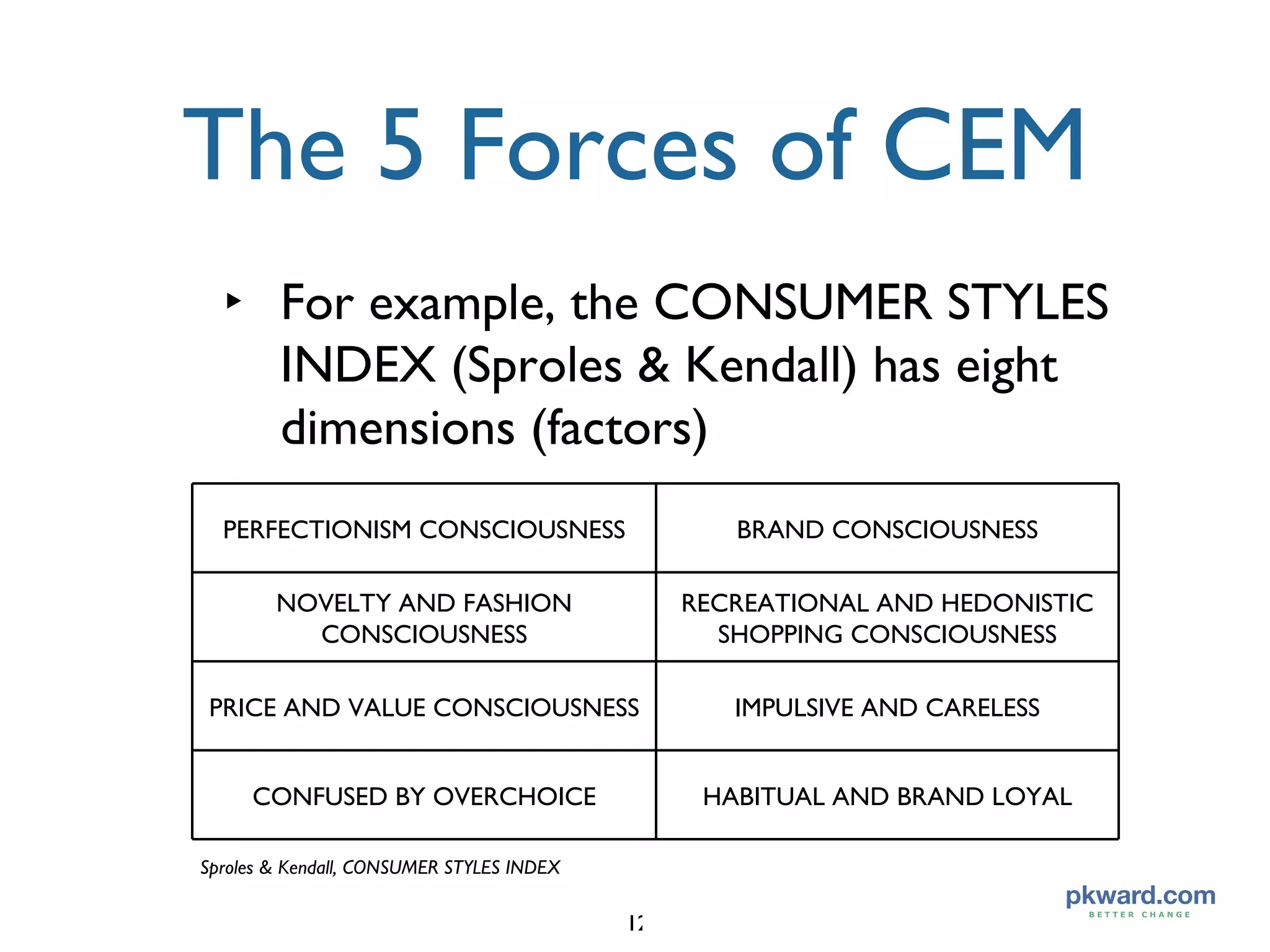
The 5 Forces of CEM For example, the CONSUMER STYLES INDEX (Sproles & Kendall) has eight dimensions (factors) Sproles & Kendall, CONSUMER STYLES INDEX PERFECTIONISM CONSCIOUSNESS BRAND CONSCIOUSNESS NOVELTY AND FASHION CONSCIOUSNESS RECREATIONAL AND HEDONISTIC SHOPPING CONSCIOUSNESS PRICE AND VALUE CONSCIOUSNESS IMPULSIVE AND CARELESS CONFUSED BY OVERCHOICE HABITUAL AND BRAND LOYAL
The 5 Forces of CEM “ The original U.S. eight-factor model could not be confirmed completely, but support [in German culture] was found for six factors: Brand Consciousness, Perfectionism, Recreational/Hedonism, Confused by Overchoice, Impulsiveness, and Novelty-Fashion Consciousness.  Variety Seeking was novel to Germany  and replaced brand loyalty and price-value consciousness  factors found in previous countries.” German Consumer Decision-Making Styles Authors:  Gianfranco Walsh, Vincent-Wayne Mitchell, and Thorsten Hennig-Thurau
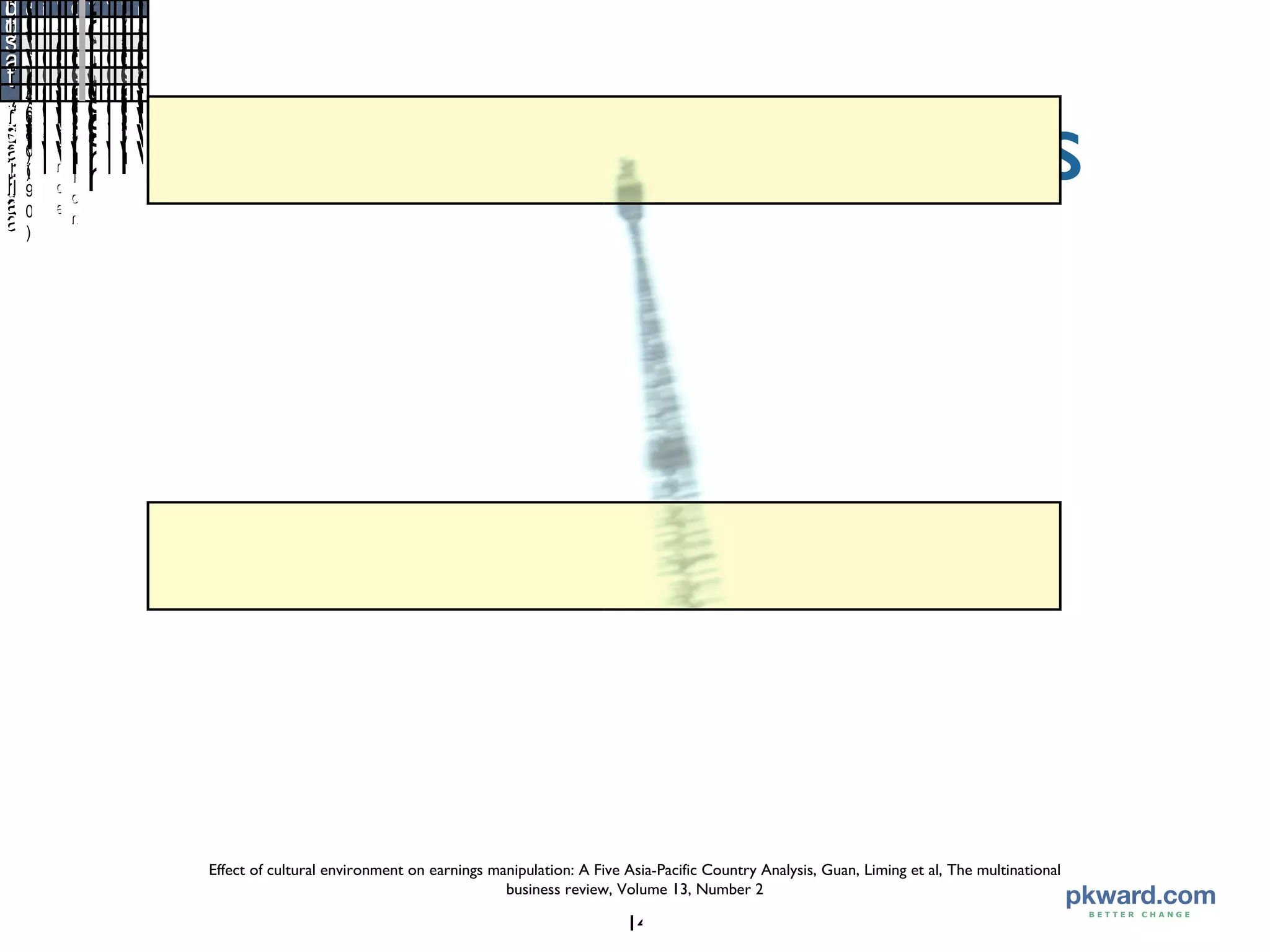
Hierarchies of Values Effect of cultural environment on earnings manipulation: A Five Asia-Pacific Country Analysis, Guan, Liming et al, The multinational business review, Volume 13, Number 2 Individualism Power Distance Uncertainty Avoidance Long-term Orientation Professionalism Uniformity Conservatism Secrecy Japan Low (46) High High High Low High High High Hong Kong Low (68) High Low High High High High Low Singapore Low (20) High Low High High High High Low Malaysia Low High Low High High High High Low Australia High (90) Low Low Low High Low Low Low
What Would You Do? Knowing about consumer buying styles, how would you have advised Wal-Mart’s team as they planned their entry into Germany? Knowing about hierarchy of values, how does Germany differ from Australia? Apply to your company.
What Would You Do? What are your brand values? What are your promises? How can you better keep those promises? In a branded way? In a memorable way? To create  measurable  emotional impact?

Five Forces of Customer Experience Management

  • 1.
    The Five Forcesof CEM Why Companies Must Operate With Clear Knowledge of the Customer’s Emotions and Values
  • 2.
  • 3.
    1. The CustomerHow do I define value? Cheaper? Better? More options? How do I define values? Privacy? Social and family values? Respect for authority? Independence?
  • 4.
    2. Networks ofData What information about a company or its services can I find: On my cell phone? On the Internet? In guides and reviews?
  • 5.
    3. Networks ofOpinion Word of mouth has a significant impact on company performance You must create memorable experiences that delight the customer But these experiences must also reinforce your most authentic brand values
  • 6.
    Defined by a(self-reported) propensity to recommend NPS subtracts the percent of customer extremely likely to recommend (90 percent or greater agreement) from the percent of customers scoring 60 percent or lower agreement “Promoters” - “Detractors” Net Promoter Score
  • 7.
    Net Promoter ScoreSource: Marsden, Samson, Upton, The London School of Economics, Advocacy Drives Growth, September 2005
  • 8.
    4. Company’s CharacterDoes it make promises it can keep? Are they relevant promises? Important to the brand? How should marketers and operations directors work together to improve promise-keeping? Does the company live its values?
  • 9.
    5. Experience Ofall the forces, one’s direct experience with a company is the most powerful Must reinforce the best of the other forces (products, services, character, value/values, word-of-mouth, etc.) Must focus on being branded , memorable and “ tellable ”
  • 10.
    Wal-Mart in GermanyRead the Case Study Discuss the five forces as they affected Wal-Mart’s position in Germany
  • 11.
    The 5 Forcesof CEM Values: What to measure Many frameworks Each is multidimensional Not all dimensions apply in all cultures
  • 12.
    The 5 Forcesof CEM For example, the CONSUMER STYLES INDEX (Sproles & Kendall) has eight dimensions (factors) Sproles & Kendall, CONSUMER STYLES INDEX PERFECTIONISM CONSCIOUSNESS BRAND CONSCIOUSNESS NOVELTY AND FASHION CONSCIOUSNESS RECREATIONAL AND HEDONISTIC SHOPPING CONSCIOUSNESS PRICE AND VALUE CONSCIOUSNESS IMPULSIVE AND CARELESS CONFUSED BY OVERCHOICE HABITUAL AND BRAND LOYAL
  • 13.
    The 5 Forcesof CEM “ The original U.S. eight-factor model could not be confirmed completely, but support [in German culture] was found for six factors: Brand Consciousness, Perfectionism, Recreational/Hedonism, Confused by Overchoice, Impulsiveness, and Novelty-Fashion Consciousness. Variety Seeking was novel to Germany and replaced brand loyalty and price-value consciousness factors found in previous countries.” German Consumer Decision-Making Styles Authors:  Gianfranco Walsh, Vincent-Wayne Mitchell, and Thorsten Hennig-Thurau
  • 14.
    Hierarchies of ValuesEffect of cultural environment on earnings manipulation: A Five Asia-Pacific Country Analysis, Guan, Liming et al, The multinational business review, Volume 13, Number 2 Individualism Power Distance Uncertainty Avoidance Long-term Orientation Professionalism Uniformity Conservatism Secrecy Japan Low (46) High High High Low High High High Hong Kong Low (68) High Low High High High High Low Singapore Low (20) High Low High High High High Low Malaysia Low High Low High High High High Low Australia High (90) Low Low Low High Low Low Low
  • 15.
    What Would YouDo? Knowing about consumer buying styles, how would you have advised Wal-Mart’s team as they planned their entry into Germany? Knowing about hierarchy of values, how does Germany differ from Australia? Apply to your company.
  • 16.
    What Would YouDo? What are your brand values? What are your promises? How can you better keep those promises? In a branded way? In a memorable way? To create measurable emotional impact?