FAULT
MADE BY : SWATI PANARA
FROM : BHARTIMAIYA COLLEGE OF
OPTOMETRY
2nd YEAR 3rd SEMESTER
OPHTHALMIC LENS
 It is the portion of the transparent medium
bounded by two refracting surfaces of at
least one of which is curved.
FAULT
 Fault is a defect before manufacture or
after manufacture.
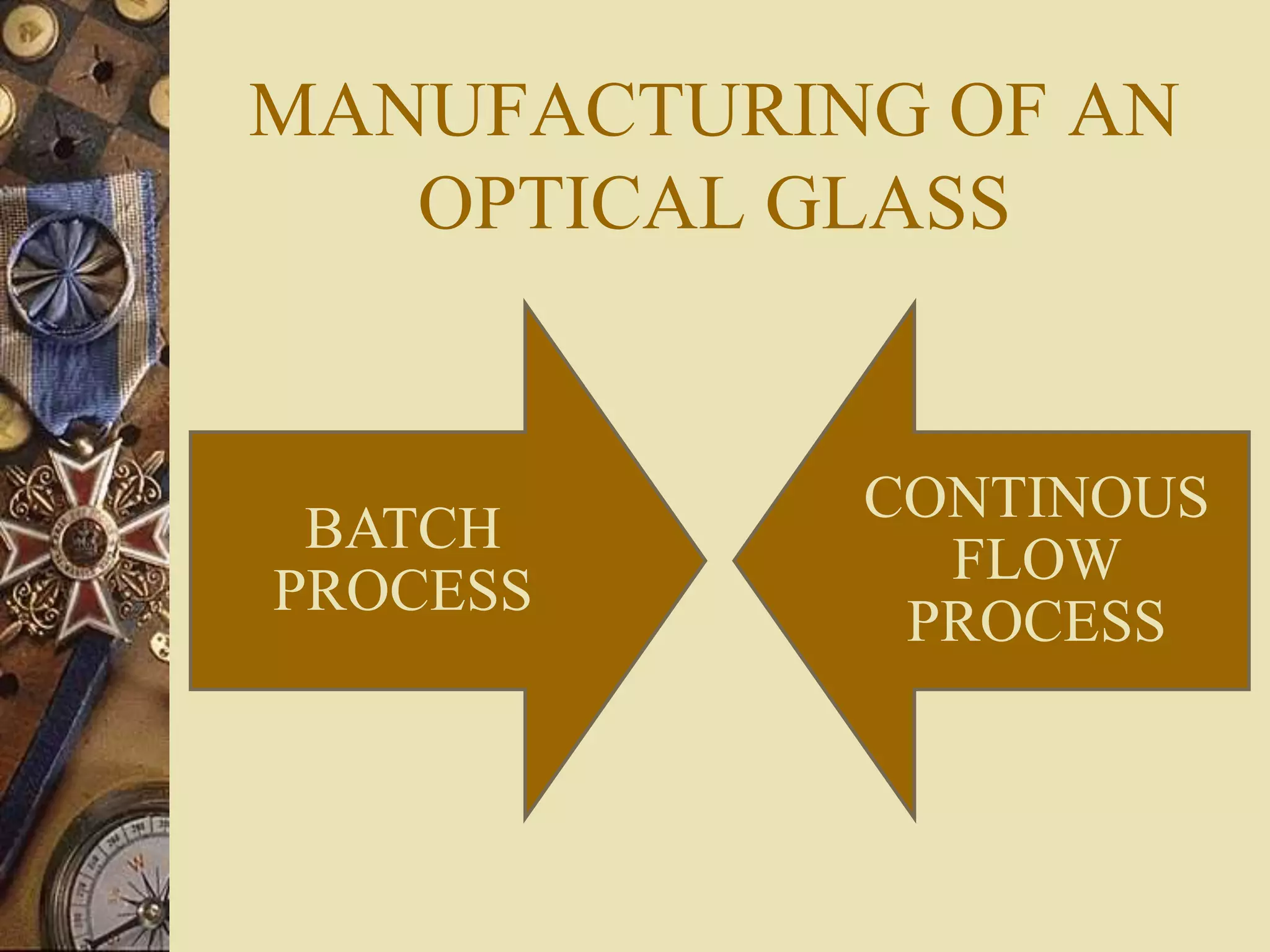
MANUFACTURING OF AN
OPTICAL GLASS
BATCH
PROCESS
CONTINOUS
FLOW
PROCESS
DEFECT
Defect in the
material of the
lens
Defect on the
surface of the
lens
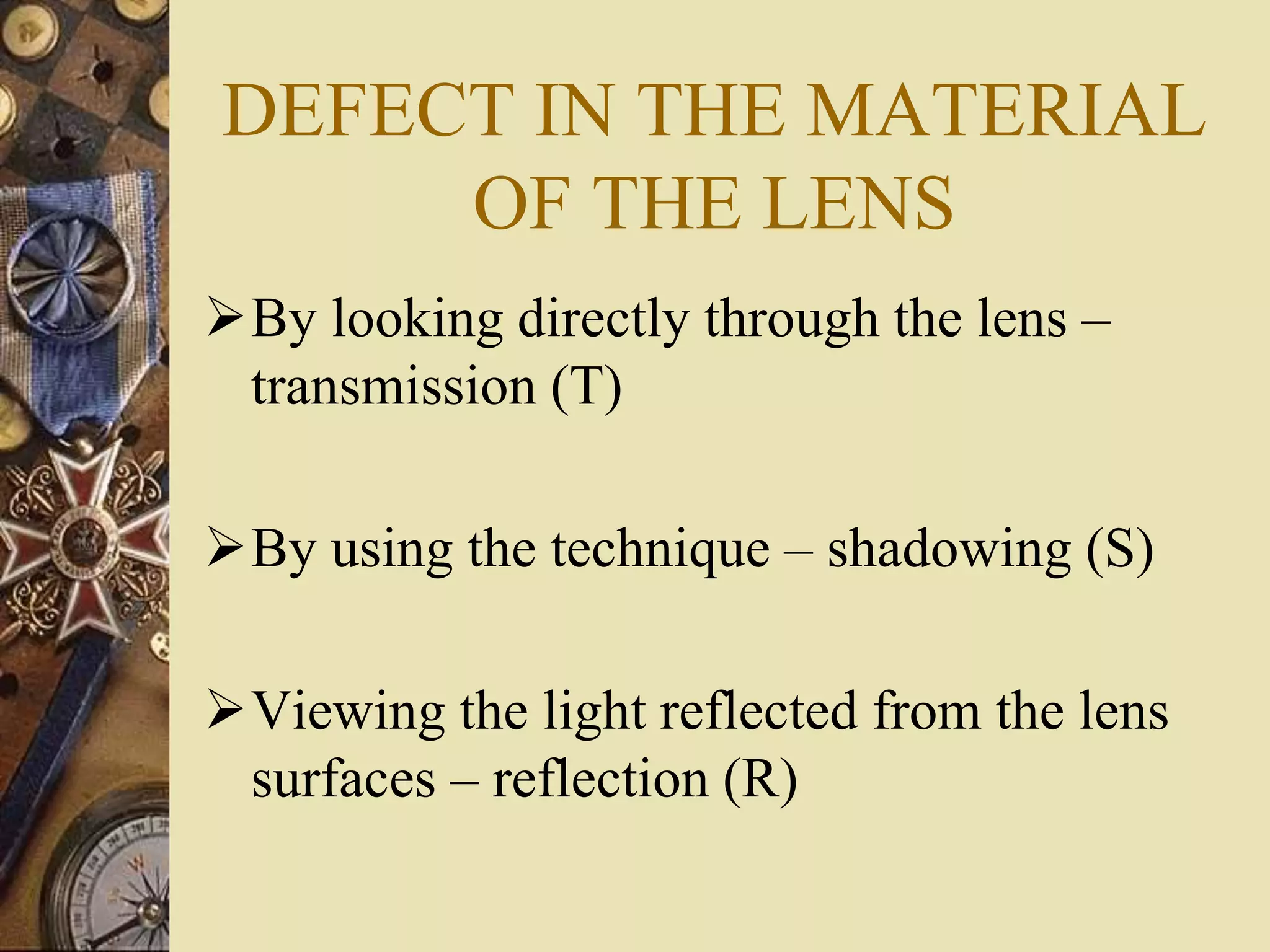
DEFECT IN THE MATERIAL
OF THE LENS
By looking directly through the lens –
transmission (T)
By using the technique – shadowing (S)
Viewing the light reflected from the lens
surfaces – reflection (R)
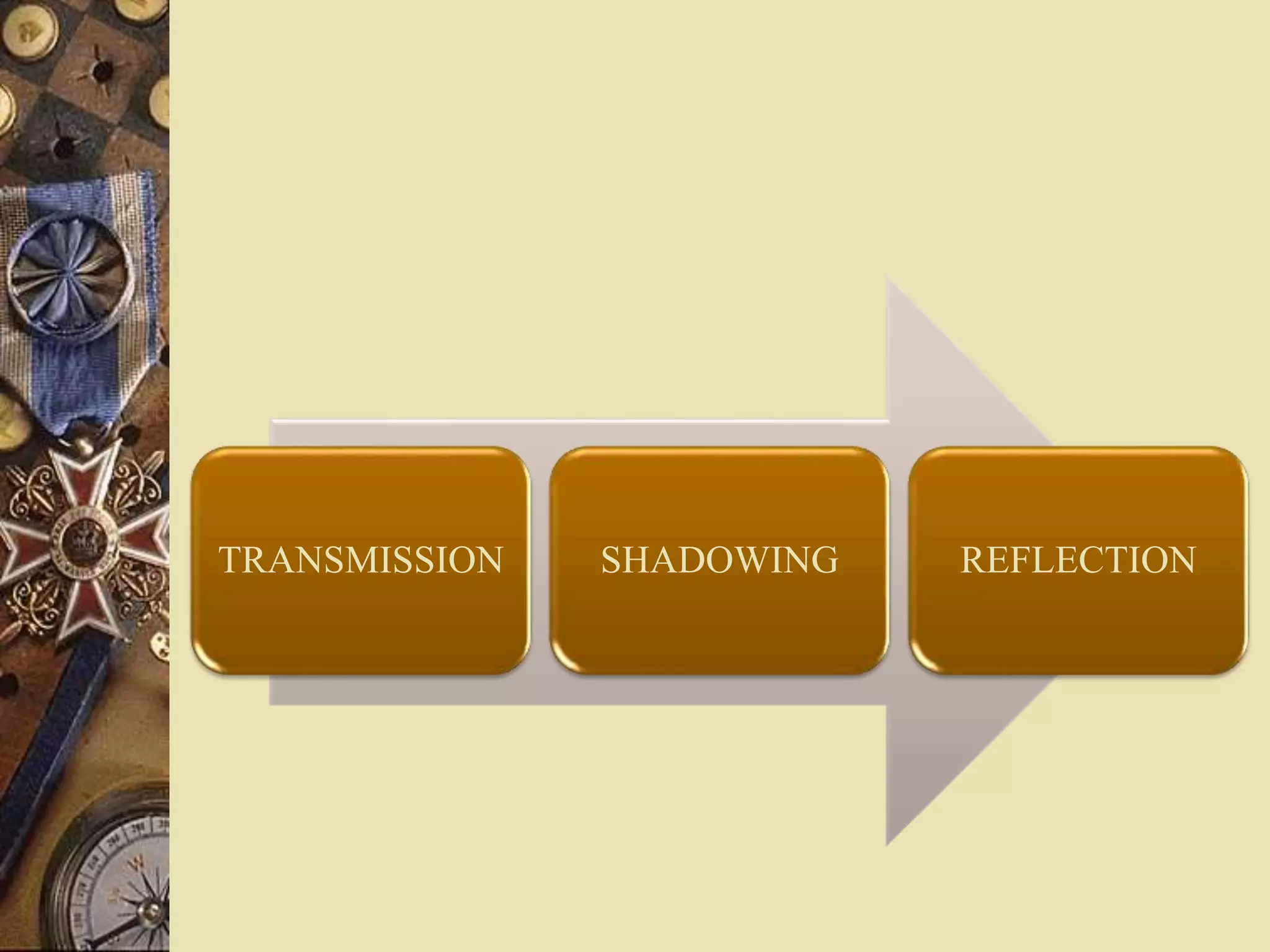
TRANSMISSION SHADOWING REFLECTION
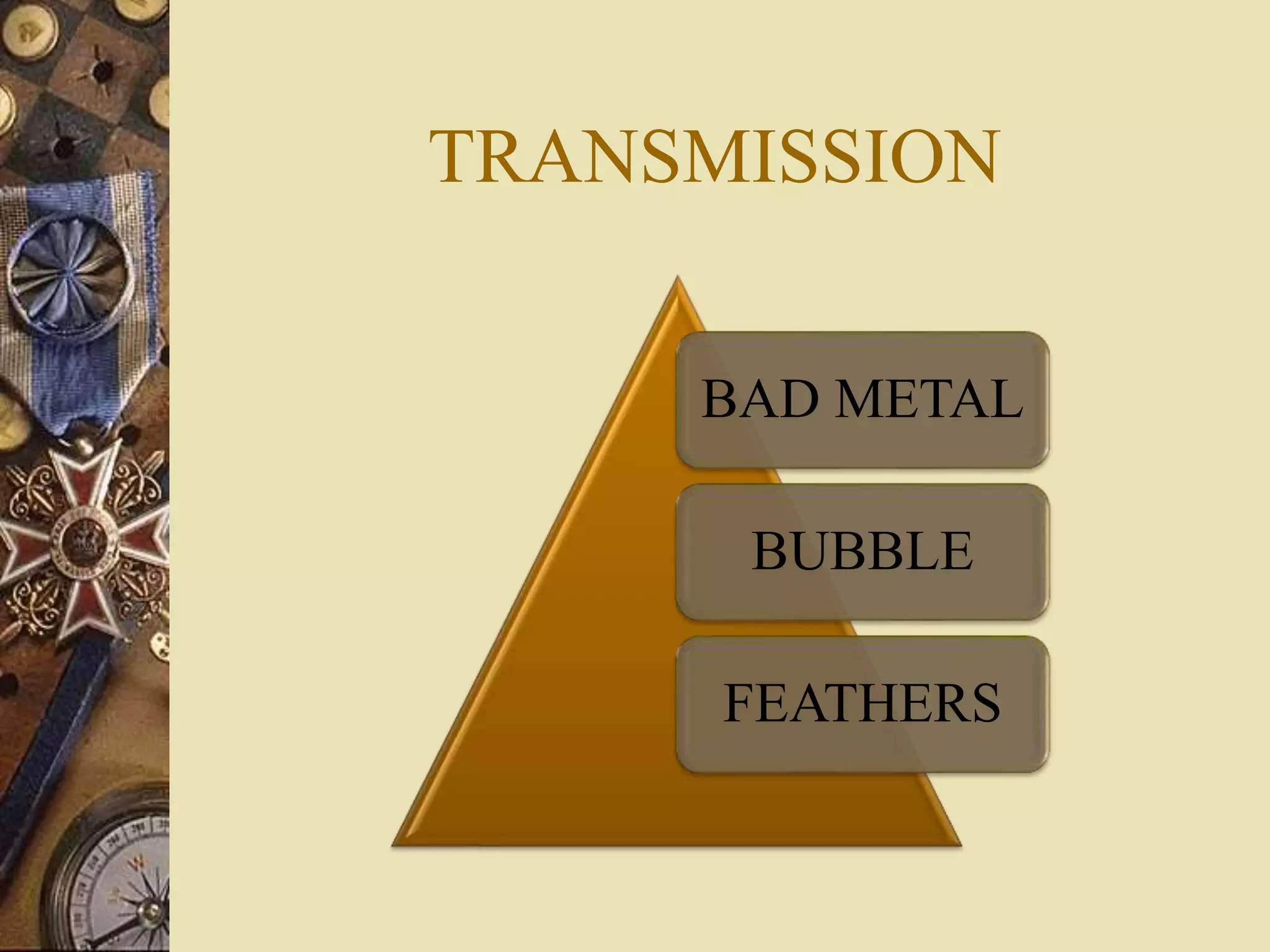
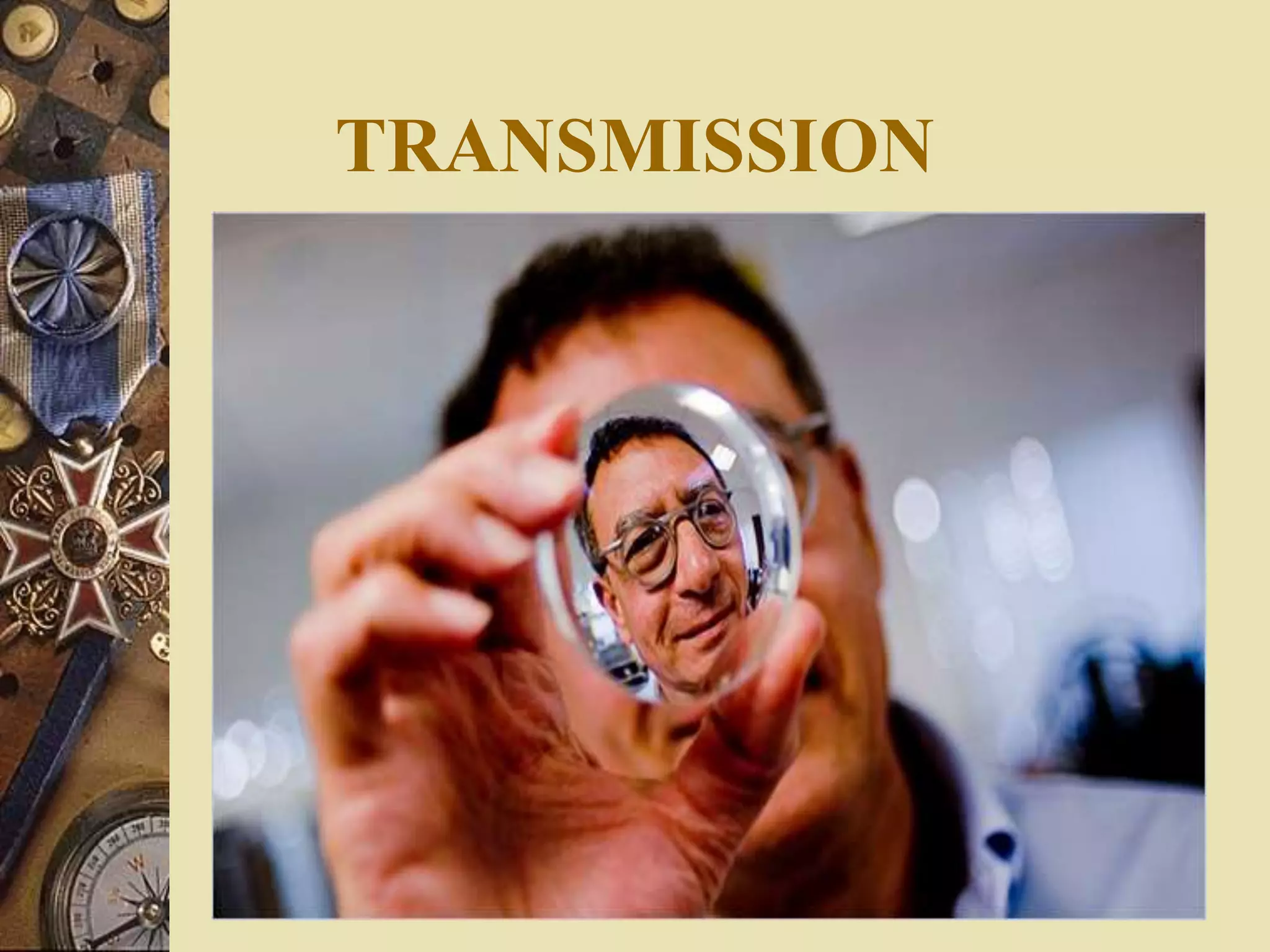
TRANSMISSION
BAD METAL
BUBBLE
FEATHERS
TRANSMISSION
BAD METAL
 Also known as “bad stock” or “stones”.
 The material must be free from any
inclusions or foreign particles that may
appear in generally due to portion of the
batch material remaining undissolved
during the melt.
BUBBLE
 Formed by the large volume of gas given
off during the melting period.
 size 1 mm diameter – seeds.
 They are as small as droplets in the glass.
 They are escaped and their escape is
promoted in the process of rapid stirring.
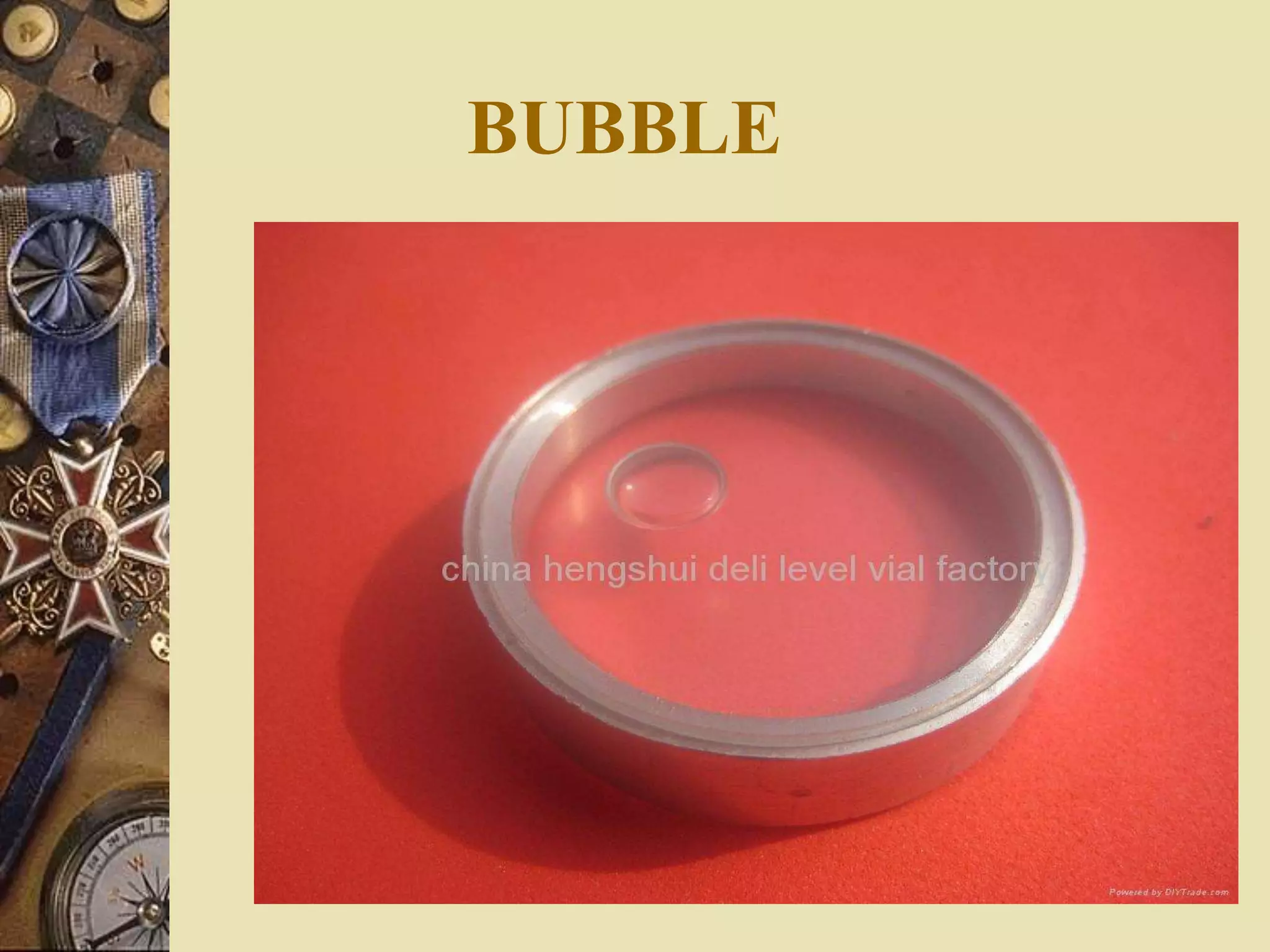
BUBBLE
FEATHERS
 A cluster of bubbles or seeds often around
bad metal takes on the appearance of a
small white feather in the glass.
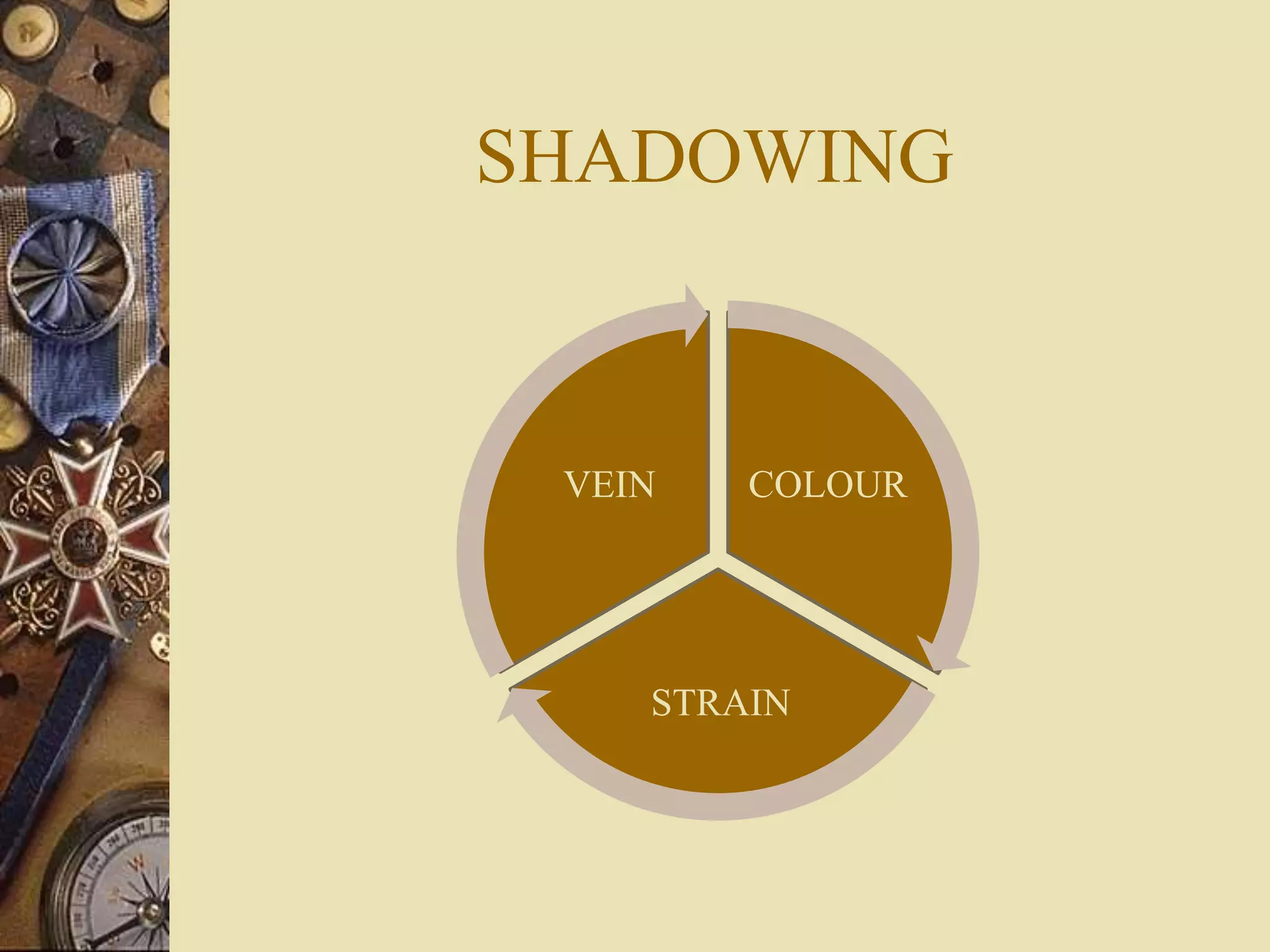
SHADOWING
COLOUR
STRAIN
VEIN
VEIN
 Fine thread or streak of glass of slightly
different refractive index to the
surrounding glass caused usually by
stirring.
 like a thin empty tube running through the
glass.
 There are caused by the insufficient mixing
of bad metal
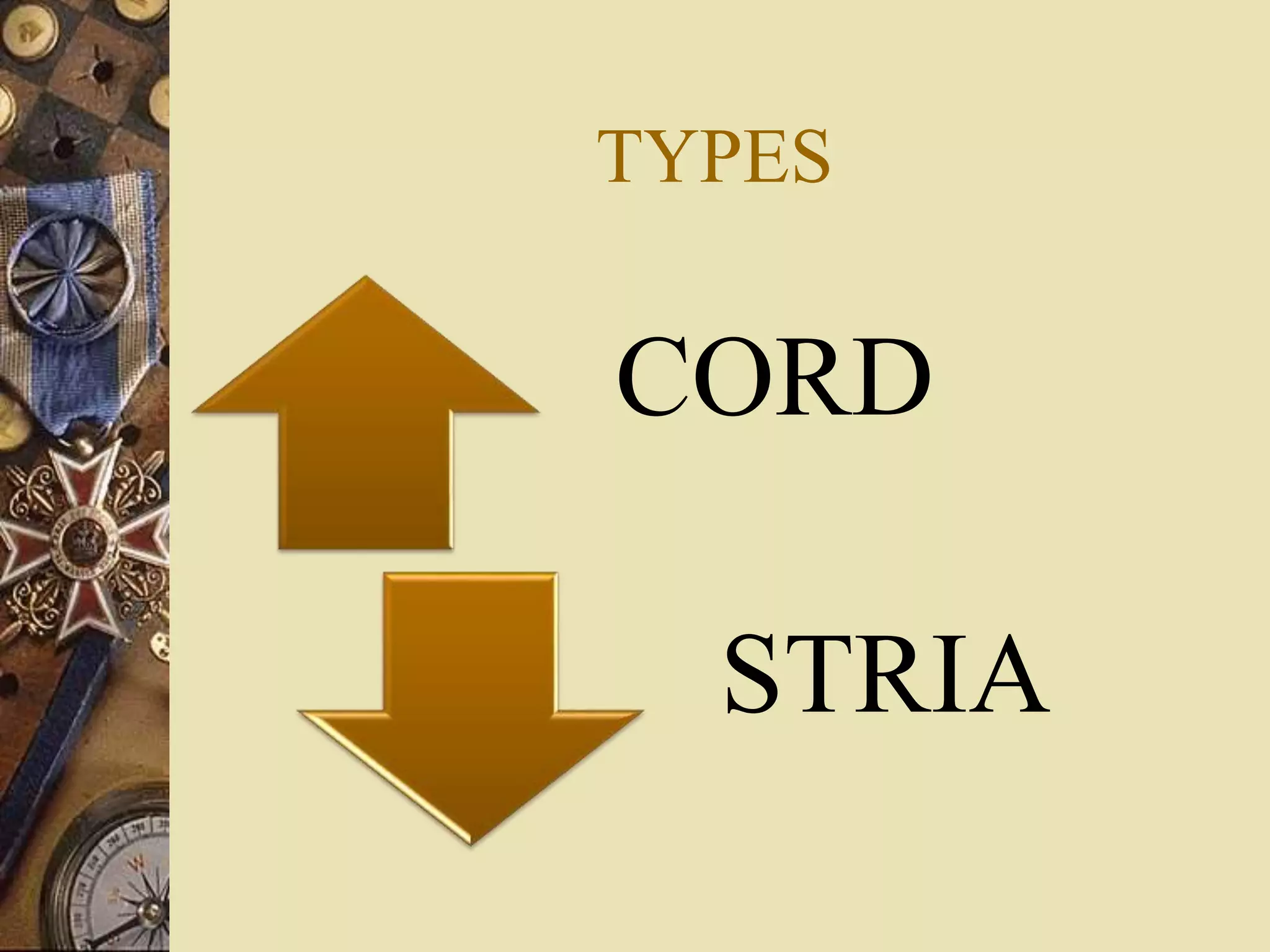
TYPES
CORD
STRIA
Two types:
a) Cord (S) – Heavy or pronounced veins.
b) Stria (S) – A very fine vein
COLOUR
 The medium from which a spectacle lens is
made have a high degree of clearness &
transparency
 The defect Color – is defined as any
unintended coloration in a medium which
is supposed to be white generally arises
from the use of impure materials in the
composition of the medium
 Any stress of iron oxide in silica, the
manufacturing glass causes unwanted
Green tinting.
 Certain high index material ingredients
will show slight yellowishness.
 Best detected on a matt white paper.
STRAIN
 If molten glasses allowed to cool too
rapidly the outer surfaces solidify before
the hotter inner portion. As the inner
portion then cools, it tends to shrink setting
up tension within the glass. The resulting
stress is called strain.
 May also arise if external forces are
allowed to compressed the glass.
 Glass may be inspected by means of
polariscope.
 The similar type of strain is seen if a tight
glazed glass is fitted in Frame.
DEFECT ON YHE SURFACE
OF THE LENS
Defects caused by
chemical or thermal action
During the production
Maltreatment of the
finished surface
DURING THE PRODUCTION
HOLE
GREYNESS
POLISHING BURN
WAVE
ORANGR PEEL DEFECT
GENERATOR MARK
RING
ROUNDING
CLOTHMARK
DRAG MARK
PAD MARK
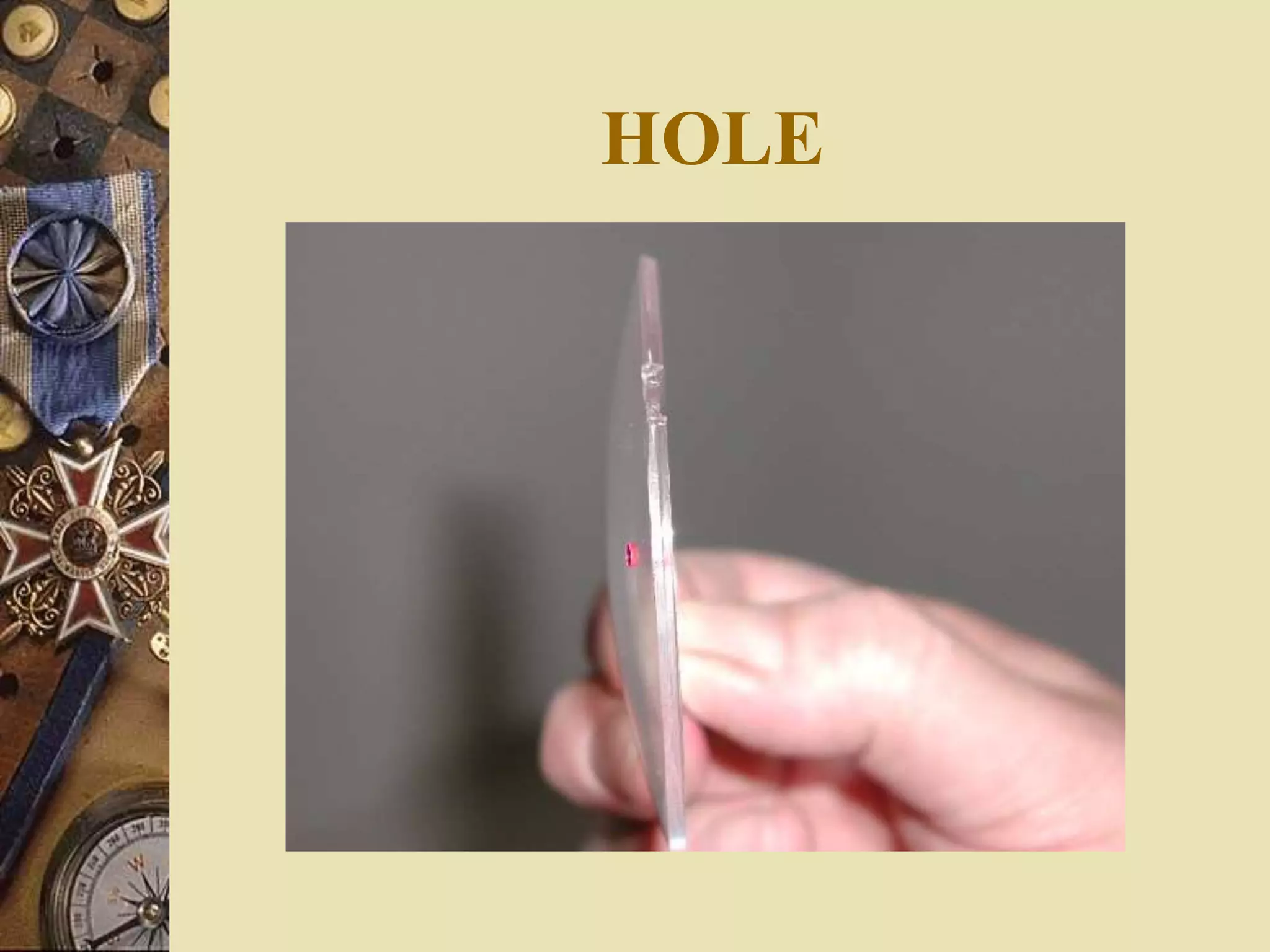
HOLE (R)
 It is also called as PIT.
 A pit in the lens surface which may be
caused by breaking into a bubble, or more
frequently by insufficient smoothing.
 It can lead to drag marks.
 It can be caused by breaking into covers.
HOLE
GREYNESS (R)
 The appearance of a surface after
incomplete polishing.
The surface still appear smooth.
Polishing process should be continued until
all signs of greyness disappear.
 It appears to be grey
POLISHING BURN (T)
 Heat is generated during the polishing pad.
 It is very common defect.
 Appearance of transparent blister or group
of blister on surface.
 During polishing if the lens surface is
allowed to get too hot, then by lack of
lubrication between the polishing pad and
lens, the polishing burn of glisters can
occur.
WAVE (T) (S)
 A wave is a surface undulation or ripple,
the surface changing curvature in the
region of the wave.
 It indicates not only the nature of the
surfaces, but also the method by which
they were produced.
 Can be attributed to faulty machine motion
or by polishing on a badly smoothed
surface or even over polishing.
ORANGE PEEL DEFECT (S)
 A form of waviness' named after its
appearance usually extending over the
entire surface of the lens.
 A defect that is closely related to a wave is
called as orange peel defect.
 Some say that this type of surface is a
water polish.
 The defect is really a type of wave and
looks like the peel of a orange.
GENERATOR MARK
 The most common type of unwanted
patterned surface marks are generator
marks.
 Generator marks are parallel , curved
marks across the surface of the lens.
 They are caused by the generator wheel.
 Light generator marks are normal after
generating.
 After fining and polishing, they should
not be visible.
 If generator marks do not disappear after
fining and polishing it is usually because
of one of the three problems:
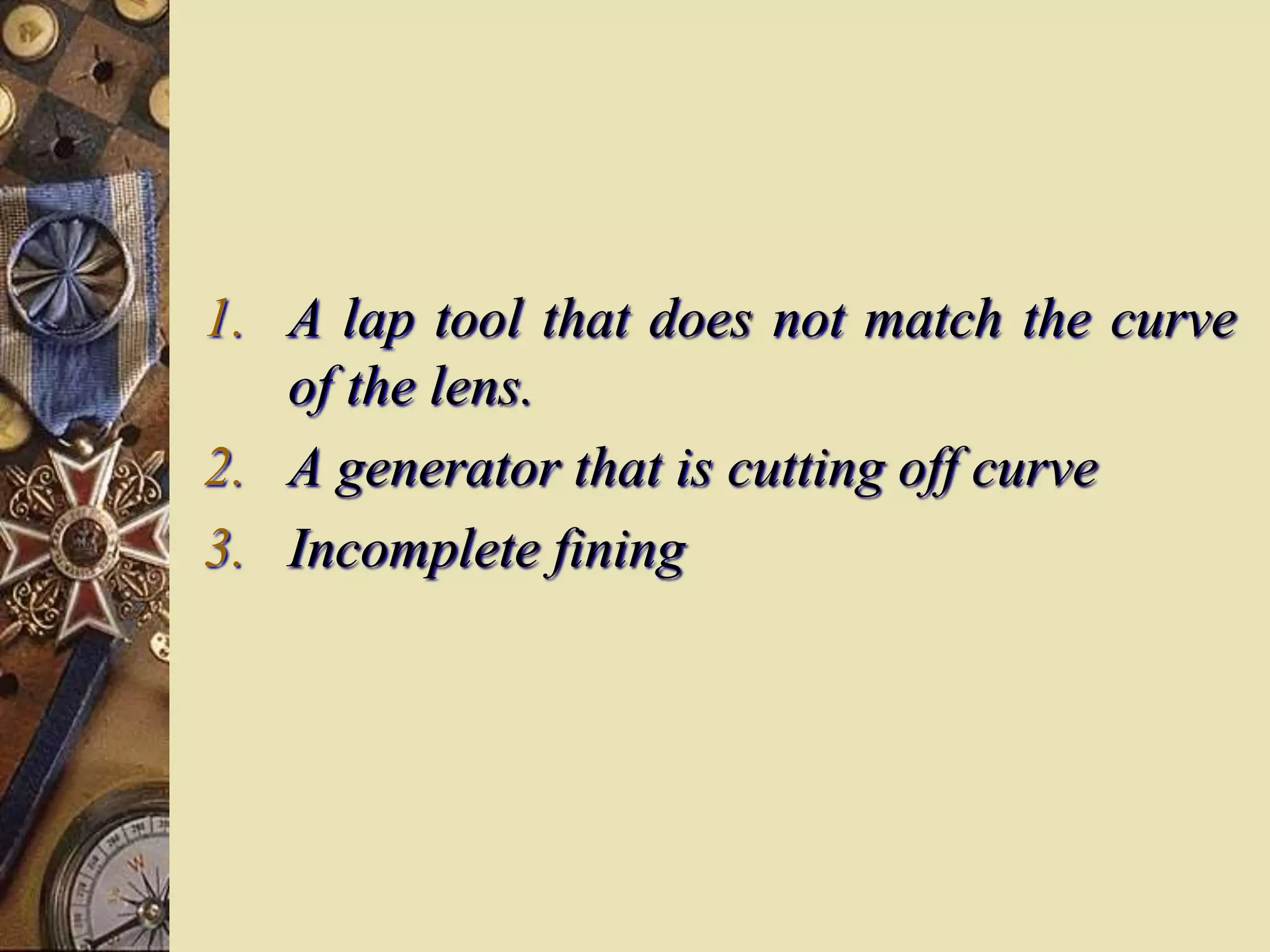
1. A lap tool that does not match the curve
of the lens.
2. A generator that is cutting off curve
3. Incomplete fining
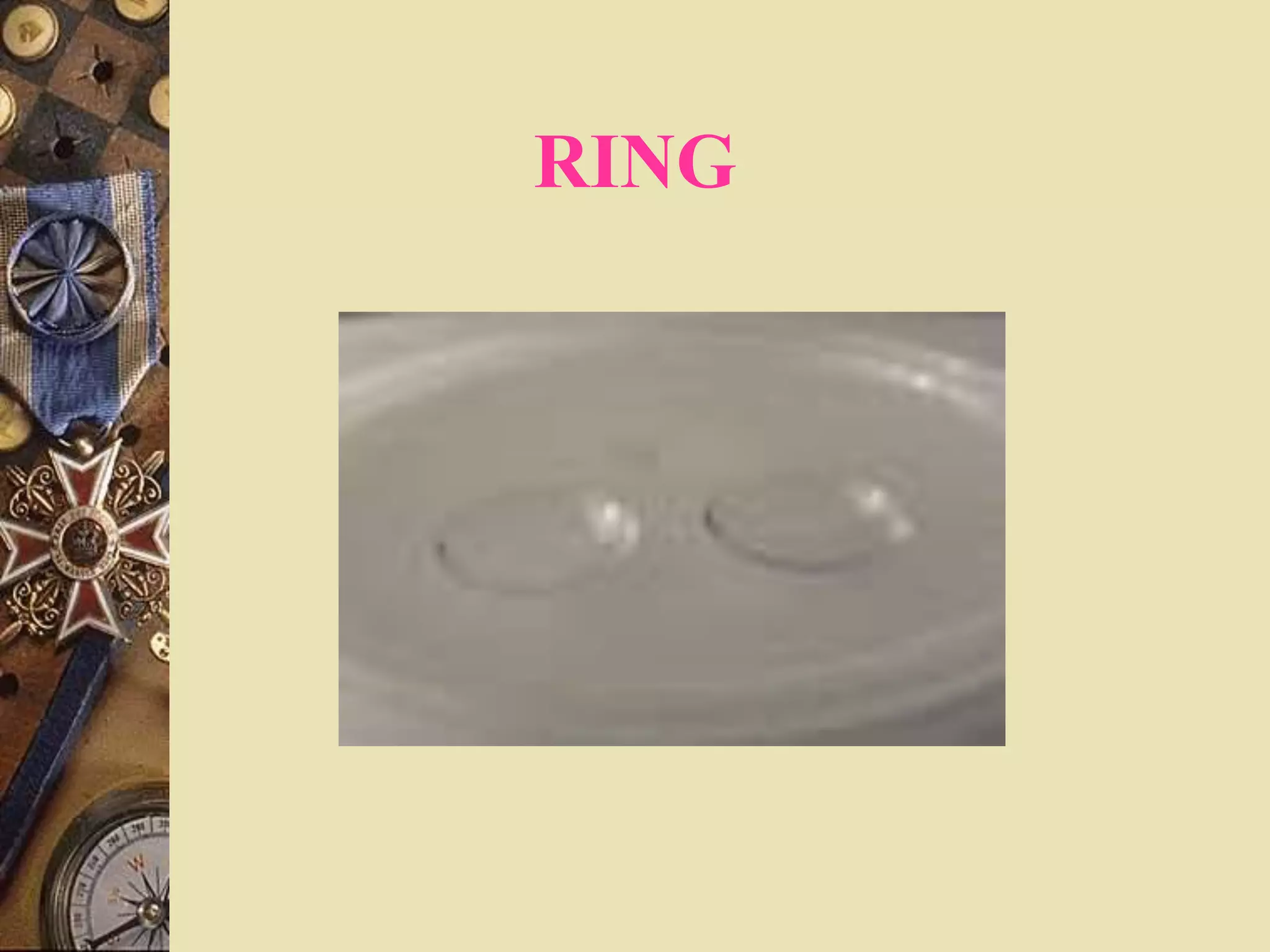
RING (T) (S)
 concentric waves produced on a spherical
surface.
RING
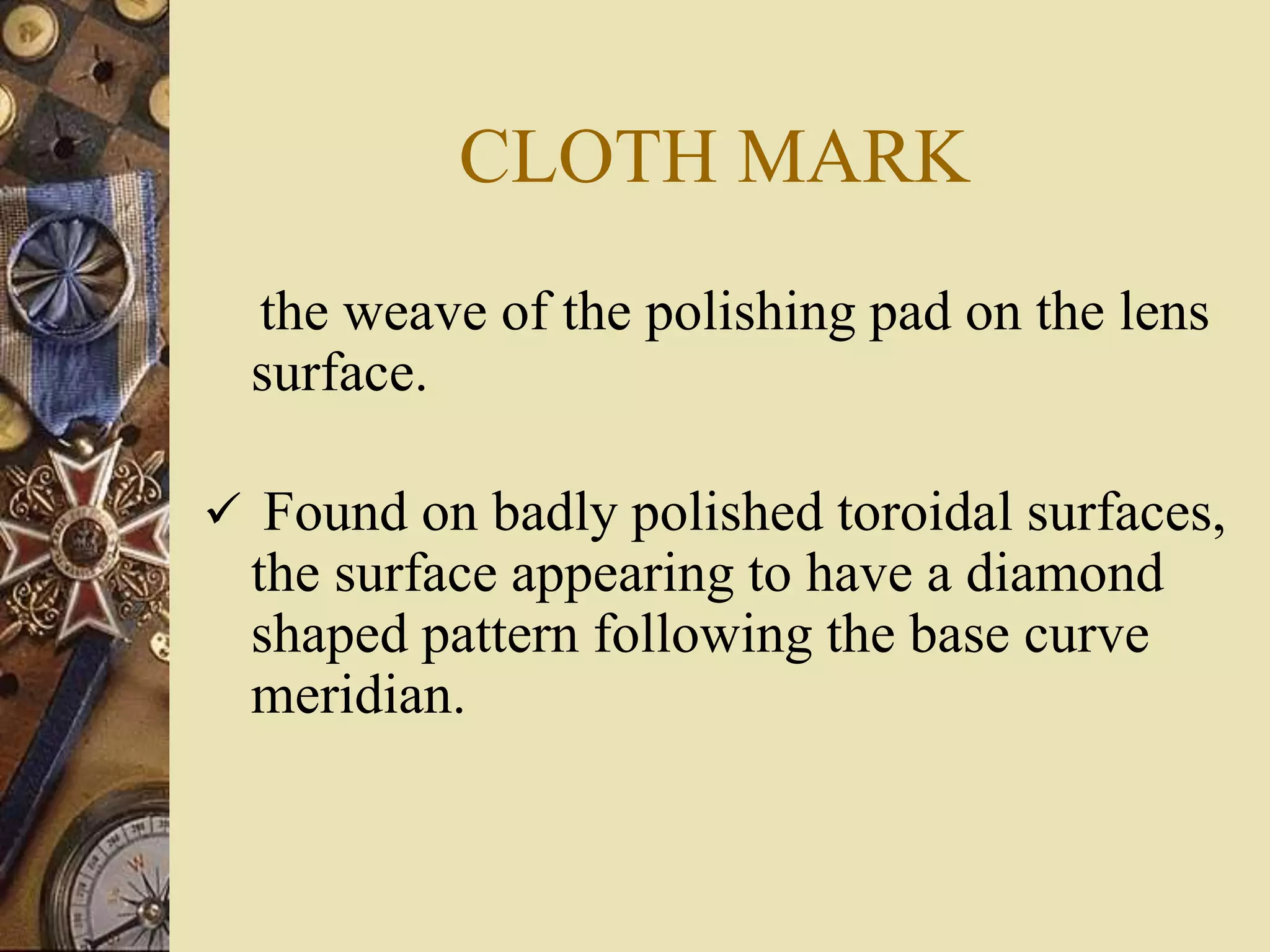
CLOTH MARK
the weave of the polishing pad on the lens
surface.
 Found on badly polished toroidal surfaces,
the surface appearing to have a diamond
shaped pattern following the base curve
meridian.
ROUNDING (S)
 A defect of figure at the edge of a lens
generally caused by excessive pressure
from a soft polishing pad towards the edge
of the lens.
DRAG MARK (S)
 A local wave usually associated with an
edge chip, the drag mark extending from
the chip & following the machine motion.
PAD MARK
 Can be experienced the form of the wave
duplicating the surface of the pad.
DEFECT CAUSED BY
CHEMICAL OR THERMAL
ACTION
CRASING
TARNISH
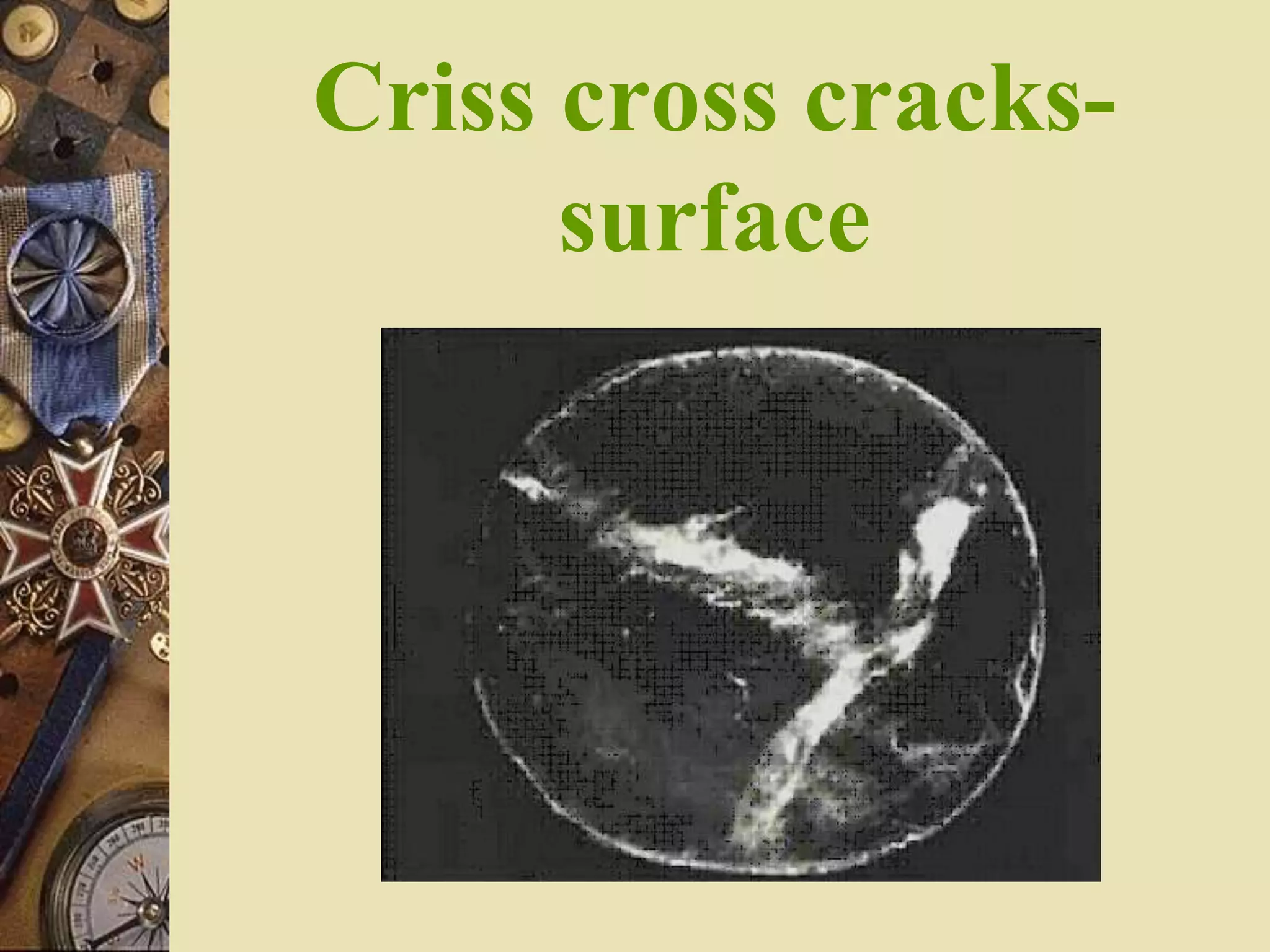
CRAZING (R)
 presenting the appearance of criss-cross
cracks in the surface.
 Usually caused in GLASS by sudden
chilling but in PLASTIC lenses it results
either from stress or solvent action.
Criss cross cracks-
surface
TARNISH (R)
 Chemical chances at the surface of the
lens, brought about by extreme
atmospheric conditions
 Flint glasses are particularly prone to this
defects
 Chemical changes at the surface.
 Lead in the material gets oxidized and lead
oxide is formed thus giving yellowish
colour
 High index lenses are particularly prone to
tarnish
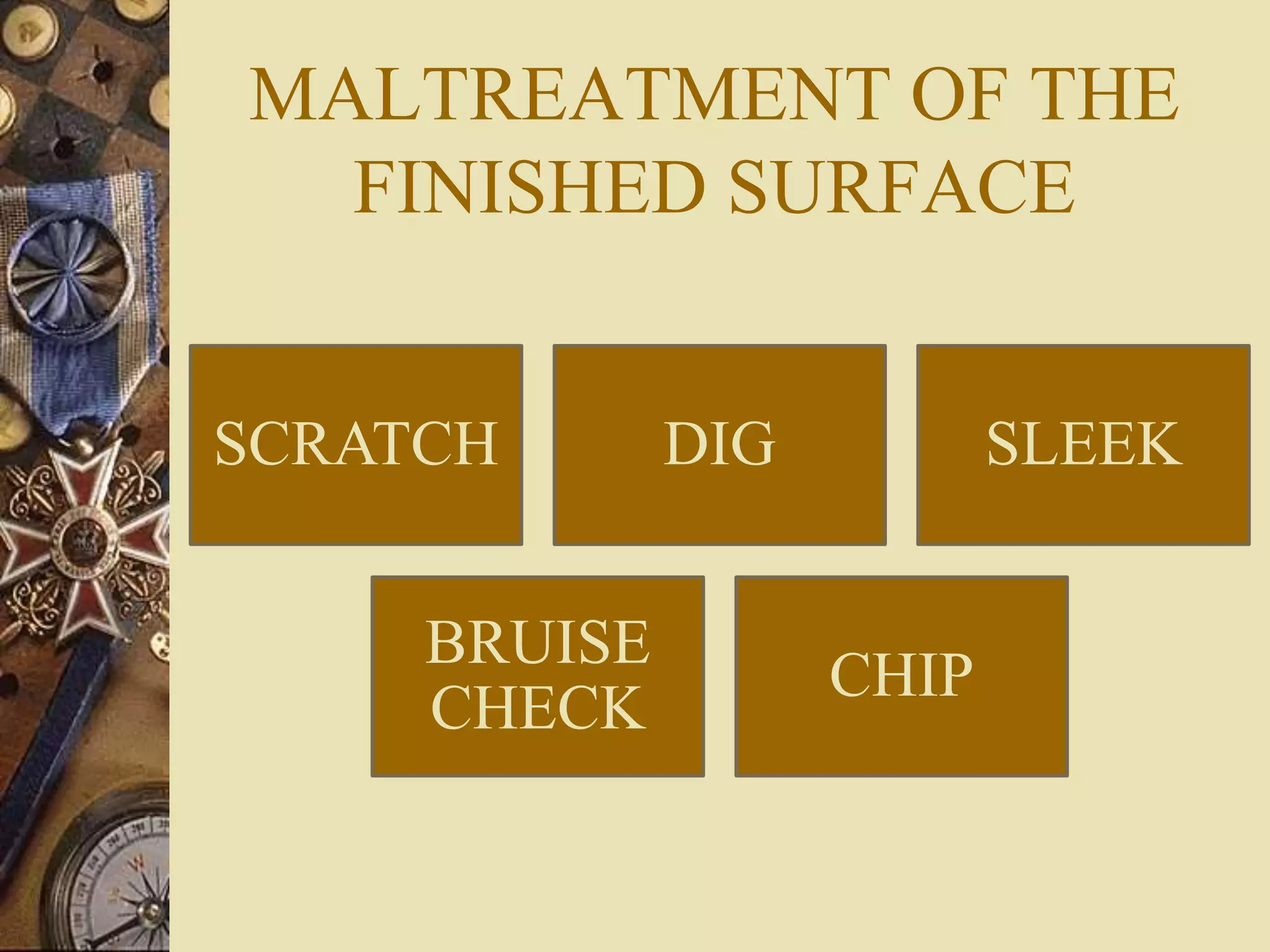
MALTREATMENT OF THE
FINISHED SURFACE
SCRATCH DIG SLEEK
BRUISE
CHECK
CHIP
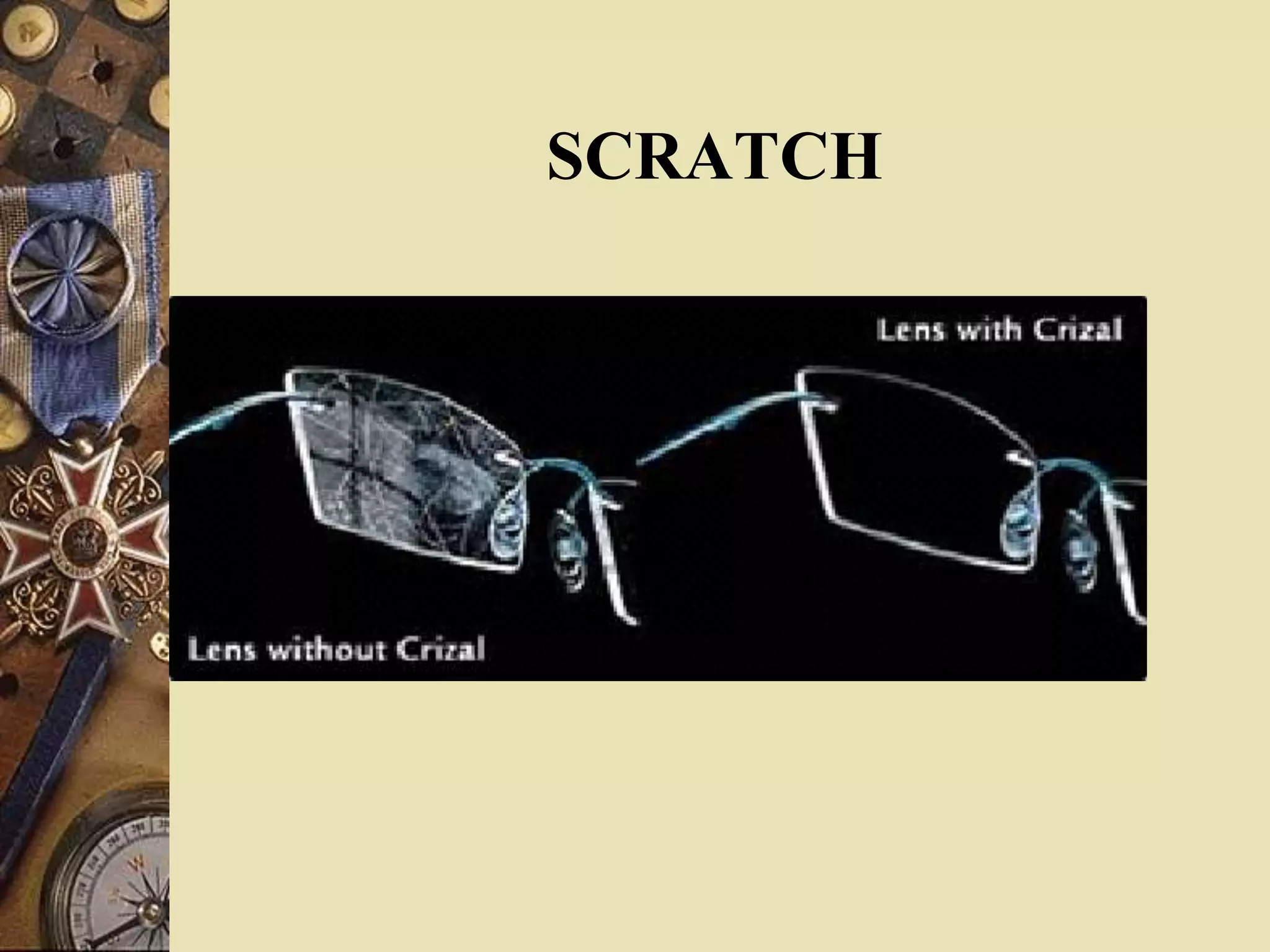
SCRATCH
 It may be found at any stage in the
grinding process.
 Elongated penetration on the surface with
jugged edge.
SCRATCH
CAUSED BY
 Penetration of surfaces characterized by
sharp edges
 Incorrect handling
 Contamination of polishing liquid
 Splintering of material.
DIG (R)
 A short scratch usually caused by striking
the lens with a sharp object or as a result of
dropping the lens.
SLEEK (R)
 an elongated penetration of the surface
without producing jagged edges.
 It may occur if a lens is cleaned with a
rough or dirty cloth.
CHIP (R)
 it occur at the edge of A Lens produced
either by impact on the edge or by tension
being applied by a spectacle frame.
BRUISE CHECK (R)
 it is a surface crack or fracture due to
impact on the surface of the glass.
 Crescent shape incomplete.
ABUSE MARK
 Term applied to cover surface defect
caused by bad handle.
NO TRANSMISSION
[T]
SHADOWING
[S]
REFLECTION
[R]
1. BAD METAL VEINS TARNISH
2. BUBBLES CORD CRAZING
3. FEATHERS STRIA HOLE
4. POLISHING
BURN
CLOTH
MARKS
GREYNESS
5. WAVES WAVES SCRATCH
6. RINGS RINGS DIG
7. DRAG
MARKS
SLEEK
8. ORANGE
PEAL
BRUISE
CHECK
9. ROUNDING CHIPS
10. ABUSE
MARKS
THANK
YOU

Fault

  • 1.
    FAULT MADE BY :SWATI PANARA FROM : BHARTIMAIYA COLLEGE OF OPTOMETRY 2nd YEAR 3rd SEMESTER
  • 2.
    OPHTHALMIC LENS  Itis the portion of the transparent medium bounded by two refracting surfaces of at least one of which is curved.
  • 3.
    FAULT  Fault isa defect before manufacture or after manufacture.
  • 4.
    MANUFACTURING OF AN OPTICALGLASS BATCH PROCESS CONTINOUS FLOW PROCESS
  • 5.
    DEFECT Defect in the materialof the lens Defect on the surface of the lens
  • 6.
    DEFECT IN THEMATERIAL OF THE LENS By looking directly through the lens – transmission (T) By using the technique – shadowing (S) Viewing the light reflected from the lens surfaces – reflection (R)
  • 7.
  • 8.
  • 9.
  • 10.
    BAD METAL  Alsoknown as “bad stock” or “stones”.  The material must be free from any inclusions or foreign particles that may appear in generally due to portion of the batch material remaining undissolved during the melt.
  • 11.
    BUBBLE  Formed bythe large volume of gas given off during the melting period.  size 1 mm diameter – seeds.  They are as small as droplets in the glass.  They are escaped and their escape is promoted in the process of rapid stirring.
  • 12.
  • 13.
    FEATHERS  A clusterof bubbles or seeds often around bad metal takes on the appearance of a small white feather in the glass.
  • 14.
  • 15.
    VEIN  Fine threador streak of glass of slightly different refractive index to the surrounding glass caused usually by stirring.  like a thin empty tube running through the glass.  There are caused by the insufficient mixing of bad metal
  • 16.
  • 17.
    Two types: a) Cord(S) – Heavy or pronounced veins. b) Stria (S) – A very fine vein
  • 18.
    COLOUR  The mediumfrom which a spectacle lens is made have a high degree of clearness & transparency  The defect Color – is defined as any unintended coloration in a medium which is supposed to be white generally arises from the use of impure materials in the composition of the medium
  • 19.
     Any stressof iron oxide in silica, the manufacturing glass causes unwanted Green tinting.  Certain high index material ingredients will show slight yellowishness.  Best detected on a matt white paper.
  • 20.
    STRAIN  If moltenglasses allowed to cool too rapidly the outer surfaces solidify before the hotter inner portion. As the inner portion then cools, it tends to shrink setting up tension within the glass. The resulting stress is called strain.  May also arise if external forces are allowed to compressed the glass.
  • 21.
     Glass maybe inspected by means of polariscope.  The similar type of strain is seen if a tight glazed glass is fitted in Frame.
  • 22.
    DEFECT ON YHESURFACE OF THE LENS Defects caused by chemical or thermal action During the production Maltreatment of the finished surface
  • 23.
    DURING THE PRODUCTION HOLE GREYNESS POLISHINGBURN WAVE ORANGR PEEL DEFECT GENERATOR MARK RING ROUNDING CLOTHMARK DRAG MARK PAD MARK
  • 24.
    HOLE (R)  Itis also called as PIT.  A pit in the lens surface which may be caused by breaking into a bubble, or more frequently by insufficient smoothing.  It can lead to drag marks.  It can be caused by breaking into covers.
  • 25.
  • 26.
    GREYNESS (R)  Theappearance of a surface after incomplete polishing. The surface still appear smooth. Polishing process should be continued until all signs of greyness disappear.  It appears to be grey
  • 27.
    POLISHING BURN (T) Heat is generated during the polishing pad.  It is very common defect.  Appearance of transparent blister or group of blister on surface.  During polishing if the lens surface is allowed to get too hot, then by lack of lubrication between the polishing pad and lens, the polishing burn of glisters can occur.
  • 28.
    WAVE (T) (S) A wave is a surface undulation or ripple, the surface changing curvature in the region of the wave.  It indicates not only the nature of the surfaces, but also the method by which they were produced.  Can be attributed to faulty machine motion or by polishing on a badly smoothed surface or even over polishing.
  • 29.
    ORANGE PEEL DEFECT(S)  A form of waviness' named after its appearance usually extending over the entire surface of the lens.  A defect that is closely related to a wave is called as orange peel defect.  Some say that this type of surface is a water polish.  The defect is really a type of wave and looks like the peel of a orange.
  • 30.
    GENERATOR MARK  Themost common type of unwanted patterned surface marks are generator marks.  Generator marks are parallel , curved marks across the surface of the lens.
  • 31.
     They arecaused by the generator wheel.  Light generator marks are normal after generating.
  • 32.
     After finingand polishing, they should not be visible.  If generator marks do not disappear after fining and polishing it is usually because of one of the three problems:
  • 33.
    1. A laptool that does not match the curve of the lens. 2. A generator that is cutting off curve 3. Incomplete fining
  • 34.
    RING (T) (S) concentric waves produced on a spherical surface.
  • 35.
  • 36.
    CLOTH MARK the weaveof the polishing pad on the lens surface.  Found on badly polished toroidal surfaces, the surface appearing to have a diamond shaped pattern following the base curve meridian.
  • 37.
    ROUNDING (S)  Adefect of figure at the edge of a lens generally caused by excessive pressure from a soft polishing pad towards the edge of the lens.
  • 38.
    DRAG MARK (S) A local wave usually associated with an edge chip, the drag mark extending from the chip & following the machine motion.
  • 39.
    PAD MARK  Canbe experienced the form of the wave duplicating the surface of the pad.
  • 40.
    DEFECT CAUSED BY CHEMICALOR THERMAL ACTION CRASING TARNISH
  • 41.
    CRAZING (R)  presentingthe appearance of criss-cross cracks in the surface.  Usually caused in GLASS by sudden chilling but in PLASTIC lenses it results either from stress or solvent action.
  • 42.
  • 43.
    TARNISH (R)  Chemicalchances at the surface of the lens, brought about by extreme atmospheric conditions  Flint glasses are particularly prone to this defects  Chemical changes at the surface.
  • 44.
     Lead inthe material gets oxidized and lead oxide is formed thus giving yellowish colour  High index lenses are particularly prone to tarnish
  • 45.
    MALTREATMENT OF THE FINISHEDSURFACE SCRATCH DIG SLEEK BRUISE CHECK CHIP
  • 46.
    SCRATCH  It maybe found at any stage in the grinding process.  Elongated penetration on the surface with jugged edge.
  • 47.
  • 48.
    CAUSED BY  Penetrationof surfaces characterized by sharp edges  Incorrect handling  Contamination of polishing liquid  Splintering of material.
  • 49.
    DIG (R)  Ashort scratch usually caused by striking the lens with a sharp object or as a result of dropping the lens.
  • 50.
    SLEEK (R)  anelongated penetration of the surface without producing jagged edges.  It may occur if a lens is cleaned with a rough or dirty cloth.
  • 51.
    CHIP (R)  itoccur at the edge of A Lens produced either by impact on the edge or by tension being applied by a spectacle frame.
  • 52.
    BRUISE CHECK (R) it is a surface crack or fracture due to impact on the surface of the glass.  Crescent shape incomplete.
  • 53.
    ABUSE MARK  Termapplied to cover surface defect caused by bad handle.
  • 54.
    NO TRANSMISSION [T] SHADOWING [S] REFLECTION [R] 1. BADMETAL VEINS TARNISH 2. BUBBLES CORD CRAZING 3. FEATHERS STRIA HOLE 4. POLISHING BURN CLOTH MARKS GREYNESS 5. WAVES WAVES SCRATCH 6. RINGS RINGS DIG 7. DRAG MARKS SLEEK 8. ORANGE PEAL BRUISE CHECK 9. ROUNDING CHIPS 10. ABUSE MARKS
  • 55.