VERTEX DISTANCE
AND POWER
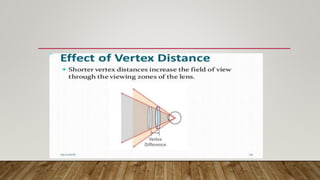
VERTEX DISTANCE
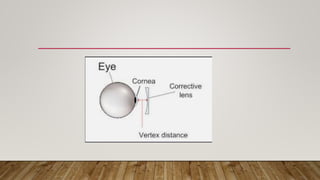
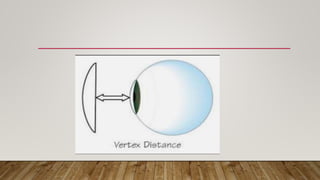
• Vertex distance is the distance between the back surface of a corrective lens,ie
spectacle or contact lens,and front to the cornea. Increasing or decreasing the
vertex distance changes the power of the lens relative to the eye
• Vertex distance is important when converting between contact lens and glasses
prescription and become significant if the glass prescriptions is beyond +/- 4.00D
• Standard vertex distance is about 12mm
LENS EFFECTIVITY
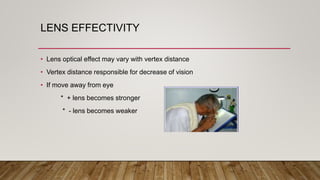
• Lens optical effect may vary with vertex distance
• Vertex distance responsible for decrease of vision
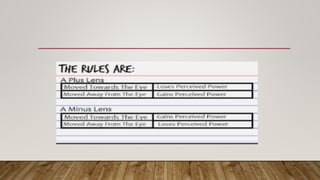
• If move away from eye
* + lens becomes stronger
* - lens becomes weaker
VD CHANGES AND THE EFFECT IN ‘+’LENS
• Increasing the vertex distance of plus lens will increase the effective power of the
lens
• Increasing the vertex distance of plus lens will decrease the effective power of
the lens
• Increasing the vertex distance of a minus lens will decrease the effective power of
the lens
• Decreasing the vertex distance of a minus lens will increasing the effective power
of the lens
VD CHANGES AND THE EFFECT IN MINUS LENS
In case of minus lens become weaker while it moving from the eye and become
stronger while it moving closure to the eye
. Magnification and minification can affected significantly by the VD
. Greater the VD ,greater the degree of magnification and minification
. Image size changes are minimized when VD is zero
SIGNIFICANCE OF VERTEX DISTANCE
• In prescription must have the same effective power as the refractive test
• The vertex distance of the phoropter/ trial frame must match the vertex distance
of the spectacle lenses
• A vertex distance become significant if the diopter power of the prescription
exceed 4.00D
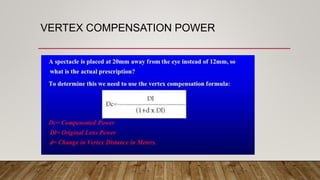
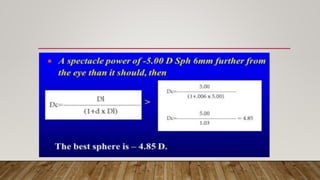
VERTEX COMPENSATION POWER
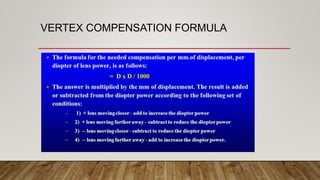
VERTEX COMPENSATION FORMULA
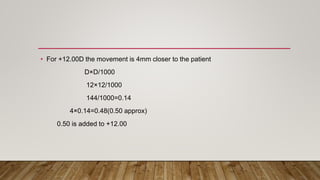
• For +12.00D the movement is 4mm closer to the patient
D×D/1000
12×12/1000
144/1000=0.14
4×0.14=0.48(0.50 approx)
0.50 is added to +12.00
• Note: if the prescription has a significant cylinder power(at least)we must perform
the calculation for the primary meridian of the power
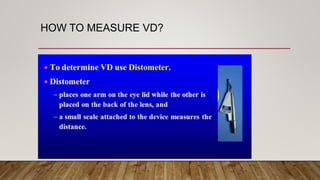
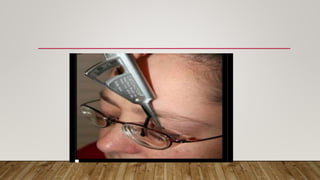
HOW TO MEASURE VD?
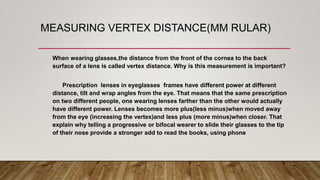
MEASURING VERTEX DISTANCE(MM RULAR)
When wearing glasses,the distance from the front of the cornea to the back
surface of a lens is called vertex distance. Why is this measurement is important?
Prescription lenses in eyeglasses frames have different power at different
distance, tilt and wrap angles from the eye. That means that the same prescription
on two different people, one wearing lenses farther than the other would actually
have different power. Lenses becomes more plus(less minus)when moved away
from the eye (increasing the vertex)and less plus (more minus)when closer. That
explain why telling a progressive or bifocal wearer to slide their glasses to the tip
of their nose provide a stronger add to read the books, using phone
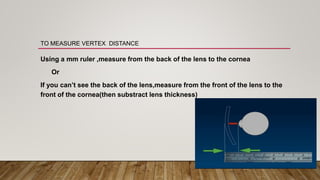
Using a mm ruler ,measure from the back of the lens to the cornea
Or
If you can’t see the back of the lens,measure from the front of the lens to the
front of the cornea(then substract lens thickness)
TO MEASURE VERTEX DISTANCE
WHAT IS VERTEX DISTANCE(BVD)TYPICALLY
USED FOR GLASSES PRESCRIPTION?
• The vertex distance is depend on the frame and how it site on your nose and
face. The lens prescription is often derived or assumed to be 13.5mm when
frames are chosen ,the vertex distance of the chosen frame doesn’t have to equal
13.5mm for low powered lenses. At the higher power the power seen by the eye
will be different than the written prescription
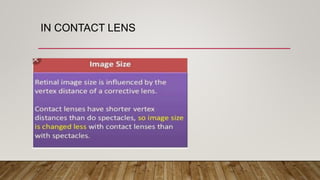
IN CONTACT LENS
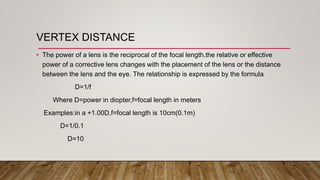
VERTEX DISTANCE
• The power of a lens is the reciprocal of the focal length,the relative or effective
power of a corrective lens changes with the placement of the lens or the distance
between the lens and the eye. The relationship is expressed by the formula
D=1/f
Where D=power in diopter,f=focal length in meters
Examples:in a +1.00D,f=focal length is 10cm(0.1m)
D=1/0.1
D=10
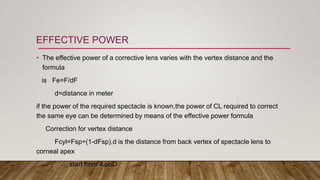
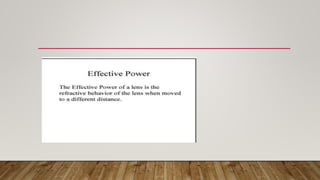
EFFECTIVE POWER
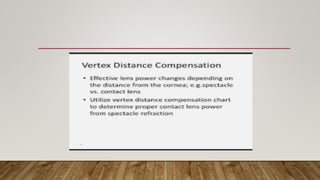
• The effective power of a corrective lens varies with the vertex distance and the
formula
is Fe=F/dF
d=distance in meter
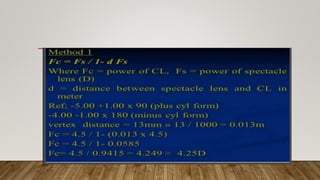
if the power of the required spectacle is known,the power of CL required to correct
the same eye can be determined by means of the effective power formula
Correction for vertex distance
Fcyl=Fsp÷(1-dFsp),d is the distance from back vertex of spectacle lens to
corneal apex
start from 4.ooD
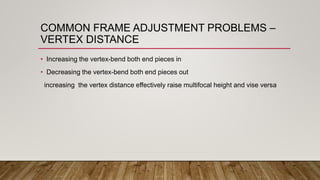
COMMON FRAME ADJUSTMENT PROBLEMS –
VERTEX DISTANCE
• Increasing the vertex-bend both end pieces in
• Decreasing the vertex-bend both end pieces out
increasing the vertex distance effectively raise multifocal height and vise versa
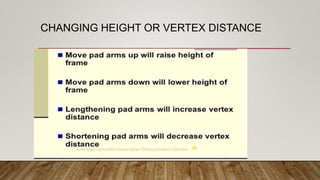
CHANGING HEIGHT OR VERTEX DISTANCE
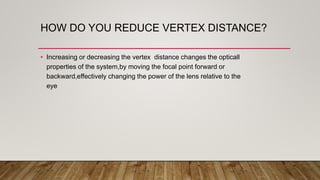
HOW DO YOU REDUCE VERTEX DISTANCE?
• Increasing or decreasing the vertex distance changes the opticall
properties of the system,by moving the focal point forward or
backward,effectively changing the power of the lens relative to the
eye
PRACTICAL APPLICATION
EXAMPLES
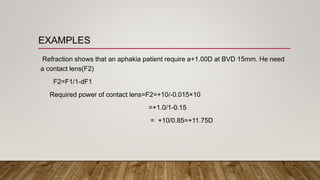
Refraction shows that an aphakia patient require a+1.00D at BVD 15mm. He need
a contact lens(F2)
F2=F1/1-dF1
Required power of contact lens=F2=+10/-0.015×10
=+1.0/1-0.15
= +10/0.85=+11.75D
Likewise a high myopia whose spectacle correction is -10.00D at BVD 14mm
require a contact lens (f2)
F2=f1/1-df1
Power of contact lens=f2=-10/1-[+0.014+(-10)]
=-10/1-0.14
=-10/1.14=-8.75D
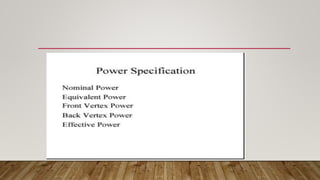
EQUIVALENT POWER
• Also called True power
• Used to specify low vision device
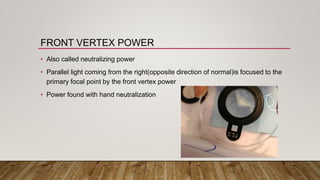
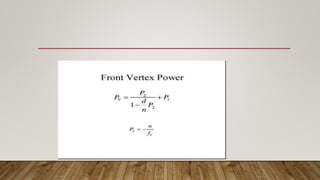
FRONT VERTEX POWER
• Also called neutralizing power
• Parallel light coming from the right(opposite direction of normal)is focused to the
primary focal point by the front vertex power
• Power found with hand neutralization
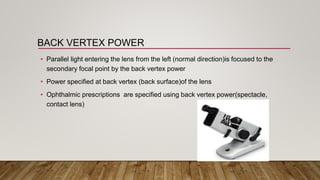
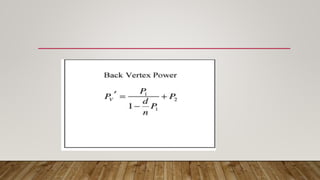
BACK VERTEX POWER
• Parallel light entering the lens from the left (normal direction)is focused to the
secondary focal point by the back vertex power
• Power specified at back vertex (back surface)of the lens
• Ophthalmic prescriptions are specified using back vertex power(spectacle,
contact lens)
PRESCRIPTION:VERTEX POWER
• Vertex distance- distance between the ophthalmic lens and the front of the
patient’s
• Effective power-change in the prescription when the distance varies from the
normally refractive 13.5mm distance to where the patient’s wear the prescription
• Concerned with high prescription (-/+4.00)
THANK YOU

Vertex distance and power

  • 1.
  • 2.
    VERTEX DISTANCE • Vertexdistance is the distance between the back surface of a corrective lens,ie spectacle or contact lens,and front to the cornea. Increasing or decreasing the vertex distance changes the power of the lens relative to the eye • Vertex distance is important when converting between contact lens and glasses prescription and become significant if the glass prescriptions is beyond +/- 4.00D • Standard vertex distance is about 12mm
  • 4.
    LENS EFFECTIVITY • Lensoptical effect may vary with vertex distance • Vertex distance responsible for decrease of vision • If move away from eye * + lens becomes stronger * - lens becomes weaker
  • 5.
    VD CHANGES ANDTHE EFFECT IN ‘+’LENS • Increasing the vertex distance of plus lens will increase the effective power of the lens • Increasing the vertex distance of plus lens will decrease the effective power of the lens
  • 6.
    • Increasing thevertex distance of a minus lens will decrease the effective power of the lens • Decreasing the vertex distance of a minus lens will increasing the effective power of the lens VD CHANGES AND THE EFFECT IN MINUS LENS
  • 7.
    In case ofminus lens become weaker while it moving from the eye and become stronger while it moving closure to the eye . Magnification and minification can affected significantly by the VD . Greater the VD ,greater the degree of magnification and minification . Image size changes are minimized when VD is zero
  • 10.
    SIGNIFICANCE OF VERTEXDISTANCE • In prescription must have the same effective power as the refractive test • The vertex distance of the phoropter/ trial frame must match the vertex distance of the spectacle lenses • A vertex distance become significant if the diopter power of the prescription exceed 4.00D
  • 12.
  • 14.
  • 15.
    • For +12.00Dthe movement is 4mm closer to the patient D×D/1000 12×12/1000 144/1000=0.14 4×0.14=0.48(0.50 approx) 0.50 is added to +12.00
  • 16.
    • Note: ifthe prescription has a significant cylinder power(at least)we must perform the calculation for the primary meridian of the power
  • 17.
  • 19.
    MEASURING VERTEX DISTANCE(MMRULAR) When wearing glasses,the distance from the front of the cornea to the back surface of a lens is called vertex distance. Why is this measurement is important? Prescription lenses in eyeglasses frames have different power at different distance, tilt and wrap angles from the eye. That means that the same prescription on two different people, one wearing lenses farther than the other would actually have different power. Lenses becomes more plus(less minus)when moved away from the eye (increasing the vertex)and less plus (more minus)when closer. That explain why telling a progressive or bifocal wearer to slide their glasses to the tip of their nose provide a stronger add to read the books, using phone
  • 20.
    Using a mmruler ,measure from the back of the lens to the cornea Or If you can’t see the back of the lens,measure from the front of the lens to the front of the cornea(then substract lens thickness) TO MEASURE VERTEX DISTANCE
  • 21.
    WHAT IS VERTEXDISTANCE(BVD)TYPICALLY USED FOR GLASSES PRESCRIPTION? • The vertex distance is depend on the frame and how it site on your nose and face. The lens prescription is often derived or assumed to be 13.5mm when frames are chosen ,the vertex distance of the chosen frame doesn’t have to equal 13.5mm for low powered lenses. At the higher power the power seen by the eye will be different than the written prescription
  • 22.
  • 23.
    VERTEX DISTANCE • Thepower of a lens is the reciprocal of the focal length,the relative or effective power of a corrective lens changes with the placement of the lens or the distance between the lens and the eye. The relationship is expressed by the formula D=1/f Where D=power in diopter,f=focal length in meters Examples:in a +1.00D,f=focal length is 10cm(0.1m) D=1/0.1 D=10
  • 24.
    EFFECTIVE POWER • Theeffective power of a corrective lens varies with the vertex distance and the formula is Fe=F/dF d=distance in meter if the power of the required spectacle is known,the power of CL required to correct the same eye can be determined by means of the effective power formula Correction for vertex distance Fcyl=Fsp÷(1-dFsp),d is the distance from back vertex of spectacle lens to corneal apex start from 4.ooD
  • 26.
    COMMON FRAME ADJUSTMENTPROBLEMS – VERTEX DISTANCE • Increasing the vertex-bend both end pieces in • Decreasing the vertex-bend both end pieces out increasing the vertex distance effectively raise multifocal height and vise versa
  • 27.
    CHANGING HEIGHT ORVERTEX DISTANCE
  • 28.
    HOW DO YOUREDUCE VERTEX DISTANCE? • Increasing or decreasing the vertex distance changes the opticall properties of the system,by moving the focal point forward or backward,effectively changing the power of the lens relative to the eye
  • 29.
  • 32.
    EXAMPLES Refraction shows thatan aphakia patient require a+1.00D at BVD 15mm. He need a contact lens(F2) F2=F1/1-dF1 Required power of contact lens=F2=+10/-0.015×10 =+1.0/1-0.15 = +10/0.85=+11.75D
  • 33.
    Likewise a highmyopia whose spectacle correction is -10.00D at BVD 14mm require a contact lens (f2) F2=f1/1-df1 Power of contact lens=f2=-10/1-[+0.014+(-10)] =-10/1-0.14 =-10/1.14=-8.75D
  • 38.
    EQUIVALENT POWER • Alsocalled True power • Used to specify low vision device
  • 39.
    FRONT VERTEX POWER •Also called neutralizing power • Parallel light coming from the right(opposite direction of normal)is focused to the primary focal point by the front vertex power • Power found with hand neutralization
  • 41.
    BACK VERTEX POWER •Parallel light entering the lens from the left (normal direction)is focused to the secondary focal point by the back vertex power • Power specified at back vertex (back surface)of the lens • Ophthalmic prescriptions are specified using back vertex power(spectacle, contact lens)
  • 44.
    PRESCRIPTION:VERTEX POWER • Vertexdistance- distance between the ophthalmic lens and the front of the patient’s • Effective power-change in the prescription when the distance varies from the normally refractive 13.5mm distance to where the patient’s wear the prescription • Concerned with high prescription (-/+4.00)
  • 45.