CR – 39 LENSES
MADE BY: SWATI PANARA
FROM : BHARTIMAIYA COLLEGE OF
OPTOMETRY
2nd YEAR 4th SEMESTER
1
CR - 39
• It is also called as Columbia resin or
allyl diglycol carbonate.
• CR – 39 or allyl diglycol carbonate is
a plastic polymer commonly used in
manufacture of eyeglass lenses.
• It was developed by Pittsburgh
Plate Glass industries.
• It is the thermosetting material.
2
• CR stands for Columbia Resin & it
is 39th formula of a thermosetting
plastic developed by the Columbia
resin project of PPG industries back
in 1940.
• “CR” stands for Columbia Resin, and
the number 39 denotes the type of
Columbia Resin used.
3
• COLUMBIA RESIN batch no. 39
• Petroleum derivative from polyester
group
• Chemically diallyglycol carbonate
• Refractive index = 1.498
• Specific Gravity = 1.32
• Abbe value = 58
• Transparency = 92.2 %
• UV cutoff = 355 nm
4
• For years CR- 39 was used without
anti scratch coating.
• Now, however, most CR-39 lenses
come with an anti scratch coating,
making the material much more
scratch resistant.
• For smaller, high velocity, sharply
pointed objects, CR-39 lenses
perform better than chemically
tempered glass.
5
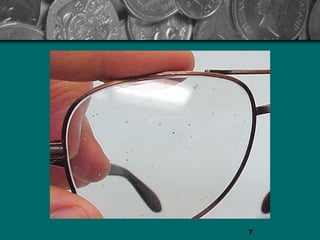
• CR-39 plastic lenses do not fog up
as easily as glass lenses.
• Whereas welding or grinding spatter
will pit or permanently stick to glass
lenses, it does not adhere to plastic
lens material.
6
7
• The material is highly impact
resistant and carries high
transparency.
• Multiple tinting and coating is
possible.
• only drawback is weak resistant to
abrasion.
8
ADVANTAGES
• High impact resistance
• Light in weight
• Resistance to chemicals and solvents
• Resistance to heat & temperature
fluctuations
• Available in photo chromic glasses
• U.V. protection
• Can be tinted & coated
• Inexpensive
9
characteristics
• Lightness
• Impact resistance
• Chemical inertness
• Resistance to pitting
• Resistance to fogging
• Tint ability
• Versatility in optical design
10
DISADVANTAGES
• Low scratch resistance i.e.
scratches are easily formed
• Increase thickness
• Index variability with temperature
• Inferior photo chromic properties
• Surface abrasion
• Warp age upon glazing
11
• Can yellow with age
• Softer material surface – scratches
more easily
• Lower refractive index and
variability with temp.
12
•THANK
YOU
13

Cr – 39 lenses

  • 1.
    CR – 39LENSES MADE BY: SWATI PANARA FROM : BHARTIMAIYA COLLEGE OF OPTOMETRY 2nd YEAR 4th SEMESTER 1
  • 2.
    CR - 39 •It is also called as Columbia resin or allyl diglycol carbonate. • CR – 39 or allyl diglycol carbonate is a plastic polymer commonly used in manufacture of eyeglass lenses. • It was developed by Pittsburgh Plate Glass industries. • It is the thermosetting material. 2
  • 3.
    • CR standsfor Columbia Resin & it is 39th formula of a thermosetting plastic developed by the Columbia resin project of PPG industries back in 1940. • “CR” stands for Columbia Resin, and the number 39 denotes the type of Columbia Resin used. 3
  • 4.
    • COLUMBIA RESINbatch no. 39 • Petroleum derivative from polyester group • Chemically diallyglycol carbonate • Refractive index = 1.498 • Specific Gravity = 1.32 • Abbe value = 58 • Transparency = 92.2 % • UV cutoff = 355 nm 4
  • 5.
    • For yearsCR- 39 was used without anti scratch coating. • Now, however, most CR-39 lenses come with an anti scratch coating, making the material much more scratch resistant. • For smaller, high velocity, sharply pointed objects, CR-39 lenses perform better than chemically tempered glass. 5
  • 6.
    • CR-39 plasticlenses do not fog up as easily as glass lenses. • Whereas welding or grinding spatter will pit or permanently stick to glass lenses, it does not adhere to plastic lens material. 6
  • 7.
  • 8.
    • The materialis highly impact resistant and carries high transparency. • Multiple tinting and coating is possible. • only drawback is weak resistant to abrasion. 8
  • 9.
    ADVANTAGES • High impactresistance • Light in weight • Resistance to chemicals and solvents • Resistance to heat & temperature fluctuations • Available in photo chromic glasses • U.V. protection • Can be tinted & coated • Inexpensive 9
  • 10.
    characteristics • Lightness • Impactresistance • Chemical inertness • Resistance to pitting • Resistance to fogging • Tint ability • Versatility in optical design 10
  • 11.
    DISADVANTAGES • Low scratchresistance i.e. scratches are easily formed • Increase thickness • Index variability with temperature • Inferior photo chromic properties • Surface abrasion • Warp age upon glazing 11
  • 12.
    • Can yellowwith age • Softer material surface – scratches more easily • Lower refractive index and variability with temp. 12
  • 13.