Shores and Coastal
Processes
Goal
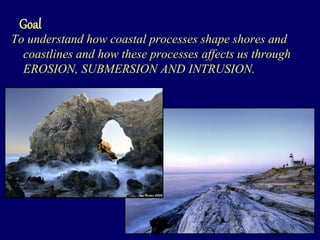
To understand how coastal processes shape shores and
coastlines and how these processes affects us through
EROSION, SUBMERSION AND INTRUSION.
Coast and shore defined
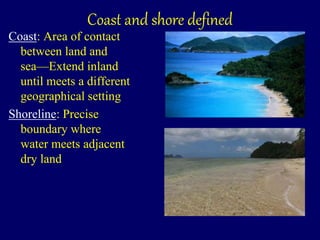
Coast: Area of contact
between land and
sea—Extend inland
until meets a different
geographical setting
Shoreline: Precise
boundary where
water meets adjacent
dry land
Waves and Tides
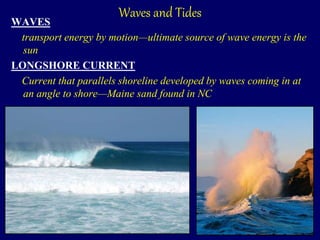
WAVES
transport energy by motion—ultimate source of wave energy is the
sun
LONGSHORE CURRENT
Current that parallels shoreline developed by waves coming in at
an angle to shore—Maine sand found in NC
Waves and Tides
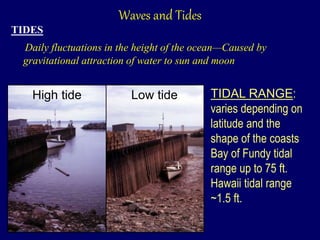
TIDES
Daily fluctuations in the height of the ocean—Caused by
gravitational attraction of water to sun and moon
TIDAL RANGE:
varies depending on
latitude and the
shape of the coasts
Bay of Fundy tidal
range up to 75 ft.
Hawaii tidal range
~1.5 ft.
High tide Low tide
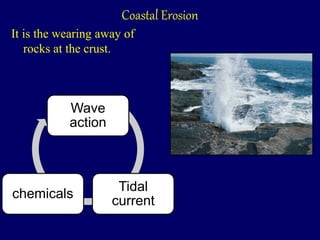
Coastal Erosion
It is the wearing away of
rocks at the crust.
Wave
action
Tidal
current
chemicals
Coastal Erosion
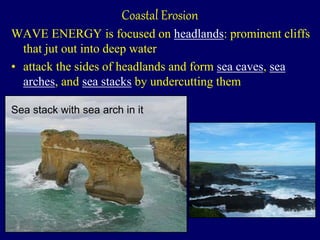
WAVE ENERGY is focused on headlands: prominent cliffs
that jut out into deep water
• attack the sides of headlands and form sea caves, sea
arches, and sea stacks by undercutting them
Sea stack with sea arch in it
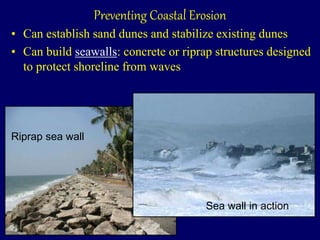
Preventing Coastal Erosion
• Can establish sand dunes and stabilize existing dunes
• Can build seawalls: concrete or riprap structures designed
to protect shoreline from waves
Riprap sea wall
Sea wall in action
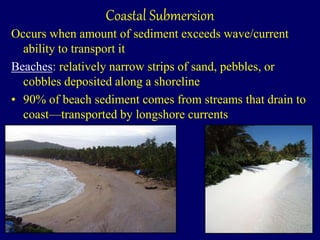
Coastal Submersion
Occurs when amount of sediment exceeds wave/current
ability to transport it
Beaches: relatively narrow strips of sand, pebbles, or
cobbles deposited along a shoreline
• 90% of beach sediment comes from streams that drain to
coast—transported by longshore currents
Coastal Submersion
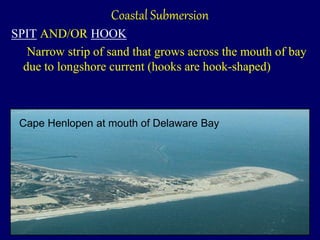
SPIT AND/OR HOOK
Narrow strip of sand that grows across the mouth of bay
due to longshore current (hooks are hook-shaped)
Cape Henlopen at mouth of Delaware Bay
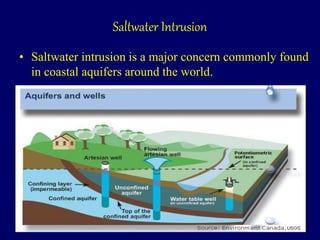
Saltwater Intrusion
• Saltwater intrusion is a major concern commonly found
in coastal aquifers around the world.
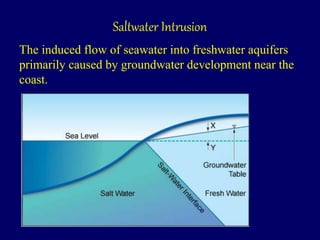
Saltwater Intrusion
The induced flow of seawater into freshwater aquifers
primarily caused by groundwater development near the
coast.

Factors that Contribute to Coastal Processes

  • 1.
  • 2.
    Goal To understand howcoastal processes shape shores and coastlines and how these processes affects us through EROSION, SUBMERSION AND INTRUSION.
  • 3.
    Coast and shoredefined Coast: Area of contact between land and sea—Extend inland until meets a different geographical setting Shoreline: Precise boundary where water meets adjacent dry land
  • 4.
    Waves and Tides WAVES transportenergy by motion—ultimate source of wave energy is the sun LONGSHORE CURRENT Current that parallels shoreline developed by waves coming in at an angle to shore—Maine sand found in NC
  • 5.
    Waves and Tides TIDES Dailyfluctuations in the height of the ocean—Caused by gravitational attraction of water to sun and moon TIDAL RANGE: varies depending on latitude and the shape of the coasts Bay of Fundy tidal range up to 75 ft. Hawaii tidal range ~1.5 ft. High tide Low tide
  • 6.
    Coastal Erosion It isthe wearing away of rocks at the crust. Wave action Tidal current chemicals
  • 7.
    Coastal Erosion WAVE ENERGYis focused on headlands: prominent cliffs that jut out into deep water • attack the sides of headlands and form sea caves, sea arches, and sea stacks by undercutting them Sea stack with sea arch in it
  • 8.
    Preventing Coastal Erosion •Can establish sand dunes and stabilize existing dunes • Can build seawalls: concrete or riprap structures designed to protect shoreline from waves Riprap sea wall Sea wall in action
  • 9.
    Coastal Submersion Occurs whenamount of sediment exceeds wave/current ability to transport it Beaches: relatively narrow strips of sand, pebbles, or cobbles deposited along a shoreline • 90% of beach sediment comes from streams that drain to coast—transported by longshore currents
  • 10.
    Coastal Submersion SPIT AND/ORHOOK Narrow strip of sand that grows across the mouth of bay due to longshore current (hooks are hook-shaped) Cape Henlopen at mouth of Delaware Bay
  • 11.
    Saltwater Intrusion • Saltwaterintrusion is a major concern commonly found in coastal aquifers around the world.
  • 12.
    Saltwater Intrusion The inducedflow of seawater into freshwater aquifers primarily caused by groundwater development near the coast.