Geologic
Timeline
Prepared by:
Engr. Andreana Amor Gulay
Engr. Ariel S. Motas
How important is your past to who
you are today?
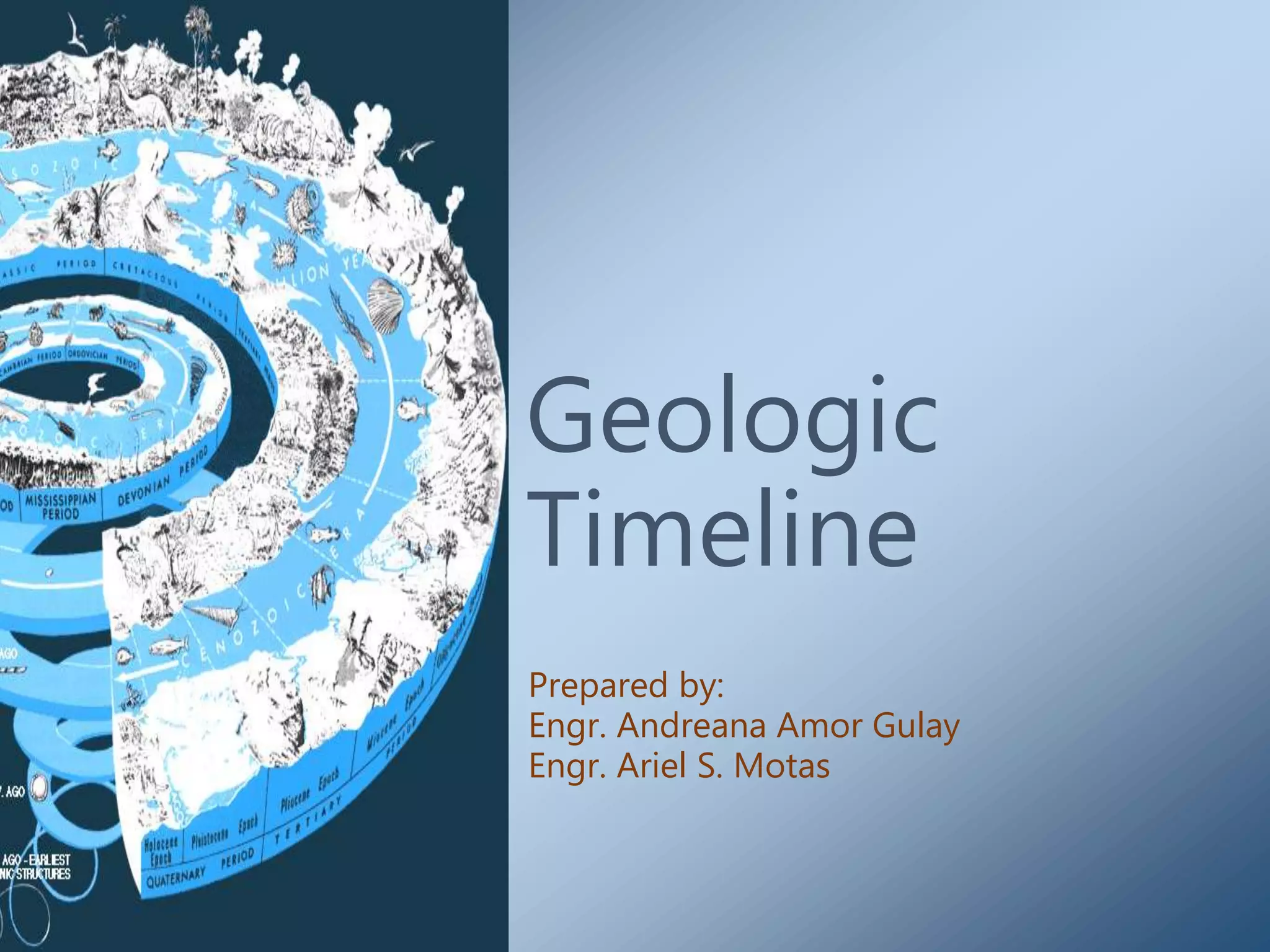
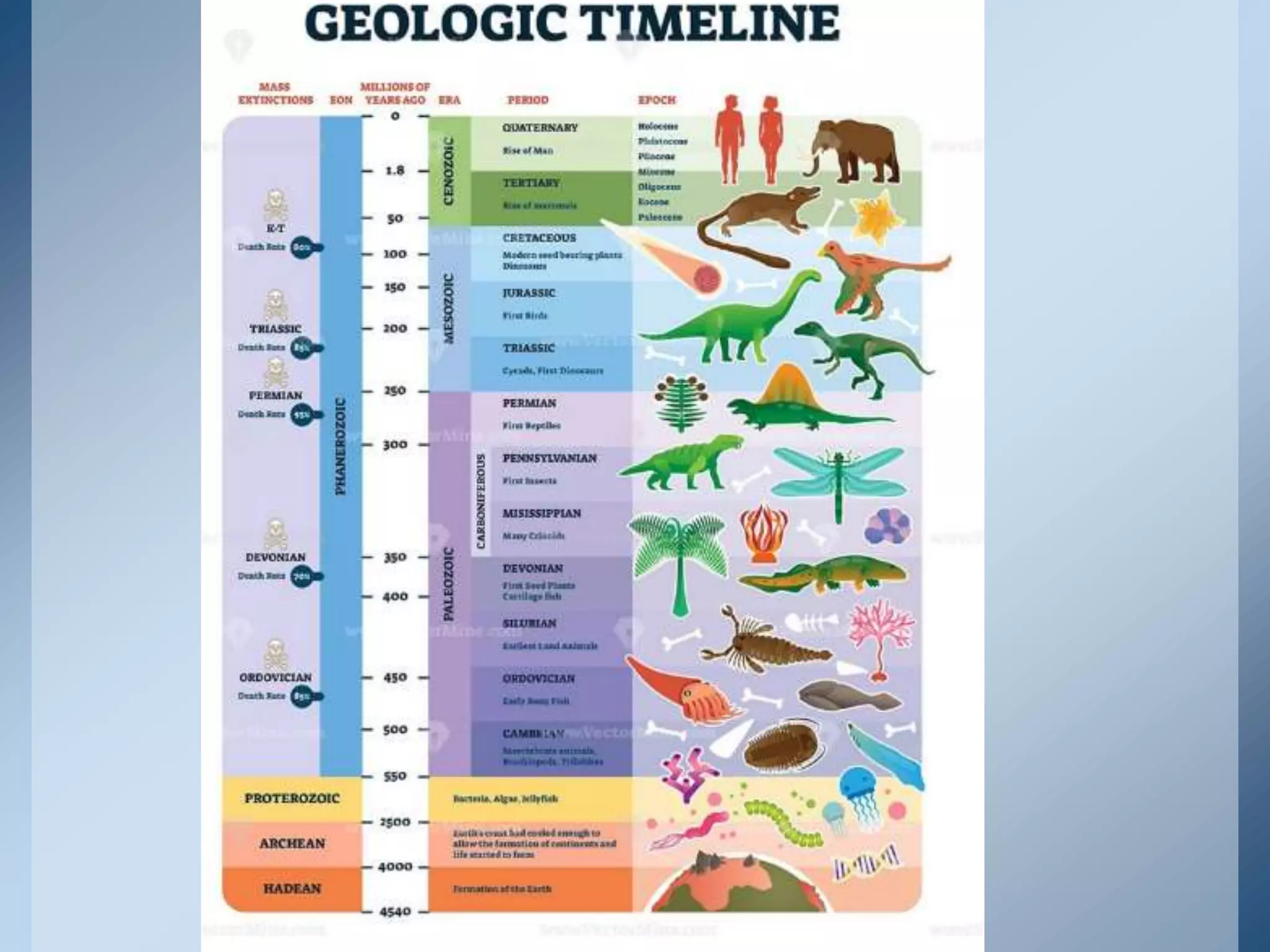
Geologic Timeline
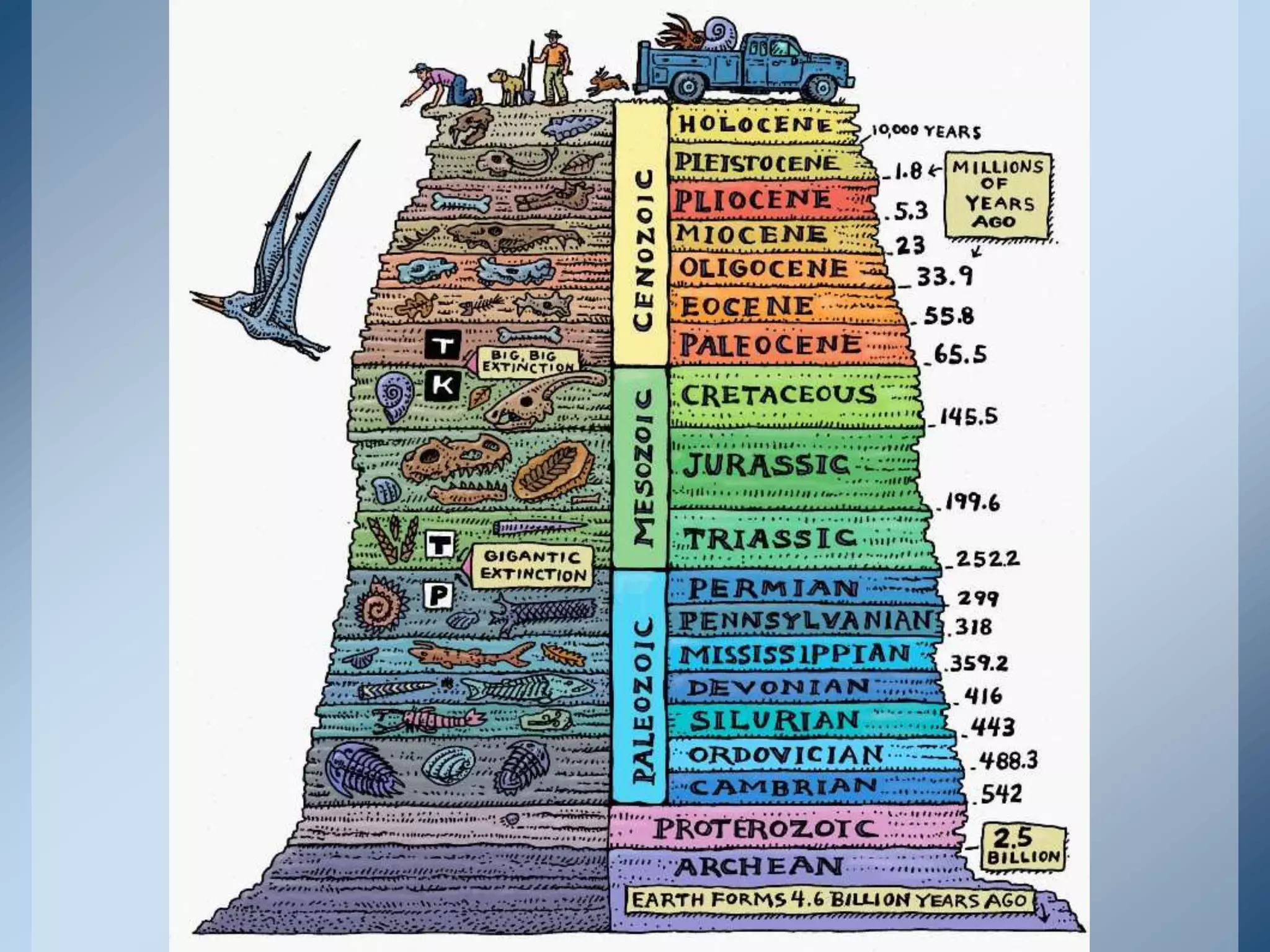
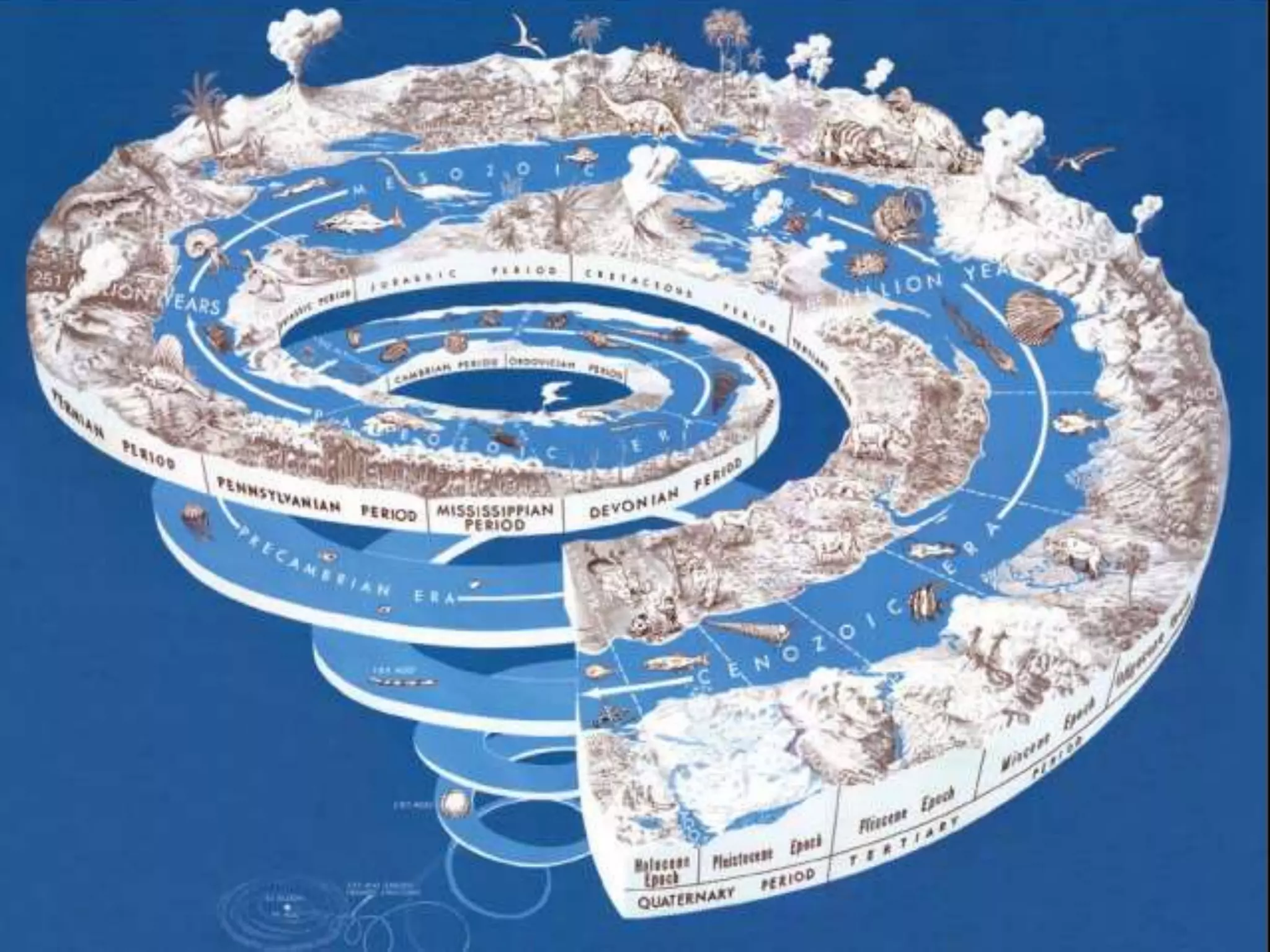
• “calendar” for events in Earth’s history.
• it serves as standard timeline used to describe the age of
rocks, fossils, and the events that formed them.
• A device which is of great help to the science of geology
owed to the explorations and studied made by the
geologists that were recorded.
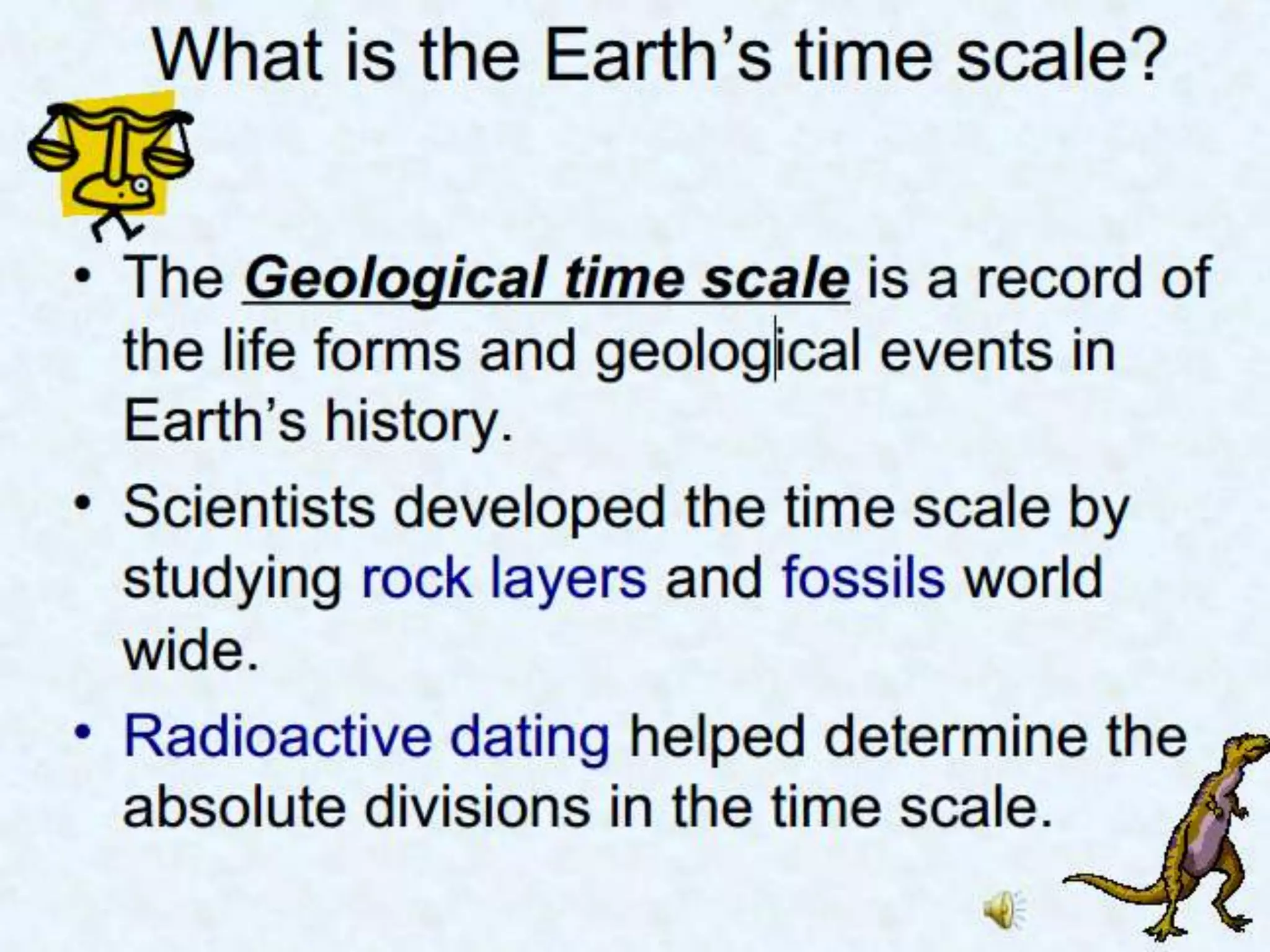
• The geologic time scale provides a system of
chronologic measurement relating stratigraphy to
time that is used by geologists, paleontologists and
other Earth scientists to describe the timing and
relationships between events that have occurred
during the history of the Earth.
The necessity of knowing how life began
in the past, the events, and principles
behind the Earth’s history enable us to
conform with the alterations or
consequences that we might encounter or
experience in the near future. As a part of the
new generation, we should be appreciative
and accept that all things that are present in
our time were the outcome of Earth’s history.
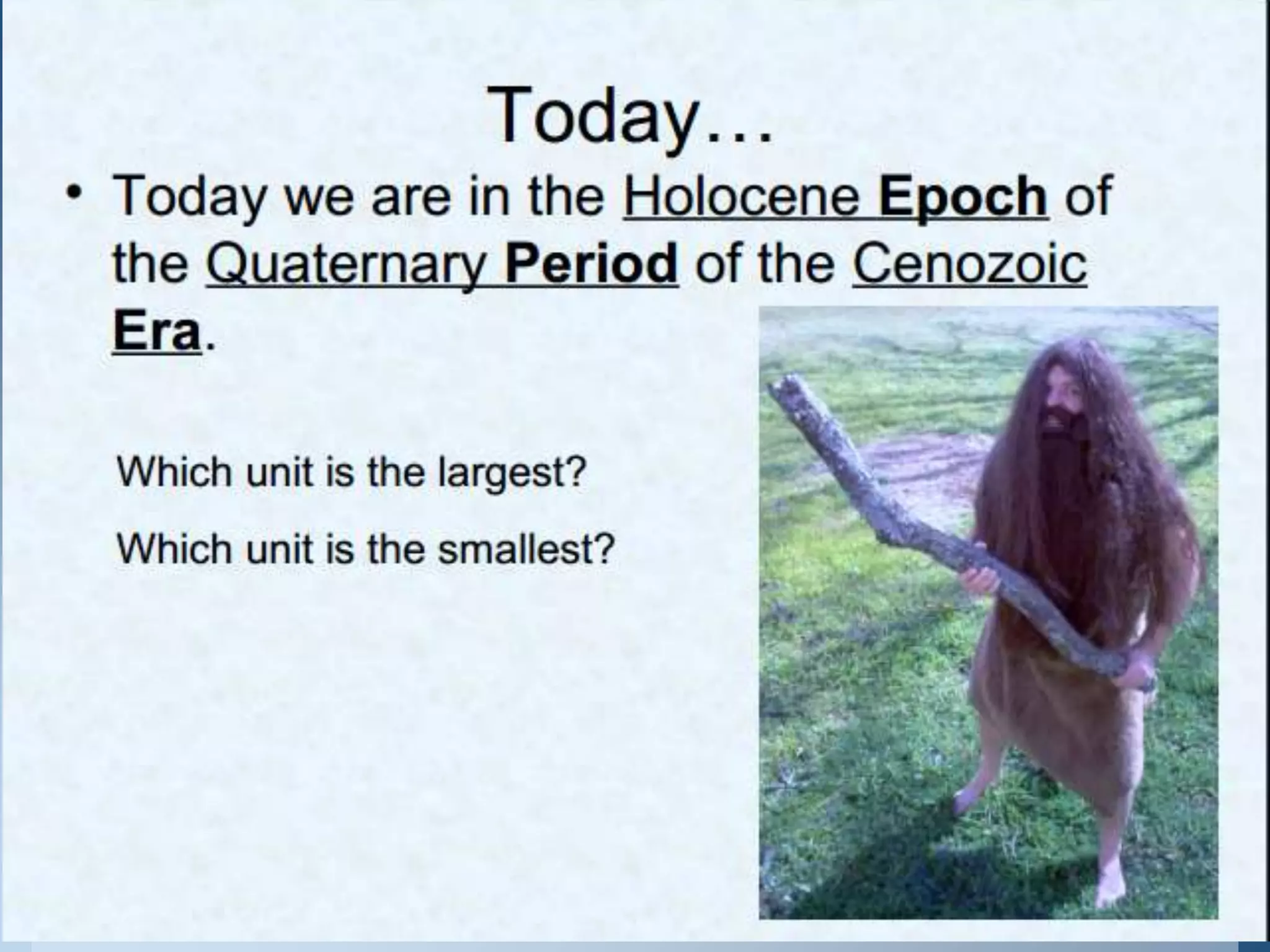
Division of Geologic
Timescale
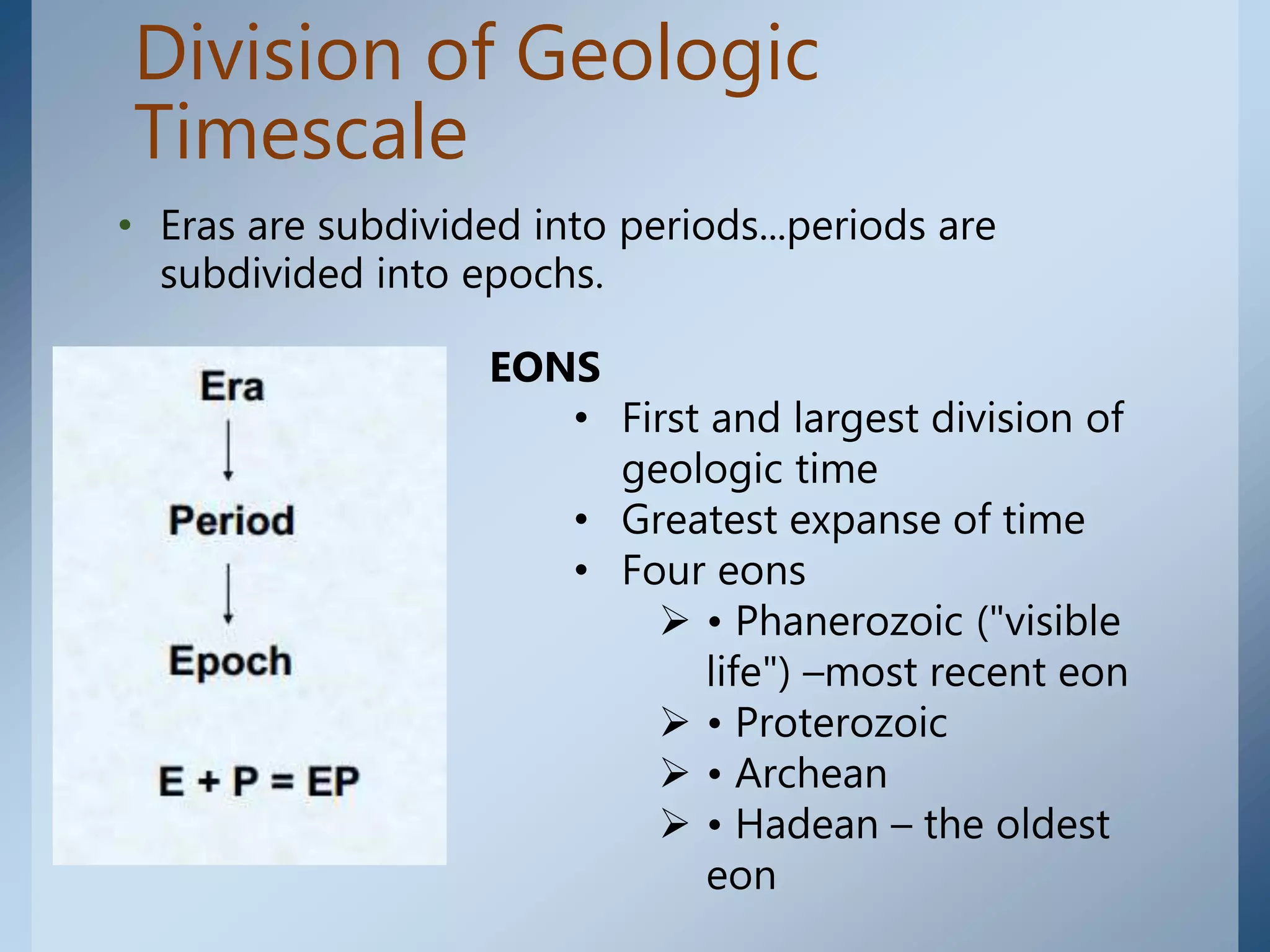
• Eras are subdivided into periods...periods are
subdivided into epochs.
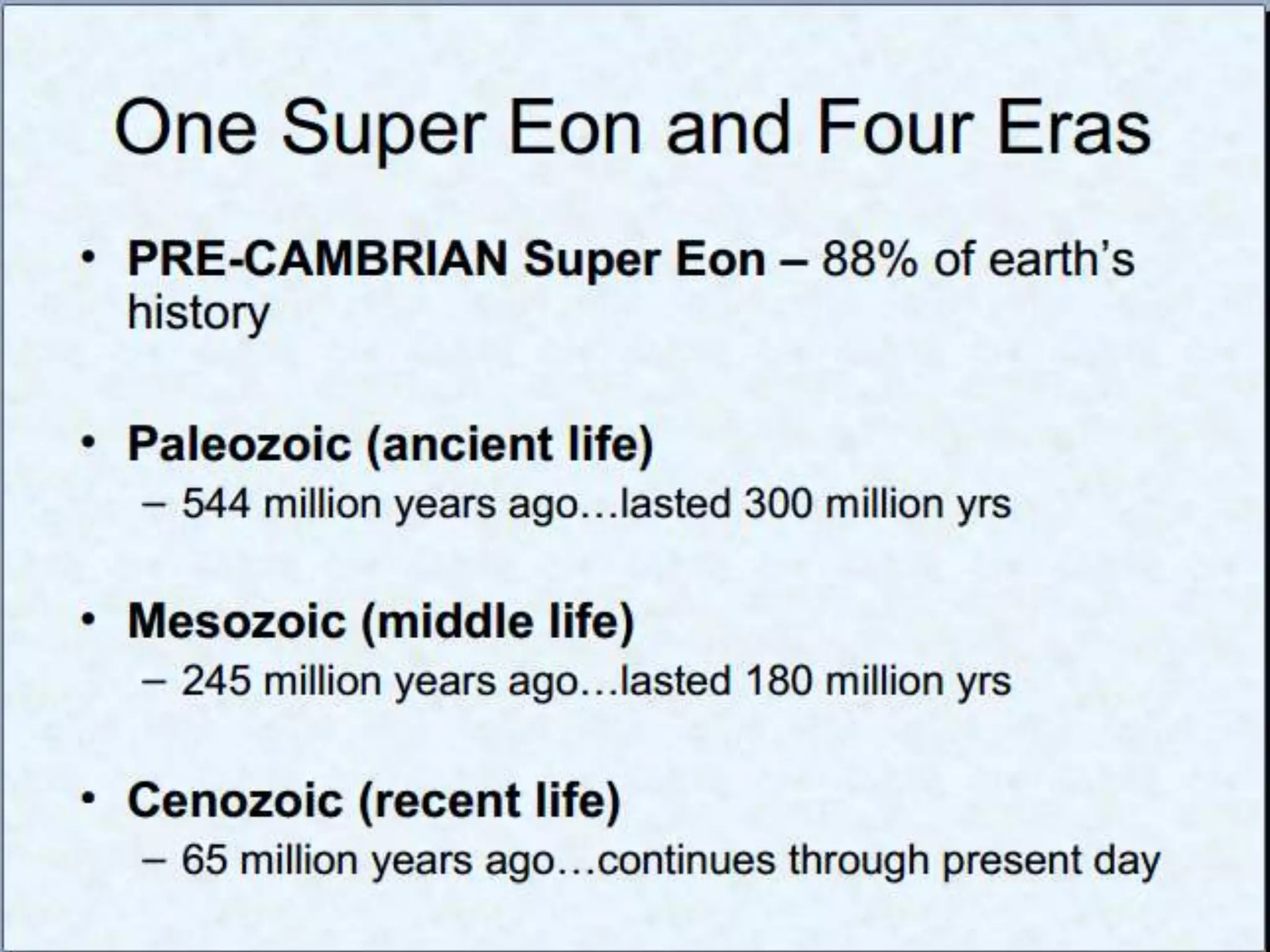
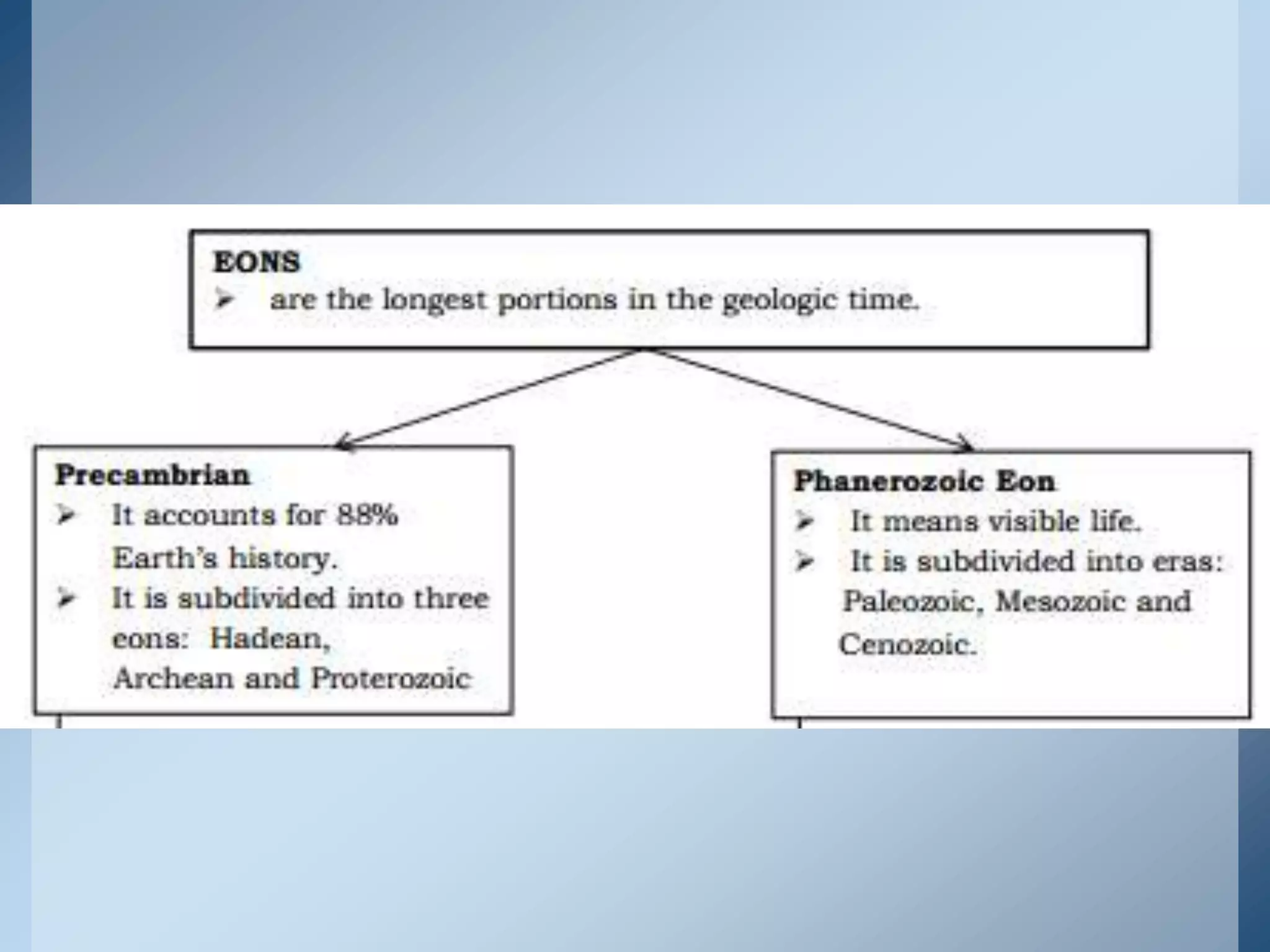
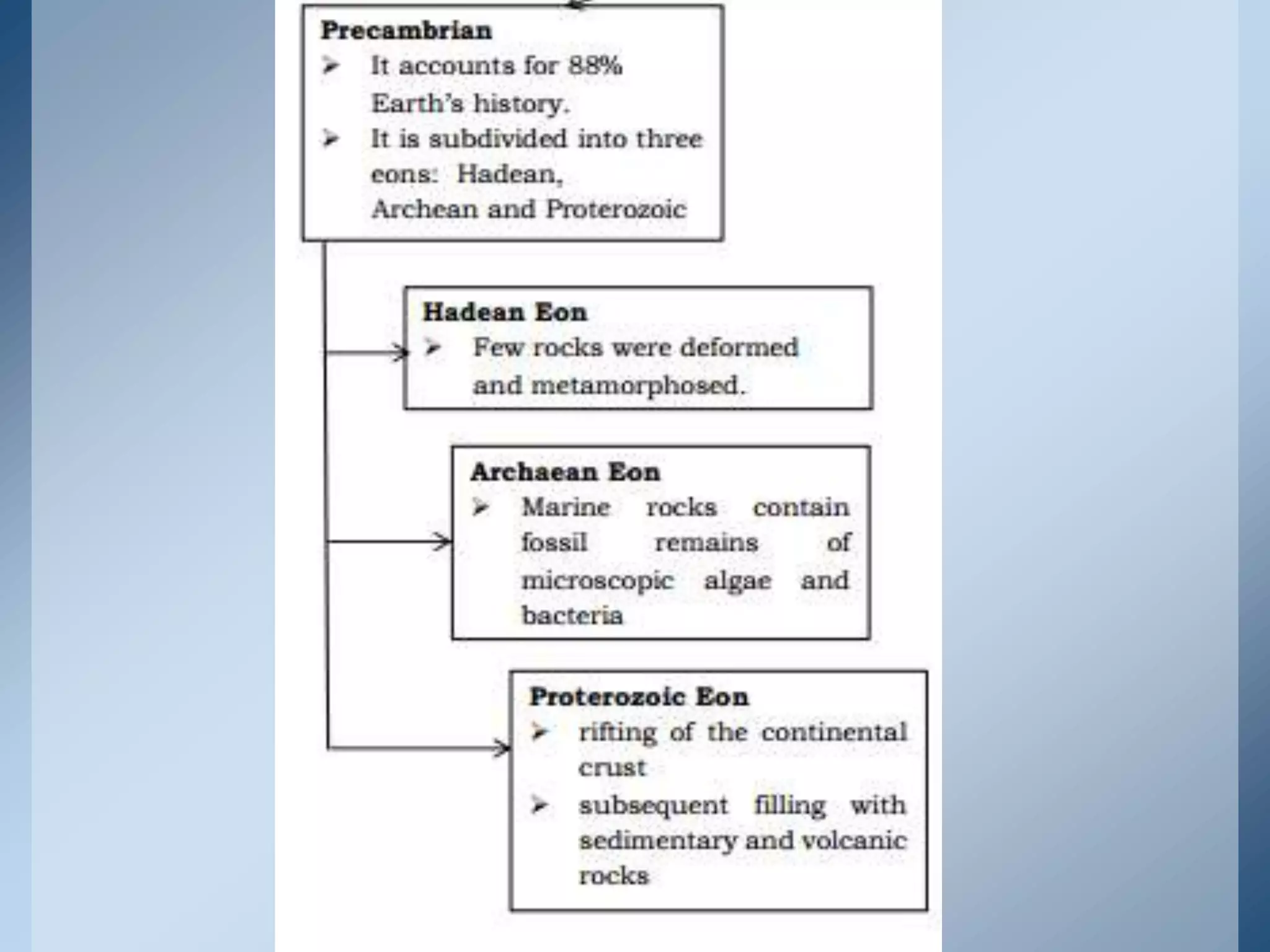
EONS
• First and largest division of
geologic time
• Greatest expanse of time
• Four eons
 • Phanerozoic ("visible
life") –most recent eon
 • Proterozoic
 • Archean
 • Hadean – the oldest
eon
Division of Geologic
Timescale
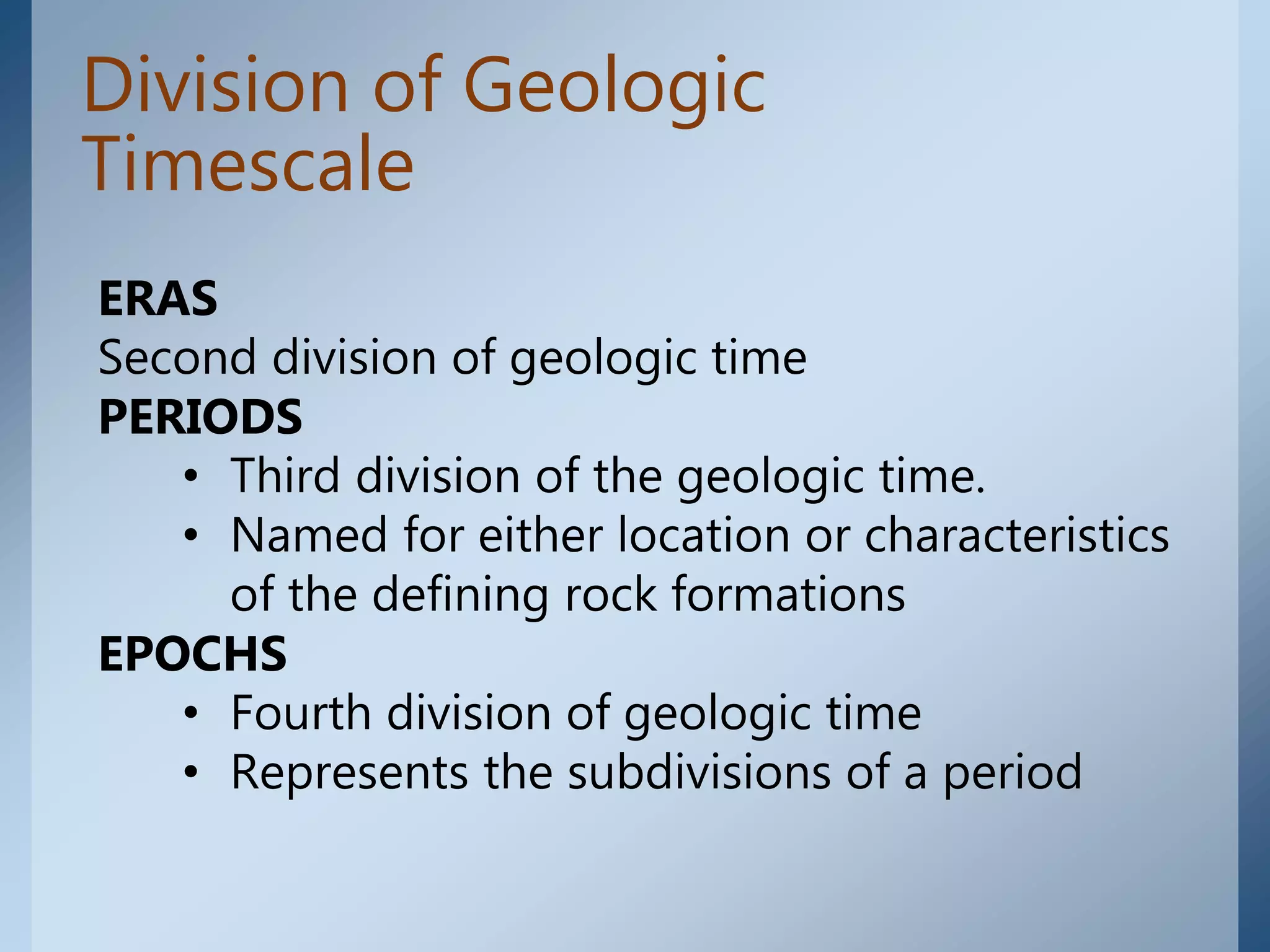
ERAS
Second division of geologic time
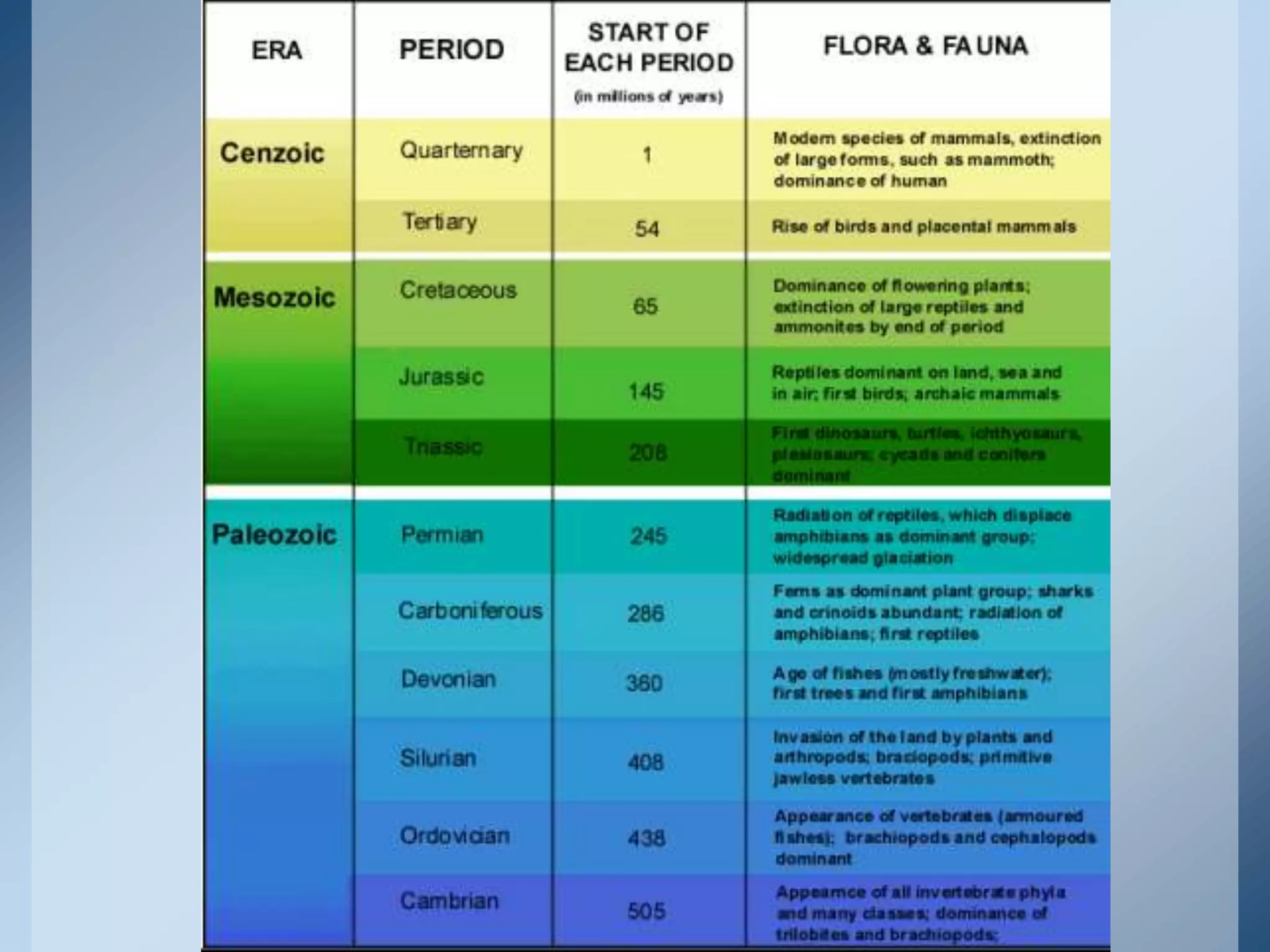
PERIODS
• Third division of the geologic time.
• Named for either location or characteristics
of the defining rock formations
EPOCHS
• Fourth division of geologic time
• Represents the subdivisions of a period
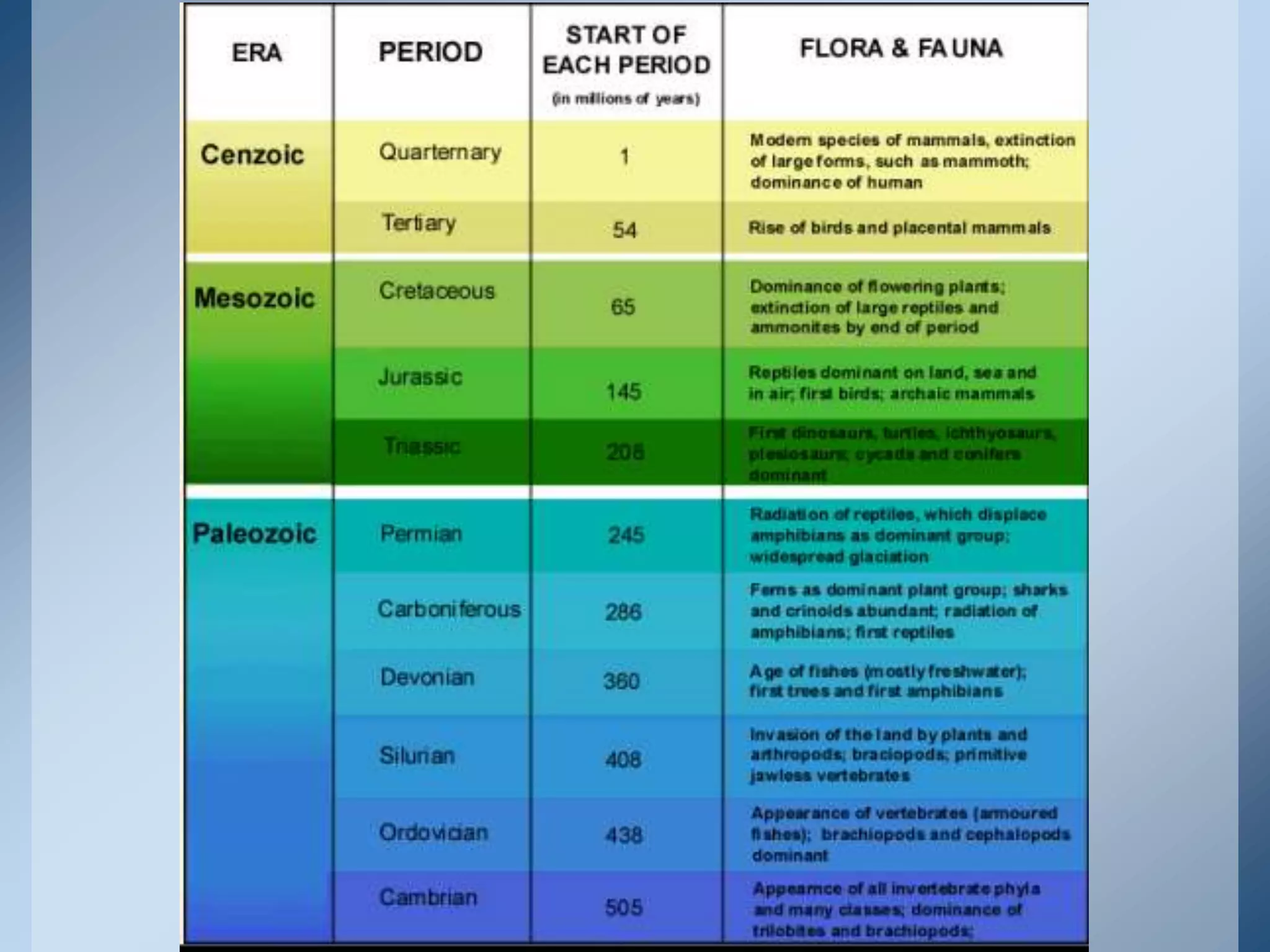
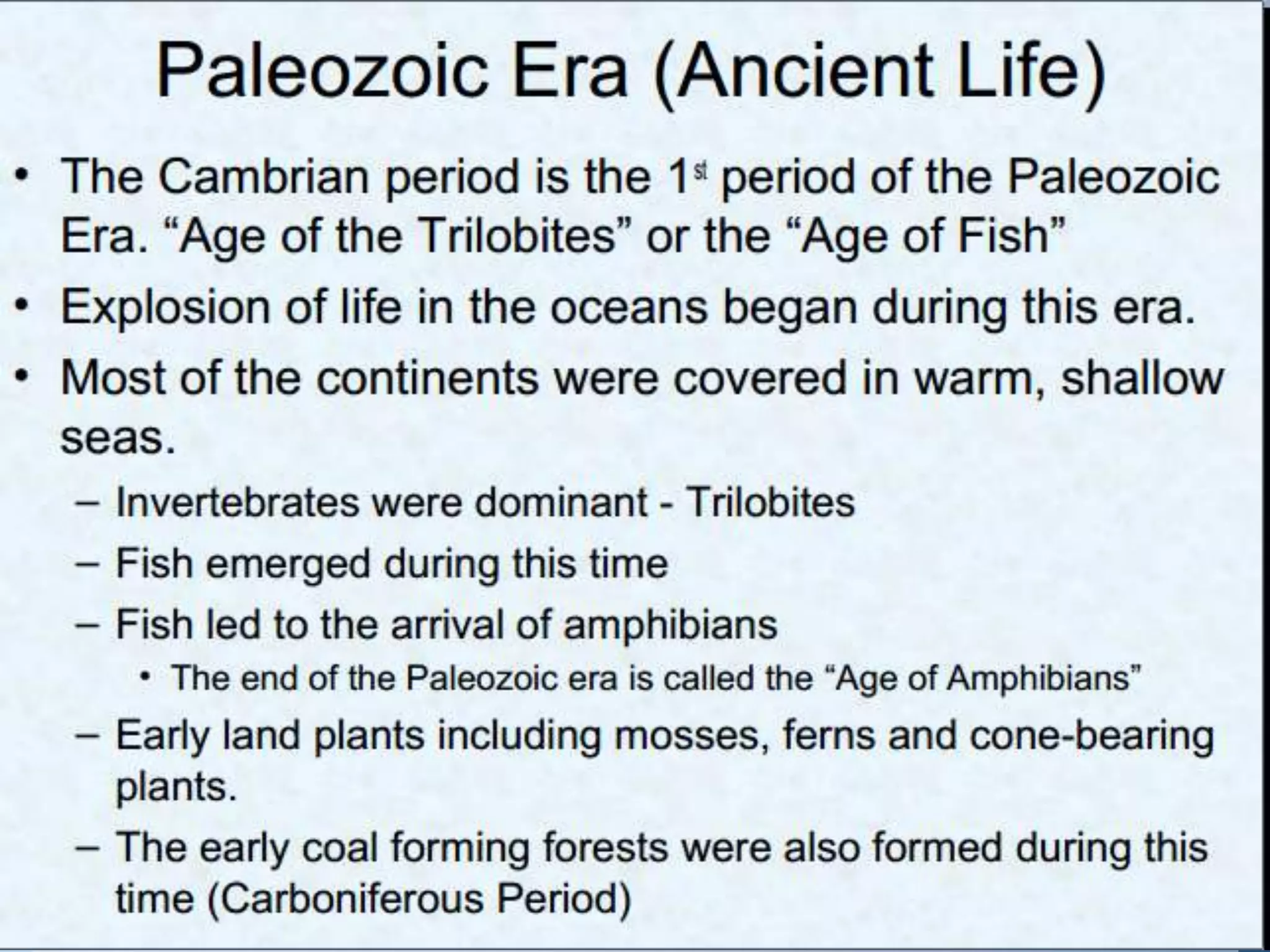
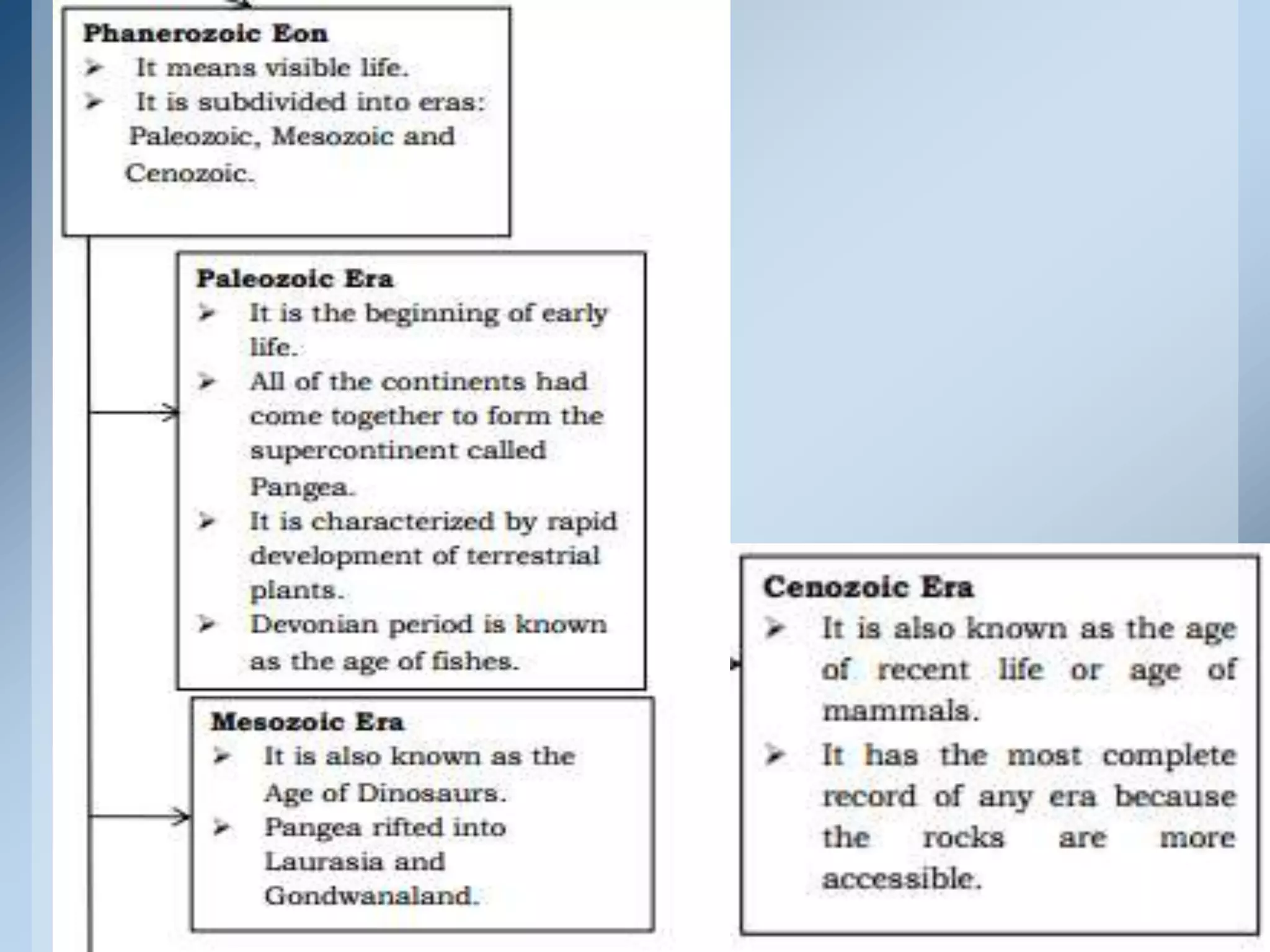
Paleozoic Era
• It is the beginning of early life.
• All of the continents had come together to
form the supercontinent called Pangea.
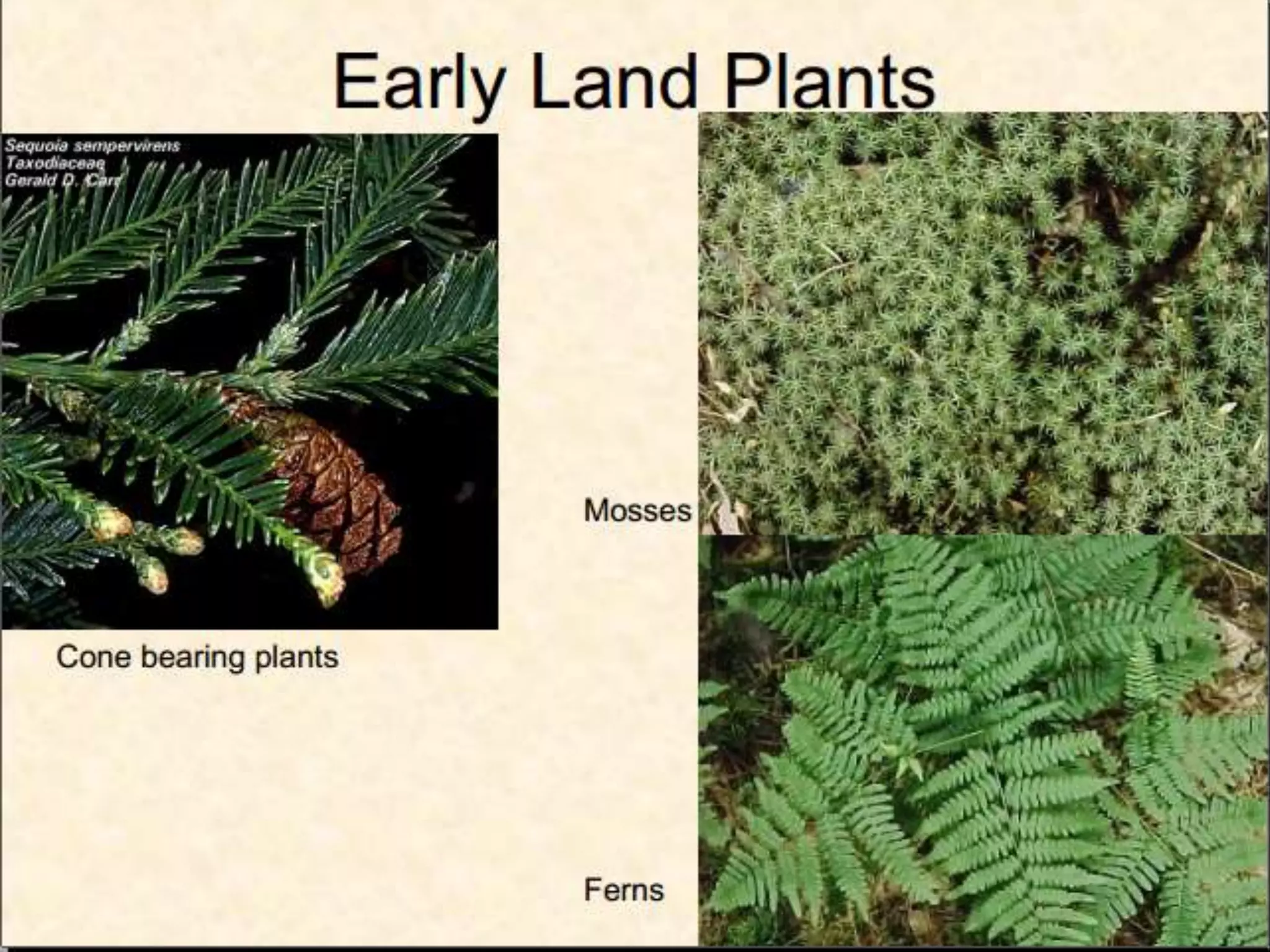
• It is characterized by rapid development of
terrestrial plants.
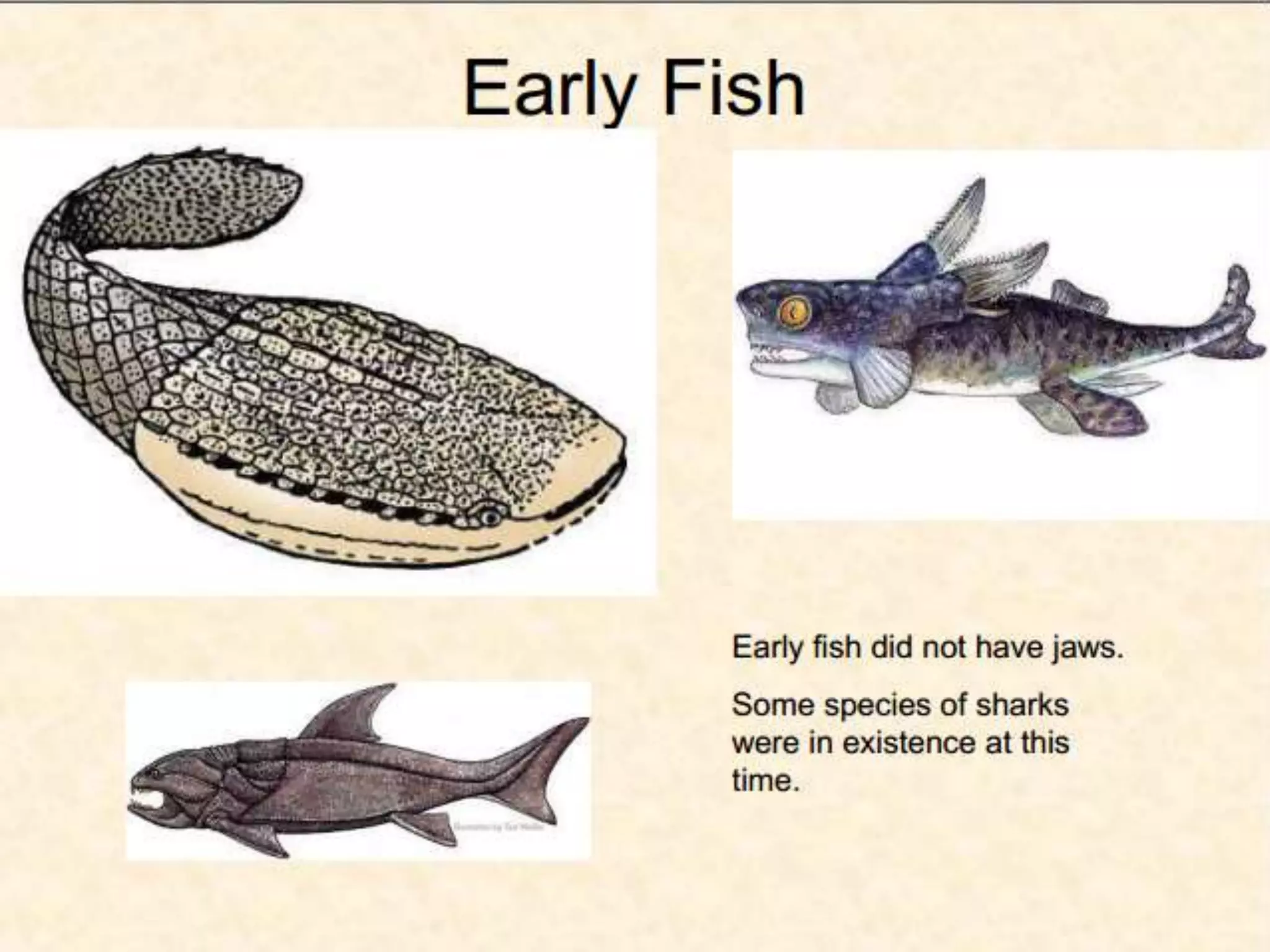
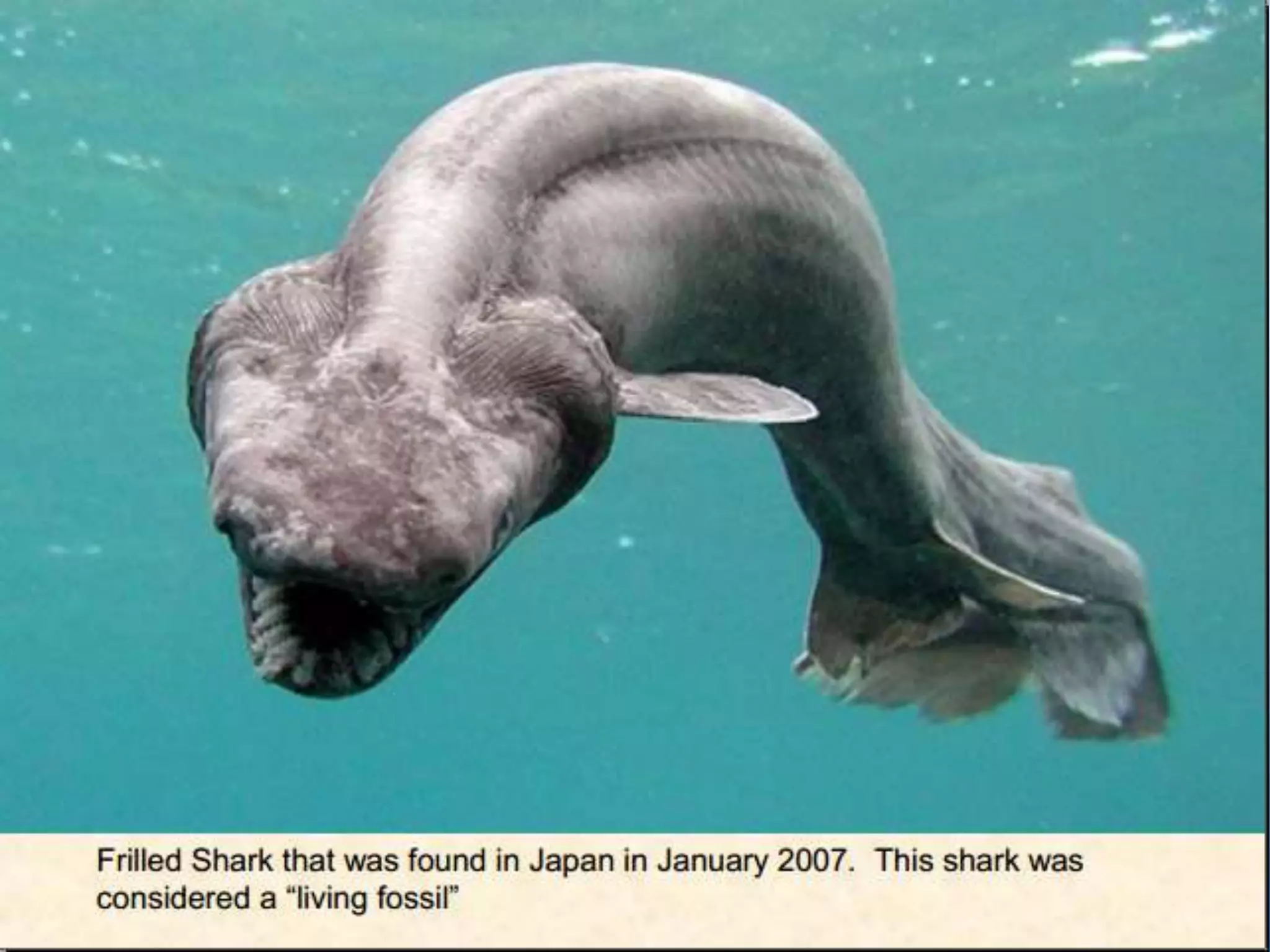
• Devonian period is known as the age of
fishes.
Paleozoic Era
• At the end of the Paleozoic, the largest
mass extinction in history wiped out
approximately 90% of all marine animal
species and 70% of land animals.
– Possible causes of this Mass Extinction Event
• Lowering of sea levels when the continents were
rejoined as Pangaea (convergent boundary)
• Increased volcanic activity (ash and dust)
• Climate changes – cooler climate
Mesozoic Era – Middle Life
• At the beginning of this era the continents
were joined as Pangaea.
• Pangaea broke up around the middle of this
era. Pangea rifted into Laurasia and
Gondwanaland.
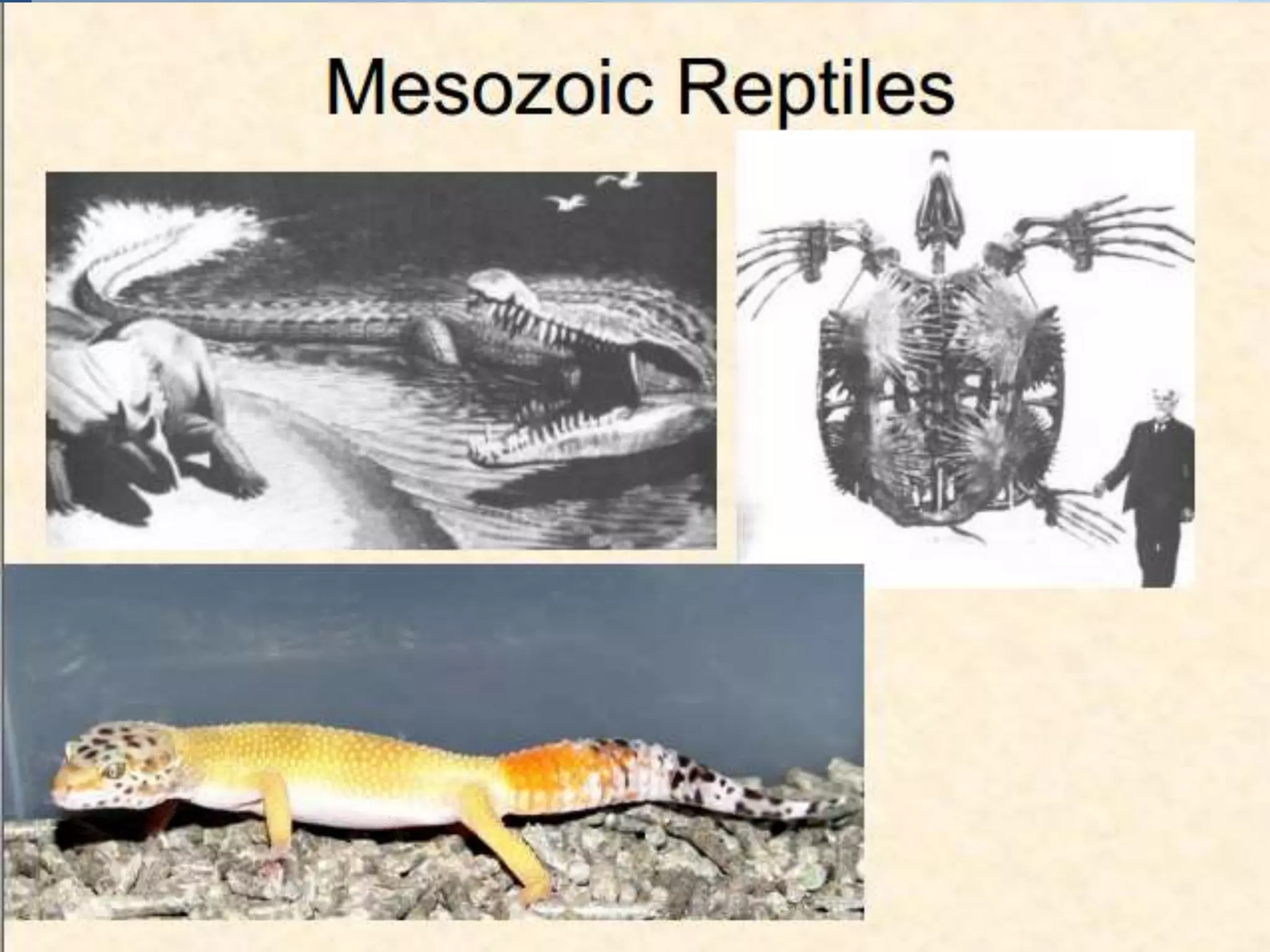
• Reptiles became the most abundant animals
because of their ability to adapt to the drier
climate of the Mesozoic Era.
– Skin maintains body fluids
– Embryos live in shells
Mesozoic Era – Middle Life
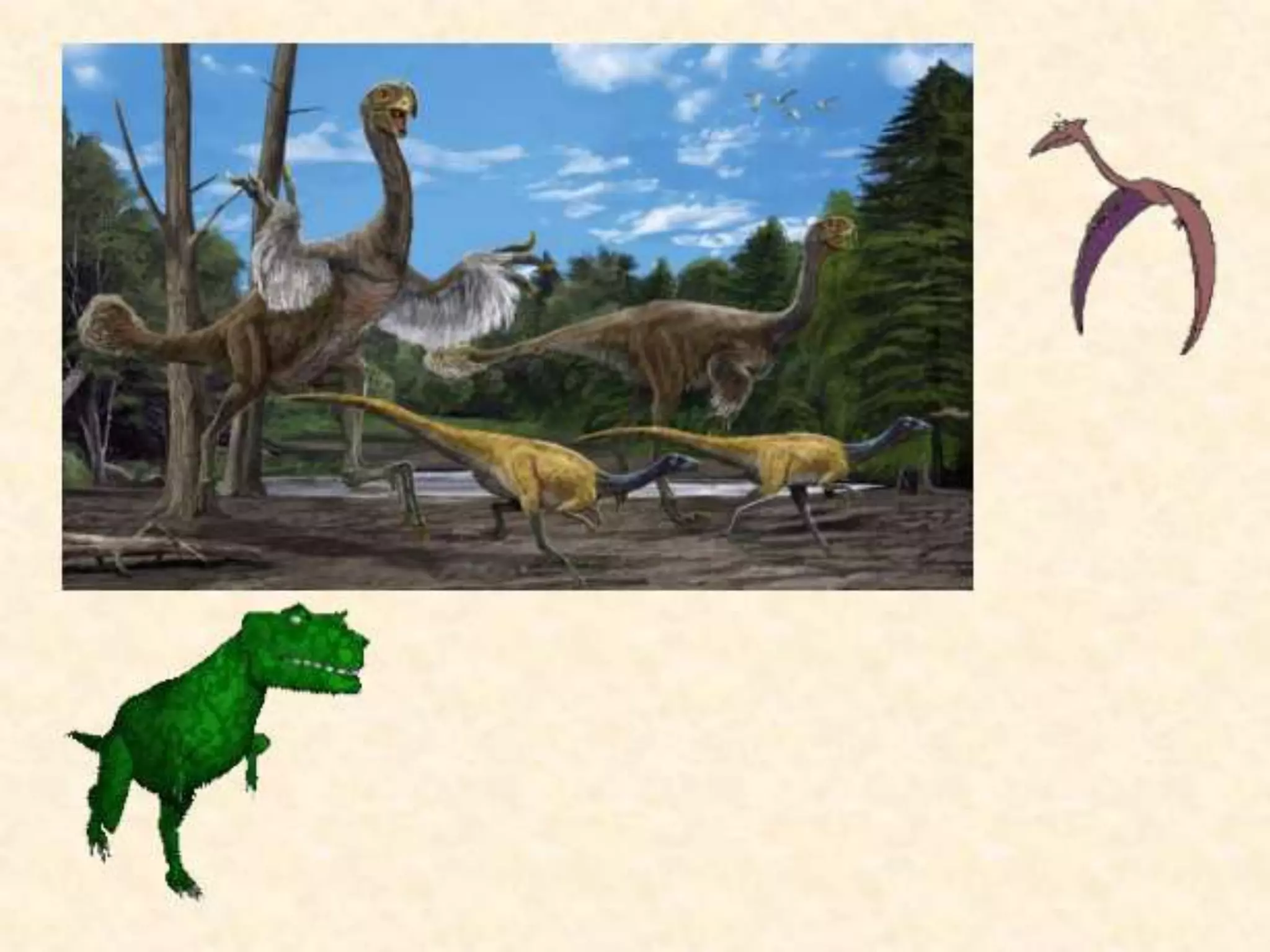
• Dinosaurs were also very active in this era.
– First small dinosaurs appeared in the Triassic
Period.
– Larger and more abundant dinosaurs appeared
in the Jurassic Period.
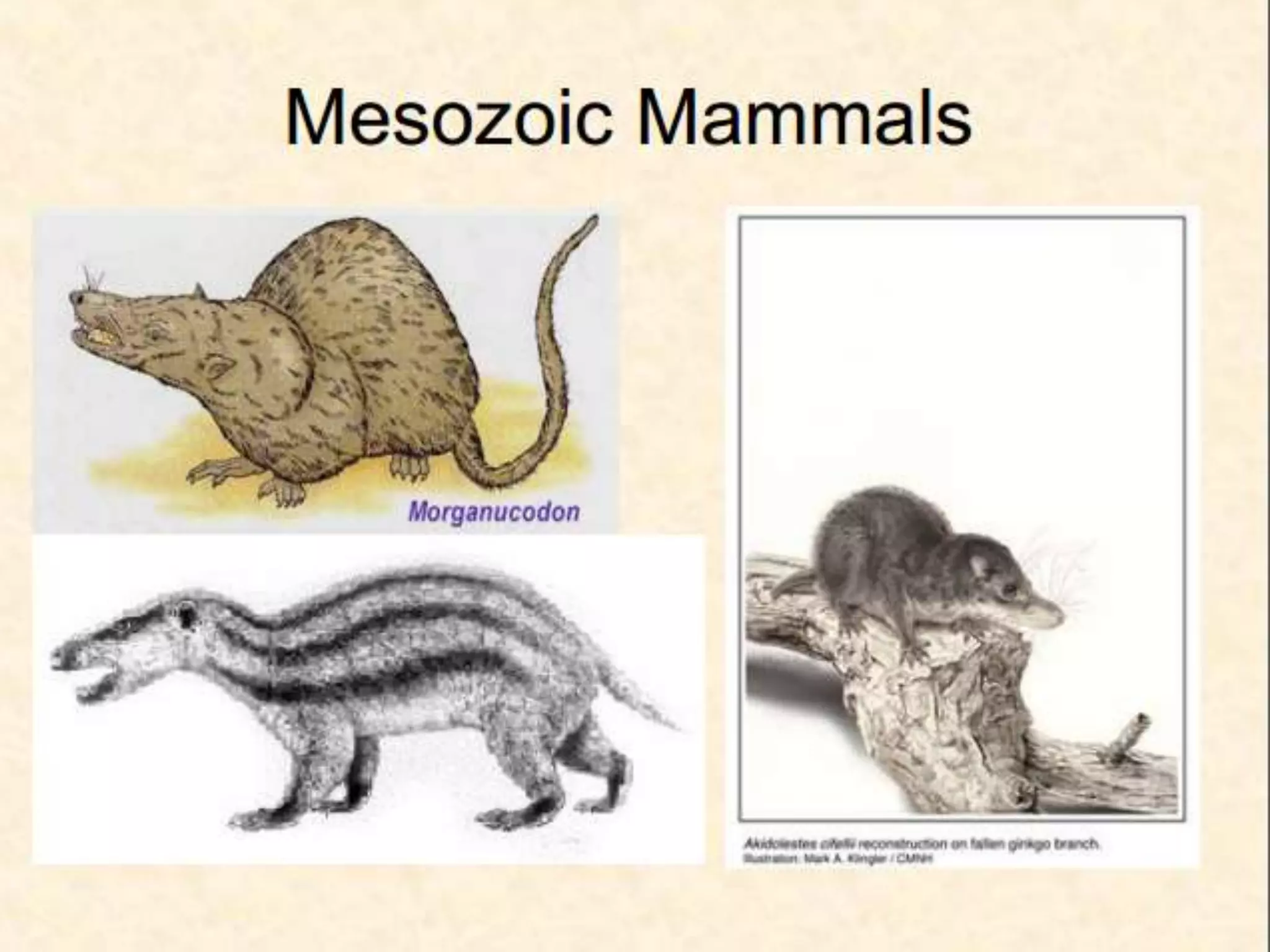
• Small mammals and birds also appeared during this
era.
– The mammals were small, warm-blooded
animals. Hair covering their bodies.
These characteristics help them survive in
changing environments.
Mesozoic Era – Middle Life
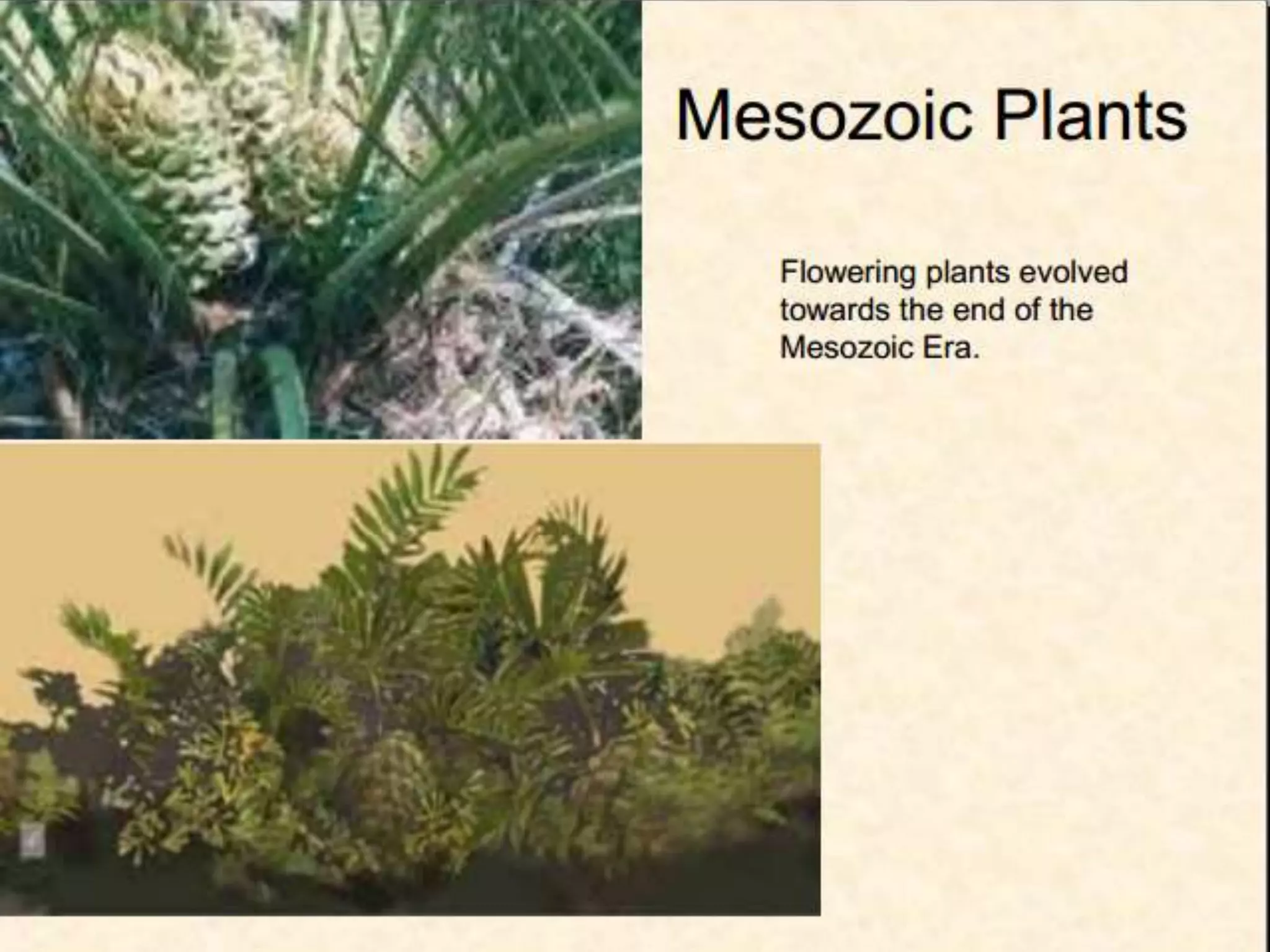
• The main plant life of this time were
Gymnosperms or plants that
produce seeds, but no flowers.
– Pine Trees
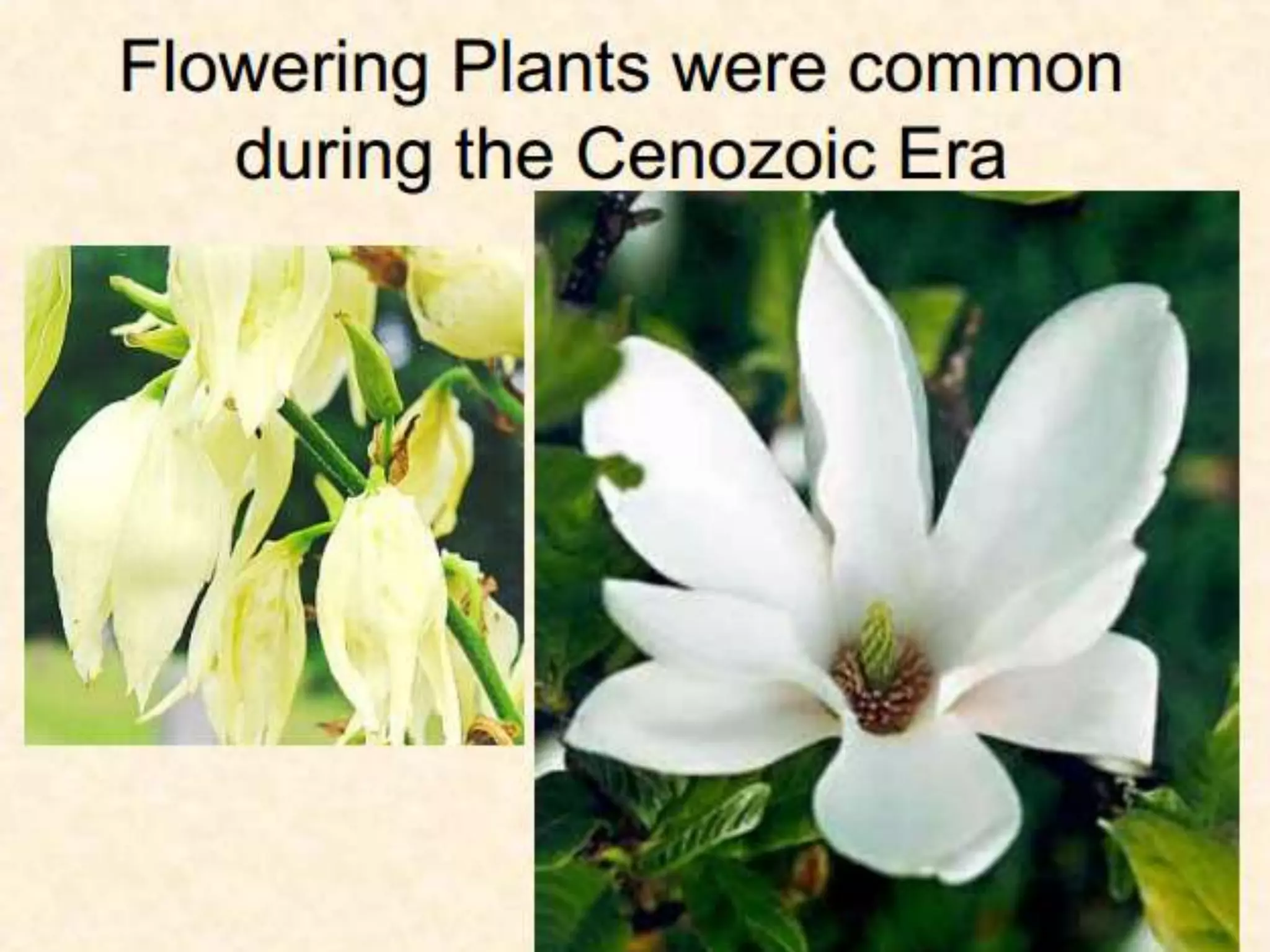
• Flowering plants appeared during
the END of this era
Mesozoic Era
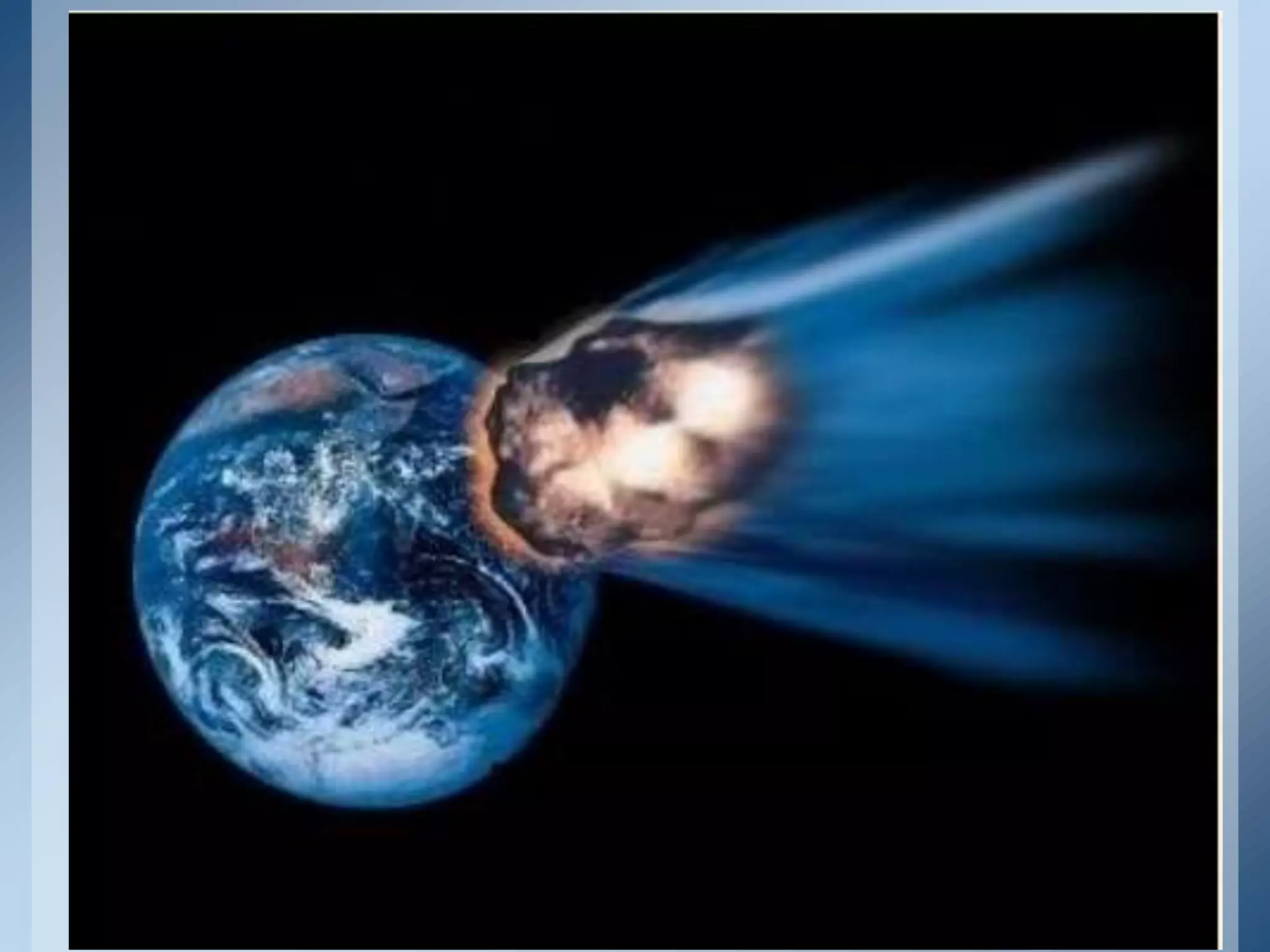
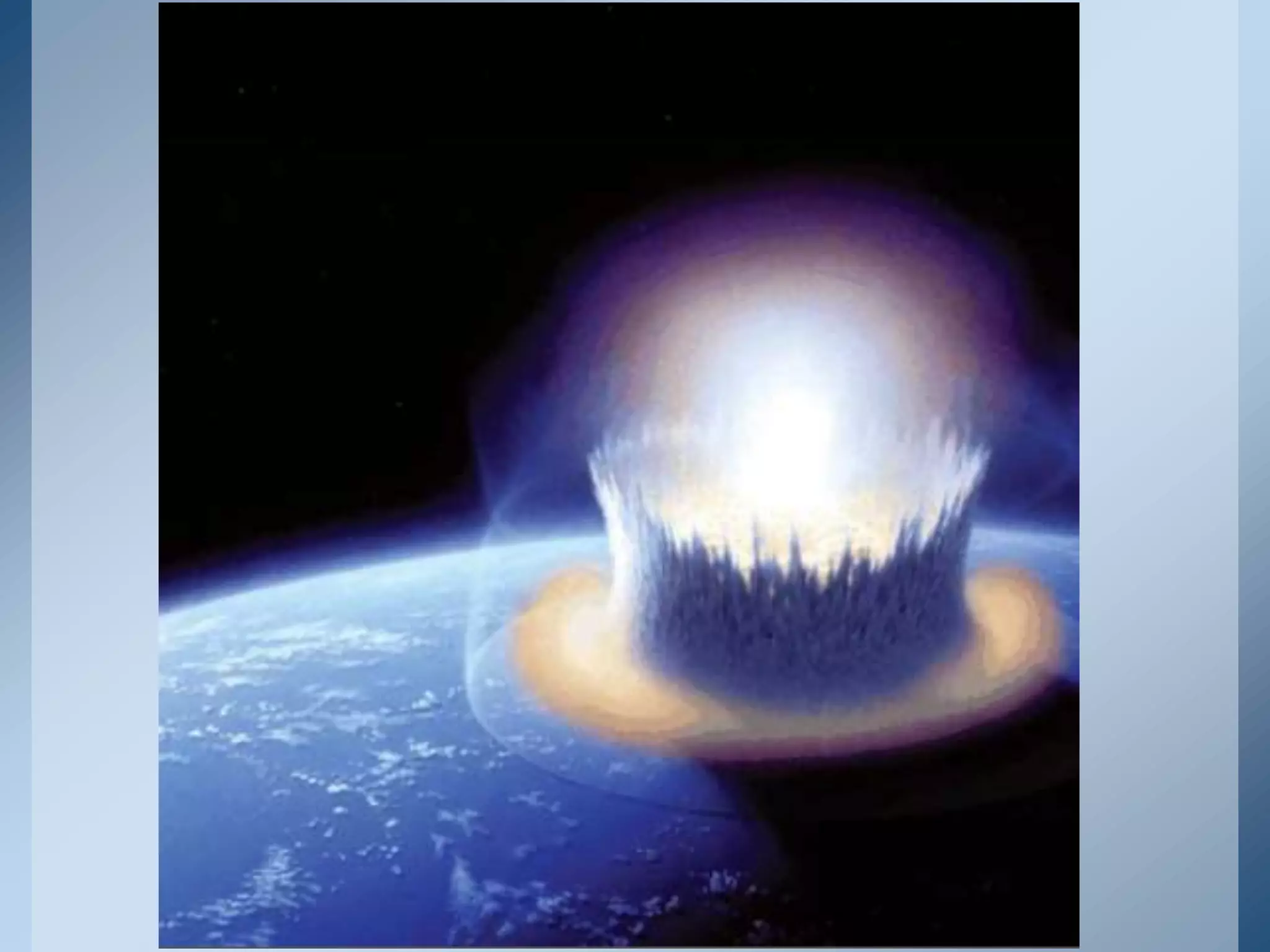
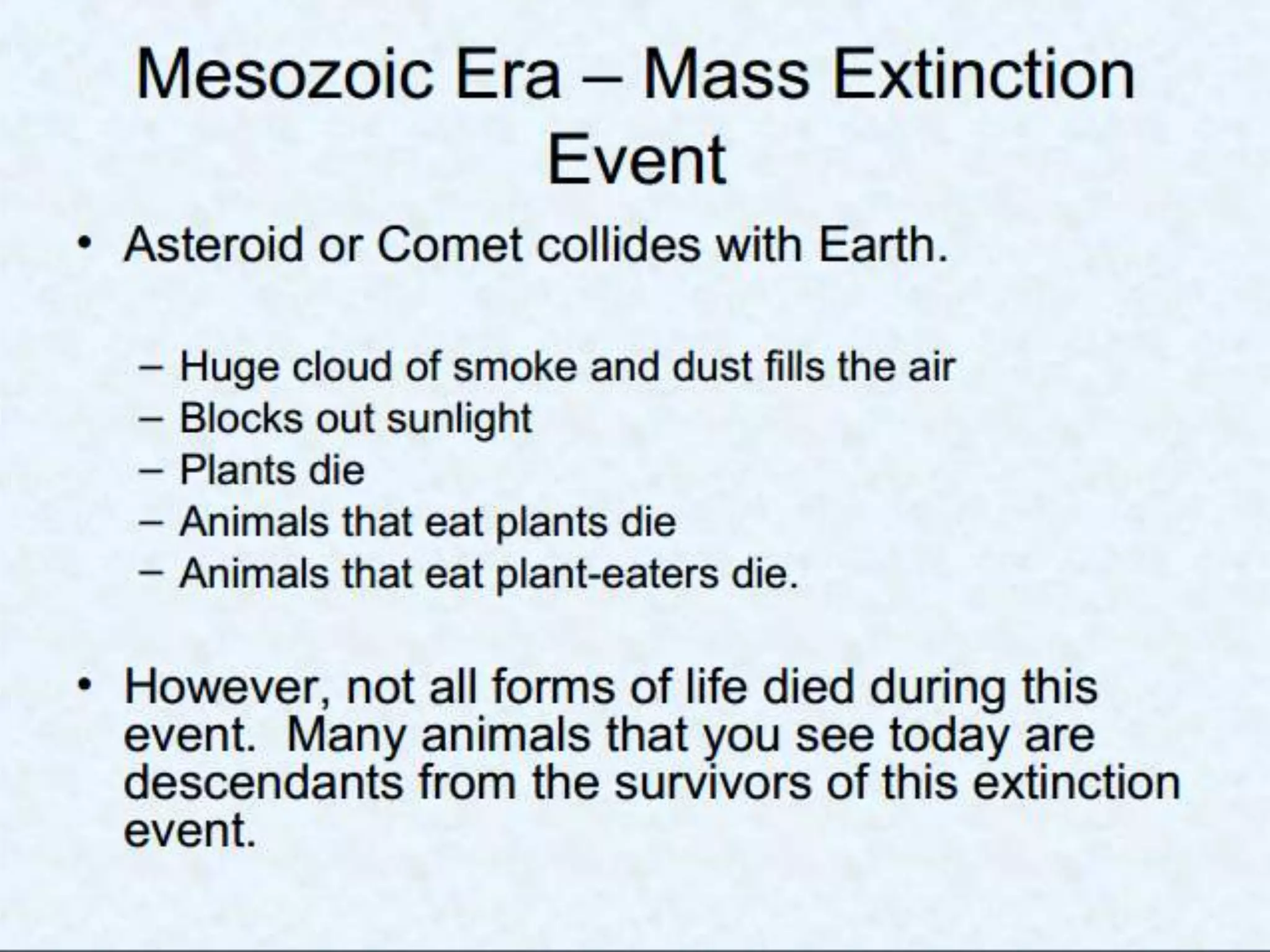
• This era ended with a mass extinction
event about 65 million years ago.
– Many groups of animals,
including the dinosaurs
disappeared suddenly at this time.
• Meteorite Impact Hypothesis
Cenozoic Era – Recent Life
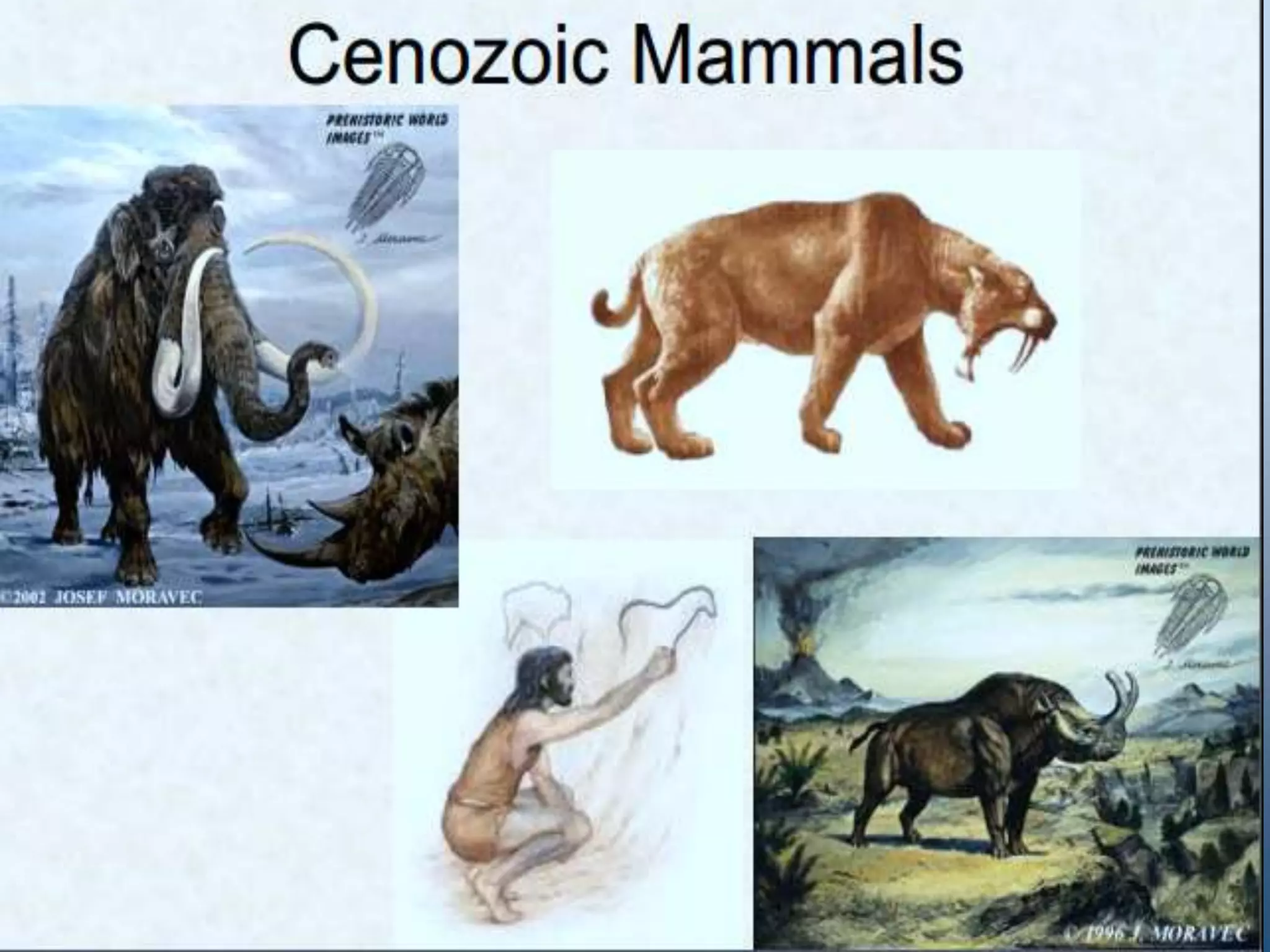
• It is also known as the age of recent life or age of
mammals.
• It has the most complete record of any era because the
rocks are more accessible.
• Began about 65 million years ago and continues today!!!!!
– Climate was warm and mild.
– Marine animals such as whales and dolphins evolved.
• Mammals began to increase and evolve adaptations that
allowed them to live in many different environments – land, air
and the sea.
– Grasses increased and provided a food source for grazing
animals
Cenozoic Era
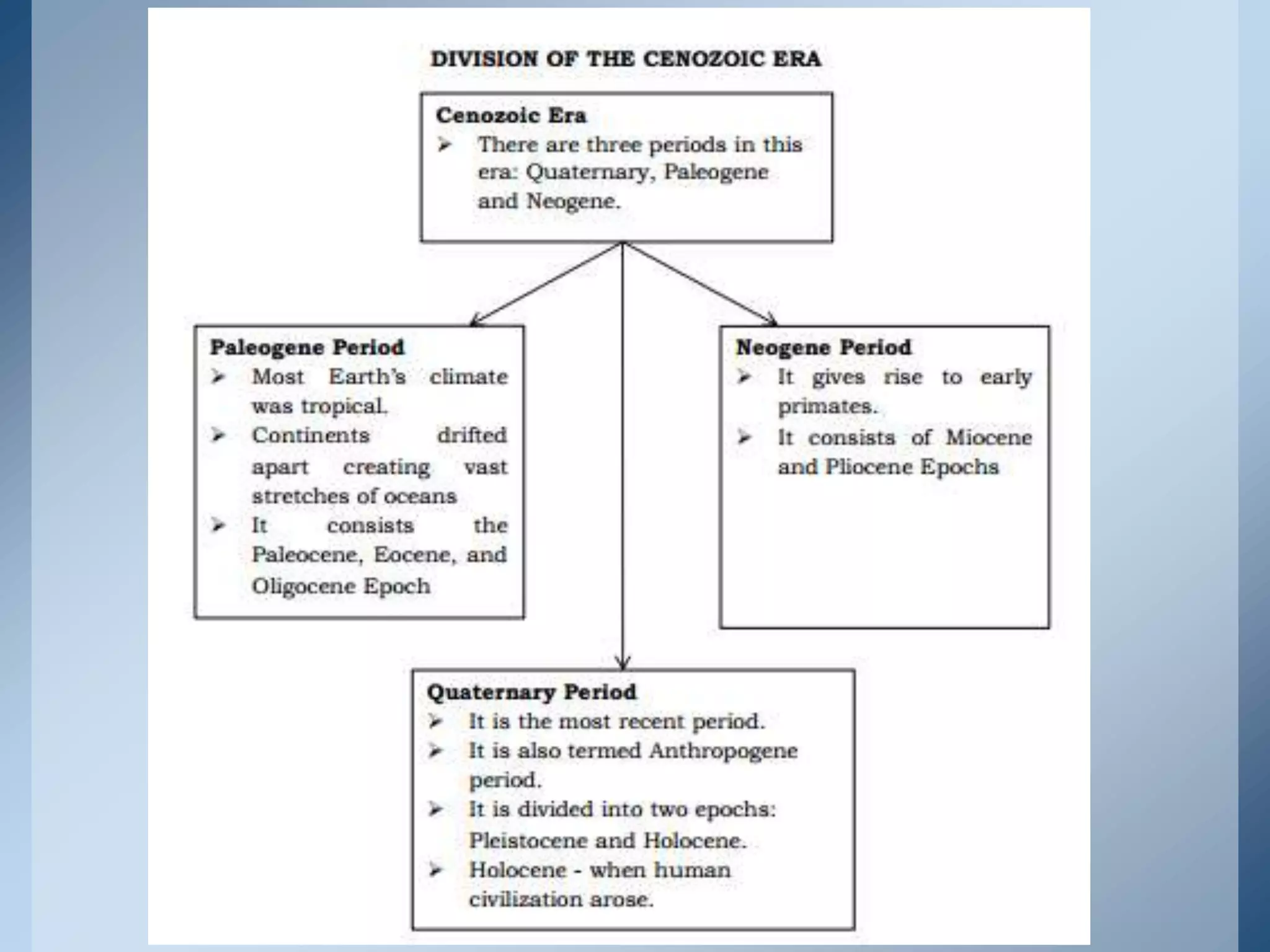
• Many mountain ranges formed during the Cenozoic Era
– Alps in Europe and Himalayas in India; Rocky
Mountains in the USA.
• Growth of these mountains may have helped to cool
down the climate
– Ice Ages occurred late in the Cenozoic Era
(Quaternary Period).
• As the climate changed, the animals had to adapt to the
rise and fall of the oceans caused by melting glaciers.
05 geologic timeline (1)

05 geologic timeline (1)

  • 1.
    Geologic Timeline Prepared by: Engr. AndreanaAmor Gulay Engr. Ariel S. Motas
  • 2.
    How important isyour past to who you are today?
  • 3.
    Geologic Timeline • “calendar”for events in Earth’s history. • it serves as standard timeline used to describe the age of rocks, fossils, and the events that formed them. • A device which is of great help to the science of geology owed to the explorations and studied made by the geologists that were recorded. • The geologic time scale provides a system of chronologic measurement relating stratigraphy to time that is used by geologists, paleontologists and other Earth scientists to describe the timing and relationships between events that have occurred during the history of the Earth.
  • 4.
    The necessity ofknowing how life began in the past, the events, and principles behind the Earth’s history enable us to conform with the alterations or consequences that we might encounter or experience in the near future. As a part of the new generation, we should be appreciative and accept that all things that are present in our time were the outcome of Earth’s history.
  • 7.
    Division of Geologic Timescale •Eras are subdivided into periods...periods are subdivided into epochs. EONS • First and largest division of geologic time • Greatest expanse of time • Four eons  • Phanerozoic ("visible life") –most recent eon  • Proterozoic  • Archean  • Hadean – the oldest eon
  • 8.
    Division of Geologic Timescale ERAS Seconddivision of geologic time PERIODS • Third division of the geologic time. • Named for either location or characteristics of the defining rock formations EPOCHS • Fourth division of geologic time • Represents the subdivisions of a period
  • 16.
    Paleozoic Era • Itis the beginning of early life. • All of the continents had come together to form the supercontinent called Pangea. • It is characterized by rapid development of terrestrial plants. • Devonian period is known as the age of fishes.
  • 17.
    Paleozoic Era • Atthe end of the Paleozoic, the largest mass extinction in history wiped out approximately 90% of all marine animal species and 70% of land animals. – Possible causes of this Mass Extinction Event • Lowering of sea levels when the continents were rejoined as Pangaea (convergent boundary) • Increased volcanic activity (ash and dust) • Climate changes – cooler climate
  • 23.
    Mesozoic Era –Middle Life • At the beginning of this era the continents were joined as Pangaea. • Pangaea broke up around the middle of this era. Pangea rifted into Laurasia and Gondwanaland. • Reptiles became the most abundant animals because of their ability to adapt to the drier climate of the Mesozoic Era. – Skin maintains body fluids – Embryos live in shells
  • 24.
    Mesozoic Era –Middle Life • Dinosaurs were also very active in this era. – First small dinosaurs appeared in the Triassic Period. – Larger and more abundant dinosaurs appeared in the Jurassic Period. • Small mammals and birds also appeared during this era. – The mammals were small, warm-blooded animals. Hair covering their bodies. These characteristics help them survive in changing environments.
  • 26.
    Mesozoic Era –Middle Life • The main plant life of this time were Gymnosperms or plants that produce seeds, but no flowers. – Pine Trees • Flowering plants appeared during the END of this era
  • 27.
    Mesozoic Era • Thisera ended with a mass extinction event about 65 million years ago. – Many groups of animals, including the dinosaurs disappeared suddenly at this time. • Meteorite Impact Hypothesis
  • 34.
    Cenozoic Era –Recent Life • It is also known as the age of recent life or age of mammals. • It has the most complete record of any era because the rocks are more accessible. • Began about 65 million years ago and continues today!!!!! – Climate was warm and mild. – Marine animals such as whales and dolphins evolved. • Mammals began to increase and evolve adaptations that allowed them to live in many different environments – land, air and the sea. – Grasses increased and provided a food source for grazing animals
  • 35.
    Cenozoic Era • Manymountain ranges formed during the Cenozoic Era – Alps in Europe and Himalayas in India; Rocky Mountains in the USA. • Growth of these mountains may have helped to cool down the climate – Ice Ages occurred late in the Cenozoic Era (Quaternary Period). • As the climate changed, the animals had to adapt to the rise and fall of the oceans caused by melting glaciers.

Editor's Notes

  • #4 Deposition of sediments contribute to reshaping the surface of the Earth. Deposits are laid down by different environmental factors such as volcanic eruption, erosion, weathering debris of rocks (clay and silts) and even all its fossil content and historical information. Earth history including its rock strata, the rock study, and discovery, as well as the fossils, are engraved in one of the most important materials known as geologic record.
  • #43 Relative dating does not determine the exact age of rock or fossils but does learn which one is older or younger than the other.  Relative age of rocks based on the order gives its physical division in the geologic time scale.  Absolute dating or age measures the amount of radioactive elements in rocks to give the ages to each division of time in the geologic time scale.  Absolute time refers to the numerical ages in millions of years or some other measurement.