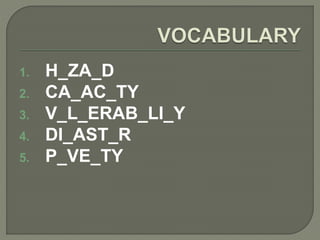

1. H_ZA_D
2. CA_AC_TY
3. V_L_ERAB_LI_Y
4. DI_AST_R
5. P_VE_TY
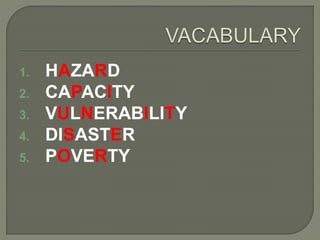
1. HAZARD
2. CAPACITY
3. VULNERABILITY
4. DISASTER
5. POVERTY
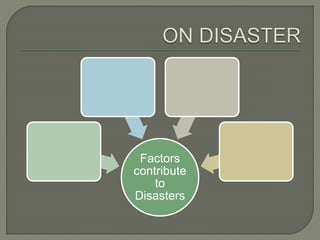
Factors
contribute
to
Disasters
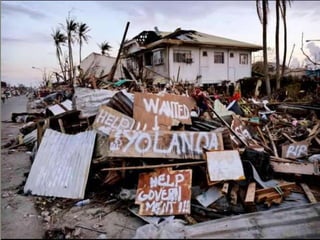
How did you feel about seeing the
footage?
What things run in your mind?
What things strike you most and
why?
GENESIS 1:1-31
God created this world; that he loves His world
and is pleased with it; and that He created man
and woman in His own image and charged them
to best steward His creation. God, who created
our world, loves life and wishes to share this life
to every creature.
Exposure to hazard
Conditions of vulnerability that are present
Insufficient capacity or measures to reduce
or cope with the potential negative
consequences
A serious disruption of the community or
the society causing widespread
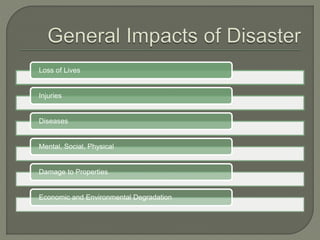
Loss of Lives
Injuries
Diseases
Mental, Social, Physical
Damage to Properties
Economic and Environmental Degradation
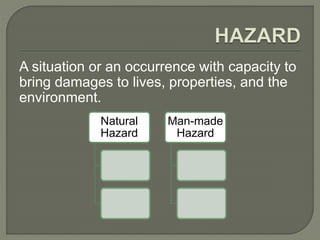
A situation or an occurrence with capacity to
bring damages to lives, properties, and the
environment.
Natural
Hazard
Man-made
Hazard
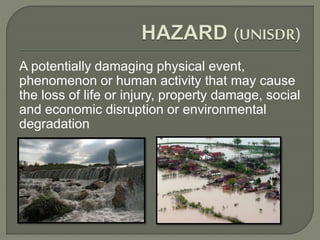
A potentially damaging physical event,
phenomenon or human activity that may cause
the loss of life or injury, property damage, social
and economic disruption or environmental
degradation
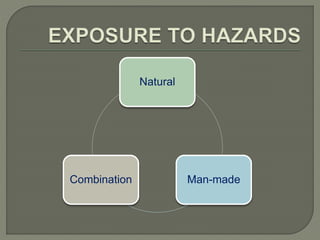
Natural
Man-madeCombination
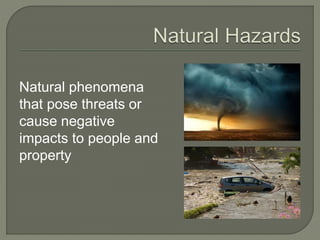
Natural phenomena
that pose threats or
cause negative
impacts to people and
property
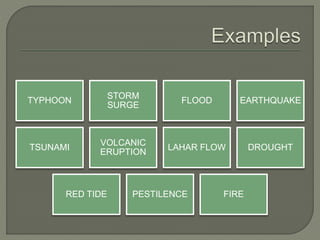
TYPHOON
STORM
SURGE
FLOOD EARTHQUAKE
TSUNAMI
VOLCANIC
ERUPTION
LAHAR FLOW DROUGHT
RED TIDE PESTILENCE FIRE
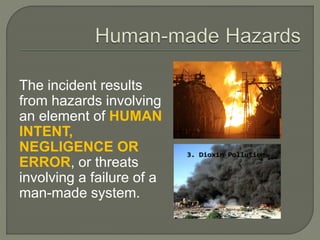
The incident results
from hazards involving
an element of HUMAN
INTENT,
NEGLIGENCE OR
ERROR, or threats
involving a failure of a
man-made system.
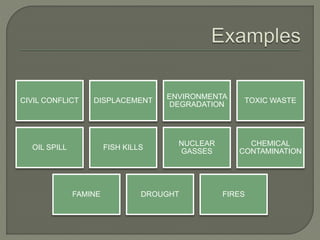
CIVIL CONFLICT DISPLACEMENT
ENVIRONMENTA
DEGRADATION
TOXIC WASTE
OIL SPILL FISH KILLS
NUCLEAR
GASSES
CHEMICAL
CONTAMINATION
FAMINE DROUGHT FIRES
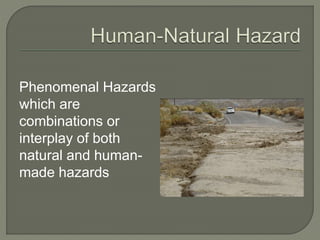
Phenomenal Hazards
which are
combinations or
interplay of both
natural and human-
made hazards
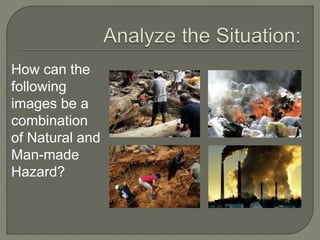
How can the
following
images be a
combination
of Natural and
Man-made
Hazard?
From the three (3) types of hazards, what
type of hazards can be prevented and can be
anticipated and why?
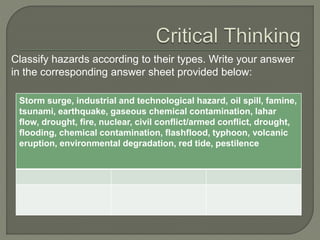
Classify hazards according to their types. Write your answer
in the corresponding answer sheet provided below:
Storm surge, industrial and technological hazard, oil spill, famine,
tsunami, earthquake, gaseous chemical contamination, lahar
flow, drought, fire, nuclear, civil conflict/armed conflict, drought,
flooding, chemical contamination, flashflood, typhoon, volcanic
eruption, environmental degradation, red tide, pestilence
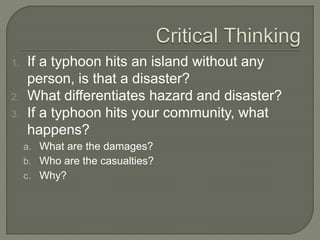
1. If a typhoon hits an island without any
person, is that a disaster?
2. What differentiates hazard and disaster?
3. If a typhoon hits your community, what
happens?
a. What are the damages?
b. Who are the casualties?
c. Why?

Disaster and Disaster Risk