Marine and
Coastal Processes :
Effects of Marine and
Coastal Processes
The coast is one of the most dynamic parts of the Earth’s surface.
It contains some of the world’s sensitive and threatened
ecosystems such as mangroves and beach forest, seagrass,and
coral reefs. The dynamics of the marine environment result to
different processes that affect human communities and
organisms in the coastal ecosystem. Some of these processes
result to natural hazards.
Marine systems are referred to as the world’s oceans while coastal
systems refer to the interface between oceans and land,
extending seawards to about the middle of the continental shelf
andinland to include allareas strongly influencedby theoceans
(Millennium Ecosystem Assessment, 2005). About 23% of the
world’s population live within 100 km of the coast and about 10%
live in extremely low-lying areas. Many of these processes like
coastal erosion, storm surges, coastal flooding, and tsunami.
Revisiting
Marine and
Coastal
Processes
The scientific field dealing with these processes
happening in our major oceans and seas is called
oceanography. It is an interdisciplinary field of
science that integrates the different fields such as
physics, chemistry, biology, geology, meteorology,
mathematics and even the social sciences to
understand the link between humans and oceans.
Coastal processes are activities or events
happening in the marine environment. These are
driven by the different environmental factors such
as atmospheric pressure, temperature, movement
of the Earth, moon, and other dynamic changes in
the ocean.
Coastal processes include waves, tides, sea level
change, crustal movement, and storm surge.
 Waves are caused by the movement of the air
masses in the coastal environment.
 Tides refer to the gravitational pull between the
Earth and the moon.
 Sea level change is a result of the rise of ocean
water which can be attributed to the melting of
glaciers or iceberg in the polar regions.
 Storm surge refers to the rising of seawater due to
changes in pressure and wind associated with a
storm.
 Crustal movement is caused by the motion of the
oceanic and continental crust of the Earth.
Effects of
Marine and
Coastal
Processes
The different coastal processes described above
may result to coastal hazards.
Coastal hazards are physical phenomena that
expose the marine environment to risk of
property damage, loss of life and ecological
degradation.
Figure 2:
Concept
map of
coastal
hazards
Coastal
Erosion
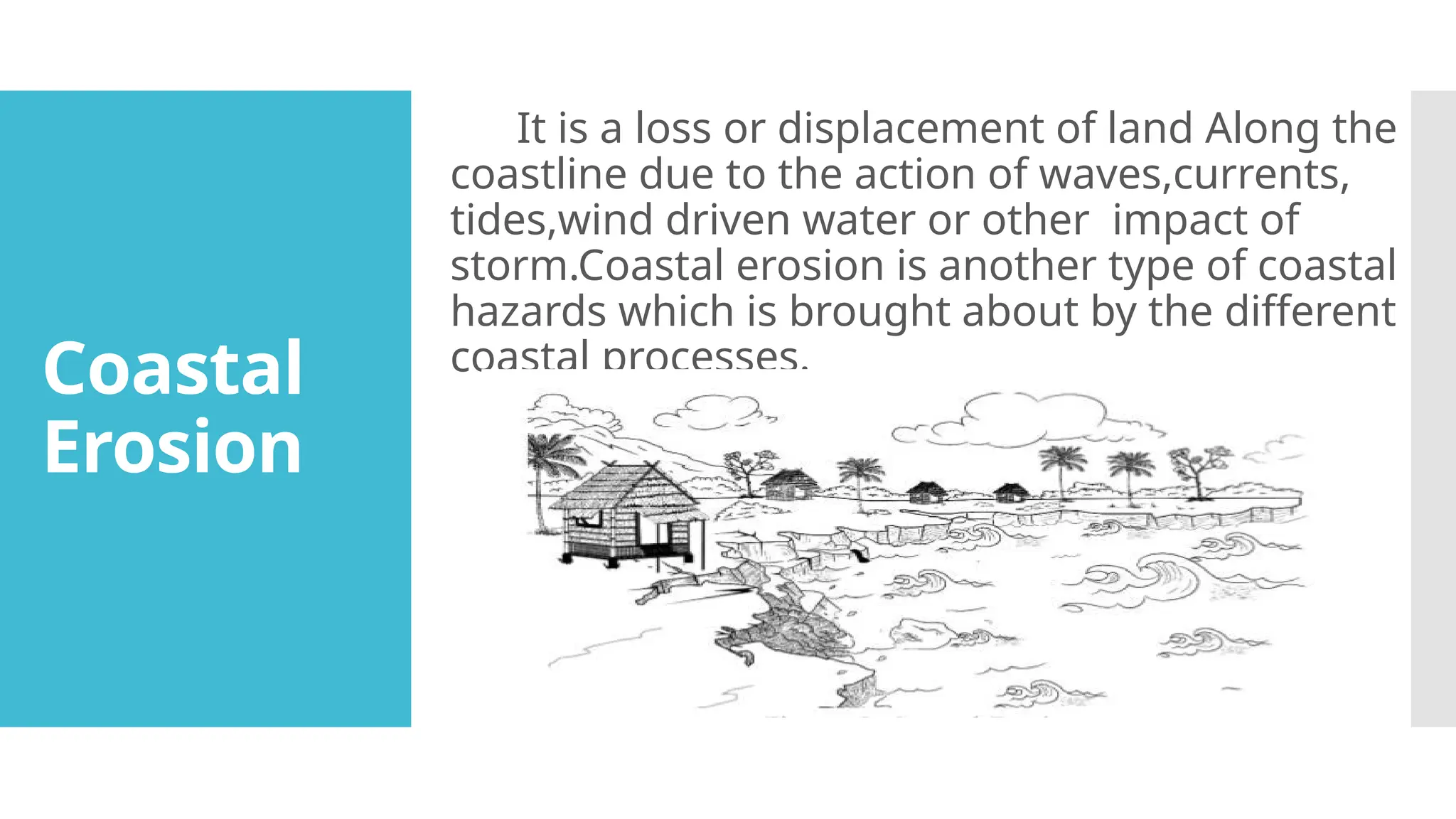
It is a loss or displacement of land Along the
coastline due to the action of waves,currents,
tides,wind driven water or other impact of
storm.Coastal erosion is another type of coastal
hazards which is brought about by the different
coastal processes.
Saltwate
r
Intrusio
n
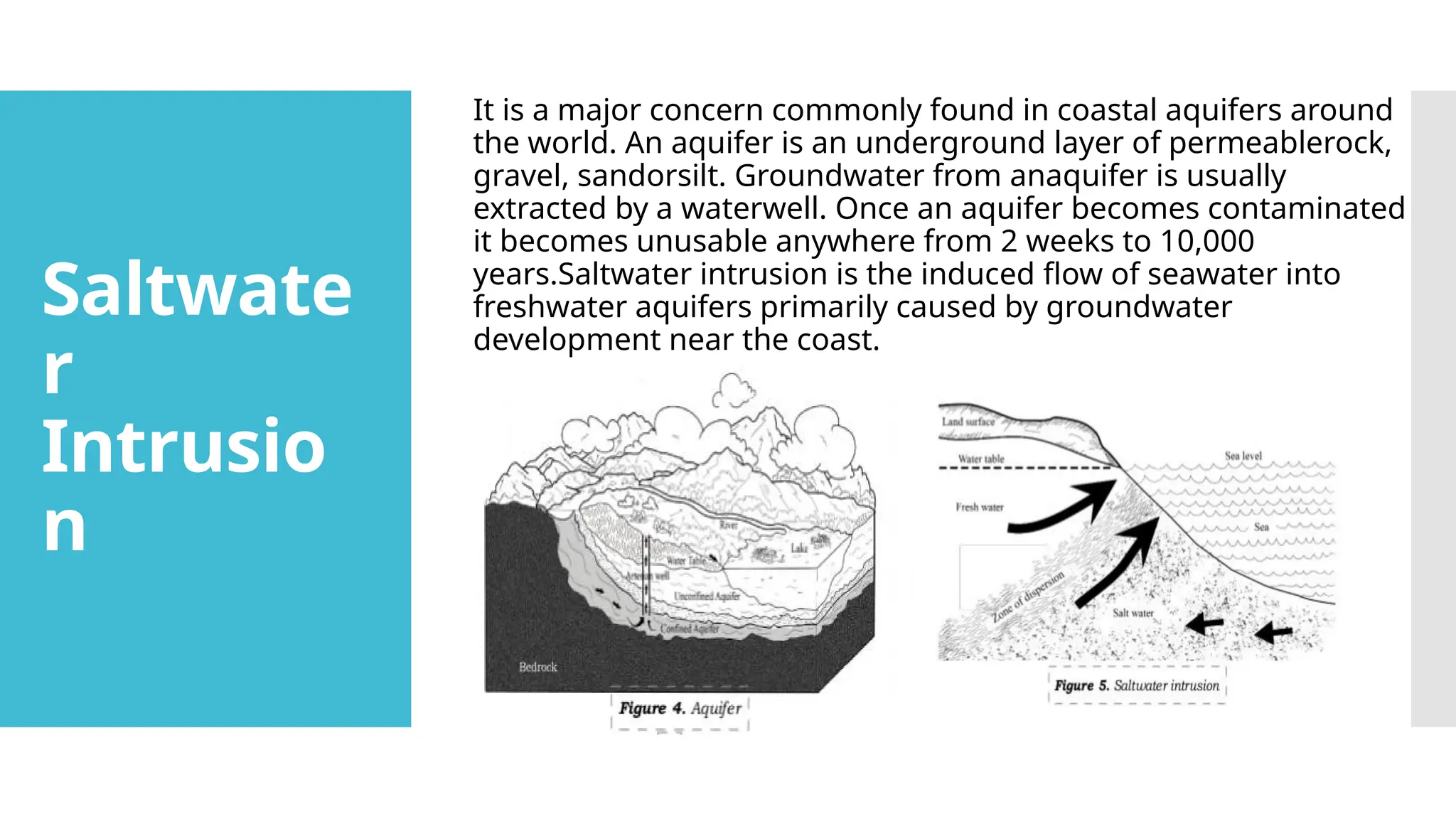
It is a major concern commonly found in coastal aquifers around
the world. An aquifer is an underground layer of permeablerock,
gravel, sandorsilt. Groundwater from anaquifer is usually
extracted by a waterwell. Once an aquifer becomes contaminated
it becomes unusable anywhere from 2 weeks to 10,000
years.Saltwater intrusion is the induced flow of seawater into
freshwater aquifers primarily caused by groundwater
development near the coast.
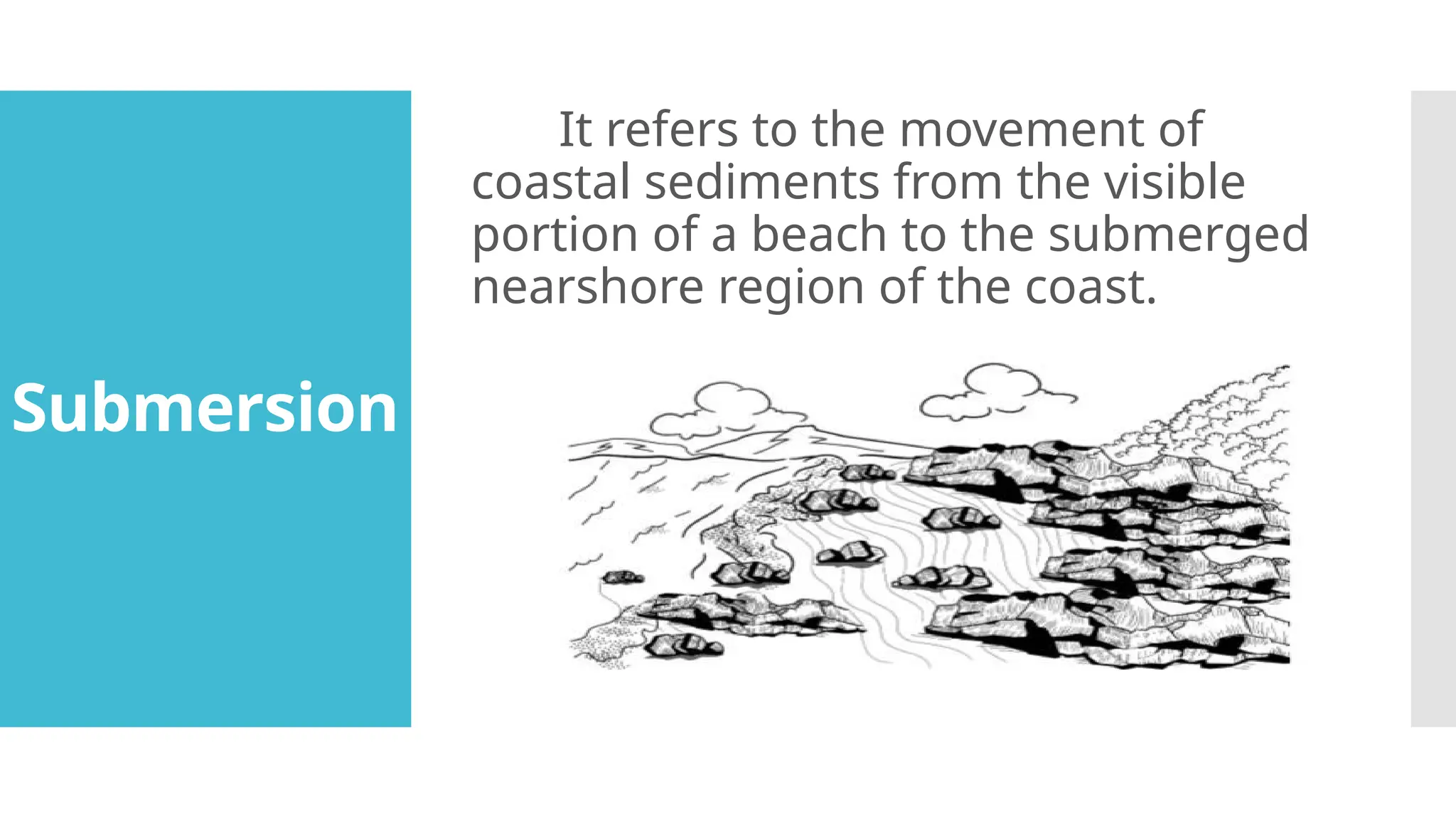
Submersion
It refers to the movement of
coastal sediments from the visible
portion of a beach to the submerged
nearshore region of the coast.
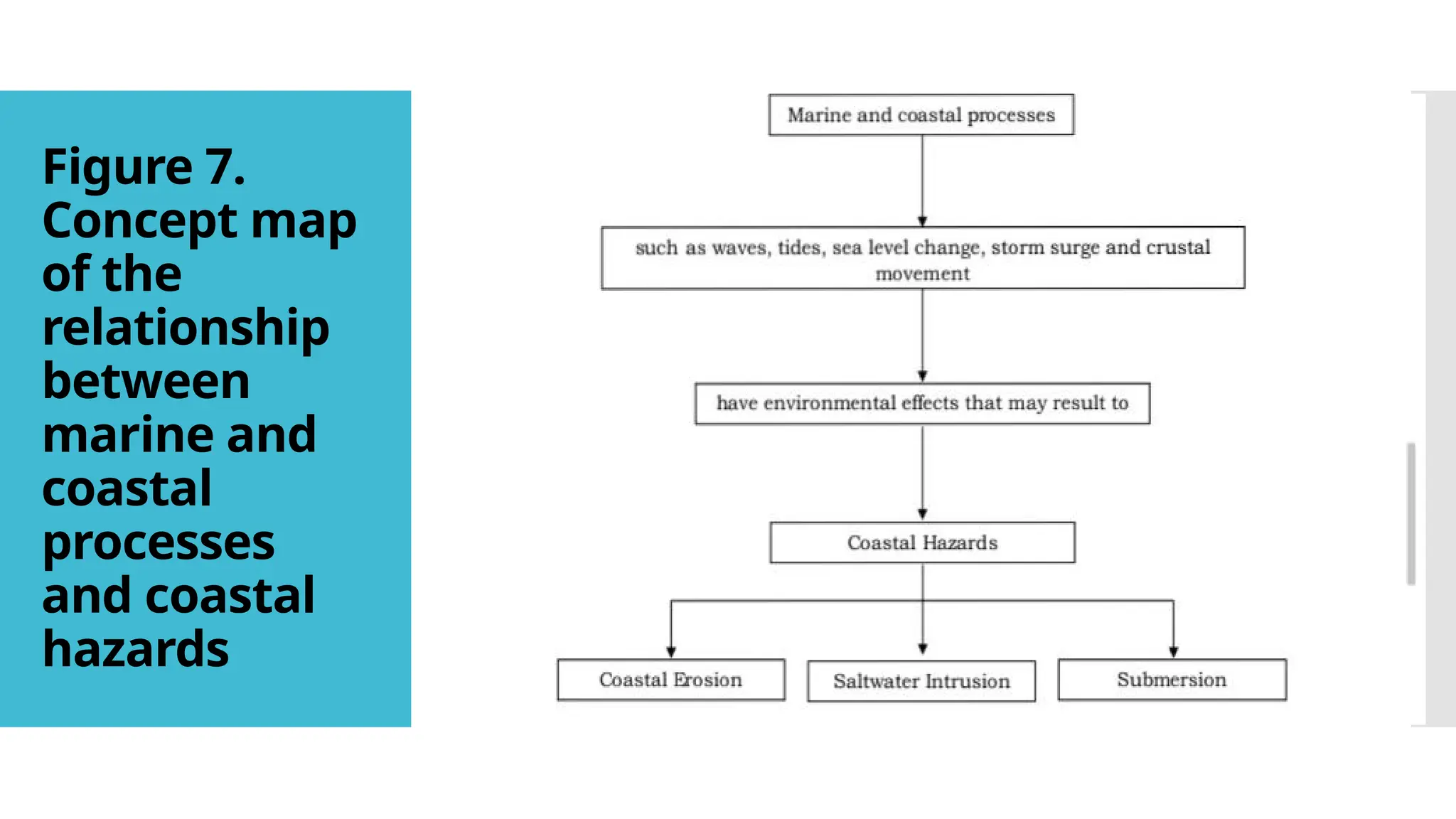
Figure 7.
Concept map
of the
relationship
between
marine and
coastal
processes
and coastal
hazards

Marine & Coastal Processes Presentation.pptx

  • 1.
    Marine and Coastal Processes: Effects of Marine and Coastal Processes
  • 2.
    The coast isone of the most dynamic parts of the Earth’s surface. It contains some of the world’s sensitive and threatened ecosystems such as mangroves and beach forest, seagrass,and coral reefs. The dynamics of the marine environment result to different processes that affect human communities and organisms in the coastal ecosystem. Some of these processes result to natural hazards. Marine systems are referred to as the world’s oceans while coastal systems refer to the interface between oceans and land, extending seawards to about the middle of the continental shelf andinland to include allareas strongly influencedby theoceans (Millennium Ecosystem Assessment, 2005). About 23% of the world’s population live within 100 km of the coast and about 10% live in extremely low-lying areas. Many of these processes like coastal erosion, storm surges, coastal flooding, and tsunami.
  • 3.
    Revisiting Marine and Coastal Processes The scientificfield dealing with these processes happening in our major oceans and seas is called oceanography. It is an interdisciplinary field of science that integrates the different fields such as physics, chemistry, biology, geology, meteorology, mathematics and even the social sciences to understand the link between humans and oceans. Coastal processes are activities or events happening in the marine environment. These are driven by the different environmental factors such as atmospheric pressure, temperature, movement of the Earth, moon, and other dynamic changes in the ocean.
  • 4.
    Coastal processes includewaves, tides, sea level change, crustal movement, and storm surge.  Waves are caused by the movement of the air masses in the coastal environment.  Tides refer to the gravitational pull between the Earth and the moon.  Sea level change is a result of the rise of ocean water which can be attributed to the melting of glaciers or iceberg in the polar regions.  Storm surge refers to the rising of seawater due to changes in pressure and wind associated with a storm.  Crustal movement is caused by the motion of the oceanic and continental crust of the Earth.
  • 5.
    Effects of Marine and Coastal Processes Thedifferent coastal processes described above may result to coastal hazards. Coastal hazards are physical phenomena that expose the marine environment to risk of property damage, loss of life and ecological degradation.
  • 6.
  • 7.
    Coastal Erosion It is aloss or displacement of land Along the coastline due to the action of waves,currents, tides,wind driven water or other impact of storm.Coastal erosion is another type of coastal hazards which is brought about by the different coastal processes.
  • 8.
    Saltwate r Intrusio n It is amajor concern commonly found in coastal aquifers around the world. An aquifer is an underground layer of permeablerock, gravel, sandorsilt. Groundwater from anaquifer is usually extracted by a waterwell. Once an aquifer becomes contaminated it becomes unusable anywhere from 2 weeks to 10,000 years.Saltwater intrusion is the induced flow of seawater into freshwater aquifers primarily caused by groundwater development near the coast.
  • 9.
    Submersion It refers tothe movement of coastal sediments from the visible portion of a beach to the submerged nearshore region of the coast.
  • 10.
    Figure 7. Concept map ofthe relationship between marine and coastal processes and coastal hazards