FACTORS AFFECTING
SOLUBILITY AND RATE OF
DISSOLUTION
Objectives
At the end of the lesson, you should be able to:
learn the different factors that affect solubility; and
identify the factors that affects the rate of solubility.
Solubility
is the ability of a substance to be dissolved in another
substance at a specific temperature and pressure.
It is also defined as the maximum amount of solute that can
be dissolved in a given amount of solvent at a specified
temperature and pressure to produce a solution in
equilibrium.
It is usually expressed in grams of solute per milliliters of
solvent.
Factors Affecting Solubility
1. Nature of Solute and Solvent
A solute can only be dissolved in a solvent when they are “alike.” A
general rule is “like dissolves like.”
2. Temperature
The solubility of a solid and liquid solute increases when temperature
is increased.
The solubility of a gaseous solute to a liquid solvent decreases as
temperature increases.
3. Pressure
The effect of pressure is only applicable for the solubility of gases in
liquids. The higher the pressure of a gas, the more soluble it is.
Rate of Dissolution
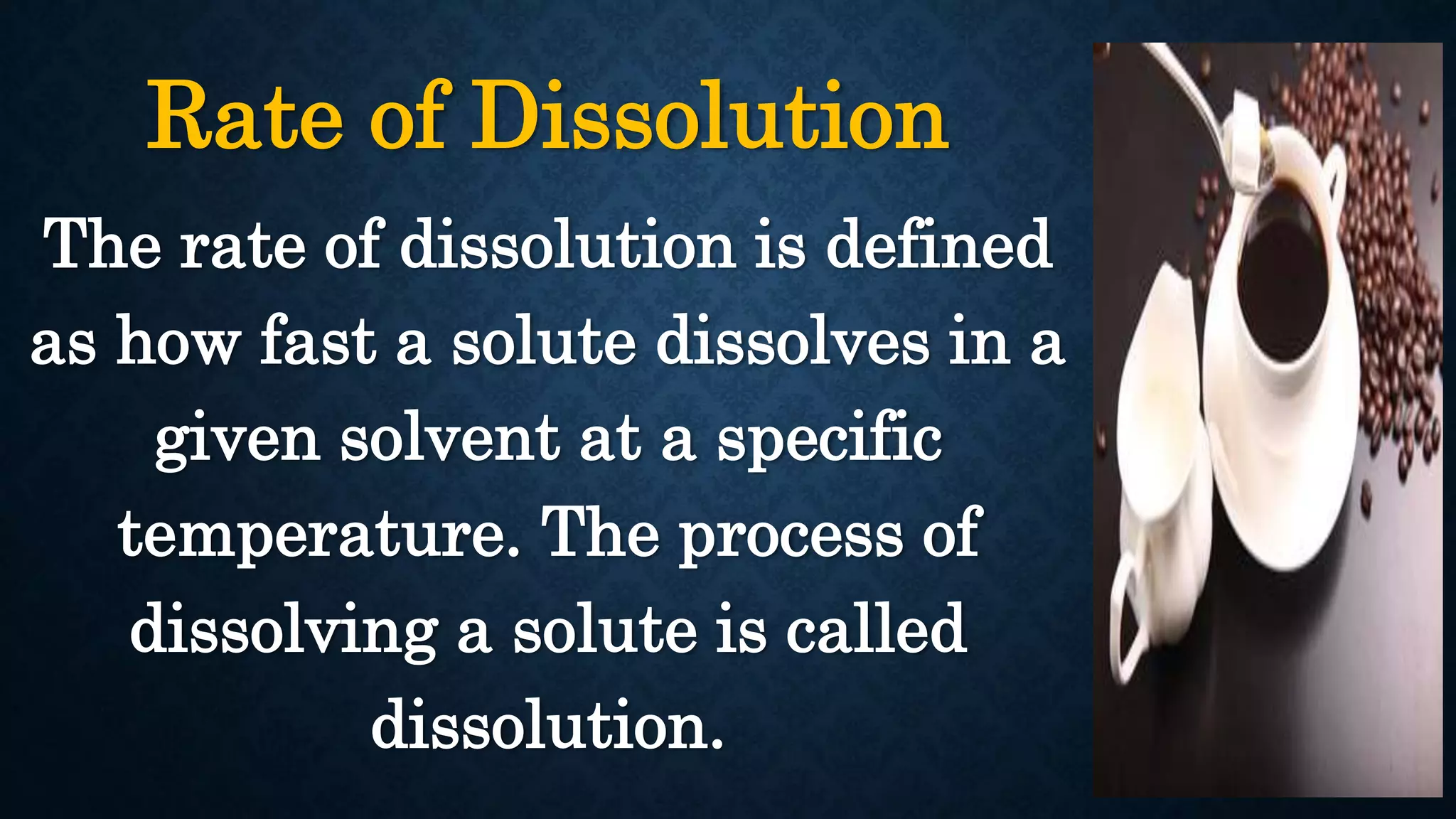
The rate of dissolution is defined
as how fast a solute dissolves in a
given solvent at a specific
temperature. The process of
dissolving a solute is called
dissolution.
Factors Affecting the Rate of Dissolution
1. Stirring
Stirring a solute will increase its rate of dissolution.
When you stir, solute particles come into closer contact
more often with solvent particles.
2. Size of the solute particle
The smaller the particles of the solute, the faster it
dissolves in the solvent. Small particles provide larger
surface area for contact with the solvent.
3. Temperature
As temperature increases, the rate of dissolution of
solid and liquid solutes also increases.
4. Amount of solute present in a solution
When you have little amount of solute in the solution,
it is easier to dissolve the same solute in the given
solvent. However, when you have a lot of solute already
present in the solvent, dissolution takes slowly.
Key Points
• Solubility is the ability of a substance to be dissolved in
another substance at a specific temperature and
pressure. It is dependent on three factors: nature of
solute and solvent, temperature and pressure.
• The rate of dissolution is defined as how fast a solute
dissolves in a given solvent at a specific temperature. It
is affected by stirring, size of solute particle,
temperature, and amount of solute already present in
the solution.

Factors Affecting Solubility and Rate of Dissolution.pptx

  • 1.
    FACTORS AFFECTING SOLUBILITY ANDRATE OF DISSOLUTION Objectives At the end of the lesson, you should be able to: learn the different factors that affect solubility; and identify the factors that affects the rate of solubility.
  • 2.
    Solubility is the abilityof a substance to be dissolved in another substance at a specific temperature and pressure. It is also defined as the maximum amount of solute that can be dissolved in a given amount of solvent at a specified temperature and pressure to produce a solution in equilibrium. It is usually expressed in grams of solute per milliliters of solvent.
  • 3.
    Factors Affecting Solubility 1.Nature of Solute and Solvent A solute can only be dissolved in a solvent when they are “alike.” A general rule is “like dissolves like.” 2. Temperature The solubility of a solid and liquid solute increases when temperature is increased. The solubility of a gaseous solute to a liquid solvent decreases as temperature increases. 3. Pressure The effect of pressure is only applicable for the solubility of gases in liquids. The higher the pressure of a gas, the more soluble it is.
  • 4.
    Rate of Dissolution Therate of dissolution is defined as how fast a solute dissolves in a given solvent at a specific temperature. The process of dissolving a solute is called dissolution.
  • 5.
    Factors Affecting theRate of Dissolution 1. Stirring Stirring a solute will increase its rate of dissolution. When you stir, solute particles come into closer contact more often with solvent particles. 2. Size of the solute particle The smaller the particles of the solute, the faster it dissolves in the solvent. Small particles provide larger surface area for contact with the solvent.
  • 6.
    3. Temperature As temperatureincreases, the rate of dissolution of solid and liquid solutes also increases. 4. Amount of solute present in a solution When you have little amount of solute in the solution, it is easier to dissolve the same solute in the given solvent. However, when you have a lot of solute already present in the solvent, dissolution takes slowly.
  • 7.
    Key Points • Solubilityis the ability of a substance to be dissolved in another substance at a specific temperature and pressure. It is dependent on three factors: nature of solute and solvent, temperature and pressure. • The rate of dissolution is defined as how fast a solute dissolves in a given solvent at a specific temperature. It is affected by stirring, size of solute particle, temperature, and amount of solute already present in the solution.